
Hu Xiu

Search documents
深度解析:为啥加沙的火停不下来?
Hu Xiu· 2025-10-16 04:05
Core Points - The article discusses the recent ceasefires in Gaza, highlighting two failed attempts and questioning the likelihood of success for a third ceasefire [1] - It mentions the involvement of the US, Egypt, Turkey, and Qatar in guaranteeing the ceasefire, suggesting a collaborative international effort [1] Summary by Categories Ceasefire Attempts - Gaza has experienced two ceasefires that ultimately failed, raising concerns about the potential success of a third attempt [1] - The situation appears optimistic with discussions around prisoner exchanges and the Israeli military's withdrawal from agreed boundaries [1] International Involvement - The US, Egypt, Turkey, and Qatar have signed guarantees in Egypt, indicating a significant diplomatic effort to stabilize the region [1]
房产是一个好的投资吗?
Hu Xiu· 2025-10-16 03:46
Core Viewpoint - The belief that real estate is the primary means of wealth accumulation and social status is being questioned, especially in light of recent failures in property investments and the potential for a reassessment of real estate as a viable investment option [1][4][5]. Group 1: Real Estate as Wealth and Status - Real estate has become a universal belief system, representing not just a home but also a means to protect and accumulate wealth [1][3]. - The rise of property investment in China has led to multiple waves of speculative buying, driven by economic policies and growth [3]. - The myth of successful property investors, such as Ou Chengxiao, is being challenged due to recent failures and legal troubles [4]. Group 2: Historical Context and Economic Implications - The shift towards an "asset economy" began approximately forty years ago, where success is measured by asset ownership rather than income [6]. - The concept of r > g (return on capital greater than return on labor) has been a persistent theme in economic discussions, particularly in low-interest environments [7][8]. - Historically, real estate has been one of the few assets that the middle class can leverage for healthy returns over time [9]. Group 3: Psychological and Social Dynamics - The over-reliance on asset value has led to anxiety among the middle class, as they shift focus from labor income to asset appreciation [10]. - The financialization of society encourages families to accumulate real estate as a means of securing welfare and economic safety [11]. - The middle class often engages in an "asset race," driven by fear of being left behind in social status [14][15]. Group 4: Land Value and Economic Growth - The core of real estate wealth lies in land value, which is a critical driver of economic growth, particularly in East Asia [17][18]. - Government policies that create land scarcity can significantly inflate land and property prices, as seen in places like Hong Kong and California [20][23]. - The majority of property price increases are attributed to rising land values rather than construction costs [25][35]. Group 5: Rental Income and Long-term Returns - Long-term returns from real estate are primarily derived from rental income, which constitutes about 80% of total returns [43]. - Despite the focus on property price appreciation, actual long-term wealth accumulation is more closely tied to rental yields [44]. - The allure of short-term price increases often overshadows the more stable, long-term rental income potential [45]. Group 6: Credit Cycles and Market Dynamics - The transformation of banking has led to a preference for real estate as collateral, resulting in a credit system heavily skewed towards property lending [46][47]. - The interdependence of credit cycles and property prices can lead to economic instability, particularly when property values decline [56][60]. - The cyclical nature of real estate markets often results in prolonged downturns that can exacerbate economic challenges for the middle class [56][67]. Group 7: Risks and Economic Vulnerability - The reliance on real estate for wealth protection can backfire during economic downturns, leading to significant financial strain on households [66][78]. - The concentration of risk in property investments can create vulnerabilities, especially when market conditions shift unfavorably [76][80]. - The perception of real estate as a safe investment is challenged by its cyclical nature and the potential for significant losses during downturns [64][66].


柬埔寨大型“杀猪盘”被端,美国没收电诈头目近13万枚比特币
Hu Xiu· 2025-10-16 03:33
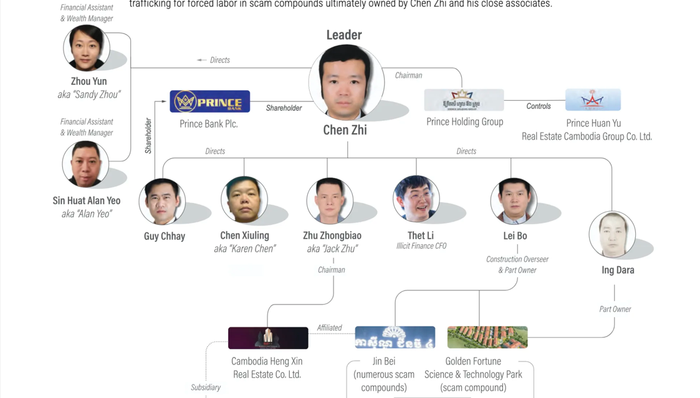
Core Viewpoint - The article discusses the significant crackdown by U.S. law enforcement on a large-scale cryptocurrency scam operation known as "pig butchering" in Cambodia, leading to the seizure of approximately 127,271 bitcoins valued at around $15 billion [3][4]. Group 1: Criminal Organization and Operations - The Prince Holding Group, led by Chen Zhi, is identified as a major player in this scam, operating forced labor fraud camps across Cambodia [5][8]. - Victims were lured under the pretense of high-paying jobs and were subjected to violence and coercion to carry out scams [6][23]. - The group is described as one of Asia's largest transnational crime organizations, with operations in multiple countries [8]. Group 2: Legal Actions and Consequences - Chen Zhi faces charges of telecommunications fraud and money laundering, with a potential maximum sentence of 40 years if convicted [7]. - The U.S. Treasury has designated the Prince Holding Group as a transnational criminal organization and has imposed sanctions on over 100 related individuals and entities [9]. - The operation is considered one of the most significant strikes against global human trafficking and online financial fraud [18]. Group 3: Impact and Scale of Fraud - The scams have resulted in billions of dollars in losses for victims worldwide, causing immense suffering [11]. - The article highlights the increase in online scams during the COVID-19 pandemic, as traditional gambling venues closed and criminal organizations shifted to online platforms [19]. - In the past year, U.S. citizens reportedly lost over $10 billion due to Southeast Asian fraud, marking a 66% increase from the previous year [21]. Group 4: Operational Tactics and Infrastructure - The criminal networks are well-organized, utilizing various tactics including fake investment platforms and leveraging political influence to shield their activities [15][24]. - The article notes that the Cambodian operations are supported by weak regulatory environments, making it a haven for such criminal activities [20].
smart #5 EHD超级电混版详细体验,精致还实用?
Hu Xiu· 2025-10-16 03:33
252km纯电续航覆盖日常,1615km综合续航打消长途焦虑,4.4L馈电油耗还很省心。18.99万起的预售 价,加上可油可电的属性,无论是城市通勤族还是家庭用户,我相信都很难拒绝这样一辆小车。 ...
揭秘Online Learning:为什么说它是AI的下一场革命?
Hu Xiu· 2025-10-16 03:20
Core Insights - The release of the MIT NANDA project's "2025 Business AI Status Report" has led to a collective decline in AI concept stocks, attracting global attention [1] Group 1 - The report highlights the current state of AI in business, indicating significant trends and projections for the future [1] - The findings of the report have raised concerns among investors, resulting in a notable drop in stock prices across the AI sector [1] - The global reaction to the report underscores the importance of AI developments in shaping market dynamics [1]
这班儿上的够难受的
Hu Xiu· 2025-10-16 03:07
Core Points - The article discusses the workplace challenges faced by a new employee, highlighting issues of social integration and negative workplace dynamics [3][20][22] Group 1: Workplace Dynamics - The new employee, referred to as Xiao Li, feels uncomfortable with her colleagues, who often make her the subject of subtle mockery and exclusion [4][12][20] - Xiao Li experiences situations where her colleagues invite her to social activities but fail to include her in the follow-up, leading to feelings of isolation [6][11][20] - There are instances where her colleagues make intrusive requests, such as wanting to see her social media posts, which she feels pressured to comply with [14][15][20] Group 2: Emotional Impact - The article emphasizes the emotional toll of negative workplace interactions, suggesting that such experiences can lead to significant anxiety and discomfort for employees [22][26][34] - It discusses the difficulty of managing negative emotions and the unrealistic expectations for employees to simply "not care" about workplace dynamics [28][30][46] - The narrative suggests that while it is challenging to eliminate negative feelings, finding ways to cope, such as engaging in enjoyable activities outside of work, can help mitigate their impact [36][38][42]
Sora2爆火,碾压Veo3,谷歌到底输哪儿了?
Hu Xiu· 2025-10-16 03:00
Core Insights - OpenAI's Sora2 has gained significant popularity since its release in early October, indicating a strong interest in AI-generated content [1] - The emergence of AI in creative fields, such as filmmaking and live streaming, suggests a transformative shift in how content is produced and consumed [1] Group 1 - Sora2's release has led to various cultural references and memes, showcasing its impact on social media and popular culture [1] - The integration of AI in live streaming, with examples like Kobe and Jackson, highlights the potential for AI to enhance audience engagement and entertainment [1] - The overall trend points towards an era where AI plays a crucial role in content creation, potentially revolutionizing the industry [1]
那些不用智能手机的人,是“怪胎”吗?
Hu Xiu· 2025-10-16 02:41
这是一个关于寻找深度、自由和真实生活的精彩故事。 故事的起点在2022年,纽约布鲁克林展望公园(Prospect Park)里,一群高中生,自称"卢德分子俱乐部"(Luddite Club),每周日风雨无阻地聚会。他们 用一个古老的名字"卢德运动"来反抗现代科技对他们生活的工业化侵蚀。 后来,手机丢了一次,她感觉到了一种解脱,从此她尝试戒掉Instagram。疫情爆发时,她14岁,社交媒体用的次数随之飙升。她意识到自己再也无法区分 自己做的事情哪些是因为她喜欢,哪些只是因为她知道会发照片。生活让她感觉像是在演戏,以符合她的社交媒体形象。后来,她删掉了所有的个人资 料,并告诉从事技术工作的爸爸她要放弃智能手机。 起初,父母根本不相信这种生活能持续下去,但后来,他们坚持让她至少要有一台旧手机。没有了智能手机,等于"社交死亡",洛根不知道该如何打发时 间。慢慢地,她感觉自己的"大脑化学反应"发生了变化。她读到了阿奈斯·宁的《拼贴画》,开始学着缝裤子,她感觉自己更有创造力,效率更高,但也 更孤独了。她开始重新观察城市、阅读、涂鸦,并享受没有闹钟的早晨。 俱乐部中其他成员大多只携带翻盖手机(flip phones)而不 ...

参观完中国电池工厂后,欧美投资人决定放弃追赶
Hu Xiu· 2025-10-16 02:22
Core Viewpoint - Western investors have abandoned their hopes of catching up with the Chinese battery industry after visiting local battery factories, indicating a need for a strategic reevaluation of their future in the global battery market [1] Group 1 - The visit by Western investors to Chinese battery factories has led to a significant shift in their perception of the competitive landscape in the battery sector [1] - The article suggests that the global battery race is prompting Western stakeholders to reconsider their strategies and investments in the industry [1]