Xin Lang Ke Ji

Search documents
美的全屋智能总经理尚喆回应能否接入格力、海尔:一切皆有可能
Xin Lang Ke Ji· 2025-10-31 09:09
Core Viewpoint - Midea Group is actively pursuing a whole-home smart strategy and is open to interoperability with competitors' products, indicating a collaborative approach in the smart home industry [1] Group 1: Smart Home Strategy - Midea's General Manager of Whole Home Intelligence, Shang Zhe, shared insights on the company's smart home strategy during the 30th Technology Month and the 3rd Visionary Conference [1] - The company is exploring discussions with other manufacturers regarding the integration of smart home systems, acknowledging the rapid development of unified protocols like Matter in overseas markets led by Apple, Google, and Amazon [1] Group 2: Industry Collaboration - Shang Zhe mentioned that the Ministry of Industry and Information Technology is leading efforts to establish a domestic smart home interoperability protocol, with Midea joining this alliance alongside other major players like Haier and Hisense [1] - Although the implementation may take time due to the size of the companies involved, there is a strong belief that progress will be made in the future [1]

对话美的全屋智能总经理尚喆:美的提“人车家融合”概念系效仿小米?
Xin Lang Ke Ji· 2025-10-31 09:03
Group 1 - Midea Group is implementing a dual-brand strategy with COLMO and Midea to enhance home intelligence through "integration of people, vehicles, and homes" to meet user needs across different spaces and scenarios [1][2] - Xiaomi has also proposed a similar "integration of people, vehicles, and homes" concept, leveraging digital technology, information technology, and artificial intelligence as foundational support [1] - Midea's approach is driven by user needs, with the company conducting in-depth user research to understand the potential of smart home technology for users with various brands of cars and home appliances [1][2] Group 2 - The growth of home intelligence is linked to the rise of mobile internet and smart vehicles, indicating that these developments are interconnected rather than isolated [1] - Midea emphasizes that the value of the "people-vehicle-home" ecosystem lies in its ability to address user needs rather than merely existing as a concept [2] - The company is cautious about using the term "ecosystem," focusing instead on delivering user value without venturing into the smartphone or automotive markets [2]
美的回应人车家融合战略,称基于用户需求非效仿小米
Xin Lang Ke Ji· 2025-10-31 08:59
Core Insights - Midea Group is developing a dual-brand strategy with COLMO and Midea to create a deeply integrated smart home experience through "human-vehicle-home integration" to meet user needs across different spaces and scenarios [1][2] Group 1: Company Strategy - Midea's approach to "human-vehicle-home integration" is based on extensive user research, focusing on the needs of users who own different brands of cars and home appliances [1] - The growth of smart homes is linked to the rise of mobile internet and smart vehicles, indicating that these developments are interconnected rather than isolated [1] Group 2: Market Positioning - Midea emphasizes that the value of the "human-vehicle-home" ecosystem lies in addressing user needs rather than merely creating a concept without practical application [2] - The company does not intend to venture into the smartphone or automotive markets but aims to collaborate with these sectors to enhance user value [2]

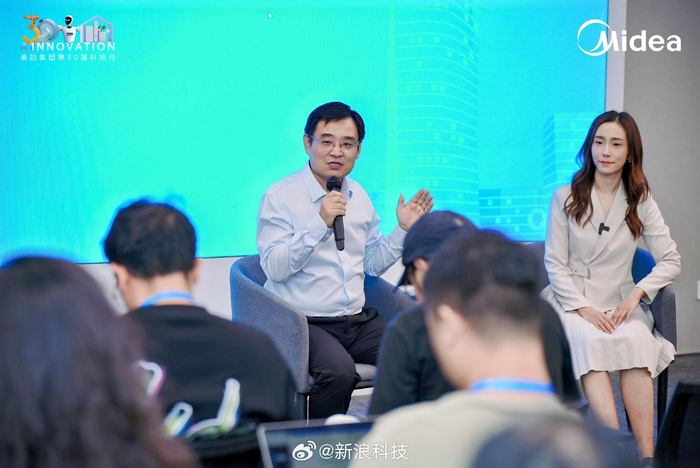
美的全屋智能可接入格力电器吗?美的集团全屋智能总经理回应!
Xin Lang Ke Ji· 2025-10-31 08:56
Core Insights - Midea Group is actively pursuing a whole-home smart strategy and is open to interoperability with competitors like Gree Electric and Haier [1] - The company acknowledges the rapid development of unified smart home protocols internationally, led by companies like Apple, Google, and Amazon, while noting challenges in the domestic market [1] - Midea has joined a domestic alliance aimed at creating a smart home interoperability protocol, which includes other major players like Haier and Hisense [1] Group 1 - Midea's General Manager of Whole-Home Intelligence, Shang Zhe, expressed optimism about the potential for collaboration with other manufacturers in the smart home sector [1] - The company has been actively engaging in discussions with other firms regarding smart home interoperability [1] - The Ministry of Industry and Information Technology in China is leading efforts to establish a domestic smart home interoperability protocol, with Midea participating in this initiative [1] Group 2 - The current development of smart home systems in China faces various challenges, despite the ongoing efforts to unify standards [1] - Midea's involvement in the alliance indicates a commitment to advancing smart home technology and addressing interoperability issues [1] - Shang Zhe believes that while significant progress may take time, the trend towards interoperability in the smart home industry is inevitable [1]
美的集团尚喆:美的美居智能用户规模已达行业前三,设备连接数超 1.259 亿
Xin Lang Ke Ji· 2025-10-31 08:13
Core Insights - Midea Group's smart home user base ranks among the top three in the industry, with over 126 million connected devices and more than 115 million registered users [1] - The monthly active users exceed 23.12 million, and the number of users with bound devices reaches 56.62 million [1] - Midea sells over 400 million home appliances globally each year, with more than 100 million of these products featuring connectivity and smart capabilities [1] - The company offers over 100 product categories equipped with advanced smart functionalities [1]

平价咖啡将诞生新万店品牌,咖啡市场进入“质价比”时代?
Xin Lang Ke Ji· 2025-10-31 08:04
Core Insights - The Chinese fresh coffee market is undergoing a significant transformation, shifting from a "brand premium" focus to a "quality-price ratio" emphasis, particularly in first-tier cities [1][3] - Starbucks is facing unprecedented competition from affordable coffee brands like Luckin Coffee, Kudi, and others, which are gaining dominance in this emerging market [1][3] Market Dynamics - The Chinese coffee market is projected to exceed 500 billion yuan by 2030, driven by three key industry variables: the entry of tea brands lowering coffee prices, low market concentration, and evolving consumer perceptions [3][5] - Consumers are increasingly willing to pay for quality rather than brand, leading to a trend where price equality becomes essential [3][5] Competitive Landscape - Starbucks' average price per cup is around 30 yuan, while competitors like Luckin Coffee and Kudi offer prices ranging from 4.5 to 16 yuan, creating a significant price gap that challenges Starbucks' competitive advantage [3][4] - Brands like Luckin Coffee have successfully attracted younger consumers by offering "low-price, high-quality" products, reshaping consumer perceptions of coffee pricing [3][4] Brand Performance - Luckin Coffee's "Coconut Latte" has achieved sales exceeding 300 million yuan, with over 30 million cups sold, showcasing its strong market presence [4] - The brand has expanded rapidly, with over 9,000 stores, doubling its scale since the beginning of the year, and has opened its first overseas store in Malaysia [4][5] Consumer Behavior - There is a notable shift in consumer behavior, with many opting for affordable coffee options, indicating a change in the perception of coffee consumption from a luxury to a daily necessity [5][6] - The demand for reasonably priced, quality coffee is consistent across different market segments, suggesting that the "high-quality, low-price" model has long-term potential [5][6] Supply Chain and Operational Efficiency - Luckin Coffee's competitive edge lies in its supply chain management, which includes significant production capacity and cost control, allowing it to maintain quality at lower prices [6] - The brand's operational model serves as a blueprint for the coffee industry, emphasizing the importance of supply chain foundations, product-market fit, and targeted expansion [6]
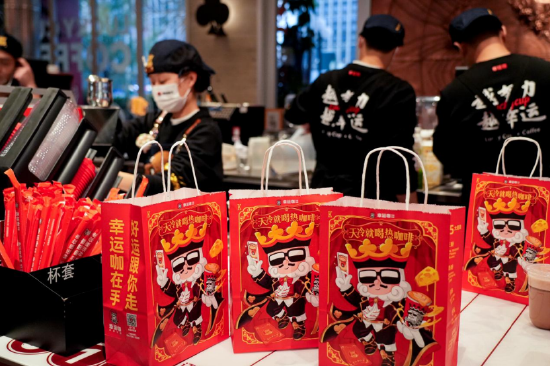
美的集团全屋智能总经理尚喆:美的美居智能用户规模已达行业前三,设备连接数超1.259亿
Xin Lang Ke Ji· 2025-10-31 07:59
Core Insights - Midea Group's smart home division has achieved significant user growth, ranking among the top three in the industry for smart home users [1] - The total number of connected devices has surpassed 1.259 billion, with registered users exceeding 1.159 billion and monthly active users reaching over 23.12 million [1] - Midea has sold over 400 million home appliances globally each year, with more than 100 million of these products featuring connectivity and smart capabilities [1] User Metrics - Total connected devices: over 1.259 billion [1] - Total registered users: over 1.159 billion [1] - Monthly active users: over 23.12 million [1] - Users with bound devices: 56.62 million [1] Product Sales - Annual global sales of home appliances: over 400 million units [1] - Appliances with connectivity and smart features: over 100 million units [1] - Number of product categories with smart capabilities: over 100 [1]
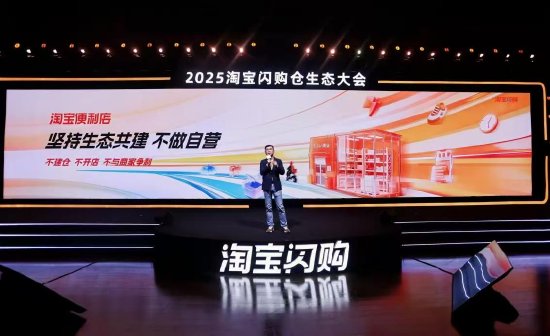
淘宝闪购发布新品牌“淘宝便利店”,投入20亿共建闪购仓生态
Xin Lang Ke Ji· 2025-10-31 07:57
Core Insights - Taobao Flash Sale has launched a new convenience store brand called "Taobao Convenience Store" aimed at providing a comprehensive shopping experience with 24-hour service and 30-minute delivery [1] - The brand will operate under a flash warehouse model leveraging Alibaba's supply chain advantages [1] - The initiative emphasizes collaboration with merchants without building warehouses or stores, ensuring that merchants retain ownership of their assets [1] Group 1 - The new convenience store brand will officially launch on November 1, targeting consumer needs with a focus on quality service [1] - The first batch of Taobao Convenience Stores will open 34 slots for high-quality merchants, featuring flagship and standard warehouse models with around 10,000 SKUs [1] - Special warehouse models will be introduced to cater to student users in campus scenarios [1] Group 2 - The plan includes expanding Taobao Convenience Stores to over 200 cities nationwide in the future [1] - Taobao Flash Sale will invest 2 billion yuan in the next year to support merchants in enhancing warehouse quality, upgrading product quality, improving logistics capabilities, and promoting continuous digital capability iteration [1]

美的机器人家族公开亮相:已研发3代5款机器人,正规划超人型机器人产品
Xin Lang Ke Ji· 2025-10-31 07:08
Core Insights - Midea Group unveiled its humanoid robot family at the 30th Technology Month and the 3rd Visionary Conference, showcasing a total of five models across three generations [1] Group 1: Product Overview - The first generation includes two models: Meiro and Meila, with Meiro being a wheeled industrial robot used for operations and logistics in the Jingzhou washing machine factory, while Meila is a home service robot capable of operating appliances like washing machines, microwaves, and refrigerators [1] - The second generation features Meiro X and Meila X, where Meiro X is a bipedal robot with 40+20 degrees of freedom designed for complex environments, and Meila X is a mini bipedal service robot tailored for home settings [1] - The third generation, referred to as Meiro U, is currently in the planning stage, indicating a continuous development strategy [1]

智联招聘李强:技术创新从加分项变成企业必选项,54%百强雇主已将AI大规模应用于多个业务板块
Xin Lang Ke Ji· 2025-10-31 06:56
Core Insights - The "2025 China Annual Best Employers Top 100 List" was officially released by Zhaopin at the HBR Management Annual Conference 2025, highlighting trends in employment relationships [1] Group 1: Employer Characteristics - 42% of the top 100 employers are recognized as "high-tech enterprises" and "demonstration enterprises for technological innovation," which is 25 percentage points higher than non-top employers, indicating a significant advantage in technological innovation [3] - 54% of the top employers have applied AI extensively across multiple business sectors, surpassing non-best employers by 39 percentage points, demonstrating a direct conversion of technological advantages into employer brand advantages [3] - The application rate of AI in human resources among the top employers is as high as 96%, with AI involved in all aspects of HR processes, making HR a leader in "human-machine symbiotic organizational transformation" [3] Group 2: Human-Machine Collaboration - 92% of the top employers hold a positive and open attitude towards human-machine collaboration, showcasing various concrete "symbiotic" scenarios [4] - The concept of "symbiosis" is categorized into three levels: 1. Efficiency symbiosis, where humans direct AI to perform repetitive tasks, freeing up employee time for more critical work [4] 2. Innovation symbiosis, with 85% of top employers using AI in product development and 73% in marketing, emphasizing collaboration where humans define problems and AI explores solutions [4] 3. Decision-making symbiosis, where AI provides multiple options through data and automation, while humans make the final judgment based on experience and values [4]