
Xin Lang Ke Ji

Search documents
奥迪怎么了? A系降至10万,多地4S店突然「消失」
Xin Lang Ke Ji· 2026-01-28 01:11
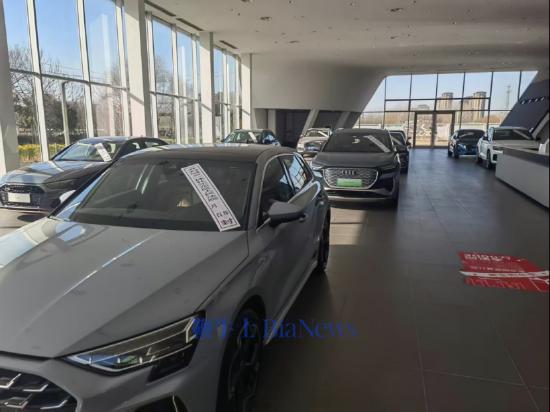
Core Insights - Audi is facing significant challenges in the Chinese market, with multiple dealerships reportedly closing down, including the Kaifeng Jinao Audi 4S store, which has left customers unable to redeem their purchased maintenance packages [1][2][4] - The overall sales of Audi in China have declined for two consecutive years, with a reported 5% drop in 2025 compared to the previous year [1][8] - In response to declining sales, Audi has initiated substantial price reductions on several models, with discounts reaching up to 50-60% [12][13] Dealership Closures - The Kaifeng Jinao Audi 4S store is among over ten Audi dealerships that have closed since the end of 2025, affecting various provinces including Guangxi, Jiangsu, Zhejiang, and others [1][5] - Customers have reported purchasing maintenance packages worth between 16,800 to 18,800 yuan, which are now rendered useless due to the dealership's closure [4][6] - Employees of the closed dealerships are also facing issues, with reports of unpaid wages and lack of communication from management [2][4] Sales Performance - Audi's total sales in 2025 reached 1.623 million units, a decrease of 2.9% from 2024, with the Chinese market accounting for 617,514 units sold, down 5% year-on-year [7][8][11] - The decline in sales is attributed to intense competition in the Chinese automotive market, with Audi's reliance on its joint ventures with FAW and SAIC being a critical factor [9][11] Pricing Strategies - In an effort to boost sales, Audi has significantly reduced prices on several models, such as the Audi A3, which is now priced starting at 106,700 yuan, representing a 40% discount from its original price [12] - Other models, including the Audi Q3 and A4L, have also seen similar price cuts, with discounts of up to 50% [12] Future Outlook - Audi's management has indicated plans for 2026 focusing on strengthening the brand, improving product offerings, and stabilizing the dealership network [15] - However, the recent closures and customer service issues suggest that maintaining brand reputation and customer satisfaction remains a significant challenge for Audi [15]

遭Meta「砍单」?歌尔股份启动裁员:研发中心成「重灾区」,称要「削到筋骨」
Xin Lang Ke Ji· 2026-01-27 01:38
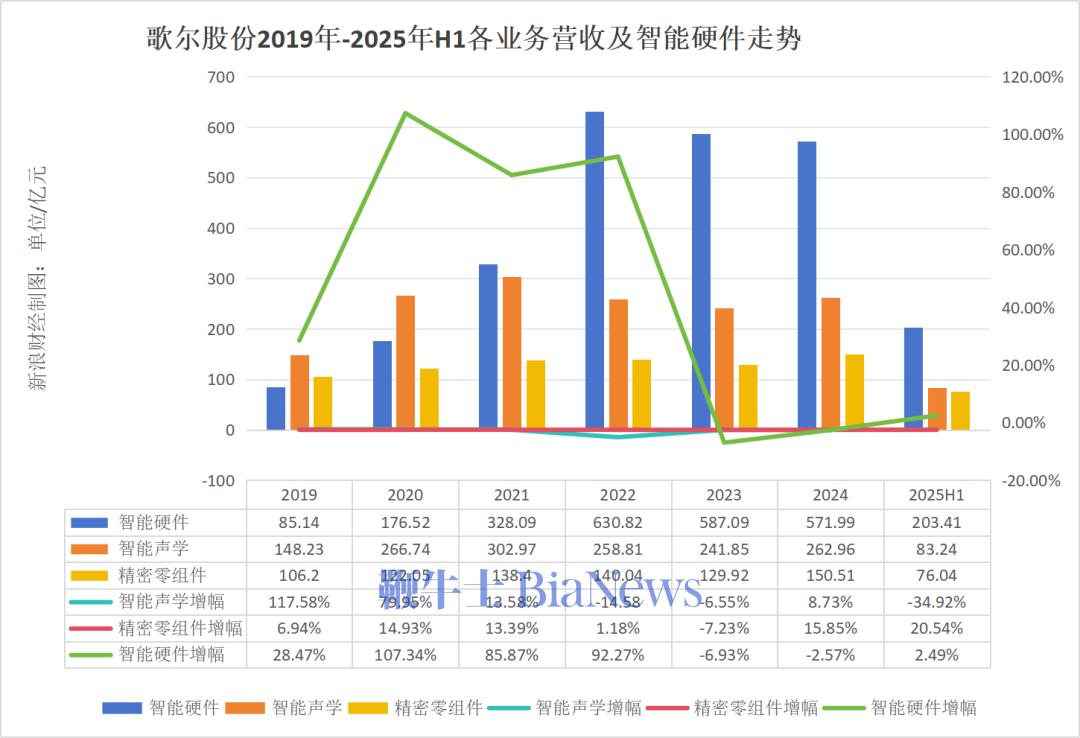
Core Viewpoint - Meta's adjustment in its metaverse business has significantly impacted its Chinese partner, GoerTek, leading to substantial financial losses and workforce reductions [1][2][4]. Group 1: Impact of Meta's Decision - Meta's decision to cut resources in its metaverse division may result in GoerTek facing losses exceeding 10 billion yuan [1][4]. - GoerTek's Alpha Labs, a core R&D center, has seen budget cuts across all departments, with layoffs expected to be between 30% and 50% in various centers [2][4]. - Employees have confirmed that the layoffs are directly related to Meta's order reductions, with some departments experiencing varying levels of impact [2][4]. Group 2: Financial Performance and Business Segments - GoerTek's main business segments include precision components, smart acoustic products, and smart hardware, with the latter accounting for 60% of overall revenue [5][7]. - The smart hardware segment, which includes VR, MR, and AR products, experienced a significant revenue growth of 107.34% in 2020, but has since seen a decline, with a drop of 6.93% in 2023 [7][8]. - The company's overseas revenue growth has also slowed down, reflecting the overall decline in the smart hardware business [8]. Group 3: R&D Investments and Market Position - Over the past five years, GoerTek has invested 24.5 billion yuan in R&D, focusing on various innovative platforms, which has led to a significant market share in MR headsets and AI smart glasses [8]. - Despite substantial investments, the changing attitudes of major tech companies like Apple and Meta towards MR and the metaverse may hinder the expected returns on these investments [8].


徕卡又要出售了,中资买下百年可乐标?
Xin Lang Ke Ji· 2026-01-26 01:20
Core Viewpoint - Leica Camera, a century-old iconic brand, is considering a sale of its controlling stake, with an estimated valuation of approximately €10-12 billion ($12-15 billion) [1] Group 1: Company Background - Leica's origins trace back to 1849 when Carl Kellner founded the "Optical Institute" in Germany, which later evolved into the Leica brand [3] - The brand has become synonymous with documentary photography, having been used by renowned photographers throughout the 20th century [5] - Leica has undergone significant transformations, including a near bankruptcy in the digital age, before being rescued by Andreas Kaufmann in 2004 [8] Group 2: Ownership and Financials - The current ownership structure consists of ACM holding 55% and Blackstone holding 45% of Leica [8] - Blackstone's investment in 2011 valued Leica at approximately €278 million, and the firm has since helped elevate Leica into a luxury brand [9][12] - Leica's revenue has seen consistent growth, increasing from €450 million to €596 million over the past four fiscal years, despite a slowdown in growth rate [11][12] Group 3: Strategic Partnerships - Leica has established significant partnerships with Chinese tech giants Huawei and Xiaomi, which have contributed to its revenue growth in the mobile imaging sector [10][18] - The collaboration with Huawei, which began in 2016, significantly boosted Leica's brand exposure and revenue, although it ended in 2022 due to Huawei's market challenges [16][18] - The partnership with Xiaomi, initiated in 2022, aims to enhance Xiaomi's brand positioning in the high-end market, providing Leica with stable returns [19][20] Group 4: Potential Buyers and Market Implications - Potential buyers for Leica include Chinese private equity firm HSG, Nordic private equity fund Altor Equity, and German optics giant Zeiss [1][20] - A successful acquisition by HSG could further enhance Leica's growth in the Chinese market, which has seen a 25% increase in sales [20] - The sale process is being managed by Morgan Stanley, and the outcome will depend on both the bidding price and regulatory considerations [10][21]

周鸿祎称今年会出现100亿个智能体,百亿级公司在AI领域都算小公司
Xin Lang Ke Ji· 2026-01-24 04:34
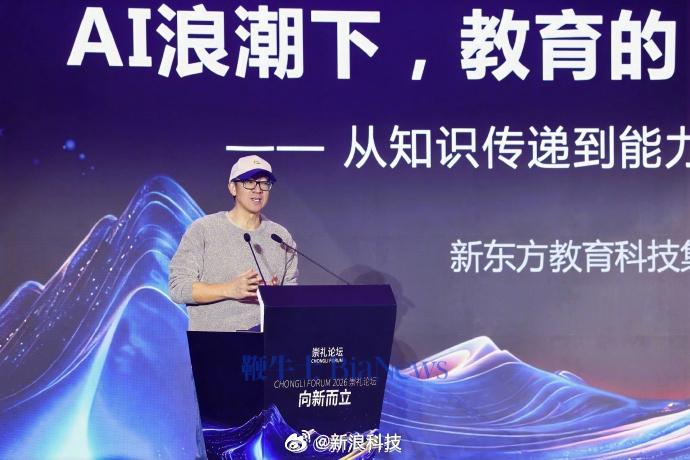
崇礼论坛 CHONGLI FORUM CHONGLI FORUM 2026 崇礼论坛 向新而立 6 @新浪科技 他谈到,"我觉得2024年、2025年大家犯了一个错误,就是把训练算力和推理算力混为一谈。实际上训 练算力需求非常大,但那是少数大公司的专享,对绝大多数普通人、普通公司来说,需要的是推理算 力。你跟大模型聊天,就算每天话痨聊2万字,每个月也就消耗几万个token,但如果真让智能体帮你做 一部短剧、在业务里给别人上一堂课,可能需要的算力投入就是百万级别甚至千万级别。" 周鸿祎还表示,中国的开源生态不仅在中国,在全世界都促进了智能体的繁荣发展,比如现在东盟国家 都在使用中国的开源模型构建他们国家的相关系统。未来很多国家都会担忧一个问题:人工智能竞争只 有中美两个玩家,那些没机会参与的国家,可能会沦为"餐桌上的食物"。(新浪科技) 今日,在2026崇礼论坛上,360集团创始人周鸿祎表示:"我觉得2026年,不说中国,全世界至少会出现 100亿个智能体,百亿级公司在AI领域都算小公司了。为什么这么说?因为大模型本身还在不断进化, 之前大模型基本就是聊天机器人的状态,干不了实际的活,只有升级成智能体,才能真正 ...

俞敏洪回应有人骂老登:但我觉得自己够不上
Xin Lang Ke Ji· 2026-01-24 03:16
Group 1 - The core viewpoint of the article highlights the expansion of New Oriental's focus to include the elderly demographic through the establishment of a retirement club [1] - New Oriental's founder, Yu Minhong, acknowledges the generational gap in knowledge, particularly regarding technology and artificial intelligence, emphasizing the importance of learning from the younger generation [1] - The statement reflects a broader trend in the industry where educational services are adapting to cater to all age groups, including seniors [1]

贝佐斯发大招了,马斯克星链霸主不保?
Xin Lang Ke Ji· 2026-01-23 01:17
Core Insights - The article discusses the contrasting work ethics and business strategies of Elon Musk and Jeff Bezos, highlighting Musk's intense work schedule compared to Bezos's semi-retirement and leisure lifestyle [1] - Bezos's company Blue Origin announced an ambitious satellite network plan, TeraWave, which aims to deploy 5,408 satellites to provide high-speed data transmission, significantly surpassing SpaceX's Starlink [3][4] - The competition between Musk and Bezos in the space industry is evolving, with both now seen as allies in promoting space exploration despite their historical rivalry [3][27] Company Strategies - TeraWave will deploy 5,408 satellites, including 5,280 low Earth orbit satellites and 128 medium Earth orbit satellites, using a dual-orbit design to achieve data transmission speeds of up to 6 Tbps [4][6] - In contrast, Starlink currently has over 9,400 satellites in orbit, with plans to expand to between 12,000 and 50,000 satellites, primarily targeting the consumer market with speeds of 100-200 Mbps [4][7] - TeraWave is specifically targeting enterprise clients, data centers, and government customers, while Starlink focuses on a mass-market approach, aiming to serve millions of ordinary users [6][7] Market Positioning - Blue Origin's TeraWave is positioned in the high-end market, emphasizing quality and specialized services for businesses, while SpaceX's Starlink is designed for mass accessibility and rapid deployment [9][11] - Amazon's satellite project, Amazon Leo, is also in development, targeting consumer and enterprise broadband services, which positions it as a direct competitor to Starlink [11][12] - The dual strategy of Blue Origin with TeraWave and Amazon Leo allows Bezos to avoid direct competition with Musk in the consumer market while still challenging Starlink in different segments [11][12] Historical Context - The rivalry between Musk and Bezos dates back to their early ventures in space exploration, with notable tensions arising from competitive bids and differing visions for the future of space [13][21] - Their relationship has evolved from direct competition to a more collaborative stance, particularly in light of shared political interests and mutual respect for each other's technological advancements [24][26] Industry Implications - The satellite internet market is becoming increasingly competitive, with geopolitical implications as various countries, including China and the EU, accelerate their own satellite projects [28] - Concerns about space debris and the environmental impact of satellite proliferation are growing, as the number of satellites in orbit increases significantly [30][31] - The lack of effective regulation in the satellite internet sector poses risks for future developments, potentially leading to overcrowded orbits and interference with astronomical observations [31]


沃尔沃搞「双标」?EX30因电池隐患全球召回,中国除外!
Xin Lang Ke Ji· 2026-01-22 00:24
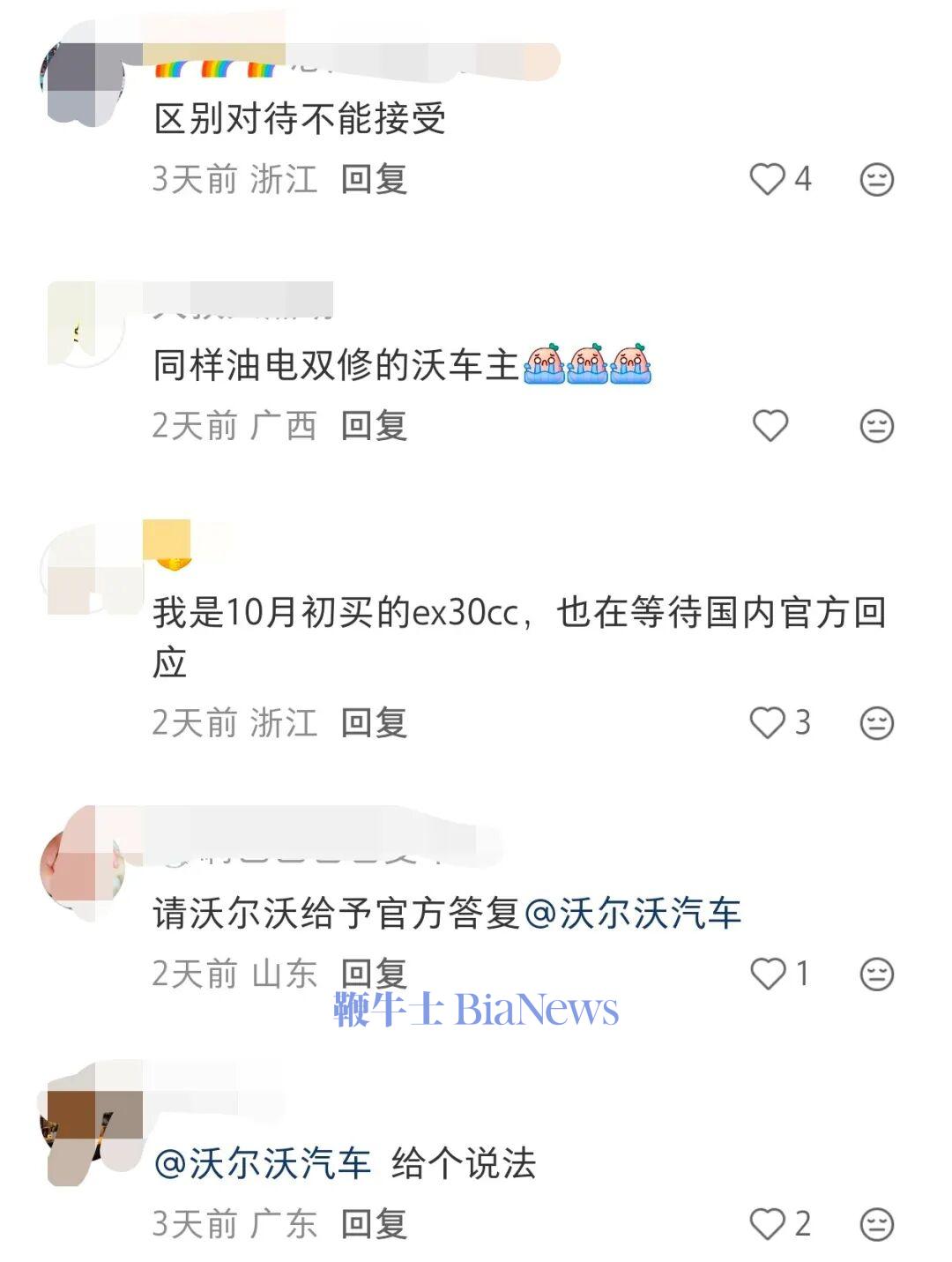
Core Viewpoint - Volvo is facing significant backlash due to safety concerns related to the battery supplier, CATL, which has led to a global recall of the EX30 model, while Chinese customers feel neglected as no recall has been announced for the domestic market [1][2][6][18]. Recall and Safety Concerns - Volvo has initiated a recall for the EX30 model globally, specifically for vehicles produced between September 6, 2024, and October 25, 2025, due to fire risks associated with CATL batteries [1][2]. - The recall affects multiple countries, including the United States (40 vehicles), Australia (2,815 vehicles), and the UK (10,440 vehicles) [1]. - In response to the fire incidents, Volvo has advised owners to limit battery charging to 70% until a comprehensive recall plan is established [2]. Customer Sentiment and Response - Domestic Volvo EX30 owners are expressing dissatisfaction over the lack of communication and action regarding the recall, feeling that they are being treated differently compared to international customers [3][5][6]. - Social media platforms have seen a surge of complaints from EX30 owners demanding explanations from Volvo regarding the perceived disparity in treatment [6][8]. Sales and Market Performance - Volvo is experiencing significant sales pressure in the Chinese market, with a reported 4% decline in overall sales for 2025, totaling 149,549 units [12]. - The sales of fully electric models have plummeted by 46%, indicating a broader trend of declining demand for Volvo's electric vehicles [12]. - In an effort to boost sales, several Volvo models are being offered at steep discounts, with some vehicles being sold at nearly half their original price [9][11][20]. Corporate Statements and Strategy - Volvo's leadership has previously emphasized a commitment to safety and quality, stating that the company would not compromise on these values for short-term market gains [17]. - However, the current situation with the EX30 recalls and aggressive discounting raises questions about the company's adherence to these principles [18][20].
被指“双标” 沃尔沃EX30因电池隐患全球召回:中国除外
Xin Lang Ke Ji· 2026-01-22 00:21
Core Viewpoint - Volvo is facing criticism over battery safety issues related to its EX30 model, which uses batteries from the supplier, CATL. The company has initiated recalls in several countries but has not yet addressed the concerns of Chinese customers, leading to allegations of differential treatment [1][3][4]. Group 1: Recall Information - Volvo has launched a global recall for the EX30 model due to fire risks associated with CATL batteries, affecting vehicles produced between September 6, 2024, and October 25, 2025 [3]. - The recall includes 40 vehicles in the United States, 2,815 in Australia, and 10,440 in the UK, among others [3]. - A fire incident involving a Volvo EX30 occurred in Brazil, prompting the recall and safety warnings for owners to limit battery charging to 70% until a full recall plan is established [3][4]. Group 2: Customer Concerns - Chinese EX30 owners are expressing dissatisfaction over the lack of recall information in China, feeling neglected compared to international customers [4][6]. - Social media discussions among Volvo EX30 owners indicate a strong demand for official responses from the company regarding the perceived differential treatment [6][8]. Group 3: Sales and Pricing Pressure - Volvo is experiencing significant sales pressure in China, with a reported 4% decline in overall sales for 2025, totaling 149,549 units [10]. - The company has resorted to heavy discounts on multiple models, with some vehicles being offered at nearly 50% off their original prices, indicating a struggle to maintain market share [8][9]. - The decline in sales is attributed to a 46% drop in fully electric vehicle sales and a 13% decrease in fuel vehicle sales, despite a rise in hybrid model sales [10]. Group 4: Corporate Statements and Credibility - Volvo's senior executives have previously stated that the company would not compromise on safety and quality to gain market share, yet the current situation raises questions about the credibility of these claims [11][13]. - The ongoing battery safety issues and aggressive pricing strategies suggest a potential disconnect between corporate messaging and operational realities [14].
开年价格战重现:汽车公司从最难的第一季度开始更难的一年
Xin Lang Ke Ji· 2026-01-22 00:03
Core Viewpoint - The automotive industry in China is facing a significant shift in 2026, with predictions of a price war initiated earlier than expected, influenced by changes in subsidy policies and market dynamics [2][3]. Group 1: Market Predictions - The China Passenger Car Association (CPCA) forecasts that domestic car sales in Q1 2026 may remain flat year-on-year but could drop by 25% compared to Q4 2025, with overall annual sales expected to show zero or minimal growth [2]. - Morgan Stanley predicts a substantial decline in Q1 2026 sales by 30%-35% due to reduced purchase tax subsidies, with an annual decrease of 5% anticipated, potentially reaching 7% without considering export sales [2]. - UBS shares a similar outlook, projecting a 2% decline in annual car sales, with export growth slowing from 28% in 2025 to 15% [3]. Group 2: Policy Changes - The National Development and Reform Commission and the Ministry of Finance have yet to announce the continuation of "two new" subsidies for 2026, with significant changes expected in the subsidy structure for new energy vehicles (NEVs) [3]. - The new policy will halve the purchase tax for NEVs, increasing costs for consumers, while the subsidy for new cars will be more detailed and based on vehicle price, with a maximum of 20,000 yuan [3]. Group 3: Industry Sentiment - Industry executives express cautious optimism regarding their companies' growth, with many expecting double-digit growth driven by overseas market expansion, despite a general conservative outlook on overall market growth [7]. - The total sales target for nine major automakers in 2026 is set at 18.339 million units, surpassing the actual sales of 3.86 million units in 2025 [7]. - New energy vehicle manufacturers have aggressive growth targets, with some aiming for increases of 70%-121%, while traditional automakers maintain more conservative targets [9]. Group 4: Price War Dynamics - A price war has already begun, with companies like BMW and Tesla implementing significant price cuts and financing options to stimulate demand ahead of the anticipated subsidy changes [10][13]. - Over 20 automakers have introduced purchase tax guarantees to attract customers, but initial sales data for January 2026 indicate a decline in demand compared to previous months [10][11]. - The adjustment of subsidy policies has raised the entry barriers for consumers, particularly affecting lower-priced vehicles, which may suppress demand in that segment [11]. Group 5: Competitive Landscape - The competition in the high-end market is expected to intensify, with new energy vehicles priced above 300,000 yuan becoming more competitive due to favorable subsidy policies [13]. - Companies like NIO, Xiaomi, and Xpeng are preparing to launch multiple new models in 2026, indicating a strategic focus on high-end segments [13].
美团共享充电宝1月起带快充2.0与3C认证
Xin Lang Ke Ji· 2026-01-21 12:08
Core Viewpoint - Starting from January 1, 2026, Meituan's shared power banks will be upgraded to Super Fast Charge 2.0 and have received 3C certification along with multiple international compliance certifications from Japan and the EU [1] Group 1 - Meituan has integrated shared power bank benefits into its membership system, allowing users with a Black Gold membership to enjoy 2 hours of shared power bank service per month [1] - Users with a Black Diamond membership can enjoy 4 hours of shared power bank service per month [1]
