Bei Ke Cai Jing

Search documents
终止港股IPO,盛新锂能转身拟32亿定增“补血”还牵手两巨头
Bei Ke Cai Jing· 2025-11-04 09:46
Core Viewpoint - Shengxin Lithium Energy has abandoned its plan for a Hong Kong IPO after over a year of preparation, citing strategic adjustments and a focus on domestic fundraising to alleviate short-term debt risks [4][11]. Group 1: Company Overview - Shengxin Lithium Energy operates primarily in the upstream and midstream segments of the lithium battery industry, with significant exposure to price fluctuations [2][5]. - The company has established lithium salt production capacity of 137,000 tons per year and lithium metal production capacity of 500 tons per year, serving various applications including lithium-ion batteries and energy storage [4]. Group 2: Financial Performance - The company has faced continuous losses, with a reported loss exceeding 600 million yuan in 2024, and a total loss of 752 million yuan in the first three quarters of the year [5][6]. - Shengxin Lithium Energy's asset-liability ratio has reached a recent high, surpassing 50% for the first time in fourteen years, which is above the median of 43.39% for its industry peers [6]. Group 3: Fundraising and Strategic Partnerships - Concurrently with the abandonment of the Hong Kong listing, Shengxin Lithium Energy announced a 3.2 billion yuan private placement aimed at strategic investors, including Zhongchuang Innovation and Huayou Cobalt Group, to enhance its lithium battery supply chain [3][10]. - The funds raised will be used entirely for replenishing working capital and repaying debts, indicating a focus on financial stability [8][10]. Group 4: Market Context and Strategic Shift - The decision to withdraw from the Hong Kong IPO reflects a more cautious approach to global expansion, as the company aims to strengthen its domestic operations before pursuing international opportunities [11]. - The recent trend of lithium battery companies seeking secondary listings in Hong Kong highlights the industry's shift towards global expansion, with Shengxin Lithium Energy initially planning to leverage this trend for international financing and brand enhancement [4][11].

前三季度净利润暴跌、孙公司股权遭冻结,皓宸医疗如何破局?
Bei Ke Cai Jing· 2025-11-04 09:35
Core Viewpoint - Haocen Medical Technology Co., Ltd. has reported a significant decline in revenue and a drastic drop in net profit, alongside a court-ordered freeze on the equity of its key subsidiary, Delun Medical [1][2][6]. Financial Performance - For the first three quarters of 2025, Haocen Medical achieved a revenue of 527 million yuan, a year-on-year decrease of 17.0%, and a net loss attributable to shareholders of 26.41 million yuan, a decline of 295.7% [2][5]. - In Q3 2025, the company reported a revenue of 213 million yuan, down 15.7% year-on-year, and a net loss of 2.66 million yuan, a decrease of 120.5% [2]. Revenue Breakdown - The core issue behind the performance decline is attributed to the drop in the oral medical service segment, which constitutes 91.98% of total revenue. This segment saw a revenue decline of 17.39% in the first half of 2025 [3]. Legal and Asset Issues - The 51% equity stake in Delun Medical, a key subsidiary, has been frozen by the court due to a creditor's revocation dispute, with the freeze lasting for two years [6][8]. - The legal dispute stems from a loan agreement with Wenzhou Bank, where the creditor claims that the transfer of equity to another subsidiary adversely affected their ability to recover the debt [7][8]. Attempts at Financial Recovery - Haocen Medical has attempted various self-rescue measures, including asset auctions and loan applications, but these efforts have not yielded positive results [9]. - The company is currently seeking to negotiate debt resolution strategies with creditors, including debt reduction and restructuring, but has not made substantial progress [9].

剥离非核心业务,派格生物解散旗下研发附属公司
Bei Ke Cai Jing· 2025-11-04 09:35
Core Insights - The company, PegBio, announced the voluntary dissolution of its non-wholly owned subsidiary, Shanghai Maiji Biotechnology Co., Ltd., to focus on its core business and streamline operations [1] - This strategic move is seen as a response to intensified industry competition and internal development pressures, aiming to divest non-core assets and concentrate on key product pipelines [1] - PegBio's core product, PB-119, is a GLP-1 receptor agonist targeting Type 2 Diabetes Mellitus (T2DM) and obesity, with its new drug application accepted by the National Medical Products Administration in September 2023 [2][3] Company Overview - PegBio was established in 2008 and specializes in innovative therapies for chronic diseases, particularly in the metabolic disorder field [1] - The company currently has six candidate products targeting various diseases, including T2DM, non-alcoholic fatty liver disease, obesity, Alzheimer's disease, opioid-induced constipation, and congenital hyperinsulinemia [1] - PegBio went public on the Hong Kong Stock Exchange in May 2023 after a previous unsuccessful attempt to list on the STAR Market in 2022 [2] Financial Performance - PegBio reported losses of CNY 279 million, CNY 283 million, and CNY 93.62 million for the years 2023, 2024, and the first half of 2025, respectively [2] - The company's future business and financial outlook heavily depend on the successful approval and commercialization of PB-119 [3] Market Competition - The market for T2DM and obesity treatments is highly competitive, with numerous GLP-1 based therapies available in China and the U.S. [3] - As of February 28, 2025, 16 GLP-1 receptor agonists have been approved in China, with over 20 candidates undergoing clinical trials for T2DM treatment [3]
国电南瑞:已回购2094.75万股,使用资金4.62亿元
Bei Ke Cai Jing· 2025-11-04 09:33
Group 1 - The company Guodian NARI announced a share repurchase plan, intending to buy back a total of 20.9475 million shares, which represents 0.261% of its total share capital [1] - The repurchase will be conducted through centralized bidding transactions, with a price range set between 21.71 yuan per share and 22.31 yuan per share [1] - The total funds allocated for this repurchase amount to approximately 462 million yuan, excluding transaction fees [1]

中国中铁:累计回购699.86万股公司股份
Bei Ke Cai Jing· 2025-11-04 09:29
Group 1 - The core point of the article is that China Railway announced a share buyback plan, having repurchased a total of 6.9986 million shares by October 31, 2025, which accounts for 0.0283% of the company's total share capital [1] - The highest transaction price during the buyback was 5.75 yuan per share, while the lowest was 5.63 yuan per share [1] - The total amount spent on the share buyback reached 39.9993 million yuan, excluding transaction fees [1]
福耀玻璃法定代表人变更,曹德旺卸任曹晖接任
Bei Ke Cai Jing· 2025-11-04 09:27
Core Viewpoint - Fuyao Glass has completed the registration process for a change in its legal representative, with the position now held by Cao Hui instead of Cao Dewang [1] Group 1 - The company has obtained a new business license from the Fuzhou Market Supervision Administration reflecting this change [1] - Other registered details on the business license remain unchanged [1]

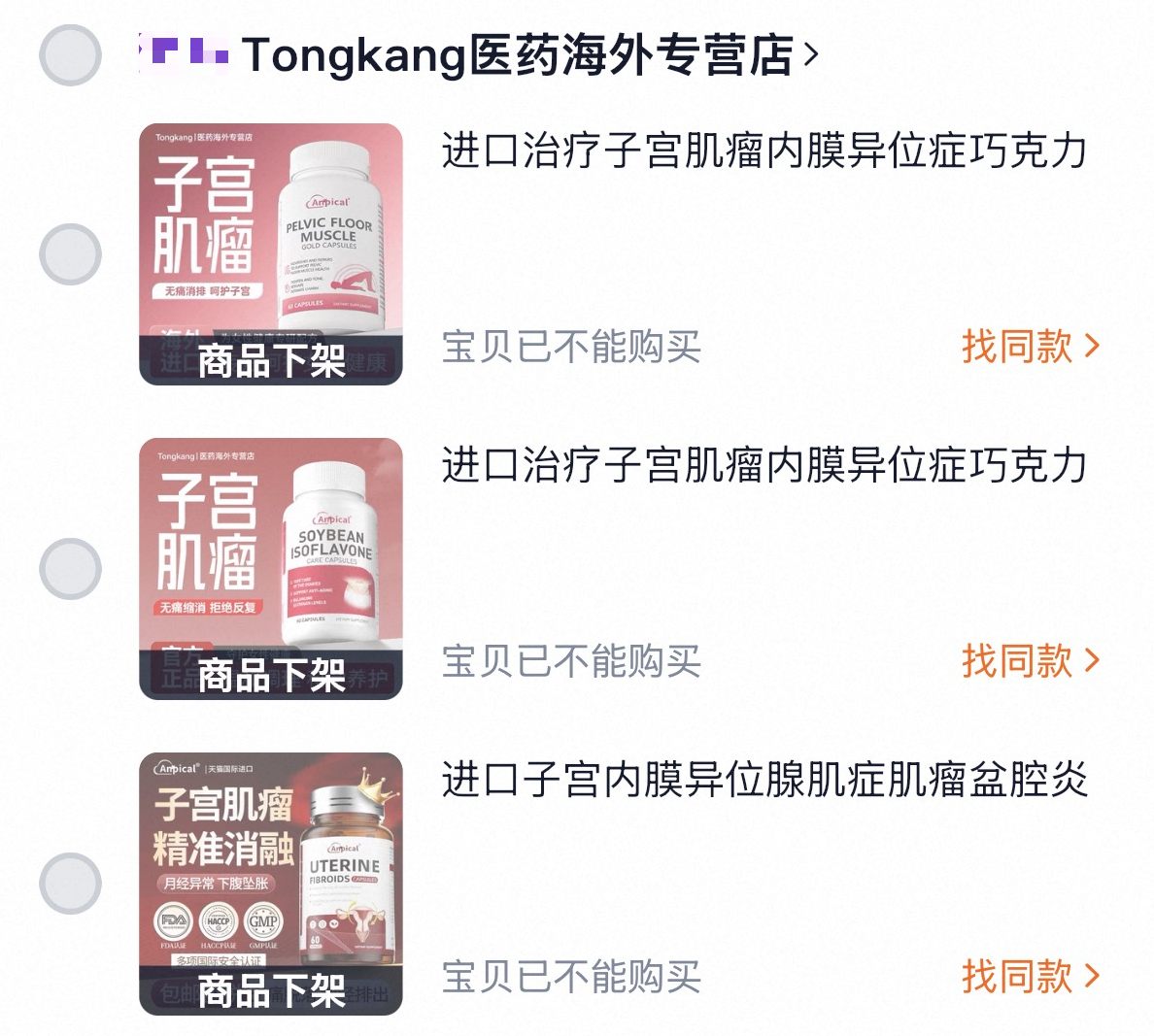
“消瘤”调查报道追踪:多款产品下架,有产品宣传依然“露骨”
Bei Ke Cai Jing· 2025-11-04 06:41
Core Viewpoint - The article highlights the ongoing issue of false advertising in the sale of health products, particularly those claiming to treat uterine fibroids, and the inadequate regulatory response to these practices [1][20][22]. Group 1: Product Changes and Regulatory Response - Following the publication of a consumer quality report, several products claiming to treat uterine fibroids have been taken down or had their promotional content altered, yet many other products with misleading claims remain available [2][15]. - Specific products, such as the "Anpical Uterine Fibroids capsules," have had their claims modified to remove references to fibroids, while still being sold under different descriptions [3][8]. - The market regulation authorities have intensified efforts to combat false advertising, with significant penalties imposed on violators, including a total of 6,876.91 million yuan in fines since the start of the year [22]. Group 2: Expert Opinions and Recommendations - Experts emphasize the need for a robust credit punishment mechanism to deter businesses from engaging in false advertising, suggesting that violators should be included in a social credit system [1][20]. - There is a call for improved regulatory frameworks to better define and penalize false advertising, as well as for platforms to enhance their vetting processes for sellers [21][22]. - The article notes that consumer awareness and ability to identify false claims are crucial in combating misleading advertisements, with recommendations for consumers to retain evidence of promotional materials [20][21].
一个月连遭两起食安事件,门店增速放缓,锅圈食汇怎么了?
Bei Ke Cai Jing· 2025-11-04 06:41
Core Viewpoint - The company, Guoquan Shihui, known as the "Mi Xue Bing Cheng of hot pot ingredients," is facing significant food safety issues, including complaints about foreign objects in their products, which could impact their brand reputation and growth potential [1][2][5]. Group 1: Food Safety Issues - Recent complaints have surfaced regarding food safety, including the discovery of a cigarette butt in a dried mushroom product and a fly in a beef tripe package [2][3]. - Consumers have reported various issues on complaint platforms, such as expired products and foreign objects in food items, raising concerns about the company's quality control [2][3][4]. Group 2: Business Growth and Challenges - Guoquan Shihui has rapidly expanded its store count, reaching over 10,000 locations within six years, primarily through a franchise model [3][4]. - The franchise model, while effective for rapid growth, has led to increased management challenges, including inconsistent product quality and service levels across locations [5][6]. Group 3: Market Competition - The hot pot industry is becoming increasingly competitive, with established players like Haidilao and Xiaobawang lowering their average customer spending [6][7]. - Guoquan Shihui faces competition not only from traditional hot pot restaurants but also from online grocery platforms, which could further pressure its market position [6][7]. Group 4: Product Strategy and Market Position - Experts suggest that Guoquan Shihui needs to optimize its product structure and may need to explore international markets or develop a second brand to sustain growth [6][7]. - The company is perceived as a typical pre-prepared food business, and as consumer expectations rise, it must ensure its products meet safety and quality standards [7][8].
在京湘菜馆接近5000家,北京湘菜名企消费促进周启动
Bei Ke Cai Jing· 2025-11-04 06:41
Core Insights - The "New Quality Hunan Cuisine: Taste of China" event was held, highlighting the growth and promotion of Hunan cuisine, with over 120,000 Hunan restaurants nationwide and nearly 5,000 in Beijing, generating an annual output value exceeding 40 billion yuan [1][2] - The Hunan cuisine industry chain has surpassed an annual output value of 600 billion yuan, ranking high among national cuisines in market share [1][2] - Hunan cuisine has become a focal point in the Chinese dining sector, with a market size growth of approximately 8.9% year-on-year in 2024, outpacing the overall growth of Chinese dining at 5.8% [2] Industry Overview - The number of Hunan restaurants has been increasing annually, with a notable rise in popularity for dishes like spicy stir-fried pork, which have become staples in various restaurant menus [2] - Hunan cuisine's market share in Chinese dining has steadily increased from 9.1% in 2018 to 10.2% in 2023, indicating a growing acceptance and demand for this cuisine [2] - Several Hunan cuisine brands are expanding beyond Hunan, opening stores in major urban centers, with Fei Dazhu having over 200 direct-operated stores nationwide and plans for further openings [2] Competitive Landscape - The increase in Hunan restaurants has led to intensified competition, particularly in cities like Beijing, where multiple popular brands are competing closely [2] - Industry experts anticipate a "price war" among Hunan cuisine brands due to heightened competition, emphasizing the need for innovation in dishes and refined operational strategies to stand out [2]
康佳集团中年“减肥”有焦虑,华润接盘能否“增肌”
Bei Ke Cai Jing· 2025-11-04 04:23
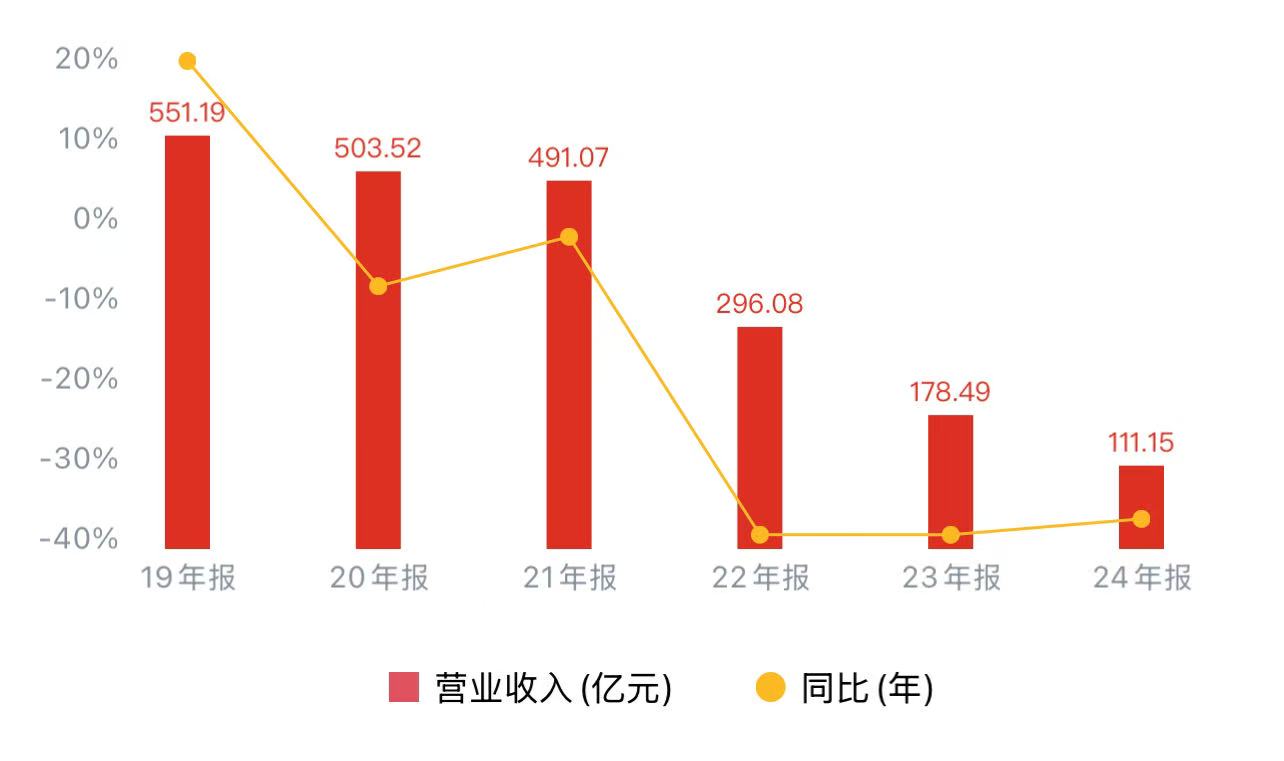
Core Viewpoint - Konka Group, once a flagship in China's home appliance industry, is currently facing significant challenges, with losses expected to continue despite a slight narrowing of losses in the first three quarters of 2025 [1][5]. Financial Performance - In the first three quarters of 2025, Konka Group reported revenue of 7.679 billion yuan, a year-on-year decrease of 5.43%, and a net loss attributable to shareholders of 982 million yuan, narrowing by 38.89% compared to the previous year [5]. - However, in the third quarter of 2025, the company experienced a revenue drop to 2.431 billion yuan, down 10.19% year-on-year, with a net loss of 598 million yuan, which is an increase in losses compared to 518 million yuan in the same period last year [6]. Historical Context - Konka Group's revenue has plummeted from over 55.1 billion yuan in 2019 to around 11.1 billion yuan in 2024, indicating a significant decline in its operational scale [2][8]. - The company's previous revenue was inflated by low-margin trading businesses, which accounted for nearly 60% of its revenue in 2019, but this segment has seen declining profitability [8][10]. Strategic Moves - In an effort to revitalize its business, Konka has pursued a diversification strategy, including acquisitions and investments in sectors like artificial intelligence, energy storage, and semiconductors, but many of these initiatives have not yielded positive results [3][12][17]. - The company underwent a significant change in ownership in 2025, with the controlling shareholder shifting from Overseas Chinese Town Group to China Resources Group, which is seen as a critical opportunity for survival and strategic realignment [4][18]. Future Outlook - The new ownership by China Resources Group is expected to provide Konka with resources and support to enhance its strategic direction and operational capabilities [23][24]. - Analysts suggest that while the change in control offers potential for recovery, significant challenges remain, particularly in improving core business profitability and effectively integrating new resources [11][24].