
Tai Mei Ti A P P

Search documents
茂业商业五连板巨震:游资击鼓传花,大股东峰顶减持,谁是最后一棒?
Tai Mei Ti A P P· 2025-12-02 13:56
Core Viewpoint - The recent surge in the stock price of Maoye Commercial (600828.SH) has been accompanied by significant insider selling, raising concerns about valuation risks and the sustainability of its financial performance [2][8]. Stock Performance and Trading Activity - Maoye Commercial's stock price increased over 40% in five consecutive days, reaching a new high before the announcement of a share reduction by its controlling shareholder [2]. - On December 1, a large sell-off occurred with 224,300 shares being dumped, leading to a price drop of 3.41% after hitting a five-day limit-up [3]. - The trading volume on December 1 reached a historical high of 1.358 billion yuan, with a turnover rate of 90%, indicating extreme volatility and a rapid change in ownership of shares [5][7]. Shareholder Actions - The controlling shareholder's action involved reducing holdings by 25.1135 million shares, amounting to approximately 161 million yuan, which represents 1.45% of the total share capital [7]. - The average selling price was around 6.40 yuan per share, and the shareholding of Maoye International decreased from 86.45% to 85% post-reduction [7]. Financial Performance and Valuation - Maoye Commercial reported a 73% decline in net profit for the first three quarters, with a dynamic P/E ratio soaring to 304.46, significantly above the industry average of 49.33 [8]. - Revenue for 2024 is projected at 6.52 billion yuan, reflecting a 5.3% year-on-year decline, while net profit is expected to drop by 26.63% [8]. - The company has a high debt burden, with interest expenses reaching 211 million yuan in the first three quarters and an asset-liability ratio of 58% [10]. Operational Challenges - Despite investing over 200 million yuan in digital transformation, online business revenue remains below 5%, indicating limited success in this area [10]. - The company’s cash flow situation is precarious, with a cash balance of 207 million yuan and an average monthly cash outflow of 352 million yuan, leading to a significant operational funding gap [11].


9折“卖子”,金种子酒“弃药从酒”落地,主业突围仍艰难
Tai Mei Ti A P P· 2025-12-02 13:03
Core Viewpoint - The divestiture of Anhui Jintai Pharmaceutical Co., Ltd. by Jinzhongzi Liquor marks a strategic shift to focus on its core liquor business and alleviate financial pressure, although the effectiveness of this move in reversing the company's ongoing losses remains uncertain [2][4]. Summary by Sections Asset Divestiture - Jinzhongzi Liquor has completed the divestiture of its pharmaceutical business, which has been in progress since April 2024, when it announced the intention to publicly transfer 92% of its stake in Jintai Pharmaceutical [2][3]. - The stake was initially listed at an assessed value of 140 million yuan but was sold for 126 million yuan after a 10% price reduction due to a lack of qualified buyers, indicating a "fire sale" approach [2][3]. - Jintai Pharmaceutical, established in 2000, reported revenues of 161 million yuan and a net profit of 6.19 million yuan in 2024, with a net asset value of 130 million yuan as of September 2025, making the sale price close to its book value [3]. Financial Performance and Challenges - Jinzhongzi Liquor has faced significant financial difficulties, being the only loss-making company among four listed liquor firms in Anhui, with cumulative losses exceeding 600 million yuan from 2021 to 2024 [4]. - In Q3 2025, the company reported a revenue of 144 million yuan, a year-on-year increase of 3.73%, but still incurred a net loss of 28.3 million yuan, indicating that cost-cutting rather than revenue growth was the primary driver of this improvement [4]. - The company has a total interest-bearing debt of 375 million yuan, surpassing its cash reserves, and has experienced negative operating cash flow, with cumulative outflows exceeding 1.2 billion yuan [4]. Strategic Focus and Management Issues - Despite efforts to streamline its product line and focus on high-end liquor, the company has struggled, with high-end liquor sales only increasing by 7.33%, while mid-range and low-end liquor revenues declined by 24% and 23.83%, respectively [4][5]. - Frequent changes in the management team, including the resignation of key executives, have raised concerns about strategic continuity and the integration of new management from shareholder China Resources Group [5].


英伟达开源最新VLA,能否破局L4自动驾驶?
Tai Mei Ti A P P· 2025-12-02 13:01
Core Insights - NVIDIA has officially open-sourced its latest autonomous driving Vision-Language-Action (VLA) model, Alpamayo-R1, which can process vehicle camera images and text instructions to output driving decisions [2][3] - The Alpamayo-R1 model emphasizes "explainability," providing reasons for its decisions, which aids in safety validation and regulatory review [3][4] - The VLA model is seen as the next core technology in intelligent driving, with various companies, including Li Auto, Xpeng Motors, and Great Wall Motors, already implementing it in production [3][4] Group 1: Model Features and Benefits - Traditional end-to-end models are often "black boxes," making them difficult to interpret, especially in complex scenarios [4] - VLA introduces a language modality as an intermediary layer, enhancing the model's ability to handle complex situations and providing a more human-like decision-making process [4][5] - The Alpamayo-R1 model has shown significant performance improvements, including a 12% enhancement in trajectory planning performance and a 25% reduction in near-collision rates [5][6] Group 2: Industry Impact and Ecosystem Development - NVIDIA aims to position itself as the "Android" of the autonomous driving sector, moving beyond being just a hardware supplier [6][8] - The company has announced plans to deploy 100,000 Robotaxis starting in 2027, collaborating with firms like Uber and Mercedes to create the world's largest L4 autonomous driving fleet [7][8] - The open ecosystem proposed by NVIDIA could facilitate data sharing among companies, potentially accelerating technological advancements in the industry [8][9] Group 3: Challenges and Future Considerations - Despite the advancements, the Alpamayo-R1 model requires high-performance hardware to meet automotive-grade latency, indicating a dependency on NVIDIA's hardware solutions [10][11] - The effectiveness of VLA technology is still under evaluation, and there are concerns about the limitations imposed by NVIDIA's platform on developers [11][12] - The successful commercialization of L4 autonomous driving will also depend on regulatory frameworks and the ability to balance data privacy with operational safety [11][12]


夸克S1眼镜硬件普通,阿里的发力方向存疑
Tai Mei Ti A P P· 2025-12-02 11:45
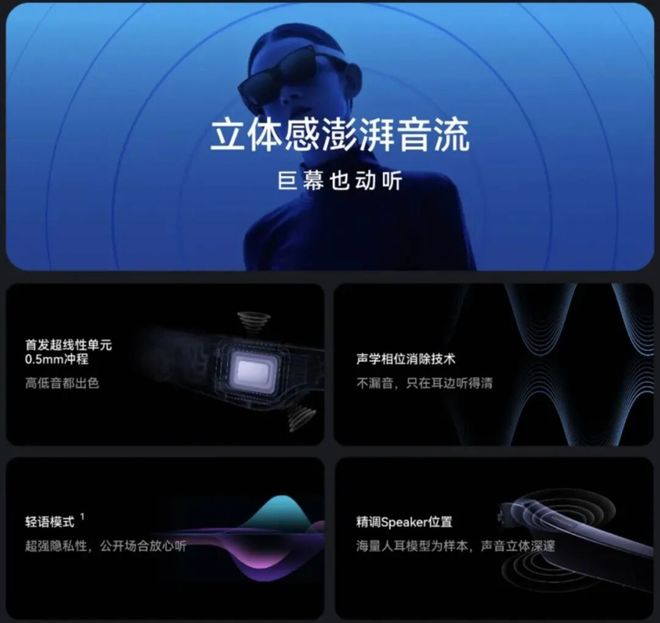
Core Insights - The article emphasizes that while China has a wealth of industrial standard products, it lacks original innovations that can rapidly penetrate technology and scenarios [1] - Major Chinese tech companies like BAT have ample cash flow and resources, unlike struggling AR startups, allowing them to build ecosystems and attract developers [1] Product Innovation - The significance of AI glasses is highlighted as a revolutionary device for human-computer interaction, capable of capturing over 80% of human sensory input, which smartphones cannot achieve [2] - However, the actual innovations presented in the product are largely based on existing ODM technologies, lacking true originality [3][5] - The only notable innovation mentioned is the "adjustable focal distance technology," which allows for variable virtual imaging distances, differing from traditional AR glasses [7] Competitive Landscape - The article discusses how major companies like Meta, Google, Microsoft, and Apple are investing heavily in R&D and acquiring key technologies, creating a significant gap with domestic competitors [10] - Even lesser-known companies like Even Realities and VITURE have valuable insights and innovations that can be leveraged [11] Design and User Experience - The design of AI glasses is crucial, with Even Realities focusing on comfort and aesthetics, aiming to create a product that users are willing to wear [20][23] - The weight of the glasses is a critical factor, with Even Realities' G2 model weighing only 36 grams, compared to a competitor's S1 model at 51 grams [18] Human-Computer Interaction - The article points out that human-computer interaction remains a significant challenge for AI+AR glasses, with domestic companies lagging behind Meta's innovative solutions like EMG wristbands [24] - The S1 model's interaction zones may complicate user experience, raising concerns about usability and intuitive design [25] Future Directions - The article suggests that companies should focus on creating genuine value through core technology development rather than rushing to market with mediocre ODM products [32] - It emphasizes the need for a paradigm shift in AI glasses, moving beyond mobile ecosystem replication to innovative hardware platforms that redefine user interaction [32]
AI 超级公司进化论:从技术突破到商业落地
Tai Mei Ti A P P· 2025-12-02 11:16
Core Insights - The article discusses the transformative impact of AI super companies on the business landscape, emphasizing their role in integrating AI technologies to enhance efficiency, innovation, and competitiveness [2][18]. Group 1: AI Super Products/Services - AI super companies are evolving hardware products from passive devices to intelligent systems capable of understanding context and intent, shifting the value focus from physical form to the intelligence they provide [3]. - Software is undergoing a fundamental restructuring, with the emergence of Agentic AI that allows for proactive task management and collaboration among specialized agents, moving beyond simple assistance to complex task execution [3][5]. Group 2: Service Models - AI services are transitioning from reactive to proactive, utilizing multi-dimensional data to anticipate user needs and provide continuous support throughout the product lifecycle, enhancing user experience [5][6]. Group 3: AI Super Infrastructure/Capabilities - The application of agents will be a key indicator of the depth of transformation within AI super companies, balancing between standard commercial applications and customized development to address specific business challenges [6][10]. - AI infrastructure is essential for supporting large model training and deployment, requiring high-performance computing resources and efficient data management systems to meet the demands of AI applications [10][11]. Group 4: Organizational Evolution - The integration of AI into organizations typically begins with the automation of standardized processes in departments like marketing and customer service, providing measurable returns on investment [13][15]. - As AI adoption deepens, organizations evolve from AI-enhanced to human-AI collaborative structures, ultimately leading to fluid, agile organizations where AI agents dynamically form teams based on project needs [15][20]. Group 5: Stages of AI Super Company Evolution - The evolution of AI super companies can be categorized into three stages: 1. AI Collaboration: AI becomes a standard capability for efficiency [18]. 2. AI Coordination: AI deeply integrates into business processes, acting as a collaborative partner [19]. 3. AI-Driven: AI becomes the central nervous system of the organization, facilitating a highly intelligent ecosystem [20]. Group 6: Evaluation Framework - An evaluation framework for AI super companies includes four dimensions and twelve key indicators, assessing aspects such as technological infrastructure, organizational collaboration, product service capabilities, and value creation [21].
具身觉醒:AI 从感知到行动的能力跃迁
Tai Mei Ti A P P· 2025-12-02 10:10
本文摘自《云栖战略参考》,这本刊物由阿里云与钛媒体联合策划。目的是为了把各个行业 先行者的技术探索、业务实践呈现出来,与思考同样问题的"数智先行者"共同探讨、碰撞, 希望这些内容能让你有所启发。 具身智能,正成为 AI 革命的核心共识与下一站锚点。当 AI 技术从数字世界迈向物理世界,硬件恰是 这场跃迁中智能体与物理环境交互的关键载体。这一趋势,正沿着三条核心赛道加速落地,并呈现出技 术复杂度和成熟度的差异。 智能硬件以智能手机、PC、AI 眼镜为代表,从设备工具升级为场景伙伴,依托成熟的端云协同架构、 实时数据处理能力与轻量化模型部署,实现多模态智能交互并 提供更多场景化服务,正迈向规模化落 地阶段;智能驾驶系统,在端到端大模型驱动下正逐步实现局部自主决策,并开始展现出超越预设规则 的自主应变能力,但模型泛化性与安全性仍需持续优化,对高弹性算力集群与多源异构数据融合也提出 更高要求;机器人技术突破门槛最高,算力层面需构建云边端深度协同的架构,数据层面需解决多模态 真实场景数据的采集、合成与处理的问题,模型层面则要同时兼顾复杂推理与运动控制,当前核心是突 破从实验室原型到产业落地的关键跨越。 尽管当前三大领域 ...
特斯拉再添一把火,「世界模型」如何重塑自动驾驶?
Tai Mei Ti A P P· 2025-12-02 09:05
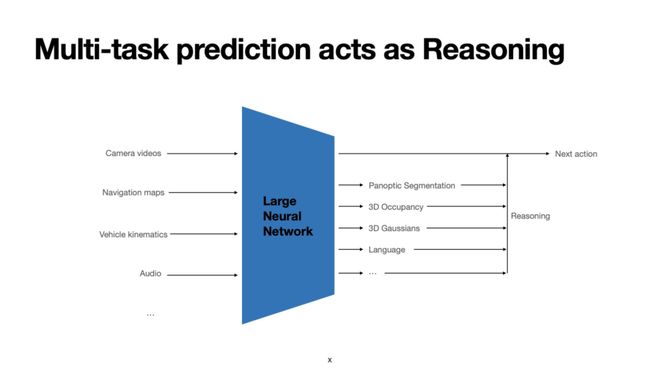
Core Insights - The article discusses the advancements in Tesla's Full Self-Driving (FSD) technology, particularly focusing on the integration of end-to-end models and world models, which are crucial for the evolution of autonomous driving technology [1][3][17]. Group 1: Tesla's FSD Developments - Tesla's AI VP Ashok Elluswamy shared significant updates on FSD, highlighting the use of a multi-modal input system that combines video, navigation maps, and audio signals into a single end-to-end neural network [1][3]. - The end-to-end architecture allows for direct output of control signals, enhancing the system's performance and reducing latency [3][4]. - The challenges faced in building an effective end-to-end system include the "curse of dimensionality," where the input data volume can explode, making real-time processing difficult [4][5]. Group 2: World Model Concept - The world model is described as a generative spatiotemporal neural system that compresses multi-modal inputs into latent states, enabling future environment predictions [18][20]. - It allows for action-conditioned future predictions, providing insights into how different actions will affect the environment, thus enhancing decision-making capabilities [21][22]. - The integration of world models with planning and control systems enables a closed-loop feedback mechanism, allowing for real-time evaluation of actions and risk assessment [22][24]. Group 3: Comparison of Approaches - The article contrasts world models with Visual-Language-Action (VLA) models, noting that world models focus on physical simulation and long-term evaluations, while VLA models leverage language processing for decision-making [46][49]. - World models are seen as more aligned with the physical nature of autonomous driving, while VLA models offer advantages in handling rare scenarios through language-based reasoning [49][50]. - The ongoing debate between these two approaches suggests that the future of autonomous driving may involve a combination of both methodologies [49]. Group 4: Developments in China - Chinese companies like NIO and Huawei are actively developing their own world models, with NIO's NWM (Nio World Model) being a notable example that integrates multi-modal information for future scene predictions [28][30]. - Huawei's WEWA architecture emphasizes direct perception-to-action pathways, avoiding language abstraction to enhance real-time decision-making capabilities [36][40]. - SenseTime's "KAIWU" world model focuses on generating high-fidelity simulation data, showcasing the growing importance of world models in the Chinese autonomous driving landscape [41][45].

云 +AI 战略落地, 一幅全球化创新图景由此展开
Tai Mei Ti A P P· 2025-12-02 08:21
Core Viewpoint - The integration of cloud and AI technologies is reshaping global industrial structures and optimizing resource allocation, with Chinese companies increasingly becoming leaders in this space [2][3]. Group 1: Global Expansion and Infrastructure - Alibaba Cloud is accelerating its international investments, with plans to establish new regional nodes in Brazil, France, and the Netherlands, and expand data centers in Mexico, Japan, South Korea, Malaysia, and Dubai [4]. - Currently, Alibaba Cloud operates in 29 regions with 91 availability zones and over 3,200 edge nodes globally [4]. - The demand for AI is driving cloud growth, with Alibaba's smart cloud revenue reaching 33.4 billion yuan, a 26% year-on-year increase, and overseas market growth outpacing domestic figures [5]. Group 2: AI and Cloud Strategy - Alibaba Cloud's AI computing power has increased over five times in the past year, introducing the new generation of AI servers that support multiple AI chips [6]. - The new high-performance network architecture supports massive data transmission needs, with storage and container services optimized for AI applications [7][8]. - By 2028, Alibaba Cloud plans to increase its global capacity by 14 times, with significant investments in overseas infrastructure [8]. Group 3: Partnerships and Collaborations - Major global companies, including BMW, HP, and Standard Chartered, are partnering with Alibaba Cloud to enhance their operations through AI and cloud technologies [9][10]. - Alibaba Cloud has formed a strategic partnership with SAP to integrate enterprise software with its cloud infrastructure, focusing initially on the Chinese market [10]. - The collaboration with the World Swimming Federation marks a significant step in providing cloud services for international sports events [11]. Group 4: AI-Driven Globalization - The demand for AI-driven solutions is prompting Chinese companies to expand internationally, with Alibaba Cloud supporting over 250,000 enterprises across various sectors [14][16]. - Companies like Meitu and Midea have successfully leveraged Alibaba Cloud's capabilities to enhance their global operations and digital transformation [15]. - Trust and compliance are critical factors for Chinese companies entering international markets, with Alibaba Cloud providing robust security and compliance frameworks [16]. Group 5: Future Outlook - The rise of AI is expected to lead to a reconfiguration of global industrial divisions, benefiting small and medium enterprises through accelerated innovation [17]. - The competition among major cloud providers is intensifying, with the potential for only a few dominant platforms to emerge globally [17].

安踏或考虑竞购彪马?全球运动服饰市场迎新变局
Tai Mei Ti A P P· 2025-12-02 06:38
Core Viewpoint - The potential acquisition of Puma by Anta Sports is under consideration, with other bidders like Li Ning and Asics also in the mix, indicating a significant shift in the global sportswear market [2][3]. Group 1: Acquisition Interest - Anta Sports is reportedly considering a bid for Puma, possibly in collaboration with private equity firms [2]. - Other potential bidders include Li Ning and Asics, although both companies have denied any substantial negotiations regarding the acquisition [2][4]. Group 2: Puma's Current Situation - Puma's largest shareholder, Artemis SAS, is exploring options for its 29.3% stake, with a sale being a possibility due to financial pressures from the Kering Group [4][5]. - Puma's performance has declined significantly, with a 10.4% year-over-year drop in sales to €1.9557 billion and a net loss of €62.3 million in Q3 2025 [6]. - The company faces challenges such as weak brand momentum, changing channel structures, U.S. tariff pressures, and high inventory levels [6]. Group 3: Anta's Growth and Strategy - Anta has achieved a significant milestone, with combined revenues from Anta Sports and Amer Sports surpassing ¥100 billion, making it the third-largest sportswear group globally [7]. - In H1 2025, Anta's revenue grew by 14.3% to ¥38.54 billion, with Amer Sports' revenue increasing by 23.46% to approximately ¥19.44 billion [8]. - Anta's ambition for global expansion is evident, with ongoing rumors of potential acquisitions, including Reebok, although these have been denied [9][10]. Group 4: Anta's Acquisition History - Anta has a track record of successful acquisitions, having built a portfolio of around 20 brands through strategic purchases since 2009 [11]. - Recent acquisitions include a stake in the Korean fashion e-commerce platform Musinsa and full ownership of the German outdoor brand Wolfskin [12]. - The acquisition of Puma would solidify Anta's position as a globally influential sports brand group, potentially reshaping the competitive landscape among Nike, Adidas, and Puma [12].

自主行动,开启 AI 进化新篇章
Tai Mei Ti A P P· 2025-12-02 05:30
Core Insights - The article emphasizes that AGI is not the endpoint but the starting point towards ASI, with Alibaba Group's CEO categorizing the evolution into three stages: intelligent emergence, autonomous action, and self-iteration, currently in the autonomous action phase [2][3] Group 1: AI Development Stages - The current phase of AI is characterized by a shift from perception and generation to decision-making and action, driven by intelligent agent technology [3] - The transition to autonomous action is seen as a critical bridge towards self-iteration, enabling AI to create real-world value [3][19] Group 2: Technological Breakthroughs - Continuous breakthroughs in technology are essential for releasing AI's value, focusing on building foundational capabilities such as computing power, basic models, and technical ecosystems [4] - The integration of cloud computing and AI is creating a full-stack technology ecosystem, addressing resource and cost bottlenecks for scalable AI deployment [5][6] Group 3: Model Innovations - Large models are evolving from single-modal to multi-modal capabilities, enhancing AI's application scope across various fields such as education and healthcare [9][10] - Innovations like reinforcement learning from human feedback (RLHF) are improving models' abilities to solve complex tasks autonomously [10] Group 4: Application and Ecosystem Development - The rise of intelligent agents is reshaping software ecosystems, enabling dynamic decision-making and task execution [11][16] - Open-source initiatives are crucial for democratizing AI technology, with Alibaba contributing over 300 open-source models to lower development costs [13][14] Group 5: Industry Transformation - AI is driving systemic innovation across industries, enhancing operational efficiency and consumer experiences [20] - The global collaboration in AI innovation is reshaping industry structures and optimizing resource allocation, facilitated by AI cloud platforms [21] Group 6: Responsible AI Development - The article highlights the importance of a governance framework to ensure AI's sustainable development, addressing challenges like data privacy and algorithmic bias [25][26] - A collaborative approach involving industry, academia, government, and the public is essential for achieving responsible AI development [27]