Tai Mei Ti A P P

Search documents
2026酒店业再变革:寒冬下的新玩法与持久战
Tai Mei Ti A P P· 2026-01-19 01:10
Core Insights - The hotel industry is facing a significant downturn, with many brands struggling to maintain profitability and market presence as evidenced by the forced delisting of Buding Hotels and the sudden closure of Marriott's Hangzhou hotel [1][2] - Economic hotel room availability is declining, with only 54% of the market share remaining by the end of 2024, and major players like Jinjiang, Shoulv, and Huazhu are shifting focus from expansion to renovation of existing properties [1][3] - The competitive landscape is evolving from a focus on scale to one emphasizing quality and innovation, with a notable shift towards the "stay + retail" model as a new revenue stream [5][6] Industry Trends - The global hotel industry is experiencing high saturation, with new brand survival rates below 35%, leading to significant closures among older, less profitable properties [3] - Major hotel groups are reporting mixed financial results, with Huazhu leading in occupancy rates and revenue per available room (RevPAR), while Jinjiang shows revenue decline despite profit growth [4] - The shift towards a "quality era" in the hotel industry is marked by a focus on operational efficiency, cost control, and innovative business models rather than mere expansion [4][10] Innovations and Strategies - The integration of AI technology is transforming hotel operations, with predictions that 75% of hotels will automate processes by 2025, although the domestic market still lags in implementation [8][9] - The "stay + retail" model is gaining traction, with hotels like Atour and Hanting introducing retail options that enhance guest experiences and increase non-room revenue [5][6] - Future success in the hotel industry will depend on the ability to offer tailored products and services that meet the diverse needs of different customer segments, alongside maintaining quality control in a franchise-heavy environment [10]



AI应用爆发前夜,大模型等待黎明
Tai Mei Ti A P P· 2026-01-18 12:01
Core Insights - The AI industry continues to gain momentum in 2026, with significant stock performance in the A-share market, particularly in AI application sectors [1] - Minimax has successfully launched on the Hong Kong stock market, achieving a market capitalization exceeding 100 billion [2] - Major tech companies are preparing for an AI application battle, with Alibaba, ByteDance, and Tencent all investing heavily in AI applications [4] Industry Trends - The rapid iteration of large models is evident, with 29 versions released by 11 tech companies in just 206 days, averaging a new version every 7.1 days [7][8] - User demand for AI applications is surging, with Doubao's monthly active users surpassing 200 million and Qianwen APP reaching 30 million in just 23 days [9] - The AI market in China is projected to grow to 993 billion by 2030, with a compound annual growth rate of 35.5% from 2024 to 2030 [10] Investment and Financials - Major companies are significantly increasing their capital expenditures on AI, with Baidu planning 30 to 50 billion, Tencent 70 to 100 billion, and Alibaba potentially increasing its 380 billion investment due to high demand [11] - AI companies are accelerating their IPOs, with multiple firms, including Zhiyuan AI and Minimax, recently listing on the Hong Kong Stock Exchange [12][14] - AI talent is in high demand, with salaries reaching up to one million and companies offering competitive packages to attract top talent [15] Challenges and Market Dynamics - Despite the growth, profitability remains a challenge, with Zhiyuan AI reporting losses exceeding 6.2 billion from 2022 to mid-2025, and Minimax over 8.7 billion from 2023 to Q3 2025 [18] - The competitive landscape remains unchanged as all major internet platforms integrate AI, leading to a potential homogenization of services [19][22] - The cost of using large models is decreasing rapidly, with significant price reductions observed in 2024, which is essential for the explosion of AI applications [27] Future Outlook - The AI industry is expected to experience an application explosion, with companies believing that revenue growth will eventually cover model costs [36] - The survival of companies in the AI sector will determine who defines the future, emphasizing the importance of endurance in the current challenging environment [37]
零克云发布AI托管平台破解“工程鸿沟”|公司动态
Tai Mei Ti A P P· 2026-01-18 04:54
Core Insights - The emergence of the Vibe Coding paradigm is driving the explosion of the creator economy, with AI applications facing a significant "engineering gap" from creativity to commercialization [1] - The launch of the Zero Cloud AI application hosting platform aims to eliminate barriers to deployment and usage, establishing the infrastructure for the intelligent agent economy [1] - By 2026, the Vibe Coding economy is expected to mature, creating a trillion-dollar market and millions of "one-person companies" (OPCs) [1] Group 1: Zero Threshold Solutions - Zero Cloud has developed a "double zero threshold" solution that addresses industry pain points, enabling creators to deploy AI applications without barriers [2] - The platform features an intelligent deployment engine that seamlessly integrates with major development platforms, allowing for automated code structure analysis and environment dependency resolution, achieving minute-level deployment [2] - The platform provides a transparent revenue-sharing mechanism, completing the commercial loop from creation to monetization [2] Group 2: Empowering Individual Creators - Zero Cloud has initiated two core plans: the "OPC Full-Stack Support Plan" for early-stage creators and the "Promoter (FDE) Cooperation Plan" to connect AI applications with vertical industries [3] - The platform's competitive advantage stems from a team with over ten years of experience in AI commercialization and entrepreneurship, combining industry vision with developer expertise [3] - The launch of the Zero Cloud platform signifies a structural transformation in the AI application ecosystem, accelerating the arrival of an inclusive intelligent agent economy driven by individual creativity [3]
摩尔定律遭遇物理 “死胡同”, TGV是突破算力桎梏的技术切口?
Tai Mei Ti A P P· 2026-01-18 03:56
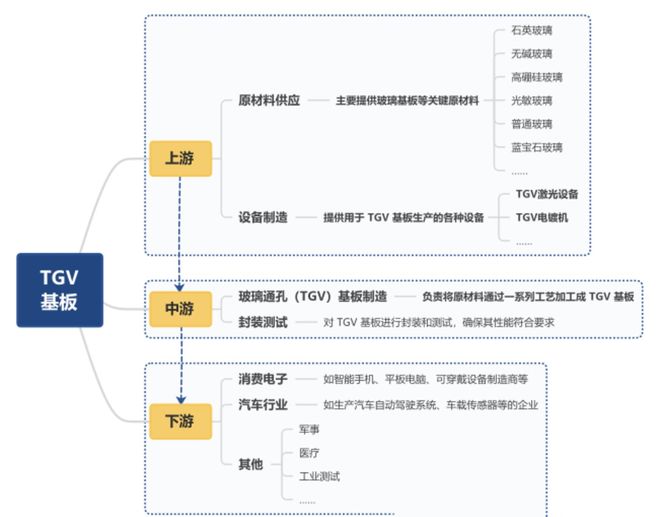
文 | 产业观察室,作者 | 方建华, 国科新能创投创始合伙人 在摩尔定律逼近物理极限的"后摩尔时代",半导体产业的演进逻辑正发生深刻嬗变。过去我们依赖的二 维平面微缩红利渐趋枯竭,三维集成(3D Integration)由此成为延续摩尔定律、突破算力桎梏的必由之 路。 然而,2.5D/3D封装与异构集成的纵深发展,对垂直互连密度与基板物理性能提出了极为苛刻的要求。 硅基板在高频损耗、制造成本与工艺复杂度上的先天不足持续放大,而玻璃基板凭借低介电损耗、高尺 寸稳定性等独特优势,正推动半导体封装由"硅基时代"向"玻璃基时代"悄然跨越。 在此进程中,玻璃通孔(Through-Glass Via,TGV)技术作为连接宏观材料与微观电路的关键枢纽,不仅 是先进封装的一项核心支撑技术,更已成为半导体产业价值重构的战略制高点之一。 全球产业巨头对TGV的战略价值早有卡位。美国康宁、日本旭硝子等国际玻璃巨头,凭借在超大尺 寸、超薄柔性玻璃领域的深厚积淀,构筑了坚实的材料壁垒。在工艺端,欧美日企业依托先发优势,在 高深宽比成孔与低温键合等核心环节形成了技术垄断,全球60%以上的核心专利皆出于此。 然而,全球产业链的韧性正面临 ...

【数智周报】 谷歌DeepMind CEO:中国的AI模型仅落后美国几个月;DeepSeek开源相关记忆模块Engram;微软在人工智能上的支出将达到5...
Tai Mei Ti A P P· 2026-01-18 02:38
Group 1 - Keda Xunfei's Chairman Liu Qingfeng stated that the domestic AI infrastructure has taken initial shape, with domestic large models matching international standards despite having half the parameters [2] - Michael Burry warned that the era of tech giants earning huge profits with minimal investment is ending, primarily due to AI, and investors should focus on Return on Invested Capital (ROIC) rather than revenue growth [3] - A BlackRock survey revealed that while investors are optimistic about AI, they are shifting their investment focus towards energy and infrastructure suppliers, with only one-fifth considering large US tech companies as attractive investment opportunities [4] Group 2 - Demis Hassabis, CEO of Google DeepMind, indicated that Chinese AI models are only a few months behind those in the US and Western countries, with significant advancements made by Chinese developers [5] - DeepSeek released a new paper on conditional memory, significantly improving model performance in various tasks, and has open-sourced a related memory module [6] - Wang Xiaochuan, CEO of Baichuan Intelligent, mentioned that the company has 3 billion yuan on hand and may initiate an IPO plan in 2027 [7] Group 3 - Zhiyu and Huawei launched the first domestically trained multimodal SOTA model on local chips, achieving a full training process on the Ascend Atlas 800T A2 device [8] - Kuaishou announced that Keling AI's revenue exceeded $20 million in December 2025, with an annual recurring revenue (ARR) of $240 million [9] - Yongyou Network projected a net loss of 1.3 to 1.39 billion yuan for 2025, although it expects to reduce losses compared to the previous year [10] Group 4 - JD.com and Lenovo deepened their "hybrid AI" cooperation, launching new products at CES 2026, with a focus on strategic collaboration around smart devices and services [11] - Alibaba's Qianwen app integrated with various services, allowing users to order food and book flights through AI, marking a significant upgrade in functionality [12] - Alipay and partners released China's first AI commercial agreement, aimed at creating a universal language for AI tasks across platforms [13] Group 5 - Yunhai Medical launched the "YunJian AI Spirit," a product that reduces long-term costs for users by offering unlimited access to traditional Chinese medicine infrared algorithms [14] - Zhiyuan purchased thousands of hours of robot training data for various tasks [15] - Meituan released the open-source "ReThink" model, achieving state-of-the-art performance in several benchmarks [16] Group 6 - Teslian introduced the upgraded T-Cluster 512 super node architecture, designed for high-performance AI model training, with a total computing power exceeding 500 PFlops [17] - Keda Xunfei launched a marketing AI platform based on the "SuperAgent" framework, enhancing efficiency in marketing strategies [18] - The first domestically trained text-to-image model was released by Zhiyu and Huawei, completing the entire training process on local chips [19] Group 7 - Tencent Cloud ADP launched the first "AI-native Widget," enhancing task delivery experiences through natural language interaction [20] - Anthropic implemented stricter measures to prevent third-party tools from bypassing rate limits, affecting several developer projects [21] - Google announced a partnership with Walmart to expand AI model shopping capabilities, allowing direct transactions through its AI application [22] Group 8 - Mark Zuckerberg initiated the "Meta Compute" project, aiming to build substantial AI infrastructure by 2030, with a focus on collaboration with governments [23] - Meta plans to lay off hundreds of employees in its Reality Labs department, shifting focus from the metaverse to AI [24] - Alphabet's market value surpassed $4 trillion for the first time, joining a select group of companies [24] Group 9 - Nvidia and Eli Lilly will jointly invest $1 billion to establish an AI drug laboratory over the next five years [26] - The US relaxed export controls on Nvidia's H200 chips to China, potentially impacting the AI hardware market [27] - Microsoft announced a plan to limit the impact of data center energy costs and water usage on local communities [29] Group 10 - OpenAI is reportedly seeking US hardware suppliers for its planned consumer devices and cloud data center expansion [32] - Elon Musk's lawsuit against OpenAI is set to go to trial in late April [33] - OpenAI and Cerebras announced a partnership worth over $10 billion to deploy a large-scale AI inference platform [34] Group 11 - Zivariable Robotics completed a 1 billion yuan A++ round of financing, backed by major investors including ByteDance and Meituan [35] - Qiangnao Technology submitted a confidential IPO application in Hong Kong [36] - OpenAI agreed to acquire the AI health application Torch for approximately $100 million [37] Group 12 - K2 Lab, founded by a former DingTalk executive, secured tens of millions in seed funding to develop an AI-driven content e-commerce agent [38] - Alibaba Cloud completed a strategic investment in ZStack, achieving a controlling stake [39] - Skild AI raised nearly $1.4 billion in funding, reaching a valuation of over $14 billion [40] Group 13 - WeLab completed a $220 million D-round strategic financing, the largest single round since its inception [41] - Merge Labs, a brain-machine interface startup, raised $252 million in seed funding, with OpenAI as a major investor [42] Group 14 - A report indicated that by 2026, the Chinese tech giants index is expected to surpass the US tech giants in profitability growth for the first time since 2022 [43] - China is accelerating the establishment of a data property registration system to enhance data circulation and value [44] - Storage prices are expected to surge by 40%-50% in Q4 2025 and again in Q1 2026 due to increased demand from AI and server capacity [45] Group 15 - A new AI model developed by US researchers can predict the risk of approximately 130 diseases based on sleep data [46] - Foreign investment firms are increasingly incorporating AI into their research processes in the Chinese market [47] - UBS believes the probability of an AI bubble in China is low, with monetization relying on cloud services and advertising [48] Group 16 - The number of AI companies in China has exceeded 6,200, with applications expanding across various industries [49]




携程遭反垄断调查,OTA行业硝烟再起
Tai Mei Ti A P P· 2026-01-17 11:29
这一消息引起了市场的普遍关注。截至1月14日港股收盘,携程股价下滑6.49%,报收569.5港元/股,总 市值3722亿港元,单日蒸发282亿港元。 业绩一路上涨的携程,遭遇了监管挑战。 近日,市场监管总局根据前期核查,依据《中华人民共和国反垄断法》,对携程集团有限公司涉嫌滥用 市场支配地位实施垄断行为立案调查。 对于这一调查,携程在公告中表示,公司将积极配合监管部门调查,全面落实监管要求,与行业各方携 手共建可持续发展的市场环境。目前,公司各项业务均正常运行。 此次调查的成型,不仅源于协会的发声,更切合了当下市场监管的关注重点。 去年11月,云南省旅游民宿行业协会指出,携程等个别OTA(在线旅游)平台利用其市场支配地位,对 云南民宿行业实施了包括但不限于"二选一"霸王条款、单方面随意涨佣、设置不公平交易条件、屏蔽流 量等不正当竞争行为。 近来,监管部门持续开展对于具有市场支配地位的平台企业的反垄断调查。 据新华社报道,2025年12月17日,市场监管总局在新闻发布会上明确指出,平台强制要求"全网最低 价"等行为可能构成构成滥用市场支配地位或者垄断协议行为。同时,近期发布的《互联网平台反垄断 合规指引(征求意 ...

三倍牛股,三年连亏,科森科技没能讲出市场爱听的故事
Tai Mei Ti A P P· 2026-01-16 12:12
Core Viewpoint - Kosen Technology (603626.SH) is expected to report a loss of between 330 million yuan and 245 million yuan for the entire year of 2025, marking its third consecutive year of losses, indicating significant challenges in the consumer electronics sector [2][4]. Group 1: Financial Performance - The company anticipates a net profit attributable to shareholders of -330 million yuan to -245 million yuan for 2025, with a net profit excluding non-recurring gains and losses expected to be between -393 million yuan and -308 million yuan [7]. - Kosen Technology's net profit has shown a drastic decline over recent years, with year-on-year changes of -76.48%, -424.29%, and -69.44% from 2022 to 2024, while gross margins have decreased from 14% to 5.34% during the same period [10]. Group 2: Market Position and Challenges - Kosen Technology is a second-tier supplier in the precision structural components sector for consumer electronics, with a market share of less than 3% globally and ranking between fifth and eighth in its domestic niche, generating approximately 3 billion yuan in revenue [4][8]. - The company faces significant pressure from both upstream and downstream in the supply chain, particularly as major clients like Huawei and Apple impose stricter cost controls and cultivate new suppliers to enhance their bargaining power [8]. Group 3: Strategic Adjustments and R&D - The anticipated losses for 2025 are attributed to several factors, including fluctuating market demand, low capacity utilization, strategic adjustments leading to inventory write-offs, and high R&D expenditures impacting net profits [6][18]. - Kosen Technology has maintained a high level of R&D investment, with 167 million yuan allocated in the first three quarters of 2025, representing 6.81% of revenue, although this is significantly lower than industry leaders [19]. Group 4: Market Perception and Speculation - The company has been associated with various high-tech concepts, such as solid-state batteries and foldable screens, which have led to speculative trading despite the weak fundamentals of its core business [11][12]. - Kosen Technology's management has attempted to pivot through strategic adjustments, including the sale of its high-margin medical device business to focus on its core consumer electronics operations, although the effectiveness of these measures remains uncertain [18].

字节把云推上“火山口”
Tai Mei Ti A P P· 2026-01-16 11:48
Core Viewpoint - The article discusses the significance of the Spring Festival Gala (Spring Festival) as a pivotal moment for companies, particularly in the context of AI and cloud services, highlighting the competitive landscape and strategic positioning of ByteDance's Volcano Engine in the AI cloud market [1][2][3]. Group 1: AI Cloud Market Dynamics - The Spring Festival Gala has become a platform for AI companies, with Volcano Engine set to showcase its capabilities, marking a competitive shift in the cloud market [2][3]. - Alibaba aims to capture 80% of the incremental growth in China's AI cloud market this year, intensifying competition for cloud service providers [2][10]. - The AI cloud market is projected to exceed 120 billion yuan by mid-2025, with significant contributions from sectors like finance, government, and manufacturing [10]. Group 2: Strategic Positioning of ByteDance - ByteDance is shifting its focus from consumer (C-end) products to business (B-end) capabilities, using the Spring Festival as a platform to correct public perception and emphasize its B-end offerings [4][9]. - The decision to feature Volcano Engine at the Spring Festival reflects ByteDance's strategy to enhance its B-end presence and showcase its technological capabilities [4][9]. - The company aims to break the stereotype of being "C-end heavy" by demonstrating its commitment to B-end growth through high-profile events [9]. Group 3: Technical Capabilities and Challenges - The Spring Festival presents extreme technical challenges for cloud service providers, requiring high concurrency and zero-error performance, which will test Volcano Engine's capabilities [12][16]. - Historical data indicates that the Spring Festival Gala could reach 168 billion interactions, necessitating robust technical infrastructure to handle peak loads [12][16]. - Volcano Engine has demonstrated its technical prowess through past collaborations, including supporting Douyin's Spring Festival Gala with significant interaction volumes [12][16]. Group 4: Competitive Landscape - The competition between Volcano Engine and Alibaba Cloud is intensifying, with both companies vying for market share in the rapidly evolving AI cloud sector [16][19]. - Alibaba Cloud has established a strong market presence, with a reported market share of 35.8% in the AI cloud sector, compared to Volcano Engine's position in the following tier [21][19]. - The future of the cloud services market is expected to be characterized by differentiated competition among various players, each leveraging unique technological strengths [22].

一盒内存条价值上海一套房,2026年将成消费电子“最贵之年”?
Tai Mei Ti A P P· 2026-01-16 09:51
堆叠的各层芯片之间通过数以千计的"硅通孔"实现垂直互联,这些TSV如同连接高楼各层的专用高速电 梯,让数据在芯片内部直接上下传输,路径大大缩短,以此提升数据传输效率。 受AI算力需求爆发影响,存储芯片价格在2026年开年之后,继续维持狂飙模式。 市场研究机构Counterpoint Research发布报告显示,存储市场行情已经超过2018年的历史高点,供应商 议价能力已达到历史最高水平,预计2026年第一季度市场价格还将上涨40%至50%,第二季度继续上涨 约20%。 有数据显示,16GB DDR5笔记本内存条价格在几个月内从380多元涨至1399元;256GB DDR5服务器内 存条价格已超过4万元/条,一盒100根总价约400万元,已超过上海部分中小户型房产的价值。 TrendForce集邦咨询调查报告则显示,存储芯片上涨带动下游电子消费品价格上涨。终端产品面临成本 考验,智能手机、个人电脑预计将上修产品价格、调降规格。 这意味着,2026年,可能成为消费电子的"最贵之年"。 AI需求激增,芯片厂商集体"向钱看" 存储芯片价格上涨的直接原因,与AI服务器需求激增直接相关。 公开数据显示,单台AI服务器的 ...

价值700亿美元的AI+医疗仍有很长的路要走丨ToB产业观察
Tai Mei Ti A P P· 2026-01-16 09:38
Core Insights - The Chinese government has officially launched the "Artificial Intelligence +" initiative, focusing on enhancing the healthcare sector through AI applications, aiming to improve the quality of life and healthcare services [2] - The healthcare industry is becoming a primary area for AI technology implementation, transitioning from optional to essential applications, with significant growth expected in the AI healthcare market [2][3] Industry Overview - The healthcare sector faces critical challenges such as uneven resource distribution, high physician workloads, and low research translation efficiency, creating ample opportunities for AI applications [3] - By 2025, the global AI application market is projected to reach $127 billion, with the healthcare sector accounting for 20% of this total [2] - The "AI + healthcare" market is expected to grow at a compound annual growth rate of over 29%, reaching $70 billion by 2032 [2] AI Applications in Healthcare - AI applications in healthcare have evolved through various stages, with clinical decision support systems (CDSS) being a key area of focus, addressing the knowledge gap between medical advancements and physician expertise [3][4] - The introduction of large language models has significantly improved the capabilities of CDSS, allowing for real-time updates and broader disease coverage, with accuracy rates surpassing 91% in some cases [5][11] - Medical imaging AI has matured, transitioning from basic disease screening to advanced multi-modal analysis, enhancing diagnostic precision and patient outcomes [6][7] Business Models and Commercialization - The commercialization of medical imaging AI is shifting from product sales to service-based models, driven by the integration of AI into healthcare workflows [7][10] - Companies like Ping An are leveraging AI to enhance patient services, streamline processes, and improve healthcare accessibility, with AI assisting in over 50% of family doctor tasks [8][11] - The AI healthcare market is facing challenges related to high development costs, long return on investment periods, and difficulties in monetization due to varying payment capabilities across healthcare institutions [21][22] Challenges and Future Outlook - Despite advancements, the integration of AI in healthcare faces hurdles such as data quality, regulatory issues, and the need for explainability in AI decision-making [16][19] - The lack of standardized, high-quality data across healthcare institutions hampers the training of AI models, necessitating improvements in data governance and sharing mechanisms [18][19] - The AI + healthcare sector is expected to enter a new phase of large-scale implementation by 2026, driven by collaborative efforts and continuous technological innovation [22]