Tai Mei Ti A P P

Search documents
3%退货率,这台泳池机器人的“异类”硬件哲学|50×50
Tai Mei Ti A P P· 2026-01-15 06:23
Industry Overview - The global market for private pool cleaning services is valued at $12.9 billion, with a significant portion relying on manual or semi-automatic cleaning methods, costing over $120 per service [2] - The pool cleaning robot market is projected to grow at an annual rate of 16%, reaching $2.5 billion by 2025, with the wireless product segment expected to dominate [2] - The shipment of wireless pool cleaning robots is forecasted to increase from less than 300,000 units in 2019 to 2.5 million units by 2025, with a compound annual growth rate exceeding 80% [2] Competitive Landscape - Maytronics, established in 1983, holds a 34.8% market share and is a leading player in the global pool cleaning robot market, particularly in the Dolphin series [3] - Chinese companies are rapidly gaining market share, with an expected total shipment of over 10 million pool robots in 2025, a 25% increase from 2024 [3] - The industry faces challenges, including high return rates averaging 15%, driven by complex product features and high logistics costs [3] Company Spotlight: Si Auto - Si Auto, founded in October 2021, has achieved a shipment of nearly 100,000 pool robots in 2024, with over 20,000 units delivered in the first half of 2025 [4] - The company boasts a remarkably low return rate of 3.85%, significantly below the industry average, indicating strong product quality [4][15] - Si Auto has secured several rounds of financing, including a recent B round of several hundred million yuan, to support technology development and market expansion [5] Technological Innovations - Si Auto's competitive edge lies in its unique manufacturing philosophy and technological advancements, particularly in motor, sensing, and sealing technologies [10] - The company has developed a proprietary brushless motor with a lifespan of 2000 cycles, four times the industry average, at a cost of only 20-28 yuan per unit [10] - Si Auto has shifted from optical cameras to acoustic technology for sensing, significantly improving performance in low-light conditions and murky water [11] Product Philosophy - Si Auto adopts a minimalist product philosophy, focusing on essential features rather than adding unnecessary complexity, which aligns with consumer needs for reliability and cost-effectiveness [12] - The company plans to expand its product line to include interest-based devices, leveraging user engagement through software interactions [13] - Si Auto's marketing strategy relies on organic growth through product quality and customer satisfaction rather than aggressive advertising [14] Market Strategy - Si Auto has established a "passive" globalization strategy, initially focusing on Amazon self-operated sales and gradually expanding to other channels [15] - The collaboration with Maytronics has enhanced Si Auto's market recognition and distribution capabilities, further solidifying its position in the high-end market [15] - The company's approach emphasizes the importance of product performance and reliability over traditional marketing tactics, leading to a strong reputation and customer loyalty [16]



千问“吃掉”淘宝、支付宝等App,阿里巴巴Agent行动开始了
Tai Mei Ti A P P· 2026-01-15 05:43
这显然是阿里巴巴预谋已久的一次集团行动。 1月15日,千问App宣布全面接入淘宝、支付宝、淘宝闪购、飞猪、高德等阿里生态业务,在全球首次 实现点外卖、买东西、订机票等AI购物功能,并向所有用户开放测试。此次升级将上线超400项AI办事 功能,让千问App成为全球首个能完成真实生活复杂任务的AI助手。 豆包手机走的是AI原生终端路线,豆包没有把Agent看做一个App,而是嵌入到操作系统和硬件层面, 让 AI 接管搜索、拍照、记录、导航、购物等行为,当然目前有一些安全法规等方面的限制。 从产品层面看,千问是阿里巴巴最"年轻"的应用,要调用淘宝、支付宝、高德等App的能力,相当于阿 里巴巴要将App的部分功能打碎,以原子化的方式为千问所用,这必然少不了集团的首肯和斡旋。发布 会现场,阿里系App各业务负责人也来到现场表示支持。 千问C端事业群总裁吴嘉表示,"AI在拥有超强大脑之后,开始长出了能够触达真实世界的手和脚,在 生活中实实在在地替用户'干活'。千问是第一个真正能帮你办事的AI,我们的独特优势在于'Qwen最强 模型'与'阿里最丰富生态'的结合。AI办事时代才刚刚开始,一些能力还在探索,我们将一步步迈进, ...

手机市场混战下的新变数:规模与利润之间的博弈,华为、苹果成最大赢家
Tai Mei Ti A P P· 2026-01-15 03:57
Group 1 - In 2025, global smartphone shipments reached 1.26 billion units, marking a 1.9% year-over-year growth, while the Chinese market saw a decline of 0.6% with shipments of approximately 285 million units [2][9][10] - Apple and Samsung maintained their leadership in the high-end market, with Apple achieving a market share of 19.7% and Samsung at 19.1%, both showing significant year-over-year growth [6][7] - Huawei regained the top position in the Chinese market with a market share of 16.4%, despite a slight decline in shipments compared to 2024 [9][10] Group 2 - Apple's iPhone 17 series significantly boosted its performance, leading to a record-breaking market share in China, with a 21.5% year-over-year increase in Q4 shipments [5][6] - Samsung achieved a remarkable 7.9% growth in 2025, the highest among the top five brands, driven by the popularity of its Galaxy A series [7][8] - The smartphone market is expected to face challenges in 2026 due to rising storage costs and changing consumer demands, with predictions of a potential decline in shipments [12][14] Group 3 - The competitive landscape is shifting towards high-end products, with brands focusing on premium offerings to counteract market pressures [16][17] - Xiaomi experienced a mixed performance, benefiting from government subsidies but facing significant declines in Q4, highlighting the volatility in the market [11] - The ongoing shortage of storage chips is anticipated to impact production costs and pricing strategies, leading to adjustments in product specifications and offerings [13][14]



中国机床的“变道”时刻 |产业链观察
Tai Mei Ti A P P· 2026-01-15 02:52
Core Viewpoint - Beijing Jingdiao's recent strategic financing of 1 billion yuan highlights a significant trend in the equipment manufacturing industry, which is regaining capital attention as high-end equipment becomes a key development direction in China's 14th Five-Year Plan [2][3] Group 1: Industry Trends - The machine tool industry achieved a revenue of 764.7 billion yuan from January to September 2025, marking a 1.6% year-on-year growth, ending a downward trend since the first half of 2023 [3] - The integration of software and hardware is becoming essential as the market demands higher precision, efficiency, and integrated solutions in manufacturing [5][6] - The shift from hardware-centric to software-driven solutions is a response to the evolving needs of high-end manufacturing, emphasizing the importance of deep integration of mechanical, electrical, and software components [5][8] Group 2: Company Development Path - Beijing Jingdiao's unique development path began with a focus on software, leading to the independent development of CNC systems and eventually machine tool manufacturing, which contrasts with the hardware-first approach of most domestic competitors [4][6] - The company has transitioned from a survival strategy to a model that emphasizes the integration of software and hardware, allowing for adaptive processing and enhanced performance of machinery [6][8] - By 2024, Beijing Jingdiao plans to launch a full range of self-developed products, including five-axis high-speed machining centers and digital manufacturing software platforms, marking a strategic shift towards becoming a comprehensive supplier of precision CNC machines and digital engineering services [8][12] Group 3: Market Responsiveness - The company is set to introduce three new products at the 2026 ITES Shenzhen Industrial Exhibition, targeting high-efficiency processing markets and precision applications in sectors like semiconductors and optics [9][12] - Beijing Jingdiao's approach to product development is driven by market demand, ensuring that new technologies align with the needs of emerging industries such as humanoid robotics and aerospace [12][13] - The company maintains a "sell one generation, research one generation" development rhythm, allowing it to quickly adapt to market feedback and emerging trends [12][14] Group 4: International Expansion - Despite a modest growth in the domestic machine tool market, exports have surged, with a 9.1% increase in machine tool exports and a 23.4% rise in metal processing machine exports from January to September 2025 [14][15] - Vietnam has emerged as the largest export market for Chinese machine tools, accounting for 12.1% of total exports, driven by the rapid growth of its manufacturing sector [15] - Beijing Jingdiao aims to differentiate itself in international markets by offering high-precision machines and comprehensive solutions rather than competing on price [15][16] Group 5: Service Capabilities - The company emphasizes the importance of service capabilities in ensuring that high-precision equipment operates effectively in client environments, which is crucial for maintaining competitive advantage in overseas markets [16][17] - Beijing Jingdiao provides complete solutions that include not only equipment but also process support and technical training, ensuring clients can effectively utilize their machines [17][18] - This service-oriented approach reflects a broader trend in the manufacturing industry, where companies are increasingly focused on delivering integrated solutions rather than just products [18][19]
60万亿存款年内到期,A股接得住吗
Tai Mei Ti A P P· 2026-01-14 16:28
Core Viewpoint - The article discusses the impending maturity of a significant amount of household savings deposits in China, which could impact market supply and demand dynamics in 2026, amidst a changing macroeconomic environment. Group 1: Deposit Maturity and Scale - The maturity of household savings deposits is expected to reach between 30 trillion to 60 trillion yuan in 2026, with estimates varying among institutions [1][3][5] - The total amount of domestic RMB deposits in financial institutions was approximately 327 trillion yuan as of November 2025, with household time deposits accounting for 121 trillion yuan [3] - A notable decline in the growth of household time deposits was observed, with an increase of only 11.03 trillion yuan in 2025, the lowest since 2022 [3] Group 2: Market Dynamics and Investment Trends - The expectation of a "deposit migration" process has begun, with significant funds potentially flowing into other wealth management assets as deposit rates decline [2][8] - Various brokerages predict a peak in deposit maturities in 2026, particularly for three-year time deposits initiated in 2023, with estimates suggesting a maturity volume of 38 trillion yuan [6][7] - The overall trend indicates that even a small percentage of funds migrating from deposits could represent a substantial amount due to the large base of total deposits [13] Group 3: Alternative Investment Products - Financial products such as wealth management, insurance, and funds are becoming more common alternatives to traditional deposits, with insurance products showing strong appeal due to their higher yields compared to bank deposits [10][11] - The insurance sector is expected to attract significant funds as it offers stable returns and safety, especially as traditional deposit rates decline [10] - Wealth management products are projected to grow significantly, with estimates suggesting an increase of 3.83 trillion yuan under conservative scenarios in 2026 [9] Group 4: Stock Market Implications - The A-share market has shown signs of increased activity, with a record number of new accounts opened in 2025, indicating potential interest in stock investments [12] - Despite skepticism about a direct correlation between deposit maturity and stock market inflows, the sheer volume of deposits suggests that even minor reallocations could lead to significant capital entering the market [13][14] - Some analysts believe that the current environment may lead to a greater willingness among middle-income groups to invest in the stock market, influenced by positive market sentiment [14]


H200批准对华出口,2026年GPU还扛得住吗?
Tai Mei Ti A P P· 2026-01-14 11:13
Group 1 - The U.S. government has approved NVIDIA to export its AI chip H200 to China, which is expected to restart shipments to Chinese customers [1] - The approval process will involve the U.S. Department of Commerce, which will charge approximately 25% fees on related transactions [1] - NVIDIA's CEO Jensen Huang emphasized the importance of the Chinese AI market, predicting it could reach $50 billion in the next two to three years [1] Group 2 - The adjustment in export policy coincides with a surge in domestic GPU companies going public [2] - Domestic GPU companies like Moore Threads and Muxi have successfully listed on the STAR Market, with significant stock price increases on their debut [3][4] - The global GPU market is expected to exceed $350 billion by 2025, with China accounting for nearly 40% of that market [4] Group 3 - Despite the growth of domestic GPU companies, there is a recognition that they have not yet formed a complete ecosystem to compete with NVIDIA's integrated approach [5] - The shift in the external market is notable, with cloud giants increasingly favoring ASICs over GPUs for specific applications [6][7] - ASIC demand is projected to grow at 44.6%, significantly outpacing GPU growth at 16.1% by 2026 [9] Group 4 - Major cloud service providers are developing their own ASIC chips, with Google and Amazon leading the way in production capacity [10][11] - Reports indicate that NVIDIA currently holds over 80% of the AI server market, but this share may decline as ASIC shipments from companies like Google and Amazon increase [11][12] - The introduction of storage-compute integration technology poses a challenge to traditional GPU architectures, addressing inefficiencies in data handling [13][15] Group 5 - NVIDIA is responding to competitive pressures by acquiring Groq, a company specializing in inference chips, to enhance its capabilities in the inference market [19][20] - This acquisition aligns with NVIDIA's historical strategy of using mergers and acquisitions to strengthen its market position and ecosystem [20] - The future landscape suggests that while GPUs will remain relevant, their dominance may be challenged by the rise of ASICs and storage-compute integrated solutions [18][20]

张文宏医生拒绝把AI接入病历系统:他真正担心的是什么?
Tai Mei Ti A P P· 2026-01-14 08:08
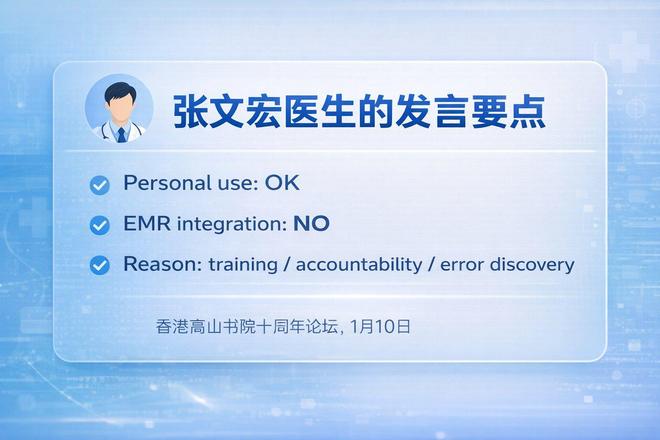
Core Viewpoint - The integration of AI into the medical system should be approached with caution, emphasizing the importance of human oversight and responsibility in decision-making processes [1][4][10] Group 1: AI in Medical Training - Concerns exist regarding AI altering the training pathways for doctors, potentially leading to a decline in critical thinking and understanding among new practitioners [2][3] - Senior doctors can use AI as a pre-screening tool, but they must possess the ability to identify errors and articulate reasons for their decisions, unlike less experienced doctors who may rely too heavily on AI-generated answers [2][3] Group 2: Governance and Responsibility - The discussion highlights the need for clear boundaries regarding AI's role in medical decision-making, ensuring that human accountability is maintained [4][5] - Key governance issues include defining which tasks require human judgment, establishing error detection mechanisms, and ensuring accountability in AI-assisted processes [4][5][7] Group 3: Risk Management - Effective risk management in AI deployment involves creating structured processes that incorporate oversight, transparency, and accountability [5][6] - The default assumption about AI's correctness can lead to diminished critical thinking and training among professionals, necessitating a focus on human reasoning and verification [7][9] Group 4: Training and Development - AI should be utilized as a training tool rather than a replacement for human judgment, promoting a culture of critical evaluation and reasoning [9][10] - The approach of having AI serve as a first reader rather than the final arbiter can enhance the training process, ensuring that professionals maintain their analytical skills [9][10]
库克退休在即,苹果迈入“诺基亚时刻”前夜
Tai Mei Ti A P P· 2026-01-14 08:08
Core Insights - The resurgence of iPhone 4 has led to a 60-fold increase in its recycling price in China and a 979% increase in search volume for "buy iPhone 4" in the U.S. by 2025, indicating a significant demand spike for this model [1][2] - The nostalgia for Steve Jobs' era is putting pressure on Tim Cook's leadership, with indications that Apple is accelerating the search for Cook's successor, with John Ternus as a leading candidate [4] - Under Cook's leadership, Apple has become the first company to reach a market value of over $1 trillion, with revenue growth from $108.2 billion in 2011 to $416.2 billion in 2025, making it one of the most profitable companies globally [7] Group 1: Leadership and Innovation - Cook's tenure has been characterized by a focus on supply chain efficiency and cost control rather than disruptive innovation, contrasting with Jobs' legacy of groundbreaking products [6][8] - The departure of key design figures, such as Jonathan Ive, has led to a decline in Apple's industrial design and innovation, with the company being cautious in its approach to new technologies [7][8] - Apple's conservative strategy has resulted in a lag in adopting new technologies, such as fast charging and foldable phones, which has affected its competitive edge [8] Group 2: AI Strategy and Challenges - Apple's AI strategy has been hindered by internal cultural conflicts and a lack of substantial investment, leading to a perception of being behind competitors like Google and Amazon in AI advancements [10][12] - The hiring of John Giannandrea, a former Google AI leader, aimed to boost Apple's AI capabilities, but he faced significant obstacles due to Apple's secretive culture and prioritization of user privacy [11][12] - The delay in launching Apple Intelligence and new Siri features has been described as "ugly" and "embarrassing," reflecting poorly on Apple's ability to innovate in the AI space [17][20] Group 3: Management Changes and Future Outlook - Significant management changes are underway at Apple, with reports of Tim Cook potentially stepping down and John Ternus being a likely successor, indicating a shift in leadership style [23][24] - Ternus is seen as a steady manager rather than an aggressive innovator, suggesting that Apple's future direction may continue to be conservative rather than revolutionary [24] - The collaboration with Google for AI development highlights Apple's struggle to maintain its ecosystem and adapt to the evolving technological landscape, raising concerns about its competitive position [19][22]

关于2026年科技行业的12个关键问答:AI、自动驾驶、机器人、世界模型、美股......
Tai Mei Ti A P P· 2026-01-14 08:08
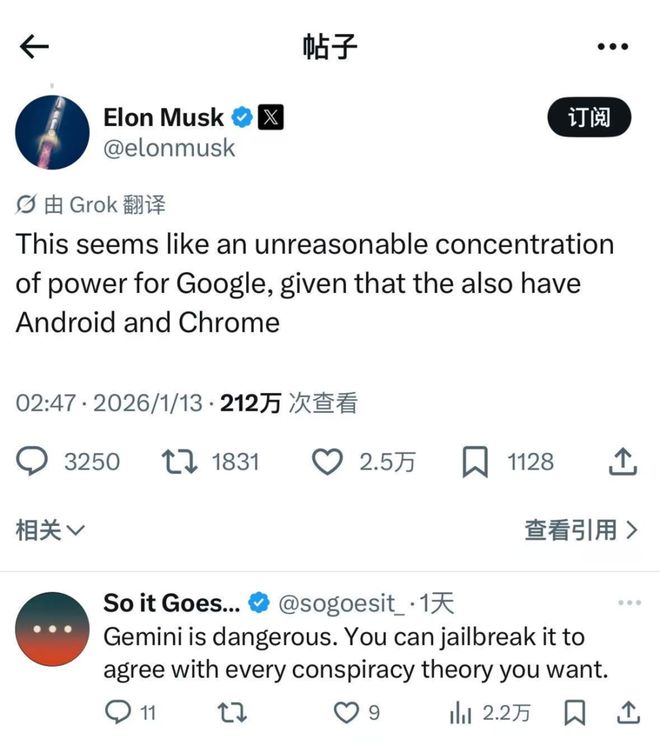
Group 1 - The core discussion revolves around the technological landscape of AI and autonomous driving, focusing on the anticipated developments in 2026 and the implications for investment opportunities [1][2][3] - The transition from theoretical discussions about AI, such as Scaling Law, to practical applications is highlighted, with industry leaders emphasizing the need for localized and practical AI solutions [2][5] - The concept of "DeepSeek Moment" signifies a shift away from the dominance of major tech companies in AI model development, suggesting that innovation may increasingly occur outside these established firms [3][4] Group 2 - The debate on whether Meta should focus on model development or application capabilities reflects broader strategic challenges faced by tech giants in the evolving AI landscape [6][7][8] - The performance of Google's Gemini and its integration with TPU showcases the importance of efficient computing solutions in the AI sector, indicating a potential shift in market dynamics [29][30] - The discussion on the operational costs of autonomous driving technologies, particularly comparing Tesla and Waymo, underscores the significance of long-term operational efficiency and maintenance in evaluating investment potential [24][25][26] Group 3 - The potential for AI applications to emerge as "killer apps" in 2026 is debated, with emphasis on the need for applications that integrate seamlessly into workflows rather than merely enhancing existing functionalities [10][11] - The financial landscape for AI investments is characterized by a belief in the ongoing growth of AI capabilities, with concerns about potential market corrections if expectations are not met [32][34] - The macroeconomic risks, including geopolitical factors and monetary policy changes, are identified as critical elements that could impact the tech sector's performance in 2026 [34][35]

速度与成本的双重考验,AI算力“大考”已至丨ToB产业观察
Tai Mei Ti A P P· 2026-01-14 06:10
Core Insights - The transition of generative AI from experimental to essential for enterprise survival highlights the challenges faced in deploying AI applications, including high computational costs and response delays [2][3][4] Group 1: AI Deployment Challenges - 37% of enterprises deploying generative AI report that over 60% experience unexpected response delays in real-time applications, with significant computational costs leading to losses upon deployment [2][4] - The demand for computational power is growing exponentially, with enterprise AI systems requiring an annual growth rate of 200%, far exceeding hardware technology iteration speeds [3] - The complexity of AI applications has evolved from simple Q&A to intricate tasks, resulting in a paradox where non-scalability leads to no value, while scalability incurs losses [2][3] Group 2: Market Growth and Projections - The global AI server market is projected to reach $125.1 billion in 2024, increasing to $158.7 billion in 2025, and potentially exceeding $222.7 billion by 2028, with generative AI servers' market share rising from 29.6% in 2025 to 37.7% in 2028 [3] - The financial sector's AI applications require millisecond-level data analysis, while manufacturing and retail sectors demand real-time processing capabilities, further driving the need for advanced computational resources [3] Group 3: Cost and Efficiency Issues - The cost of token consumption is rising sharply, with ByteDance's model usage increasing over tenfold in a year, and Google's platforms processing 43.3 trillion tokens daily by 2025 [6] - High operational costs are evident, with AI programming token consumption increasing by approximately 50 times compared to the previous year, while the cost of computational power is decreasing at a rate of tenfold annually [6][7] - The average utilization of computational resources is low, with some enterprises reporting GPU utilization rates as low as 7%, leading to high operational costs [9] Group 4: Structural and Architectural Challenges - The mismatch between computational architecture and the demands of AI applications leads to inefficiencies, with over 80% of token costs stemming from computational expenses [8][9] - Traditional architectures are not optimized for real-time inference tasks, resulting in significant resource wastage and high costs [9][10] - Network communication delays and costs are significant barriers to scaling AI capabilities, with communication overhead potentially accounting for over 30% of total inference time [11] Group 5: Future Directions and Innovations - The future of AI computational cost optimization is expected to focus on specialization, extreme efficiency, and collaboration, with tailored solutions for different industries and applications [16] - Innovations in system architecture and software optimization are crucial for enhancing computational efficiency and reducing costs, with a shift towards distributed collaborative models [13][14] - The industry is moving towards a model where AI becomes a fundamental resource, akin to utilities, necessitating a significant reduction in token costs to ensure sustainability and competitiveness [14][16]