Tai Mei Ti A P P

Search documents
造假、巨亏、实控人涉刑:睿昂基因诈骗迷局下的精准医疗之困
Tai Mei Ti A P P· 2026-01-27 02:21
Core Viewpoint - Ruian Gene (688217.SH) faces dual setbacks as its actual controllers are sued for fraud, and the company forecasts a significant revenue drop for 2025, indicating a severe decline in financial performance and trust [2][10]. Group 1: Company Background - Ruian Gene was founded by actual controllers Xiong Hui and Xiong Jun, who have impressive academic backgrounds and initially developed a clinical HBV drug resistance testing kit, filling a technological gap in the market [5]. - The company went public on the STAR Market in May 2021, becoming a star in precision medicine due to its technological advantages in leukemia detection, with the controlling family holding over 30% of the shares [5][6]. Group 2: Fraud Allegations and Investigation - The fraud investigation began in July 2021 when the Shenzhen Medical Insurance Bureau received reports of employees from AstraZeneca allegedly altering cancer patient gene test results to fraudulently obtain insurance reimbursements [6][9]. - Ruian Gene was implicated as a key player in the fraud chain, with its subsidiary Wuhan Sitai being mentioned in court proceedings regarding the manipulation of test results [9][10]. Group 3: Financial Performance and Forecast - The company forecasts a revenue of only 170 million to 176 million yuan for 2025, representing a year-on-year decline of 27.36% to 29.84%, with net losses expected to widen to between 39.91 million and 59.86 million yuan [2][12]. - The core business of molecular diagnostic reagent sales has been severely impacted, with a nearly 20% decline in revenue in the first half of 2025, and the testing service business experiencing a 30.2% drop in revenue [13][15]. Group 4: Governance and Management Response - Following the legal troubles of the actual controllers, the company's governance structure has not changed significantly, with Xiong Hui resigning from her positions in September 2025 but her husband quickly taking over [10][18]. - Despite ongoing financial losses and the legal issues, the company approved a cash dividend of 1.7 yuan per 10 shares, reflecting a disconnect between management decisions and financial realities [17][18]. Group 5: Industry Implications - The situation at Ruian Gene serves as a cautionary tale for the precision medicine industry, emphasizing the importance of trust and integrity in maintaining market position and customer relationships [20].



新势力的下半场,小鹏正在换一种跑法
Tai Mei Ti A P P· 2026-01-26 14:00
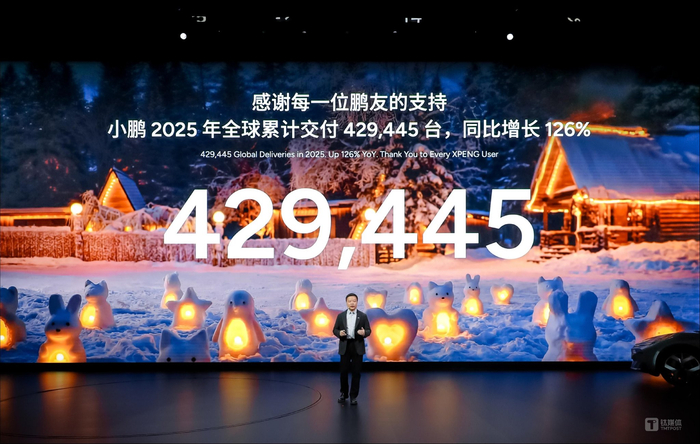
Core Viewpoint - Xiaopeng Motors is positioning itself for a new growth cycle starting in 2026, emphasizing a shift from a focus on pure electric vehicles and intelligent driving to a dual-energy product strategy, technological innovation, and global market expansion [2][3][20]. Group 1: Product Strategy - Xiaopeng launched four new models simultaneously, including the P7+, G7, G6, and G9, aiming to regain market momentum and address diverse consumer needs in a competitive landscape [3][20]. - The company is betting on a dual-energy approach, integrating both pure electric and range-extended vehicles to broaden its market reach and enhance sales stability in 2026 [7][10]. - The specifications of the new models, such as the P7+ and G7, highlight a focus on maintaining a pure electric driving experience while extending range through innovative battery and fuel tank designs [9][10]. Group 2: Market Dynamics - The range-extended vehicle market is expected to see significant growth in 2026, with over ten major automakers planning to launch new models, indicating a shift in supply-side dynamics [7][20]. - Xiaopeng's strategy aims to address the increasing competition in the electric vehicle market by expanding its product matrix and enhancing its delivery capabilities [3][10]. Group 3: Organizational Resilience - In 2025, Xiaopeng focused on restructuring its organizational capabilities, achieving a delivery of 429,000 vehicles, a 126% year-on-year increase, and reaching a milestone of one million vehicles produced [11][13]. - The company adopted a conservative approach to inventory management, prioritizing low stock levels and efficient cash flow to mitigate operational risks [13][14]. Group 4: Technological and Global Expansion - Xiaopeng is entering a critical phase of technological advancement, transitioning from conceptual to practical applications of physical AI, which is expected to be pivotal from 2026 to 2028 [15][19]. - The company is enhancing its global presence, having entered over 60 countries, and is focusing on localizing research, manufacturing, and delivery to build a sustainable international business model [17][18]. Group 5: Evaluation Criteria for 2026 - The success of Xiaopeng's dual-energy strategy will be measured by its ability to expand overall sales without internal cannibalization, maintain delivery quality and customer satisfaction across multiple models, and establish replicable success in international markets [20][21].

光刻技术 “跨界” 屏幕制造:维信诺 ViP 技术的底层突破 | 公司动态
Tai Mei Ti A P P· 2026-01-26 11:43
影像工作者需要更精准的色域,游戏玩家追求毫秒级的响应,甚至是移动办公族也希望能有出彩的显示 效果却不影响续航。在这样的背景下,在智能手机上证明了自己的OLED显示技术,正加速向平板、笔 电、车载等中大尺寸领域渗透。 据Omdia预测,2023年至2028年间,IT产品OLED面板的出货量将以每年56%的速度增长,而车载显示 OLED面板的年复合增长率将达到49%。然而,站在这一风口之上,产业界却面临着一道隐形的屏障: 沿用传统的制造工艺,似乎已难以支撑AI时代对中大尺寸OLED显示性能与成本的双重极致追求。 工艺瓶颈,亟需技术换道 要明白传统制造工艺的瓶颈,首先要了解传统制造工艺的原理。 长期以来,中小尺寸 OLED 市场被 FMM(精细金属掩模版)蒸镀工艺统治。简单来说,FMM就是一 张布满微小孔洞的金属网。制造OLED屏幕时,红、绿、蓝三种发光材料通过这张"网"被精准地"喷"到 基板上,形成像素点阵。 这项技术支撑了智能手机OLED屏幕的繁荣,但当产业试图将OLED推向中大尺寸时,它的局限开始集 中暴露。 首先,是精度瓶颈。金属网的孔洞做不到无限小,800 PPI几乎就是物理极限。其次,是尺寸限制。当 基 ...

AI来了,大厂为什么留不住高管? | 巴伦精选
Tai Mei Ti A P P· 2026-01-26 10:44
Core Insights - The article discusses the transition of tech executives from large companies to startups, driven by the AI revolution and the limitations of traditional corporate structures [2][5][24] - It highlights the emergence of two waves of entrepreneurs: the "tech believers" focused on model development and the "business translators" who prioritize commercialization [17][20] Group 1: Reasons for Departure - Executives are leaving large firms due to structural conflicts between established corporate cultures and the innovative demands of AI development [5][9] - The rise of AI technologies, particularly the Transformer architecture, has prompted many to seek opportunities outside their companies, where they can pursue innovative projects without bureaucratic constraints [5][6] - The decision-making processes in large firms often hinder rapid innovation, leading talented individuals to pursue entrepreneurial ventures where they can explore new ideas more freely [11][12] Group 2: Characteristics of Departing Executives - The departing executives often possess deep technical knowledge and a strong understanding of AI, making them valuable assets in the startup ecosystem [17][25] - They have the ability to integrate resources and build teams, which is crucial for the collaborative nature of AI projects [25] - Their insights into industry needs and market demands position them well to identify and capitalize on new business opportunities [25][26] Group 3: Challenges Faced by Large Firms - Large companies struggle to retain talent due to lengthy decision-making processes and a culture that prioritizes risk minimization over opportunity maximization [10][11] - Despite offering attractive compensation packages, these firms fail to address the underlying issues related to organizational structure and innovation [10][12] - The inability to provide a conducive environment for experimentation and risk-taking further exacerbates talent retention challenges [12][13] Group 4: Investment Trends - Investors are increasingly favoring executives with backgrounds in major tech firms, viewing them as reliable indicators of potential success in the uncertain AI landscape [24][25] - The shift in investment focus reflects a broader trend where capital seeks to mitigate risks associated with new technologies by backing experienced leaders [24][26] - The emergence of a "hunting mechanism" among investors highlights the proactive approach to identifying and supporting promising talent from large companies [27][28]

重组落地,协同发力—— 佛塑科技与金力新能源剑指锂电隔膜产业新格
Tai Mei Ti A P P· 2026-01-24 05:29
Core Insights - The acquisition of Hebei Jinli New Energy Technology Co., Ltd. by Fospower Technology has been approved by the China Securities Regulatory Commission, marking a strategic partnership aimed at enhancing competitiveness in the lithium battery industry [1][3] - The merger is expected to leverage both companies' strengths, particularly in technology and production capabilities, to drive industry upgrades and establish a new development framework [1][3] Group 1: Fospower Technology - Fospower Technology has a long-standing presence in the polymer functional film sector, having filled several domestic technological gaps and led the formulation of national standards for wet separators [1][3] - The company has invested in R&D and industrialization for over 30 years, creating a comprehensive system that includes technology development, manufacturing processes, and quality control [1][3] - Fospower aims to build a new growth engine in the new energy materials sector through this acquisition, enhancing its market position [3][4] Group 2: Jinli New Energy - Jinli New Energy is a leading player in the lithium battery wet separator market, recognized as a national-level specialized and innovative "little giant" enterprise [2][3] - The company has achieved significant technological advantages in ultra-thin and high-strength separator products, with a production capacity for 2μm ultra-thin high-strength separators and a market share of approximately 18% in the domestic wet separator market [2][3] - By mid-2025, Jinli New Energy is projected to rank second in the domestic separator industry in terms of shipment volume, with a production capacity of around 5.9 billion square meters and an overall capacity utilization rate of over 80% [2][3] Group 3: Strategic Synergies - The acquisition involves a transaction value of 5.08 billion yuan for 100% equity of Jinli New Energy, along with an additional 1 billion yuan raised to support the transaction and future development [3] - The collaboration is expected to enhance business growth, technology development, product layout, and customer resources, providing strong support for Jinli's future capacity upgrades and international expansion [3][4] - Both companies are already engaging in systematic integration across R&D sharing, production line planning, supply chain collaboration, and cutting-edge technology development [3][4] Group 4: Future Prospects - Post-restructuring, Jinli New Energy is anticipated to accelerate capacity release and efficiency optimization, reinforcing its technological and scale advantages in the ultra-thin high-strength separator sector [4] - The company is also focusing on customer certification in Europe and North America, aiming to expand its global market presence with the support of Fospower's resources and governance experience [4] - The merger represents a significant strategic move for Fospower in the new energy materials sector, with expected synergies enhancing Jinli's market participation and influence in the lithium battery separator market [4]

明阳智能复牌涨停,490亿风电巨头收购关联标的跨界“太空光伏”丨并购一线
Tai Mei Ti A P P· 2026-01-23 11:27
2026年1月23日,停牌十日的明阳智能(601615.SH)复牌后迎来一字涨停,股价报收21.65元/股,总市 值攀升至490亿元。此次股价异动的核心动因,是公司前一日晚间披露的收购预案,拟通过"发行股份 +支付现金"的方式,收购中山德华芯片技术有限公司(下称"德华芯片")100%股权,并配套募集资金 补充流动性。 这场看似常规的并购交易,串联起控股股东主导的关联交易、太空光伏的热点概念与上市公司自身的财 务现状。在行业竞争加剧与资本市场热点交织的背景下,此次收购既是明阳智能拓展新兴业务的战略尝 试,也引发了市场对交易细节、标的价值及后续发展的多重关注。 浓厚的家族关联交易 明阳智能的此次收购,从交易发起方到标的股权结构,都打上了鲜明的"家族关联"烙印。与多数上市公 司自主筹划并购不同,本次交易的主导者并非公司本身,而是其控股股东明阳能投集团。2026年1月12 日,明阳智能收到控股股东出具的《关于筹划重大事项的通知》,才正式启动对德华芯片控制权的收购 进程。 标的公司德华芯片的股权穿透直指上市公司实控人家族。公开信息显示,德华芯片的控股股东为广东明 阳瑞德创业投资有限公司,该公司由明阳智能董事、副总裁张超 ...


农药概念三年新高:退税调整挤泡沫,行业自愈破内卷丨行业风向标
Tai Mei Ti A P P· 2026-01-23 11:12
Group 1: Market Performance and Trends - The A-share pesticide concept sector is experiencing a strong upward trend, with the pesticide concept index reaching 883.41 points, marking a new three-year high and a nearly 94% rebound since its low of 456.27 points in February 2024 [2] - The market consensus indicates a significant breakthrough in the long-standing low-price competition within the Chinese pesticide industry, driven by policy corrections, internal industry changes, and a cyclical recovery in overseas demand [2] Group 2: Policy Changes and Industry Impact - The Ministry of Finance and the State Taxation Administration announced the cancellation of VAT export rebates for over 20 pesticide raw materials and intermediates, effective April 1, which targets the long-standing issues of overcapacity and inefficient resource use in the industry [5] - The cancellation of the 9% export rebate is expected to increase offshore costs for related products, pressuring companies to eliminate outdated production capacity [7] Group 3: Industry Challenges and Shifts - The pesticide industry has been plagued by overcapacity and severe price wars, with an average profit margin of only 5.7% in 2024, the lowest in a decade [8] - The industry is characterized by a high number of small enterprises (over 70% of total) that contribute less than 30% of production capacity, many of which face environmental and operational challenges [7] Group 4: Positive Developments and Future Outlook - A positive trend is emerging as more companies shift from low-value generic pesticide production to high-end formulations and biopesticides, indicating a structural upgrade in product offerings [9] - The global pesticide market is expected to see a recovery in demand as inventory levels normalize, with China's pesticide exports projected to increase significantly in 2024 [14][16] Group 5: Mergers and Acquisitions - The pesticide industry is witnessing a new wave of mergers and acquisitions, with the concentration ratio (CR10) increasing from 34% to 45%, driven by policy adjustments and a recovery in overseas demand [17] - Various types of acquisitions are occurring, including global expansion and vertical integration, aimed at enhancing competitiveness and reducing cost volatility [17] Group 6: Strategic Industry Changes - Companies are focusing on three main dimensions for transformation: emphasizing technological innovation for green products, optimizing industrial layout to extend value chains, and managing costs effectively during the current market window [18]

以岭药业重拾增长趋势:2025年预盈超12亿元,高研发投入进入兑现期
Tai Mei Ti A P P· 2026-01-23 10:21
以岭药业 1月22日,以岭药业(002603.SZ)发布2025年度业绩预告。公司预计,2025年度归属于上市公司股东的 净利润为12亿元–13亿元,同比扭亏为盈,标志着经营层面的关键性拐点初步显现。 在宏观环境承压、行业竞争白热化的背景下,这份成绩单是以岭药业长期坚持"研发驱动"与"管理提 效"双轮战略进入收获期的明确信号。 2025年前三季度,公司已实现营收58.68亿元,归母净利润10亿元,同比增长80.33%。据此测算,第四 季度单季净利润约为2亿至3亿元。 这一变化背后,是公司强化全链条成本控制、推动"提质增效"管理变革的直接成果。以岭药业在公告中 指出,2025年是以岭药业"七五"规划的攻坚之年。在宏观环境偏弱、行业竞争加剧的背景下,公司管理 层保持战略定力,坚持"着眼长远发展"的总体思路,一手"外拓市场"、一手"内抓管理",推动主业经营 走出恢复性上行通道。 | 项目 | 本报告期(2025年1-12月) | 上年同期 | | --- | --- | --- | | 归属于上市公司 股东的净利润 | 盈利:120,000 万元-130,000 万元 | 亏损:72.451.56 万元 | | 扣 ...

“不务正业”,中国移动下场卖保险
Tai Mei Ti A P P· 2026-01-23 10:04
Core Insights - China Mobile officially enters the insurance market, leveraging its vast user base of nearly 1 billion and extensive offline channels to disrupt the competitive landscape of the insurance industry [1][10][14] Group 1: Strategic Entry into Insurance - The entry into insurance is a culmination of over 20 years of strategic positioning, starting with the establishment of a national insurance brokerage in 2001, which allowed China Mobile to navigate regulatory frameworks and sales processes effectively [1][2] - In 2016, China Mobile became the second-largest shareholder of China Merchants Renhe Life Insurance, marking a shift from simple channel cooperation to a deeper capital partnership aimed at creating synergistic effects between channels, capital, and products [2][10] - The launch of "Home Insurance" and "Medical Insurance" in early 2026 represents a significant step towards large-scale operations, with initial trials focused on local markets to assess product fit and user acceptance [2][3] Group 2: Product Offerings and Market Response - The "Medical Insurance" product addresses the common pain point of high medical costs, offering low entry barriers and comprehensive coverage, with annual premiums ranging from 199 to 699 yuan and a maximum coverage of 1.118 million yuan [4][10] - The "Home Insurance" product combines property and accident coverage with value-added services, offering flexible pricing from free to 199 yuan per month, with a maximum coverage of 1.442 million yuan [5][6] - Initial market feedback indicates that while the products are attracting attention due to their integration with communication services, there are concerns regarding limited coverage and unclear terms [3][4] Group 3: Financial Performance and Market Context - China Mobile's financial performance remains strong, with a revenue of 1,040.76 billion yuan in 2024, a year-on-year increase of 3.12%, and a net profit of 138.4 billion yuan, reflecting robust profitability and cash flow stability [7][10] - The overall telecom industry is experiencing a slowdown in revenue growth, prompting China Mobile to seek new profit avenues through insurance, which offers stable cash flow and long-term lifecycle benefits [10][12] - The shift towards insurance is seen as a strategic move to diversify revenue streams and alleviate pressure from traditional business segments, which are nearing saturation [10][12] Group 4: Competitive Landscape and Industry Dynamics - The competitive landscape among telecom operators is evolving, with China Unicom focusing on AI and partnerships, while China Telecom is retracting from the insurance sector, highlighting differing strategic responses to market pressures [3][8] - The insurance market in China is characterized by intense competition, with significant growth potential in health and property insurance, particularly in underserved markets [11][12] - China Mobile's strategy to leverage its extensive offline presence and user trust aims to enhance accessibility and integration of insurance services into everyday life, positioning it as a "hidden guardian" in consumers' daily activities [14]

金马游乐的转型焦虑:业绩波动加剧、毛利率下滑,定增加码机器人是解药吗?
Tai Mei Ti A P P· 2026-01-22 10:48
Core Viewpoint - Jinma Amusement (300756.SZ) has announced a private placement plan to raise up to 1.053 billion yuan, aiming to transition from a "manufacturer of amusement equipment" to a "comprehensive service provider in cultural tourism and entertainment" through investments in four core areas [2] Fund Allocation - The fundraising plan allocates funds primarily to four areas: 4.54 billion yuan (43.1%) for the development and industrialization of cultural tourism and entertainment robots, 2.85 billion yuan for park and scenic spot construction and operation, 1.94 billion yuan for IP empowerment projects, and 1.2 billion yuan for working capital [3][4] Project Details - The cultural tourism and entertainment robot project is the focal point, with a construction period of 36 months, aiming to establish a research and industrialization base in Zhongshan, producing various types of robots for theme parks and commercial complexes [4][5] Strategic Rationale - The company’s confidence in heavily investing in this field is based on three core logics: 1. Long-term experience in amusement equipment, with technologies that can be quickly adapted for intelligent robots 2. Natural advantages in landing scenarios, having served over 1,000 theme parks and scenic spots globally 3. Validation from previous practices, including strategic investments and successful product launches [5] Business Model - The IP empowerment project aims to integrate high-quality IP resources with amusement equipment and robots, addressing cultural deficiencies in tourism products. The park and scenic spot operation project focuses on creating a "manufacturing + operation" business loop [6][5] Financial Structure - The 1.2 billion yuan allocated for working capital aims to optimize the company's financial structure, reducing the asset-liability ratio and enhancing risk resistance [6] Performance Fluctuations - Jinma Amusement has experienced significant performance volatility over the past five years, with a peak in 2019 followed by a decline due to the pandemic and industry competition. Despite a revenue increase to 569 million yuan in the first three quarters of 2025, the underlying performance remains concerning [7][9][10] Revenue Trends - In 2023, revenue rose to 739 million yuan, an increase of 81.96%, but net profit dropped significantly compared to 2019 levels. The company faced a revenue decline of 21.88% in 2024, with net profit plummeting by 97.38% [10][12] Core Business Challenges - The core amusement equipment manufacturing business, which accounts for over 90% of revenue, has seen a decline in profitability, with gross margins dropping from 55.22% in 2019 to 31.13% in 2024 due to an imbalance in product structure [12] Insider Selling - Prior to the fundraising announcement, the company's actual controller and key executives executed a significant sell-off, raising over 300 million yuan, which has raised concerns about the company's confidence and capital operation logic [12][13] Transition Challenges - The upcoming 1.053 billion yuan private placement represents both an opportunity for transformation and a high-stakes gamble for the company, as it faces multiple challenges in technology implementation, market validation, and profitability [14]