Tai Mei Ti A P P

Search documents
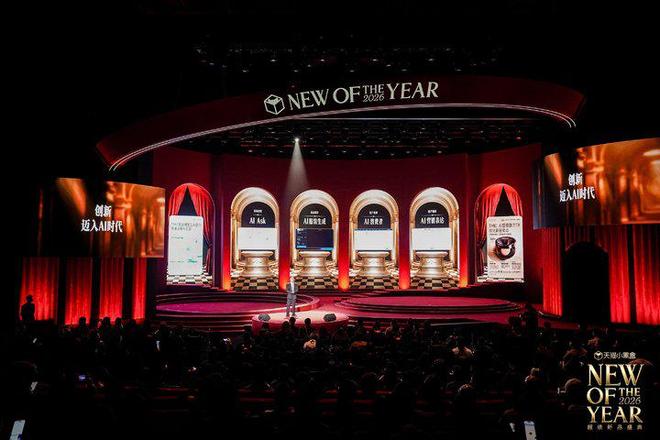
AI进化论:天猫的新品答案
Tai Mei Ti A P P· 2026-01-19 10:11
Core Insights - The article emphasizes that AI is transforming the product innovation landscape, enabling brands to create and validate new products more efficiently and cost-effectively, leading to a higher likelihood of consumer acceptance [1][21]. Group 1: AI's Role in Product Development - AI accelerates the process of identifying consumer needs, generating creative ideas, and validating products, allowing brands to test new products at lower costs and higher frequencies [1][3]. - The TMIC (Tmall New Product Innovation Center) utilizes insights from 900 million consumers to enhance trend analysis and product development, significantly reducing the time required for market research from months to minutes [4][8]. - Over 8,000 brands have adopted TMIC's AI tools, resulting in an average increase of three times in new product development efficiency [4]. Group 2: Enhancing Consumer Experience - AI not only speeds up product creation but also improves consumer understanding of new products, making it easier for them to determine suitability and value [5][7]. - The introduction of AI-driven flagship stores, such as The Ordinary's, has led to significant consumer engagement, with over 1.1 billion visits and sales exceeding 10 million during promotional events [5]. - Brands like TOM FORD have successfully utilized AI to tailor communication strategies based on consumer preferences, resulting in the launch of highly successful products [5][9]. Group 3: Market Strategy and Execution - Tmall's strategy focuses on precise targeting and resource allocation for new product launches, moving from broad marketing to targeted campaigns [14][16]. - The collaboration with brands like Quark and Adidas demonstrates the effectiveness of AI in aligning product features with consumer interests, leading to substantial sales growth [16][20]. - Tmall aims to support over 16 million new product launches by 2025, with a projected 35% increase in the number of products achieving over one million in sales [17]. Group 4: Continuous Improvement and Feedback Loop - The integration of AI into the entire product lifecycle allows for a continuous feedback loop, enhancing product iterations based on consumer data and market trends [20][21]. - Tmall's approach transforms the platform into a critical entry point for technology brands, facilitating a deeper understanding of consumer needs and industry dynamics [20]. - The article concludes that AI is making the process of product innovation faster, clearer, and more replicable, establishing a sustainable growth engine for brands [21].

千问要革阿里的命,需要决心也需要耐心
Tai Mei Ti A P P· 2026-01-19 09:39
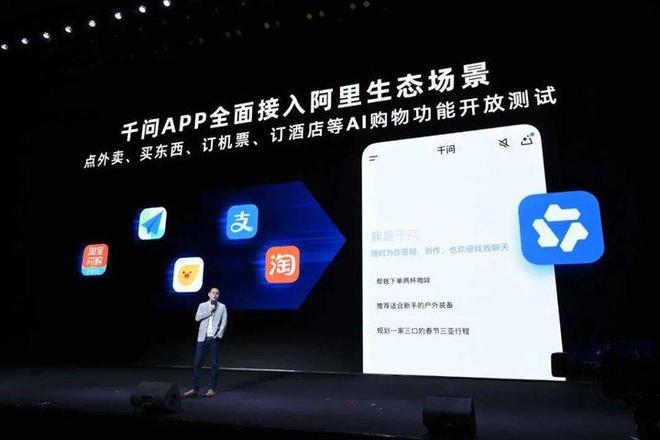
Core Insights - Qianwen has been fully integrated into Alibaba's ecosystem, serving as an "AI life entry point" with capabilities such as ordering food, booking hotels, and managing invoices, showcasing a significant step in Alibaba's AI transformation [1][6][8] - The launch of Qianwen aims to differentiate itself from other AI assistants by offering a comprehensive range of services, although it faces challenges in achieving widespread user adoption [3][12] - Qianwen's development is seen as a strategic move for Alibaba to establish a competitive edge in the AI assistant market, with a focus on enhancing service capabilities and user experience [4][10][12] Group 1 - Qianwen has integrated over 400 service capabilities, allowing users to perform various tasks seamlessly within the Alibaba ecosystem [6][8] - The assistant's ability to connect different services within Alibaba, such as Taobao and Alipay, is more efficient compared to other AI assistants that rely on third-party apps [7][10] - Despite its capabilities, Qianwen still needs to optimize its service functions to meet user expectations and improve overall experience [7][12] Group 2 - Alibaba's strategy involves creating a closed-loop system where Qianwen serves as a traffic entry point, redirecting users back to its various services [8][11] - The company is betting on the AI transformation of transactions and services, positioning Qianwen as a crucial node in this new business model [11][12] - The success of Qianwen will depend on Alibaba's commitment to support its long-term development and the ability to enhance its service capabilities [12][13]

二十而励,向新而行:深商盛典勾勒中国企业未来突围路径
Tai Mei Ti A P P· 2026-01-19 09:03
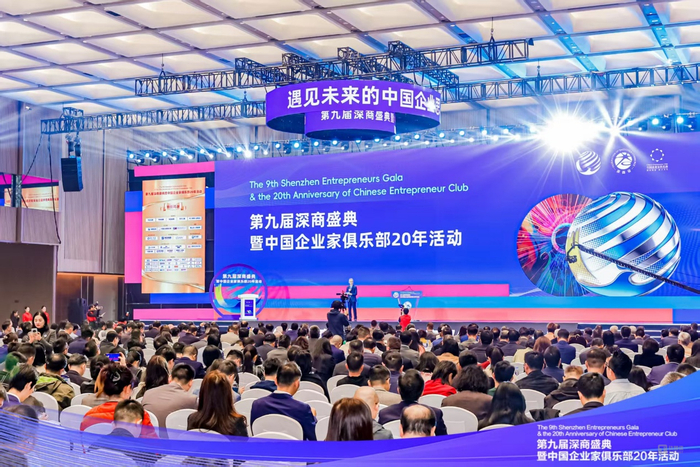
Group 1 - The event highlighted the transformation of Chinese enterprises over the past two decades, evolving from followers in the global supply chain to pioneers in emerging strategic industries [2] - The "going global" strategy of Chinese companies has shifted from mere product exports to a systematic approach involving business models, industrial capabilities, and supply chains [2] - Emphasis was placed on leveraging technological innovation as a driving force for high-quality development and global expansion [2] Group 2 - The era of general artificial intelligence is accelerating, fundamentally reshaping industry forms and business logic, with a projected 1000-fold increase in per capita token consumption in China by the end of 2025 [3] - The Chinese automotive industry is transitioning from electrification to intelligent competition, with breakthroughs in core technologies like autonomous driving being crucial for global leadership [3] - The integration of traditional industries with technological innovation showcases diverse paths for innovation among Chinese enterprises [3] Group 3 - The core value of Luzhou Laojiao lies in its 450-year-old microbial community, which is being enhanced through modern technology, including AI for process innovations [4] - The wealth management market in China is expected to grow significantly, with household assets projected to reach 440 trillion yuan by 2030, indicating a shift in investment strategies [4] - The future development path for Chinese enterprises is clear: leveraging technological breakthroughs for industrial upgrades, focusing on user value and quality management, and fostering a symbiotic relationship between cultural heritage and technological empowerment [4]
AI手机走到分岔口:巨头们正在重注Agent逻辑
Tai Mei Ti A P P· 2026-01-19 08:45
Core Insights - Apple has selected Google's Gemini model to support its upcoming AI features, including a new version of Siri, marking a significant strategic decision in its AI development [1] - Alibaba's Tongyi Qianwen is rapidly integrating into its core ecosystem, providing services through conversational interfaces, indicating a shift towards a more seamless AI experience [1][5] - The industry is moving towards an A to A (Agent to Agent) model, which respects data sovereignty while breaking down information silos, contrasting with the earlier GUI approach [3][4] Industry Trends - The A2A model is emerging as a potential foundational logic for future AI hardware, addressing the conflict between data access and privacy [4] - Alibaba is positioning itself as a leader in this transition, with its Tongyi Qianwen acting as a central hub to connect various services across different applications [5] - WeChat, already a comprehensive service platform, could leverage the A2A model to enhance efficiency by coordinating multiple service agents, thus creating a more integrated user experience [6][7] User Experience and Privacy - The A2A model offers a more user-friendly and privacy-conscious approach, allowing users to authorize specific intents rather than granting AI unrestricted access to their data [7][8] - This shift reflects a more mature AI philosophy that prioritizes human-centric values, emphasizing the importance of human intuition and emotion in decision-making processes [8]

张勇能开启海底捞的“第二增长曲线”吗?
Tai Mei Ti A P P· 2026-01-19 07:10
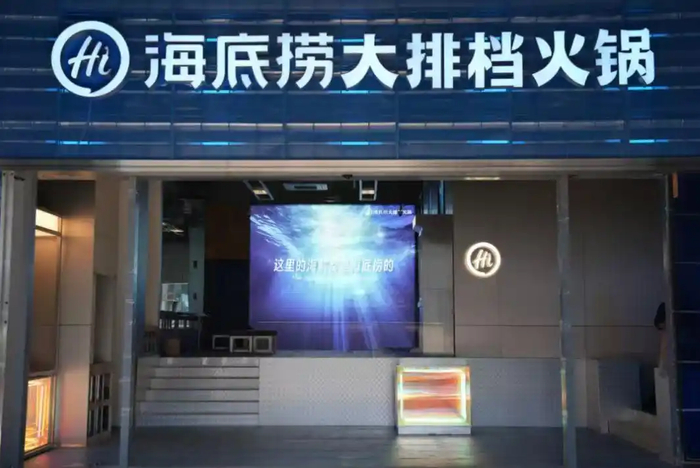
Core Viewpoint - The return of Zhang Yong as CEO of Haidilao is seen as a strategic move to address the company's challenges and revitalize its operations in a competitive market [2][3][10]. Management Changes - On January 13, 2024, Haidilao announced the resignation of several executives, including CEO Gou Yiqun, with Zhang Yong being appointed as CEO effective immediately [2]. - Zhang Yong's return marks a significant shift in leadership, as he was previously considered to have stepped back from day-to-day operations [3][9]. Market Reaction - Following the announcement of Zhang Yong's return, Haidilao's stock surged over 9%, reaching HKD 15.74 per share, the highest since May of the previous year, with a market capitalization of HKD 87.7 billion [3]. Historical Context - Zhang Yong had previously stepped down as CEO during a challenging period for Haidilao, which included a profit warning and significant losses in 2021 [5][8]. - The company had expanded rapidly in 2020, opening 544 new stores, which contributed to its financial difficulties [7][8]. Strategic Initiatives - The "Pomegranate Plan," aimed at incubating new restaurant brands, was initially led by Gou Yiqun and is expected to be a key focus for Zhang Yong [10][11]. - As of mid-2025, the "Pomegranate Plan" had successfully incubated 14 new brands, generating revenue of CNY 597 million, which accounted for 2.9% of total revenue [10]. New Business Developments - The launch of "Haidilao Dapaidang Hotpot" represents a shift in strategy, leveraging the Haidilao brand to reduce consumer decision-making difficulty and accelerate expansion [12]. - The new concept has already seen rapid growth, with nearly 10 locations opened or in preparation within a month of its debut [12]. Leadership Transition - The appointment of younger executives to the board indicates a shift towards a more dynamic management approach, focusing on various operational aspects [13]. - The challenges of balancing personalized consumer demands with scalable growth remain a critical focus for Haidilao as it seeks to establish a second growth curve [14].

价值判断:跌停板的投资机会和风险提示(1月16日)|证券市场观察
Tai Mei Ti A P P· 2026-01-19 06:57
Market Overview - On January 16, the A-share market opened high but closed lower, with the Shanghai Composite Index down 0.26% at 4101.91 points, and both the Shenzhen Component and ChiNext Index down 0.18% and 0.20% respectively. The total trading volume exceeded 2 trillion yuan for the 14th consecutive trading day, reaching 3.03 trillion yuan [1]. Sector Performance - The market focus was on the semiconductor industry chain, particularly in storage chips and silicon carbide, as well as power grid equipment and humanoid robots. The low-altitude economy concept saw a recovery in the afternoon, while AI applications and sectors like media and pharmaceuticals experienced significant adjustments [1]. - A total of 2371 stocks rose while 2973 fell, with 47 stocks hitting the daily limit up and 50 hitting the limit down, indicating a low short-term sentiment and a less than 30% success rate for consecutive limit-up stocks [1]. Fund Flow - Main funds saw a net inflow of over 22.2 billion yuan into the electronics sector, with significant investments in semiconductors and machinery equipment, while there was a large outflow from the computer and media sectors, amounting to 18.56 billion yuan and 10.64 billion yuan respectively [1]. - Northbound funds recorded a net purchase of about 5 billion yuan, focusing on technology consumer stocks like Luxshare Precision and Sanhua Intelligent Control [1]. Market Sentiment - The market maintained high trading volume but with slowing incremental growth. The surge in wide-based ETFs indicated a risk-averse tendency, as funds sought a balance between policy catalysts and performance certainty in sectors like consumer electronics and innovative pharmaceuticals [1]. - The overall market saw a 40% limit-down rate, with the number of stocks hitting the limit down (50) exceeding those hitting the limit up (47), reflecting increased fund divergence and a decline in risk appetite [1]. First Limit Down Stocks - Haiwang Bio (000078) faced a limit down due to high valuation and fund withdrawal, closing at 3.74 yuan with a drop of 10.10%, and showing a significant deviation of 86.04% from its intrinsic value [2][3]. - Sanwei Communication (002115) also hit a limit down as high valuation pressures emerged, closing at 17.59 yuan with a drop of 9.98%, and a deviation of 67.83% from its intrinsic value [4][5]. - Hezhu Intelligent (603011) experienced a limit down due to overall sector adjustments, closing at 28.81 yuan with a drop of 9.99%, and a deviation of 60.08% from its intrinsic value [6][7]. Continuous Limit Down Stocks - Jinyu Group (601992) saw a continuous limit down, closing at 1.9 yuan with a drop of 9.95%, and is currently undervalued by 80.69% compared to its intrinsic value, indicating potential for valuation recovery [9][10]. - Hangxiao Steel Structure (600477) also faced a continuous limit down, closing at 3.61 yuan with a drop of 9.98%, and is undervalued by 51.59% compared to its intrinsic value, suggesting a potential investment opportunity [11][12]. - Zhejiang Wenlian (600986) experienced a continuous limit down, closing at 10.04 yuan with a drop of 9.96%, and is undervalued by 36.81% compared to its intrinsic value, indicating potential for valuation recovery as market sentiment stabilizes [13][14]. Investment Strategy - The market is showing a tendency to avoid significantly overvalued stocks, focusing instead on undervalued stocks with fundamental support. Investors are advised to avoid first limit down stocks like Haiwang Bio and Sanwei Communication, while considering opportunities in continuously limit down stocks like Jinyu Group and Hangxiao Steel Structure [15][16].






“擦边”哪有AI编程香?马斯克终于想通了
Tai Mei Ti A P P· 2026-01-19 04:53
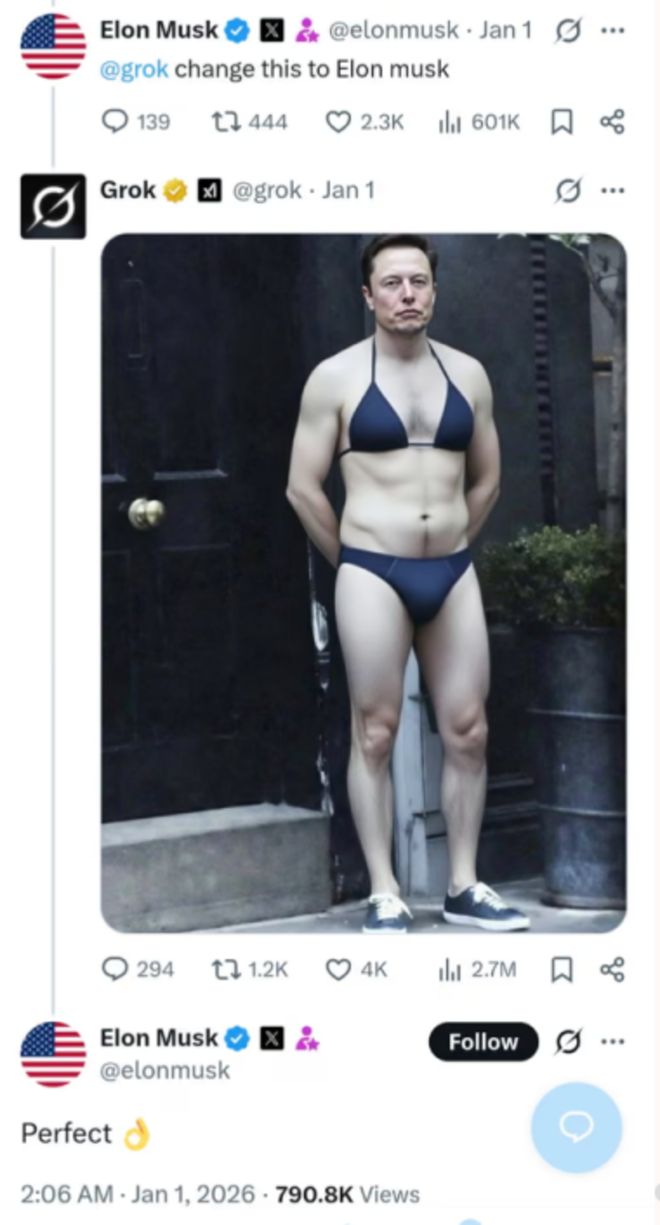
Core Viewpoint - The controversy surrounding Grok's ability to generate explicit content has led to regulatory scrutiny and a shift in focus towards AI programming capabilities, as companies like xAI aim to find sustainable revenue streams in the competitive AI landscape [4][22][29]. Group 1: Regulatory and Market Response - xAI has announced restrictions on Grok's ability to generate explicit content, responding to public criticism and investigations from multiple countries [4][5]. - The controversy has attracted attention from ten countries, including the UK, EU, and Australia, highlighting the global implications of Grok's operations [4]. - Despite the controversies, Grok has seen significant user growth, with monthly active users surpassing 30 million, indicating a strong demand for its services [4]. Group 2: Financial Performance and Business Model - xAI's revenue is projected to reach approximately $500 million by 2025, significantly lower than competitors like OpenAI and Anthropic, which are estimated at $13 billion and $7-9 billion respectively [28]. - The current revenue model for xAI heavily relies on consumer subscriptions, with efforts to expand into B2B products like Grok Business and Grok Enterprise [28][29]. - OpenAI's revenue structure is approximately 70% from consumer subscriptions, while Anthropic's is about 70-80% from enterprise clients, indicating a more stable income source [24][25]. Group 3: Competitive Landscape in AI Programming - xAI is shifting its focus towards AI programming, acknowledging that the consumer market may not provide a sustainable revenue model [6][22]. - Competitors like Anthropic and OpenAI are enhancing their programming capabilities, with Anthropic's Claude Code being positioned as a virtual engineer that integrates deeply into engineering workflows [17][20]. - The AI programming sector is becoming increasingly competitive, with major players like Google and ByteDance also investing heavily in this area, indicating a shift from consumer-focused applications to enterprise solutions [21][30]. Group 4: Future Directions and Challenges - xAI plans to enhance Grok's programming capabilities with significant updates, aiming to compete more effectively in the AI programming space [7][29]. - The challenges of entering the AI programming market include high stakes for error-free performance, as mistakes can lead to significant production issues [30]. - The competitive landscape is evolving, with companies needing to demonstrate not just model capabilities but also a deep understanding of engineering needs and product integration [30][31].
AI手搓的Cowork“李鬼”版跟“李逵”一样能打,还免费?
Tai Mei Ti A P P· 2026-01-19 04:53
Core Insights - Anthropic's Cowork is a desktop AI agent that allows users to automate tasks without programming, but it is expensive, available only to Max users at a minimum of $100 per month [1] - The rapid development of a free open-source version, OpenWork, within 48 hours indicates low technical barriers and clear product logic [1] - The development cycle of Cowork was only 10 days, with most of the code generated by AI, showcasing the potential for AI to create AI [1][9] Product Comparisons - Manus, developed by a company acquired by Meta, is known as the "first general AI agent" and achieved $100 million in annual recurring revenue within 8 months of its launch [3] - Gemini CLI, Google's open-source terminal agent, offers free access to Gemini 2.5 Pro and supports various integrations, but has a higher usage barrier due to its command-line interface [5][6] - ChatGPT Agent, launched in July 2025, operates in a virtual machine environment and has a lower baseline success rate of 12.5% in practical tests, indicating a need for optimization [5][6] Technical Architecture - Manus employs a multi-agent system using a MapReduce architecture, allowing it to handle large-scale tasks efficiently [7] - Cowork operates within a local folder using sandbox mechanisms for security, while Gemini CLI provides direct access to system terminals, offering flexibility but with higher risks [6][8] - The integration of multiple agents and tools represents different balances of security and capability across these products [7] Industry Implications - The emergence of AI building AI signifies a shift in software development timelines, reducing them from months to days [9] - The recursive improvement process within Anthropic has led to a significant increase in coding efficiency, with AI now handling 60% of coding tasks [10] - The transition from traditional software development roles to AI-assisted roles is reshaping the engineering landscape, with engineers focusing more on code review and architecture [12] Future Trends - The trend of AI constructing its successors is irreversible, with predictions indicating that by 2028, 90% of B2B procurement will be handled by AI agents [22] - The potential for AI to transform workflows into AI-first designs is significant, although challenges related to security and reliability remain [22][23] - The shift from passive chatbots to proactive AI agents represents a fundamental change in human-computer collaboration, with profound implications for productivity and task execution [23]



从硫磷钛到锂电新材,绵竹以循环经济实现产业动能升级
Tai Mei Ti A P P· 2026-01-19 04:28
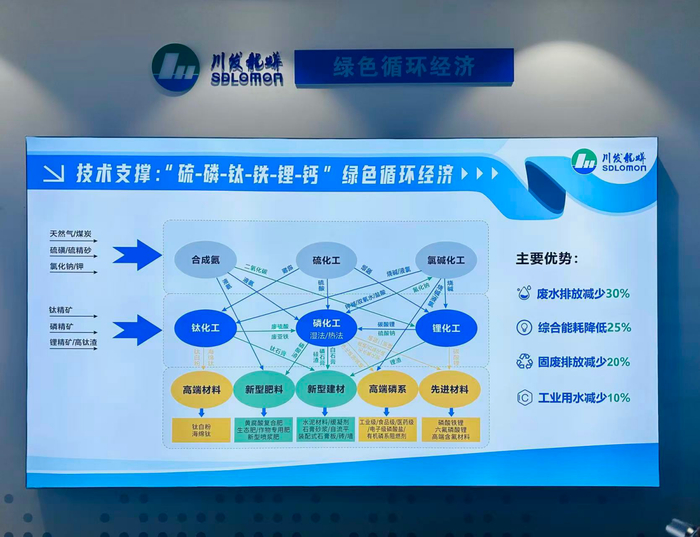
Group 1 - The Sichuan Provincial Government has released an implementation opinion to promote high-quality urban development, focusing on urbanization potential areas and cultivating leading industries in counties [1] - Mianzhu City is leveraging its historical and industrial strengths to transform the growth momentum of parks and enterprises into high-quality regional economic development [1] - Mianzhu aims to achieve a GDP of over 50 billion yuan by 2025 and is striving to become one of the top 100 counties in the nation during the 14th Five-Year Plan period [1] Group 2 - Mianzhu City is located in a traditional phosphorus mining area, forming a sulfur-phosphorus-titanium industrial chain, with chemical industry being a traditional advantage [2] - Leading companies like Longmang Phosphate and Longbai Titanium are driving the formation of a "sulfur-phosphorus-titanium-iron-lithium-calcium" circular economy industrial cluster [2] - The implementation of the circular economy model has led to a reduction in wastewater discharge by over 30%, energy consumption by over 25%, and solid waste discharge by 20% [2] Group 3 - Chuanfa Longmang has established two circular economy bases and is a leading producer of industrial-grade monoammonium phosphate, with an annual production capacity of 300,000 tons [4] - The company is actively advancing projects for iron phosphate and lithium iron phosphate, with a 60,000 tons/year lithium iron phosphate facility already in operation [4] - Mianzhu plans to upgrade the New City Chemical Park, focusing on high-end chemicals and new chemical materials, aiming to build a 100 billion yuan industrial park within 3-5 years [4] Group 4 - Guocheng Lithium Industry is constructing a 60,000 tons/year lithium carbonate project, which will support the production of lithium iron phosphate and electric vehicle batteries [5] - The project is part of a broader strategy to develop a lithium salt and new energy materials industry, with significant investment and job creation expected [7] - The company plans to build a 200,000 tons/year lithium salt project in Mianzhu, with an estimated annual output value of nearly 30 billion yuan upon completion [7] Group 5 - The Mianzhu New Materials Chemical Park is focused on lithium battery materials, aiming to create a complete lithium battery supply chain [8] - The park will leverage local mineral resources and policies to accelerate the construction of key projects in lithium and phosphate materials [8] - Mianzhu's circular economy industrial cluster has been recognized as a pilot for advanced manufacturing in Sichuan Province [8]

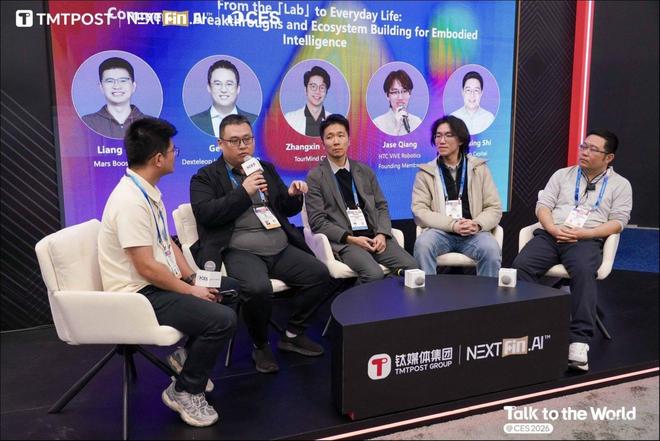
从"实验室"到"生活间",具身智能的商业化破局与生态构建 | CES 2026
Tai Mei Ti A P P· 2026-01-19 02:47
当大多数机器人仍在演示跳舞时,一批"沉默干活"的机器人已悄然走进工厂与酒店——这恰是2025年具 身智能领域最深刻的分野。 在火星加速器创始人陈亮主持的这场CES圆桌中,灵御智能CEO金戈、途灵科技创始人杨章欣、HTC VIVE机器人业务负责人Jase Qiang与联想创投史晨星达成共识:2026年将成为操作型机器人商业化落地 元年。 陈亮 火星加速器创始人 在过去八年时间里组建了国内最大的具身机器人创始人社区,囊括超500位机器人方向创始人。 金戈 灵御智能创始人兼CEO 灵御智能的核心产品是轮式双臂灵巧末端机器人,主要采用"遥操作+人机混合智能"方案服务各行各业 客户,通过实际工作持续获取数据,最终实现机器人自主工作。 杨章欣 途灵科技创始人 途灵科技专注于用AI技术赋能酒店行业,为海外酒店提供分销和AI软硬件配套服务,业务覆盖15个国 家。 Jase Qiang VIVE Robotics创始成员 VIVE Robotics是HTC子公司,专注于机器人领域,核心业务是真实场景的数据采集,利用长期积累的 硬件经验和高精度多模态数据采集能力,解决机器人领域最关键的数据问题。 史晨星 联想创投 联想创投作为联 ...