Tai Mei Ti A P P

Search documents
17亿纾困变夺权?贵州百灵实控人与华创证券对簿公堂
Tai Mei Ti A P P· 2025-12-03 14:23
Core Viewpoint - The legal dispute between Guizhou BaiLing's controlling shareholder Jiang Wei and Huachuang Securities has escalated from a capital rescue initiative to a courtroom battle, highlighting the complexities and risks associated with equity pledges in the A-share market [6][18]. Group 1: Background of the Dispute - The conflict originated in 2019 when Jiang Wei, the major shareholder of Guizhou BaiLing, accepted a rescue plan from Huachuang Securities amid high pledge ratios, but the plan failed to exit on schedule, leading to litigation [2][18]. - Jiang Wei had pledged over 20 billion yuan since 2012 for investments in various projects, resulting in significant financial strain and a high pledge ratio, with 97.49% of his shares pledged by the end of 2018 [7][10]. - In December 2018, Guizhou BaiLing signed a strategic cooperation agreement with Huachuang Securities to address the high stock pledge ratio, marking the beginning of their partnership [8][10]. Group 2: Financial Details and Agreements - By September 2019, Huachuang Securities had invested 1.4 billion yuan to acquire 161 million shares of Guizhou BaiLing, representing 11.54% of the total share capital, along with a 361 million yuan stock pledge loan [10][15]. - The rescue fund was set to last for three years, extendable to five, with specific terms for share sales and a priority buyback right for Jiang Wei [10][12]. Group 3: Escalation of Conflict - Tensions rose as Huachuang Securities began to exert control over Guizhou BaiLing's management, leading to accusations from Jiang Wei of obstruction and mismanagement [12][13]. - The financial situation worsened for Jiang Wei, with total interest payments reaching approximately 2.09 billion yuan by mid-2025, and his shares fully pledged, leading to potential forced sell-offs [15][16]. - The conflict culminated in lawsuits filed by both parties, with Huachuang Securities seeking repayment of the rescue funds and Jiang Wei counter-suing for damages and enforcement of the buyback agreement [18][20]. Group 4: Market Implications - The ongoing legal battle and the issues surrounding equity pledges may serve as a cautionary tale for investors in the A-share market, particularly regarding the risks associated with high pledge ratios and the complexities of rescue agreements [6][21]. - The situation has drawn attention from regulatory bodies, with Jiang Wei facing investigations for alleged insider trading and disclosure violations, further complicating the narrative [23].



安凯微失血仍举债豪赌,十余家VC借道曲线退出
Tai Mei Ti A P P· 2025-12-03 11:16
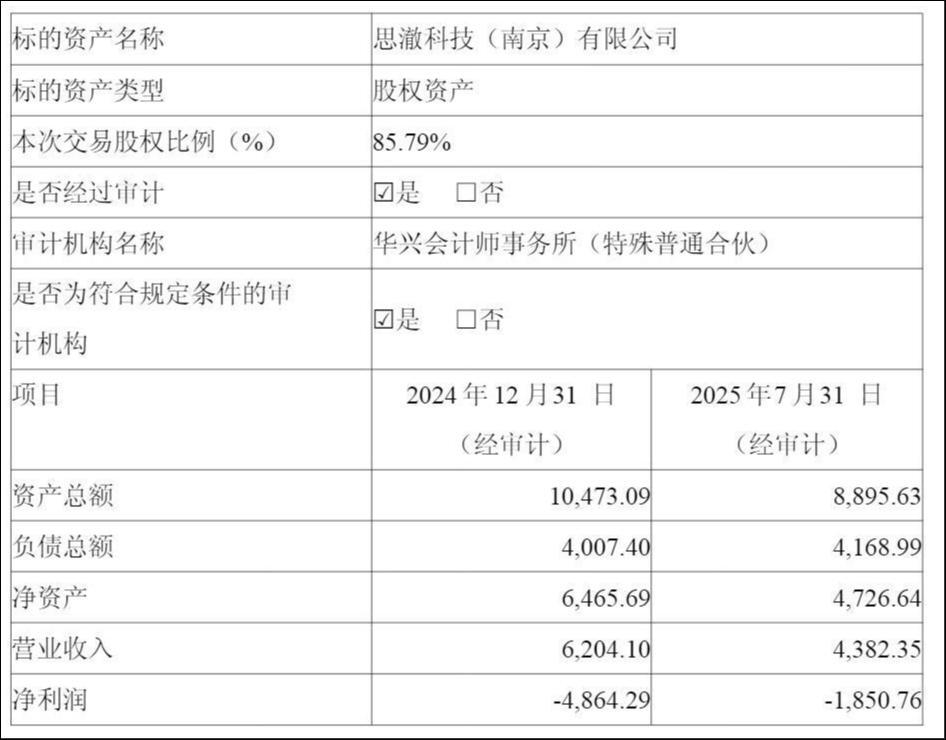
Core Viewpoint - Ankai Micro (688620.SH) plans to acquire 85.79% of Siche Technology for 326 million yuan in cash, despite Siche not being profitable yet. The acquisition is valued at a high premium due to Siche's technology in ultra-low power AIoT chips and its synergy with Ankai Micro in various aspects [1][2][10]. Financial Overview - The acquisition price is based on a valuation of 375 million yuan for Siche Technology, with a significant increase in shareholder equity value of 127.52% and a combined equity increase of 714.53% [2][3]. - Siche Technology reported revenues of 62.04 million yuan and 43.82 million yuan for 2024 and the first seven months of 2025, respectively, with net losses of 48.64 million yuan and 18.51 million yuan [2][3]. Acquisition Structure - The acquisition includes performance guarantees, where if the net profit during the commitment period (2026-2028) is negative, the founding shareholders must transfer remaining shares at zero cost [3][4]. - The founding team has committed to keeping the core team intact, with a maximum turnover rate of 50% during the performance commitment period [4]. Financial Challenges - Ankai Micro faces liquidity pressure, with a cash balance of 310 million yuan and short-term liabilities of 146 million yuan as of Q3 2025. The company plans to finance the acquisition through a combination of its own funds and bank loans [4][6]. - The company has to manage over 500 million yuan in investment projects alongside the 326 million yuan acquisition payment, indicating a significant financial balancing challenge [6]. Market Context - Ankai Micro, listed on the Sci-Tech Innovation Board in June 2023, has seen a decline in performance since its IPO, with continuous losses and negative operating cash flow [5]. - The acquisition aims to enhance product offerings, accelerate technology upgrades, and improve market competitiveness through shared resources and reduced costs [10]. Investor Dynamics - The acquisition features a differentiated pricing mechanism, where external investors sold their shares at a higher valuation compared to the founding team, indicating a strategic exit for venture capitalists [7][10].

中国人工智能大会丨对话蒋俏蕾:AI离真人还差得很远,未来也未必像人
Tai Mei Ti A P P· 2025-12-03 10:05
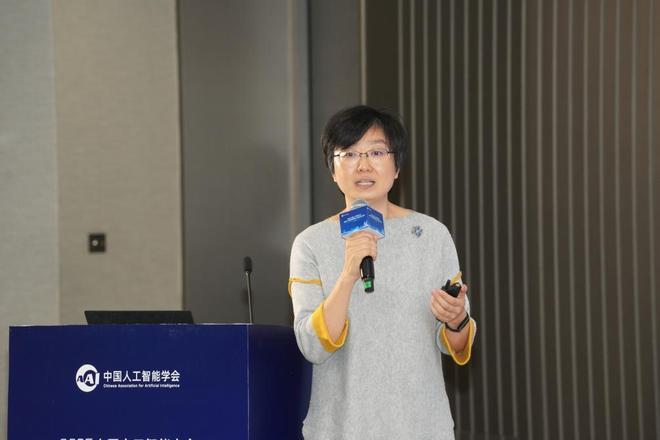
常常会有人将AI智能与人类智能做类比,思考如今的人工智能有多像人,但在蒋俏蕾的研究中,在不 同维度的智能对比上,AI还远达不到人类智能的程度。其中最关键的差异,是AI可以模拟情感、却无 法真正拥有情感,至少在目前是。 那些人类的脆弱之处,恐惧、欲望、痛苦,恰恰是AI无法取代的地方,因为AI不会像人类一样面临生 老病死。人正是因为生命有限,才会珍惜时光,孕育出勇气、牺牲、同情和无条件的爱。这种复杂的情 感,也许AI可以从字面上读懂,但无法发自内心理解。 文 | 新浪Insights "现在的人工智能离真人还差得很远,并没有像电视剧《西部世界》里那般。现在人工智能处在工具以 上、伙伴未满的状态。" 在2025中国人工智能大会暨全国人工智能学院院长(系主任)年会上,清华大学新闻与传播学院长聘教 授、博士生导师蒋俏蕾表达了她对于人机关系的思考。 蒋俏蕾认为,也许未来具身智能机器人的身体能够做到和人的生理结构高度类似,比如害怕时心脏会狂 跳,那时才有可能会接近人类真实的情感。 她还提出了一个更具想象力的演进——也许AI并不会以人类智能为参照物"进化",而可能会成为与人类 的思考方式、协作方式完全不同的新物种,不一定遵从 ...
瑞士医疗科技公司Testmate Health研发性传播感染家用检测试剂
Tai Mei Ti A P P· 2025-12-03 10:05
Group 1 - Switzerland has ranked first in the global innovation index for 14 consecutive years since 2011, making it a significant source of innovation and the first strategic partner of China in innovation development and technology finance [2] - The "Swiss Innovation 100" list, organized by Venturelab, highlights the top 100 innovative and market-potential Swiss companies annually, covering various fields such as life sciences, engineering, robotics, information communication, low-carbon technology, and food technology [2] - Testmate Health, founded in 2021, focuses on developing home test kits for sexually transmitted infections (STIs), allowing patients to conduct tests privately at home and receive professional results quickly [3][5] Group 2 - The World Health Organization estimates approximately 374 million new cases of STIs occur annually, with traditional testing methods being costly and often leading to patients avoiding testing due to embarrassment [5] - Testmate's home testing kit utilizes urine-based DNA amplification technology, providing results comparable to laboratory tests while ensuring patient privacy and reducing costs and time to treatment [7][8] - The global STI diagnostics market is projected to grow at a rate of 6.4% annually, reaching around $18 billion by 2032, with Testmate planning to adopt both B2B and B2C business models [8] Group 3 - Testmate's self-testing kit is the first of its kind globally, allowing users to obtain PCR-level results for gonorrhea, chlamydia, and trichomoniasis within 30 minutes, with positive results directly communicated to healthcare professionals [7][8] - The company completed a $6 million seed funding round in June 2024, led by RH Capital, to support the development and clinical trials of its low-cost, over-the-counter home STI testing kit [8]

亏损中逆势收购上游设备商,恩捷股份打响隔膜产业链整合第一枪
Tai Mei Ti A P P· 2025-12-03 10:03
Core Viewpoint - Enjie Co., a leading lithium battery separator manufacturer, is making a strategic acquisition of Qingdao Zhongke Hualian New Materials Co., a wet-process separator equipment supplier, amidst industry challenges and its own financial losses [1][3]. Group 1: Financial Performance and Market Conditions - Enjie Co. reported a revenue increase of 27.85% year-on-year to 9.543 billion yuan for Q3 2025, but faced a net loss of 86 million yuan, a 119.5% decline compared to the previous year [1]. - The average price of mainstream wet-process 7μm separators fell to 0.74 yuan/square meter in the first half of 2025, a 25% year-on-year decrease, indicating intense price competition in the industry [1]. - Enjie Co.'s net profit margin was only 0.95%, significantly lower than competitors like Cangzhou Mingzhu (8.34%) and Zhongcai Technology (6.58%) [2]. Group 2: Strategic Acquisition and Industry Integration - The acquisition of Zhongke Hualian represents a vertical integration strategy, allowing Enjie Co. to combine separator manufacturing with equipment supply, enhancing operational synergy [3]. - Zhongke Hualian has established production bases with a total capacity of approximately 2 billion square meters, with additional facilities under construction that could bring total capacity to 5 billion square meters [4]. - This acquisition will enable Enjie Co. to reduce equipment procurement costs, optimize production processes, and gain significant market share in the lithium battery separator industry [5]. Group 3: Future Outlook and Market Positioning - Enjie Co. believes the industry is at a critical turning point from oversupply to supply-demand balance, with new capacity additions expected to be lower than the previous year [6][7]. - The company is experiencing a stable increase in demand and order volume, indicating a recovery in the market [7]. - Enjie Co. is also expanding its global footprint with projects in Hungary and the U.S., and is preparing for next-generation battery technologies, positioning itself to navigate the industry's downturn [7][8].

“云计算春晚”又来了!不止自研AI芯片和模型,亚马逊云科技回答了一个核心问题
Tai Mei Ti A P P· 2025-12-03 06:59
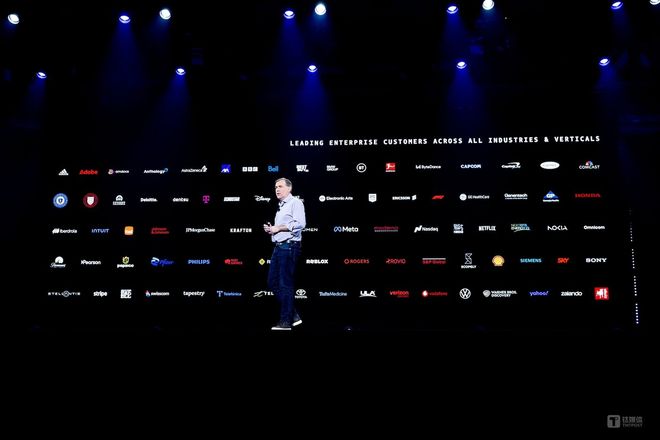
Core Insights - Amazon Web Services (AWS) is focusing on enabling innovation by providing developers with the necessary technology and infrastructure to build their ideas, which was not possible two decades ago [2][4] - AWS has achieved significant growth, with a business scale of $132 billion and a year-on-year growth rate of 20%, adding $22 billion in revenue in the past year [5][4] - The introduction of AI Agents marks a pivotal shift in the AI landscape, transitioning from AI assistants to more capable AI Agents that can understand intent and execute tasks autonomously [6][5] AI Infrastructure - AWS emphasizes the importance of having a scalable and powerful AI infrastructure, which includes both NVIDIA GPUs and its own Trainium chips [7][8] - AWS has deployed over 1 million Trainium chips, significantly enhancing deployment efficiency due to its control over the entire technology stack [11][10] - The latest Trainium 3 chip offers substantial improvements in computing power and memory bandwidth, making it one of the most advanced AI training and inference systems available [13][14] Model Development - AWS believes in a diverse model ecosystem rather than a single model dominating all tasks, expanding its model offerings on Amazon Bedrock [17][18] - The Nova series has been upgraded to Nova 2, which provides high-performance models for various applications, including a new speech-to-speech model [20][21] - Amazon Nova Forge allows enterprises to create proprietary models by integrating their unique data with AWS's advanced models, enhancing their competitive edge [23][21] Agent Deployment - AWS introduced Amazon Bedrock AgentCore, a platform designed for enterprise-level applications that enables the deployment of AI Agents in a secure and modular manner [25][26] - The AgentCore includes a memory mechanism to manage context, allowing Agents to accumulate experience and optimize performance over time [26][27] - AWS has implemented a policy system within AgentCore to ensure that Agent behavior is predictable and aligned with user intentions, addressing enterprise concerns about AI autonomy [28][29] Addressing Technical Debt - AWS launched Amazon Transform to assist clients in migrating from legacy systems, addressing the significant costs associated with technical debt [30][33] - The company aims to support all modernization needs, allowing developers to create custom code transformation processes for various programming languages and frameworks [33][34] Internal Agent Development - AWS has developed its own Agents, such as Kiro, which can convert natural language instructions into executable code, significantly improving development efficiency [34][35] - The Kiro Autonomous Agent can handle routine development tasks, learning team preferences and enhancing collaborative efforts [35][36] - AWS also introduced the Amazon Security Agent to ensure security best practices are followed throughout the development lifecycle [36][38] Conclusion - AWS's comprehensive approach to AI, from infrastructure to model development and Agent deployment, positions it as a leader in the emerging Agentic AI era, redefining the capabilities of enterprise-level AI solutions [38][39]

销量狂欢的B面:车企忙着发战报,经销商忙着去库存
Tai Mei Ti A P P· 2025-12-03 06:33
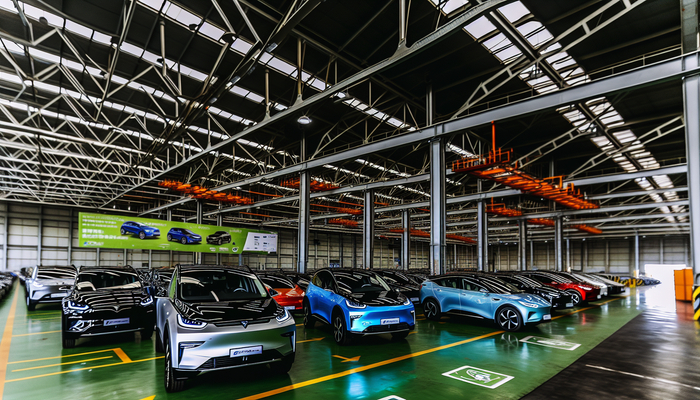
Core Insights - The Chinese automotive market in November 2025 showcased a stark contrast between the booming sales of new energy vehicles (NEVs) and rising inventory warning indices, indicating a potential disconnect between reported sales and actual consumer demand [2][9][12]. Sales Performance - Several companies, including Li Auto and Xiaopeng Motors, have reported significant year-on-year growth, with Xiaopeng achieving a 156% increase in deliveries from January to November 2025, surpassing its annual target [3][5]. - Leap Motor emerged as a standout performer, announcing over 500,000 units sold in 2025, significantly exceeding industry expectations [2][3]. - NIO's multi-brand strategy is paying off, with total deliveries reaching 36,275 units in November, driven by the new ES8 and the recently launched Le Dao brand [4][5]. Inventory Concerns - The inventory warning index for automotive dealers rose to 55.6% in November, indicating increased pressure on the distribution channel and suggesting that some of the reported sales figures may be due to inventory transfers rather than actual consumer purchases [9][10][12]. - The rising inventory levels reflect a shift in market dynamics from supply-driven growth to demand-constrained conditions, highlighting the need for companies to focus on genuine consumer demand rather than just sales figures [12][13]. Market Dynamics - The market is experiencing a transition from broad growth to a phase of "stock competition," where the ability to innovate and create demand through product offerings becomes increasingly critical [6][7]. - Companies are employing various strategies to navigate this competitive landscape, with some relying on flagship models to drive sales while others are transitioning from hybrid to fully electric vehicles [7][10]. Conclusion - The juxtaposition of high delivery numbers against rising inventory levels suggests that the automotive market is undergoing a significant transformation, necessitating a focus on channel health and sustainable demand rather than merely chasing sales figures [14][15].


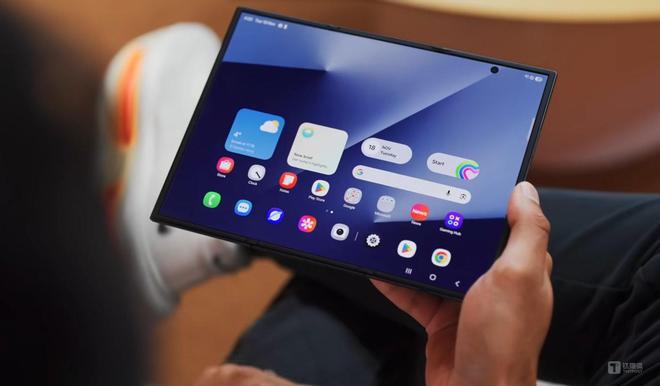
比华为多个屏幕但更厚重,三星要用三折叠跟苹果硬碰硬
Tai Mei Ti A P P· 2025-12-03 03:27
Core Viewpoint - The smartphone market is facing a decline, particularly in China, which has experienced two consecutive quarters of negative growth. However, the foldable smartphone segment is still growing, with both Huawei and Samsung leading the market. Samsung has recently launched its first tri-fold smartphone, the Galaxy Z TriFold, which is set to compete with Huawei's offerings [2][12][18]. Group 1: Product Launches and Features - Samsung's Galaxy Z TriFold features a unique G-shaped folding mechanism, allowing for an additional external display, but it is thicker and heavier compared to Huawei's Mate X [5][9]. - The Galaxy Z TriFold has a thickness of 3.9mm at its thinnest point and weighs 309g, while Huawei's Mate X has a thickness of 3.6-12.8mm and weighs 298g [5][12]. - The device is equipped with a Snapdragon processor from the previous year, not the latest version, which raises questions about its competitiveness [3][18]. Group 2: Market Dynamics and Competition - Samsung and Huawei together hold 58% of the global foldable smartphone market share, with Samsung at 34% and Huawei at 24% [12][17]. - The foldable smartphone market is still considered niche, accounting for only 2.5% of global smartphone shipments as of Q3 2025 [17]. - The introduction of the Galaxy Z TriFold is seen as a strategic move to counter Apple's anticipated entry into the foldable market next year [18][21]. Group 3: Challenges and Future Outlook - The tri-fold design presents technical challenges in terms of components like screens and hinges, which Samsung is addressing with its Armor FlexHinge technology [7][24]. - The foldable smartphone segment is expected to evolve, with a focus on software optimization to enhance user experience, particularly as Apple prepares to launch its own foldable device [22][24]. - The Chinese market is projected to maintain a significant share of the global foldable smartphone market, with expectations of 40% over the next five years [15][17].

AI芯片大战升级!亚马逊推出首款3nmAI芯片Trainium 3,挑战英伟达、谷歌
Tai Mei Ti A P P· 2025-12-03 02:12
Core Insights - The competition in the AI chip sector is intensifying, with Amazon launching its new AI chip Trainium 3, which is designed for high-performance generative AI workloads [2][3] - Trainium 3 is built on a 3nm process and manufactured by TSMC, offering significant improvements over its predecessor, Trainium 2 [2] - AWS emphasizes the cost-effectiveness of Trainium chips, claiming they can reduce training and inference costs by 50% compared to equivalent GPU systems [5] Group 1: Product Features and Performance - Trainium 3 boasts a computing power that is 4.4 times greater than the previous generation, with a memory bandwidth that is four times higher and a 40% increase in energy efficiency [3] - The new Trainium 3 UltraServer can deploy up to one million Trainium 3 chips, increasing the deployment capacity tenfold [3] - Each Trainium 3 chip integrates 144GB of high-bandwidth memory, while competitors like Google's TPU and NVIDIA's latest offerings have higher memory capacities [3][4] Group 2: Market Position and Competition - AWS has not provided direct performance comparisons between Trainium 3 and competitors like NVIDIA and Google, which raises questions about its competitive standing [3][6] - NVIDIA maintains a strong market position, with its CFO asserting that no competitors can challenge its dominance, citing the company's ecosystem and standards [6] - Despite competition, AWS and NVIDIA announced a collaboration to integrate NVIDIA's NVLink Fusion technology into future Trainium chips, enhancing interconnectivity and server communication [8] Group 3: Market Adoption and Future Prospects - Trainium 3's initial customer base is limited, primarily serving companies like Anthropic, which has a close relationship with AWS [10] - AWS aims to replicate the architecture developed for Anthropic on new servers to attract larger clients, although Anthropic has multiple chip options, including NVIDIA's products [10] - AWS's broader strategy includes launching various AI models and services, indicating a commitment to vertical integration in the AI space [11][12]



埃森哲成了OpenAI的“布道者”,中国的“华与华”们却在卖营销方案 | 马上评
Tai Mei Ti A P P· 2025-12-03 01:11
Core Insights - OpenAI and Accenture have formed a strategic partnership aimed at accelerating AI transformation in Western enterprises, marking a potential new era for AI adoption in the region [1][3]. Group 1: Partnership Details - Accenture will equip its thousands of IT professionals with ChatGPT Enterprise and act as OpenAI's primary partner to help global businesses adopt and deploy generative AI technology [3]. - The collaboration aims to address key challenges faced by enterprises in effectively integrating AI into their workflows, moving beyond mere technical licensing [3][4]. Group 2: Challenges in AI Transformation - Many enterprises struggle to realize significant business value from AI, often limiting their efforts to pilot projects without achieving scalable applications [3][4]. - A lack of understanding among executives regarding the complexities of AI transformation leads to underestimating the challenges of data governance, talent acquisition, and cross-department collaboration [4][5]. - AI transformation requires deep involvement from top management to align strategy, allocate resources, and foster a culture that supports continuous iteration and scaling [4][5]. Group 3: Talent and Organizational Barriers - There is a scarcity of cross-disciplinary talent who understand both AI technology and business needs, making it difficult for companies to fill this gap through short-term hiring [5][6]. - Organizational inertia and departmental silos hinder the effective application of AI, as different departments often operate independently, preventing end-to-end optimization of business processes [5][6]. Group 4: Comparison of Global Approaches - Western enterprises are generally more willing to invest in consulting services to address internal management and operational challenges, while Chinese companies tend to rely on internal teams and lack systematic planning for AI transformation [6][7]. - Accenture's recent financial report indicates a threefold increase in revenue related to generative AI and a significant investment plan to optimize its business for AI-related initiatives [7][8]. Group 5: Market Dynamics in China - Chinese enterprises possess unique advantages in AI, such as vast data resources and market potential, but face challenges in professional consulting services for deep process transformation [7][8]. - The lack of specialized consulting firms in China limits the ability to effectively implement AI transformations, as many local firms focus on short-term projects rather than long-term strategic investments [8].