未可知人工智能研究院

Search documents
观点| 警惕你的品牌正在被AI“隐形”!
未可知人工智能研究院· 2025-09-16 03:03
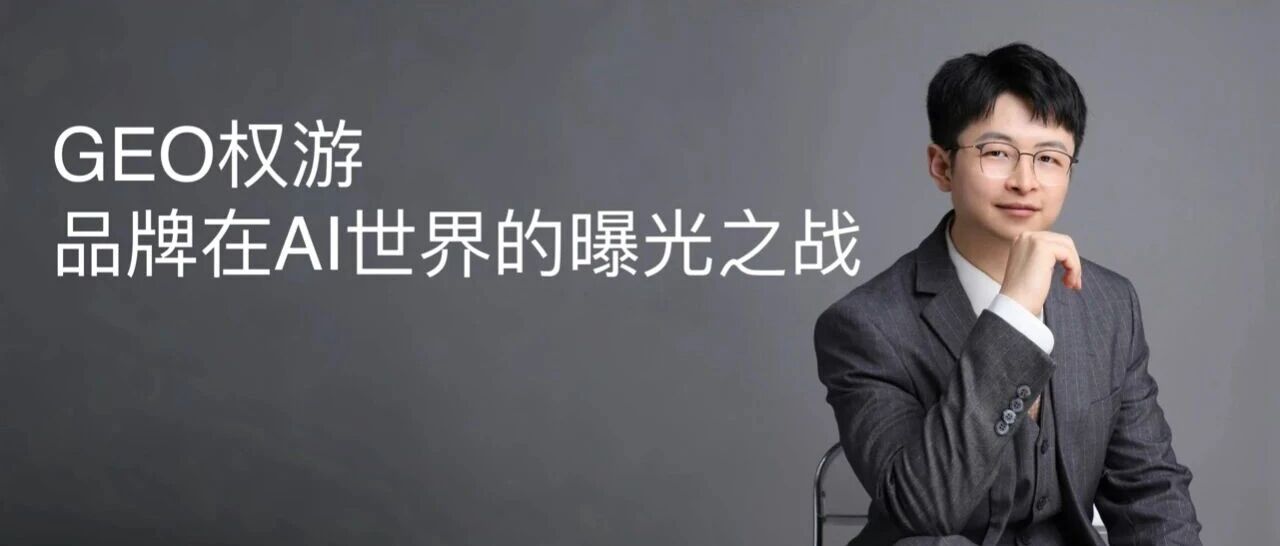
当你的竞品在AI对话窗口里被频繁推荐,当用户问"买XX选什么品牌"时AI报出的全是对手名字,而你的品牌明明投入百万营销却在生成式AI里查无此人 ——这不是营销失效,而是你错过了品牌竞争的"新战场": Generative Engine Optimization(GEO,生成式引擎优化) 。 作为未可知人工智能研究院创始人,我最近接到了太多品牌负责人的紧急咨询:" 杜博士,我们投了几十万做内容,为什么AI里搜不到我们 ?""竞品没见 怎么宣传,怎么AI一推荐就是它?"今天,我把这些 高频问题 整理成一篇 深度指南 ,告诉你为什么GEO正在决定品牌的下一个十年,以及如何通过它让 AI成为你的"永久销售员"。 一、别再给人类做内容了!你的钱,可能全打了水漂 "我们今年投了200万做行业文章,搜狐、百家号、门户网站发了个遍,人类阅读量都不错,怎么AI排名还是垫底?"这是某家居品牌总监上周的原话,也 是90%客户的共同困惑。 答案扎心但很直白: AI的偏好和人类完全是两回事 。你以为的"爆款文章",在AI眼里可能只是"信息噪音"。 数据佐证的"可信度": 用具体数字代替模糊描述。比如"我们的产品故障率低于0.1%",比 ...


新书| 杜雨博士新书《人形机器人》正式出版
未可知人工智能研究院· 2025-09-15 03:02
Core Insights - Humanoid robots are rapidly transitioning from science fiction to reality, driven by technological breakthroughs, economic restructuring, and societal demand upgrades [2] - The book "Humanoid Robots: Technology, Industry, and Future Society" provides a comprehensive framework for understanding the evolution of humanoid robots, their complex industrial ecosystem, and the ethical challenges of human-robot coexistence [2] Technological Leap: From Mechanical Mimicry to Embodied Intelligence - Humanoid robots are designed to maximize adaptability to complex environments through human-like forms, integrating multiple disciplines such as mechanics, electronics, materials, energy, and artificial intelligence [4] - Key components like planetary roller screws, harmonic reducers, frameless torque motors, and six-dimensional force sensors have matured, reducing costs and enhancing supply chain security [4] - The domestic production of these components is accelerating, with companies like Green Harmonic and Hechuan Technology leading the way, which is crucial for scaling production [4] Industry Explosion: Hardware First, Software Challenges - Current investment trends favor hardware with strong certainty over uncertain software algorithms, reflecting a rational market choice [7] - Hardware technology paths are clear, with predictable market demand in industrial manufacturing and logistics, where humanoid robots show significant potential to replace human labor [7] - Software faces challenges such as insufficient generalization and real-time performance, leading to cautious capital investment focused on companies with proven product viability [7] Social Reconstruction: Job Redefinition and Ethical Challenges - The proliferation of humanoid robots will not only displace jobs but also create new roles such as robot trainers and AI ethics supervisors, necessitating a transformation in the education system [9] - Concerns about privacy, algorithmic bias, and accountability arise as robots collect personal data, highlighting the need for legal and ethical frameworks to address these issues [9] Value of the Book: A Bridge Connecting Technology and Future - The book offers a rigorous analytical framework that connects fragmented insights into a cohesive understanding of humanoid robots, benefiting investors, entrepreneurs, and the public [12] - It maintains a cautiously optimistic perspective, recognizing both the efficiency gains and potential societal imbalances posed by humanoid robots [12] - The next decade is critical for humanoid robots to transition from laboratories to households, with core technology mastery being key to defining the future [12]


喜讯| 未可知高级AI讲师吴小楠入选杭州市人工智能学会专家库
未可知人工智能研究院· 2025-09-13 03:03
Core Viewpoint - The Hangzhou Artificial Intelligence Society has officially announced the expert database for the years 2024-2026, highlighting the inclusion of Wu Xiaonan, a senior AI lecturer from the Unforeseen AI Research Institute, due to her extensive experience in AI education and application [1][7]. Group 1: Expert Database Announcement - The Hangzhou Artificial Intelligence Society conducted a public recruitment for experts, receiving 126 applications and ultimately selecting 67 experts for inclusion in the expert database after a rigorous evaluation process [2]. - The public notice for the expert list is set from August 20 to August 22, 2025 [2]. Group 2: Wu Xiaonan's Qualifications - Wu Xiaonan has gained wide recognition in AI commercial application research and popularization, focusing on the integration of AI technology in education, finance, and media [5]. - She holds dual master's degrees from Peking University and the National University of Singapore, and has been a visiting scholar at the Oxford University Fintech Forum [5]. Group 3: Future Contributions - Wu Xiaonan will leverage the platform of the Hangzhou Artificial Intelligence Society to engage deeply in the integration of industry and academia, standard formulation, and policy recommendations, aiming to enhance the competitiveness and influence of Hangzhou as an AI innovation hub [7].

喜讯| 张孜铭副院长入选杭州市人工智能学会专家库
未可知人工智能研究院· 2025-09-12 03:02
Group 1 - The core viewpoint of the article highlights the inclusion of Zhang Ziming, Vice President of the Unknowable Artificial Intelligence Research Institute, in the expert database of the Hangzhou Artificial Intelligence Society for the 2024-2026 period after a rigorous evaluation process [1][3]. - The Hangzhou Artificial Intelligence Society, established in 2012, currently has over 400 members, including key AI educators from local universities and leaders from major enterprises, aiming to promote the application and transformation of AI research through various activities [3]. - The recent update of the expert database aims to enhance the decision-making and service capabilities of the society, with 67 experts successfully included [3]. Group 2 - Zhang Ziming specializes in the application training and solution implementation of AI technologies in specific business scenarios, holding dual master's degrees from Peking University and the National University of Singapore, as well as dual bachelor's degrees from Central China Normal University and Huazhong University of Science and Technology [5]. - He has authored influential books such as "AIGC: The Era of Intelligent Creation" and has been involved in drafting group standards for generative AI data application compliance, contributing significantly to the safe and standardized development of AI technologies [5]. - Zhang Ziming plans to leverage the society's platform to actively participate in AI technology discussions, standard development, and policy recommendations, aiming to foster high-quality development of the AI ecosystem in Hangzhou and establish it as a globally influential AI innovation hub [5].

案例| SEO已死, GEO当立: daydream如何在新AI时代, 抢走Google的流量?
未可知人工智能研究院· 2025-09-10 03:01
流量的法则,正在被重新书写。 在过去二十年里,SEO(搜索引擎优化)是数字世界的金科玉律。品牌们投入巨资,像研究炼金术一样研究Google的算法,只为在搜索结果中占据一个靠 前的位置。 但现在,地壳正在移动。 DeepSeek、豆包、Kimi、文心一言、 ChatGPT ……这些生成式AI正成为新的流量入口。用户不再满足于一串蓝色链接,他们想要的是一个直接、精准、 经过AI整合的答案。 当用户习惯改变,旧的流量地图便瞬间失效。在这场剧变中,一家名为daydream的公司,像一位精准的猎手,提前预判了猎物的迁徙路线。 他们不仅活了下来,还在三个月内,为客户实现了25倍 的LLM(大语言模型)流量增长。 今天,我们就来解构daydream的增长神话,看看它如何定义下一代的流量游戏——GEO(Generative Engine Optimization,生成式引擎优化)。 一家为未来而生的公司 daydream的诞生,并非源于某个天才创始人的灵光一闪,而是源于对时代脉搏的精准把握。 他们的团队并非简单地将SEO的旧瓶装上AI的新酒。恰恰相反,他们洞察到了一个根本性的转变: 用户意图正在取代关键词,成为流量分配的核心 ...

观点| 杜雨博士接受吴晓波频道专访:解读AI生成内容强制标识政策
未可知人工智能研究院· 2025-09-08 03:01
Core Viewpoint - The implementation of the "Artificial Intelligence Generated Synthetic Content Identification Measures" and "Cybersecurity Technology Artificial Intelligence Generated Synthetic Content Identification Methods" marks a new phase in the regulation of AI-generated content (AIGC) in China, addressing the risks associated with its rapid development and widespread use [1][2][3]. Policy Implementation - The new regulations are seen as a timely and necessary upgrade in supervision, establishing a foundation of trust within the industry [2][3]. - The policies transition AIGC governance from "industry self-regulation" to "national regulation," indicating a mature upgrade in governance systems [3][5]. Risk Prevention - The core objectives of the policy focus on three key risks: 1. Preventing fraud and the spread of false information by enabling quick identification of content authenticity [6][7]. 2. Clarifying copyright and content ownership to reduce legal disputes and protect the original ecosystem [7]. 3. Preventing internet data pollution by ensuring that low-quality AI-generated content does not degrade model performance [7]. Impact on AI Technology and Industry Applications - The policy is expected to positively influence the industry by shifting content creation focus from speed and quantity to quality and credibility, thus purifying the training data pool [8][9]. - It aims to provide a "license for entry" in high-trust sectors such as news, finance, healthcare, and education, alleviating societal concerns and accelerating value realization [8][9]. Long-term Governance Measures - Four supporting measures are proposed for achieving healthy AIGC development: 1. Strengthening responsibility tracing technology to ensure accountability [9][11]. 2. Controlling data quality from the source to enhance content reliability [11]. 3. Establishing a "human + AI" collaborative review mechanism for content verification [11]. 4. Enhancing public AI literacy through education and outreach initiatives [11]. International Comparison - The regulatory landscape for AIGC varies globally, with the U.S. favoring self-regulation, the EU implementing strict preemptive measures, and Japan taking a cautious approach [12][15]. - China's unique path combines explicit and implicit identification measures, emphasizing source and process management to mitigate misinformation [16]. Corporate Impact - The new regulations present both challenges and opportunities for companies, including increased costs for technology upgrades and extended responsibility chains [17][20]. - However, they also highlight new business opportunities in "trustworthy AI" and compliance technology, as well as the rising value of high-quality content [20]. Societal Value - The policy aims to reshape the content ecosystem and protect the public's cognitive space by preventing the spread of misinformation [21][26]. - The ongoing efforts of the Unknown Artificial Intelligence Research Institute will focus on promoting "technology for good" through standard-setting, technological development, and public education [22].

新书| 杜雨博士做客刘润直播间: 《投资于人》新书首发
未可知人工智能研究院· 2025-09-04 03:02
Core Viewpoint - The concept of "Investing in People" emphasizes the importance of directing financial resources towards improving human capital, which plays a crucial role in enhancing employment, increasing residents' income, and stimulating consumption, thereby creating a virtuous cycle between economic development and the improvement of people's livelihoods [1]. Group 1 - The future of investment lies in "Investing in People" rather than traditional assets like real estate or funds, as human skills can outpace inflation and provide better returns [6][8][11]. - The government is shifting focus from merely having a large population to cultivating talent, indicating that investing in skilled individuals aligns with national strategies [8][11]. - The rise of AI technology means that individuals who can effectively utilize AI will be more valuable in the job market, further supporting the case for investing in personal skills [11][14]. Group 2 - Real-life examples illustrate the benefits of investing in human capital, such as a programmer who increased his income significantly after learning AI programming, demonstrating a return of 17 times on his investment [17]. - A business owner who invested in employee training saw a return of 40 times on his investment, highlighting the exponential benefits of investing in people over equipment [18]. - A mother who learned skills for assisting her child with overseas applications earned substantial income through her newfound knowledge, showcasing the practical returns of investing in personal development [19]. Group 3 - A three-step formula for individuals to effectively invest in themselves includes selecting high-leverage skills, committing time daily for learning, and applying learned skills immediately for feedback [22][25][27]. - The first step emphasizes choosing skills that can be immediately applied to generate income, rather than pursuing degrees that may not translate into practical job skills [23][24]. - The second step encourages daily investment of time in learning, suggesting that even one hour a day can accumulate significant knowledge over a year [25][26]. Group 4 - A checklist of three questions is provided to help individuals avoid poor investments in learning, ensuring that the skills learned can be applied within three months, that time can be dedicated to learning, and that feedback mechanisms are in place [28]. - For employers, the article suggests viewing employee training as an investment rather than a cost, with tools to calculate the return on investment (ROI) for training programs [30][33]. - The concept of a "Growth Agreement" is introduced to retain employees after training, ensuring that they remain with the company for a specified period post-training [33]. Group 5 - The article concludes with three truths about investing in people, emphasizing that human value will surpass material value, that effective investment does not require large sums but rather smart allocation, and that individuals themselves are the best investment [36][38][39]. - It encourages immediate action, such as creating a skills inventory, calculating ROI for employee training, and exploring available training subsidies [42][43].

案例| 从 SEO 到 GEO: Profound 的 AI 搜索“权游”
未可知人工智能研究院· 2025-09-03 03:03
Core Insights - The article discusses the significant shift in search behavior due to AI-driven chat search tools, which have captured 5% of desktop search traffic in the U.S. as of early 2024, up from 1.3% earlier in the year, indicating a critical turning point in user habits [2] - The traditional SEO model is being replaced by a new paradigm termed "GEO + AI ecosystem cultivation," emphasizing the need for brands to adapt to this change [2] Group 1: Foundational Changes in Search - The rise of AI search tools marks a departure from the conventional "keyword + click" model to a direct answer retrieval approach, disrupting established SEO practices [2] - Historical data suggests that surpassing a 3% user habit threshold indicates a significant shift, which has now been achieved by AI search tools [2] Group 2: Company Background and Development - Profound was founded by James Cadwallader and Dylan Babbs, who recognized the need for brands to maintain visibility in AI-generated answers [5] - The company completed its angel funding round in spring 2024 and launched its MVP in summer 2024, quickly attracting major clients and securing a total funding of $58.5 million by August 2025 [7] Group 3: Founders' Profiles - James Cadwallader is noted for his marketing acumen and ability to drive brand growth through content, while Dylan Babbs brings technical expertise from his experience at Uber [9][10] Group 4: Product Overview - Profound's platform serves as a comprehensive tool for tracking AI visibility, optimizing content for AI answers, and generating new content based on AI preferences [12] - The platform includes modules for AI visibility tracking, Answer Engine Optimization (AEO), and content creation with gap analysis [13][14][15] Group 5: Case Study - Lake.com utilized Profound's services to enhance its visibility in AI platforms, resulting in a fivefold increase in organic traffic and a 50% visibility rate in AI-generated answers for non-branded keywords [16][18] Group 6: Implications for the Chinese Market - The article highlights a similar trend in China, where AI search products are gaining traction, and emphasizes the importance for brands to establish an AI answer optimization system early on [22] Group 7: Future Outlook - The article posits that brand operations will increasingly involve long-term collaboration with AI models, suggesting that neglecting this aspect could lead to brand invisibility in the consumer landscape [25]
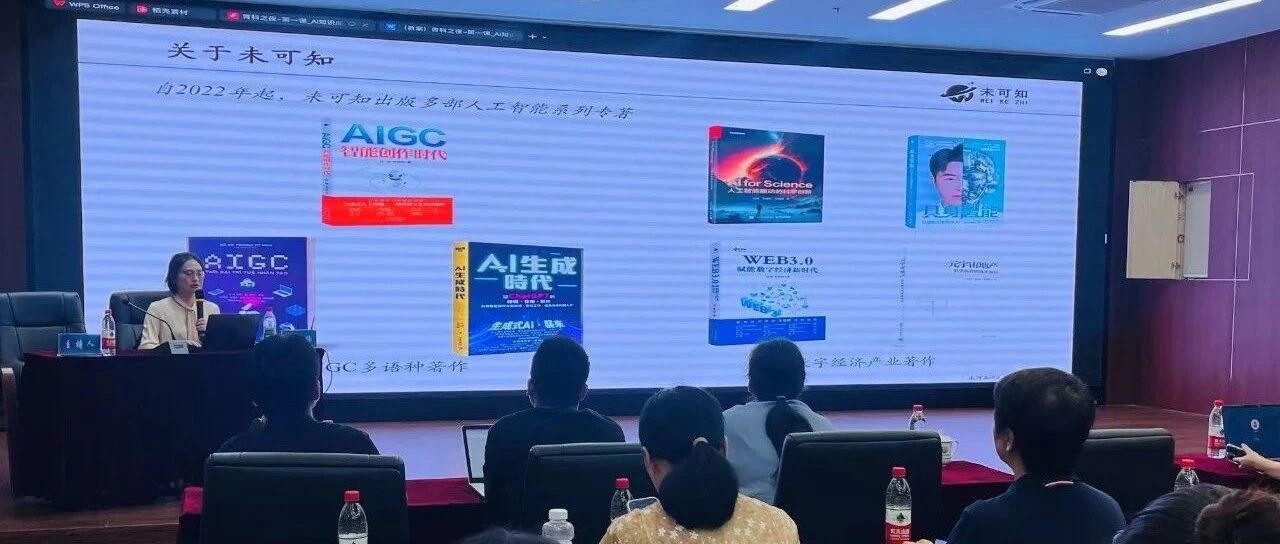
政务培训| 未可知 x 浙江省科协: 省科协系统信息员和新媒体工作人员培训圆满结束
未可知人工智能研究院· 2025-08-31 03:01
Core Insights - The article discusses a training session led by Wu Xiaonan, a senior lecturer at the Unknown AI Research Institute, focusing on "DeepSeek Prompting Techniques and News Writing" for over 120 participants from the Zhejiang Provincial Science and Technology Association [1]. Group 1: Training Overview - The training emphasized the characteristics of communication in the intelligent media era and systematically analyzed the core methodologies of AI-assisted writing [1]. - The course was structured into three main modules: optimizing prompt engineering, reconstructing scientific narrative logic, and generating promotional copy for various scenarios [1]. - Participants engaged in real-time operations to master practical skills for controlling AI output styles and quickly generating suitable content [1]. Group 2: Organizational Focus - The Unknown AI Research Institute is dedicated to AI frontier trends, commercial implementation, and talent development, aiming to become the "cognitive infrastructure of the AI era" [2]. - The institute actively develops practical training programs, including DeepSeek workplace applications and AI strategy workshops, to convert cutting-edge technologies into actionable training solutions [5]. - Future plans include deepening efforts in the AI field and promoting the integration of AI technology across various industries [5].
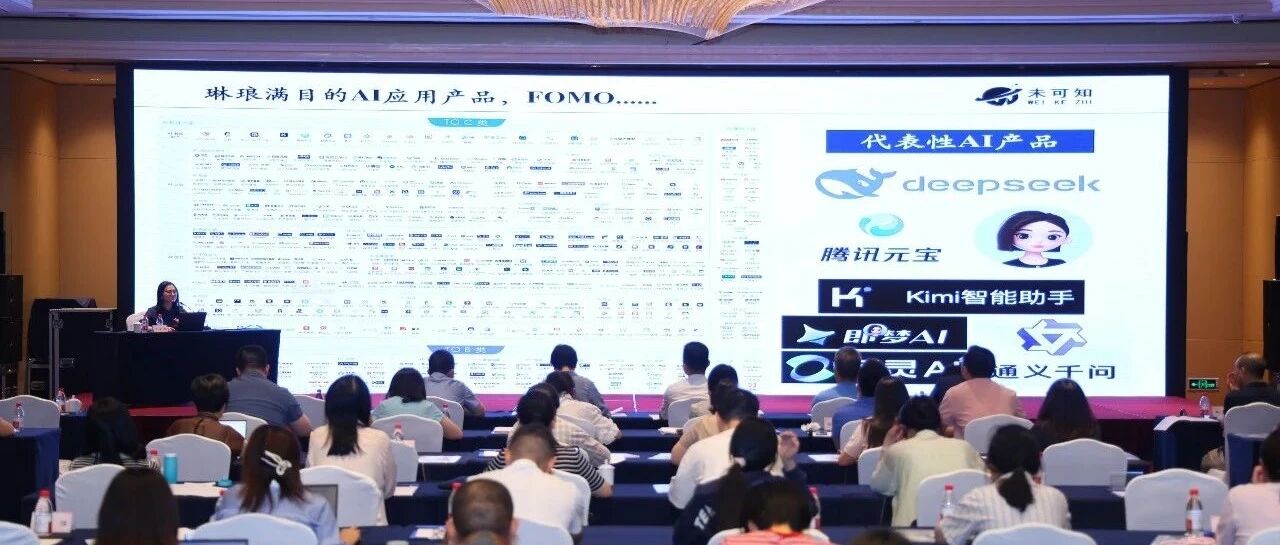
AI夜校| 未可知 x 杭州市科协: “青科之夜”AI知识库主题课程圆满结束
未可知人工智能研究院· 2025-08-30 03:02
Core Viewpoint - The article discusses the successful completion of the "AI Workplace Applications: Knowledge Base Empowerment" course, aimed at helping young technology workers in Hangzhou enhance their skills in utilizing AI tools for professional development and innovation [1][8]. Group 1: Course Structure and Content - The course lasted for one month, with weekly sessions focusing on different aspects of AI knowledge application [1]. - The first week covered basic operations and foundational knowledge of AI knowledge bases [1]. - The second week focused on using AI tools for tracking technological advancements and market insights [1]. - The third week provided practical guidance on selecting AI tools for technology evaluation and product selection [1]. - The final week addressed the challenges of academic and work output, specifically in research report and paper writing [1]. Group 2: Participant Feedback and Impact - Participants reported significant improvements in efficiency, with one researcher noting that AI tools reduced the time to extract core data from three days to two hours [3]. - The final session's tools helped participants derive three innovative points from experimental data, which previously required extensive time [3]. - Terms like "efficiency revolution" and "thinking breakthrough" were frequently mentioned by participants, indicating a positive reception of the course [3].