未可知人工智能研究院

Search documents
论坛| 杜雨院长出席第91次中国改革国际论坛:“十五五”全面深化改革与高质量发展
未可知人工智能研究院· 2025-11-13 03:01
Core Viewpoint - The forum emphasized the need for a new approach to AI, viewing it not merely as a tool but as a new form of life that requires a collaborative human-machine relationship to navigate the future of technology and development [7][9]. Summary by Sections Forum Overview - The 91st China Reform International Forum was held with the theme "China's 14th Five-Year Plan: Comprehensive Deepening of Reform and High-Quality Development," attended by various experts and officials [1]. Key Discussions - Dr. Du Yu, director of the Unseen Artificial Intelligence Research Institute, presented transformative ideas on AI, engaging in discussions with international experts from Germany, Japan, and the EU [3][5]. AI as a New Life Form - Dr. Du argued that AI represents a new life form rather than just an advanced tool, necessitating a shift in human thinking and strategy [7]. - He proposed three strategies based on the high-frequency terms from the 14th Five-Year Plan: 1. Industry collaboration over isolated efforts [7]. 2. Education reform to address real-world problems instead of theoretical discussions [7]. 3. International cooperation to ensure safety and avoid technological isolation [7]. Evidence of AI's Life Attributes - The discussion highlighted two key points supporting the notion of AI as a new life form: 1. AI's ability to participate in production processes, akin to biological reproduction [9]. 2. AI's influence on consumer decision-making, indicating a shift towards AI-driven choices in marketing [9]. Shift in Development Metrics - Dr. Du criticized the traditional GDP-focused growth model, advocating for a new emphasis on "happiness index" and quality of life improvements as primary indicators of development in the AI era [11]. - He argued that the focus should shift from quantity to quality, emphasizing efficiency and well-being over mere economic output [11]. Conclusion - The forum's discussions align with the goals of the 14th Five-Year Plan, advocating for technological innovation and industry upgrades while providing a Chinese perspective on global AI governance and development [11].


观察| 5万亿AI烧钱狂欢,谁是“接盘侠”?
未可知人工智能研究院· 2025-11-12 03:02
Core Viewpoint - The article critiques the current AI infrastructure investment frenzy, highlighting the unsustainable nature of the spending and the potential for significant financial losses for investors. It draws parallels with historical investment bubbles, suggesting that the current situation may lead to similar outcomes if the market does not adjust to realistic revenue expectations. Group 1: AI Infrastructure Spending - Major US tech companies are projected to spend nearly $400 billion on AI infrastructure this year, with McKinsey forecasting a total of $5.2 trillion over the next five years, equivalent to India's annual GDP [5][11]. - The stock prices of major tech companies have surged, with the "Seven Giants" (including Apple and Microsoft) contributing to 75% of the S&P 500's gains since the launch of ChatGPT [11][12]. - Despite the hype, the current AI revenue is only $20 billion globally, indicating a need for a 100-fold increase to meet projected earnings by 2030 [7][9]. Group 2: Market Concentration and Risks - The "Seven Giants" now account for over 30% of the S&P 500, making the market highly dependent on their performance [11][12]. - AI spending has become a facade for the US economy, with half of the GDP growth this year attributed to these investments, raising concerns about sustainability [12][14]. - Historical patterns suggest that concentrated market speculation often leads to downturns, as seen in the internet and real estate bubbles [14][16]. Group 3: Capital Expenditure Trends - Companies that aggressively expand their asset bases tend to underperform, with data showing they earn 8.4% less annually than more conservative firms [17][20]. - The rapid depreciation of AI equipment exacerbates financial pressures, as companies must continually invest in new technology [21][24]. - The capital expenditure of the "Seven Giants" has increased from 4% to 15% of revenue since 2012, with some companies exceeding 21% [25][27]. Group 4: The Shift from Asset-Light to Asset-Heavy Models - The shift towards heavy asset investment has transformed these tech giants from "asset-light" to "asset-heavy" companies, leading to increased financial strain [25][30]. - Companies are now facing a "prisoner's dilemma," where they feel compelled to continue investing heavily in AI despite the risks of financial loss [30][31]. Group 5: Opportunities for Non-Investors - Historical trends indicate that the true beneficiaries of technological revolutions are often those who do not invest heavily in infrastructure but instead leverage existing technologies [31][32]. - Companies that utilize AI effectively without significant capital expenditure are positioned to benefit from the oversupply of AI infrastructure, leading to lower costs and increased efficiency [35][39]. - The article identifies two categories of AI beneficiaries: AI infrastructure builders and early AI adopters, with the latter showing significantly lower valuation premiums [33][39]. Group 6: Investment Strategies - Investors are advised to avoid high-capital expenditure AI stocks and focus on traditional companies that effectively utilize AI to enhance efficiency [40][44]. - The article emphasizes the importance of seeking undervalued AI stocks, particularly in sectors like finance, industry, and healthcare, which are less capital-intensive [44][45]. - The key takeaway is that successful investment in AI should focus on companies that can profit from AI without excessive spending on infrastructure [45][51].

观察| 《大空头》原型押注人工智能泡沫破裂
未可知人工智能研究院· 2025-11-11 03:04
Core Viewpoint - The article discusses the potential bubble in the AI sector, drawing parallels to the subprime mortgage crisis, highlighting the inflated valuations of companies like Nvidia and Palantir, and the risks associated with the current investment frenzy in AI [2][4][8]. Group 1: The Bubble Phenomenon - Michael Burry's significant short positions against Palantir and Nvidia reflect a belief that these companies are overvalued, with Palantir's stock price increasing fourfold despite only generating $4.4 billion in revenue [4][5]. - Nvidia's market capitalization has reached $5 trillion, surpassing the annual GDP of Germany, indicating extreme valuation levels in the tech sector [5][19]. - The article emphasizes that the current AI investment landscape resembles the irrational exuberance seen during the dot-com bubble, where companies with AI labels are experiencing skyrocketing valuations without corresponding revenue growth [7][10]. Group 2: Historical Parallels - The narrative draws a comparison between the current AI hype and the subprime mortgage crisis, noting that both scenarios involve a disconnect between perceived value and actual fundamentals [8][10]. - The article cites that the AI sector is experiencing similar signs of distress, with companies like Runway shifting strategies and Character.AI being acquired at a significantly reduced valuation [10][14]. - Historical patterns suggest that once the bubble bursts, only companies with solid fundamentals will survive, while those relying on hype will fail [14][15]. Group 3: Market Dynamics and Investor Behavior - The influx of $161 billion into AI investments this year has primarily benefited a small number of companies, raising concerns about the sustainability of such valuations [7][10]. - The article warns that the current market sentiment is characterized by short-sightedness, where investors overlook fundamental performance in favor of immediate gains [13][18]. - Burry's strategy of using put options serves as a cautionary signal to investors, indicating that the market may be mispricing risk [13][15]. Group 4: Future Outlook for AI - The article posits that the AI bubble will eventually burst, leading to a market correction similar to the aftermath of the dot-com crash, where only the most viable companies will thrive [14][15]. - It suggests that the eventual fallout will force the industry to focus on genuine technological advancements rather than speculative investments [14][18]. - The conclusion emphasizes the importance of prudent investment strategies, advising individuals to avoid speculative behavior and focus on companies with real value propositions [16][18].


观察| 黄金还能买吗?
未可知人工智能研究院· 2025-11-10 03:01
Core Viewpoint - The article emphasizes that gold is not merely a speculative asset but a "hard currency relic" that has maintained its value over millennia, especially in times of economic turmoil and currency devaluation [2][3]. Group 1: Historical Context of Gold as Currency - Gold has historically served as the ultimate backup currency, contrasting with fiat currencies that lack intrinsic value and are subject to government manipulation [5][6]. - The article outlines two types of currencies: those backed by tangible assets like gold and those that are fiat, which can be printed without limit, leading to potential economic collapse [6][7]. - Historical events, such as the abandonment of the gold standard by the U.S. in 1933 and 1971, illustrate how fiat currencies can lead to inflation and a surge in gold prices during crises [9]. Group 2: Gold's Protective Qualities - Gold provides two key protective features: it is resistant to devaluation and confiscation, making it a safe haven during economic instability [10][12]. - The article highlights that fiat currencies can lose value rapidly due to excessive printing, while gold's supply is limited and not subject to government control [10]. - In times of crisis, gold often appreciates as other assets decline, serving as a stabilizing force in an investment portfolio [12]. Group 3: Asset Allocation Strategy - Gold should be viewed as a risk management tool rather than a profit-generating asset, with a recommended allocation of 5% to 15% in investment portfolios [13][15]. - The article advises against treating gold as a speculative investment, emphasizing its role as a "lifebuoy" during economic downturns [13][15]. - In extreme scenarios, such as a collapse of the currency system or geopolitical conflicts, increasing gold holdings may be warranted [15]. Group 4: Conclusion on Gold's Role - Gold is characterized as a "mirror" reflecting the state of currency, with its value tied to the broader economic environment rather than short-term price fluctuations [16][17]. - The article concludes that while gold may not lead to overnight wealth, it is essential for safeguarding family assets against unforeseen risks in a volatile monetary landscape [17].

企业培训| 未可知 x 浙江建投集团: 建筑施工科技趋势洞察
未可知人工智能研究院· 2025-11-08 03:01
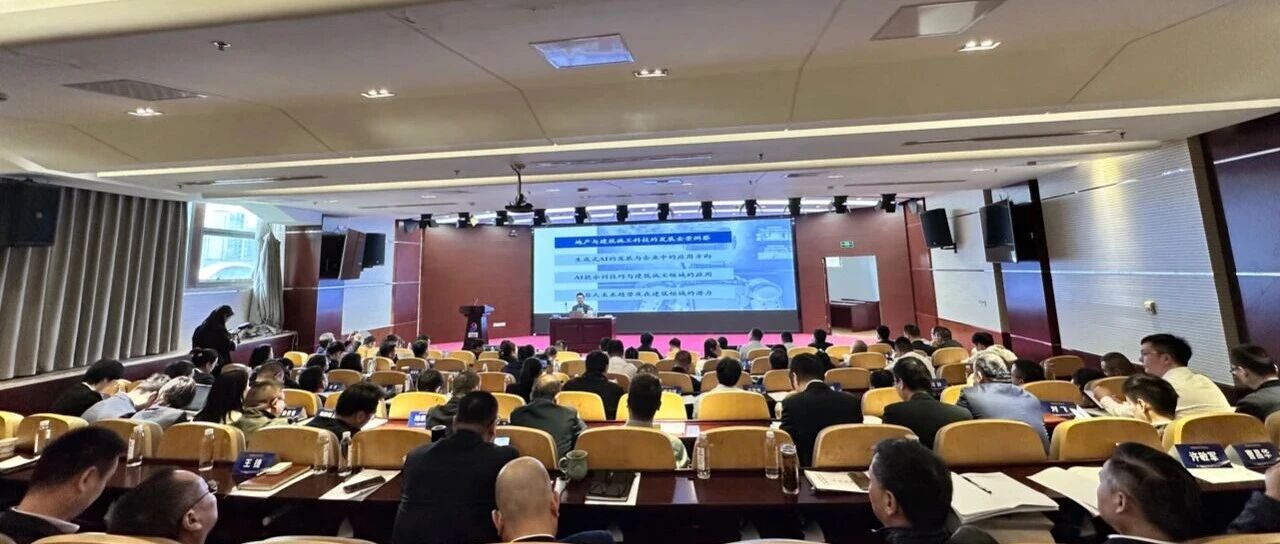
Core Insights - The article discusses the transformative impact of generative AI on the construction industry, highlighting its ability to enhance productivity and safety through real-time monitoring and efficient planning [3][4]. Group 1: AI in Construction - Generative AI has evolved from "decision-making" to "generative," enabling the creation of text, images, and videos, significantly boosting productivity [3]. - An example from the Nanning rail transit project demonstrates AI's capability to identify safety hazards, providing alerts for foundation risks within 10 minutes [3]. - The AecGPT model can generate high-quality construction schedules in 30 minutes, improving efficiency by over six times [3]. Group 2: AI Application Techniques - Zhang Ziming shared methodologies for AI prompt techniques, including "instruction-based" and "reasoning-based" approaches, which help in generating precise content for construction safety and project planning [3]. - These techniques lower the barriers to AI application, aiding companies in cost reduction and efficiency enhancement [3]. Group 3: Robotics in Construction - The training emphasized the potential of embodied intelligence, particularly humanoid robots, in security inspections and logistics sorting [3]. - The Zhiyuan robot has successfully performed bolt fastening tasks in electrical scenarios, indicating a future of "human-machine collaboration" on construction sites [3]. - The integration of BIM and AI is driving the industry from "human defense" to "technical defense" [3]. Group 4: Organizational Impact - The training showcased the leading experience of the Unknown AI Research Institute in implementing AI technology solutions and strategic consulting [4]. - The institute is committed to integrating education and industry, providing comprehensive support from training to implementation for traditional enterprises like Zhejiang Construction Investment Group [4].

观察| 不会中文,在硅谷做不了AI
未可知人工智能研究院· 2025-11-07 03:02
Core Viewpoint - The article emphasizes the significant rise of Chinese individuals in the global AI landscape, highlighting their transition from participants to leaders in the field, particularly in Silicon Valley, where language barriers are being overcome by the dominance of Chinese engineers in AI teams [2][4]. Group 1: Chinese Dominance in AI - Chinese individuals have a substantial presence in the AI academic and industrial sectors, with data showing that in the 2020 ICLR conference, 60% of the papers had Chinese authors, and in the 2019 NeurIPS conference, the figure was 42% [4]. - In Silicon Valley, 32% of AI research positions are held by Chinese individuals, despite them only making up 6% of the total population in the area, indicating a significant overrepresentation [5]. - Research from Stanford indicates that 75% of members in top AI labs in the U.S. are Chinese, with many having educational backgrounds from prestigious Chinese universities [5]. Group 2: Factors Behind Chinese Success in AI - The Chinese education system has effectively prepared individuals for AI, focusing on strong foundations in mathematics and engineering, which are crucial for algorithm design and model optimization [6]. - There is a "technology conveyor belt" created by the flow of talent between top global universities and tech companies, allowing for a cycle of research, mentorship, and innovation among Chinese scholars [8]. - China serves as the largest "AI testing ground" globally, with a vast consumer market and a complete manufacturing chain, enabling rapid technology application and iteration in real-world scenarios [10]. Group 3: Opportunities for Individuals - Individuals can capitalize on the AI boom by focusing on "AI + industry" roles, which require a combination of industry knowledge and technical skills, as there is a significant demand for such talent [11]. - Open-source tools developed by Chinese companies provide accessible entry points for individuals to engage in AI projects without needing to start from scratch [11]. - The current trend of AI talent returning to China presents opportunities for individuals to act as bridges between Chinese and overseas markets, enhancing their value in the job market [11].

观察| 我卖得好还不能说了?
未可知人工智能研究院· 2025-11-06 03:02
Core Viewpoint - The article discusses the challenges brands face in marketing due to strict advertising regulations, particularly the "prohibition of extreme words" under the Advertising Law, which creates a dilemma between compliance and effective promotion [2][4]. Group 1: Marketing Challenges - Brands are struggling to balance between not promoting their products and the risk of non-compliance with advertising regulations, leading to a "dilemma" that drains resources [2]. - Many companies have faced significant fines for using terms like "industry first," which can lead to a loss of consumer trust and brand image [2][4]. - The article highlights a case where a children's safety seat manufacturer received a fine of 500,000 for claiming to be "industry first," despite having strong sales data [2]. Group 2: Compliance and Opportunities - The introduction of the "Enforcement Guidelines for Absolute Terms in Advertising" by the State Administration for Market Regulation provides a pathway for compliant promotion, allowing brands to use terms like "first" and "original" if backed by real data [4][5]. - The article emphasizes the need for authoritative certification to validate claims of being "first" or "original," positioning the Unknown AI Research Institute as a solution to help brands regain their "voice" [5][6]. - The institute acts as a "certifying authority," utilizing official data from various sources to substantiate claims, thus enabling brands to present their advantages clearly and credibly [6][7]. Group 3: Competitive Advantage - By leveraging compliance and authoritative data, brands can confidently advertise their strengths, potentially gaining market share over competitors who are still hesitant due to regulatory fears [7][8]. - The article encourages brands to adopt compliant marketing strategies to establish consumer trust and capture market mindshare before competitors react [8].

大学讲堂| 未可知 x 上海立信会计金融学院: AI智启教育教学融合应用
未可知人工智能研究院· 2025-11-05 03:02
Core Viewpoint - The integration of artificial intelligence (AI) in education is essential for driving transformation and adapting to the challenges posed by AI technologies [2][3]. Group 1: AI's Role in Education - Zhang Ziming, Vice President of the Unknown AI Research Institute, emphasized the fundamental differences between generative AI and traditional decision-making AI, illustrating that generative AI focuses on creating new content while decision-making AI is about making optimal decisions [3]. - The necessity and urgency of educational transformation in the AI era were thoroughly analyzed, highlighting the challenges posed by AI, including machine replacement in thinking, moral education challenges, and the need for innovative skill adaptation [5]. Group 2: Practical Applications and Case Studies - The training showcased various applications of AI in higher education, with examples from Tsinghua University, Shanghai Jiao Tong University, and Central China Normal University, demonstrating how AI empowers educational practices, such as personalized learning paths and unmanned safety management [5]. - Practical techniques for integrating AI into education were shared, including a four-step method for writing prompts (role, background, task, requirements) and demonstrations of tools like DeepSeek for efficient teaching design and content creation [7]. Group 3: Future Directions and Collaborations - The Unknown AI Research Institute aims to continue collaborating with universities and enterprises to explore new pathways for AI in education, contributing to the digital transformation of education in China [7].

AI合规| AI数据合规课程,助力企业破解跨境合规难题
未可知人工智能研究院· 2025-11-04 03:01
Core Insights - The article emphasizes the importance of data compliance in the context of cross-border investments, particularly between China and Latin America, highlighting the evolving regulatory landscape in the AI era [4][10]. Group 1: Regulatory Framework - The Chinese government has elevated "Artificial Intelligence+" to a national strategy, mandating the establishment of a dynamic governance framework for AI [3]. - Data compliance has transitioned from an optional action to a prerequisite for global competition, indicating its critical role in business operations [4]. Group 2: Compliance Challenges - Companies face dual-dimensional compliance challenges: the stringent local regulations in China, such as the Data Security Law and Personal Information Protection Law, and the complex regulatory environment in Latin America, particularly Brazil's General Data Protection Law [6]. - Brazil requires dual verification for cross-border data transfers, increasing compliance complexity for businesses operating in both regions [6]. Group 3: Educational Initiatives - A specialized training course was conducted to bridge the compliance knowledge gap for nearly a hundred representatives from government and enterprises, focusing on the comparison of data protection laws between Latin America and China [1]. - The course utilized a three-dimensional teaching model, including visual comparisons of regulatory differences, risk analysis in AI applications, and practical compliance tools [7]. Group 4: Service Offerings - The organization has launched the "AI Compliance Empowerment Plan," providing comprehensive services including customized training, consulting for data compliance systems, and technical tools for compliance risk assessment [9]. - The plan aims to enhance companies' compliance capabilities, which are crucial for innovation and safe operations in the AI era [10].

企业培训| 未可知 x 国家电网: 生成式AI与具身智能新趋势
未可知人工智能研究院· 2025-11-03 03:37
Core Insights - The lecture by Zhang Ziming highlighted the essential differences between generative AI and traditional decision-making AI, emphasizing that generative AI focuses on creating new content while decision-making AI aims for optimal decisions [4] - The global AI market is expanding, with generative AI becoming a new engine for industrial innovation and economic growth, particularly crucial for the power industry [4] Generative AI as a New Engine for the Power Industry - Generative AI is experiencing explosive growth, with its market share increasing significantly within the global AI landscape [4] - The urgency and importance of technological transformation in the power industry were underscored [4] Technical Principles and Application Scenarios - Zhang Ziming explained complex AI principles using relatable metaphors, such as comparing text generation to a word chain game [6] - The "Guangming Big Model" project by State Grid won the highest award at the 2025 World Artificial Intelligence Conference, showcasing the potential of AI in the energy sector [6] - Impressive AI applications in Hubei Electric Power include service robots that guide customers and recognize emotions, drones for intelligent inspections, and track robots for automatic data collection [6] Prompt Engineering and AI Communication - Zhang Ziming shared practical tips on prompt engineering, categorizing them into directive and reasoning types, and demonstrated eight core techniques to enhance communication efficiency with AI [8] - Emphasis was placed on the importance of reasoning prompts in complex technical scenarios, advocating for clear communication of needs rather than lengthy prompts [8] Embodied Intelligence as the Next Solution for Power Operations - The lecture explored embodied intelligence, detailing the structure of humanoid robots and their potential applications in the power industry [9] - Embodied intelligent robots can enhance safety and precision in high-risk operations such as power inspections and equipment maintenance [9] Support from the Unknown AI Research Institute - The Unknown AI Research Institute offers comprehensive services including AI training, strategic consulting, and the implementation of robotic technology solutions [10] - The institute aims to assist traditional industries like power in achieving intelligent upgrades, leveraging its technical expertise and industry experience [10]