未可知人工智能研究院

Search documents
大学讲堂| 未可知 x 路易斯大学: 杜雨博士《AI与未来叙事》跨文化传播课程
未可知人工智能研究院· 2025-12-04 03:02
Core Insights - The article discusses the future of AI and narrative, focusing on the transformative impact of AI on media, journalism, and strategic communication [1][4]. Group 1: Development of AI in China - The Chinese AI industry has experienced two major development waves, namely the "Four Little Dragons of Computer Vision" and the "Six Little Tigers of Large Language Models," with the latter significantly expanding the market size, which now holds a 20% share of the global market [5]. - Under the "AI+" national strategy, sectors such as internet, telecommunications, finance, and government are becoming core areas for AI penetration, accelerating the digital transformation process [8]. - Despite challenges such as insufficient financing (with AI funding in China projected at $5.2 billion in 2024, only 7% of that in the U.S.) and limitations on high-end computing power due to export controls on key chips, the AI company DeepSeek has emerged as a solution, demonstrating superior performance in benchmark tests with a training cost of only $6 million [9][12]. Group 2: Transformation of Business Communication - AI is fundamentally restructuring the communication logic between enterprises and users, becoming an irreversible competitive factor [13]. - Research indicates that nearly 80% of global executives believe generative AI will drive substantial industry changes within the next three years, with companies lacking AI strategies facing potential elimination risks [14]. - Various case studies illustrate AI's application in business communication, such as 3D Home using AI for home design, Watsons employing AI for customer service optimization, and AI tools assisting in report writing and interview processes [17][18]. Group 3: Applications in the Media Industry - AI has deeply integrated into various stages of media production, enabling real-time transcription and content generation, as seen with Xinhua's "Quick Pen" robot and Zhejiang TV's use of digital humans for news broadcasting [19]. - Digital human live streaming is identified as a promising commercial application of AI in media, although there are limitations regarding the depth and human touch in investigative reporting [21]. - To mitigate risks associated with AI in media, a dual solution is proposed: establishing data cleansing mechanisms for input and ensuring journalists maintain responsibility for output, as AI cannot assume legal accountability [21]. Group 4: Cross-Cultural Dialogue and Future Directions - The Q&A session highlighted cross-cultural perspectives on AI ethics, adaptation in communication, and pathways for SMEs to implement AI, emphasizing the need for a balanced approach to innovation, compliance, and humanistic care [22]. - The event served as a platform for deep dialogue between Eastern and Western perspectives on AI communication practices, showcasing China's achievements and innovations in the AI sector [22][23]. - The organization aims to continue fostering international exchanges and collaborations in the AI field to support the healthy development and application of AI technologies globally [23].


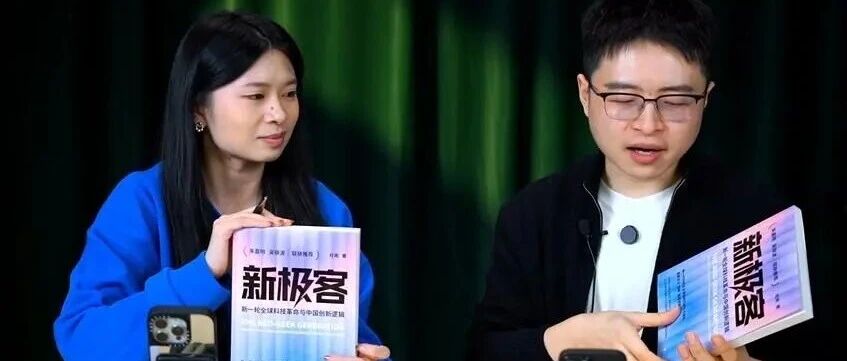
新书| 杜雨博士携新书《新极客》做客吴晓波频道,解密00后创业潮
未可知人工智能研究院· 2025-12-03 03:02
Core Viewpoint - A new technological revolution led by Generation Z is reshaping the global innovation landscape, characterized by the emergence of "new geeks" who integrate technology, business, and humanities to drive innovation [1][3]. Group 1: Characteristics of New Geeks - New geeks are practitioners of technological inclusivity, exemplified by projects like "Yiying" AI model that enhances garment design efficiency and quality control in textile manufacturing [5]. - They are believers in open-source collaboration, with over 3 million active open-source projects in China, where Z generation developers account for over 70% of contributors [6]. - New geeks are promoters of digital-physical integration, focusing on practical industry applications, such as reducing operational time in telecommunications through digital twin technology [7]. Group 2: The Rise of Post-00 Entrepreneurs - The emergence of post-00 entrepreneurs is attributed to three factors: lowered technical barriers, increased policy support, and upgraded market demand [9]. - These entrepreneurs exhibit a mature mindset, focusing on long-term goals rather than short-term trends, and are capable of addressing technical challenges with innovative solutions [10]. - China's innovation logic is transitioning from a model of "catching up" to one of "leading," driven by scenario-based innovation and open-source collaboration [10]. Group 3: Unique Advantages of the Chinese Market - Innovation in China often starts from market needs, creating a vibrant testing ground for technology applications across various sectors [12]. - The positive cycle of "technology - industry - market" allows new geeks to quickly validate and optimize their innovations, as seen in the development of the open-source Harmony operating system [12]. Group 4: Ecosystem Empowerment - A robust ecosystem supports innovation, with R&D funding exceeding 3.6 trillion yuan, fostering a conducive environment for new geeks [14]. - Patient capital is emerging in China, willing to support long-term, high-potential technology projects, contrasting with short-term profit-seeking investments [14]. - The open-source movement is breaking down technological monopolies, enabling Chinese developers to participate in global technology rule-making [14]. Group 5: Cultural DNA - The new geeks embody a spirit of innovation driven by a sense of national responsibility, aiming to use technology for societal benefit [16]. - This combination of personal ideals and national destiny provides a unique motivational force for Chinese innovators [16]. Group 6: Challenges and Long-term Commitment - New geeks face challenges such as ensuring technological reliability, navigating ethical boundaries, and achieving commercial viability [18]. - Four guiding principles for overcoming these challenges include maintaining a focus on core technology, embracing open-source collaboration, prioritizing user needs, and balancing innovation with ethical considerations [19][20][21]. Conclusion - The collaboration between Dr. Du Yu and Blue Lion has produced a significant work that highlights the potential of new geeks in leading a new era of innovation in China, emphasizing the importance of their contributions to the global technological landscape [22][24].
观察| 未来只有一门学科,叫 “AI+”
未可知人工智能研究院· 2025-12-02 03:02
▲ 戳蓝 色字关注我们! 创新是区分领袖和追随者的标准。 —— 史蒂夫 · 乔布斯 如果你还抱着"学AI是投机""传统学科才踏实"的陈词滥调,那清华大学2025年本科生特等奖学金的15强名单,就是给你脑袋敲碎的"铁锤"—— 这个时 代早没有"学科百花齐放"的温情,只有"AI主科"和"其他副科"的残酷分层,甚至连"副科"都不配,只是AI的"附属配件" 。 这群站在全国智力珠峰的年轻人,用论文、专利和国际冠军证明:谁还在纠结"我是哪个学院的正统",谁就是把自己钉在"前工业时代"的耻辱柱上,等 着被AI浪潮连骨头带渣吞掉! | | 清华大学特等奖学金 (本科生) | | | --- | --- | --- | | | 答辩入围名单 | | | 序号 | 院系 | 姓名 | | I | 电子系 | 林旭煊 | | 2 | 计算机系 | 徐汝一 | | 3 | 自动化系 | 罗长盛 | | 4 | 航院 | 陈秀虎 | | 5 | 化学系 | 冯庚辉 | | 6 | 交叉信息院 | 李忆唐 | | 7 | 经管学院 | 吕博涵 | | 8 | 外文系 | 张抒悦 | | g | 美术学院 | 姚都文 | | 10 | ...

观察| 你的孩子,正在被AI悄悄“分层”
未可知人工智能研究院· 2025-12-01 03:01
▲ 戳蓝 色字关注我们! 我们致力于工具的精良, 却忽略了工具的用途。 —— 尼尔 · 波兹曼 还在瞎操心农村孩子用不上AI?快别自作多情了! 中国青少年研究中心调研了全国8563个中小学生,数据一出来直接打脸: 城市娃用 AI 的占 63.7% ,农村娃也有 60.2%—— 没有显著差距 。 更让人惊掉下巴的是,女生用AI的比例(64.2%)居然比男生(59.2%)还高,谁说只有男生爱捣鼓这些? 真相一 这哪是什么数字鸿沟啊?分明是AI把城乡、性别这些老掉牙的标签全撕了。 但先别忙着欢呼"技术平权",这种无差别渗透根本不是什么福音,就是场藏在屏幕后的"认知绑架"。 以前农村孩子缺电脑没办法,现在好了,手机揣兜里AI随叫随到,可问题是——他们拿AI干了啥?是真用来学东西,还是纯粹当偷懒工具? 这种看不见的差距,比"有没有"可怕多了! AI 成了 " 作业外挂 " ,孩子连脑都懒得动了? 家里有中小学生的家长,随便拉一个出来都能吐槽"AI写作业"这事儿。 调研说71%的孩子用AI查资料、找思路,听着还行?可再看那16.8%的孩子——直接把题目往AI里一扔,等着要答案!这不就是换了个高科技壳子 的"抄作业"吗?连 ...
观察| 最近爆火的 Nano Banana,普通人到底怎么用?
未可知人工智能研究院· 2025-11-30 03:03
▲ 戳蓝 色字关注我们! 这两天刷圈总看到 "Nano Banana",它到底为啥突然火了? 对咱们普通人有啥用? 国内又咋体验? 今天一次性说清楚! 01 Nano Banana 走红核心 2. 免费渠道开放 :此前多数AI图像工具存在收费或算力受限问题,而近期大量平台开放Nano Banana免费体验,普通用户无需成本即可尝试,加速了 其传播速度。 02 普通用户实用场景 从趣味到工具的多元价值 Nano Banana并非仅用于"玩梗",更能解决日常场景中的实际需求,主要可分为三大类: 1. 社交场景:提升内容表现力 将个人自拍转化为日漫、手绘等风格头像,增强社交平台内容独特性;旅行照片通过风格迁移(如宫崎骏动画风、电影感滤镜),让朋友圈内容更具吸 引力,摆脱"游客照"同质化问题。 2. 办公学习:高效获取素材 制作PPT、笔记时,可快速生成匹配主题的插图(如"极简风科技元素""治愈系教育插画"),避免版权纠纷且节省寻找素材的时间;对于家长,还能将 孩子的简笔画升级为精致插画,助力亲子作业完成。 低门槛与高效果的双重优势 与传统AI图像工具相比,Nano Banana的核心竞争力在于"降低创作门槛,同时保 ...

企业培训| 未可知 x 国家能源集团: AI 赋能智能化转型
未可知人工智能研究院· 2025-11-29 03:01
Core Insights - The article discusses a training session led by Zhang Ziming, Vice President of the Unknown AI Research Institute, focusing on how AI can empower the energy sector's intelligent transformation [1][4]. Group 1: Training Overview - The training session was titled "AI Empowering Intelligent Transformation in the Energy Industry" and aimed to help enterprises seize opportunities in AI technology [1]. - Zhang Ziming, an expert in AI with dual master's degrees from Peking University and the National University of Singapore, presented the core differences between generative AI and decision-making AI [3]. Group 2: Training Content - The training covered three dimensions: global AI technology trends (macro), the value of AI in the energy industry (meso), and implementation paths for enterprises (micro) [3]. - Practical examples included the application of AI in smart inspection by State Grid, AI customer service by Southern Power Grid, and Huawei's Pangu model, demonstrating AI's effectiveness in grid optimization, renewable energy forecasting, and intelligent operations [3]. Group 3: Practical Tools and Skills - In the practical tools segment, Zhang Ziming demonstrated applications like DeepSeek and prompt engineering, emphasizing the need for talent to integrate technical and emotional skills in the AI era [3]. - Interactive games allowed participants to experience efficiency improvements in AI text generation and image creation, such as using DeepSeek for social media posts and AI tools for energy promotional posters [3]. Group 4: Conclusion and Future Outlook - Zhang Ziming concluded that the essence of AI is to enhance human efficiency, urging companies to embrace intelligence from a strategic perspective [4]. - The Unknown AI Research Institute has provided customized services to several energy companies, helping them build digital competitiveness [4][5]. - The training received high praise from participants at the State Energy Group, injecting new momentum into the intelligent transformation of the energy sector [5].

沙龙| 未可知 x 西湖国学馆:杜雨博士《投资于人》人文专场分享纪实
未可知人工智能研究院· 2025-11-28 03:02
Core Insights - The article emphasizes the importance of investing in oneself as the best form of investment, especially in the context of modern societal challenges and technological advancements [7][9]. - It highlights the shift from external opportunities to internal development, suggesting that personal capabilities and virtues are fundamental to long-term success [9]. Group 1: Author's Background and Philosophy - Dr. Du Yu, the founder of Weikezhi, has a diverse background as a musician, writer, investor, and researcher, illustrating the concept of "investing in people" through his own experiences [4]. - His academic journey includes degrees from Wuhan University, Peking University, and the Chinese University of Hong Kong, culminating in a PhD from the Chinese Academy of Social Sciences, showcasing a commitment to continuous learning and self-investment [4]. Group 2: Integration of Traditional Wisdom - Dr. Du uses the "Huangdi Neijing" as an example to demonstrate that ancient texts encompass a wide range of knowledge, including music, geography, and psychology, which can provide holistic insights for modern challenges [6]. - He advocates for the integration of traditional wisdom into contemporary practices, arguing that ancient philosophies can help navigate the complexities of modern life [10][12]. Group 3: Practical Applications and Recommendations - The article suggests that individuals should focus on practical experiences and learn from those who have achieved tangible results, rather than solely relying on theoretical knowledge [12]. - Dr. Du encourages the reading of classical texts as a means to cultivate a stable mindset in the fast-paced AI era, positioning traditional wisdom as a "ballast" for the soul [12]. Group 4: Future Directions - Weikezhi aims to explore the intersection of artificial intelligence and humanistic values, promoting comprehensive personal development and providing practical solutions for growth [14]. - The organization is committed to disseminating Chinese traditional wisdom globally, enhancing cross-cultural exchanges and revitalizing ancient knowledge in modern contexts [12][14].

观察| AI尽头是“核聚变”?
未可知人工智能研究院· 2025-11-27 03:12
Core Viewpoint - The article argues that nuclear fusion, often touted as the "ultimate energy" solution, is not a viable option for meeting future energy demands, particularly in the context of AI advancements. It highlights the misconceptions surrounding nuclear fusion and presents a critical analysis of its feasibility and practicality [1]. Summary by Sections 01: The Myth of Nuclear Fusion - Nuclear fusion is perceived positively due to three main advantages, but these are misleading and not practical [2]. - The claim that seawater contains abundant fuel for nuclear fusion is deceptive; while deuterium is present, it requires tritium, which is not naturally available and must be produced through complex processes [3]. - The assertion of zero pollution and risk is true, but the low energy output of fusion makes it impractical for power generation [4]. - The energy density of fusion fuel is often confused with its power density; while fusion fuel has high energy density, its power output is significantly lower than that of fission reactors [6]. 02: Fundamental Issues with Nuclear Fusion - The power density of nuclear fusion is 20 times lower than that of nuclear fission, necessitating much larger reactor sizes to produce equivalent energy [7][9]. - The cost of building a nuclear fusion power plant is projected to be at least three times higher than that of a fission plant, with estimates for a fusion reactor reaching up to $150 billion for equivalent output [11]. - The sustainability of fusion fuel is limited, with available resources lasting only a fraction of the time compared to fission fuel, contradicting the notion of "unlimited" energy [16]. 03: Misconceptions Surrounding Nuclear Fusion - The belief that fusion technology is on the verge of commercial viability has persisted for decades, yet significant breakthroughs remain elusive [18]. - The narrative of fusion being a clean and environmentally friendly energy source is politically motivated, but economic feasibility is questionable if the cost of electricity remains high [20]. - The use of complex terminology in fusion discussions often serves to obscure the fundamental issues and lack of practical solutions [21]. 04: Alternative Energy Solutions - Upgraded nuclear fission technologies are presented as safer, more cost-effective, and capable of recycling waste, making them a more reliable energy source for the future [20]. - Renewable energy sources, such as wind and solar, combined with advanced storage solutions, are positioned as complementary to nuclear fission, providing a stable and sustainable energy system [21]. 05: Conclusion - The article emphasizes the need to focus on practical energy solutions rather than relying on the unrealistic promises of nuclear fusion, advocating for advancements in fission technology and renewable energy systems to meet future energy demands [22].

AI交互| 小预算也能引爆线下体验,用AI抢抓客流
未可知人工智能研究院· 2025-11-26 03:02
Core Viewpoint - The article emphasizes the potential of an AI interaction system designed for offline businesses, which can enhance customer engagement and drive sales without requiring significant investment or technical expertise [2][3]. Summary by Sections AI Interaction System - The AI interaction system is developed to transform ordinary stores into attractive destinations using minimal investment, addressing the needs of small and medium enterprises that struggle with AI adoption due to budget constraints [2][3]. Cost Efficiency - A survey indicates that 68% of small and micro enterprises have an AI budget of less than 5000 yuan per month, yet many hesitate to invest in AI solutions. The company aims to reduce the cost of interaction systems from hundreds of thousands to one-tenth of traditional solutions, making technology accessible to all businesses [3]. Core Scenarios - The system offers a comprehensive solution that spans from attracting traffic to retaining users, designed around the "experience-participation-conversion" logic [5]. Scenario 1: Naked-eye 3D Real-time Image - This feature allows customers to visualize products without trying them on physically, enhancing customer engagement. A trial at a beauty brand showed a 47% increase in customer dwell time and a 32% rise in conversion rates [6]. Scenario 2: Gesture Interaction Screen - Customers can interact with products through gestures, improving the shopping experience. A fast-food brand reported a rise in customer satisfaction from 65% to 92% and a 28% increase in sales during non-peak hours after implementing this technology [8][10]. Scenario 3: Interactive Ocean Wall - This system allows children to create digital content from their drawings, enhancing engagement and increasing repeat visits by 53% at a family-oriented venue. The user-generated content can also be monetized [11][13]. Scenario 4: Interactive Combat - Customers can engage in virtual challenges, turning waiting time into consumption time. A sports brand saw a 71% increase in weekend foot traffic and a 45% boost in related sales after adopting this feature [14][16]. Competitive Advantages - The system offers three disruptive advantages: - Cost revolution with an average monthly investment of only 3000 yuan, significantly lower than industry standards, allowing for quick ROI [18]. - Zero technical barriers with rapid deployment and full-service support, enabling businesses to start using the system immediately [19]. - Data-driven operations that provide real-time analytics to optimize user engagement and conversion rates [19]. Customer Case Study - A community children's clothing store experienced a threefold increase in weekend traffic and significant revenue growth after implementing the interactive systems, demonstrating the effectiveness of the technology [21]. Call to Action - The company offers free store experience customization and discounts for early adopters, aiming to democratize access to advanced technology for offline businesses [21].

大学讲堂| 未可知 x 浙工大: 杜雨博士为大一新生授课《AI大潮下的自我升级》
未可知人工智能研究院· 2025-11-25 03:01
Core Viewpoint - The core message emphasizes that AI is not here to replace humans but to eliminate those who cannot adapt to AI technologies, highlighting the importance of self-upgrading and skill transformation in the AI era [4][6]. Group 1: AI's Impact on the Labor Market - AI's influence on the labor market is analyzed through a three-dimensional framework, indicating that the competition between AI's substitution and creation effects hinges on human adaptability to change [4][6]. - The agricultural, industrial, and service sectors are experiencing "AI-filtered upgrades," with new roles such as smart agricultural robots, industrial metaverse engineers, and AI interaction designers emerging as direct products of this transformation [8]. - The concept of "human-machine collaboration" is presented as a current necessity, where failure to collaborate with AI could lead to unemployment [11]. Group 2: Transformation of Job Skills in the AI Era - Data from McKinsey and Goldman Sachs reveals that 46% of tasks in U.S. white-collar jobs can be automated by AI, with the legal sector at 44%, while the arts have a low automation rate of 1%, underscoring that AI can handle processes but not creativity [14]. - The notion of "learning a trade for life" is criticized as outdated in the AI era, with a focus on five skill dimensions: technical skills (STEM), advanced cognitive skills (creativity, critical thinking), and social-emotional skills (empathy, leadership) being essential for resisting AI obsolescence [15][17]. Group 3: Practical Paths for Self-Upgrade - Four key thinking principles are proposed for self-upgrading: 1. Reverse thinking encourages strategic positioning during market fluctuations [18]. 2. Risk thinking challenges the notion of AI as an all-powerful solution, emphasizing the danger of over-reliance on AI [20]. 3. Compound thinking advocates for continuous improvement, suggesting that incremental daily progress can outpace AI advancements [22]. 4. Leverage thinking positions AI as a powerful tool that can either merely illuminate or propel significant advancements, depending on the user's capability [24]. Group 4: Interactive Q&A and Practical Training - During the interactive Q&A, the focus shifts to addressing "AI anxiety," with the advice to shift from "should I learn AI?" to "how can I use AI?" This perspective encourages students from non-technical backgrounds to leverage AI as a tool to enhance their professional capabilities [26]. - The conclusion emphasizes that the essence of the AI competition is a race against time, where the difference between individuals lies in how effectively they utilize AI to save time and deepen their thinking [32].