未可知人工智能研究院

Search documents
速递 | 中国公司干翻硅谷!全球具身智能第一,完全开源
未可知人工智能研究院· 2026-01-13 03:02
Core Viewpoint - A Chinese company, Qianxun Intelligent, has achieved a significant milestone by surpassing the Silicon Valley company Physical Intelligence in the global embodied intelligence model rankings, securing the top position with its open-source model, Spirit 1.5 [1][2]. Group 1: Global Ranking and Performance - The RoboChallenge Table30 is the first large-scale real-robot evaluation ranking, assessing robots on 30 practical tasks, which provides a more accurate measure of performance compared to previous self-reported rankings [2]. - Qianxun's Spirit 1.5 scored 66.09, achieving a success rate of over 50%, surpassing the previous leader, Pi0.5, which had a score of 61.84 and a success rate of 42.67% [3]. Group 2: Technological Innovation - Qianxun's success is attributed to its unique approach called "Diverse Collection," which allows robots to learn from real-world scenarios without predefined scripts, leading to a 40% increase in transfer learning efficiency compared to traditional methods [4][5]. - The company emphasizes the importance of training models with diverse, real-world data to enhance their adaptability and performance in complex tasks [5]. Group 3: Team and Funding - Qianxun's founding team includes Han Fengtang, a former CTO of Lush Robotics, and Gao Yang, a Tsinghua University graduate and Berkeley PhD, both of whom bring extensive industry experience and expertise [6][8]. - The company has rapidly secured funding, completing multiple financing rounds since its establishment in February 2024, with the latest round raising nearly 600 million, led by JD.com [8][9]. Group 4: Market Position and Strategy - Qianxun is categorized as a "soft-hard integrated" player in the embodied intelligence sector, possessing both proprietary software and hardware, which allows for a data feedback loop that enhances model training and hardware performance [12][13]. - The company is positioned to capitalize on the growing demand for robots in logistics and retail, as evidenced by JD.com's investment, which reflects the need for functional robots in real-world applications [9][11]. Group 5: Future Opportunities - The emergence of embodied intelligence is expected to create significant employment opportunities, particularly in roles such as robot algorithm engineers, scene solution experts, and data collection engineers [17][19]. - The industry is anticipated to see a clear differentiation in the next 1-2 years, with companies that cannot access sufficient real-world data likely to fall behind, while those like Qianxun that integrate hardware and software effectively will thrive [21][22].


观察 | 阿里双线作战:押注闪购与AI,不是左右互搏是大棋?
未可知人工智能研究院· 2026-01-12 05:02
Core Viewpoint - Alibaba is strategically focusing on both instant retail and AI, aiming to establish a strong user mindset and market position in the evolving landscape of consumer services [1][12][68]. Group 1: Market Positioning - Alibaba plans to invest heavily in instant retail, targeting to become the leader in this sector by 2026, indicating a rare assertive stance [1][12]. - The primary competition is not with Meituan or ByteDance, but rather in capturing user attention and decision-making processes [6][8]. - The instant retail market is projected to exceed 1 trillion by 2026 and reach 2 trillion by 2030, highlighting the significant growth potential [13]. Group 2: Strategic Resource Allocation - Alibaba's strategy involves concentrating resources on key areas during critical market phases, with over hundreds of billions allocated to instant retail in 2025 [19][20]. - The company is currently in a pivotal phase where its market share in instant retail has reached 42%, narrowing the gap with the leader [20][21]. - By focusing on instant retail, Alibaba aims to leverage this sector to enhance its overall local service ecosystem [23]. Group 3: Dual Focus on AI and Instant Retail - The simultaneous investment in AI is not a distraction but a strategic combination of short-term and long-term initiatives [30][41]. - AI is seen as a tool to reconstruct the consumer decision-making process, potentially increasing efficiency significantly [35][36]. - The integration of AI into various service scenarios aims to create a comprehensive ecosystem that connects shopping, delivery, and local services [40][62]. Group 4: Long-term Vision and Strategy - Alibaba's approach is to maintain a balance between immediate market needs and future technological advancements, avoiding a binary choice between focusing solely on instant retail or AI [45][68]. - The company is adopting a "rural encirclement of cities" strategy, starting with AI tools to capture users and gradually expanding into broader service areas [63]. - The success of Alibaba's strategy will be evident by 2026, depending on its ability to lead in instant retail and establish a strong user base for its AI initiatives [70].



观察 | 谷歌市值逼近4万亿美金!2026能否超越英伟达?
未可知人工智能研究院· 2026-01-11 09:02
Core Viewpoint - Google is positioned to potentially surpass Nvidia by 2026, driven by its strong cash flow, innovative research, vertical integration, and unique ecosystem advantages [4][26]. Group 1: Financial Performance and Revenue Structure - Google's advertising revenue exceeded $240 billion last year, accounting for approximately 77% of total revenue, with search ads being the primary contributor [5]. - Google Cloud, which grew over 30% year-on-year, generated $15.2 billion in revenue in Q3 last year, representing 15% of total revenue [8]. Group 2: Research and Development - Google invests heavily in R&D, providing a conducive environment for top talent, exemplified by DeepMind's breakthroughs like AlphaFold, which won the Nobel Prize in Chemistry in 2024 [12]. - Google's foundational work on the Transformer architecture has positioned it as a leader in AI, with its Gemini model gaining significant market share against ChatGPT [13][14]. Group 3: Competitive Strategy - Google employs a vertical integration strategy with its TPU chips, which are designed for internal use, allowing it to maintain a cost advantage over Nvidia's GPUs [16][18]. - Predictions indicate Google will produce 3 million TPUs this year and 5 million next year, narrowing the production gap with Nvidia [19]. Group 4: Market Valuation and Perception - The market currently favors Nvidia due to its straightforward business model and immediate profitability, while Google's investments in long-term projects like Waymo and quantum computing are seen as less certain [22][23]. - Google's business model is characterized by "imagination space," which may offer greater long-term potential compared to Nvidia's "certainty" model [25]. Group 5: Future Outlook - Key variables to monitor include Gemini's market share growth, the commercialization pace of TPUs, and Nvidia's ability to scale its Blackwell chips [26][27]. - Google's ecosystem, with over 3 billion daily users across its platforms, provides a unique competitive advantage that is difficult for others to replicate [32][34]. Group 6: Insights for Investors - Long-term investment strategies yield compounding benefits, as demonstrated by Google's sustained investment in AI and cloud technologies [37]. - Vertical integration is becoming increasingly important, as companies that control multiple stages of the supply chain can exert greater pricing power [37]. - Companies that appear to be progressing slowly may actually be building significant value over time, as evidenced by Google's rapid market capitalization growth from $2 trillion to $4 trillion in just two years [37].



观察 | 千亿IPO背后的真相:MiniMax赢过智谱,靠的不是技术?
未可知人工智能研究院· 2026-01-10 04:04
Group 1 - The core point of the article emphasizes the importance of understanding demand over merely focusing on technology, as highlighted by Peter Drucker [1] - MiniMax's IPO performance was exceptional, with significant market interest from top global investors like Tencent, Alibaba, Sequoia, GIC, and South African pension funds [7][8] - The article contrasts MiniMax's rapid commercialization strategy targeting the consumer market with Zhizhu's more traditional B2B approach, indicating a fundamental difference in their business models [9][10] Group 2 - MiniMax's Talkie application, launched in June 2023, has generated substantial revenue, contributing 63.7% of the company's total revenue, with projections of nearly $36 million in the first nine months of 2025 [15] - The average age of MiniMax's team is post-95, showcasing the potential of young talent in driving innovation and success in the tech industry [20][29] - The article outlines three key insights for ordinary individuals: the significance of emotional value in products, the necessity for technology to serve practical scenarios, and the advantages of youth in the AI era [31][38] Group 3 - The article suggests that the recent IPOs of MiniMax and Zhizhu signal a strong confidence in the AI sector, with a focus on companies that can successfully commercialize their technologies [40][42] - It emphasizes that the true benchmark for success is not merely going public but achieving profitability and sustainable growth [47][48] - Companies that can identify real user needs and generate genuine revenue will become increasingly valuable in the market [49]
课题 | 未可知 x 社科联:《人工智能时代社科普及策略和实践探索》课题顺利结项
未可知人工智能研究院· 2026-01-09 04:36
Core Viewpoint - The article discusses the completion of a research project titled "Strategies and Practical Exploration of Social Science Popularization in the Era of Artificial Intelligence - A Case Study of Shangcheng District, Hangzhou," emphasizing the need for innovative upgrades in social science popularization to align with the rapid development of artificial intelligence technology [1][3]. Group 1: Era Proposition - The integration of artificial intelligence into various sectors is creating new demands for social science development, necessitating a re-evaluation of social science knowledge systems to meet these evolving needs [3]. - The 2024 government work report highlights the importance of AI in national development, marking social science popularization research as a significant area of theoretical and practical value [3]. Group 2: Core Insights - **Demand Upgrade**: There is a need to reconstruct the social science knowledge system to adapt to the AI era, guided by theories such as Qian Xuesen's "Great Wisdom Theory," which advocates for knowledge integration and innovation [4]. - **Driving Innovation**: AI technologies like big data analysis and machine learning are enhancing social science research by enabling deeper data analysis and innovative thinking, thus improving research efficiency and quality [5]. - **Efficiency Improvement**: Traditional methods of social science popularization are inadequate for modern knowledge acquisition needs, necessitating the use of AI to innovate dissemination methods and broaden outreach [7]. Group 3: Practical Value - The project focuses on the practical implications of AI on social science development in Shangcheng District, providing actionable strategies for local social science popularization efforts and serving as a reference for nationwide integration of AI and social science [8]. Group 4: Future Outlook - The organization plans to continue exploring the intersection of AI and social sciences, aiming to transform research outcomes into practical applications that enhance social science popularization and contribute to the modernization of society [9].

观察 | 融资数亿!红杉高瓴抢投的核聚变,藏着你未来10年的财富密码
未可知人工智能研究院· 2026-01-08 10:03
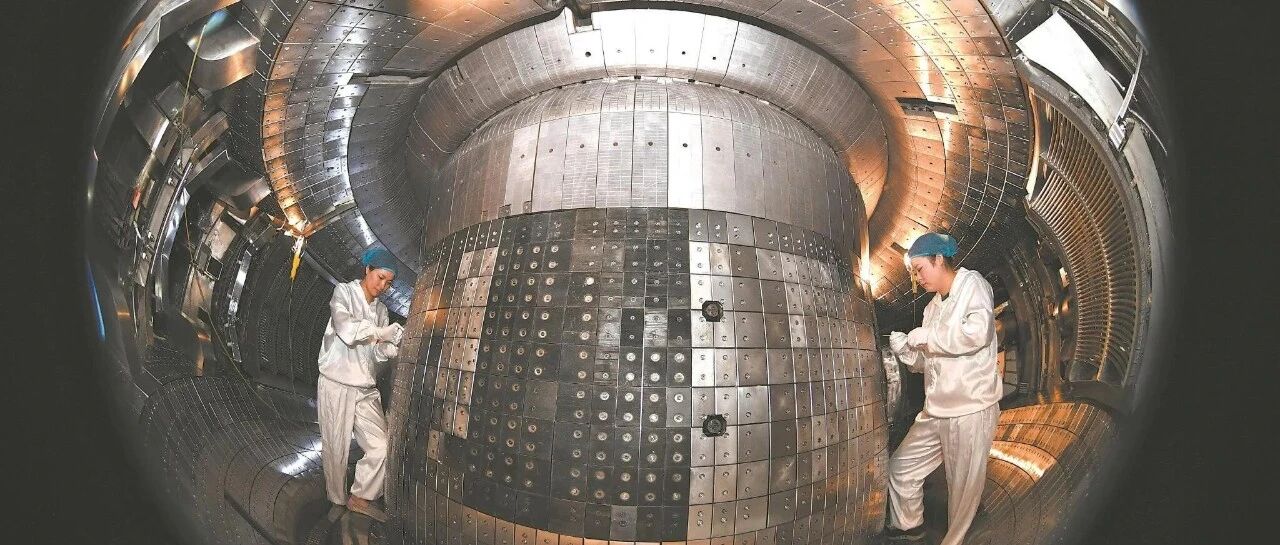
Core Viewpoint - The article discusses the increasing investment in nuclear fusion technology, highlighting its potential as a solution to the energy demands of the AI era and the significant financial backing from top venture capital firms and government initiatives [2][8][20]. Group 1: Investment Trends - Dongsheng Fusion, a newly established nuclear fusion company, secured several hundred million yuan in its angel round funding [2]. - Major investors include Sequoia, IDG, Hillhouse, and Dinghui, indicating a strong interest from top-tier venture capital firms [3]. - The trend of investing large sums in early-stage, high-risk projects like nuclear fusion is unusual, as traditionally, venture capitalists avoid significant investments at the angel stage due to high risks [9][10]. Group 2: Energy Demand and AI - The demand for AI computing power is driving a shift in focus from acquiring more chips to securing sufficient electricity, as the operational costs of AI data centers are heavily influenced by electricity expenses [17][19]. - The capital expenditures of major tech companies like Microsoft, Google, and Amazon are projected to approach $400 billion, with a significant portion allocated to addressing energy shortages [19]. Group 3: Nuclear Fusion as a Solution - Nuclear fusion is being viewed as a "ultimate energy" solution due to the limitations of traditional energy sources and the safety concerns associated with nuclear fission [21][22]. - Notable investments in nuclear fusion include a $375 million investment by OpenAI's CEO in Helion and a power purchase agreement between Google and Commonwealth Fusion [24][25]. Group 4: Domestic Developments - In China, the establishment of the China Fusion Energy Company and significant funding rounds for various fusion startups indicate a strong governmental push towards fusion energy, with plans to invest over 300 billion yuan by 2030 [28][31]. - The timeline for fusion energy development includes milestones such as starting combustion experiments in 2027 and completing engineering experimental reactors by 2035 [35]. Group 5: Technological Advances - The article outlines three main approaches to nuclear fusion: Tokamak, FRC, and inertial confinement, each with its own advantages and challenges [41]. - Recent breakthroughs in high-temperature superconductors and AI technology are accelerating the development of nuclear fusion by making it more feasible and cost-effective [46][48]. Group 6: Opportunities for Individuals - The transition from laboratory to engineering in nuclear fusion presents numerous job and entrepreneurial opportunities across various fields, including engineering, materials science, and project management [57]. - Investment opportunities exist in the supply chain related to nuclear fusion, such as superconducting materials and precision manufacturing [58]. - Understanding the implications of nuclear fusion and energy transformation can provide individuals with a competitive edge in future investment opportunities [58]. Group 7: Dongsheng Fusion's Significance - Dongsheng Fusion is pursuing a unique "deuterium-helium-3" fusion route, which is considered safer and cleaner than traditional methods [61]. - The company is backed by a team from Fudan University and supported by significant funding from local government initiatives [62]. - The interest from top-tier VCs in Dongsheng Fusion is attributed to its differentiated technology, strong academic foundation, and robust policy support [63].
观察 | Manus 收购案要黄?这可能是中国AI出海的分水岭
未可知人工智能研究院· 2026-01-08 04:43
Core Viewpoint - The acquisition of Manus for $2 billion is likely to fail due to potential violations of technology export control regulations, highlighting the intersection of technology and national sovereignty in the context of US-China relations [1][4][6]. Group 1: Manus Acquisition Context - Manus, a startup that achieved a valuation increase of over 100 times in three years, is facing scrutiny from the Ministry of Commerce regarding its acquisition by a US tech giant [2][4]. - The acquisition is not merely a commercial transaction but touches on sensitive issues of technology sovereignty and data security between China and the US [4][15]. Group 2: Historical Precedents - The case of TikTok in 2020 serves as a precedent where the US government forced ByteDance to sell its US operations, leading to complications due to revised technology export control regulations [10][12]. - Another historical example is the 1990 acquisition of MCI by a Chinese company, which was reversed by the US government on national security grounds, illustrating that cross-border tech acquisitions are influenced by geopolitical factors [14][15]. Group 3: Legal and Regulatory Challenges - There is a debate on whether Manus's technology qualifies as "core technology," with some arguing that it is merely an application layer product and should not fall under export controls [19][20]. - The updated "Prohibited Export Technology Directory" in China includes critical technologies such as personalized information push services, which could encompass Manus's offerings [21][32]. Group 4: Compliance and Regulatory Strategies - The article discusses the "Singapore wash" strategy, where companies attempt to relocate to Singapore to evade Chinese regulations, but this approach is increasingly scrutinized by regulatory bodies [24][28]. - Manus's relocation to Singapore was part of an effort to shed its "Chinese company" label, but the underlying technology and data sources remain a concern for regulators [26][30]. Group 5: Recommendations for International Expansion - Companies are advised to conduct compliance assessments before international expansion to ensure their technologies and data do not violate export controls [39]. - It is crucial to separate technology and data layers, ensuring that overseas versions utilize local data and comply with regulations [40]. - Maintaining open communication with domestic regulatory authorities is essential for navigating the complexities of international operations [40]. Group 6: Significance of Manus Case - The Manus case signifies a new phase in China's control over AI core technologies, indicating that the previous methods of circumventing regulations may no longer be viable [41][43]. - This situation emphasizes the need for Chinese AI entrepreneurs to operate within a framework of compliance when pursuing international opportunities, reflecting a shift in the rules of engagement in the global tech landscape [43].

观察 | CES 2026开幕:黄仁勋点名中国AI,物理AI时代来了!
未可知人工智能研究院· 2026-01-07 04:03
Core Insights - The article emphasizes that the AI competition has begun, with significant advancements being made in AI technology, particularly in the context of the CES event [1][2][3] Group 1: AI Advancements and Market Implications - Huang Renxun praised Chinese AI models at CES, highlighting the open-source model DeepSeek as a significant achievement, indicating a shift in the competitive landscape [6][7] - The cost efficiency of Chinese teams in AI inference is noted, with DeepSeek achieving results comparable to GPT-4 at a fraction of the cost, suggesting a potential market expansion [10][13] - The reduction of AI inference costs is crucial for market growth, allowing more companies to adopt AI technologies, which could lead to explosive demand for chips from companies like NVIDIA [17][18] Group 2: Physical AI and Industry Impact - Huang Renxun stated that the era of "Physical AI" has arrived, indicating that AI must move beyond conversational capabilities to practical applications in industries like manufacturing and logistics, which together represent a market worth over $50 trillion [22][23] - The introduction of the new Rubin chip, which increases inference power fivefold, could significantly lower operational costs for businesses deploying AI solutions [24][25] Group 3: Competitive Landscape and Strategic Moves - Major players like Intel and AMD are also making strides in the AI space, with Intel releasing a 1.8nm AI PC chip and AMD focusing on overcoming computational bottlenecks, indicating a competitive race for edge AI market share [31][32][34] - Chinese companies are leveraging cost advantages and a robust supply chain to compete globally, with examples of robots being produced at significantly lower costs than their foreign counterparts [36][37] Group 4: Opportunities for Individuals - The article outlines three key areas for individuals to explore: using AI tools to enhance work efficiency, understanding the integration of AI in traditional industries, and pursuing careers related to robotics and edge computing [40][41][42] - The transition of AI from a purely digital tool to one that operates in the physical world presents real opportunities for proactive individuals [43][44]

观察 | Kimi手握百亿拒上市,智谱MiniMax抢着上:AI圈IPO大战背后的生死局
未可知人工智能研究院· 2026-01-06 04:03
Group 1 - The core viewpoint of the article is that timing is more important than speed in the business world, and Kimi's decision to delay its IPO is based on the current market conditions rather than confidence [1][5][49] - Kimi has recently completed a $500 million financing round and holds over 10 billion RMB in cash, indicating that they are not in a rush to go public [1][6] - The company has been burning through 200 million RMB monthly to acquire users, leading to a significant drop in monthly active users, which makes an IPO unfavorable at this time [7][8] Group 2 - Kimi's new model, codenamed "Kiwi-do," has shown superior performance in visual physics reasoning tests, suggesting that the company is leveraging technology to buy time for commercialization [14][15] - The competition between Zhipu and MiniMax for IPO is described as a race against time, with both companies having high valuations but low revenues, leading to extremely high price-to-sales ratios [16][18][20] - The article highlights the critical issue of commercialization in the AI industry, noting that training a foundational model costs around 30 million RMB and must be repeated every three months, which can lead to unsustainable financial practices [25][26][30] Group 3 - The article provides three strategies for individuals to capitalize on AI opportunities: focusing on vertical applications, prioritizing cost-reduction and efficiency-enhancing AI tools, and paying attention to the practical applications of multimodal capabilities [41][42][43] - It emphasizes the importance of distinguishing between genuine demand and hype in the AI sector, advising to look for clear paying users, viable business models, and significant technological barriers [44][45][47] - The overall sentiment is that the AI industry is shifting from a "burning money" approach to a focus on survival and efficiency, presenting a unique opportunity for those who can navigate the changing landscape [48][50]

观察 | AI行业真相:传统行业没崩,OpenAI红利见顶,真正机会在这
未可知人工智能研究院· 2026-01-05 04:02
Core Insights - The article emphasizes that traditional industries are not as vulnerable to AI disruption as commonly perceived, with only minor declines in sectors like search engines and education technology [4][5][6] - AI is described as a gradual force of change rather than an immediate threat, suggesting that traditional industries have a window of five to ten years to adapt [7][21] - The report highlights the importance of integrating AI into workflows to gain a competitive edge, rather than relying solely on AI technology itself [7][21] Industry Performance - Traditional search engines experienced a year-over-year decline of only 3%, while traditional education technology platforms saw a 7% drop, indicating stability in these sectors [5][8] - Digital freelance work declined by 8%, but the overall trend remains steady, suggesting resilience in the market [8] - The report categorizes various sectors as "Steady," indicating that while AI is encroaching on market share, the protective barriers of these industries are stronger than anticipated [5][8] AI Market Dynamics - ChatGPT's growth rate turned negative at -4% in December, while competitors like Google's Gemini and Meta's AI products saw significant growth rates of 82% and 109%, respectively [9][10] - The market share of ChatGPT decreased by 3 percentage points over four months, indicating a shift in competitive dynamics where latecomers are gaining ground [9][10] - The fastest-growing AI sector is music generation, with an overall growth rate of 36%, highlighting opportunities in niche markets [16][20] Investment Opportunities - Companies like Zhiyu and MiniMax are entering a critical phase for capitalizing on AI, with MiniMax projected to achieve a 780% revenue growth in 2024 [24][26] - The differing business models of these companies present varied risk-reward profiles for investors, with Zhiyu focusing on B2B and MiniMax on a global C2C approach [24][26] - The successful IPOs of these companies could stimulate further investment in the AI sector, encouraging new startups to emerge [26][28] Actionable Insights - Individuals in traditional industries are encouraged to explore how AI tools can enhance efficiency, as the integration of AI will become a fundamental skill in the workplace [28][29] - Establishing a diverse AI toolset for different applications is recommended, as relying on a single tool may limit effectiveness [29] - Focusing on vertical market opportunities where AI can address specific pain points is advised, as these areas are likely to yield significant returns [29][21]