投资界

Search documents
“寒武纪已成老登”
投资界· 2025-12-18 07:21
新贵正忙 。 作者/冯雨晨 报道/投资界PEdaily 没有永远的小甜甜。 短 短 十 来 天 , 两 家 市 值 超 3 0 0 0 亿 的 巨 头 诞 生 —— 摩 尔 线 程 和 沐 曦 集 成 排 队 科 创 板 敲 钟,首日涨幅均超5 0 0 %,令人惊叹。若是打新中上一签,当日即可实现数十万浮盈。 一 时 间 , 几 乎 所 有 的 目 光 都 聚 集 在 这 两 家 芯 片 新 贵 身 上 。 而 作 为 AI 芯 片 带 头 大 哥 的 寒 武纪,也在这个热闹非凡的时刻被"端"了出来。正如股民们调侃:摩尔线程和沐曦集成 就像1 8岁热情洋溢的少女,寒武纪则像沉默寡言的老登。 其实,此时距离市场尊称其为"寒王",才仅仅过去不到四个月。 小登排队 敲钟 暴涨 寒王有点落寞 不曾想,A股总市值一下子 就增了6 0 0 0多亿 。 1 2 月 5 日 , 摩 尔 线 程 在 万 众 期 待 中 摘 下 "GPU 第 一 股 " , 首 日 表 现 较 发 行 价 最 高 涨 超 5 倍,市值突破3 0 0 0亿元。随后几个交易日又续写新高,股价一度开挂冲至9 4 1元成为A 股"第三贵",市值逼近4 ...


杭州要造火箭了
投资界· 2025-12-18 07:21
"中国版SpaceX"箭元科技可复用火箭基地正式落地杭州。 近日,据彭博社报道,埃隆·马斯克旗下S p a c eX计划最早于2 0 2 6年中后期上市,融资将 远超3 0 0亿美元,目标估值约1 . 5万亿美元。而作为"中国版S p a c eX"的箭元科技,也正 式将 我国商业航天领域首个以"回收复用"为核心定位的综合性产业基地 落户杭州钱塘 区,箭元科技也成为杭州招引落地的第一家商业航天火箭总装企业。明年年底,首枚在 杭州钱塘制造的箭元火箭计划发射,杭州将迎来首枚"杭州钱塘箭"。 箭元中大型液体运载火箭总装总测及回收复用基地鸟瞰图 "十五五"规划提出重点加快航空航天等战略性新兴产业的集群化发展,让新兴产业成为 拉动经济增长、优化经济结构的重要引擎,为高质量发展注入强劲动力。中国证监会已 经明确将商业航天纳入科创板第五套上市标准的适用范围,蓝箭航天、星河动力等商业 火箭公司近期已相继启动上市进程。从国家顶层设计到资本市场支持,商业火箭迎来黄 金发展期。 以箭元科技、蓝箭航天、星河动力等为代表的头部商业火箭公司,未来登 陆资本市场的路径明确,发展前景可期。 箭元科技是国内首个规划采用"不锈钢+液氧甲烷"方案 ...

刚刚,深圳超级国资诞生
投资界· 2025-12-17 03:08
Core Insights - The article discusses the establishment of the "Guochuang Yinkechuang Fund" in Shenzhen, which has a registered capital of 18.9 billion RMB, highlighting the significant involvement of state-owned enterprises and government-backed funds in the investment landscape [5][6][7]. Fund Overview - The Guochuang Yinkechuang Fund was officially registered on December 15, 2025, with a total capital of 18.9 billion RMB, located in the Qianhai Shenzhen-Hong Kong Cooperation Zone [6]. - The fund is managed by Shenzhen Guochuang Investment Co., Ltd., which is wholly owned by the Shenzhen Guiding Fund Investment Co., Ltd. [6]. - Major contributors include Shenzhen Guiding Fund (12.8 billion RMB, 67.72%), Huitong Financial Holdings (3 billion RMB, 15.87%), and Qianhai Financial Holdings (2 billion RMB, 10.58%) [6][7]. Investment Landscape - Since 2015, Shenzhen has established government investment funds exceeding 150 billion RMB, creating 13 guiding funds that have mobilized nearly 500 billion RMB in capital [7]. - The total scale of state-owned funds in Shenzhen exceeds 7 trillion RMB, with over 500 funds targeting strategic emerging industries and future industries, accounting for over 90% of the investment [7]. Future Goals - Shenzhen aims to form a "dual ten-thousand" structure by the end of 2026, targeting a trillion-level "20+8" industrial fund group and over 10,000 registered equity investment and venture capital funds [8]. Economic Development Initiatives - Shenzhen's government has outlined nine key areas for economic work in 2026, focusing on nurturing new growth drivers, enhancing the integration of technology and industry, and optimizing traditional industries [9]. - The Shenzhen Municipal Financial Office has proposed measures to support the reform of the Growth Enterprise Market and promote venture capital activities [9]. Talent Attraction Strategies - Shenzhen has introduced various measures to attract young talent, including free accommodation for recent graduates, transitional housing at 60% of market rates, and entrepreneurial subsidies up to 30,000 RMB [9][10]. - Financial incentives for talent settlement include up to 100,000 RMB for PhDs, 50,000 RMB for master's degree holders, and 30,000 RMB for bachelor's degree holders [10]. Startup Ecosystem - The article highlights the vibrant startup ecosystem in Shenzhen, with notable companies like Ying Shi Innovation and Tuo Zhu Technology emerging from the region [10][11]. - The presence of a robust supply chain has attracted numerous investors to Shenzhen, particularly in the AI hardware sector [11].

中国下一批千亿公司
投资界· 2025-12-17 03:08
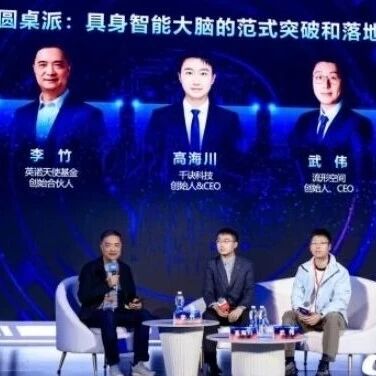
Core Viewpoint - The article discusses the advancements and potential of embodied intelligence, particularly focusing on the development of a "brain" for robots that can adapt and learn across various forms and tasks, highlighting the contributions of companies like Qianjue Technology and Liufeng Space [2][3][4]. Group 1: Embodied Intelligence Development - Embodied intelligence has emerged as a hot investment area, with significant advancements in creating "small brains" but challenges remain in developing a comprehensive "big brain" [3][4]. - Recent scientific research indicates substantial potential for embodied intelligence, although the foundational paradigms are still evolving [4]. - Qianjue Technology aims to create a "brain in a jar" that can be utilized by various robot forms, with plans to connect 100,000 devices to its system by next year [4][5]. Group 2: Technical Approaches - Qianjue Technology employs a decoupled approach to brain modeling, allowing for independent optimization and evolution of different brain regions, which enhances efficiency [5][14]. - Liufeng Space focuses on building world models that drive embodied brains, utilizing real-time interactive space generation technology [6][11]. - The two companies represent different paths in the development of embodied intelligence, with Qianjue emphasizing brain-like structures and Liufeng leveraging world models for practical applications [8][10]. Group 3: Data and Training - Data scarcity is a significant challenge in training embodied intelligence systems, with Qianjue Technology achieving multiple generations of pre-training, which is rare in the industry [14][17]. - Liufeng Space believes that good robot data should be treated as an asset, emphasizing the importance of diverse and abundant data for effective training [12][17]. - Both companies recognize the need for extensive data to achieve effective pre-training, with estimates suggesting that a billion clips may be necessary for comprehensive training [26][27]. Group 4: Future Outlook - The timeline for achieving a mature embodied brain technology is optimistic, with both companies suggesting that significant advancements could occur within two years [26][27]. - The potential for embodied intelligence to surpass language models is highlighted, with expectations for the emergence of numerous billion-dollar companies in this sector [27].
沐曦3000亿,投资人迎来超级回报
投资界· 2025-12-17 03:08
Core Viewpoint - The successful IPO of Muxi Integrated Circuit (Shanghai) Co., Ltd. on the STAR Market marks a significant milestone for domestic GPU manufacturers, with a market capitalization exceeding 300 billion yuan shortly after listing [2][3]. Company Overview - Muxi was founded in 2020 by Chen Weiliang, who has a strong technical background from AMD, along with partners Peng Li and Yang Jian, aiming to create a self-sufficient GPU ecosystem in China [3][6]. - The company has developed a range of products, including the Xisi N series GPU for AI computing and the Xiyun C series GPU for general computing, with a focus on breaking reliance on foreign technology [6][7]. Investment Journey - Muxi's funding journey began with nearly 100 million yuan in angel financing shortly after its establishment, attracting numerous investors including Sequoia China and ZhenFund [8][9]. - Despite facing challenges in 2022 due to competition and market conditions, Muxi secured significant investments based on its technological capabilities and team experience, leading to a pre-IPO valuation exceeding 15.88 billion yuan [9][10]. Market Context - The Chinese GPU market is projected to grow from 38.5 billion yuan in 2020 to 163.8 billion yuan by 2024, with a significant shift towards domestic suppliers expected by 2027 [9][10]. - Muxi's growth reflects a broader trend of increasing domestic capabilities in high-performance computing, with the company positioned as a key player in this evolving landscape [6][7]. Team and Leadership - Chen Weiliang's leadership and experience in GPU design and commercialization have been pivotal in Muxi's rapid growth, with the company achieving a compound annual growth rate of 4074.52% in revenue over the past three years [7][8]. - The team’s extensive experience in the industry is seen as a critical factor in navigating the complexities of chip development and market entry [6][7]. Future Outlook - Muxi aims to reach profitability by 2026, with ongoing product development and market expansion strategies in place [7][8]. - The company’s successful IPO is viewed as a validation of its long-term vision and the potential for further growth in the domestic GPU market [2][3].
印度CEO正被欧美「清算」
投资界· 2025-12-17 03:08
Core Insights - The article discusses the rising influence of Indian-origin executives in major global companies, highlighting that approximately 10% of CEOs in the Fortune 500 are of Indian descent, with over 60% of the top 300 global companies employing Indian executives [1][2]. Group 1: Education and Background - The Hyderabad Public School is identified as a significant contributor to the success of Indian executives, producing numerous leaders for multinational corporations like Microsoft and Adobe [3][4]. - The school emphasizes leadership education over mere academic performance, aiming to cultivate leaders across various fields [3][4]. - The tuition fees for the Hyderabad Public School range from 171,000 to 225,000 Indian Rupees (approximately 13,000 to 17,000 RMB), indicating that it primarily serves middle-class and affluent families [5][6]. Group 2: Networking and Mentorship - A strong alumni network plays a crucial role in the career advancement of Indian executives, providing support and opportunities for collaboration [6][9]. - The "mentor system," referred to as "passing the torch," is prevalent among Indian executives, where established leaders help guide and promote younger Indian professionals within organizations [9][10]. - Organizations like TiE have institutionalized this mentorship model, requiring successful members to mentor newcomers, thereby fostering a supportive community [10]. Group 3: Cultural Dynamics and Challenges - The close-knit nature of the Indian professional community in the U.S. has led to perceptions of exclusivity, causing discomfort among non-Indian colleagues [11]. - Criticism has emerged regarding the effectiveness of Indian executives, with some suggesting that their ability to present well may overshadow actual performance [12][13]. - Recent trends indicate a divide, where new Indian executives are rising while older ones face layoffs, suggesting a shift in the expectations of leadership effectiveness in the evolving business landscape [13].

“寒武纪卖早了”
投资界· 2025-12-16 07:52
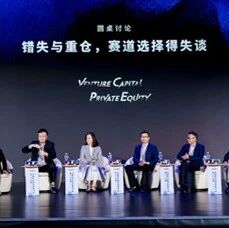
Core Insights - The article discusses the annual venture capital conference in Shenzhen, focusing on the theme of "missed opportunities and heavy investments" in the context of investment strategies and industry shifts in China [2][3]. Group 1: Investment Institutions Overview - Tang Capital, founded in 2019, focuses on hard technology, particularly in electronic information, advanced manufacturing, and new materials, managing over 3 billion [3]. - Huakong Fund, established in 2007, has over 10 billion under management, emphasizing hard technology sectors such as advanced manufacturing and AI [4]. - Huaying Capital, founded in 2008, has invested in over 280 companies, with over 50% of investments related to AI [4]. - Guozhong Capital, established in 2015, manages 16 billion across multiple funds, focusing on supporting small and medium-sized enterprises [5]. - Lenovo Star, since 2008, has invested in over 400 companies, primarily in technology and healthcare [6]. - Linghang New Frontier, founded in 2019, manages approximately 2.8 billion, focusing on smart technology and biomedical sectors [7]. - Tiantang Silicon Valley, established in 2000, has invested in over 230 projects, with over 50% achieving exits, focusing on technology and healthcare [8]. Group 2: Investment Strategies and Shifts - Investment strategies have evolved due to industry cycles, with institutions adjusting their focus based on market conditions and technological advancements [9][16]. - Huaying Capital's investment methodology adapts to different stages of technology development, focusing on disruptive technologies and market leadership [12]. - Institutions like Tang Capital and Huakong Fund emphasize AI and advanced technologies as key future investment areas, reflecting a shift towards more innovative sectors [29][30]. - Guozhong Capital aligns its investment strategy with national development plans, focusing on emerging industries as outlined in the "14th Five-Year Plan" [19]. Group 3: Missed Opportunities and Lessons Learned - Many institutions shared experiences of missed opportunities in sectors like quantum computing and commercial aerospace, highlighting the importance of timely decision-making [25][27]. - The article emphasizes the need for continuous learning and adaptation in investment strategies to avoid missing out on emerging trends [26][28]. - Institutions reflect on past mistakes, such as underestimating the potential of the solar energy sector, which has since become a leading industry [26]. Group 4: Future Focus Areas - Future investment focus areas include AI, embodied intelligence, and commercial aerospace, with expectations for significant growth in these sectors [29][30]. - Institutions are also looking at advanced materials and renewable energy as key investment opportunities over the next five years [32][33].
闯荡俄罗斯
投资界· 2025-12-16 07:52
Core Viewpoint - The recent implementation of visa-free travel between Russia and China has generated excitement among Chinese tourists, but the reality of traveling in Russia presents significant challenges and frustrations [4][12]. Group 1: Travel Experience Challenges - Chinese tourists face unexpected difficulties upon arrival in Russia, including a 24-hour silence period for foreign SIM cards, which complicates communication and navigation [5][6]. - The lack of international hotel brands and the high prices of local accommodations have led to a significant increase in travel costs, with some hotels charging exorbitant rates [6][7]. - Tourists experience severe disruptions in navigation due to GPS signal interference, forcing them to rely on traditional methods for finding their way [6][10]. Group 2: Economic and Pricing Dynamics - The economic impact of sanctions has led to inflated prices in Russia, contradicting the expectation of lower costs for Chinese tourists [12][13]. - The influx of wealthy Russians into domestic tourist destinations, such as Sochi, has driven prices up due to increased demand, creating a competitive environment for tourists [13][14]. - Tourists are often paying more for outdated infrastructure and services, leading to a perception of poor value for money [14]. Group 3: Service Quality and Cultural Differences - The service quality in Russia is perceived as lacking compared to expectations set by experiences in other countries, with a notable absence of customer-oriented service [14][15]. - The cultural differences in service attitudes contribute to a sense of alienation for Chinese tourists, who are accustomed to more attentive service [15][16]. Group 4: Market Dynamics and Tourist Behavior - The shift in travel plans due to canceled flights to Japan has led many tourists to seek alternatives in Russia, often without fully understanding the differences in travel experiences [15][16]. - The initial excitement of visa-free travel has been tempered by the harsh realities of navigating a complex and often frustrating travel environment in Russia [12][16].

曾毓群老师,要IPO敲钟了
投资界· 2025-12-16 07:52
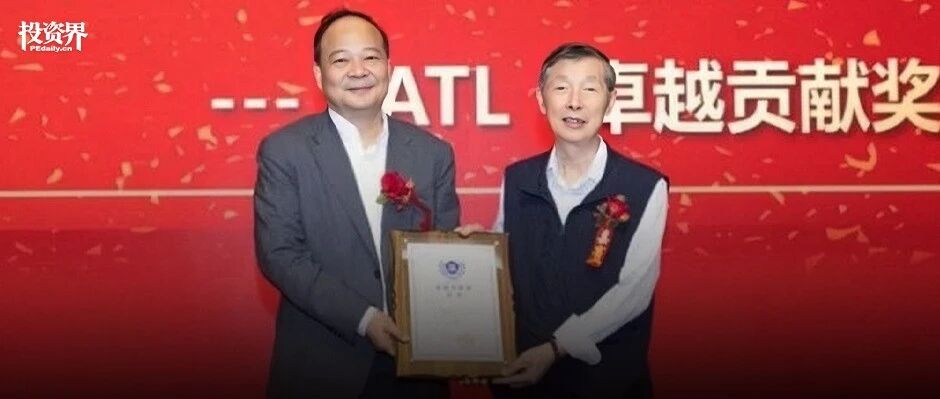
Core Viewpoint - The article highlights the upcoming IPO of Weilan New Energy, a company specializing in solid-state batteries, and emphasizes the significant contributions of its founders, particularly Chen Liquan, who is regarded as a pivotal figure in China's lithium battery industry [2][5][15]. Company Overview - Weilan New Energy has submitted its IPO guidance to the Beijing Securities Regulatory Bureau, aiming to list on the ChiNext board [2]. - The company was founded by notable figures from the Chinese Academy of Sciences, including Chen Liquan, who is known as the "Father of Lithium Batteries" [2][5]. - Weilan New Energy's product focus includes solid-state batteries, which utilize solid electrolytes to enhance safety, capacity, and charging efficiency compared to traditional liquid batteries [6][7][10]. Product and Technology - The company proposes the concept of "in-situ solidification," transforming liquid electrolytes into solid-state without changing existing processes [10]. - Key products include: - 360 Wh/kg high energy density power cells, capable of over 1000 km range, delivered to NIO [10]. - 280 Ah ultra-safe energy storage cells, set for delivery in the second half of 2023 [10]. - 320 Wh/kg energy density cells for low-altitude economic applications, supplied to various clients [10]. Production Capacity and Contracts - Weilan New Energy has established four production bases with an annual capacity of 28.2 GWh, planning to exceed 100 GWh in total capacity [11]. - The company recently signed a significant contract worth approximately 4 billion RMB with Shaanxi Forestry Industry Group for solid-state cells and energy storage equipment [11]. Investment and Valuation - Weilan New Energy has attracted substantial venture capital, with a valuation exceeding 18 billion RMB, positioning it as a leading player in the solid-state battery sector [13][15]. - The company has undergone multiple rounds of financing, with notable investors including major VC firms and strategic partners [14][15]. Industry Impact - Chen Liquan's influence extends beyond Weilan New Energy, having mentored numerous successful companies in the battery sector, including CATL [17][18]. - The article underscores the importance of solid-state batteries in achieving China's dual carbon strategy and the broader goals of new energy vehicle development [15].
快递驿站,塌房了
投资界· 2025-12-16 07:52
Core Viewpoint - The express delivery station business, once perceived as a low-cost and low-barrier entrepreneurial opportunity, is now facing significant challenges, leading many operators to exit the market despite previous profitability [5][27]. Group 1: Business Challenges - Many express station owners are experiencing financial losses despite high package volumes, with one owner reporting an average monthly delivery volume of 80,000 but still operating at a loss [5][27]. - The competitive landscape has intensified, with new entrants and aggressive tactics among existing operators, including price wars and complaints to regulatory bodies [10][16][27]. - The introduction of new regulations has increased operational burdens, forcing some owners to handle deliveries themselves, which raises costs and complicates operations [25][27]. Group 2: Financial Dynamics - The average income from delivery fees has decreased, with one operator noting a drop from 4,500 to around 1,500 monthly due to increased competition and reduced package volumes [27]. - Penalties from delivery companies are a significant financial drain, with one operator reporting that over 70% of their income was deducted due to fines [18][22]. - The overall trend in the express delivery industry shows a decline in service prices, with a reported 8.2% decrease in average delivery fees in early 2025 [28]. Group 3: Market Trends - The express delivery market is projected to grow, with an estimated 175.08 billion packages expected in 2024, reflecting a 21.5% year-on-year increase [27][28]. - Despite the growth in package volume, the profitability for individual stations is declining due to increased competition and reduced fees, leading to a challenging environment for operators [27][28]. - The rise of alternative delivery models, such as automated delivery vehicles, is changing the operational landscape, further complicating the situation for traditional express stations [27]. Group 4: Survival Strategies - Many station owners are diversifying their business models by incorporating additional services, such as community group buying or retail, to supplement their income [29]. - Some operators are actively seeking to transfer their stations to new owners, often advertising them as "profitable immediately," despite the underlying challenges [6][29]. - The survival of express stations often hinges on the owner's ability to manage costs effectively and adapt to the rapidly changing market dynamics [29].