Canalys

Search documents
Canalys(现并入Omdia)数据快闪:2025年第一季度,全球可穿戴腕带设备重点市场厂商排名
Canalys· 2025-06-18 01:51
Core Insights - The global wearable band device market is projected to grow by 13% year-on-year in Q1 2025, reaching a shipment volume of 46.6 million units, driven by a low base from the previous year and a rebound in market demand [1] Market Overview - The three main product categories—basic bands, basic watches, and smartwatches—have all seen growth, contributing significantly to market expansion [1] Vendor Rankings - Xiaomi regained the top position globally with a 44% increase in shipments to 8.7 million units, primarily due to the success of the Redmi Band 5 [2] - Apple ranked second with a 5% increase in Apple Watch shipments, reaching 7.6 million units, and is expected to revitalize growth with new product updates in the second half of 2025 [2] - Huawei maintained third place with a 36% increase in shipments to 7.1 million units, supported by the performance of the GT and Fit series [2] - Samsung experienced a significant 74% increase in shipments to 4.9 million units, leveraging a dual-track strategy to expand in emerging markets while maintaining a premium position in developed markets [2] - Garmin ranked fifth with a 10% increase in shipments to 1.8 million units, enhancing customer retention through a differentiated product mix [2] Regional Insights - In Africa, Transsion led with a 48% market share and a remarkable 217% annual growth [3] - In the APAC region (excluding Greater China), Noise held the top position with a 15% market share, despite an 18% decline in growth [4] - In Latin America, Xiaomi led with a 38% market share and a 62% increase in shipments [5] - In the United States, Apple dominated with a 49% market share and a 6% growth rate [8] - In India, Noise led with a 27% market share, although it faced an 18% decline in growth [9] - In Germany, Apple held the top position with a 29% market share and a 10% growth rate [10]




2025年第一季度,中国大陆PC出货量逆势增长12%,联想夺冠PC市场,华为稳居平板第一
Canalys· 2025-06-16 13:30
Canalys (现 并入 Omdia )最新数据 显示 , 2025 年第一季度 , 中国大陆 PC 市场(不含平板)出 货量达 890 万台,同比增长 12% ;平板市场增长更为强劲,出货 870 万台,同比攀升 19% 。政府补 贴政策有效刺激消费 市场的 设备升级需求,成为主要增长驱动力。 展望未来,中国大陆 PC 市场预计将 在 2025 年持平, 2026 年增长 6% ,而平板电脑市场预计将在今年增长 5% , 2026 年收缩 8% 。 2025 年第一季度,中国大陆PC细分市场表现不一。受政府补贴推动,消费市场延续强劲势头,笔记本出 货量同比大幅增长20%。相比之下,商用市场的表现较为温和,大型企业的PC采购保持持平;而中小企 业(SMB)市场在连续11个季度下滑后终于出现温和复苏,同比增长2%。 Canalys(现并入Omdia)高级分析师徐颖(Emma Xu)表示:"过去两年,中国大陆的PC市场格局发生 了显著变化,本土品牌间的竞争愈发激烈。专注消费市场的中国厂商如软通动力、华为、荣耀和小米在 2025年第一季度均实现增长,进一步蚕食了联想、惠普和戴尔等传统商用强者的市场份额。华为在5月 ...
华为Watch 5系列:智能穿戴迈向健康决策平台的战略跃迁
Canalys· 2025-06-15 12:27
Core Insights - Huawei's Watch 5 series is positioned as an "AI smart watch," marking a strategic shift from merely health data collection to an active health intervention platform [1] - In a slowing global smartwatch market, Huawei aims to break through growth ceilings by focusing on "health decision-making" as a new growth avenue [1] Key Upgrades of Huawei Watch 5 Series - The series features three significant upgrades that enhance its functionality and user experience [2] Strategic Intent and Technological Moat - Huawei's integration of self-developed chips, algorithms, and sensors creates a significant competitive advantage, establishing a difficult-to-replicate technological moat [7] Core Scenarios of Terminal Services - The watch serves as a critical touchpoint connecting user behavior with backend services, facilitating Huawei's transition from hardware sales to ongoing service operations [5] Active Health Intervention Capability - The watch utilizes local AI computing and multi-modal perception to identify health risks and generate personalized intervention suggestions, integrating with remote medical services [6] Independent Terminal Evolution - The device supports independent communication via 5G eSIM (in the domestic market), catering to various scenarios such as elderly monitoring and extreme sports [6] Health Ecosystem Hub - Built on HarmonyOS, the watch enables multi-device interaction and opens APIs/SDKs for third-party services, creating a closed-loop ecosystem of "data-model-service" [6] Global Expansion Strategy - Leveraging its leading position in the Chinese market, Huawei plans to replicate its successful "active health intervention model" in emerging overseas markets [8] Challenges Facing Huawei's Vision - Huawei's "health brain" vision faces three main challenges: building a trust system, validating business models, and establishing ecological collaboration [10][12] Strategic Recommendations - To ensure long-term success, Huawei should focus on four core areas: building a trust system, validating business models, establishing ecological rules, and ensuring global compliance [11][13][14][15] Value Reconstruction - The future of wearable technology is shifting from selling product features to building long-term user relationships based on ongoing services [19] Conclusion - The Huawei Watch 5 series represents a strategic signal indicating a shift in the competitive landscape of the wearable industry, emphasizing the importance of user perception, scalable services, and sustainable business models [16]
2025年第一季度,全球云支出增长21%,AWS、微软、谷歌三大云厂商持续云投入,以争夺AI成本优势
Canalys· 2025-06-13 04:46
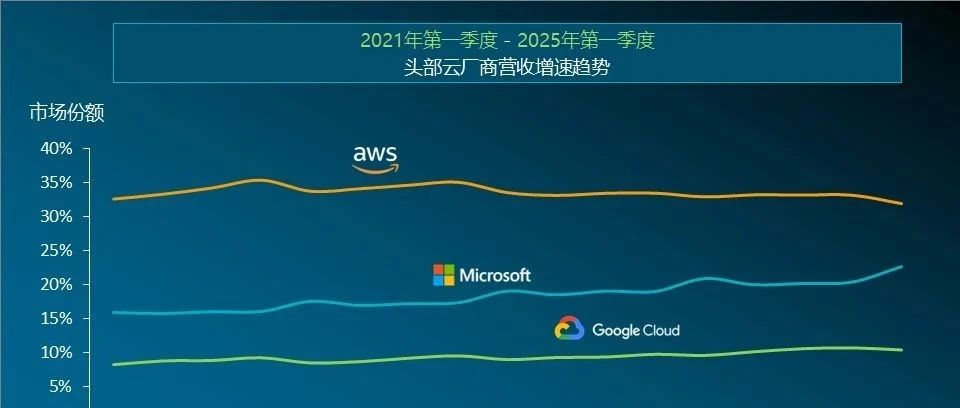
Core Insights - The global cloud infrastructure services spending reached $90.9 billion in Q1 2025, marking a 21% year-over-year increase, driven by the need for AI application deployment and cloud migration [1] - Major cloud providers are accelerating infrastructure optimization to lower AI usage costs and enhance inference efficiency, with a focus on self-developed chips [1][2] - The top three cloud providers—Amazon Web Services (AWS), Microsoft Azure, and Google Cloud—account for 65% of global cloud spending, with their combined spending growing by 24% year-over-year [1] Group 1: Market Overview - The global cloud services market is experiencing steady growth, focusing on two strategic priorities: accelerating cloud migration and exploring generative AI applications [2] - The rise of generative AI heavily relies on cloud infrastructure, which in turn reinforces corporate cloud strategies and speeds up migration processes [2] Group 2: Major Cloud Providers - AWS maintains its market leadership with a 32% share and a 17% year-over-year revenue growth, while its AI business is in early development but shows triple-digit annual growth [4] - AWS has introduced price cuts to promote the adoption of its self-developed Trainium AI chips, which offer a 30-40% advantage in price-performance ratio compared to Nvidia [5] - Microsoft Azure holds a 23% market share with a 33% year-over-year growth, attributing 16 percentage points of this growth to AI [6] - Google Cloud retains a 10% market share with a 31% year-over-year growth, although its revenue backlog decreased slightly due to supply constraints [7]



华为鸿蒙PC发布:迈向科技主权的一大步
Canalys· 2025-06-12 04:15
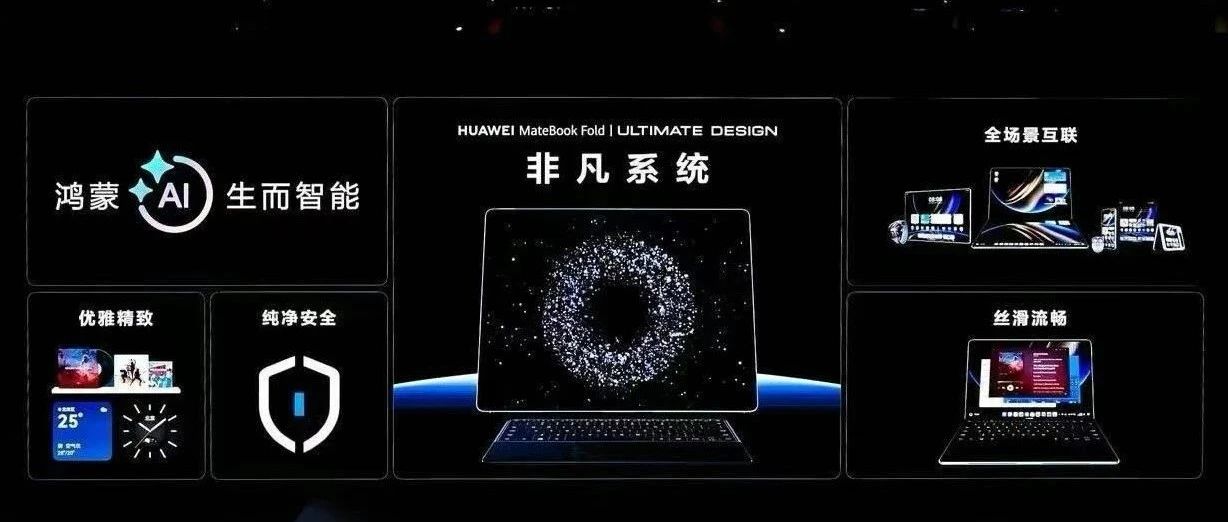
Core Viewpoint - Huawei's transition to a fully self-developed software and hardware ecosystem marks a significant milestone, especially with the cessation of Windows licensing by March 2025 and the impact of U.S. export controls on key chip suppliers [1][11]. Group 1: Product Development and Launch - Huawei has accelerated the development of its self-researched operating system and chips for mobile devices and PCs, with a focus on achieving technological independence [1]. - By the end of 2024, Huawei shipped approximately 103 million smartphones and 21 million tablets running on the HarmonyOS, indicating growing acceptance among consumers and developers [1]. - The first batch of HarmonyOS 5 PCs was officially launched in mainland China on May 19, 2025, featuring two main models believed to be powered by Huawei's self-developed Kirin X90 chip [1][11]. Group 2: Key Features of HarmonyOS PCs - The initial HarmonyOS PCs showcase three major highlights: a foldable design, self-developed chips, and enhanced security features [2]. - The MateBook Fold introduces a new product form factor, combining portability and performance, while achieving significant improvements in battery efficiency, heat dissipation, and system security through integrated hardware and software [2]. Group 3: AI Integration and Multi-Device Collaboration - A standout feature of the HarmonyOS PCs is the deep integration of AI and seamless multi-device collaboration, allowing real-time file, application, and task sharing with Huawei smartphones and tablets [3]. - The built-in AI assistant "Xiao Yi" supports various functions such as meeting transcription, translation, content creation, and search assistance, reflecting Huawei's commitment to enhancing user experience [3]. Group 4: Application Ecosystem Challenges - The first batch of HarmonyOS PCs supports over 1,000 applications, including 150 native PC applications, with a goal to exceed 2,000 by the end of 2025 [4]. - Key international software like Adobe Creative Suite and Microsoft Office has yet to be adapted for HarmonyOS PCs, prompting Huawei to invest billions in developer incentives to accelerate application development [4]. Group 5: Short-term Challenges - Huawei needs to clarify user positioning and create differentiated advantages, as current HarmonyOS PCs lack a compelling value proposition for specific consumer or business segments [6]. - Strategies such as dual-boot support, discounts, trade-in programs, and bundled services could help minimize user attrition during the system transition [7]. Group 6: Long-term Success Factors - Establishing a mature and competitive application ecosystem will require long-term investment and collaboration with mainstream software partners [8]. - Huawei must leverage the growing interest in AI applications to explore innovative opportunities within its full-stack strategy [9]. Group 7: Multi-Device Ecosystem Strategy - Huawei's "1+8+N" strategy aims to create a cohesive ecosystem across smartphones, PCs, wearables, smart home devices, and automotive systems, similar to Apple's high-engagement ecosystem [10]. - To compete effectively with global giants like Apple and Microsoft, Huawei must enhance the seamlessness of data flow, consistency of AI experiences, and innovation in interface design [10]. Group 8: Strategic Implications - The launch of HarmonyOS PCs represents a strategic shift towards platform autonomy and technological independence for Huawei, aiming to build a comprehensive ecosystem from chips to software [11]. - Future success will depend on precise product planning, effective marketing strategies, and ongoing investment in AI innovation to meet the productivity and compatibility needs of PC users [11].
2025年第一季度,Canalys(现并入Omdia)智能手机全方位榜单及预测:前10款机型、AI、高端手机、折叠屏、5G
Canalys· 2025-06-09 06:19
Group 1: Global Smartphone Market Overview - In Q1 2025, the global smartphone market experienced a slight year-on-year growth of 0.2%, indicating a plateau in market recovery due to macroeconomic and geopolitical uncertainties affecting consumer sentiment [1] - The global smartphone shipment volume is projected to reach 1.22 billion units in 2025, reflecting a modest year-on-year increase of 0.1% [1] - The market is expected to grow at a compound annual growth rate (CAGR) of 1% from 2025 to 2029, facing challenges from declining low-end replacement demand and fluctuating local government policies [1] Group 2: High-End Smartphone Market Insights - The demand for high-end smartphones remains resilient, with shipments in the $600+ price segment increasing by 12% year-on-year in Q1 2025 [3] - Apple leads the high-end market with a 59% share and a 10% year-on-year growth, while Samsung follows with a 22% share but a 1% decline in shipments [4][3] - Huawei's high-end segment saw a significant growth of 69%, capturing a 9% market share, while Google and Xiaomi also reported year-on-year increases of 21% and 81%, respectively [4][3] Group 3: AI Smartphone Projections - Canalys forecasts that the penetration rate of AI smartphones will reach 34% in 2025, driven by advancements in chip capabilities and the efficiency of edge models [9] - New mid-range SoCs, such as Snapdragon 8s Gen4 and Dimensity 9400e, are expected to support the smooth operation of large models, further enhancing AI smartphone adoption [9] - The market for AI smartphones is anticipated to maintain a rapid growth trend from 2025 to 2026 [9] Group 4: Foldable Smartphone Forecast - The shipment volume of foldable smartphones is expected to achieve only a 0.1% year-on-year growth in 2025, as demand remains under pressure despite efforts from major manufacturers to lower prices and expand SKUs [24] - 2026 may be a pivotal year for the foldable market, with rumors of Apple's foldable product potentially revitalizing market interest and discussions around software interaction and hardware design [24]

2025年第一季度,受经济不确定性影响,拉美智能手机市场同比下降4%, 荣耀市场份额创历史新高
Canalys· 2025-06-04 11:52
Core Viewpoint - The Latin American smartphone market experienced a 4% year-on-year decline in Q1 2025, ending six consecutive quarters of growth, with total shipments reaching 33.7 million units [1][8]. Market Performance - Samsung led the market with 11.9 million units shipped, a 7% increase year-on-year, driven by strong demand for entry-level models A06 and A16 [1][8]. - Xiaomi ranked second with 5.9 million units, a 10% increase, supported by the popularity of the Redmi 14C 4G and Note 14 series [1][8]. - Motorola fell to third place with 5.2 million units, a 13% decline, due to its reliance on low-end products like G15 and G05 [1][8]. - Honor's strong performance with the X series led to a 2% increase in shipments to 2.6 million units, securing the fourth position [1][8]. - Transsion ranked fifth with 2.1 million units, experiencing a significant 38% decline, marking its first drop in the region [1][8]. Market Trends - The smartphone market in Latin America showed a clear polarization, with growth concentrated in entry-level and high-end segments, while the mid-range market, which accounts for 78% of total shipments, remains the primary battleground [2][7]. - Economic uncertainty, particularly concerns over tariff increases, has severely impacted the market, leading manufacturers to tighten aggressive sales strategies and retailers to reduce inventory [2][7]. - The Brazilian market was the only one among the top five to see growth, with a 3% increase in shipments to 9.5 million units, driven by increased investments from Chinese brands like Honor, Xiaomi, and realme [4][5]. Future Outlook - Canalys predicts a slight decline of 1% in the Latin American smartphone market for 2025, influenced by global economic uncertainties and potential inflation [7]. - Manufacturers are expected to focus on maintaining lean and flexible inventory management, optimizing product portfolios, and enhancing consumer experience to remain competitive in a redefined growth environment [7].


Canalys(现并入Omdia)数据快闪:2025年第一季度,全球智能手机重点市场厂商排名
Canalys· 2025-06-03 03:26
Core Insights - The global smartphone market experienced a modest growth of only 0.2% in Q1 2025, with shipments reaching 296.9 million units, marking a continuous decline in growth rate over three consecutive quarters [1] - Samsung maintained its leading position with 60.5 million units shipped, followed by Apple with 55 million units, and Xiaomi with 41.8 million units [1] Global Market Overview - The smartphone market is facing challenges due to the end of a phase of high replacement cycles and manufacturers seeking healthier inventory levels [1] - In Western Europe, Samsung led with a 36% market share, while Apple grew by 11% year-on-year [2] - In Africa, Transsion dominated with a 47% share, despite a 5% decline, while Xiaomi saw a significant growth of 32% [2] - Latin America saw Samsung at 35% market share with a 7% increase, while Xiaomi grew by 10% [2] - In the United States, Apple led with a 60% share, experiencing a 26% growth, while Samsung followed with 24% [6] Regional Highlights - In Mainland China, Xiaomi took the lead with a 19% market share and a remarkable 40% growth, followed closely by Huawei at 18% [5] - In India, vivo led with a 22% share, while Samsung and Xiaomi faced declines of 23% and 38% respectively [5] - Brazil's market was led by Samsung with a 43% share, while Lenovo and Xiaomi also held significant positions [6] - In Mexico, Samsung led with 25% market share, while Xiaomi and Lenovo faced declines [7]



2025年第一季度,欧洲智能手机出货量下滑2%,但高端设备市场份额创历史新高,谷歌首次跻身前五
Canalys· 2025-05-28 03:26
Core Insights - The European smartphone market (excluding Russia) experienced a 2% year-on-year decline in shipments in Q1 2025, totaling 32.4 million units, primarily due to weak demand for entry-level devices [1][2][3]. Group 1: Market Performance - Samsung maintained its position as the market leader with 12.2 million units shipped, showing a slight increase, while its Galaxy S series achieved record high shipments, contributing to the highest average selling price (ASP) in Europe [1][5]. - Apple ranked second with a 10% year-on-year increase in shipments to 8 million units, driven by strong terminal demand and initial channel stocking of the iPhone 16e [1][5]. - Xiaomi demonstrated resilience with a minor decline of 2% in shipments to 5.3 million units, remaining in the top three for the 20th consecutive quarter [1][5]. - Motorola and Google ranked fourth and fifth, with shipments of 1.7 million and 0.9 million units, respectively, with Google entering the top five for the first time [1][5]. Group 2: Entry-Level Device Trends - The demand for entry-level devices significantly declined, with shipments of devices priced below 200 euros reaching their lowest level in over a decade, reflecting a challenging demand environment [2][3]. - Companies relying on devices priced under 400 euros faced difficulties, with inventory buildup due to overestimated terminal demand at the end of Q4 2024 [3]. Group 3: High-End Market Dynamics - The high-end segment, driven by Apple and Samsung, saw a record 32% share of devices priced above 800 euros in Q1 2025 [5]. - Apple's strong performance continued despite existing inventory of older models, with double-digit growth in shipments [5]. - Samsung achieved its highest quarterly high-end device shipments, with a 12% year-on-year increase in Galaxy S series shipments, supported by aggressive promotional strategies [5]. Group 4: Market Outlook and Challenges - The long-term competitive landscape is increasingly favoring Apple and Samsung, raising concerns among channel partners about market share and profitability, especially in the competitive entry-level segment [6]. - Canalys forecasts a 3% decline in the European smartphone market for 2025, with a potential recovery of 1% growth in 2026 [6].
非洲智能手机市场延续增长势头,预计2025 年增长3%,荣耀跻身前五
Canalys· 2025-05-27 02:12
Core Viewpoint - The African smartphone market is experiencing growth, with a 6% year-on-year increase in shipments in Q1 2025, reaching 19.4 million units, driven by active offline retail and a renewed focus on broad market coverage by manufacturers [1][6]. Group 1: Market Growth Drivers - Egypt remains the largest smartphone market in North Africa, with a 34% increase in shipments due to the IMEI whitelist policy, improved macroeconomic stability, and a renewed focus on local manufacturing [2]. - Algeria's smartphone market grew by 16%, supported by government policies, advancements in telecom technology, and increasing consumer demand [2]. - South Africa saw a 14% growth, aided by government measures such as the removal of a 9% luxury tax on smartphones priced below 2500 ZAR (approximately 137 USD) and the gradual phase-out of 2G/3G networks to promote 4G and 5G adoption [2]. Group 2: Competitive Landscape - Transsion's shipments declined by 5% after seven consecutive quarters of growth, as competitors began to replicate its three-tier distribution model, offering more stylish designs and better configurations [3]. - Samsung and Xiaomi regained market momentum, with Samsung holding a 21% market share and Xiaomi achieving a 32% growth, particularly in Egypt and Nigeria [3][6]. - Honor experienced a remarkable 283% growth, driven by its high-end Magic series and partnerships for 5G bundled sales [3]. Group 3: Market Challenges and Outlook - Despite growth potential, the African smartphone market faces economic challenges that may suppress growth momentum, with a forecasted moderate growth of 3% in 2025 due to slow infrastructure development and rising sovereign debt [5]. - 4G devices accounted for 85% of shipments in Q1 2025, with mid-range devices (priced between 100 to 199 USD) making up 42% of the market, indicating limited consumer purchasing power [5]. - The reliance on financing models for device acquisition raises concerns about consumer debt sustainability, impacting overall market stability [5].