日经中文网

Search documents
日经BP精选:外国游客热捧蒙奇奇,日本常青IP焕发新生
日经中文网· 2025-11-07 03:08
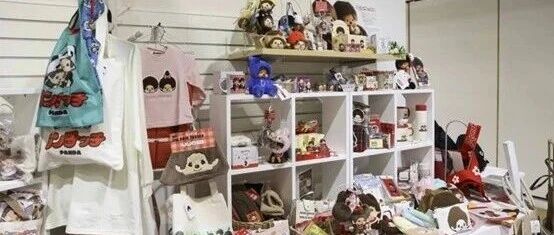
Core Points - The article highlights the increasing popularity of the "Monchhichi" toy among foreign tourists, particularly in the Asakusa area of Tokyo [6] - Sales of "Monchhichi" have surged by 3.7 times due to endorsements from overseas celebrities on social media [6] - Sekiguchi's president emphasizes the importance of maintaining a market presence for sustained success [6]

特朗普:如果败诉需要关税第二方案
日经中文网· 2025-11-07 03:08
Core Viewpoint - The article discusses President Trump's potential response to a Supreme Court ruling against his tariff policies, indicating that a "second plan" may be necessary if the court rules against him, which he believes would have devastating consequences for the U.S. economy [2][4]. Group 1: Legal Context and Implications - The Supreme Court recently held oral arguments regarding the constitutionality of Trump's core tariff mechanism, "reciprocal tariffs," with several justices expressing skepticism about the legal basis for these tariffs [4]. - The current tariffs are based on the International Emergency Economic Powers Act (IEEPA), which does not explicitly authorize the imposition of tariffs, leading to claims of overreach by the Trump administration [5]. Group 2: Alternative Legal Frameworks - Alternatives to IEEPA include the Tariff Act of 1930, which allows for a maximum 50% tariff increase, and the Trade Act of 1974, which permits a maximum 15% tariff on imports within 150 days to address balance of payments deficits [6]. - Specific tariffs on steel and aluminum are based on Section 232 of the Trade Expansion Act, which has already seen over 700 "derivative products" added to the tariff list since spring [6]. Group 3: Implementation and Timing Concerns - Trump noted that while alternative legal frameworks could be explored, they would likely take more time compared to the current IEEPA-based approach, which allows for rapid implementation of tariffs through presidential executive orders [7]. - He emphasized the need for quick decision-making, stating that the current method is the best defense measure available [7]. Group 4: Financial Consequences of a Supreme Court Loss - If the Supreme Court rules against the tariffs, the U.S. Treasury will need to address potential refund procedures for taxpayers, with estimates suggesting that the tax revenue at stake could reach between $750 billion and $1 trillion, half of which may require actual refunds [8]. - The U.S. Trade Representative indicated that not only the plaintiffs but also other taxpayers might seek refunds, with the specific procedures to be determined through discussions between the Treasury and the courts [8].
美国加强稀土资源争夺,但障碍重重
日经中文网· 2025-11-07 03:08
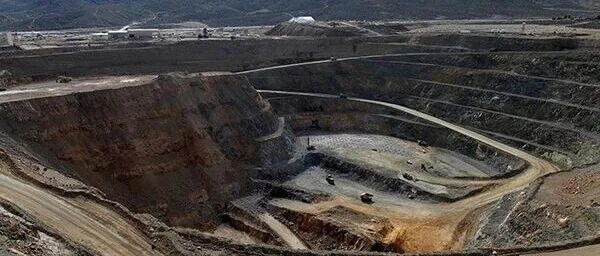
Core Viewpoint - The U.S. government is investing in domestic rare earth production to reduce reliance on China, with significant implications for the industry and market dynamics [2][6]. Group 1: U.S. Government Actions - The U.S. Department of Defense has invested $400 million in MP Materials, the largest shareholder in the only operational rare earth mine in the U.S. [9]. - The U.S. government is increasingly intervening in the private sector to bolster domestic production of strategic resources, citing national emergency due to insufficient domestic production systems [5]. Group 2: Market Reactions - Following China's announcement to restrict exports of certain rare earth materials and technologies, U.S. rare earth companies saw a surge in stock prices, with USA Rare Earth rising by 14% in one day [3]. - The overall U.S. stock market experienced a sell-off, but rare earth-related companies attracted investor interest amid heightened concerns over supply chain vulnerabilities [3]. Group 3: Strategic Importance of Rare Earths - Rare earth elements are critical for various applications, including electric vehicles and military equipment, leading to heightened economic security concerns in the U.S. [6]. - The U.S. is heavily dependent on China for rare earth imports, prompting a sense of urgency in developing domestic capabilities [6]. Group 4: China's Export Controls - China has initiated 11 significant export controls on key raw materials from January to October 2025, matching the historical peak seen in 2011 [7]. - The return of export controls by China reflects a strategic approach to leverage its dominance in the rare earth market [7].
丰田销量强劲上调业绩预期,但半导体风险仍在
日经中文网· 2025-11-06 08:00
Core Viewpoint - Despite the heavy burden of U.S. auto tariffs, Toyota's balanced development and sales strategy in major regions like China and Europe has proven effective. However, risks remain in semiconductor and rare earth procurement [1][12]. Financial Forecast - For the fiscal year ending March 2026, Toyota forecasts a consolidated net profit of 2.93 trillion yen, a 39% year-on-year decline, which is an upward revision from the previous estimate of 2.66 trillion yen (44% decline) [1]. - Sales are expected to grow by 2% to 49 trillion yen, while operating profit is projected to decrease by 29% to 3.4 trillion yen, with upward adjustments of 500 billion yen and 200 billion yen respectively [3]. Regional Performance - Toyota's sales strategy has led to a balanced revenue structure across regions, with North America accounting for only 28% of total sales, lower than competitors like General Motors (56%) and Honda (47%) [8]. - In North America, local production increases have supported the launch of models like the Tundra and Tacoma, tailored to local demand [8]. - Sales in India increased by 14% to 160,000 units, while sales in Indonesia decreased by 18% to 120,000 units, with other regions providing effective support [8]. Production and Efficiency - The introduction of the Toyota New Global Architecture (TNGA) has improved production efficiency, reducing equipment investment and development time by 25% and vehicle costs by 10% compared to pre-TNGA levels [11]. - For the first half of the fiscal year, Toyota reported a 6% increase in sales to 24.63 trillion yen, with a 7% decline in net profit to 1.77 trillion yen, and a global sales increase of 5% to 5.26 million units, marking a historical high [11]. Supply Chain Risks - The automotive supply chain faces increased disruption risks amid U.S.-China tensions, particularly concerning semiconductor shortages, which are critical for production [12]. - The CFO expressed awareness of potential risks from U.S. economic policies, despite currently not seeing direct impacts [13]. Investment and Future Strategy - Toyota plans to continue significant investments in the U.S., with a recent announcement of an additional $88 million investment in a West Virginia plant, indicating a commitment to local production [14]. - The company is also focusing on software-defined vehicles (SDVs) and must prioritize advancements in autonomous driving technology to remain competitive [14].


高市称日美将探讨推进南鸟岛稀土合作的方式
日经中文网· 2025-11-06 08:00
Group 1 - The core viewpoint of the article highlights Japan's commitment to diversifying its rare earth procurement channels in collaboration with the United States, emphasizing the importance of this partnership for both nations [1][3]. - Japanese Prime Minister Fumio Kishida signed a cooperation document in the rare earth sector with U.S. President Donald Trump during their meeting in October [3]. - Japan plans to begin experimental excavation in the waters near Minami-Torishima (South Bird Island) starting January 2026 [1][3].

美企押注AI提升效率1~9月裁员95万人
日经中文网· 2025-11-06 08:00
Core Viewpoint - The article discusses the significant increase in layoffs in the U.S. corporate sector, driven by the adoption of AI technologies, with a notable impact on white-collar jobs [2][5][6]. Group 1: Layoff Statistics - In the first nine months of 2025, U.S. companies announced approximately 946,426 layoffs, a 55% increase compared to the same period last year [2][4]. - Major companies like Microsoft and Amazon have announced substantial layoffs, with Microsoft cutting 15,000 jobs and Amazon 14,000 jobs [5][7]. - The layoffs have reached the highest level since the COVID-19 pandemic, despite the overall economy and unemployment statistics not showing significant deterioration [2][5]. Group 2: Reasons for Layoffs - The primary reason cited for layoffs is "market and economic conditions," accounting for 20% of the total [4]. - Sectors particularly affected include retail and logistics, with layoffs in these areas increasing threefold and twofold, respectively, compared to last year [4]. - Although only 4% of companies directly attribute layoffs to AI, many are leveraging AI as a justification for workforce reductions [5][6]. Group 3: Impact of AI on Employment - AI is increasingly seen as a rationale for layoffs, with companies like Accenture and PwC announcing significant job cuts while also investing in employee retraining related to AI [5][6]. - Amazon's CEO indicated that as AI improves efficiency, the workforce will continue to shrink, although he later attempted to clarify that AI was not the immediate cause of current layoffs [7]. - The trend of layoffs is viewed as a strategic move by companies to capitalize on the current moment to implement AI-driven efficiency improvements [6][7].

FT中文网精选:中国AI机器人赛道的“群雄时刻”
日经中文网· 2025-11-06 02:26
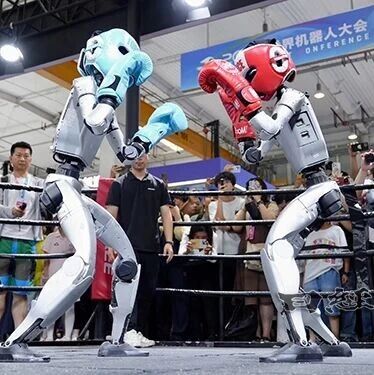
Core Viewpoint - The article discusses the emerging competition between China and the United States in the field of humanoid robotics, highlighting the strengths of each country's technological ecosystem and the implications for the market [5][6]. Group 1: Technology Comparison - The competition is characterized by China's manufacturing and engineering advantages represented by the humanoid robot R1 from Yuzhu Technology, priced at $5,900, which is aimed at researchers and developers [6]. - In contrast, the U.S. is represented by Figure AI's Figure 03, which focuses on household tasks and is expected to see its price drop from $150,000 to a range of $20,000 to $30,000, showcasing the ambition of American companies in industrial automation and home applications [6]. Group 2: Market Dynamics - The introduction of these humanoid robots marks the beginning of a price war aimed at making robotics more accessible, indicating a shift towards mass production and consumer adoption in both markets [6]. - The competition is described as a "final showdown" between the two tech giants, emphasizing the significance of this moment in the evolution of humanoid robotics [6].
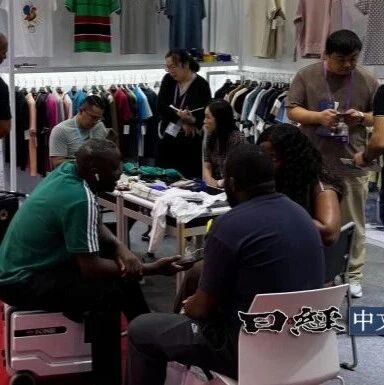
中国最大规模贸易洽谈会签约额增长3%
日经中文网· 2025-11-06 02:26
Group 1 - The core viewpoint of the article highlights the significant growth in participation and contract amounts at the China Import and Export Fair (Canton Fair), indicating a positive outlook for China's export trends [2][5] - The total export contract amount reached approximately $25.65 billion, marking a 3% increase compared to the 2024 autumn fair [2] - The number of participating buyers exceeded 310,000 from 223 countries and regions, reflecting an 8% growth and setting a historical record [2] Group 2 - Participation from countries along the "Belt and Road" initiative accounted for 214,000 buyers, representing a 9% increase and nearly 70% of the total attendance [2] - Notable increases in participation were observed from Brazil and Europe, with a 30% growth, while the U.S. saw a 14% increase in attendees [4] - To support Chinese enterprises affected by U.S. tariff policies, the exhibition fees were reduced by 50% starting from the spring fair this year [5]
美国最高法院质疑特朗普关税合法性
日经中文网· 2025-11-06 02:26
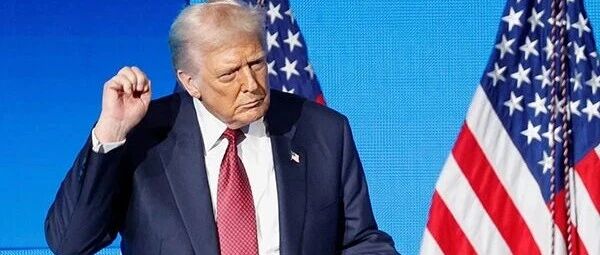
围绕特朗普政府征收的关税是否符合宪法的诉讼,美国最高法院11月5日举行了辩论。包括保 守派法官在内,对特朗普政府的严厉指责接连不断。首席大法官约翰·罗伯茨称政府方面的主 张"不恰当"…… 在围绕特朗普政府征收的关税是否符合宪法的诉讼中,美国联邦最高法院11月5日举行了听取 原告和美国政府双方主张的口头辩论。包括保守派法官在内,对特朗普政府的严厉指责接连 不断,最高法院的首席大法官约翰·罗伯茨称政府方面的主张"不恰当"。 这是"美国历史上最重要的审判" 这场被美国总统特朗普称为"美国历史上最重要的审判"的最高法院审理于11月5日上午10点 开庭。 开庭前,美国商务部长卢特尼克等官员出现在几乎满座的旁听席上,旁听人和记者纷纷探出 身子想确认其身份。特朗普本人没有旁听。 最高法院接连对特朗普总统启动的对等关税和芬太尼关税提出严厉指责(Reuters) 在庭审中,美国政府对各国征收的"对等关税"和对中国等征收的"芬太尼关税"成为审理的对 象。这些都是以《国际经济紧急权力法》(IEEPA)为法律依据。 IEEPA规定,在国家紧急状态时允许以总统的权限限制进口,但没有明确规定可以启动关税。 关税相关的权限原本由美国联邦国 ...
中国消费品企业大举进入巴西市场
日经中文网· 2025-11-06 02:26
Core Insights - Chinese consumer brands are increasingly entering the Brazilian market, with a focus on low prices and high performance, as exemplified by companies like Mixue Ice City, BYD, Meituan, and Didi [2][6][10] - The Brazilian market is seen as a promising emerging market due to its large population of over 200 million and a growing middle class with strong consumption desires [6][10] Group 1: Mixue Ice City - Mixue Ice City has signed a memorandum with the Brazilian government to create approximately 25,000 jobs and plans to invest 3.2 billion reais (about 4.235 billion yuan) by 2030 [4] - The company aims to open its first store in São Paulo by the end of 2025, with preparations underway in a shopping center [4] - Mixue Ice City has grown to over 47,500 stores globally, surpassing McDonald's in scale, and is now targeting Brazil as a new market [2] Group 2: Other Chinese Brands - Meituan's overseas brand "Keeta" is set to invest 5.6 billion reais in the next five years, starting its services in the suburbs of São Paulo [5] - Didi is rapidly expanding its food delivery service in Brazil, planning to invest 2 billion reais, which is double its original plan, by 2026 [6] - The increasing presence of Chinese brands in Brazil is supported by the strengthening political ties between China and Brazil, which enhances the investment environment [6][10] Group 3: Consumer Perception - A survey in Brazil revealed that over 60% of respondents prefer Chinese products in the mobile and personal computer sectors, surpassing the preference for American products [9] - BYD has significantly increased its market share in Brazil, accounting for about 70% of the electric vehicle sales, reflecting a shift in consumer perception towards Chinese technology [9] - The perception of Chinese brands as offering "low prices and high performance" is becoming more entrenched among Brazilian consumers [9]