日经中文网

Search documents
台积电熊本改产3纳米,日本供应链厚度增加
日经中文网· 2026-02-06 02:52
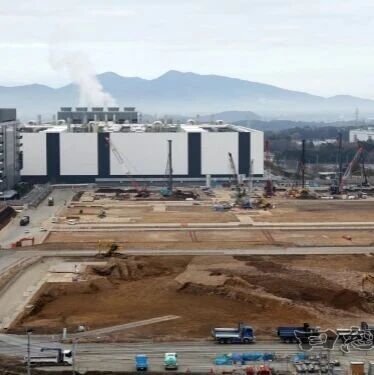
Group 1 - TSMC is constructing a new factory in Kumamoto, Japan, aimed at producing cutting-edge chips for artificial intelligence (AI) [2] - Rapidus plans to mass-produce 2nm products in Hokkaido, enhancing Japan's semiconductor supply chain with stable AI semiconductor production from both northern and southern bases [2] - The Japanese semiconductor equipment and materials sectors are expected to benefit significantly from these developments, as Japan holds a substantial market share in these areas [2] Group 2 - TSMC's CEO, Wei Zhejia, is considering adjustments to the production plan for the Kumamoto factory to manufacture 3nm semiconductors, which may increase the originally estimated investment of $12.2 billion [4] - The 3nm semiconductors will be utilized in NVIDIA's GPUs, highlighting the importance of ensuring a stable supply of advanced semiconductors as new data centers for AI are established in Japan [4] - Japan's semiconductor equipment market holds approximately 30% of the global share, while the materials sector accounts for about 50%, indicating a strong domestic capability to support advanced semiconductor production [4] Group 3 - Tokyo Electron plans to invest 700 billion yen in equipment over the next five years, with a new facility in Kumamoto set to begin operations in spring 2026, increasing development capacity by four times [5] - Canon is investing 50 billion yen by September 2025 to establish a new facility for photolithography equipment used in AI semiconductor assembly [6] - Ibiden plans to invest 500 billion yen over three years starting in 2026 to expand production capacity for packaging substrates used in AI server chips, expected to increase by 2.5 times by 2028 [6] Group 4 - The Japanese government aims to support the semiconductor and AI sectors with over 10 trillion yen by 2030, accelerating the establishment of a cutting-edge semiconductor supply chain [6] - Japan has provided approximately 1.2 trillion yen in subsidies to TSMC's factories and about 2.9 trillion yen to Rapidus, with conditions for TSMC to increase semiconductor production during supply shortages [6] - The competitive landscape for attracting investment in advanced semiconductor manufacturing is intensifying globally, necessitating a comprehensive approach to develop the domestic semiconductor industry, including equipment, materials, and design engineering [6]


日经BP精选:AI让“专利大量申请时代”重现
日经中文网· 2026-02-06 02:52
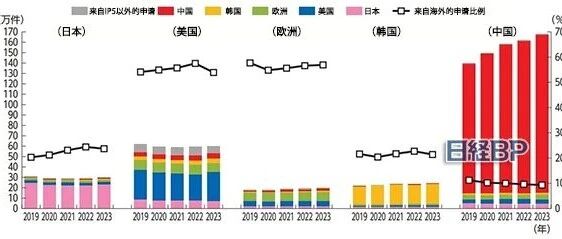
Core Viewpoint - The article discusses the trends in patent applications from major countries and regions, highlighting the dominance of domestic applications in Japan, China, and South Korea, while noting a higher proportion of foreign applications in the United States and Europe [3][5]. Group 1: Patent Application Trends - Japan, the United States, Europe, China, and South Korea are referred to as the "IP5" (the five major intellectual property offices), which account for over 80% of global patent applications [3]. - In Japan, China, and South Korea, less than 25% of patent applications come from overseas, indicating a strong preference for domestic filings [3]. - In contrast, over 50% of patent applications in the United States and Europe originate from foreign entities, showcasing a more international approach to patent filings in these regions [3].
特朗普表示全面支持高市早苗大选,3月19日会谈
日经中文网· 2026-02-06 02:52
美国总统特朗普2月5日在社交媒体上表示,将于3月19日在白宫与日本首相高市早苗会谈。日美两国政 府此前一直在协调高市早苗今年春季进行首次访美。 特朗普预计将于4月访问中国,与中国领导人举行首脑会谈。在此之前,特朗普希望强调与被其定位为 美国对华战略关键、亚洲最大盟友的日本之间的合作。 在2月8日举行的众议院选举投票前,特朗普对高市早苗表示"作为美国总统,我将完全且全面支持她"。 他写道:"她绝不会让日本国民失望。祝愿这个非常重要的星期日投票取得成功"。 日本首相高市早苗和美国总统特朗普(2025年10月,Reuters) 特朗普2月5日在社交媒体上表示,将于3月19日在白宫与日本首相高市早苗会谈。特朗普对高市早苗表 示"作为美国总统,我将完全且全面支持她","她绝不会让日本国民失望"。美国总统在日本国政选举临 近之际,明确表态支持特定政治力量,实属罕见…… 特朗普5日还呼吁支持将于4月举行大选的匈牙利总理欧尔班,称其为"真正强大、有实力的领导者"。目 前匈牙利执政党的支持率低迷。 在第二届特朗普政府中,特朗普多次呼吁支持与其个人关系良好的他国领导人,这类做法尤为显眼。 2025年10月,特朗普在白宫与阿根廷总 ...

日本大选终盘选情:执政党有望超300席
日经中文网· 2026-02-06 02:52
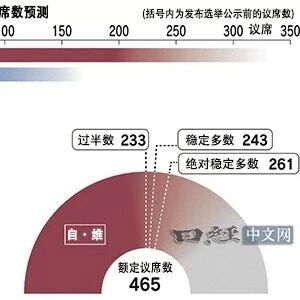
本次调查于2月3~5日在日本全国范围内通过电话和互联网实施,日经同时结合采访获知的内容分析了 形势。在选举初期的1月27、28日,也曾实施同样的调查。即便到了最后阶段,全部289个小选区中仍有 超半数处于胶着状态,局势优劣可能会因细微的变动而反转。 由立宪民主党和公明党新组建的中道改革联合尚处于渗透阶段,直至最后阶段也难以预测其走向。投计 票日(8日)预计恰逢降雪峰值,日本的天气预报显示以日本海沿岸为中心将迎来大雪。这些因素均可 能对投票行为与选举结果产生影响。 自民党在选举初期便展现出从公示前198个议席增至过半数233个议席的势头。在最后阶段,似乎进一步 扩大了支持。该党正着眼于拿下超261议席的"绝对稳定多数",以确保在所有常任委员会中占据过半数 席位,并垄断委员长职位。 调查于2月3~5日实施。自民党在最后阶段似乎进一步扩大了支持,目前正着眼于拿下超261议席的"绝 对稳定多数"。一方面,新党"中道改革联合"的席位有可能从发布选举公示前的167个议席减少一半…… 日本经济新闻社对即将于2月8日进行投计票的众议院选举实施调查,分析了选举终盘(最终阶段)的选 情。执政党的自民党与日本维新会在总计465个议 ...
中国厂商掌握6成日本电视市场
日经中文网· 2026-02-06 02:52
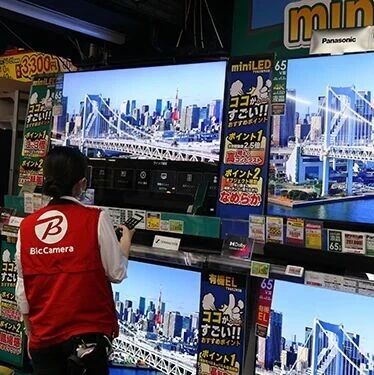
Core Viewpoint - The Japanese consumer electronics industry, particularly in the television sector, is experiencing a significant shift towards Chinese ownership and influence, with projections indicating that Chinese companies will dominate the market share in the coming years [2][5]. Group 1: Market Dynamics - In Tokyo's electronics retail stores, brands like REGZA, BRAVIA, and Viera are prominently displayed, but the capital structure reveals that Chinese companies will control 60% of the market share due to the withdrawal of Japanese firms [2][4]. - Toshiba's REGZA brand is primarily owned by Hisense, a Chinese appliance giant, holding 95% of the shares, while Toshiba retains only 5% [4]. - Sony plans to divest its television business by 2027, transitioning to a joint venture with TCL, where TCL will hold 51% and Sony 49%, effectively placing the Sony brand under Chinese control [4][5]. Group 2: Competitive Landscape - According to BCN Research, REGZA is projected to lead the Japanese television market by 2025, with Chinese brands like Hisense and TCL collectively holding 50% of the market share. If Sony's brand moves to the TCL-led joint venture, the Chinese share will rise to 60% [5]. - In the global television market, Japanese companies are losing ground, with South Korea's Samsung Electronics leading the market, followed by LG, Hisense, and TCL, which together account for over 50% of the global market share [7]. Group 3: Strategic Shifts - Panasonic is the only major Japanese company left pursuing an independent path in the television sector after Sony's divestment. Panasonic is also considering selling or exiting its television business by 2025 [7]. - The restructuring is not limited to televisions; Toshiba sold its refrigerator business to Midea Group in 2016, and Hitachi is contemplating selling its domestic business [7]. - Japanese companies are struggling with scale and supply chain issues, prompting a shift towards digital and subscription-based business models, as seen with Sony's focus on PlayStation and infrastructure digitalization [8].


中国资金在搅动金价?
日经中文网· 2026-02-05 07:55
Core Viewpoint - The article discusses the recent fluctuations in the gold market in China, highlighting the impact of both institutional investors and individual investors on gold prices as the Chinese New Year approaches [2][4]. Group 1: Market Dynamics - In late January, gold prices plummeted due to the nomination of Kevin Warsh, who is perceived as negative towards interest rate cuts, as the Federal Reserve Chairman, leading to a rebound in the dollar and subsequent declines in gold prices [4]. - As the Chinese New Year approaches, institutional investors and funds have been adjusting their gold holdings, leading to increased selling pressure and a sharp drop in prices [2][4]. - The influx of individual investors, viewing the price drop as a buying opportunity, has resulted in a significant rebound in gold prices, creating heightened volatility in the market [2][5]. Group 2: Consumer Behavior - Despite being a weekday, many consumers are actively purchasing gold jewelry, indicating a surge in demand as they seek to capitalize on lower prices [5]. - Promotional activities in shopping centers, particularly in Wuhan, have attracted large crowds, with some consumers waiting overnight to purchase gold items [5]. - The perception of gold as a reliable investment has been reinforced, especially as the Shanghai Gold Exchange saw a surge in trading volume during the price drop [4][5]. Group 3: Regulatory Environment - Chinese regulatory authorities have raised their vigilance regarding gold investments, urging investors to manage risks and avoid speculative behaviors [8]. - Major state-owned banks have implemented measures to limit trading volumes and increase minimum purchase amounts, reflecting concerns over overly optimistic individual investors [8]. - The People's Bank of China’s move to increase gold reserves is viewed as a signal for individual investors to buy, but any changes in investment behavior post-holiday could impact the support for the gold market [8]. Group 4: Future Outlook - The retail sales of gold and jewelry in China are projected to reach 373.6 billion yuan by 2025, marking a 13% year-on-year increase, indicating a strong long-term demand for gold [7]. - The cumulative retail sales since 2006 have reached 4.6 trillion yuan, showcasing the historical significance of gold as an investment vehicle for Chinese consumers [7].

台积电日本熊本新工厂转向3纳米产品
日经中文网· 2026-02-05 07:55
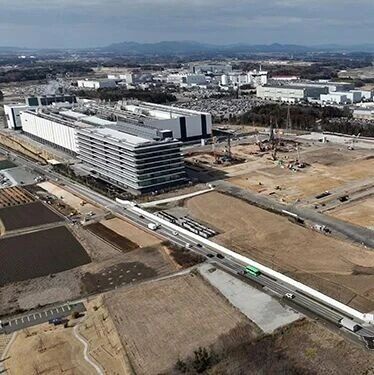
Core Viewpoint - TSMC has shifted its production plans for the Kumamoto second factory in Japan to focus on 3nm semiconductors aimed at the AI sector, responding to the growing demand for advanced AI chips [2][4]. Group 1: Production Plans - Initially, TSMC planned to produce 6nm products at the Kumamoto second factory, primarily for communication devices [4]. - Due to weak demand, construction was temporarily halted before the end of 2025, prompting a reassessment of production products and manufacturing equipment [4]. - The decision to produce 3nm products, which are second only to the upcoming 2nm products set to begin mass production in Taiwan in 2025, reflects TSMC's strategy to meet the increasing demand for AI semiconductors [4]. Group 2: Market Implications - The 3nm products will be integral to the next generation of AI semiconductors developed by companies like NVIDIA, indicating a significant market opportunity for TSMC in the AI sector [2][4]. - This move is expected to stabilize the supply of advanced semiconductors within Japan amidst fierce global competition in the AI semiconductor market [2].
松下与庆大推进移动中微波供电实用化
日经中文网· 2026-02-05 07:55
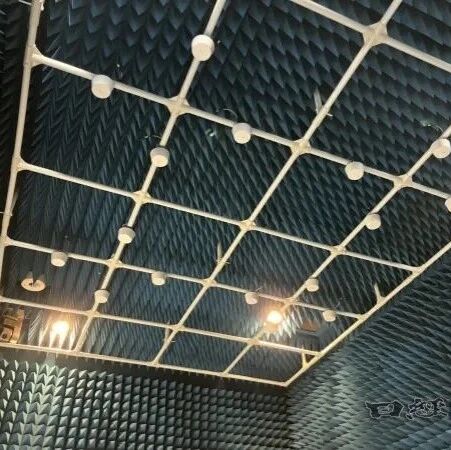
Core Viewpoint - Panasonic Holdings is developing a microwave power supply system aimed at charging devices wirelessly, with initial applications expected for sensors in robots and potential future applications for smartphones, drones, and electric vehicles (EVs) by 2028 [2][5]. Group 1: Technology Overview - The technology utilizes microwave waves, similar to those used in microwave ovens, to charge devices. The power received decreases with distance due to the dispersion of waves in space [4]. - To enhance charging efficiency, Panasonic employs a method that allows microwave waves from multiple antennas to interfere with each other, creating stronger signals at the device's location [4]. - The system can charge devices up to 10 meters away and can simultaneously charge multiple devices, making it suitable for use in populated areas due to the lower frequency of the waves [5]. Group 2: Initial Applications and Testing - The initial focus will be on sensors installed on factory robotic arms, which will be tested starting in March to monitor operational status continuously [5]. - Due to the lower efficiency of power transmission, the technology is expected to be primarily used for low-power devices like sensors in the short term. More efficient power transmission methods will be needed for charging larger devices like drones or EVs [5].
日本1月进口EV销量增68%,比亚迪增至3.4倍
日经中文网· 2026-02-05 07:55
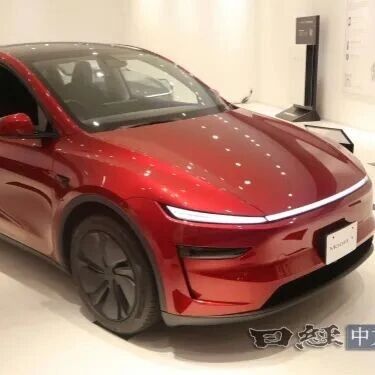
Group 1 - The increase in EV subsidies has significantly boosted sales, with Tesla's Model Y benefiting from this trend [2][4] - In January, Japan's imported car sales (excluding domestic manufacturers) decreased by 12% year-on-year, totaling 13,019 units, while pure electric vehicle (EV) sales rose by 68% to 2,041 units, marking a recovery after a month [2] - Tesla's sales in Japan, categorized under "others," reached 1,086 units, increasing 3.4 times, driven by the new subsidy policy effective from January 1 [4] Group 2 - The Japanese government increased the EV subsidy for Tesla's Model 3 and Model Y (with some exceptions) to 1.27 million yen (approximately 56,190 yuan), an increase of 400,000 yen (approximately 17,698 yuan) [4] - BYD's sales in Japan also surged to 180 units, a 3.4-fold increase, with strong sales of the SUV "Sea Lion 7" and growing orders for the plug-in hybrid "Sea Lion 6" [4] - Overall, imported car sales in Japan experienced a negative growth for the first time in 12 months, with significant declines in major German brands such as Mercedes-Benz, Volkswagen, and BMW [4]
Temu加入日本《产品安全誓约》
日经中文网· 2026-02-05 03:10
Group 1 - Temu has joined the "Product Safety Pledge" initiated by the Japanese Consumer Affairs Agency, marking the first time a company founded in China has participated in this initiative [2][4] - The "Product Safety Pledge," established in 2023, requires companies to provide information to consumers and take measures such as recalling unsafe products [4] - Temu will require merchants to submit certification documents before listing products and will closely cooperate with Japanese regulatory authorities to take down products that violate safety standards [4]