日经中文网

Search documents
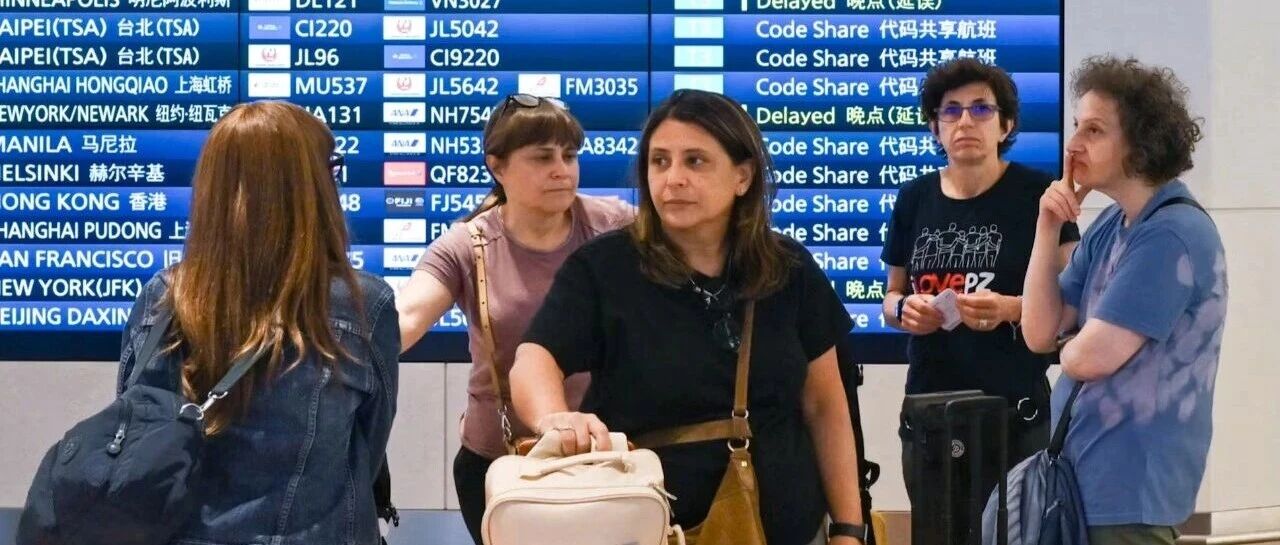
支持高市早苗的都是些什么人?
日经中文网· 2025-10-27 08:00
Core Viewpoint - The support rate for the new cabinet led by Takashi Sawa is significantly high among the working-age population, indicating a shift in political support dynamics in Japan [2][6]. Group 1: Support Rate Analysis - The support rate for Takashi Sawa's cabinet is 81% among the 18-39 age group, 82% among the 40-50 age group, and 66% among those aged 60 and above [2][6]. - Compared to the previous cabinet led by Ishiba Shigeru, the support rate among those under 30 has more than doubled, showing a strong appeal to younger voters [6]. - The support rate for the Liberal Democratic Party (LDP) has risen to 36%, although it has not yet returned to the 41% level seen at the establishment of Ishiba's cabinet [11]. Group 2: Political Dynamics - The current cabinet has garnered support not only from LDP supporters but also from those who previously supported opposition parties like the Democratic Party for the People and other minor parties [2][8]. - In the recent Senate election exit polls, fewer voters under 30 supported the LDP compared to those supporting the Democratic Party for the People and other opposition parties, indicating a potential recovery in support for the LDP among this demographic [8]. - The support rate among male voters for Takashi Sawa's cabinet is 75%, while for female voters it is 73%, showing a balanced appeal across genders [8]. Group 3: Comparison with Previous Cabinets - The support rate for Ishiba's cabinet among LDP supporters was less than 70% at its inception, while it has increased to 91% for Takashi Sawa's cabinet [8][10]. - The support rate for opposition party supporters for Ishiba's cabinet was around 10-20%, but it has risen to over 80% for Takashi Sawa's cabinet [10].

丰田4~9月全球销量526万辆,创新高
日经中文网· 2025-10-27 08:00
Group 1 - Toyota's global sales from April to September increased by 5% year-on-year, reaching 5,267,216 units, marking a historical high for the same period [2] - In the U.S. market, sales grew by 11% to 1,295,606 units, driven by strong demand for hybrid vehicles despite high tariffs [2][4] - In China, sales rose by 6% to 914,342 units, supported by strong sales of the new EV "bZ3X" and hybrid vehicles, along with promotional measures linked to government subsidies [2][5] Group 2 - For the fiscal year 2025, Toyota expects to achieve a record sales target of 10.4 million units, with overseas sales increasing by 6% to 4,553,249 units [4] - The number of vehicles exported from Japan to the U.S. increased by 21% to 304,151 units, despite the impact of tariffs [5] - Global production from April to September grew by 6% to 4,985,122 units, with production in Japan increasing by 3% and in the U.S. by 14% [5]


特朗普访日,将确认强化日美同盟
日经中文网· 2025-10-27 08:00
Group 1 - The core focus of the article is on the strengthening of the Japan-U.S. alliance, particularly in defense and technological cooperation, as highlighted by the upcoming summit between Prime Minister Kishi and President Trump [2][5][6] - The Japanese government plans to revise its National Security Strategy and increase defense spending to approximately 43 trillion yen for the period from 2023 to 2027 [5] - A memorandum of cooperation aimed at enhancing shipbuilding capabilities will be signed, and a Japan-U.S. shipbuilding working group will be established to discuss specific collaboration plans [5][6] Group 2 - The summit will address various topics, including the defense policy guidelines of the Kishi government, emphasizing the Japan-U.S. alliance as a cornerstone of Japan's foreign and security policy [5] - Both leaders are expected to reaffirm the implementation of the Japan-U.S. tariff agreement reached by the previous administration [6] - The two governments will reach agreements on scientific and technological cooperation in seven areas, including artificial intelligence (AI) and next-generation communication standards [4]
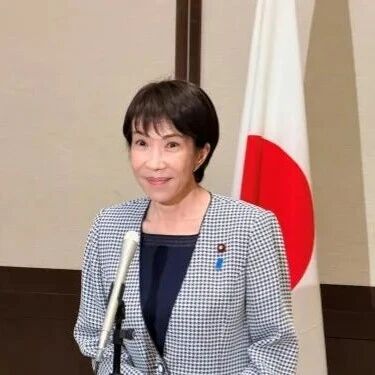
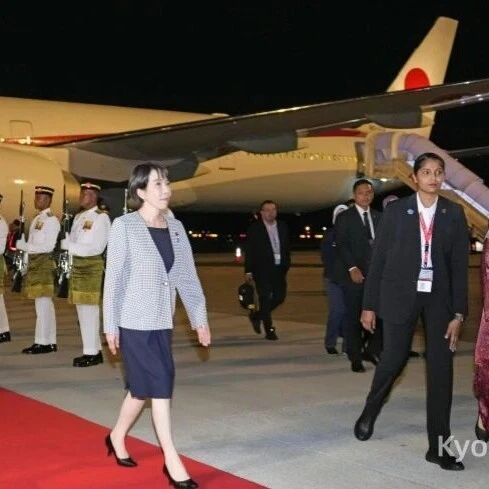
高市在东南亚完成外交首秀,继承安倍理念
日经中文网· 2025-10-27 03:38
Core Points - The core foundation of Japan's Southeast Asia diplomacy under Prime Minister Kishida Fumio is the "Free and Open Indo-Pacific" (FOIP) concept proposed by former Prime Minister Shinzo Abe in 2016 [5][6] - Japan aims to strengthen economic and security cooperation with ASEAN countries amidst the backdrop of US-China tensions and geopolitical shifts [2][5] Summary by Sections Japan-ASEAN Relations - At the ASEAN summit on October 26, a joint statement advocating for a "rules-based international order" was reached [4] - Kishida expressed a commitment to advancing the FOIP concept, indicating a desire to build upon Abe's diplomatic legacy [5] Economic and Security Cooperation - A consensus was reached to establish a working group to discuss expanding economic cooperation [5] - The launch of the "Japan-ASEAN AI Co-Creation Initiative" was announced to promote the safe and reliable use of artificial intelligence [5] Regional Significance - ASEAN's economic development is significant, enhancing its attractiveness as a market, and its strategic location at the crossroads of the Indian and Pacific Oceans adds to its geopolitical importance [5] - The region's stability is crucial for Japan, especially in light of the complexities arising from the US-China trade war and relationships with countries like Russia and North Korea [5][6] Trust in Japan - A survey conducted by the ISEAS indicated that Japan has been perceived as the most "trustworthy country and regional partner" for seven consecutive years among ASEAN respondents [6]
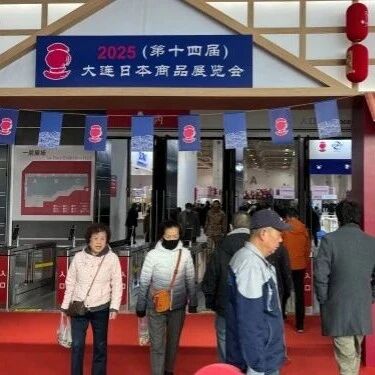
日本商品展览会延期后在大连举办
日经中文网· 2025-10-27 03:38
Core Viewpoint - The successful opening of the Dalian Japan Goods Exhibition is significant as it may improve Chinese sentiments towards Japan through exposure to Japanese products and services, despite the historical and political tensions between the two countries [2][7]. Group 1: Event Overview - The Dalian Japan Goods Exhibition, which started in 2008, is now in its 14th year and is organized by the Dalian municipal government, which actively seeks Japanese investment [4]. - The exhibition features participation from 27 prefectures and 4 cities in Japan, showcasing approximately 4,000 products across various categories, including food, beverages, and health products for the elderly [4][6]. Group 2: Political Context - The exhibition has been affected by political relations, with cancellations in 2012 due to deteriorating Sino-Japanese relations and in 2023 amid concerns over the Fukushima nuclear water discharge [6]. - The event was initially scheduled for September but was postponed to October due to uncertainties surrounding its feasibility [6]. Group 3: Public Sentiment - The successful opening of the exhibition is seen as a potential turning point for improving public sentiment towards Japan, as evidenced by attendees like a 70-year-old visitor who expressed interest in Japanese cosmetics [7].
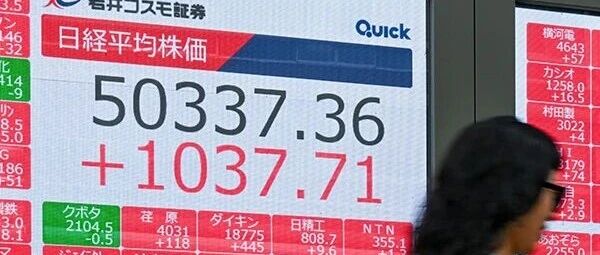
日经突破5万点 “早苗经济学”推动行情
日经中文网· 2025-10-27 03:38
Group 1 - The Nikkei average index rose significantly, reaching 50,337.36 points, marking a historic breakthrough above 50,000 points, driven by expectations surrounding the economic policies of the new Kishida administration and external factors like anticipated interest rate cuts in the US and the expansion of the AI market [2][4]. - The Kishida administration's approval rating stands at 74%, significantly higher than the previous administration's 51%, which is perceived positively by the market as it suggests greater stability for the government [4]. - The "Japan Weeks" event highlighted the shift from savings to investment in Japan, with Finance Minister Shunichi Suzuki noting that the proportion of cash and deposits in personal financial assets remains high compared to the US, indicating substantial room for change [4]. Group 2 - AI and semiconductor-related stocks, such as Advantest and SoftBank Group, contributed to the market's upward movement, while defense-related stocks saw increased buying ahead of the upcoming US-Japan summit [5]. - The Bank of Japan is expected to maintain its current interest rates during the upcoming monetary policy meeting, with market consensus suggesting potential rate hikes could occur in January or as early as December [5]. - The external environment is favorable, with the US CPI for September coming in below expectations, raising the likelihood of interest rate cuts in the US, and easing trade tensions between the US and China, which supports investor sentiment [6].
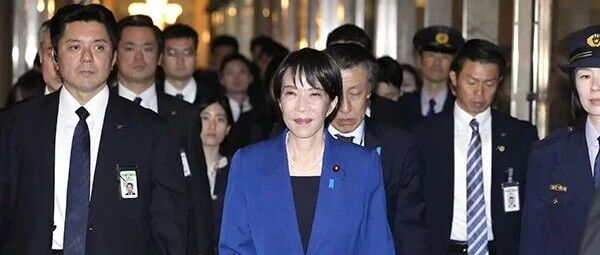
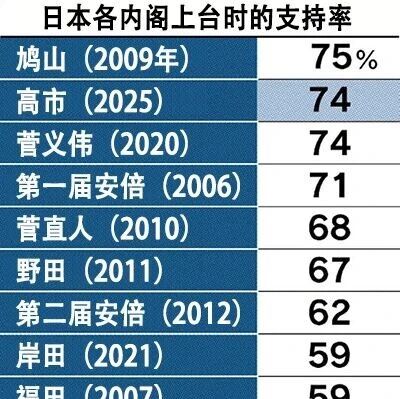
高市早苗内阁支持率达到74%
日经中文网· 2025-10-27 03:38
Core Viewpoint - The approval rating of the new cabinet led by Prime Minister Kishi Sanae is 74%, significantly higher than the previous cabinet led by Ishiba Shigeru, which had an approval rating of 51% at the time of its establishment [2][4]. Group 1: Cabinet Approval Ratings - Kishi Sanae's cabinet approval rating of 74% is comparable to previous cabinets, such as Yukio Hatoyama (75%) and Yoshihide Suga (74%) [4]. - The approval rating increased by 37 percentage points compared to the last survey of Ishiba's cabinet conducted in September [2]. Group 2: Public Support and Political Dynamics - The support for the ruling Liberal Democratic Party (LDP) has risen to 36%, an increase of 5 percentage points from the last survey [5]. - The approval rating for Kishi's cabinet and the new LDP leadership is positively viewed by 55% of respondents, surpassing the 29% who disapprove [5]. Group 3: Public Concerns and Policy Priorities - The top reasons for supporting Kishi's cabinet are "good policies" and "trustworthy character," each cited by 36% of respondents [7]. - The most pressing policy issue for the public is "price control," with 51% prioritizing it, followed by "economic growth" (33%) and "pensions" (27%) [7]. Group 4: Coalition Dynamics - The Japan Innovation Party (JIP) has opted for an "outside cooperation" model, with 50% of respondents supporting this approach, while only 19% believe they should send ministers to the cabinet [7].
FT中文网精选:美国政府关门,影响几何?
日经中文网· 2025-10-27 03:38
Core Viewpoint - The article discusses the ongoing U.S. federal government shutdown, which has lasted for three weeks, marking it as the second longest in U.S. history, surpassed only by the 35-day shutdown during Trump's first presidency [6]. Group 1 - The current government shutdown began on October 1 and has exceeded the previous record of 21 days from the Clinton era [6]. - The shutdown has not significantly impacted U.S.-China relations, as federal government-managed activities such as visa issuance and international flights remain unaffected [6].

日本餐饮用通缩经验在中国发力低价店
日经中文网· 2025-10-26 00:33
Core Insights - Sally's plan to double its store count in China to 1,000 by 2035 aligns with its strategy to leverage low-cost dining options amid a challenging economic environment [2][4] - The company is investing approximately $30 million to build a new factory for sauces, pasta, and pizza, set to commence operations in Guangzhou in January 2026 [4] - The trend of increasing low-cost dining options is evident as high-end restaurants exit shopping centers due to economic downturns, enhancing Sally's appeal as a tenant [4] Expansion Plans - Sally aims to open over 50 new low-cost Italian restaurants annually in China, targeting a total of 1,000 stores by 2035, comparable to its domestic store count in Japan [4] - FOOD&LIFE COMPANIES (F&LC) plans to increase the number of "Sushi郎" stores in the Greater China region by approximately 40, reaching around 190 by the end of the 2026 fiscal year [6] Market Context - The Chinese economy is experiencing a deflationary trend, with the Consumer Price Index (CPI) showing a year-on-year decline for four consecutive months as of May, although it saw a slight increase of 0.1% in June [6] - Japanese dining companies have honed their ability to provide high-quality dishes at low prices through efficient cooking and service techniques developed in a long-term deflationary environment [7] Consumer Preferences - Japanese dining brands are gaining positive recognition in China for their balance of quality and price, appealing to consumers' desire for value [7] - The pricing strategy for dishes at Sally's restaurants includes offerings such as Milan-style baked rice at 15 yuan and squid ink pasta at 16 yuan, catering to local consumer preferences [4]

日本签证手续费要涨价了
日经中文网· 2025-10-26 00:33
Core Viewpoint - The article discusses the upcoming increase in visa application fees in Japan, highlighting its potential impact on tourism and international travel [2] Group 1: Visa Fee Increase - Japan's visa application fees are set to rise, which may deter some potential travelers [2] - The increase in fees is part of a broader strategy to manage the influx of tourists and improve administrative processes [2] - The new fee structure is expected to be implemented in the near future, affecting various types of visas [2] Group 2: Impact on Tourism Industry - The rise in visa fees could lead to a decrease in the number of foreign visitors, particularly from cost-sensitive markets [2] - Industry stakeholders are concerned about the potential negative effects on Japan's tourism revenue and overall economic growth [2] - The article suggests that the tourism sector may need to adapt to these changes to maintain competitiveness [2]