高工锂电

Search documents
高工锂电15周年策划|英联翁伟嘉:从0到1再到量产应用,复合集流体迎接锂电新周期
高工锂电· 2025-07-06 11:29
Core Viewpoint - The article highlights the 15-year journey of China's power battery industry, emphasizing its growth from inception to becoming a global leader, and outlines the challenges and opportunities that lie ahead as the industry enters a new phase starting in 2025 [2][4]. Group 1: Industry Development - The Chinese power battery industry has evolved significantly over the past 15 years, transitioning from a nascent stage to a robust sector that is now a key representative of China's manufacturing on the global stage [2][4]. - The industry is expected to face new challenges and opportunities as it moves towards 2025, with a focus on electric transportation, energy system transformation, and the emergence of new applications and business models [2][4]. Group 2: Activities and Events - To commemorate its 15th anniversary, the company will conduct a series of activities from March to December 2025, including research visits, video interviews, in-depth reports, and an industry celebration [5]. - The anniversary theme "Stirring 15 Years, Looking Ahead to a New Journey" will involve dialogues with over 100 representatives from the industry, reflecting on past developments and future prospects [4][5]. Group 3: Video and Communication Initiatives - The video initiatives will include dialogues with 20 industry leaders and discussions with young leaders in the new energy sector, focusing on the globalization of Chinese enterprises [7][8]. - Key discussion topics will cover the successes and failures of the past 15 years, new technologies, application scenarios, and business models for the future [10][11]. Group 4: Industry Milestones and Future Outlook - The article outlines the development phases of the Chinese lithium battery industry, categorizing them into three stages: the budding phase (2010-2015), the explosive growth phase (2016-2020), and the global leadership phase (2021-2025) [12]. - Future focus areas include technological advancements such as solid-state batteries and sodium-ion batteries, as well as the expansion of applications across various sectors [13].

2025高工新能源新材料产业大会 | 金汇能集团将作主题演讲
高工锂电· 2025-07-06 11:25
Core Viewpoint - The article highlights the advancements in silicon-carbon anode materials as a crucial breakthrough for enhancing lithium battery energy density and extending the range of electric vehicles, addressing the limitations of traditional graphite anodes [1][2]. Group 1: Industry Context - The global lithium battery industry is entering a critical phase of energy density competition, driven by the demand for electric vehicles with a range exceeding 1000 kilometers and long-life, high-safety energy storage systems [1]. - Silicon-carbon anode materials, with a theoretical specific capacity of 4200 mAh/g, are gaining widespread attention as a solution to improve lithium battery performance [1]. Group 2: Company Innovations - Jinhuineng has been engaged in anode material research since 2004, establishing a high-end R&D team led by Academician Cheng Huiming from the Chinese Academy of Sciences, and has accumulated 35 national invention patents [2]. - The company has developed a unique nanostructure design that effectively mitigates the volume expansion issue of silicon materials during charge and discharge cycles, achieving significant improvements in energy density and cycle life [2]. Group 3: Production Capacity and Market Applications - Jinhuineng has established a comprehensive product system covering artificial graphite and silicon-carbon anodes, with applications in digital, power batteries, and energy storage [3]. - The company’s Yaan base has an annual production capacity of 100,000 tons, generating over 2 billion yuan in annual output value, while the Chongqing base, set to be operational in October 2024, will have a total investment of 1 billion yuan and an expected annual output value of 3 billion yuan [3]. - The planned Yancheng project, with an investment of 5 billion yuan, aims to further expand production capacity to meet the growing market demand [3].

中创新航单月装机创新高,40%环比增速领跑全球
高工锂电· 2025-07-06 11:25
Core Viewpoint - The global battery installation market is experiencing intense competition, with companies like 中创新航 (Zhongxin Innovation) achieving significant growth through diverse applications and flexible technology combinations. The company has reached a record monthly installation of 4.82 GWh in May, marking a 40% increase from April and positioning it as the fourth largest globally in cumulative installations for the first five months of 2025 [1][2]. Group 1: Installation Growth and Market Position - In the first five months of 2025, 中创新航's cumulative installation reached 16.85 GWh, ranking fourth globally [1]. - The company achieved a record monthly installation of 4.82 GWh in May, with a 40% month-over-month growth, the fastest globally [1]. - The diverse product range of 中创新航 covers multiple applications, including passenger vehicles, commercial vehicles, energy storage, ships, and aircraft, contributing to collaborative growth across various markets [1]. Group 2: International Orders and Technology Advancements - 中创新航 has secured a 30 GWh battery order from Hyundai for the IONIQ 5 model, marking a significant milestone in its international expansion [2]. - The company has also received orders from Volkswagen, planning to supply batteries to multiple subsidiaries by the end of 2027, enhancing its overseas customer base [2]. - The fast-charging technology of 中创新航 is gaining traction in the domestic passenger vehicle market, with the recent launch of the Xiaopeng G7 featuring the company's 5C ultra-fast charging AI battery [2]. Group 3: Commercial Vehicle Growth - 中创新航's commercial vehicle battery deliveries exceeded 6 GWh in the first half of 2025, representing a 280% year-over-year increase, with June deliveries surpassing 1.5 GWh for the first time [4]. - The company anticipates rapid growth in its commercial vehicle segment over the next two years, driven by the commercial viability of electric heavy trucks [4]. - In addition to passenger and commercial vehicles, 中创新航 is making strides in electric ships and overseas energy storage projects, securing significant contracts in various regions [4]. Group 4: Capacity Expansion - To meet the diverse delivery schedules, 中创新航 is accelerating its global capacity expansion, with new projects launched in Changzhou, Xiamen, and Chengdu, as well as a planned 15 GWh energy storage battery factory in Portugal [5]. - The company is in a phase of supply capacity expansion, expecting a concentrated release of delivery capabilities by 2026 [5].

锂电“反内卷”破局点初现
高工锂电· 2025-07-06 11:25
Core Viewpoint - The article emphasizes the systemic transformation in the new energy materials industry, focusing on "innovative paths" and "zero-carbon manufacturing" that span the entire lifecycle from high-performance material development to resource recycling [1] Group 1: Material Innovation - Tianmu Xian Dao is leveraging its advantages in CVD silicon-carbon anode technology to achieve large-scale production, with products supporting energy densities exceeding 300 Wh/kg [2] - The company is constructing the largest new silicon-carbon production center in Xuchang, Henan, with a planned total capacity of 60,000 tons, and the first phase is expected to contribute 600 to 1,000 tons of capacity by 2025 [2] - Jinhui Energy has made significant advancements in silicon materials, addressing the industry's challenges related to volume changes during cycling, achieving both high capacity and long cycle life [4] Group 2: Manufacturing Process Innovation - Shangshui Intelligent is innovating in dry electrode equipment, providing core tools for "zero-carbon manufacturing," which eliminates solvent use and reduces production costs by over 15% [5] - The company has introduced compact desktop intelligent equipment for efficient small-scale trials, and its IPO application aims to raise 587 million yuan for building a high-precision intelligent equipment base [5] Group 3: Recycling and Sustainability - Huayou Recycling is building a global recycling network to address the anticipated 820,000 tons of retired batteries in China by 2025, promoting standardized and large-scale recycling [5] - Hefei Hengli provides robust equipment support for this network, with technology enabling safe and low-energy separation of retired batteries, already applied in partner production lines [5] - The collective efforts of these companies illustrate a complete value chain from material innovation to recycling, highlighting the dual focus on performance and sustainability in the new energy industry [6]
张小飞:全场景需求下,电池新材料竞争如何变?
高工锂电· 2025-07-05 10:47
Core Viewpoint - The 2025 High-Performance New Energy Materials Conference will focus on the theme of "New Materials, New Dynamics, New Ecology," exploring the development paths of the lithium battery industry under material innovation and ecological reconstruction [1][8]. Group 1: Market Trends - The electric vehicle, energy storage, and other traditional markets continue to grow, while emerging markets like low-altitude flying vehicles and robotics are gaining traction, indicating a comprehensive electrification wave [2]. - The demand for new energy vehicles and energy storage is leading market growth, with significant potential in emerging sectors over the next decade [2][3]. - The market dynamics are shifting, raising questions about supply chain capabilities and the balance between quantity and quality in production [2]. Group 2: Technological Advancements - Solid-state battery shipments are rapidly increasing, with companies competing for market share, while sodium batteries are emerging in energy storage and power sectors, indicating a broad future market [3][4]. - The evolution of new technologies may disrupt existing market structures, presenting challenges for traditional companies and new opportunities for materials and equipment firms [4]. Group 3: Industry Challenges - The energy storage sector is experiencing high growth, but the market is becoming increasingly competitive, with significant technological gaps emerging among companies [4]. - The trend towards larger battery cells raises questions about the sustainability of demand post-installation and the potential for smaller players in the market [5]. Group 4: Globalization and Competition - Chinese lithium battery companies are expanding their global footprint, facing challenges such as high overseas factory establishment costs and policy risks [6][7]. - The balance between localization and globalization is critical as competition intensifies, raising concerns about the sustainability of China's leading position in the global lithium battery market [7].

2025高工新能源新材料产业大会 | 厦钨新能源、湖南恩捷、赣锋锂业等将做主题演讲
高工锂电· 2025-07-05 10:47
Core Viewpoint - The industrialization of solid-state batteries requires a collaborative innovation across the entire material system, focusing on the reconstruction of the electrochemical environment within the battery [1] Group 1: Solid-State Battery Materials - The iteration of cathode materials is crucial for achieving performance breakthroughs in solid-state batteries, with companies like Rongbai Technology advancing their first-generation 8-series ternary materials to ton-level verification, matching the cost of liquid batteries [2] - The second-generation 9-series ultra-high nickel materials with a capacity greater than 230mAh/g have been shipped to major clients, while the third-generation lithium-rich manganese-based materials (capacity > 300mAh/g) are in joint development, aiming for small batch shipments by 2025 [2] - Xiamen Tungsten's new "NL" cathode material structure shows significant improvements in energy density and rate performance due to its stable structure and wider interlayer spacing [2] Group 2: Cost Reduction and Production Capacity - The use of inexpensive metals instead of precious metals in materials presents significant long-term cost reduction potential, with current production capacity at the kiloton level, primarily targeting low-altitude economy and 3C consumer sectors [3] - Hunan Enjie, a subsidiary of Enjie Co., is innovating in the solid-state battery sector by adopting a "one-step" carbon thermal reduction process to produce high-purity lithium sulfide, with a hundred-ton production capacity established [3] - Enjie predicts that the price of lithium sulfide may drop to 500,000 yuan per ton within the next 3-5 years [3] Group 3: Electrolyte Development - Enjie is building a full-chain advantage from "electrolyte powder" to "electrolyte film," with a high ionic conductivity of 6mS/cm for its nanometer-level sulfide electrolyte powder and plans for a kiloton production line [4] - Xiamen Tungsten is developing a unique lithium sulfide synthesis process, claiming significant advantages in purity and cost, and is preparing to promote it to domestic and international clients [4] - Rongbai Technology is also actively developing optimized particle size distribution for sulfide electrolytes, with pilot verification planned for the fourth quarter of the same year [4] Group 4: Supporting Materials and Integration - BlueTing New Energy has introduced metal-organic framework (MOF) materials, which enhance lithium-ion conduction and extend the cycle life of solid-state batteries by 30-50% [4] - BlueTing has combined MOF with inorganic electrolytes to define a "super solid-state electrolyte (SSE)" and has formed strategic partnerships with electrolyte companies to provide interface solutions for mainstream technology routes [5] - Ganfeng Lithium, as a "full-stack integrator," has achieved milestone breakthroughs in battery cells, realizing small batch production of lithium metal batteries with an energy density of 500Wh/kg [6] Group 5: Market Applications - Ganfeng is expanding the application of semi-solid and solid-state batteries from electric vehicles to low-altitude economy aircraft and high-end consumer electronics, showcasing a complete closed-loop from materials to commercialization [6]




高固含、低能耗、降成本,红运机械四大系统直击锂电制浆最痛处
高工锂电· 2025-07-05 10:47
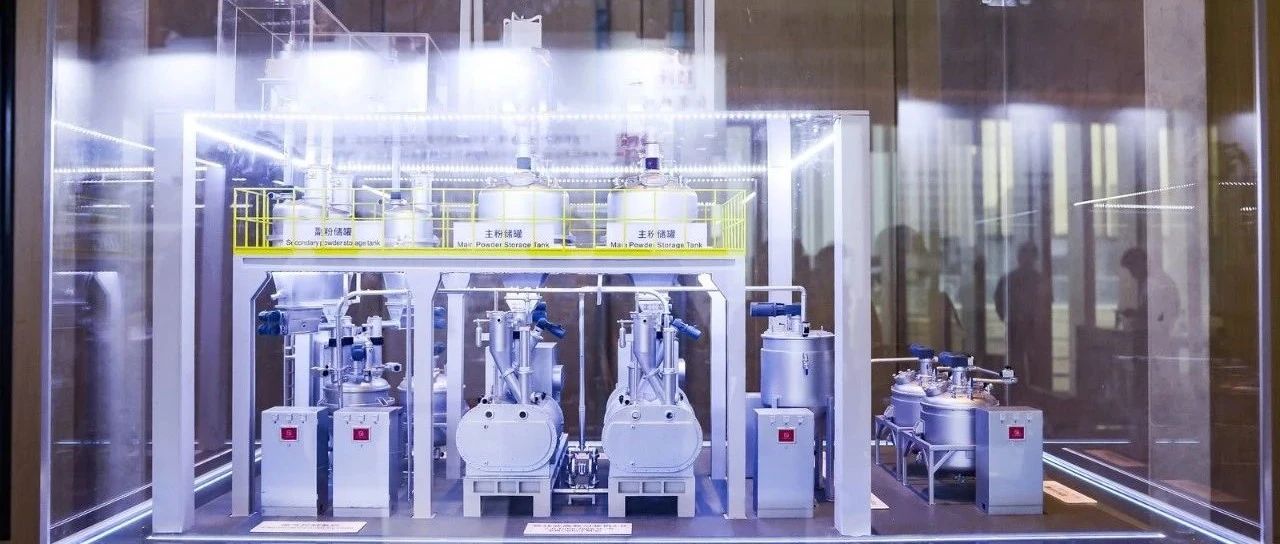
Core Viewpoint - The article highlights the launch of innovative products by Hongyun Machinery aimed at addressing the challenges in the lithium battery manufacturing process, particularly in slurry preparation technology, which is crucial for battery performance and production efficiency [1][4]. Summary by Sections Product Launch - Hongyun Machinery successfully held the "Slurry Core Power, Intelligent Chain Future" 2025 product launch event, introducing several new systems including high-efficiency pipeline slurry systems, high-speed circulation slurry systems, twin-screw continuous slurry systems, and dry electrode processes [1][4][12]. Industry Context - The lithium battery industry is at a critical juncture of technological iteration and industrial upgrade, facing challenges such as energy efficiency and environmental constraints in wet processes, material dispersion issues in dry processes, and the need for cost-effective, high-consistency production [2][4]. Company Philosophy - Hongyun Machinery emphasizes that slurry processes should not hinder technological innovation but rather unlock material potential, aiming to bridge the gap from laboratory to mass production through technological breakthroughs [4][6]. Product Features - The high-efficiency pipeline slurry system is designed for high solid content slurry, showcasing energy consumption of less than 45 KWh/t for positive electrode slurry and less than 33 KWh/t for negative electrode slurry, significantly outperforming industry averages [15][16]. - The high-speed circulation slurry system addresses the dual needs of rapid mixing and precise temperature control, maintaining temperatures below 45°C to prevent material damage [18][21]. - The twin-screw continuous slurry system supports production capacities from 30L/hour to 1500L/hour, integrating automatic feeding, continuous transport, and efficient mixing [22][24]. - The dry electrode process aims to overcome key bottlenecks in material mixing uniformity and batch consistency, facilitating the industrialization of dry electrode technology [25][31]. Collaborative Efforts - The establishment of a joint laboratory with Saike Power focuses on developing key equipment for all-solid-state batteries, addressing challenges in mixing, slurry preparation, and electrode formation [33][35]. Industry Implications - The advancements presented by Hongyun Machinery reflect a significant leap in the domestic equipment manufacturing sector, demonstrating capabilities that meet or exceed international standards, thus supporting the industry's shift towards high-efficiency and green technologies [36].
高工锂电15周年策划|天赐材料徐金富:锂电下一个15年 别再互相“残杀”
高工锂电· 2025-07-05 08:48
Core Viewpoint - The article highlights the significant evolution of China's power battery industry over the past 15 years, marking its transition from a nascent stage to a global leader, and anticipates new challenges and opportunities in the next 15 years, particularly in globalization and technological innovation [2][4]. Summary by Sections Industry Development - The Chinese power battery industry has grown from 0 to 1, evolving from a weak presence to a strong global competitor, becoming a representative of China's manufacturing prowess and a symbol of economic transformation [2][4]. - The industry is expected to enter a new phase starting in 2025, characterized by challenges such as the electrification of transportation and deeper energy system reforms, leading to new application scenarios, technological innovations, and business model developments [2][4]. 15th Anniversary Activities - To commemorate its 15th anniversary in 2025, the company plans a series of activities under the theme "Stirring 15 Years, Looking Ahead to a New Journey," which includes dialogues with over 100 industry representatives to reflect on past developments and future opportunities [4][5]. Video and Communication Initiatives - The company will conduct video interviews with 20 industry leaders and young innovators in the new energy sector, focusing on the globalization of Chinese enterprises and the evolution of the lithium battery industry [7][8]. - Topics for discussion will include a review of the industry's successes and failures over the past 15 years, as well as expectations and plans for the next 15 years [10][11]. Industry Milestones - The article outlines the development trajectory of the Chinese lithium battery industry from its initial phase (2010-2015), through its explosive growth (2016-2020), to its current position as a global leader (2021-2025), highlighting key technological and commercial breakthroughs [12][13]. - It emphasizes the changes in the core industry chain, including batteries, equipment, and materials, and features top companies in various segments [12][13]. Future Outlook - The focus for the next 15 years will be on technological advancements such as solid-state batteries and sodium-ion batteries, as well as the expansion into all-scenario applications like energy storage and eVTOL [13]. - The company will host an industry celebration during its annual conference in 2025, inviting over 1,000 industry stakeholders to reflect on past achievements and discuss future challenges and opportunities [15].
大而美法案落地,美国新能源补贴“悬崖式”退场
高工锂电· 2025-07-04 11:41
Core Viewpoint - The article discusses the significant policy shift in the U.S. regarding renewable energy and its implications for the industry, particularly following the passage of the Omnibus Budget and Bipartisan Balanced Budget Act (OBBBA), which reverses previous incentives and support for clean energy initiatives [1][2][5]. Summary by Sections Legislative Changes - The OBBBA extends the tax cuts from 2017 and introduces new consumer tax incentives, aiming to stimulate the economy with a focus on consumption rather than investment-driven growth [2]. - The act eliminates key clean energy and electric vehicle incentives from the Inflation Reduction Act (IRA), marking a fundamental shift in U.S. fiscal and industrial policy [2][4]. Impact on Renewable Energy Sector - The removal of government support is seen as a "strategic destruction" of the renewable energy sector, creating a challenging environment for long-term capital investments [6][8]. - Predictions indicate a potential reduction of 57% to 72% in new clean energy capacity additions in the U.S. due to the new regulations [7]. Electric Vehicle Market - The OBBBA will end tax credits for electric vehicles much earlier than previously planned, leading to a significant drop in projected EV market penetration, which is now estimated at around 12% by 2025, halving previous expectations [9][8]. - The act also relaxes penalties for traditional fuel vehicles, potentially leading to a short-term surge in EV purchases followed by a sharp decline in sales [8]. Supply Chain and Trade Implications - The introduction of a 20% tariff on goods imported from Vietnam further complicates the supply chain for U.S. battery and solar companies that had relied on Vietnam as a production hub [10][11]. - The OBBBA introduces stringent rules regarding foreign entities, complicating compliance and potentially freezing investments in the sector [13][14]. Market Reactions - Major financial institutions have downgraded the outlook for U.S. automakers, reflecting the immediate impact of the policy changes on market dynamics [15]. - Companies are responding differently, with some shifting investments back to traditional vehicle production while others continue to pursue electric vehicle projects despite the risks [15][16]. Long-term Industry Outlook - The article warns that the U.S. "battery belt" could transform into a "rust belt" due to the abrupt policy changes, jeopardizing previously announced clean energy investments totaling $522 billion [18]. - The global oversupply pressure may increase, leading to intensified price competition and challenges for businesses that previously thrived under more favorable conditions [19].

新材料应用多点“开花”
高工锂电· 2025-07-04 11:41
Core Viewpoint - The commercialization of lithium battery new materials is transitioning from technological exploration to large-scale application, driven by the dual forces of upgraded demand in the lithium battery industry and enhanced material innovation capabilities [1]. Market Demand - The rapid development of electric vehicles, energy storage systems, eVTOL, and robotics has created a pressing demand for high-performance materials, opening up vast application spaces for the new materials industry [2]. Capital Market Response - In the first half of 2025, new signed projects in the new energy materials sector exceeded 10 billion yuan, covering various sub-sectors such as silicon-based anode materials, copper foil, PVDF resin, and high-nickel cathode materials, indicating strong market recognition of the new materials industry's prospects [3]. Company Innovations - **Sungrow Technology** achieved breakthroughs in silicon-based anode materials, reducing volume expansion by 60% and surpassing 1000 cycles in lifespan through a unique nanometer silicon particle and fluidized carbon coating process [4]. - **Anhui Zhongji** set a new industry standard with its 4.5-micron lithium battery copper foil, achieving a tensile strength of over 200 MPa and a stable elongation of 3.5%, balancing high energy density requirements with tensile strength and flexibility [5]. - **Dongyangguang Fluororesin** developed high-performance PVDF resin for lithium battery separators, enhancing heat resistance, chemical stability, and mechanical strength, with a deformation rate below 5% at 120°C and a 30% improvement in electrolyte corrosion resistance [5][6]. - **Lanxi Zhide** constructed a dual-technology engine in high-nickel cathode materials, successfully producing low-cobalt or cobalt-free materials, reducing production costs and enhancing energy density [6]. - **Good Electric Technology** introduced a new generation of water-based binders that improve electrode structure stability while reducing harmful organic solvent usage, thus supporting green development and lowering manufacturing costs [7][8]. Future Outlook - The new energy materials industry is expected to face broader development opportunities and more intense market competition, with a focus on scaling production, controlling costs, and enhancing product performance [9].