是说芯语

Search documents
积塔半导体斥资7.2亿元成立新公司!
是说芯语· 2025-11-03 08:01
Core Viewpoint - The establishment of Shanghai Jittacreaton Semiconductor Co., Ltd. with a registered capital of 720 million RMB marks a significant step in enhancing the competitiveness of the semiconductor industry in China, particularly in specialized chip manufacturing [1][4]. Company Overview - Shanghai Jittacreaton Semiconductor Co., Ltd. was officially established on October 20, 2025, with a registered capital of 720 million RMB [1][2]. - The company is wholly owned by Shanghai Jittacreaton Semiconductor Co., Ltd. and operates in various sectors including sales of semiconductor discrete devices, power electronic components, and electronic products [2][3]. Industry Context - Since its inception in 2017, Jittacreaton Semiconductor has focused on the research and production of integrated circuit chips, providing core chip manufacturing platforms and technical services for automotive electronics, industrial control, and high-end consumer electronics [3][4]. - The company has established two production bases in the Lingang New Area and Xupu District, with a combined capacity of 300,000 chips per month, equivalent to 8-inch wafer production [4]. Strategic Importance - The formation of Shanghai Jittacreaton Semiconductor Co., Ltd. signifies a crucial advancement in the company's efforts to enhance its industrial chain layout and market competitiveness [4]. - This initiative is expected to bolster China's independent innovation capabilities in the specialized chip sector, providing stronger chip support for critical areas such as automotive electronics and industrial control [4].

特朗普:英伟达顶级 GPU 仅供美国使用,其他国家无法获得
是说芯语· 2025-11-03 07:16
Core Viewpoint - The article discusses the potential restrictions imposed by the Trump administration on the export of advanced AI chips, specifically the Blackwell chips from Nvidia, to countries outside the United States, particularly China [1][3][5]. Group 1: Export Restrictions - Trump stated that only U.S. companies will have access to Nvidia's advanced Blackwell chips, indicating a stricter stance than previously suggested by U.S. officials [1][3]. - The administration's comments suggest that China and other countries may be entirely barred from obtaining the most advanced semiconductors [5]. - Trump emphasized that while the most advanced Blackwell chips will not be sold to China, there may still be opportunities for lower-tier versions to be available [5][6]. Group 2: Nvidia's Position - Nvidia has not applied for U.S. export licenses for the Chinese market, indicating a cautious approach amid the evolving regulatory landscape [6]. - Recently, Nvidia announced plans to supply over 260,000 Blackwell AI chips to South Korea and major companies like Samsung Electronics, highlighting a focus on allied nations [5].


AMIES在中国光刻推进中崛起!
是说芯语· 2025-11-03 02:14
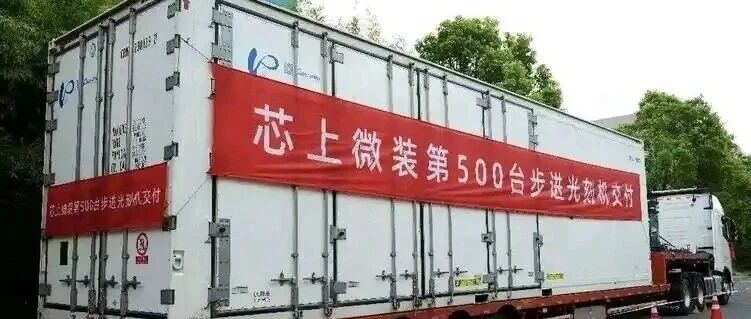
Core Insights - The article highlights the growing semiconductor capabilities in China, particularly focusing on the advancements made by companies like SiCarrier and AMIES Technology in the lithography equipment sector [1][3]. Company Developments - AMIES Technology, a spinoff of Shanghai Micro Electronics Equipment (SMEE), is recognized as a leading state-owned lithography company in China, aiming to accelerate the commercialization of its equipment [4]. - SMEE has developed the 600 series lithography system, which has entered mass production at the 90nm node, and is currently working on a 28nm immersion model [4]. - AMIES showcased a diverse product portfolio at the exhibition, including compound semiconductor lithography machines, laser annealing systems, advanced inspection equipment, and solutions for packaging and wafer bonding [5]. Market Position - AMIES claims its advanced packaging lithography machines are designed for high-end chip packaging applications, featuring high resolution, large exposure fields, and support for high warpage substrates, catering to advanced packaging requirements [6]. - The company has achieved significant market recognition, with its advanced packaging lithography machines holding a 35% share in the global market and approximately 90% in the Chinese market [7]. Production Milestones - In August 2025, AMIES announced the shipment of its 500th stepper lithography machine, marking a significant milestone in its production capabilities [8]. Industry Competition - Various companies are competing to develop domestic DUV and EUV lithography systems as part of China's push for semiconductor self-sufficiency [9]. - Zetop Technologies, partly owned by SK Hynix and the Changchun Institute of Optics, is involved in this competitive landscape, with shareholders including leading EUV optical researchers [10]. - Yuliangsheng, also partially owned by SK Hynix, has provided a 28nm DUV lithography system to China's largest foundry, SMIC, for testing in 7nm production [11].
马斯克:五年后传统手机和APP将消失!为手机设计芯片和系统的工程师会随之消失吗?
是说芯语· 2025-11-02 08:06
Core Viewpoint - Elon Musk predicts that traditional smartphones and apps will disappear within 5 to 6 years, with AI generating most of the content humans interact with daily [1] Group 1: Predictions on Technology and AI - Musk envisions a future where smartphones will simplify to display and sound output, with AI deeply integrated into every aspect of these devices [1] - He forecasts that AI will surpass individual human intelligence by 2026 and exceed the collective intelligence of humanity by 2030 [1] Group 2: Impact on Chip Design and Engineering - Concerns arise regarding the future of mobile chip and system engineers due to Musk's predictions, as certain aspects of chip design, like analog circuit design, require human creativity and expertise that AI cannot fully replicate [3] - Current AI tools, such as NVIDIA's ChipNeMo and Synopsys.ai Copilot, can assist in coding and note organization but are not capable of independently completing the entire chip design process [3] - System design in mobile technology requires a deep understanding of user needs and hardware optimization, which AI can assist with but cannot replace the essential experience and knowledge of human engineers [4] Group 3: Future of Chip Engineering Careers - The future of chip engineers will depend on two key factors: breakthroughs in AI technology that allow for fully autonomous chip design and a potential shift in the industry towards new design models that do not rely on traditional processes [5] - Despite the technological wave indicated by Musk's predictions, the unique nature of the chip industry suggests that engineers will not be easily replaced, and continuous learning and adaptation to AI tools will be crucial for their future [5]


最新!安世中国再发声:荷兰停供晶圆、恶意抹黑、欠付10亿元货款!
是说芯语· 2025-11-02 00:37
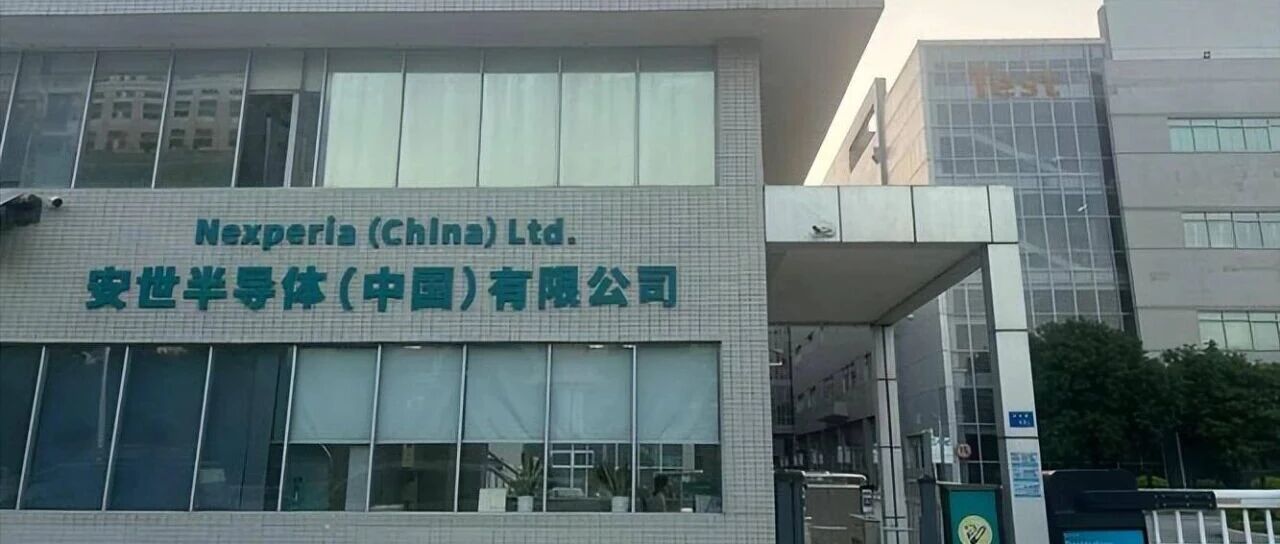
Core Viewpoint - Nexperia China strongly refutes the claims made by Nexperia Netherlands regarding the unilateral decision to stop supplying wafers to the Dongguan assembly and test site (ATGD) from October 26, 2025, asserting that the allegations of non-compliance with payment terms are false and misleading [6][7]. Group 1: Allegations and Responses - Nexperia Netherlands' assertion that local management failed to comply with contractual payment terms is described as fabricated and malicious defamation against Nexperia China's management, with the company claiming that Nexperia Netherlands owes ATGD over RMB 1 billion in outstanding payments [7][8]. - The management team at Nexperia Netherlands is accused of severe dereliction of duty, prioritizing personal interests over the company's overall interests, which violates professional ethics and corporate governance [8]. Group 2: Impact on Customers and Supply Chain - The unilateral suspension of supply by Nexperia Netherlands is said to disregard customer interests, violate contractual agreements, and undermine customer trust, which is characterized as an extremely irresponsible act [9]. - Nexperia China has established sufficient inventories of finished goods and work-in-progress, ensuring stable fulfillment of customer orders through year-end and beyond, while also initiating multiple contingency plans to secure long-term supply resilience [10]. Group 3: Commitment to Customers - Nexperia China emphasizes its commitment to product quality and fulfilling customer promises, stating that the actions of Nexperia Netherlands will not change this commitment [11][12].
快报-上海AI芯片龙头重启IPO!估值205亿!
是说芯语· 2025-11-01 14:05
Core Viewpoint - Shanghai AI chip leader Suiyuan Technology has re-registered for IPO guidance with the Shanghai Securities Regulatory Bureau, replacing the previous advisor, China International Capital Corporation, with CITIC Securities [1][3]. Group 1: Company Overview - Suiyuan Technology, established in March 2018, focuses on AI cloud computing chips and has a current valuation of 20.5 billion yuan, with notable shareholders including Tencent and the National Integrated Circuit Industry Investment Fund [2][3]. - The company specializes in the research and sales of AI training and inference chips, offering products such as cloud AI training acceleration cards and inference acceleration cards [5]. Group 2: IPO Process - This marks the second time Suiyuan Technology has initiated the IPO guidance process, having previously completed the registration in August 2024 with a different advisory firm [3]. - The company has a registered capital of 335 million yuan and a decentralized shareholding structure without a controlling shareholder [3]. - Both Suiyuan Technology and CITIC Securities have begun the IPO guidance work, although a specific timeline for the IPO has not yet been disclosed [6].

芯片和机器人顶尖专家归国!
是说芯语· 2025-11-01 10:08
Core Insights - The article highlights the significant career move of Pang Zhibo, a leading expert in industrial chips and robotics from ABB Group, who has joined Peking University's Advanced Manufacturing and Robotics Institute as a long-term professor [1][9]. Group 1: Pang Zhibo's Background and Expertise - Pang Zhibo is recognized globally in the field of industrial automation and robotics, having held the position of Senior Principal Scientist at ABB, which is one of the largest industrial engineering companies worldwide [1][7]. - His research focuses on interdisciplinary theories and applications in intelligent robotics and autonomous systems, covering areas such as physical information neural networks, multimodal embodied intelligent models, and high-dynamic agile robot hardware [2][9]. Group 2: Contributions at ABB - At ABB, Pang Zhibo played a crucial role in formulating and advancing the company's global distributed R&D strategy, which significantly influenced ABB's technological positioning and competitive advantage in the industrial automation sector [7]. - He managed over 800 R&D personnel across various business domains and led the development and implementation of more than 80 technological products, showcasing a high level of management scale and achievement in the global industrial R&D landscape [7][8]. Group 3: Academic and Research Impact - Pang Zhibo has published over 100 international journal papers and holds 24 authorized invention patents, demonstrating effective conversion of academic achievements into intellectual property [8]. - His appointment at Peking University is expected to bridge the gap between fundamental research and industrial application, leveraging the university's strengths in basic discipline research and talent cultivation [8][9]. Group 4: Implications for China's Advanced Manufacturing Sector - Pang Zhibo's return to China reflects the growing potential and attractiveness of the country's advanced manufacturing and robotics sectors, which are increasingly becoming focal points in global technological competition [9]. - With increased investment, growing market demand, and supportive policies, China is positioning itself as a significant player in the innovation and application of advanced manufacturing technologies [9].

重磅!闻泰科技换帅!
是说芯语· 2025-11-01 06:21
Core Viewpoint - Wentech Technology has appointed Ms. Shen Xinjia as the new president, highlighting the company's confidence in her capabilities and past performance [2][4]. Group 1: Appointment Details - The board of directors unanimously approved the appointment of Ms. Shen Xinjia as president during a meeting on October 30 [3]. - Ms. Shen will no longer serve as vice president, and her term as president will align with the current board's term [3]. Group 2: Qualifications and Experience - Ms. Shen holds a Bachelor's degree in Law from East China University of Political Science and Law and a Master's degree in Law from Columbia University, along with a Chinese legal professional qualification [4]. - She has over 15 years of experience in corporate governance, compliance risk management, and cross-border mergers and acquisitions [4]. - Prior to joining Wentech, she worked at Bosch China and Trina Solar Asia Pacific, and she joined Wentech's subsidiary, Anshi Semiconductor, in January 2017 as the legal head for the Asia Pacific region [5][6].


华虹公司:唐均君辞职!总裁白鹏获委任为董事会主席!
是说芯语· 2025-11-01 01:51
Group 1 - The company announces that Bai Peng will be appointed as the chairman of the board, nomination committee chairman, and authorized representative starting from October 31, 2025, while continuing as the president [2] - Tang Junjun will resign from his positions as executive director, chairman of the board, and nomination committee chairman, effective October 31, 2025 [3] - Bai Peng, aged 62, has over 30 years of experience in integrated circuits and has held significant positions at Intel, including global vice president, and has been the CEO of Rongxin Semiconductor since September 2022 [4] Group 2 - For the first half of 2025, the company reported revenue of 8.018 billion yuan and a net profit attributable to shareholders of 74.32 million yuan [5]

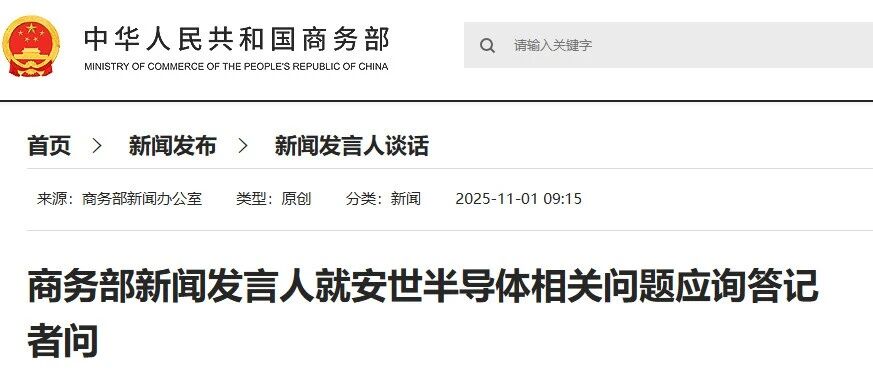
刚刚!商务部回应安世事件!
是说芯语· 2025-11-01 01:51
Core Viewpoint - The Chinese Ministry of Commerce emphasizes the importance of maintaining stability in global supply chains and expresses concern over the Dutch government's interference in corporate affairs, which has contributed to current supply chain disruptions [2]. Group 1: Ministry of Commerce's Response - The Ministry of Commerce has previously addressed concerns regarding Anshi Semiconductor and reiterates its stance on the matter [2]. - The Ministry welcomes companies facing difficulties to reach out for assistance, indicating a willingness to consider exemptions for eligible exports based on actual circumstances [2]. Group 2: Industry Events and Presentations - A series of presentations are scheduled, focusing on advancements in programmable computing chips and the future of computing paradigms, highlighting the role of RISC-V architecture [6][9]. - The event includes discussions on high-performance chips for AI applications and the integration of storage and computing technologies [9][10]. - The announcement of the 2024-2025 China IC Unicorn Awards and recognition of innovative achievements in the semiconductor industry will take place [9].