是说芯语

Search documents
SK海力士与三星将切断中国EDA!
是说芯语· 2025-09-06 12:38
Core Insights - The EDA market is dominated by American companies Synopsys, Cadence, and Siemens EDA, holding over 70% market share, while Chinese companies like Huada Jiutian, Gai Lun, and Xin He are rapidly gaining presence due to cost-effective solutions [1] - Samsung Electronics has reportedly been using Chinese EDA solutions since 2022, indicating a shift from traditional reliance on American EDA products [1] - SK Hynix is conducting an emergency review of its use of Chinese EDA software, driven by concerns over potential U.S. sanctions and the desire to maintain good relations with the U.S. semiconductor market [3] - The U.S. Department of Commerce previously issued letters to major EDA suppliers, requesting them to halt shipments to Chinese customers, which has impacted the market dynamics [3] - The domestic EDA market in China is expected to increase its localization rate from 10% in 2019 to 25% by 2025, although high-end sectors still rely heavily on imports [4] Group 1 - The EDA market is primarily led by U.S. companies, with a significant share held by Synopsys, Cadence, and Siemens EDA [1] - Chinese EDA companies are gaining traction, with Samsung Electronics adopting their solutions [1] - SK Hynix's review of Chinese EDA usage is a precaution against U.S. sanctions [3] Group 2 - The U.S. has previously restricted EDA exports to China, affecting major suppliers [3] - The localization rate of China's EDA market is projected to rise significantly by 2025, though challenges remain in high-end sectors [4] - The competitive landscape indicates that if Chinese EDA is phased out, costs for Samsung and SK Hynix could increase due to reliance on more expensive U.S. products [3]


恭喜澜起芯片!三星、SK 海力士、AMD、英特尔集体为其站台!
是说芯语· 2025-09-06 08:52
Core Viewpoint - The launch of the CXL 3.1 Type 3 Memory Expansion Controller (MXC) chip M88MX6852 by 澜起科技 marks a significant advancement in memory expansion technology, aimed at enhancing bandwidth and reducing latency for next-generation data center servers [1][5]. Group 1: Product Features - The M88MX6852 chip supports CXL.mem and CXL.io protocols, providing high bandwidth and low latency memory expansion and pooling solutions for data centers [1]. - It utilizes a PCIe 6.2 physical layer interface with a maximum transmission rate of 64 GT/s (x8 lanes) and features a dual-channel DDR5 memory controller supporting speeds up to 8000 MT/s, improving data exchange efficiency between the CPU and SDRAM or DIMM modules [1]. - The chip integrates dual RISC-V microprocessors for dynamic resource configuration, real-time event processing, and hardware-level security management, along with multiple interfaces for system integration and firmware upgrades [1]. Group 2: Market Demand and Applications - The demand for cloud computing resource pooling is rapidly increasing, making traditional memory architectures a performance bottleneck in terms of bandwidth and scalability [2]. - The M88MX6852 chip is designed to help data center users achieve elastic allocation and efficient utilization of memory resources, thereby reducing total cost of ownership (TCO) [2]. - Its compact 25mm x 25mm packaging is compatible with EDSFF (E3.S) and PCIe add-in card (AIC) formats, making it suitable for various deployment environments including servers, all-flash arrays, and edge computing [2]. Group 3: Industry Reception - 澜起科技's president, Stephen Tai, emphasized that the launch signifies a breakthrough in CXL technology, enhancing memory expansion performance and energy efficiency while promoting the development of decoupled memory architectures [5]. - Major industry players such as Samsung, SK Hynix, AMD, and Intel have expressed strong support for the M88MX6852, highlighting its potential to revolutionize next-generation memory architectures and its alignment with cost-reduction goals [5][6]. - Samsung's VP noted the synergy between their CXL memory solutions and 澜起科技's chip, while AMD and Intel representatives acknowledged the importance of CXL memory expansion in future data center computing [5][6].

20亿芯片项目打了水漂!
是说芯语· 2025-09-06 08:00
Core Viewpoint - The bankruptcy of Zhejiang Qingke Semiconductor Co., Ltd. highlights the rapid failure of a project that was once seen as a significant investment in the domestic high-end chip industry, with a total investment of 2 billion yuan, leading to its liquidation just two years after its establishment [1]. Group 1: Project Background - Zhejiang Qingke Semiconductor's project aimed to create a "domestic high-end chip empowerment multi-industry integration application industrial base" in Jinhua Economic and Technological Development Zone, focusing on lightweight SOC heterogeneous chips and the integration of "chips + IoT" [1]. - The project was initially viewed as a key driver for the regional semiconductor industry but faced a swift decline, culminating in bankruptcy [1]. Group 2: Technical Route Issues - A significant factor in the company's failure was the choice of technology route, particularly the decision not to adopt the RISC-V architecture, which has gained traction in the industry due to its open-source and flexible nature [2]. - The lack of competitive performance, power consumption, and compatibility in comparison to RISC-V-based products hindered market penetration and revenue generation for Zhejiang Qingke Semiconductor [2]. Group 3: Financial Challenges - The company's financial difficulties were exacerbated by a broken funding chain, with a reported funding gap exceeding 500 million yuan due to reduced local government subsidies [3]. - The interruption of external financing, driven by negative operational signals, led to an inability to meet obligations such as supplier payments and employee salaries, resulting in labor disputes and further operational strain [3]. Group 4: Industry Insights - Experts suggest that SOC heterogeneity can effectively utilize the RISC-V architecture, which is becoming a focal point for many companies and research institutions [4]. - The modular and scalable nature of RISC-V allows for tailored processor designs that can meet diverse computing needs, making it a suitable choice for lightweight SOC heterogeneous chips [4][5].

寒武纪股价“过山车”之际,有一家国产芯片企业正被人民日报点赞
是说芯语· 2025-09-06 04:58
Core Viewpoint - The article discusses the dramatic fluctuations in the A-share market, particularly focusing on the performance of Cambrian Technology and the implications of global AI computing power competition, highlighting the challenges faced by China's chip industry and the innovative paths being explored by domestic companies like Qingwei Intelligent [1][2]. Group 1: Market Dynamics - Cambrian Technology's stock price dropped to 1202 yuan, a decline of over 20% from its historical high of 1595.88 yuan, resulting in a market value loss exceeding 700 billion yuan [1]. - Nvidia announced sufficient inventory of its H100/H200 chips, but the H20 chip's shipments to China fell short due to safety concerns, reflecting the complexities of global AI computing power competition [1]. Group 2: Technological Innovation - The reconfigurable AI chip (RPU) represents a new technology stream distinct from GPUs, utilizing a "data flow architecture" that allows dynamic configuration of computing units, enhancing efficiency and adaptability for various AI tasks [2]. - Reconfigurable chips are seen as a potential fourth category of general-purpose computing chips, following CPUs, FPGAs, and GPUs, with significant advantages in efficiency, scalability, and cost-effectiveness [2]. Group 3: Commercialization and Application - Qingwei's TX81 cloud computing chip has shown superior interconnectivity and energy efficiency compared to GPU clusters, with nearly 20,000 orders for its computing cards since launch [4]. - The global trend towards "data flow architecture" is gaining momentum, with companies like OpenAI and SambaNova leading the way in diversifying AI chip architectures [4]. Group 4: Future Challenges and Opportunities - The AI computing industry faces challenges from the exponential growth in model parameters and the physical limits of traditional chip manufacturing, prompting a search for breakthroughs in wafer-level chip technology [5][6]. - The C2C computing grid technology developed from reconfigurable data flow architecture addresses inter-chip connectivity issues, enhancing data transmission efficiency and overcoming traditional bandwidth bottlenecks [6].

新凯来获超百亿元半导体设备订单!客户包含中芯国际、华虹集团、长江存储
是说芯语· 2025-09-05 06:54
Core Viewpoint - The article highlights the rapid growth and strategic importance of Shenzhen-based semiconductor equipment company Xinkailai, which is positioned to significantly contribute to China's semiconductor supply chain security and independence amid international restrictions [1][4][8]. Group 1: Company Overview - Xinkailai has over 10 billion yuan in orders from major clients including Shenzhen Pengxin Micro, SMIC, Huahong Group, and Yangtze Memory Technologies [1]. - The company aims to achieve 100% domestic production of semiconductor manufacturing equipment, leveraging both state-owned and private sector resources [4][7]. - Xinkailai's revenue is projected to reach 4.5 billion yuan in 2023, 7.5 billion yuan in 2026, and 16.9 billion yuan in 2028, with profitability expected in 2027 [1][10]. Group 2: Market Context - The Chinese semiconductor equipment market is expected to reach $49.6 billion in 2024, growing by 35% year-on-year, with a significant gap in domestic production capabilities for advanced process equipment [10][11]. - The supply chain for EUV lithography machines is heavily reliant on Western technology, with China potentially lagging 10 to 15 years behind due to export restrictions [3][10]. - Xinkailai is strategically targeting the high-end market segment, particularly in advanced process equipment, to fill the existing gaps in domestic capabilities [10][11]. Group 3: Strategic Partnerships and Development - Xinkailai has established deep collaborations with leading wafer fabs, enabling rapid iteration from research and development to mass production [11]. - The company has set up a testing wafer fab in Shanghai to accelerate the testing of domestic devices and components [11]. - Shenzhen's state-owned assets are also backing the establishment of several specialized wafer fabs to ensure a stable supply of semiconductor products for various industries [11].

突发!闪迪宣布涨价!什么信号?
是说芯语· 2025-09-05 03:47
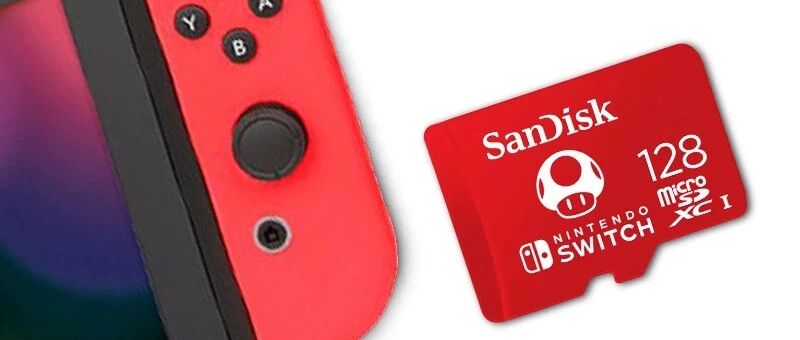
Core Viewpoint - Sandisk has announced a price increase of over 10% for all channel and consumer products due to strong demand for flash memory products driven by artificial intelligence applications and growing storage needs in data centers, client devices, and mobile sectors [2]. Group 1 - Sandisk is experiencing strong demand for its flash memory products, which is influenced by the rise of artificial intelligence applications [2]. - The price adjustment of over 10% is aimed at ensuring the provision of high-performance flash memory solutions and supporting ongoing innovation investments [2]. - The price changes will apply only to new quotes and orders, not to existing commitments, with future evaluations and potential adjustments planned for upcoming quarters [2].
传英伟达5213亿要收购联发科?
是说芯语· 2025-09-05 02:07
Core Viewpoint - The collaboration between MediaTek and NVIDIA on the GB10 super chip has sparked speculation about a potential acquisition of MediaTek by NVIDIA for $73 billion (approximately 521.34 billion RMB) [1][3]. Group 1: Collaboration and Market Speculation - The partnership between MediaTek and NVIDIA is characterized by complementary technologies and a close relationship, leading to market speculation about a possible acquisition [1]. - The GB10 chip combines MediaTek's CPU and storage design capabilities with NVIDIA's GPU design advantages, showcasing how NVIDIA integrates its Blackwell GPU with industry-standard interfaces [3]. Group 2: Acquisition Challenges - Industry experts believe that the rumored acquisition price of $73 billion is too low and would face significant regulatory scrutiny, particularly from Taiwan and mainland China, making approval unlikely [3][4]. - NVIDIA's previous attempt to acquire Arm for $40 billion was blocked due to antitrust concerns, indicating that a similar fate could await any potential acquisition of MediaTek [3]. Group 3: Strategic Importance of MediaTek - MediaTek is the third-largest company by market capitalization in Taiwan, following TSMC and Hon Hai, and plays a crucial role in Taiwan's semiconductor industry [4]. - The Taiwanese government is expected to conduct a thorough review of any acquisition attempts, especially in light of rising geopolitical tensions and a push for technological self-sufficiency [4]. Group 4: Implications for NVIDIA - NVIDIA has transitioned into an AI infrastructure company, shifting its core capabilities from chip design to system-level solutions, which may limit the benefits of acquiring MediaTek [4]. - The current supply chain for NVIDIA has expanded beyond traditional semiconductor manufacturing to include various components, indicating a shift in its operational focus [4].


超15亿!上海芯片独角兽获新一轮融资,中移动参投
是说芯语· 2025-09-04 07:27
Core Viewpoint - The commercialization of photonic networks and photonic computing is reaching a critical turning point, with significant advancements in technology and funding opportunities for companies in this sector [1]. Group 1: Company Overview - Xizhi Technology, a leading player in the photonic computing sector, has completed over 1.5 billion CNY in Series C financing, with participation from major investors including China Mobile and Shanghai Guotou [2]. - The company is the only domestic unicorn focused on photonic mixed computing and is accelerating the development of the next-generation photonic mixed computing card to support AI large models [2][3]. Group 2: Technological Advancements - The company has developed a high-bandwidth, low-latency optical interconnect solution that significantly enhances GPU utilization and demonstrates advantages in computing density, energy efficiency, and cost reduction [3]. - Xizhi Technology launched the world's first distributed optical interconnect GPU supernode, LightSphere X, during the 2025 WAIC, winning the highest award, the SAIL Award [3][5]. Group 3: Research and Development - The latest generation of photonic mixed computing cards, Xizhi Tian Shu, features a 128×128 photonic matrix, marking the first application of photonic mixed computing in complex commercial models [5]. - The company has established strategic partnerships with leading domestic photonic/electronic wafer manufacturers and system vendors, facilitating breakthroughs in key areas such as supernode construction and CPO [5].
无锡半导体设备年会快讯-中微尹志尧:抵制15种恶性内卷!
是说芯语· 2025-09-04 04:01
Core Viewpoint - The semiconductor equipment industry faces significant challenges and opportunities, with a focus on the rapid development strategies of companies like Zhongwei, which is crucial for achieving self-reliance and competitiveness in the global market. Group 1: Industry Challenges - The semiconductor micro-processing equipment industry is facing ten major challenges, including the need for integration of over 50 disciplines, achieving uniformity and reliability at the atomic level, and high barriers to market entry due to existing monopolies [1]. - Development and market entry of micro-processing equipment require substantial R&D funding, often 10 to 100 times the equipment price, and a complete supply chain of materials and components [1][2]. - The cyclical nature of the micro-processing equipment market is more volatile than that of micro-device industries, making it difficult to predict [1]. Group 2: Market Dynamics - The semiconductor equipment market is characterized by fierce competition, which demands increased output and lower prices, posing greater challenges for new entrants [1]. - The investment required for advanced chip production lines is around $10 billion, with over 300 types of specialized equipment needed, and the expected annual output value of chips is approximately $2.5 billion [2][3]. - The market for semiconductor equipment is projected to grow significantly, with a focus on etching and thin-film deposition technologies as critical processes for 3D device manufacturing [3][4]. Group 3: Company Overview - Zhongwei has maintained an annual revenue growth rate exceeding 35% for 14 consecutive years, with a remarkable growth of 43.9% in the first half of 2025 [6][8]. - The company has a strong R&D focus, with expenditures significantly higher than the average for companies listed on the Science and Technology Innovation Board, and has accelerated its product development cycle to under two years [8]. - Zhongwei has developed a range of advanced equipment, including 20 models of third-generation machines, and is expanding its market coverage in etching and thin-film deposition [5][8].


绝境重生!象帝先 GPU 流片成功!
是说芯语· 2025-09-04 01:19
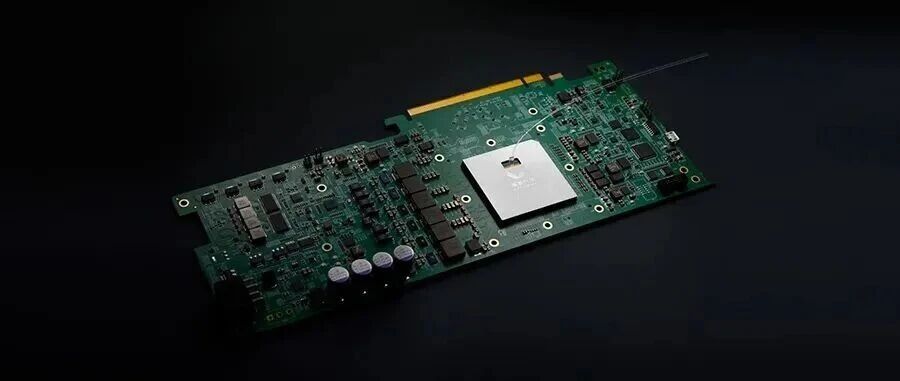
Core Viewpoint - The successful tape-out of the "Fuxi" architecture chip by Xiangdixian marks a significant breakthrough in high-end chip technology, enhancing its capabilities in graphics rendering and parallel computing [1][3]. Group 1: Technological Advancements - The "Fuxi" architecture GPU has achieved a computing power of 160 TFLOPS (FP32) and integrates 12GB of HBM2 memory, showcasing its advanced performance in the high-end chip sector [1]. - Xiangdixian plans to launch two differentiated products based on the "Fuxi" architecture: Fuxi A0, targeting the high-end rendering market, and Fuxi B0, which innovatively combines GPU and NPU architectures for edge model deployment and the rapidly growing AIPC market [3]. Group 2: Market Position and Strategic Support - The involvement of state-owned investment institutions, such as Chongqing Liangjiang Industry Development Group, in Xiangdixian's shareholder structure highlights the recognition of its technological potential by industrial capital [3]. - Xiangdixian is considering its listing plans in conjunction with market conditions and its development strategy, while Anfu Technology will continue to support its growth through resources and capital [3].