生物世界

Search documents
武汉纺织大学×华中科技大学合作论文,登上Cell头条
生物世界· 2025-10-20 00:00
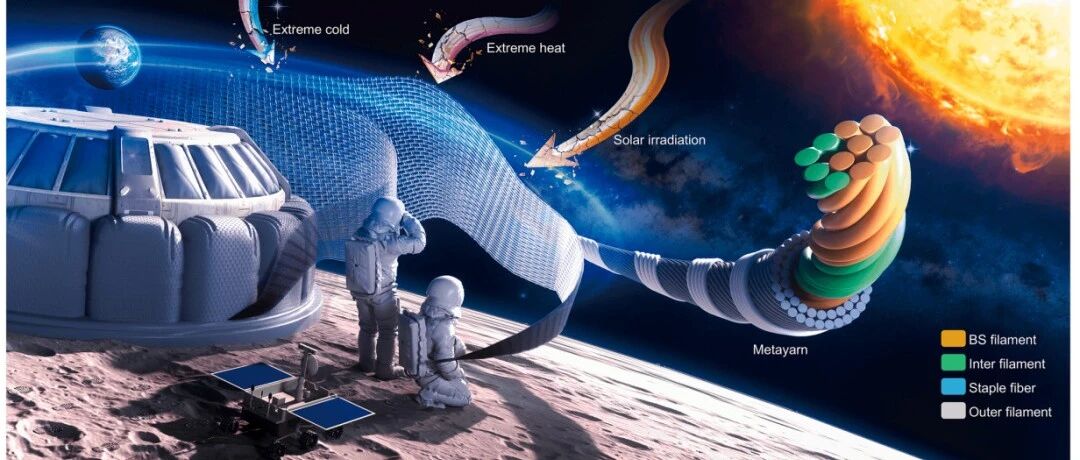
Core Viewpoint - A recent research paper from Wuhan Textile University and Huazhong University of Science and Technology has been highlighted on the Cell Press website, focusing on the development of hierarchical basalt metayarn for ergonomic protective space textiles, which is crucial for future human space colonization [4][7]. Group 1: Research Significance - The paper titled "Hierarchical basalt metayarn for ergonomic protective space textiles" was published online on October 1, 2025, and is authored by notable professors and academicians from the two universities, with Wuhan Textile University as the primary institution [4]. - The research introduces a novel method to transform brittle inorganic basalt fibers into practical ergonomic space protective textiles, essential for human survival in extreme space environments [7][9]. Group 2: Material Properties - Basalt, a common volcanic rock, shares similarities with lunar and Martian soil, making it a vital material for space equipment. It can withstand extreme temperatures ranging from 780°C to -260°C and has excellent resistance to solar radiation [8]. - The newly developed metayarn exhibits flexibility, high strength, and stability, allowing it to be processed into soft fabrics that can endure intense solar radiation and extreme temperature fluctuations [11]. Group 3: Technological Innovation - The research team has pioneered a coaxial spiral wrap spinning technique, enabling the industrial-scale production of multi-level, skin-friendly basalt metayarn, overcoming challenges related to fiber brittleness and weaving [9][11]. - The metayarn can maintain structural integrity even after exposure to flames at 1300°C, showcasing its exceptional fire resistance and comfort-protection integration [11][13]. Group 4: Applications - The ergonomic textiles made from metayarn are cost-effective, dyeable, skin-friendly, and flexible, providing innovative solutions for applications such as space suits, lunar bases, space flags, smart firefighting suits, automotive interiors, and polar exploration equipment [13].

登上Cancer Cell封面:中国创新“双免疫检查点抑制”疗法,改变结肠癌治疗策略
生物世界· 2025-10-19 09:30
撰文丨王聪 编辑丨王多鱼 排版丨水成文 在全世界范围内, 结直肠癌 (CRC) 是发病人数第三的癌症 (仅次于肺癌和乳腺癌) ,是死亡人数第二的癌症 (仅次于肺癌) 。约 15% 的结直肠癌患者被 发现存在 微卫星高度不稳定/错配修复缺陷 (MSI-H/dMMR) ,这已被认为是结肠癌的一个独特亚型,具有独特的生物学和临床特征。这些肿瘤表现出高突变 负荷,导致产生大量新抗原和免疫响应性肿瘤微环境,使其特别容易受到免疫治疗的影响。 新辅助治疗 (Neoadjuvant therapy) 是指在手术前进行的系统性治疗 (例如化疗、放疗或免疫治疗) ,目的是缩小肿瘤、降低手术难度、减少术后复发风险, 或提前评估治疗效果。当联合免疫治疗 (例如抗 PD-1 单抗、抗 CTLA-4 单抗) 时,称为 新辅助免疫治疗 ( Neoadjuvant immunotherapy ) , 其在 MSI- H/dMMR 结肠癌中显示出良好的治疗效果,但 双免疫检查点抑制( 抗 PD-1 单抗 + 抗 CTLA-4 单抗 ) 是否比抗 PD-1 单抗的单药治疗带来更多益处,目前 仍不清楚。 2025 年 10 月 13 日, 一项来 ...

Nature子刊:启动子编辑,实现对转基因表达的精准调控
生物世界· 2025-10-19 03:31
Core Insights - The article discusses the development of a new framework called DIAL (Dynamically Editable Artificial Loci) that allows for unprecedented precision in controlling transgene expression, addressing a long-standing challenge in synthetic biology [4][5]. Group 1: Gene Expression Control - Small changes in gene expression can lead to significant shifts in cell states, necessitating tools that can precisely regulate expression levels [7]. - DIAL utilizes a synthetic zinc finger transcription factor whose activity increases as spacer sequences are removed, allowing for fine-tuned control of transgene expression [7][9]. - The framework introduces a modular and scalable approach to constructing editable promoters, setting new standards for transcriptional controllability [7][9]. Group 2: Applications and Benefits - DIAL enables user-guided, time-defined transgene expression control, which is crucial for applications requiring staged developmental signals or gradual activation of therapeutic genes [9][10]. - The technology is compatible with lentiviral delivery systems, demonstrating its versatility in generating various expression levels in primary cells and induced pluripotent stem cells (iPSCs) [9][10]. - One of DIAL's most attractive features is its ability to produce stable and heritable expression states, facilitating long-term lineage tracing and phenotypic mapping [10]. Group 3: Implications for Research and Medicine - The ability to finely tune gene dosage is expected to significantly enhance cell fate engineering strategies, potentially improving regenerative medicine approaches for neurodegenerative diseases [10]. - DIAL aims to increase the precision and predictability of synthetic gene circuits, which is critical for the safety and efficacy of gene therapy applications [10].

Cancer Cell:肿瘤内细菌,驱动癌症治疗耐药性
生物世界· 2025-10-19 03:31
Core Insights - Tumor-infiltrating bacteria, particularly Fusobacterium nucleatum, are increasingly recognized as key components of the tumor microenvironment (TME) and are linked to cancer recurrence and treatment resistance [2][5] - The recent study published in Cancer Cell highlights a new mechanism by which these bacteria disrupt interactions between cancer epithelial cells and induce cell-cycle arrest, leading to resistance against chemotherapy drug 5-fluorouracil (5-FU) [3][10] Summary by Sections Tumor-Infiltrating Bacteria and Cancer - Tumor-infiltrating bacteria, especially in mucosal sites, are being viewed as critical elements of TME [2] - Specific bacteria have been associated with cancer progression and poor prognosis, such as the enrichment of Fusobacterium nucleatum in colorectal cancer (CRC) tissues [2] Mechanism of Action - The study describes how extracellular bacteria, including Fusobacterium nucleatum, regulate the behavior of cancer epithelial cells [6] - These bacteria are primarily found in the extracellular regions of the TME in colorectal and oral cancers, where cell density, transcriptional activity, and proliferation are reduced [6] Experimental Findings - In vitro experiments show that Fusobacterium nucleatum disrupts epithelial cell contact, causing cells to enter a G0-G1 phase and inhibiting transcriptional activity [6] - This state confers resistance to the chemotherapy drug 5-FU and remodels the tumor microenvironment [6] - The findings were validated through live-cell imaging, spatial analysis, mouse models, and a cohort of 52 colorectal cancer patients [6] Clinical Implications - High loads of Fusobacterium nucleatum in tumors correlate with reduced treatment response [8] - The study emphasizes the potential of targeting microbial-tumor interactions as a therapeutic strategy [10]

Nature Medicine:这个基因突变,会导致肥胖,但能抵御心脏病
生物世界· 2025-10-19 03:31
Core Insights - The article discusses a study published in Nature Medicine that reveals a paradoxical finding regarding obesity and cardiovascular health related to the MC4R gene mutation [2][3][6]. Group 1: Study Findings - Individuals with MC4R gene mutations are severely obese but exhibit lower levels of low-density lipoprotein (LDL) cholesterol and a reduced risk of heart disease compared to peers with similar body mass index (BMI) [3][6]. - Approximately 1% of obese individuals and 5% of obese children carry the MC4R gene mutation, which leads to excessive eating and severe obesity [6]. - In the Genetics of Obesity Study, 144 adults with MC4R mutations showed lower blood pressure, total cholesterol, LDL cholesterol, and triglyceride levels compared to those with normal MC4R function [6]. Group 2: Mechanisms of Action - The study indicates that the MC4R gene, which encodes a key protein in the brain, regulates appetite and food intake; its deficiency leads to overeating and obesity [6][9]. - After a high-fat diet, individuals with MC4R protein dysfunction exhibited a lower increase in triglyceride-rich lipoproteins and fatty acid oxidation markers, suggesting a different lipid metabolism response [7][9]. Group 3: Implications for Treatment - The findings suggest that MC4R plays a crucial role in lipid metabolism and cardiovascular disease risk, providing a basis for developing potential drugs or therapies aimed at reducing cardiovascular disease risk [9].

登上Cell封面:中国科学院将CRISPR基因编辑与AI机器人结合,推动可持续农业发展
生物世界· 2025-10-18 09:00
Core Insights - The article discusses the significant opportunities presented by artificial intelligence (AI) and robotics in the transition to precision agriculture, which can enhance crop yields, reduce costs, and promote sustainability [3][8] - A research team from China has developed a novel approach that integrates biotechnology and AI, proposing the concept of crop-robot co-design to overcome challenges in hybrid breeding [4][9] Group 1: Research Highlights - The research published in the journal Cell introduces the world's first intelligent breeding robot, GEAIR, capable of automated cross-pollination, which significantly lowers breeding costs and shortens breeding cycles [4][8] - The team utilized genome editing to redesign flower morphology, creating male-sterile tomato plants with exposed stigmas, facilitating robot-assisted pollination [8][9] - The GEAIR system can achieve automated F1 hybrid breeding with efficiency comparable to manual pollination, aiding in the rapid development of climate-resilient and flavorful crops [8][11] Group 2: Technological Innovations - Genome editing of ABC model genes allows for the production of male-sterile flowers with exposed stamens in tomatoes and soybeans, potentially revolutionizing robotic hybrid breeding [9] - AI-driven robots simplify the process of cross-pollination, enhancing the efficiency of hybrid breeding [9] - The integration of biotechnology with AI-based robotics addresses bottlenecks in rapid crop breeding, providing solutions for sustainable precision agriculture [9][11]

Nature Medicine:首次人体实验,PD-1单抗治疗艾滋病
生物世界· 2025-10-18 04:05
Core Viewpoint - The article discusses the potential of Budigalimab, an anti-PD-1 monoclonal antibody developed by AbbVie, as a treatment for HIV infection, highlighting its safety and efficacy in a Phase 1b clinical trial, which may lead to a paradigm shift in HIV treatment by enabling "ART-free" control of the virus [2][3][8]. Group 1: Background on HIV and Current Treatments - Approximately 40 million people worldwide are infected with HIV, making it a significant public health threat [2]. - Antiretroviral therapy (ART) is the standard treatment that suppresses HIV replication but does not cure the infection, requiring daily medication which poses adherence challenges [2]. Group 2: Budigalimab Clinical Trial Overview - Budigalimab is a humanized anti-PD-1 monoclonal antibody designed to reverse immune exhaustion in chronic HIV-1 infection [6]. - The Phase 1b clinical trial involved 41 HIV-infected participants, assessing safety, tolerability, and pharmacokinetics through multiple low-dose intravenous injections [6][7]. Group 3: Trial Results and Efficacy - The trial demonstrated good tolerability of Budigalimab, with 29 out of 41 participants experiencing adverse events, mostly mild and unrelated to the treatment [7]. - In a 12-week exploratory efficacy analysis, 6 out of 11 participants showed delayed HIV viral rebound after treatment interruption, indicating potential for sustained viral control without ART [7][8]. Group 4: Implications for Future Research - The successful outcomes of the Phase 1b trial support further Phase 2 clinical trials, aiming to explore the feasibility of "ART-free" HIV control through immune modulation [8].


哈医大最新研究登上Cell头条:从多组学视角揭示不同器官系统的衰老差异
生物世界· 2025-10-18 04:05
Core Insights - The article discusses a significant research paper published in Cell Genomics, focusing on the multi-omic underpinnings of heterogeneous aging across multiple organ systems [4][6]. - The research aims to shift the paradigm of age-related disease management from a "divide and conquer" approach to a "unified prevention" strategy by understanding the molecular mechanisms of aging [7][9]. Research Objectives - The study aims to clarify the genetic associations between organ-specific aging and blood-based epigenetic aging, revealing phenotypic clusters related to heterogeneous aging across multiple organ systems [7]. - It seeks to identify candidate gene drug targets associated with these heterogeneous aging processes and evaluate opportunities for repurposing existing drugs [7]. - The research intends to uncover downstream proteomic and metabolomic effects driven by organ-specific and blood-based epigenetic aging, identifying detectable biomarkers [7]. - The study integrates findings to map the interaction networks of heterogeneous aging across multiple organ systems and their potential cross-layer molecular regulatory mechanisms [7][10]. Key Findings - The research team developed a framework based on R/Shiny, accessible online, providing a comprehensive multi-omic molecular map of heterogeneous aging [9]. - The study advances the understanding of aging heterogeneity, offering insights for precision medical strategies aimed at delaying organ-specific aging and preventing or treating related chronic diseases [9][10]. - Heterogeneous aging phenotypic clusters exhibit distinct biological characteristics, and genomic approaches have identified priority drug targets for addressing this aging heterogeneity [10].

Nature子刊:吴玉章/田易/张轶团队发现自身免疫和过敏疾病治疗新靶点——LARP4
生物世界· 2025-10-18 04:05
Core Viewpoint - The study published in Nature Biomedical Engineering highlights the role of LARP4 in regulating the quiescence exit of naive CD4+ T cells, suggesting that inhibiting LARP4 could improve autoimmune and allergic diseases [2][3][6]. Group 1: Research Findings - Naive T cells are in a resting state and exit this state upon antigen stimulation, with LARP4 identified as a critical regulatory factor for this process [6]. - Conditional knockout of LARP4 in naive CD4+ T cells enhances their resting state and impedes quiescence exit, affecting the stability of several mRNAs crucial for T cell activation [6]. - The differentiation of naive CD4+ T cells into helper T cell subsets is impaired following LARP4 knockout, leading to improvements in autoimmune and allergic responses [6][8]. Group 2: Therapeutic Implications - The research team developed a LARP4 peptide inhibitor, LIPEP, which mimics the effects of LARP4 deficiency and alleviates the severity of autoimmune diseases and allergies in mouse models [6][8]. - The findings establish a link between RNA stability and the homeostasis/adaptive activation of CD4+ T cells, indicating that LARP4 could be a new target for preventing and treating autoimmune and allergic diseases [8].

北京林业大学发表最新Science论文
生物世界· 2025-10-18 01:00
随着干旱持续时间延长且强度加大,预计对陆地初级生产力的影响将逐渐加剧。然而,一些生态系统似乎能够适应多年干旱,其生产力的下降幅度在干旱 持续时间增加时保持不变或逐渐减小。 编辑丨王多鱼 排版丨水成文 气候变化正使全球许多地区遭遇更严重、持续时间更长的干旱。一些生态系统对日益加剧的干旱表现出了一定的适应能力,但随着干旱程度的加重, 这种情况可能会发生变化。 2025 年 10 月 17 日,北京林业大学 庾强 教授团队联合全球 28 个国家 126 家单位的 177 位科研人员,在国际顶尖学术期刊 Science 发表了题为: Drought intensity and duration interact to magnify losses in primary productivity ( 干旱强度和持续时间互作加剧初级生产力的损失 ) 的研究论文。 该研究发现,随着干旱强度增加和持续时间延长,草原和灌丛生态系统会从逐步适应转向生产力急速衰退。 论文链接 : https://www.science.org/doi/10.1126/science.ads8144 https://www.nature.com/a ...