机器人大讲堂

Search documents
汇聚·连接·赋能!北京市机器人产业协会正式成立
机器人大讲堂· 2025-12-26 11:55
为深入贯彻落实《北京市机器人产业创新发展行动方案( 2023—2025年)》 , 加速北京市机器人产业的创 新资源整合,推动产业链上下游企业协同共进,在业务主管部门北京市经济和信息化局的指导与支持下, 中 国电子信息产业发展研究院牵头联合北京人形机器人创新中心、北京水木东方医用机器人技术创新中心等 单 位发起成立北京市机器人产业协会 。 12月26日 , 北京市机器人产业协会成立大会 在京隆重举行 。会议由北京市机器人产业协会秘书长梁学修主 持, 北京市经济和信息化局二级巡视员汪剑波 、智能装备处副处长梁洪郡, 北京市 昌平区委常委、副区长 柳强 , 昌平区经济和信息化局局长 靳浥 , 中关村朝阳园管委会 ( 区科信局 ) 产业促进二处处长 李鑫 , 中关村科学城管理委员会产业促进四处副处长郑雪 , 经济技术开发区管委会具身智能专班干部 张婷婷等政府 主管部门领导, 以及 来自机器人产业链上下游的 400余 名企业家、专家学者及机构代表共同 出席大会 见证 协会成立 。 协会的成立 标志着北京在系统性构建机器人产业高质量发展格局上 又 迈出了坚实一步 。 大会现场 柳强副区长致辞 ▍ 协会揭牌: 北京市机器人 ...

昌平机器人产业“大招连放”,产业新生态加速形成!
机器人大讲堂· 2025-12-26 03:05
今年以来,昌平区机器人产业活动精彩纷呈,形成了 "以赛事培育创新人才、以论坛引领技术突破、以路演促进产融对接"的良性发展格局。这些活动不仅提升了昌 平在机器人领域的知名度和影响力,更实实在在地推动了技术创新和产业集聚。 赛事、资本、技术、人才在此交汇,昌平正以系统性的产业生态布局,崛起为北京机器人创新版图上的重要一极。 当机器人从实验室走向产业舞台, 昌平区正以 一系列重磅活动 和企业的卓越创新 为笔 ,在智能制造的画卷上勾勒出机器人全产业链的繁华图景。今年以来,昌 平区围绕机器人产业 "动作不断",从技术创新到资本对接,从人才集聚到生态构建,每一步都在为机器人产业链的崛起注入强劲动能! ▍ 赛事峰会齐登场,技术创新"动能澎湃" ▍ 产业集聚成势,龙头企业表现亮眼 昌平机器人产业蓬勃发展,关键数据令人瞩目: 今年 1-8 月, 16 家机器人规上企业合计实现营业收入 88.5 亿元,同比增长 28.0% , 初具规模的产业集群已然 成型。 产业规模持续突破, 目前, 全区集聚机器人企业 136 家 。 昌平已初步形成机器人产业集群效应,形成了 "一核引领、多点支撑"布局,建设" 1+5+1 "产业体系。 这一 ...


ROBOTAC携手宇树科技开启机器人搏击新纪元
机器人大讲堂· 2025-12-26 03:05
Core Insights - The global robotics technology is transitioning from laboratory validation to real-world application, focusing on adaptability in complex environments rather than just executing pre-set actions [1] - The role of robots is evolving to include autonomous decision-making and stable operation in uncertain environments, necessitating breakthroughs in motion control capabilities [1] - Robotics competitions are becoming crucial for driving technological evolution, serving as a testing ground for design, algorithms, and control systems under extreme conditions [1] Group 1: ROBOTAC Development - ROBOTAC (Robot + Tactic) is a national-level robotics competition in China, integrated into the national college robotics competition system since 2015 and the academic competition evaluation system since 2019 [2] - The competition emphasizes a blend of fun and technicality, characterized by the "5I" principles: Interesting, Independent Development, Interdisciplinary, Involving, and International [2] Group 2: Talent Development and Educational Value - ROBOTAC provides a platform for practical experience in robotics, guiding students through the entire process from task analysis to presentation, enhancing their practical skills and teamwork [5] - The competition promotes the development of robotics laboratories, student organizations, and curriculum reforms in universities, creating a sustainable support system for robotics education [5] Group 3: Innovation Ecosystem and Cross-Disciplinary Collaboration - ROBOTAC serves as an open innovation platform, fostering collaboration across engineering, design, and academia, creating a comprehensive competition system with various types of events [7] - The competition has established a complete event structure that includes research and application, engineering and design, and multiple levels of competition [7] Group 4: Motion Control Technology - Motion control is critical in robotics, akin to the function of a biological "cerebellum," ensuring stability and coordination in dynamic and uncertain environments [11] - The ability to perform complex tasks under external disturbances is essential for robots, particularly in high-dynamic scenarios like humanoid combat [12] Group 5: YuTree Technology's Core Advantages - YuTree Technology focuses on high-dynamic motion control, developing a systematic technology path from hardware to control algorithms [13] - The company emphasizes self-developed high-performance servo motors and gear systems to ensure reliable operation under high-frequency movements and external shocks [13] Group 6: ROBOTAC and YuTree Collaboration - The introduction of the large group humanoid kung fu competition aims to address core technical issues in motion control and strategy decision-making [15] - YuTree provides essential technical support and hardware for the competition, enabling teams to focus on advanced technological innovations rather than basic reliability [17] Group 7: Value of Competition Expansion - The competition creates a platform for students to engage with real-world robotics challenges, promoting interdisciplinary collaboration and practical application of knowledge [20] - This cycle of competition driving technology and vice versa supports the development of a robust talent pipeline from education to industry [20]

1年融资17亿,“华为系”人形企业,如何用“刺绣”解题具身智能?
机器人大讲堂· 2025-12-26 03:05
Core Viewpoint - The article highlights the innovative approach of the company Itstone Intelligent Navigation, which has developed the world's first autonomous embroidery robot, showcasing its advanced capabilities in the field of embodied intelligence [2][4]. Group 1: Company Overview - Itstone Intelligent Navigation, established less than a year ago, has secured 1.7 billion RMB in funding and aims to create practical robots rather than just showcase technology [2][4]. - The founding team includes notable figures from Huawei and Baidu, indicating a strong background in AI and robotics [4][21]. Group 2: Technological Innovation - The embroidery task is seen as a rigorous test of robotic capabilities, requiring sub-millimeter precision, flexible coordination, and delicate force control [6][8]. - The company has demonstrated that its technology can be applied to complex industrial tasks, such as autonomous wire harness assembly, which has been considered a significant challenge in industrial automation [8][9]. Group 3: Systematic Approach - Itstone has developed a three-part solution named DATA-AI-PHYSICS, which integrates data collection, AI modeling, and hardware design to create a cohesive system [10][20]. - The data collection method is human-centric, utilizing wearable devices to gather real-world data without altering human operation methods [14][15]. Group 4: AI Model Development - The company has built a foundational AI model called TARS AWE 2.0, which addresses common challenges in embodied intelligence, such as spatial recognition and generalization capabilities [17][20]. - This model allows for efficient transfer of learned skills across different tasks and environments, facilitating scalable deployment [17][20]. Group 5: Hardware Design - Itstone's hardware is designed specifically for AI applications, focusing on minimizing the digital-to-physical gap, which enhances the performance of embodied AI models [18][20]. - The robots feature self-developed components that achieve high efficiency in torque control and integrate sensory capabilities for better execution [18][20]. Group 6: Market Position and Future Outlook - The company’s approach is likened to the early days of autonomous driving, emphasizing the importance of data in achieving widespread intelligent robotics [22][23]. - Itstone aims to build a robust technical framework that can adapt and scale, ultimately leading to the deployment of useful robots in everyday life [23].

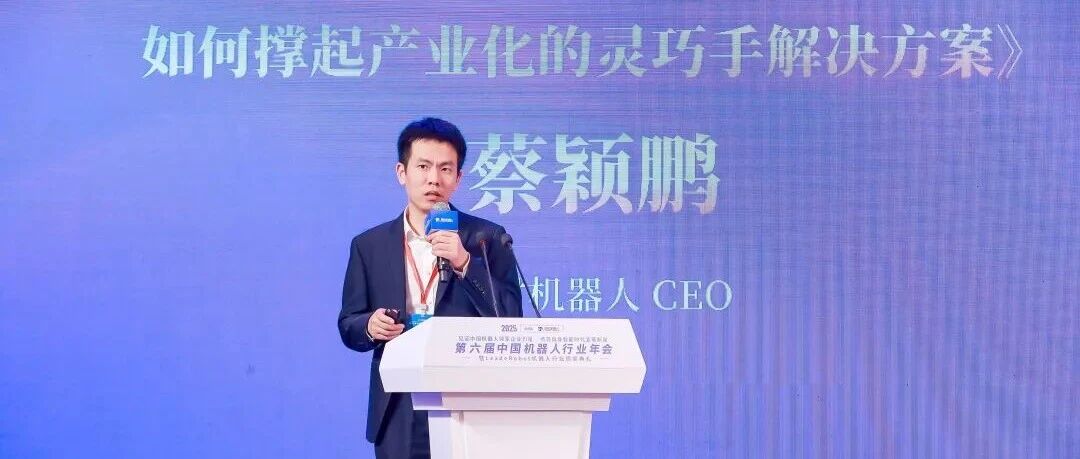
践行者说|蔡颖鹏:将“最难一厘米”拆解为模块,穿越灵巧手的量产深水区
机器人大讲堂· 2025-12-26 00:00
Core Insights - The sixth China Robot Industry Annual Conference was held in Hangzhou, gathering over 2,000 industry experts and entrepreneurs to discuss the future of robotics technology and business [1] - The focus of this report is on the insights shared by Cai Yingpeng, CEO of Yinshi Robotics, regarding the challenges and solutions in the industrialization of dexterous hands [3][4] Group 1: Challenges in Dexterous Hand Development - Cai Yingpeng highlighted that dexterous hands represent the "last centimeter" of value realization in humanoid robots, which is also the most challenging aspect for mass production [3][7] - The industry faces a "cost, performance, and reliability" triangle, where achieving success in industrialization requires addressing these interrelated challenges [7] - The cost considerations extend beyond manufacturing to include usage and maintenance costs, emphasizing the need for modular designs that allow users to easily replace and upgrade components [7][8] Group 2: Modular Design Solutions - Yinshi Robotics has adopted a unique approach since its establishment in 2016, focusing on a universal modular design that integrates the micro servo cylinder as a standardized "bionic muscle" module [8][10] - This modular design allows for compatibility with various technical routes, enabling the development of dexterous hands that can achieve high load capacity and precision for industrial applications [10][11] - The design simplifies the processes of design, manufacturing, and maintenance, improving cost-effectiveness and reliability [11] Group 3: Innovations in Sensor Technology - The design philosophy extends to sensor technology, where tactile sensors are created as easily replaceable standard modules, addressing power supply, communication, and environmental protection issues [12] - A fusion of tactile and force sensors is employed to achieve adaptive force control across a range of tasks, from precision assembly to heavy object handling [12] Group 4: Market Validation and Growth - The micro servo cylinder has applications beyond robotics, including in high-end manufacturing and medical robotics, which validates its mass production and quality control in more demanding markets [14] - Yinshi Robotics has seen accelerated growth in delivery volumes, with a cumulative delivery of 1,000 units from 2016 to 2023, and projections of 2,000 units in 2024 and over 10,000 units in 2025 [14] - The company serves over 700 clients across various sectors, including education, industry, commerce, and healthcare, demonstrating the effectiveness of its modular approach [14][18]
共赴产业新程!北京市机器人产业协会成立大会邀您见证未来
机器人大讲堂· 2025-12-25 06:40
Core Viewpoint - The establishment of the Beijing Robot Industry Association aims to accelerate innovation and collaboration within the robot industry, aligning with the "Beijing Robot Industry Innovation Development Action Plan (2023-2025)" [1][5]. Group 1: Association Establishment - The Beijing Robot Industry Association will serve as a bridge between the government and member units, focusing on policy research, industry data analysis, and providing decision-making support for enterprises [5]. - The association will organize industry exchange activities and exhibitions to promote collaboration and market expansion within the robot industry [5]. Group 2: Policy Interpretation - The conference will feature a policy interpretation session that covers city-level and regional policies, focusing on technology innovation, funding support, and talent cultivation [6]. - Various district representatives will explain their respective robot industry innovation policies to help enterprises and practitioners seize development opportunities [6]. Group 3: Expert Insights - Industry experts will share insights on current trends, key innovations, and practical applications in the robot industry, providing guidance for future development [7]. - The reports will focus on the evolution of embodied intelligence and the challenges faced, helping practitioners understand industry trends and technological bottlenecks [7][8]. Group 4: Event Details - The inaugural meeting of the Beijing Robot Industry Association is scheduled for December 26, 2025, at the Kexing Laifucheng Auditorium in Changping District, Beijing [10][11].

共赴具身未来!2025全球具身智能机器人前沿技术与产业生态合作论坛即将启幕
机器人大讲堂· 2025-12-25 06:40
随着人工智能技术加速渗透千行百业,具身智能作为实现人与物 理世界自然交互的核心技术,正成为驱动产业变革的关键引擎,发展 前景尤为广阔。珞石机器人作为全球智能机器人领域的创新领导者, 始终以技术创新为核心,携手产学研各界协同发力,为全球智能制造 的转型升级提供关键力量。 在当前人工智能与机器人技术深度融合的背景下, 路石机器人隆 重举办"具身跃迁·生态共荣'一一2025全球具身智能机器人前沿技术 与产业生态合作论坛"。本次论坛将汇聚全球学术权威与产业先锋领 袖,通过主题演讲、圆桌对话等形式,聚焦具身智能的技术突破、场 景落地与生态协同等关键议题,共同探索智能变革前沿,共建开放包 容、可持续发展的全球具身智能生态体系。 As Al permeates all industries, embodied intelligence enables natural human-physical interaction and emerges as a key engine for industri- al transformation with broad prospects. As a global intellige ...
免费领取 |《2025中国机器人行业年刊》电子版发布,全景洞察产业未来
机器人大讲堂· 2025-12-25 06:40
Core Insights - The article highlights the significant achievements of China's robotics industry in 2025, marking a transition from "small to large" and establishing a complete industrial chain system [1] - The "2025 China Robotics Industry Yearbook" has been compiled to provide a comprehensive overview of the industry's development and future direction, serving as a reliable reference for stakeholders [1] - The yearbook is available in both physical and electronic formats, with the electronic version being offered for free to readers [1][2] Policy Section - The yearbook systematically reviews national and local policies supporting the robotics industry, emphasizing the alignment of national strategies with local actions [8] - Key policies include the inclusion of "embodied intelligence" in the 2025 Government Work Report and the identification of intelligent robots as a focus area in the "Artificial Intelligence +" initiative [8] Technology Section - The yearbook focuses on breakthroughs in robotics technology, showcasing significant advancements such as real-time autonomous decision-making algorithms and the development of biohybrid robots [10] - Innovations like the "embodied intelligence base" are highlighted, which allow robots to learn and adapt in simulated environments [10] Market Section - The robotics market in China is projected to grow significantly, with the industrial robot market expected to reach approximately 68.426 billion yuan, reflecting an 11.9% growth rate by 2025 [12] - The humanoid robot market is anticipated to reach 8.239 billion yuan, accounting for 61% of the global market share [12] Industry Section - The yearbook documents the historical progress of the robotics industry in 2025, marking it as the "year of mass production" for humanoid robots [14] - The industry is characterized by the integration of embodied intelligence across various sectors, enhancing robots' capabilities in non-standard tasks and dynamic processes [14] Company Section - The yearbook features over 60 outstanding companies in various robotics fields, including humanoid robots, embodied intelligence, and core components, showcasing a vibrant and competitive industry landscape [16] - Companies range from publicly listed firms to innovative startups, covering the entire supply chain from R&D to system solutions [16] Financial Section - The yearbook reports a robust investment landscape in the robotics sector, with 574 disclosed financing events totaling over 50.4 billion yuan in 2025, marking an 18.6% increase from 2024 [18] - Investment trends indicate a dual focus on early-stage funding and significant late-stage financing events, particularly in core components and humanoid robots [18] Trend Section - The yearbook provides forward-looking insights into the robotics industry, predicting trends such as technological integration, product intelligence, and the emergence of new application scenarios [20] - The industry is expected to play a crucial role in global technological competition, driven by advancements in embodied intelligence and responses to demographic changes [20]
登顶T-RO!中大团队提出PTSS-ZND模型,实现连续体机器人预设时间高精度控制
机器人大讲堂· 2025-12-24 10:42
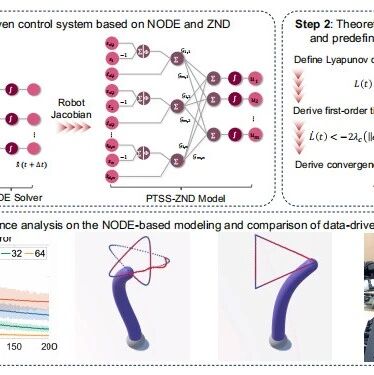
针对这些痛点,来自 中山大学计算机学院谭宁老师团队 了一套创新解决方案 : 将神经常微分方程( NODE)的数据高效建模能力与预设时间同步稳定归零神经动力学(PTSS-ZND)模型的可靠控制特性相结 合,构建出兼具高效性与稳定性的新型控制系统。 这一成果已被国际顶级期刊《 IEEE Transactions on Robotics》录用,为连续体机器人技术的突破奠定了基础。 在仿生机器人的前沿探索中,连续体机器人已成为一个备受瞩目的新兴领域,代表着当前技术创新的一个重要 前沿方向。 连续体机器人的设计灵感源自自然界中的软体生物,如象鼻、章鱼触手和蛇类。与传统由刚性连杆和明确关节 组成的机器人不同,连续体机器人全身柔软可弯曲,能在三维空间中连续变形。这种特性赋予了它们无与伦比 的灵活性:可以挤过比自身直径更窄的空间,能安全地与脆弱物体或人类互动,且易于微型化。 但这份 "柔性优势" 背后,是巨大的技术挑战。传统机器人的运动规律可以通过刚体力学精确描述,而连续体 机器人的形变过程涉及复杂的力学耦合,如同用数学公式描述水流的任意形态,难度极大。 早期,工程师们采用 "分段常曲率假设" 建模,将机器人近似为一系列弯曲 ...
会议通知(第二轮)| 医工融合分会2025年学术年会暨医工融合大湾区创新发展大会
机器人大讲堂· 2025-12-24 10:42
Core Viewpoint - The integration of medical and engineering fields is becoming a key driver for breakthroughs in high-end medical equipment and biopharmaceutical innovation, particularly in Zhuhai, which is positioned as a strategic hub in the Guangdong-Hong Kong-Macao Greater Bay Area [2]. Event Details - The "Medical-Engineering Integration Annual Conference 2025" will be held from December 26 to 28, 2025, in Zhuhai, Guangdong, aiming to promote high-quality development in the medical-engineering integration sector [2]. - The conference theme is "Jointly Inviting the Bay Area: Medical-Engineering Integration to Inspire the Future," focusing on creating a resource platform for collaboration among government, associations, hospitals, universities, research institutions, investment entities, and enterprises [2]. Organizing Institutions - The conference is guided by the China Medical and Health Culture Association and organized by Beijing Institute of Technology (Zhuhai), Zhuhai Health Bureau, and the Medical-Engineering Integration Branch of the China Medical and Health Culture Association [3]. Conference Highlights - The event will feature top scholars and industry leaders sharing insights on cutting-edge research and industry trends, fostering a collaborative ecosystem for project signing and talent introduction [60]. - A dedicated Zhuhai Medical-Engineering Integration Liaison Office will be established to provide ongoing support and services, including policy consultation and funding connections [60]. Main Content - The agenda includes leadership speeches, high-quality thematic forums, academic dialogues, and an award ceremony for outstanding orthopedic innovation projects [61]. - Resource matching sessions will be organized, including project roadshows and expert evaluations, along with site visits to local leading enterprises [61]. - Policy and service promotion will cover key industry policies in biomedicine, high-end medical equipment, and artificial intelligence [61].