Sinopec Corp.(00386)

Search documents
2026年央企重组“第一枪”打响 中国石化与中国航油两大集团实施重组
Shang Hai Zheng Quan Bao· 2026-01-08 16:49
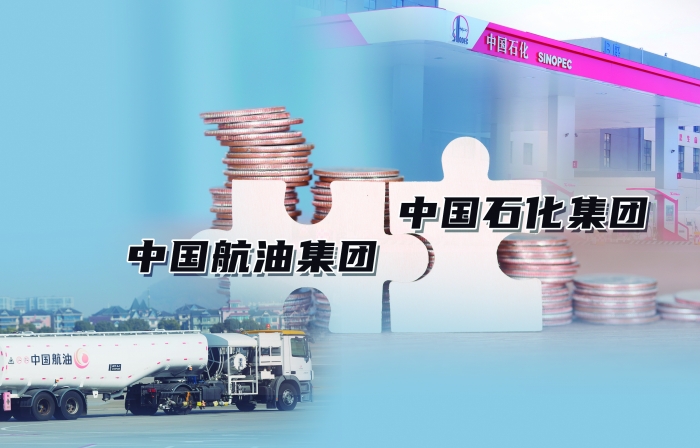
◎记者 王子霖 据1月8日国务院国资委官网消息,经报国务院批准,中国石油化工集团有限公司(简称"中国石化集 团")与中国航空油料集团有限公司(简称"中国航油集团")实施重组。本次"强强联合",有望助力降 低航空燃料供应成本,增强我国航空燃料产业竞争力,促进航空业绿色低碳转型。 两大石油央企集团"强强联合" 事实上,2025年11月,本次重组已被中国航油集团旗下在新加坡交易所上市的中国航油(新加坡)股份 有限公司的一则公告"剧透"。不过,彼时的公告并未披露另一家重组方,只提到中国航油集团将与另一 家企业集团进行重组。 "中国石化集团与中国航油集团的重组符合近年来国企改革聚焦主责主业、通过整合提升核心竞争力的 整体方向,其目的在于优化国有资本布局,避免同质化竞争。"中国企业改革与发展研究会研究员周丽 莎表示,处于航空燃料产业链下游关键环节的中国航油集团,拥有覆盖全国运输机场及航空客户的销售 网络,这确保了其航油产品的稳定销售。通过重组实现"炼油—分销"一体化,有助于增强我国航油供应 链的稳定性与议价能力。 郭晨凯 制图 据1月8日国务院国资委官网消息,经报国务院批准,中国石化集团与中国航油集团实施重组。从供应链 ...

刚刚!国务院批准:中国石化、中国航油,重组
DT新材料· 2026-01-08 16:05
Core Viewpoint - The restructuring of Sinopec and China National Aviation Fuel is expected to enhance the resilience of the aviation fuel industry chain and ensure energy security for the aviation sector in China [1][2]. Group 1: Industry Overview - China National Aviation Fuel is the largest aviation fuel service provider in Asia, involved in procurement, transportation, storage, testing, sales, and refueling [1]. - Sinopec is the world's largest refining company and the leading aviation fuel producer in China [1]. Group 2: Market Potential - According to S&P, China's aviation fuel consumption is projected to grow from 39.28 million tons in 2024 to 75 million tons by 2040 [3]. - The merger will leverage integrated refining and aviation fuel supply systems to reduce intermediate links and lower supply costs, thereby strengthening energy security for the aviation industry [3]. Group 3: Competitive Landscape - Major international aviation fuel service providers include integrated oil and petrochemical companies like Shell, BP, ExxonMobil, and Total, which have significant advantages in scale, product quality, and infrastructure [4]. - The current production, sales, and refueling of aviation fuel in China are fragmented among different companies, which limits overall competitiveness compared to large international players [5]. Group 4: Sustainable Development - The merger is also expected to promote the high-quality development of sustainable aviation fuel (SAF), which is recognized as a key route for reducing carbon emissions in the aviation sector [6]. - Sinopec is one of the earliest companies in China to have SAF production capabilities, while China National Aviation Fuel plays a crucial role in the promotion and application of SAF [6].
中国石化与中国航油实施重组:超级航母即将诞生
Sou Hu Cai Jing· 2026-01-08 15:54
Core Viewpoint - The strategic merger between China Petroleum & Chemical Corporation (Sinopec) and China National Aviation Fuel Group (China Aviation Fuel) aims to create a comprehensive "super aircraft carrier" that integrates the entire aviation fuel supply chain, enhancing competitiveness and promoting green transformation in the aviation fuel industry [2][5][8] Group 1: Strength of the Companies - Sinopec is the world's largest refining company and China's top aviation fuel producer, with a registered capital of 326.5 billion RMB and a market capitalization of 689.8 billion RMB as of the merger announcement [3] - China Aviation Fuel is Asia's largest integrated aviation fuel service provider, covering procurement, transportation, storage, testing, sales, and refueling, serving 585 global airline customers [3] Group 2: Motivation for the Merger - The merger is driven by strong market demand and the complementary strengths of both companies, with global aviation fuel demand projected to reach 389 million tons by 2025, a 3.9% increase [4] - The merger aims to streamline operations, allowing Sinopec's aviation fuel to reach end customers directly through China Aviation Fuel's network, thus maximizing the value of the supply chain [4] Group 3: Strategic Value - The merger supports the low-carbon development of China's aviation industry, with Sinopec making significant advancements in sustainable aviation fuel (SAF), which can reduce carbon emissions by over 50% compared to traditional aviation fuel [5] - The integration enhances China's competitive position in the global aviation fuel market, which is currently dominated by companies like Shell and BP, by creating a unified operational capability across the entire aviation fuel supply chain [6] Group 4: Multi-Dimensional Impact - The merger is expected to lower aviation fuel costs, alleviating financial pressure on airlines and promoting healthier industry development [7] - Consumers will benefit from improved service reliability and potentially lower travel costs due to optimized operational efficiencies [7] - The combined asset quality and profitability of the merged entity will provide a more attractive investment opportunity in the capital market, enhancing the recognition of state-owned capital [7] Group 5: Industry Restructuring - The merger signifies a new era of collaborative development in China's aviation fuel industry, positioning it as a core force in high-quality energy development and global competition [8] - The integration is expected to enhance the efficiency of state capital allocation and strengthen China's international influence in the aviation fuel sector [8]
A股晚间热点 | 重磅催化!中国石化、中国航油官宣重组 有何影响?
智通财经网· 2026-01-08 15:30
Group 1 - China Petroleum and Chemical Corporation (Sinopec) and China Aviation Oil Group announced a restructuring approved by the State Council, aimed at enhancing competitiveness in the aviation fuel industry and supporting green transformation efforts [1] - Guangzhou plans to establish itself as a new hub for commercial aerospace by 2035, focusing on reusable rocket technology and leveraging local testing facilities [1] Group 2 - The Ministry of Industry and Information Technology (MIIT) held a meeting with 16 major companies in the lithium battery sector to address irrational competition and regulatory compliance [2] - The Ministry of Commerce responded to inquiries regarding the review of Meta's acquisition of the AI platform Manus, emphasizing adherence to Chinese laws and regulations for cross-border investments [3] Group 3 - The market regulator reported a significant drop in polysilicon futures, with a 9% decline, following a meeting addressing monopoly risks in the photovoltaic sector [4] - Hong Kong's stock market experienced a downturn, with Goldman Sachs indicating that while a bull market may continue until 2026, the momentum is expected to slow down [6] Group 4 - OpenAI launched ChatGPT Health, targeting the healthcare market, which has seen over 230 million health-related inquiries weekly, highlighting the demand for AI in healthcare [9] - The semiconductor industry is expected to continue its supercycle until 2027, driven by persistent demand for AI technologies [11]

两大能源央企重组 专家看好协同效应
Shang Hai Zheng Quan Bao· 2026-01-08 15:22
Core Viewpoint - The merger between China Petroleum & Chemical Corporation (Sinopec) and China Aviation Oil Group aims to create a comprehensive aviation fuel supply system, enhancing energy security, international competitiveness, and green transformation capabilities while optimizing state-owned capital allocation [1][4]. Group 1: Company Overview - Sinopec is the world's largest refining company and China's largest aviation fuel producer, while China Aviation Oil Group is Asia's largest aviation fuel service provider [1][3]. - Sinopec is a major integrated energy and chemical group, being the largest supplier of refined oil and petrochemical products in China, with the second-largest number of gas stations globally [3]. - China Aviation Oil Group provides fuel supply services to 258 transport airports and 454 general airports in China, serving 585 global airline customers [3]. Group 2: Strategic Significance of the Merger - The merger is seen as a significant step in advancing strategic restructuring and professional integration among central enterprises, enhancing national aviation energy supply security and promoting green low-carbon transformation [4][5]. - The integration is expected to create synergies that will enhance the overall competitiveness of both companies [4]. Group 3: Sustainable Aviation Fuel (SAF) Development - SAF is recognized as a mainstream route for decarbonizing the aviation industry, with the International Air Transport Association (IATA) estimating that SAF will contribute 65% of carbon reductions needed for the aviation sector to achieve carbon neutrality by 2050 [7]. - Sinopec has developed its own bio-jet fuel technology and has established a production facility with an annual capacity of 100,000 tons, which can utilize waste cooking oil, significantly reducing carbon emissions [8][9]. - The merger is expected to enhance the research and development, industrialization capabilities, and international trade advantages in the SAF sector, promoting high-quality development of the industry chain [9].
两大央企重组,影响多大?最新解读来了
券商中国· 2026-01-08 14:58
Core Viewpoint - The merger between China Petroleum & Chemical Corporation (Sinopec) and China Aviation Oil Group aims to enhance national aviation energy supply security, promote green and low-carbon transformation in aviation energy supply, and establish a world-class aviation energy supplier [1][2]. Group 1: Company Overview - Sinopec is the largest refined oil and petrochemical product supplier in China, the world's largest refining company, and the second-largest chemical company, with a comprehensive energy industry chain [2]. - China Aviation Oil is the largest integrated aviation fuel service provider in Asia, involved in procurement, transportation, storage, testing, sales, and refueling of aviation fuel [2]. Group 2: Market Potential - The demand for aviation kerosene in China is projected to reach approximately 50 million tons by 2030, with an average annual growth rate of around 4% during the 14th Five-Year Plan period [2]. - According to S&P forecasts, China's aviation fuel consumption is expected to grow to 75 million tons by 2040 [2]. Group 3: Synergies and Competitive Position - The merger is expected to create significant synergies by leveraging integrated refining and aviation fuel supply systems, reducing intermediate links, and lowering supply costs [3]. - Currently, China's aviation fuel production, sales, and refueling operations are fragmented across different companies, which limits overall competitiveness compared to international integrated oil and gas companies [3]. Group 4: Green Transformation - The merger will facilitate the high-quality development of sustainable aviation fuel (SAF) industry, with Sinopec being the first in Asia to have independent R&D and commercial production of bio-jet fuel [3]. - China Aviation Oil plays a crucial role in the promotion and ecological construction of SAF, and the merger will enhance collaboration in this area [3]. Group 5: Strategic Context - This merger marks the first central enterprise-level restructuring case entering the 14th Five-Year Plan, aligning with the government's push for strategic and professional mergers and acquisitions [4]. - The State-owned Assets Supervision and Administration Commission (SASAC) emphasizes the importance of integrating key technologies, market channels, and strategic resources through mergers [4].

中国石化中航油官宣重组,抢占绿色航空战略高地
中国能源报· 2026-01-08 14:38
Core Viewpoint - The merger between China Petroleum & Chemical Corporation (Sinopec) and China Aviation Oil Group (CAOG) represents a historic collaboration between the world's largest refining company and Asia's largest aviation fuel service provider, aiming to create a more efficient aviation fuel supply chain and support the green transformation of the aviation industry [1][3]. Group 1: Merger Overview - The merger was approved by the State Council on January 8, marking a significant step in integrating the aviation fuel supply chain from crude oil refining to airport fueling [1]. - Sinopec is the leading supplier of aviation kerosene in China, with a production exceeding 26 million tons in 2023, while CAOG dominates the aviation fuel procurement, storage, and distribution across major airports [3]. Group 2: Strategic Implications - The integration aims to eliminate intermediate links, allowing Sinopec's aviation kerosene products to enter the market more efficiently, thus reducing supply costs and enhancing operational efficiency [4]. - The merger aligns with the State-owned Assets Supervision and Administration Commission's directive for state-owned enterprises to focus on their core businesses and achieve resource integration [3]. Group 3: Green Aviation Fuel Focus - The collaboration is not only about current supply chain security but also positions both companies to embrace the future of sustainable aviation fuel (SAF), which is expected to grow significantly in the coming years [5][6]. - The target for blending biofuels in aviation has been raised from 2% to 5%, indicating a strong commitment to reducing carbon emissions in the aviation sector [6]. Group 4: Industry Impact - The merger is expected to reshape the competitive landscape of the aviation fuel market in China, compelling other state-owned and private refining companies to seek new differentiation strategies or collaborative models [10]. - The combined entity will leverage its scale and position to lead the green transformation of the aviation fuel market, emphasizing the importance of resource control and green technology in future energy competition [10].

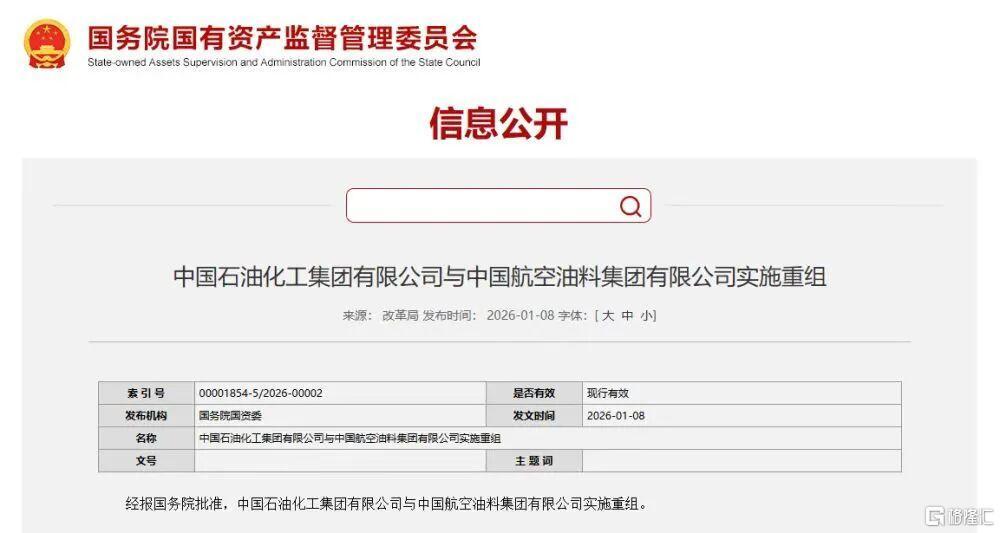
经报国务院批准,中国石油化工集团有限公司与中国航空油料集团有限公司实施重组
Ge Long Hui· 2026-01-08 14:26
(责任编辑:宋政 HN002) 【免责声明】本文仅代表作者本人观点,与和讯网无关。和讯网站对文中陈述、观点判断保持中立,不对所包含内容 的准确性、可靠性或完整性提供任何明示或暗示的保证。请读者仅作参考,并请自行承担全部责任。邮箱: news_center@staff.hexun.com 格隆汇1月8日|经报国务院批准,中国石油化工集团有限公司与中国航空油料集团有限公司实施重组。 ...

两大央企重组获批,新“巨无霸”诞生了!
Ge Long Hui· 2026-01-08 14:25
Core Viewpoint - The restructuring of China Petroleum & Chemical Corporation (Sinopec) and China Aviation Oil Group has created a super energy entity, significantly reshaping the aviation fuel industry in China [1][3]. Group 1: Company Overview - Sinopec is the world's largest refining company and the leading aviation fuel producer in China, controlling 40% of domestic aviation fuel production capacity and having technological advantages in sustainable aviation fuel (SAF) [3]. - China Aviation Oil is Asia's largest aviation fuel service company, monopolizing 95% of the aviation fuel sales network and providing a comprehensive supply chain from procurement to airport refueling [3]. - The merger transforms the relationship between the two companies from "buyer and seller" to a unified entity, streamlining the production and refueling process [3]. Group 2: Market Context - Global aviation fuel demand is projected to reach 389 million tons in 2025, with a year-on-year growth of 3.9%, while domestic demand is expected to exceed 40 million tons during the 14th Five-Year Plan period, with an average annual growth rate of 4% [5]. - The restructuring addresses key bottlenecks in the industry, such as redundancy in intermediate links and high costs, which have hindered development [5]. Group 3: Strategic Implications - This restructuring is part of a broader trend of professional integration among state-owned enterprises, with six groups of ten companies having undergone strategic mergers during the 14th Five-Year Plan [5]. - The merger is expected to enhance the efficiency of state capital allocation and position China's aviation fuel industry to compete with international giants like Shell and ExxonMobil [5]. Group 4: Impact on A-shares - Two types of stocks are highlighted for attention: Sinopec, which will benefit from stable aviation fuel sales and high-value-added business opportunities, and sustainable aviation fuel (SAF) concept stocks, such as HXN Energy and Longkun Environment, which will benefit from the merger's acceleration of SAF promotion [5].
两大能源央企官宣重组 业内:旨在打造“从炼厂到机翼”全链条一体化
Mei Ri Jing Ji Xin Wen· 2026-01-08 14:24
Group 1 - The core point of the news is the restructuring of China Petroleum & Chemical Corporation (Sinopec) and China Aviation Oil Group, which aims to create an integrated supply chain from refining to aviation, enhancing supply stability and efficiency in the oil and gas industry [2][3] - Sinopec is the largest supplier of refined oil and petrochemical products in China, and the world's largest refining company, while China Aviation Oil Group is the largest aviation fuel supplier in Asia, providing services to 258 transportation airports and 454 general airports in China [2] - The restructuring is expected to reduce intermediate trade and coordination costs, potentially alleviating the financial pressure on airlines, as aviation fuel accounts for about one-third of airline costs [3] Group 2 - The integration will enhance the resilience and response speed of the supply chain, addressing challenges such as extreme weather and geopolitical conflicts, thereby supporting the safe operation of the civil aviation system [3] - The move is also seen as a way to optimize state-owned capital layout, avoid homogeneous competition, and create a modern energy enterprise that can compete with international giants like Shell and BP, thereby increasing global market share and pricing power [3] - Sinopec has been actively developing sustainable aviation fuel (SAF) opportunities, having established China's first large-scale industrial facility for bio-jet fuel production, which has already been utilized in domestic and international flights [4][5]