CHINA TELECOM(00728)

Search documents
智慧监管能力获认可,中国电信翼支付参与国务院国资委穿透式监管课题研究
Di Yi Cai Jing· 2025-12-16 10:14
Core Viewpoint - The State-owned Assets Supervision and Administration Commission (SASAC) of the State Council is conducting research on enhancing the penetrating supervision of state-owned enterprises, with China Telecom's Yipay participating as a key support unit, showcasing its capabilities in digital technology for intelligent regulatory transformation [1][2]. Group 1: Research and Development - China Telecom's Yipay has formed a specialized research team that integrates data, technology, and business fields to support the development of a penetrating supervision system [2]. - The research focuses on two main directions: "system construction" and "data responsibility," aiming to create a systematic implementation plan for intelligent penetrating supervision [2]. Group 2: Implementation Pathway - The "Yufeng" platform is developed based on research and practice, featuring a six-step implementation path that includes organizational support, top-level design, infrastructure preparation, data foundation construction, model platform development, and operational supervision [3]. - The platform aims to address governance challenges by providing a real-time, automated warning system for penetrating supervision [3]. Group 3: Technological Capabilities - The "Yufeng" platform operates on a data-driven, risk-insight, and intelligent supervision philosophy, featuring a core architecture that enables comprehensive risk visibility and intelligent early warning [5]. - It has the capacity to process EB-level massive data, integrating over 300 million business entities and more than 2 billion relational data points, significantly enhancing model inference speed by up to 6.5 times [5]. Group 4: Practical Outcomes and Recognition - The "Yufeng" platform has received multiple authoritative recognitions, including being selected as a high-value scenario for artificial intelligence by SASAC and winning the Wu Wenjun Artificial Intelligence Science and Technology Progress Award [6]. - The platform has effectively improved risk prevention capabilities for over 30 central enterprises, addressing key risk scenarios such as illegal affiliations and false trade [6].


2025年中国无线通信系统行业发展历程、产业链、发展现状、重点企业经营情况及趋势研判:5G部署与应用深化发展,驱动无线通信系统规模超万亿元[图]
Chan Ye Xin Xi Wang· 2025-12-16 01:25
Core Insights - The Chinese wireless communication system industry is transitioning from scale construction to a critical phase of quality and efficiency enhancement, focusing on network capability improvement, cost reduction, and deeper integration with industrial manufacturing and smart energy sectors [1][12] - The market size is projected to grow from 1.5 trillion yuan in 2020 to 2.35 trillion yuan in 2024, with a compound annual growth rate (CAGR) of 11.92% [1][12] - The ongoing commercialization of 5G-A and continuous research and development of 6G will further release new technological dividends, solidifying the industry's role as a key infrastructure for the digital economy [1][12] Industry Overview - Wireless communication systems utilize radio waves for information transmission without wired connections, enabling mobile communication, remote control, and sensor networks [3][5] - The industry encompasses various applications, including mobile communications, television broadcasting, satellite navigation, smart homes, and industrial automation [3][5] Industry Development History - The wireless communication industry began with Guglielmo Marconi's invention of radio communication in 1895, evolving through significant milestones such as the introduction of mobile phone services in 1946 and the development of 5G technology [7][8] Industry Chain - The industry chain consists of upstream components like baseband chips and RF chips, midstream production processes, and downstream applications in mobile communication, broadcasting, and automation [8][10] Current Industry Status - The industry is driven by the large-scale deployment of 5G technology, the acceleration of industrial internet penetration, and the expansion of IoT applications, with a total of 475.8 million 5G base stations expected by October 2025 [11][12] - As of October 2025, the number of 5G mobile phone users is projected to exceed 1.184 billion, indicating strong consumer demand for high-speed wireless services [11][12] Key Enterprises - Major players in the industry include China Mobile, China Telecom, and China Unicom, which dominate the market due to their extensive network coverage and user base [13][14] - Companies like Dafeng Technology, Wuhan Fangu, and Sanwei Communication are also significant contributors, focusing on RF devices and network optimization [13][14] Future Trends - The industry is expected to see deeper integration of communication technology with AI and computing, transforming wireless networks into intelligent systems capable of real-time environmental sensing and distributed computing [17][18] - The network architecture will evolve towards a more integrated and elastic model, combining satellite and ground networks for seamless global coverage [18] - The focus will shift from technical capability to value creation, embedding network capabilities into various industries such as industrial internet and smart energy [19]



智通港股通持股解析|12月16日
智通财经网· 2025-12-16 00:37
根据2025年12月15日披露数据,中国电信(00728)、绿色动力环保(01330)、大眾公用(01635)位 居港股通持股比例前3位,分别为72.41%、70.03%、69.99%。此外,小米集团-W(01810)、招商银 行(03968)、美团-W(03690)在最近有统计数据的5个交易日内,持股额增幅最大,分别为+21.69亿 元、+19.12亿元、+10.96亿元;盈富基金(02800)、中芯国际(00981)、中国海洋石油(00883)在最 近有统计数据的5个交易日内,持股额减幅最大,分别为-15.25亿元、-9.34亿元、-7.82亿元。 具体数据如下(交易所数据根据T+2日结算): 1、港股通最新持股比例排行(前20名) | 公司名称 | 持股数量 | 最新持股比例 | | --- | --- | --- | | 中国电信(00728) | 100.50亿股 | 72.41% | | 绿色动力环保(01330) | 2.83亿股 | 70.03% | | 大眾公用(01635) | 3.74亿股 | 69.99% | | 凯盛新能(01108) | 1.70亿股 | 68.03% | | 天津 ...



6G传输系统原型样机发布 八只概念股研发投入高
Zheng Quan Shi Bao· 2025-12-15 18:27
Core Insights - China Mobile has officially released the "China Mobile 6G Transmission Technology White Paper" and the "China Mobile 6G Transmission System Prototype 1.0," outlining its vision, architecture, and key technology directions for 6G networks [1][2] - The prototype marks a transition from theoretical research to system validation, laying a crucial foundation for future technological iterations and industry collaboration [2] - The Chinese government and local policies are increasingly supporting the development of the 6G industry, with a projected market size of 1.3 trillion yuan by 2030, making it the largest 6G market globally [2] Industry Developments - Major telecom operators in China, including China Telecom and China Unicom, are accelerating their 6G technology research, focusing on areas such as semantic communication and low-orbit satellite testing [2][3] - The 6G industry is entering a golden development period, supported by national strategies and local policies aimed at fostering future industries [2] Market Performance - A total of 34 A-share stocks are categorized as 6G concept stocks, with an average increase of 8.15% since December, highlighting investor interest [3] - Companies like Zhenlei Technology and Tongyu Communication have seen significant stock price increases, with Zhenlei Technology rising by 61.18% [3] Financial Metrics - Zhenlei Technology reported a revenue of 302 million yuan for the first three quarters of the year, a year-on-year increase of 65.76%, and a net profit of 101 million yuan, up 598.09% [3] - Eight 6G concept stocks have invested over 10% of their revenue in R&D, indicating a strong commitment to innovation [3] Institutional Attention - Since the second half of the year, 12 6G concept stocks have attracted significant institutional attention, with companies like Yiyuan Communication and Tongyu Communication receiving extensive research coverage [4] - Yiyuan Communication is actively involved in standardization and cutting-edge research, contributing to the development of 5G standards and focusing on key technologies for 6G [4]


中国电信接待9家机构调研,包括中金公司、华泰证券、摩根士丹利等
Jin Rong Jie· 2025-12-15 10:43
Core Viewpoint - China Telecom is upgrading its strategy from "cloud transformation and digitalization" to "cloud transformation, digitalization, and intelligence benefits," focusing on enhancing business value through artificial intelligence and digital infrastructure [1][5]. Group 1: Strategic Upgrades - The company aims to fully embrace next-generation artificial intelligence, placing it at the core of its strategy to enhance operational processes and empower various industries [3][5]. - China Telecom is focusing on four core technologies and seven strategic emerging fields, increasing investment to achieve significant results in areas like quantum communication and intelligent networking [3][4]. - The company plans to maintain stable basic business operations while simultaneously achieving breakthroughs in new strategic businesses, creating a new type of digital information infrastructure centered on cloud-network integration [4][6]. Group 2: Future Planning - The company has initiated the preparation of its "15th Five-Year Plan," emphasizing strategic upgrades, future industry layout, and strengthening technological innovation capabilities [6][7]. - Key areas of focus for the "15th Five-Year Plan" include enhancing strategic upgrades, laying out future industries, and reinforcing core technological capabilities [7][8]. - The company aims to maintain stable revenue and profit growth while enhancing the quality of revenue through digitalization, international business, and intelligent products [7][8]. Group 3: Intelligent Cloud Development - China Telecom's Tianyi Cloud has entered a new stage of intelligent cloud development, providing heterogeneous computing power services with a total scale of 85 EFLOPS across 18 provinces [2][10]. - The company has developed a Triless architecture for PaaS, which has been tested in multiple central enterprise projects, offering one-stop computing power scheduling and AI development services [10][11]. - The DaaS layer integrates various datasets to support national data infrastructure construction, while the SaaS layer has achieved a market-leading position with a 57.1% penetration rate in central enterprises [10][11].

信达证券:中国电信属较优质的派息股选择 评级为“买入”
Xin Lang Cai Jing· 2025-12-15 07:31
Group 1 - The core viewpoint of the report indicates that China Telecom (00728) achieved moderate growth in both revenue and profit in the first three quarters of 2025, although the profit growth rate slightly slowed in the third quarter [1][8] - For the first three quarters of 2025, the group's revenue increased by 0.6% year-on-year, with service revenue growing by 0.9%; EBITDA rose by 4.2%, and profit attributable to shareholders increased by 5.0% [2][9] - In the third quarter alone, the group's revenue decreased by 0.9% year-on-year, while service revenue grew by 0.5%; EBITDA increased by 2.4%, and profit attributable to shareholders rose by 3.6%, with the slowdown attributed to macroeconomic factors [2][9] Group 2 - The Tianyi Cloud business is in a transitional phase, with revenue growth slowing; in the first half of 2025, Tianyi Cloud's revenue was 57.3 billion RMB, a year-on-year increase of 3.8%, which is a deceleration compared to previous periods [3][10] - Management noted that the global cloud computing industry is undergoing a critical transition, with a significant decline in growth for general computing cloud services, while demand for AI-driven intelligent computing is very strong [3][10] - In the first three quarters of 2025, the group's intelligent revenue, including AI and intelligent computing services, grew by 62.3% year-on-year [3][10] Group 3 - The government is expected to encourage the application of AI-related cloud computing technologies during the 14th Five-Year Plan period, which may benefit Tianyi Cloud's business [3][11] - A significant portion of the group's enterprise clients are government-related entities, which tend to be conservative in adopting AI-related cloud computing technologies due to high security requirements [11] - The recent "14th Five-Year Plan" emphasizes improving technological self-reliance and innovation-driven development, indicating a focus on promoting technological innovation in the coming years [11] Group 4 - The rise in Chinese government bond yields has somewhat affected the attractiveness of high-dividend stocks, but the expectation is that there is limited room for further increases in bond yields [4][6] - The group's traditional mobile services and fixed broadband business remain stable, combined with healthy free cash flow and potential growth from AI-related cloud computing, positioning the group as a quality dividend stock choice [6][11]

信达证券:中国电信属较优质的派息股选择 评级为”买入”
Zhi Tong Cai Jing· 2025-12-15 07:01
Core Viewpoint - China Telecom (00728) is experiencing moderate growth in revenue and profit for the first three quarters of 2025, although the profit growth rate has slightly slowed in the third quarter. The Tianyi Cloud business is in a transitional phase, with a decline in general cloud computing revenue but a significant increase of 62.3% in intelligent computing-related revenue for the same period. Future government policies promoting technological innovation may encourage government and enterprise clients to adopt AI-related cloud computing, presenting opportunities for Tianyi Cloud. The recommendation rating is "Buy" [1]. Group 1 - In the third quarter of 2025, the group's profit maintained moderate growth, with a slight revenue increase of 0.6% year-on-year for the first three quarters, and service revenue growing by 0.9%. EBITDA increased by 4.2%, and profit attributable to shareholders rose by 5.0%. However, in the third quarter alone, revenue decreased by 0.9% year-on-year, with service revenue growing by 0.5%, EBITDA up by 2.4%, and profit attributable to shareholders increasing by 3.6%. The slowdown in profit growth is primarily influenced by macroeconomic factors [2]. Group 2 - Tianyi Cloud is in a transitional phase, with revenue growth slowing. In the first half of 2025, Tianyi Cloud's revenue was 57.3 billion RMB, reflecting a year-on-year growth of 3.8%, which is a deceleration compared to previous periods. Management indicated that the global cloud computing industry is undergoing a critical transition, with a significant decline in growth for general computing-based cloud services, while demand for AI-driven intelligent computing is robust. The intelligent revenue, including AI and intelligent computing services, grew by 62.3% year-on-year for the first three quarters of 2025 [3]. Group 3 - The government is expected to implement measures encouraging the application of AI-related cloud computing technologies during the 14th Five-Year Plan period. A significant portion of the group's enterprise clients are government-related entities, which tend to be conservative in adopting AI-related cloud computing due to high security requirements. The recent "14th Five-Year Plan" emphasizes improving technological self-reliance and innovation-driven growth, indicating that promoting technological innovation will be a government priority in the coming years, which could benefit Tianyi Cloud's business [4]. Group 4 - The upward potential for Chinese government bond yields is limited, making the group a relatively attractive dividend stock choice. Since the second half of the year, Chinese government bond yields have risen, somewhat affecting the appeal of high-dividend stocks. Given the current U.S. interest rate cut cycle and the state of the Chinese macroeconomy, further increases in government bond yields are not expected. The group's traditional mobile services and fixed broadband business remain stable, coupled with healthy free cash flow and potential growth from AI-related cloud computing, positioning the group as a quality dividend stock [5].
信达证券:中国电信(00728)属较优质的派息股选择 评级为”买入”
智通财经网· 2025-12-15 06:59
Core Viewpoint - China Telecom (00728) is experiencing moderate growth in revenue and profit for the first three quarters of 2025, although the profit growth rate has slightly slowed in the third quarter. The Tianyi Cloud business is in a transitional phase, with a decline in general cloud computing revenue but a significant increase of 62.3% in intelligent computing-related revenue for the same period. Future government policies promoting technological innovation may encourage government and enterprise clients to adopt AI-related cloud computing, presenting opportunities for Tianyi Cloud. The recommendation rating is "Buy" [1]. Group 1 - In the third quarter of 2025, the group's profit maintained moderate growth, with a slight revenue increase of 0.6% year-on-year for the first three quarters, and service revenue growing by 0.9%. EBITDA increased by 4.2%, and profit attributable to shareholders rose by 5.0%. However, in the third quarter alone, revenue decreased by 0.9% year-on-year, with service revenue growing by 0.5%, EBITDA up by 2.4%, and profit attributable to shareholders increasing by 3.6%. The slowdown in profit growth is primarily influenced by macroeconomic factors [2]. Group 2 - Tianyi Cloud is in a transitional phase, with revenue growth slowing down. In the first half of 2025, Tianyi Cloud's revenue was 57.3 billion RMB, reflecting a year-on-year growth of 3.8%, which is a deceleration compared to previous periods. Management indicated that the global cloud computing industry is undergoing a critical transition, with a significant decline in growth for general computing-based cloud services, while demand for AI-driven intelligent computing is robust. The intelligent revenue, including AI and intelligent computing services, grew by 62.3% year-on-year for the first three quarters of 2025 [3]. Group 3 - The government is expected to implement measures encouraging the application of AI-related cloud computing technologies during the 14th Five-Year Plan period. A significant portion of the group's enterprise clients are government-related entities, which tend to be conservative in adopting AI-related cloud computing due to high security requirements. The "14th Five-Year Plan" emphasizes improving technological self-reliance and innovation-driven development, indicating that promoting technological innovation will be a government priority in the coming years, which could benefit Tianyi Cloud's business [4]. Group 4 - The upward potential for Chinese government bond yields is limited, making the group a relatively attractive dividend stock choice. Since the second half of the year, Chinese government bond yields have risen, somewhat affecting the appeal of high-dividend stocks. Given the current U.S. interest rate cut cycle and the state of the Chinese macroeconomy, further increases in government bond yields are not expected to be significant. The group's traditional mobile services and fixed broadband business remain stable, coupled with healthy free cash flow and potential growth from AI-related cloud computing, positioning the group as a quality dividend stock [5].
央企ETF(159959)开盘跌0.33%,重仓股澜起科技跌2.02%,中芯国际跌1.41%
Xin Lang Cai Jing· 2025-12-15 03:47
Core Viewpoint - The Central Enterprise ETF (159959) opened at 1.530 yuan, experiencing a slight decline of 0.33% on December 15 [1] Group 1: ETF Performance - The Central Enterprise ETF's major holdings include companies such as 澜起科技 (Lianqi Technology), 中芯国际 (SMIC), and 海康威视 (Hikvision), with respective opening declines of 2.02%, 1.41%, and 0.71% [1] - The ETF's performance benchmark is the 中证央企结构调整指数 (CSI Central Enterprise Structural Adjustment Index), managed by 银华基金管理股份有限公司 (Yinhua Fund Management) [1] - Since its establishment on October 22, 2018, the ETF has achieved a return of 53.63%, while its return over the past month has been -3.61% [1] Group 2: Individual Stock Movements - Notable stock movements within the ETF include 国电南瑞 (Guodian NARI) increasing by 0.34%, 招商银行 (China Merchants Bank) remaining unchanged, and 宝钢股份 (Baosteel) decreasing by 0.56% [1] - Other stocks such as 中国神华 (China Shenhua) and 中国建筑 (China State Construction) also remained unchanged, while 长安汽车 (Changan Automobile) and 中国电信 (China Telecom) saw declines of 0.77% and 0.15%, respectively [1]




临沂联通电信合作,5G RedCap技术填补山区信号盲区
Qi Lu Wan Bao· 2025-12-15 03:01
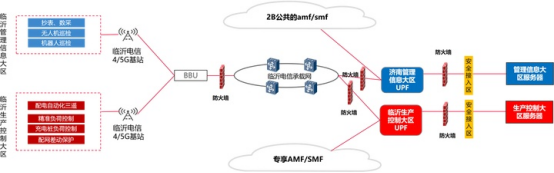
Core Viewpoint - The collaboration between Linyi Unicom and Linyi Telecom has successfully implemented the first commercial use of 5G RedCap technology based on the 800M frequency band in the province, addressing network coverage challenges in rural areas and marking a significant step towards deeper business integration through resource sharing [1][2]. Group 1: Technological Innovations - The integration of the 800M frequency band's wide coverage with Unicom's 5G RedCap technology has led to three major breakthroughs: filling signal blind spots in remote mountainous areas, avoiding redundant construction of L900 frequency band base stations, and meeting the low latency and high reliability requirements of the power industry for dedicated networks [2]. - The establishment of a joint task force by both companies aims to overcome technical barriers related to network slicing and transmission optimization, ensuring seamless integration with the national power grid's 5G dedicated network [2]. Group 2: Cost Efficiency and Resource Optimization - By sharing existing telecom resources, Linyi Unicom has avoided the need to upgrade the 900 frequency band and deploy RedCap licenses, significantly reducing costs associated with hardware procurement, software licensing, and base station modifications [4]. - The shared model is expected to lower both construction and operational costs while enhancing customer satisfaction through improved fault response and business continuity [4]. Group 3: Impact on Rural Development - The innovative practices of Linyi Unicom and Telecom are set to drive the growth of IoT connections in rural areas, supporting the implementation of the rural revitalization strategy and addressing the digital divide [4].