CCB(00939)

Search documents
建行德州电厂支行:危急时刻的“守护者”,用责任显担当
Qi Lu Wan Bao· 2025-09-22 09:07
Core Points - The article highlights a successful intervention by a bank employee to prevent a customer from falling victim to a telecom fraud scheme, showcasing the bank's commitment to customer safety [1][2] - The bank's proactive approach includes educating customers about common fraud tactics and maintaining a strong partnership with local anti-fraud centers to ensure quick responses [2] Group 1 - A customer reported receiving a suspicious transfer notification, prompting immediate action from the bank staff to assess the situation and freeze the account [1] - The bank employee reassured the customer and explained the nature of telecom fraud, emphasizing the importance of safeguarding personal information [1] - The quick response led to the successful protection of the customer's funds, amounting to 50,000 yuan, reinforcing the bank's dedication to customer service [2] Group 2 - The incident reflects the bank's "customer-centric" service philosophy, which prioritizes the security of customer funds and proactive fraud education [2] - The bank's effective collaboration with the anti-fraud center demonstrates a commitment to building a secure financial environment and enhancing public trust in financial institutions [2] - The article underscores the bank's social responsibility and its role in fostering a stable and harmonious financial ecosystem through practical actions [2]
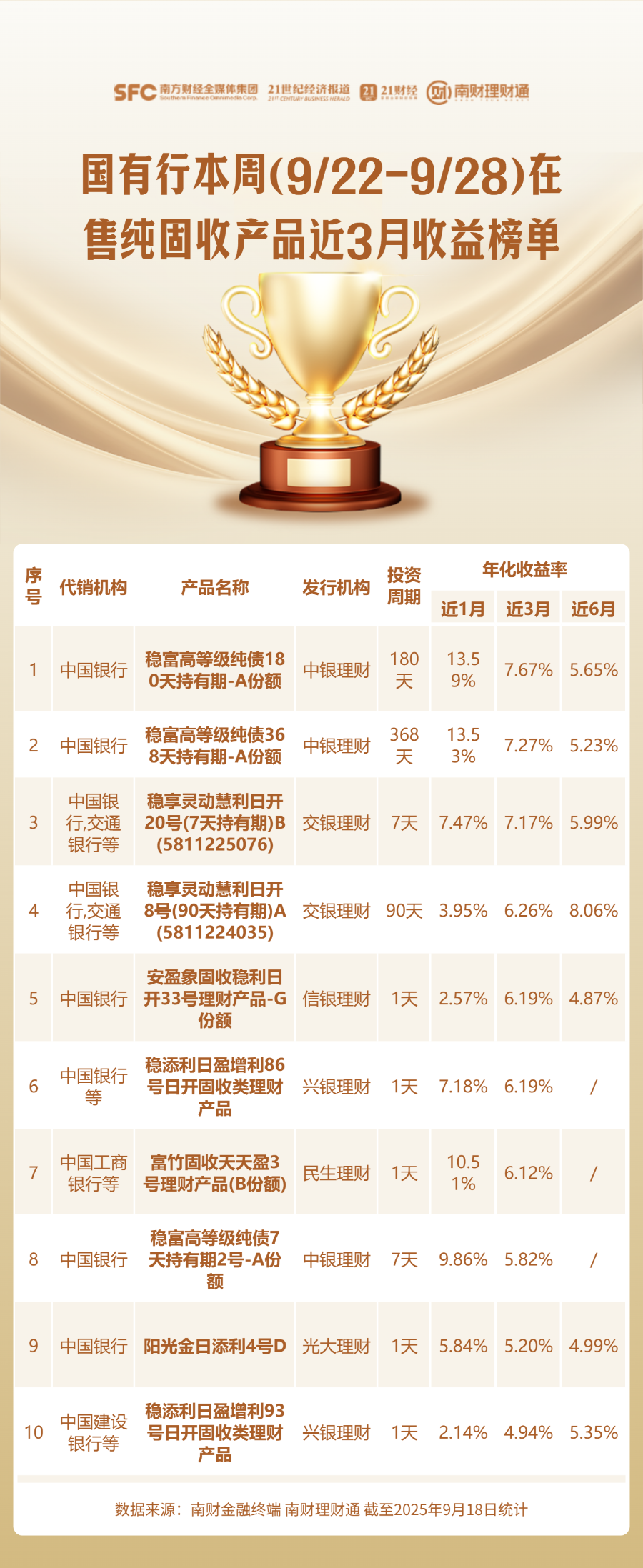
国有大型银行板块9月22日跌1.46%,建设银行领跌,主力资金净流出8.05亿元
Zheng Xing Xing Ye Ri Bao· 2025-09-22 08:47
Group 1 - The core viewpoint of the article highlights a decline in the state-owned large bank sector, with a 1.46% drop on September 22, led by Construction Bank [1] - The Shanghai Composite Index closed at 3828.58, up 0.22%, while the Shenzhen Component Index closed at 13157.97, up 0.67% [1] - The trading performance of individual state-owned banks showed varying degrees of decline, with Construction Bank falling 3.27% to a closing price of 65.8 [1] Group 2 - The net outflow of main funds from the state-owned large bank sector was 805 million yuan, while retail investors saw a net inflow of 717 million yuan [1] - The detailed fund flow data indicates that Agricultural Bank had a significant retail net inflow of 368 million yuan, despite a main fund outflow of 3.12 billion yuan [2] - The data also shows that Industrial and Commercial Bank experienced a main fund outflow of 1.88 billion yuan, with a retail net inflow of 137 million yuan [2]





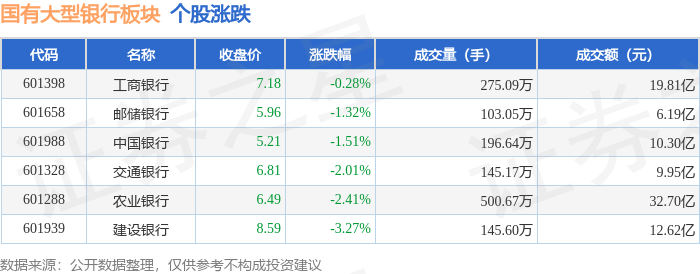
银行渠道本周在售纯固收理财产品榜单(9/22-9/28)
2 1 Shi Ji Jing Ji Bao Dao· 2025-09-22 07:04
Core Insights - The article emphasizes the importance of selecting bank wealth management products amidst a plethora of similar-sounding offerings, urging investors to discern and choose wisely [1] - The South Finance Wealth Management team compiles a weekly performance ranking of wealth management products available through various distribution channels, focusing on those with outstanding performance [1][6] - The ranking criteria include product type, specifically targeting pure fixed income, "fixed income plus," and mixed products, as well as performance stability over a minimum of three months [1] Group 1: Product Performance - The ranking showcases annualized performance over the past month, three months, and six months, sorted by the three-month annualized return to reflect multidimensional performance during recent market fluctuations [1] - The current focus is on pure fixed income products issued by wealth management companies, providing investors with a curated selection of available products [1] Group 2: Distribution Institutions - A total of 28 distribution institutions are involved, including major banks such as Industrial and Commercial Bank of China, Bank of China, Agricultural Bank of China, and others [2] - The assessment of the "on sale" status of wealth management products is based on their investment cycle projections, although actual availability may vary due to factors like sold-out quotas or differing product lists for various clients [2] Group 3: Performance Data - The article includes specific performance data for various wealth management products, detailing their annualized returns over different periods, such as the "Stable Wealth High-Grade Pure Bond 18" from Bank of China, which has a three-month annualized return of 7.67% [5] - Other notable products include "Stable Enjoy Flexible Wisdom Day Open 20" from China Merchants Bank with a three-month return of 7.47% and "Stable Wealth High-Grade Pure Bond 36" also from Bank of China with a return of 7.27% [5][7]
【盘中播报】沪指跌0.18% 社会服务行业跌幅最大
Zheng Quan Shi Bao Wang· 2025-09-22 06:43
Market Overview - The Shanghai Composite Index decreased by 0.18% as of 13:58, with a trading volume of 1,044.32 million shares and a total transaction value of 17,266.00 billion yuan, representing a 9.94% decrease compared to the previous trading day [1]. Industry Performance - The electronics sector showed the highest increase with a rise of 3.31%, followed by the computer sector at 0.84% and the automotive sector at 0.15% [1]. - The sectors with the largest declines included social services at -2.34%, retail at -1.84%, and media at -1.70% [2]. Leading Stocks - In the electronics sector, Hongfu Han led with a significant increase of 20.01% [1]. - In the computer sector, Chuling Information rose by 19.99% [1]. - The automotive sector saw Aotajia increase by 10.12% [1]. Detailed Industry Data - The following table summarizes the performance of various industries: - Electronics: +3.31%, 4,060.59 billion yuan, +2.17% from the previous day [1] - Computer: +0.84%, 1,384.60 billion yuan, -2.65% from the previous day [1] - Automotive: +0.15%, 1,071.14 billion yuan, -16.92% from the previous day [1] - Social Services: -2.34%, 184.90 billion yuan, -22.45% from the previous day [2] - Retail: -1.84%, 199.98 billion yuan, -24.68% from the previous day [2] - Media: -1.70%, 403.50 billion yuan, -21.59% from the previous day [2]



智通港股沽空统计|9月22日
智通财经网· 2025-09-22 00:23
Summary of Key Points Core Viewpoint - The report highlights the top short-selling stocks in the market, indicating significant investor sentiment and potential market movements for these companies [1][2]. Short Selling Ratios - The top three companies with the highest short-selling ratios are China Resources Beer (100.00%), Li Ning (100.00%), and Tencent Holdings (95.84%) [1][2]. - The short-selling ratio reflects the percentage of shares that are sold short compared to the total shares outstanding, indicating bearish sentiment among investors [2]. Short Selling Amounts - The companies with the highest short-selling amounts are Alibaba (35.98 billion), Baidu (25.30 billion), and Xiaomi (14.66 billion) [1][2]. - These figures represent the total monetary value of shares that have been sold short, suggesting a significant level of investor concern regarding these companies [2]. Deviation Values - The top three companies with the highest deviation values are China Ping An (46.83%), Tencent Holdings (43.52%), and Yixin Group (38.34%) [1][2]. - Deviation value indicates the difference between the current short-selling ratio and the average short-selling ratio over the past 30 days, highlighting stocks that may be experiencing unusual trading activity [2].



中国服务业企业500强发榜 平均营收规模首次突破千亿
Chang Jiang Shang Bao· 2025-09-21 23:01
Core Insights - The "2025 China Service Industry Enterprises Top 500" list shows that the average revenue of the listed companies has surpassed 100 billion yuan, reaching 1022.24 billion yuan, marking a significant milestone in the service sector [1][2] - The total revenue of the top 500 service enterprises has exceeded 50 trillion yuan, amounting to 51.1 trillion yuan, with a growth rate of 3.82%, which is an increase of 1.9 percentage points compared to 2024 [2] - The number of companies entering the trillion-yuan club has reached 9, with JD Group recognized as the largest private service enterprise [2] Group 1: Revenue and Profitability - The entry threshold for the top 500 service enterprises has increased by 19.5 billion yuan, reaching 79.8 billion yuan, which is a growth of 10.71% [2] - The total assets of the top 500 service enterprises have surpassed 400 trillion yuan, reaching 404.9 trillion yuan, with a growth of 9.19% [2] - The net profit for the top 500 service enterprises in 2025 is projected to be 3.34 trillion yuan, reflecting a growth of 6.71% [2] Group 2: Composition and Trends - Among the top 500 service enterprises, 276 are state-owned and 224 are private, indicating a balanced representation in the service sector [3] - Traditional service sectors like real estate and retail have seen a decrease in the number of entrants, while modern services such as internet and IT services, finance, logistics, and business services have increased, with 184 companies from these sectors making the list, an increase of 12 from 2024 [3] - The income profit margin for the remaining 427 service enterprises, excluding commercial banks and residential real estate, has reached 4.04%, the highest since the start of the 14th Five-Year Plan [2]


银行群体为何易出ESG评级优等生
Zhong Guo Zheng Quan Bao· 2025-09-21 20:17
Core Insights - The MSCI ESG rating of CITIC Bank has been upgraded by two levels to the highest AAA rating, making it one of five banks in the A-share market to achieve this rating [1][2] - China's banking sector is leading in ESG performance compared to other industries, with 25 out of 42 listed banks rated A or above [2][3] - The improvement in ESG ratings is attributed to both regulatory support and the banks' own efforts in governance and green finance innovation [1][4] ESG Performance - As of September 19, five banks, including CITIC Bank, have achieved the AAA rating in the MSCI ESG ratings [1] - The average ESG rating of the banking sector is higher than that of other industries, with nearly 60% of listed banks rated A or above [2] - The disclosure rate of ESG reports among A-share listed banks is significantly higher than the overall market, with 100% of banks disclosing their 2024 ESG reports compared to 46.83% for all A-share companies [2] Green Finance Growth - The scale of green finance in the banking sector has been growing rapidly, with major banks like ICBC and Bank of China leading in green loan balances [3] - As of June 2023, ICBC's green loan balance exceeded 6 trillion yuan, while Bank of China's green loan balance reached 4.54 trillion yuan, growing by 16.95% compared to the end of 2024 [3] - The total green loan balance in the banking sector is projected to reach approximately 42 trillion yuan by June 2025 [3] Governance and Strategy - Banks are increasingly integrating ESG into their corporate strategies, with many viewing it as a catalyst for business innovation and risk management [4][5] - Major banks have established comprehensive ESG management systems, with clear responsibilities for ESG-related risk management at the board level [4] - Training programs on ESG governance and sustainable development are being implemented, with ICBC training over 120,000 employees in 2024 [5] Social Responsibility - Banks are enhancing their performance in consumer rights protection and inclusive finance, contributing positively to their ESG ratings [6][7] - For instance, CITIC Bank and China Merchants Bank have implemented systematic compliance management measures for financial marketing [6] - In inclusive finance, China Merchants Bank reported a balance of 887.68 billion yuan in loans to small and micro enterprises by the end of 2024, an increase of 83.4 billion yuan from the previous year [7] Climate Change Initiatives - The banking sector is increasingly focusing on climate-related issues, conducting stress tests and scenario analyses to assess the impact of climate change on their assets [8][9] - Banks are leveraging digital capabilities to support industrial transformation towards green and low-carbon practices [9] - Notable projects include Bank of China's financing for a carbon capture project and CITIC Bank's issuance of a green loan linked to sustainable development in the construction industry [10]


银行“二永债”赎回潮来袭
Bei Jing Shang Bao· 2025-09-21 16:03
Core Viewpoint - The recent trend of banks redeeming perpetual bonds and subordinated debt is driven by the need to optimize capital structure, reduce financing costs, and comply with regulatory requirements during a declining interest rate environment [1][3][4]. Group 1: Redemption Activities - Multiple banks, including China Construction Bank, CITIC Bank, and Ningbo Bank, have announced full redemptions of their 2020-issued perpetual bonds, with amounts ranging from tens of billions to hundreds of billions [1][3]. - As of September 21, 2023, the total redemption scale of bank perpetual bonds has reached 729.28 billion yuan this year, with a year-on-year increase of over 180% compared to last year's total of 1.11 trillion yuan [3][4]. Group 2: Drivers Behind Redemption - The primary drivers for the redemption of old bonds include the current macroeconomic environment of declining interest rates, allowing banks to replace high-cost debt with lower-cost alternatives [4][6]. - Regulatory requirements, particularly for globally systemically important banks, necessitate maintaining a total loss-absorbing capacity (TLAC) risk-weighted ratio of no less than 16%, prompting banks to optimize their capital structure through debt replacement [4][7]. Group 3: Capital Structure Optimization - New subordinated debt has a higher proportion counted towards capital, which can quickly enhance banks' Tier 2 capital and improve key regulatory indicators like capital adequacy ratios [6][7]. - The efficiency of old subordinated debt diminishes after five years, leading banks to redeem these bonds to maintain adequate capital buffers and comply with new regulatory standards [6][7]. Group 4: Future Outlook - As more existing capital instruments approach their redemption windows, the pace of replacing perpetual bonds is expected to accelerate, driven by stricter counter-cyclical capital regulations [7]. - If the macroeconomic interest rate trend remains downward, banks will likely continue to benefit from cost advantages in issuing new bonds, further incentivizing the redemption of old debt [7].



上市银行非利息收入高增背后:下半年增速能否持续?
Zhong Guo Jing Ying Bao· 2025-09-20 13:18
Core Insights - The total operating income of 42 listed banks exceeded 2.9 trillion yuan, with net profit surpassing 1.1 trillion yuan in the first half of the year, indicating strong financial performance [1] - Non-interest income has played a crucial role in improving bank performance, with significant growth observed across major state-owned banks and smaller banks [1][2] Group 1: Non-Interest Income Growth - Major banks reported substantial increases in non-interest income, with China Bank at 1141.87 billion yuan (up 26.43%), ICBC at 1135.16 billion yuan (up 6.5%), and CCB at 1075.64 billion yuan (up 19.64%) [2] - The growth in non-interest income is attributed to various factors, including a rise in fees and commissions, which reached 652.18 billion yuan for CCB, and a notable increase in other non-interest income for China Bank, which grew by 42.02% [2][3] Group 2: Factors Influencing Non-Interest Income - Analysts suggest that the high growth rates in non-interest income are due to the normalization of fee income after previous disruptions and a low base effect from last year's capital market activity [3] - The performance of non-interest income in the second half remains uncertain, with potential pressures from market volatility affecting investment income [3] Group 3: Regional Banks and Differentiation - Some regional banks have achieved remarkable growth in non-interest income, such as Changshu Bank with a 57.26% increase and Zhangjiagang Bank with a 140% rise in fee and commission income [4] - Regional banks are encouraged to leverage their local market knowledge to establish differentiated competitive strategies, focusing on wealth management and tailored financing services for local enterprises [5]
AIC大步疾进的“B面”:银行返程股权投资模式“谢幕”
Sou Hu Cai Jing· 2025-09-20 00:48
Core Insights - The role of bank return equity investment is becoming increasingly awkward due to regulatory changes and the emergence of new investment channels [2][3] - The shift from bank return equity investment to financial asset investment companies (AIC) is reshaping the landscape of equity investment in China [3][8] Historical Context - Bank return equity investment was once thriving, with major banks establishing investment funds in Hong Kong and investing in various sectors such as healthcare and technology [4][5] - The peak of bank return equity investment occurred between 2012 and 2015, driven by the rise of RMB funds and collaboration with local governments [5][6] Regulatory Environment - Financial regulatory authorities have discouraged bank return equity investment due to compliance issues and the high-risk nature of equity investments [6][7] - Recent policies have opened up avenues for banks to engage in equity investment through AICs, effectively closing the door on return equity investment [3][8] Market Trends - Since 2018, the number of bank return equity investment funds has decreased, and their market activity has significantly cooled down [7][9] - The emergence of AICs has led to a competitive disadvantage for bank return equity investment platforms, as many technology companies prefer AIC funding due to perceived policy risks [9][10] Future Directions - Bank return equity investment platforms are exploring business transformation into asset management and financial advisory services, but these areas are seen as less profitable compared to equity investment [10][11] - The potential closure of these platforms raises concerns about the future of employees and the need for new business models [10][11]