CCB(00939)

Search documents
程军、石永拴,同日被查!
证券时报· 2025-12-31 15:40
银行业反腐。 据中央纪委国家监委驻中国银行纪检监察组、天津市纪委监委消息:中国银行浙江省分行党委书记、行长程军涉嫌严重违纪违法,目前正接 受中央纪委国家监委驻中国银行纪检监察组纪律审查和天津市监察委员会监察调查。 据中央纪委国家监委驻中国建设银行纪检监察组、山东省纪委监委消息:中国建设银行河南省分行原党委书记、行长石永拴涉嫌严重违纪违 法,目前正接受中央纪委国家监委驻中国建设银行纪检监察组纪律审查和山东省聊城市监察委员会监察调查。 证券时报各平台所有原创内容,未经书面授权,任何单位及个人不得转载。我社保留追 究相关 行 为主体法律责任的权利。 综合自:中央纪委国家监委网站 责编:李丹 校对:陶谦 版权声明 转载与合作可联系证券时报小助理,微信ID:SecuritiesTimes END 点击关键字可查看 潜望系列深度报道丨 股事会专栏 丨 投资小红书 丨 e公司调查 丨 时报会客厅 丨 十大明星私募访谈 丨 国常会,最新部署! 丨 利好!每年让利投资者510亿 元,证监会新规出炉 丨 证监会,最新发布! 丨 突发!300500、688333,被证监会立案 丨 2025A股收官!超500股翻倍 丨 突发暴跌!全 ...




北水成交净买入34.49亿 北水全年净买入港股逾1.4万亿港元 创历史纪录新高
Zhi Tong Cai Jing· 2025-12-31 14:22
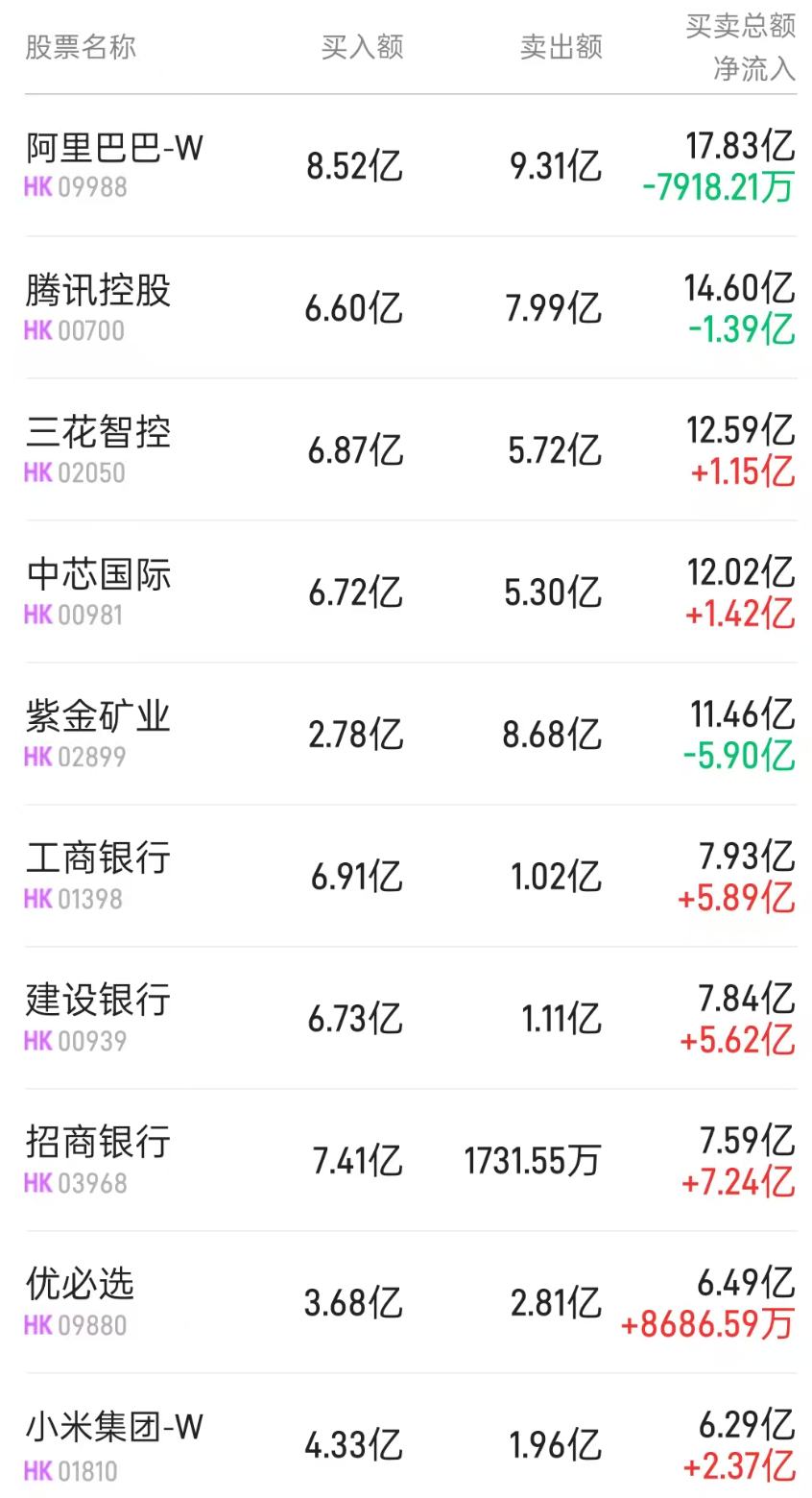
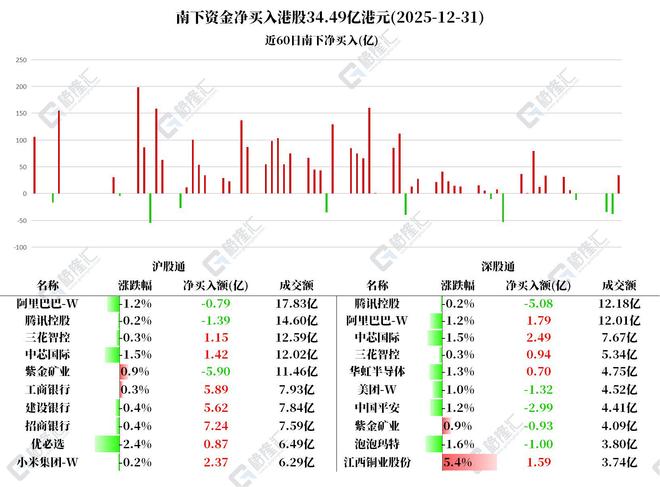
Group 1: Market Overview - On December 31, the Hong Kong stock market saw a net inflow of 34.49 billion HKD from northbound funds, with 30.97 billion HKD from the Shanghai Stock Connect and 3.51 billion HKD from the Shenzhen Stock Connect. This marks a record high net inflow of 1.41 trillion HKD for the year, significantly up from approximately 807.9 billion HKD in 2024 [2]. Group 2: Key Stocks - The most net bought stocks by northbound funds included China Merchants Bank (招商银行) with 7.24 billion HKD, Industrial and Commercial Bank of China (工商银行) with 5.88 billion HKD, and China Construction Bank (建设银行) with 5.61 billion HKD [6]. - The most net sold stocks were Zijin Mining (紫金矿业) with a net outflow of 6.82 billion HKD and Tencent (腾讯) with a net outflow of 6.46 billion HKD [7]. Group 3: Sector Performance - The banking sector is expected to benefit from a stable macro-financial environment, with projections indicating that bank interest margins may have bottomed out and risks in the real sector are easing. This is anticipated to lead to income and profit recovery in the banking industry [6]. - Semiconductor stocks, particularly SMIC (中芯国际), received significant net buying, with 3.91 billion HKD, driven by price increases in the 8-inch BCD process platform by approximately 10% [6]. Group 4: Specific Company Insights - Jiangxi Copper (江西铜业) saw a net inflow of 1.58 billion HKD, while Zijin Mining faced a net outflow of 6.82 billion HKD. The National Development and Reform Commission emphasized the need for optimizing the management of the copper smelting industry, which may impact future production levels [7]. - Xiaomi Group (小米集团) received a net inflow of 2.37 billion HKD, supported by government policies promoting consumer electronics [7].



银行业十五五展望系列专题(上篇):回眸十四五,监管引导和主动求变下的银行经营理念重构
Shenwan Hongyuan Securities· 2025-12-31 14:14
Investment Rating - The report indicates a positive outlook for the banking industry, suggesting a return to a price-to-book (PB) ratio of 1x during the "15th Five-Year Plan" period, focusing on stable profitability and high-quality development [3][4]. Core Insights - The banking sector is transitioning from a focus on scale to quality, with an emphasis on risk management and structural optimization. The "15th Five-Year Plan" includes the goal of building a strong financial nation, highlighting the importance of high-quality development [3][16]. - The report identifies key changes in the banking industry during the "14th Five-Year Plan," including a shift in credit structure, a focus on profitability, and the need for banks to balance risk and efficiency [2][4]. - Regulatory support is expected to stabilize net interest margins, which have reached record lows, with a projected recovery in the coming years [5][19]. Summary by Sections 1. From Quantity to Quality - The banking industry has evolved through three five-year plans, with a shift from rapid expansion to a focus on quality and risk management. The current phase emphasizes high-quality development and financial support for key sectors [2][10]. 2. Developments During the "14th Five-Year Plan" 2.1 ROE: Resilience of State-Owned Banks and Advantages of City Commercial Banks - The return on equity (ROE) for listed banks has remained around 10%, with city commercial banks showing a slight advantage due to higher leverage and better provisioning [19][20]. 2.2 Credit: Moving Away from Scale to Balance Capital and Efficiency - Banks are prioritizing structural transformation over sheer volume, focusing on supporting key sectors and optimizing credit distribution [4][12]. 2.3 Interest Margin: Recovery from Continuous Decline - The report anticipates a stabilization of net interest margins, which have been under pressure, with regulatory measures aimed at supporting banks [5][19]. 2.4 Risk: Provisioning to Support Stability - The banking sector is expected to manage risks more effectively, with a focus on maintaining adequate provisions to support profitability during challenging economic conditions [4][19]. 2.5 Financial Markets: An Alternative Revenue Stream - The report highlights the increasing importance of financial market activities as a means to smooth revenue amid declining interest income, with banks diversifying their investment strategies [4][19]. 3. Investment Analysis Opinion - The report suggests a dual strategy of focusing on leading banks and undervalued city commercial banks, anticipating a recovery in valuations for state-owned banks that have been lagging [3][4].
一果生金!建行“链”上枣庄石榴,赋能火红产业新生态
Qi Lu Wan Bao· 2025-12-31 13:32
Group 1: Industry Development - The pomegranate industry in Yuyuan Town, Shandong Province, has a history of over 2000 years and is supported by local government policies aimed at promoting its development [1][3] - Yuyuan Town is recognized as one of the seven major pomegranate production areas in China, benefiting from unique geographical advantages that support the growth of the pomegranate industry [1] - The local government has elevated the pomegranate industry to a city-level development strategy, facilitating the integration of primary, secondary, and tertiary industries [1][3] Group 2: Financial Support and Growth - The Construction Bank (建行) has actively supported the pomegranate industry by providing various financial products and services, including loans to local farmers and businesses [2][3][11] - A notable case is that of Sun Ning, who received a 1 million yuan "Yunong Loan" from the bank, which significantly boosted his pomegranate bonsai business, leading to a sales revenue of over 2 million yuan in 2023 [2][3] - The bank has issued loans totaling 55 million yuan for network supply chain projects and 14.17 million yuan for various pomegranate-related businesses [4][11] Group 3: Product Innovation and Market Expansion - The local government encourages the development of new pomegranate products, resulting in over 20 varieties, including pomegranate juice, wine, tea, and cosmetics [3] - The "Red Pomegranate" series of products developed by the Zaozhuang Public Transport Group has gained popularity, showcasing the potential for cross-industry innovation [6][8] - The animation series "Silk Road," produced by a local company, has become a significant cultural product, highlighting the integration of cultural and agricultural industries [9][10][11] Group 4: Economic Impact - The pomegranate industry has evolved from a single planting model to a comprehensive ecosystem that includes planting, processing, cultural tourism, and creative industries, contributing to rural revitalization [10][11] - As of November, the Construction Bank has provided over 300 million yuan in loans to nearly 450 entities in the pomegranate industry, supporting their growth and development [11]
又一国有大行浙江省分行原行长落马
第一财经· 2025-12-31 13:18
Core Viewpoint - The article discusses the ongoing anti-corruption efforts within China's financial sector, highlighting the recent investigation of Cheng Jun, the president of Bank of China Zhejiang Branch, for serious violations of discipline and law, marking a significant trend in the scrutiny of high-ranking officials in state-owned banks [3][4]. Group 1: Investigations and Trends - Cheng Jun is the 211th central-level official investigated in 2025, a decrease from 257 in 2024, indicating a tightening of scrutiny on high-ranking officials [3]. - Cheng is the fifth former president of a state-owned bank's Zhejiang branch to be investigated in recent years, following several others who faced similar allegations of serious violations [4]. - In 2025, a total of 65 central management officials were investigated, surpassing the 58 from the previous year, while 722 provincial management officials were also scrutinized [5]. Group 2: Broader Anti-Corruption Efforts - The 20th Central Commission for Discipline Inspection's fourth plenary session emphasized the importance of deepening anti-corruption efforts in 2025, which is seen as a crucial year for the completion of the 14th Five-Year Plan [5]. - In 2024, disciplinary bodies across the country investigated 73 provincial-level and above officials, 4,348 bureau-level officials, 35,000 county-level officials, and 121,000 township-level officials, reflecting a comprehensive approach to tackling corruption [5].


胡薄走访慰问财税金融系统干部职工
Xin Lang Cai Jing· 2025-12-31 12:43
滨州日报/滨州网讯在元旦佳节来临之际,12月31日下午,市委常委、副市长、市政府党组副书记胡薄 走访慰问财税金融系统干部职工,向大家致以新年的问候与祝福。 胡薄先后到招商银行滨州分行、建设银行滨州西城支行、人民银行滨州市分行、国家金融监督管理总局 滨州监管分局走访,参观营业大厅、业务办公区,与一线干部职工亲切交流,详细询问各项工作运行情 况,对大家一年来的辛勤付出表示感谢。 胡薄指出,金融是国民经济的血脉。今年以来,全市财税金融系统围绕中心工作,迎难而上、奋力进 取,在助力滨州经济稳健向好中发挥了重要作用。新的一年,要继续保持昂扬的斗志,用足用好各项优 惠政策,加强和改进金融服务,为产业发展、企业转型、科技创新、民生改善提供有力保障,为品质滨 州建设作出新贡献。 张博参加活动。 原标题:胡薄走访慰问财税金融系统干部职工 ...
图解丨2025年最后一天,南下资金大举买入中资银行股
Xin Lang Cai Jing· 2025-12-31 12:33
Group 1 - Southbound funds net bought Hong Kong stocks worth 3.449 billion HKD today [1] - The top net purchases included China Merchants Bank at 724 million HKD, Industrial and Commercial Bank of China at 589 million HKD, and China Construction Bank at 562 million HKD [1] - Notable net sales included Zijin Mining at 682 million HKD, Tencent Holdings at 646 million HKD, and China Ping An at 298 million HKD [1] Group 2 - Southbound funds have recorded a continuous net sell of Tencent for five consecutive days, totaling 3.94334 billion HKD [2]



中行、工行、农行、建行、交行、邮储银行集体官宣:这笔钱要计利息!
Mei Ri Jing Ji Xin Wen· 2025-12-31 12:20
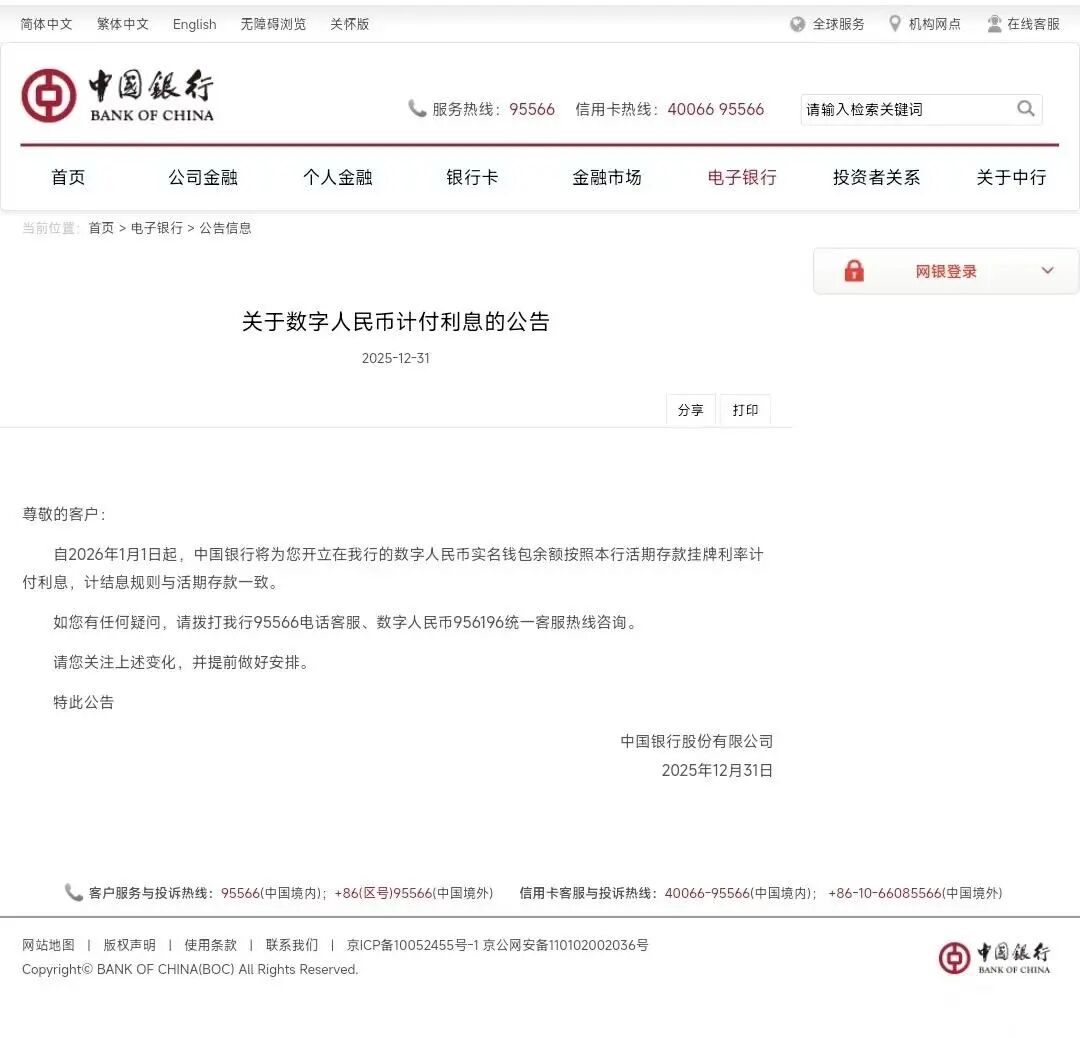
Core Viewpoint - Starting from January 1, 2026, six major state-owned banks in China will begin to pay interest on the balances of digital RMB real-name wallets at the same rate as their current deposit rates, following the same interest calculation rules as regular savings accounts [1][10]. Group 1: Announcement Details - The six banks involved are the Bank of China, Industrial and Commercial Bank of China, Agricultural Bank of China, China Construction Bank, Bank of Communications, and Postal Savings Bank [1]. - The current interest rate for regular savings accounts is noted to be 0.05% [10]. - Interest will be calculated quarterly, with the interest credited to accounts on the 21st of each quarter's last month [10]. Group 2: Wallet Types and Interest Eligibility - Digital RMB wallets are categorized into four types: Type 1, Type 2, and Type 3 are real-name wallets eligible for interest, while Type 4 is an anonymous wallet that does not earn interest [10][12]. - Type 1 wallets require in-person verification and must be linked to a domestic bank account, while Type 2 and Type 3 wallets can be opened remotely with varying identification requirements [12][13][14]. - The new definition of digital RMB indicates a shift from being classified as M0 (cash) to being recognized as a form of deposit currency, allowing for interest accrual [11][12].

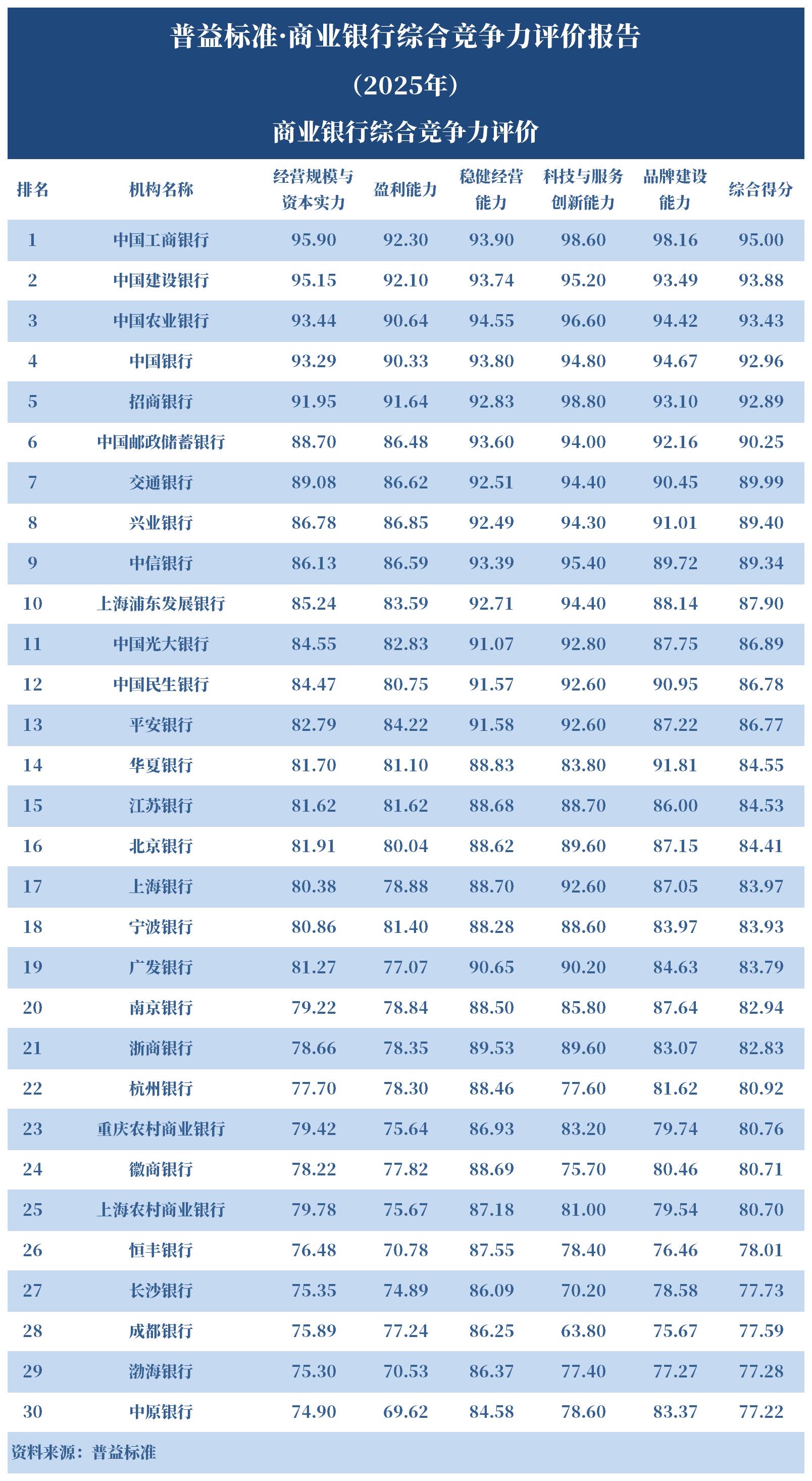
商业银行综合竞争力评价报告发布 助力银行业高质量发展
Zhong Guo Jing Ji Wang· 2025-12-31 11:55
Core Insights - The operating logic of commercial banks is undergoing a profound transformation, facing challenges such as narrowing net interest margins and diverse risk sources, while also seizing strategic opportunities from digital transformation and service model upgrades [1] - The "Comprehensive Competitiveness Evaluation Index System for Commercial Banks" was officially released, aiming to provide a scientific and comprehensive measure of banks' real performance and competitive status in the context of high-quality development [1] Group 1: Evaluation Framework - The evaluation system includes five core modules: operational scale and capital strength, profitability, sound operational capability, technological and service innovation capability, and brand building capability [1] - This framework covers the entire chain from resource support to performance output, risk control compliance to innovation-driven growth, and short-term operations to long-term value [1] Group 2: High-Quality Development - Experts emphasize that high-quality development for commercial banks must move beyond reliance on asset scale growth, focusing instead on stable, endogenous growth under capital constraints [2] - Banks are encouraged to optimize their asset structures and allocate credit resources to strategic national priorities and high-quality customer segments [2] Group 3: Profitability Challenges - The narrowing of net interest margins has become a new normal, necessitating the construction of more resilient and diversified profit models [2] - Banks should strategically accelerate the development of wealth management, investment banking, and transaction finance, which have lower capital consumption and higher customer stickiness [2] Group 4: Technology Investment Evaluation - There is an unprecedented scale of investment in technology resources within the banking sector, requiring a mechanism to evaluate the conversion of technology input into business value [3] - A comprehensive evaluation mechanism should consider the impact of technology on internal management efficiency and external business benefits [3] Group 5: Competitiveness Rankings - The rankings of commercial banks based on their operational scale, profitability, and sound operational capability have been published, with the Industrial and Commercial Bank of China leading in all three categories [4][5][6] - The top five banks in terms of operational scale and capital strength are: 1. Industrial and Commercial Bank of China - 95.90 2. China Construction Bank - 95.15 3. Agricultural Bank of China - 93.44 4. Bank of China - 93.29 5. China Merchants Bank - 91.95 [4][5]
工行、农行、中行、建行、交行、邮储,集体宣布
21世纪经济报道· 2025-12-31 11:44
Core Viewpoint - The digital renminbi will officially end its "interest-free era" as major state-owned banks announce that starting January 1, 2026, the balance in real-name digital renminbi wallets will earn interest based on the current deposit rate [1][4][10]. Group 1: Digital Renminbi Interest Policy - Six major state-owned banks, including ICBC, ABC, BOC, CCB, BOCOM, and PSBC, will implement interest payments on digital renminbi wallet balances according to the current deposit rate starting January 1, 2026 [1][4]. - The interest will be calculated based on the People's Bank of China's regulations for current deposits, with interest credited quarterly [3][4]. - The introduction of this interest policy is part of the People's Bank of China's action plan to enhance the management and service system for digital renminbi [4][10]. Group 2: Transition to Digital Deposit Currency - The implementation of the interest policy marks the transition of digital renminbi from a "digital cash" model to a "digital deposit currency" model [10]. - Previously, digital renminbi was classified as M0, similar to cash, and did not earn interest, limiting its attractiveness compared to bank deposits [10]. - With the new policy, digital renminbi will be treated as a liability of commercial banks, allowing it to support credit activities and deposit expansion mechanisms, thus enhancing its monetary elasticity [10][11]. Group 3: Current Status and Future Prospects - As of November 2025, digital renminbi has processed 3.48 billion transactions with a total transaction amount of 16.7 trillion yuan [8]. - The digital renminbi is being tested in various scenarios, including daily consumption and government services, and is expanding into cross-border payment initiatives [7][8]. - The future digital renminbi will be a modern digital payment and circulation tool, supported by the central bank and possessing attributes of commercial bank liabilities [10][11].