
CHINA TAIPING(00966)

Search documents
固定收益点评:分红险复兴,如何影响保险配置偏好?
Guohai Securities· 2025-12-25 08:05
1. Report Industry Investment Rating No relevant content provided. 2. Core Viewpoints of the Report - The report addresses the asset allocation characteristics of dividend - paying insurance and the impact of its transformation on the bond market [4][10] - In 2025, the transformation of dividend - paying insurance became an industry trend, with significant growth in scale. The income of ordinary dividend - paying insurance of six listed insurance companies in the first half of 2025 reached 157.7 billion yuan, a year - on - year increase of 12%, and its proportion in total life insurance income rose from 15% at the end of 2024 to 16.3% [5][11] - The rapid expansion of dividend - paying insurance meets the needs of both clients and insurance companies. For clients, it offers "certainty of guaranteed return + elastic dividend expectation"; for insurance companies, it helps prevent interest spread losses and reduces the impact of investment asset prices on financial statements [5][14][15] - Compared with ordinary life insurance, the asset allocation logic of dividend - paying insurance is more return - oriented, increasing the allocation of high - volatility assets [5] - The growth rate of insurance companies' bond allocation scale may slow down marginally, and their preference for equities will continue. In terms of specific bond types, insurance companies may increase trading demand for ultra - long - term treasury bonds and allocation demand for secondary perpetual bonds while maintaining the allocation of ultra - long - term local government bonds [5][20][22] 3. Summary by Directory 3.1 Dividend - paying Insurance Transformation Initiation - In 2025, major listed insurance companies placed dividend - paying insurance at the core of their products, driving it to dominate new business. The income of dividend - paying insurance of six listed insurance companies in the first half of the year increased significantly [11] - Each major insurance company has taken measures to promote dividend - paying insurance. For example, China Ping An focused on dividend - paying products, and China Pacific Insurance optimized its product structure with increased dividend - paying insurance new - policy premium [12] 3.2 Reasons for the Rapid Increase in Dividend - paying Insurance Scale - Client side: In the context of low - interest rates and expected stock market improvement, the "certainty of guaranteed return + elastic dividend expectation" of dividend - paying insurance meets clients' demand for more elastic returns [5][14] - Insurance company side: It can prevent interest spread losses and reduce the impact of investment asset price fluctuations on financial statements [5][15] 3.3 Differences in the Asset Allocation Logic of Dividend - paying Insurance - Accounting mechanism: Dividend - paying insurance uses the "floating fee method" for measurement, allowing its liability - side price to be linked to the asset - side. It has a return smoothing mechanism, giving its account a higher risk tolerance [5][16][17] - Business transformation: Higher and stable investment returns are crucial for attracting customers, fulfilling dividend promises, and promoting successful transformation [17] 3.4 Impact on the Bond Market - Overall bond demand: The growth rate of insurance companies' bond allocation scale may slow down marginally, and their preference for equities will continue. In the first three quarters of 2025, the proportion of equity assets in insurance companies' new investments increased from 10.4% in 2024 to 39.9%, while the proportion of bonds decreased from 72.2% to 57.1% [20] - Specific bond types: Insurance companies may increase trading demand for ultra - long - term treasury bonds and allocation demand for secondary perpetual bonds while maintaining the allocation of ultra - long - term local government bonds [22]


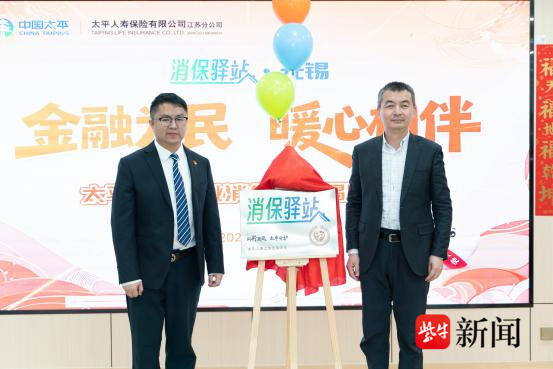
太平人寿江苏分公司“消保驿站”无锡站揭牌 打造“一站式”金融为民服务新阵地
Yang Zi Wan Bao Wang· 2025-12-25 05:42
Core Viewpoint - The establishment of the "Consumer Protection Station" by Taiping Life Insurance in Wuxi, Jiangsu, represents a significant step in enhancing consumer rights protection and upgrading convenient service systems, aiming to integrate financial services with consumer rights protection into community life [1][3]. Group 1: Functions of the Consumer Protection Station - The station combines four main functions: financial education, insurance service processing, consumer rights protection, and community innovation co-construction, creating a "nearby, warm, one-stop" service front [3]. - The "Financial Education Zone" serves as a "financial knowledge charging station" for community residents, promoting financial literacy and risk awareness through various outreach activities [6]. - The "Insurance Service Zone" focuses on providing convenient and personalized services for in-person clients, particularly catering to the needs of foreign nationals, the elderly, and individuals with disabilities through bilingual services and accessible facilities [6]. Group 2: Consumer Rights Protection and Community Engagement - The "Rights Protection Zone" aims to preemptively address disputes by establishing mediation stations in collaboration with regulatory bodies, ensuring efficient and fair resolution of consumer complaints [6]. - The "Innovation Co-construction Zone" offers community amenities such as microwaves and charging stations, while also organizing skill training and festive activities to foster interaction between the company and the community [6]. - Following the unveiling ceremony, a traditional Chinese medicine free clinic was well-received, indicating the community's positive response to the station's initiatives [8].


多家险企康养社区密集落地
Jin Rong Shi Bao· 2025-12-24 03:00
Group 1 - The core viewpoint of the articles highlights the rapid development and expansion of senior care communities by major insurance companies in China, indicating a shift towards diversified and high-quality elderly care services [1][2][3] Group 2 - China Taiping's "Wutong Renjia" community in Shanghai welcomed its 1500th resident, showcasing the community's growth since its opening in November 2019, with interest groups increasing from over 10 to over 30 [1] - The community has established a comprehensive health保障 system, integrating community medical services with a rehabilitation hospital and a three-tier referral system [1] - As of now, China Taiping operates five major senior care communities across different cities, all of which are fully operational [1] Group 3 - The opening of the "Taikang Zhijia - Tongyuan Experience Center" in Jiangsu is part of Taikang Insurance's broader strategy, with plans for approximately 1500 elderly care units and a rehabilitation medical facility expected to be operational by Q4 2027 [2] - Taikang Insurance has established a presence in 37 cities with 47 projects, serving over 20,000 residents across 27 operational communities [2] - China Pacific Insurance has launched two new communities in Beijing and Sanya, bringing its total to 15 projects, with 14 already operational, completing a national elderly care service network [2] Group 4 - The trend of travel-based elderly care is emerging as a new focus for insurance companies, with Dajia Insurance unveiling its "Dajia's Home - Huangshan Feicui Valley" community in a scenic area [2] - Dajia Insurance plans to establish 16 urban medical care communities and multiple travel therapy communities in various locations by November 2025 [2] Group 5 - The insurance industry is transitioning from single project operations to a nationwide network, offering comprehensive services that include health management, cultural entertainment, and travel vacation options, addressing the challenges of an aging population [3]
资负管理要求将深化,多维度匹配督促行业行稳致远:保险行业重大事项点评
Huachuang Securities· 2025-12-22 03:46
Investment Rating - The report maintains a "Recommendation" rating for the insurance industry, indicating an expectation that the industry index will outperform the benchmark index by more than 5% in the next 3-6 months [28]. Core Insights - The new asset-liability management regulations aim to deepen the alignment between asset and liability management, enhancing the industry's long-term stability and operational capabilities [16]. - The report highlights that the recent decline in long-term interest rates has put pressure on net investment returns, posing potential "spread loss" challenges for the industry [8]. - The report notes that the head-listed insurance companies are expected to manage their liability costs better than smaller firms, which may face greater pressure due to cost management issues [16]. Summary by Sections Regulatory Changes - The new regulations clarify asset-liability management goals, principles, governance structures, policies, procedures, and establish regulatory and monitoring indicators [3]. - Key changes include institutional integration, improved organizational structures, and optimized calculation standards for regulatory indicators [3]. Monitoring Indicators - Regulatory indicators for property insurance companies focus on cost-benefit matching, duration matching, and liquidity matching, with specific minimum standards set for various metrics [4][5][6]. - Life insurance companies have indicators such as effective duration gap and comprehensive investment income coverage ratio, with strict monitoring requirements [4]. Investment Performance - As of H1 2025, the average net investment return for listed insurance companies is approximately 3.5%, with significant variations among companies [8]. - The report indicates a notable decline in new business costs for life insurance companies, driven by adjustments in preset interest rates and unified pricing strategies [12][15]. Strategic Implications - The report suggests that the new regulations may lead to a trend of controlling the scale of whole life insurance business sales and increasing allocations to long-duration bonds [16]. - It is anticipated that the pricing of new insurance products will become more cautious as companies focus on cost-benefit matching [16].

《保险公司资产负债管理办法(征求意见稿)》点评:全面规范资负管理引导长期经营,利好头部险企
国泰海通· 2025-12-21 11:50
Investment Rating - The report maintains an "Overweight" rating for the insurance industry [1][2]. Core Insights - The "Insurance Company Asset-Liability Management Measures (Draft for Comments)" aims to comprehensively standardize the asset-liability management system of insurance companies, reinforcing the primary responsibility of companies and clarifying regulatory indicators to guide long-term stable operations [2][3]. - The introduction of the new measures is expected to enhance the asset-liability management framework, particularly under the backdrop of interest rate fluctuations and accounting standard reforms, benefiting leading insurance companies that align with stricter regulatory requirements [4]. Summary by Sections Regulatory Framework - The draft requires insurance companies to establish a governance structure for asset-liability management, with the board of directors ultimately responsible and senior management directly leading the efforts [4][5]. - It specifies the need for a professional department dedicated to asset-liability management, ensuring independence from business and investment management departments [4][7]. Management Policies and Procedures - The measures outline requirements for asset and liability analysis, product pricing management, asset allocation policies, and stress testing [4][5]. - Regulatory indicators include minimum standards for liquidity coverage ratios and effective duration gaps, with specific metrics for property and life insurance companies [9][10]. Monitoring and Risk Management - Monitoring indicators are established to identify and warn against asset-liability mismatch risks, enhancing risk management capabilities [4][9]. - The report emphasizes the importance of aligning asset-liability management with long-term operational goals, with a focus on achieving cost-revenue matching and liquidity matching [4][10]. Investment Recommendations - The report suggests that the new measures will guide the industry towards long-term stable operations and optimize asset-liability matching, maintaining an "Overweight" stance on the industry [4][12]. - Recommended companies include China Ping An, China Pacific Insurance, New China Life, and China Life Insurance [4][12].

【微头条】通过党建共建实现资源联动、高效服务,中央驻青保险企业党建共建行动启动
Xin Lang Cai Jing· 2025-12-18 14:23
Core Viewpoint - The "Hongbao Qingwan" central insurance enterprise party-building co-construction initiative was launched at the People's Insurance Company of China (PICC) Qingdao branch, aiming to enhance political leadership and service capabilities in the financial sector [1][3]. Group 1 - Eight insurance institutions, including PICC, China Life Insurance, and China Taiping Insurance, signed a party-building co-construction agreement [1][3]. - The co-construction agreement outlines six action items, including the creation of an "integrated" party-building community and a "service-oriented" development joint body [1][3]. - The initiative aims to achieve new heights in political leadership, a new pattern of integrated development, and new contributions to local services [1][3]. Group 2 - The co-construction is expected to facilitate resource linkage and efficient services, addressing the current issues of "dare not insure" and "cannot insure" in key economic sectors [1][3]. - The PICC Qingdao branch will serve as the rotating lead for the first year of this initiative [2][4].

中国太平20251217
2025-12-17 15:50
Summary of China Taiping's Conference Call Company Overview - **Company**: China Taiping Insurance Holdings Company Limited - **Industry**: Insurance and Financial Services Key Points Investment Strategy and Performance - China Taiping adjusted its investment strategy in Q3 2025, responding to government calls to increase A-share equity holdings since May, benefiting from investment returns in certain sectors [2][3] - The net investment yield for the first half of 2025 was 3.11%, with expectations for total investment returns to rebound and potentially exceed last year's levels [2][3] - The company plans to allocate 30% of new investable funds to the A-share market, gradually increasing equity positions [4][15] Taxation and Financial Performance - The tax rate for 2025 is significantly lower than in 2024, which is expected to enhance post-tax earnings [2][5] - The company has fully adopted new accounting standards, although domestic operations are still affected by old standards, leading to transitional tax rate differences [5] Risk Management and Claims - Following a significant fire incident in Hong Kong, China Taiping is managing a claim of 2 billion HKD, with a low retention ratio due to reinsurance [2][6] - The company has a strong market presence in property and building insurance, which aids in managing risks effectively [6] Product Diversification and Sales Channels - The "Open Door" initiative launched in October aims to diversify products, including increasing the proportion of annuity-type and traditional insurance products [2][7] - In the bancassurance channel, the company expects rapid growth in 2024 due to policy integration, with significant value contributions anticipated in 2025 [2][9] Liability Management - New business break-even yield costs have decreased to 1.7%-1.9%, while existing business break-even yield is around 2.5% [4][11] - The duration gap between assets and liabilities is expected to narrow by 0.5%-0.8% annually due to increased sales of participating insurance [12] Market Outlook and Strategy - The company anticipates a stable low-interest-rate environment, with plans to gradually increase equity allocations in response to government policies supporting long-term market development [13][15] - China Taiping is focusing on a balanced investment strategy, with a preference for growth assets (60%) over dividend assets (40%) [22] Future Projections - The company aims for a 90% share of participating insurance in 2025, with a target of maintaining over 50% in the future [29] - The focus will also be on enhancing the product structure, potentially increasing traditional insurance offerings [29] Market Position and Competitiveness - China Taiping has established a solid position in the bancassurance channel through partnerships with major banks, increasing the number of bancassurance outlets from over 70,000 to 90,000 [9][10] - The company is committed to maintaining agent income stability despite regulatory changes in the individual insurance channel [30] Dividend Policy and Shareholder Returns - The company maintains a cautious approach to dividends, with plans to evaluate and potentially adjust the dividend payout strategy based on net profit growth and tax policies [26][31] Long-term Investment Initiatives - A long-term stock investment pilot has been initiated with a fund size of 10 billion RMB, which began operations in Q4 [28] Additional Insights - The company is diversifying its investment portfolio beyond traditional sectors, focusing on technology, energy, and infrastructure [23][19] - The impact of regulatory changes on market dynamics and investment strategies is being closely monitored to ensure compliance and optimize returns [16][31]
港股大金融股午后拉升,中国人寿(02628.HK)涨超4%,新华保险(01336.HK)、中信证券(06030.HK)涨超3%,中国太保(02601.H...
Jin Rong Jie· 2025-12-17 06:25
本文源自:金融界AI电报 港股大金融股午后拉升,中国人寿(02628.HK)涨超4%,新华保险(01336.HK)、中信证券(06030.HK)涨超 3%,中国太保(02601.HK)、中国太平(00966.HK)、招商证券(06099.HK)、农业银行(01288.HK)涨超 2%。 ...

聚焦主责主业 在服务国家大局中展现新作为
Jin Rong Shi Bao· 2025-12-17 02:01
12月15日,中国太平集团召开会议,传达学习中央经济工作会议精神、全国金融系统工作会议精 神,结合实际研究贯彻落实措施。中国太平集团董事长尹兆君主持会议并讲话。 会议指出,这次中央经济工作会议是在"十四五"即将圆满收官、"十五五"即将开启的历史节点召开 的一次重要会议。中国太平各级机构要认真学习领会会议精神,切实把思想和行动统一到中央决策部署 上来。 会议要求,要以习近平新时代中国特色社会主义思想为指导,全面贯彻党的二十大和二十届历次全 会精神,认真落实中央经济工作会议决策部署,深刻领悟"两个确立"的决定性意义,坚决做到"两个维 护",坚持稳中求进工作总基调,树立和践行正确政绩观、业绩观,坚持防风险、强监管、促高质量发 展主线,全力完成2025年经营发展目标任务,确保"十四五"圆满收官,实现"十五五"良好开局。 会议强调,要聚焦主责主业,在服务国家大局中展现新作为。紧紧围绕会议部署的"八个坚持"重点 任务,特别是与保险业密切相关的领域,丰富保险产品服务供给,发挥保险长期资金优势,积极服务扩 大内需和建设强大国内市场、服务创新和培育新动能、服务绿色转型和民生保障、服务对外开放和"一 带一路"共建,支持香港国际金 ...

中国太平20251215
2025-12-16 03:26
Summary of China Taiping's Conference Call Company Overview - **Company**: China Taiping - **Date**: December 15, 2025 Key Points Impact of Hong Kong Fire Incident - The fire incident in Hong Kong has a controllable impact on the company's compensation, with preparations for claims already in place, including loss assessment and capital reserve considerations [2][4] - The company has a low reinsurance ratio, which may affect the overall compensation assessment [5][6] 2026 Business Strategy - The focus for the 2026 business strategy is on life insurance, with preparations starting in Q4 2025 [2][7] - The company aims for over 50% of new premiums to come from participating insurance within 3-5 years starting from 2025, a target that is nearly achieved [2][8] - The product offerings will diversify, particularly in participating insurance, with a neutral interest rate target [2][7] Duration Management - There is a significant duration difference between participating insurance (9-10 years) and traditional insurance (19-20 years) [9][10] - Selling more participating insurance is expected to narrow the duration gap by 0.5 to 0.8 percentage points annually, alleviating investment pressure and enhancing asset allocation flexibility [10][32][33] Individual Insurance and Bancassurance Performance - The effective workforce in individual insurance has rebounded, increasing from 223,000 to 229,000 [13] - The company has seen significant growth in bancassurance partnerships, increasing the number of cooperative bank outlets from over 70,000 to over 90,000 in two years [13] - Bancassurance is expected to continue contributing substantial value, with a projected 400% year-on-year growth in the first half of 2024 [13] Regulatory Environment and Product Development - The company is responding to regulatory focus on floating income long-term health insurance products, which are seen as a direction for industry innovation [11] - The proportion of protection products in New Zealand's premiums is low, around 10%, while participating insurance dominates at about 90% [12] Investment Strategy and Market Outlook - The company plans to increase investments in the domestic A-share market, with a current public market equity ratio of approximately 12.3% to 12.4% [22] - The expected interest rate environment for 2026 is low and stable, with strategies to manage fixed income investments accordingly [31] - The company is adopting a high-dividend strategy, focusing on stocks with stable cash flows and a minimum acceptable dividend yield of 4% to 5% [26][27] Financial Performance and Future Goals - The new business value (NBV) growth target for 2026 is not yet defined, but the company aims to outperform leading competitors [17] - The company has a solid solvency position and does not currently require urgent capital replenishment, although it is exploring options like convertible bonds for future needs [39] Dividend Policy Considerations - The dividend policy will consider three accounting systems and is inclined towards DPS growth, contingent on performance and clarity on solvency and tax implications [37][38] Additional Insights - The company is actively managing its duration gap and has achieved a reduction of 0.8 years in 2025, with expectations for continued narrowing in the future [32][33] - The overall liability duration is approximately 17.2 years, while asset duration is about 12.7 years, indicating a need for ongoing management of the duration gap [34]