SMIC(00981)

Search documents
A股三指数下挫 福建牛股11天8板 港股中芯国际跌超5%
2 1 Shi Ji Jing Ji Bao Dao· 2025-10-31 05:03
Market Overview - On October 31, major indices collectively declined, with the Shanghai Composite Index down 0.63% and the ChiNext Index down 1.49% [1] - The total trading volume in the Shanghai and Shenzhen markets reached 1.58 trillion yuan, an increase of 27.4 billion yuan compared to the previous trading day [1] - A total of 3,826 stocks rose while 1,497 stocks fell [1] Index Performance - The Shenzhen Component Index and Shanghai Composite Index saw declines of 0.63% and 0.62% respectively, while the North Exchange 50 Index rose over 3% [2] - The ChiNext Index fell by 1.49%, and the STAR Market 50 Index decreased by 2.51% [2] - The total trading volume was 1.58 trillion yuan, with a predicted volume of 2.47 trillion yuan, reflecting an increase of 6.2 billion yuan [2] Sector Performance - The pharmaceutical sector showed resilience, with stocks like Sanofi and Lianhuan Pharmaceutical hitting the daily limit [2] - The lithium battery sector was active, with Tianji shares achieving consecutive gains and several stocks reaching the daily limit [2] - In contrast, computing hardware concept stocks experienced significant declines, particularly in the optical module sector [3] Hong Kong Market - The Hang Seng Index and Hang Seng Tech Index both declined, with notable drops in stocks like China CRRC and BYD [3][4] - The biotechnology and healthcare sectors showed strength despite the overall market downturn [3] Gold Market - As of October 31, the price of gold jewelry per gram returned to 1,200 yuan, with brands like Chow Sang Sang and Lao Feng Xiang reporting increases [7][10] - The gold market is experiencing high-frequency fluctuations, with banks adjusting investment thresholds to align with market dynamics [10] - Analysts remain optimistic about the gold market's outlook due to factors such as a weakening dollar and expectations of interest rate cuts [10]


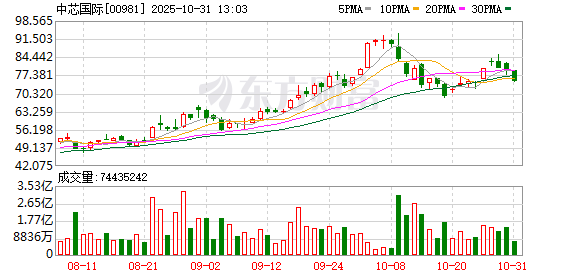
A股三指数下挫,福建牛股11天8板,港股中芯国际跌超5%
2 1 Shi Ji Jing Ji Bao Dao· 2025-10-31 05:00
Market Overview - On October 31, major indices collectively declined, with the Shanghai Composite Index down 0.63% and the ChiNext Index down 1.49% [1] - The trading volume in the Shanghai and Shenzhen markets reached 1.58 trillion yuan, an increase of 27.4 billion yuan compared to the previous trading day [1] - A total of 3,826 stocks rose while 1,497 stocks fell [1] Sector Performance - The North Exchange 50 Index surged over 3%, with companies like Lijia Technology, Betterray, and KunGong Technology each rising over 10% [1] - The pharmaceutical sector saw gains, with Sanofi and Lianhuan Pharmaceutical hitting the daily limit [1] - The lithium battery sector was active, with Tianji shares achieving two consecutive limits and several stocks like Enjie shares also hitting the daily limit [1] Regional Stocks - Fujian local stocks performed well, with Pingtan Development achieving eight limits in eleven days, and other stocks like Fulongma and Fujian Jinsen also gaining [1] Declining Stocks - The computing hardware concept stocks collectively fell, with major adjustments in the "Yizhongtian" optical module trio [1] - Storage chip concept stocks experienced volatility, with Jiangbolong dropping over 10% [1] - Controlled nuclear fusion concept stocks declined, with China Nuclear Construction hitting the daily limit down [1] Hong Kong Market - The Hang Seng Index and Hang Seng Tech Index both showed declines, while biotechnology and healthcare sectors strengthened [2] - Notable declines included China CNR down nearly 9% and BYD down over 5% [2] Japanese Market - The Nikkei 225 Index reached a historical high, surpassing 52,000 points, before retreating slightly to 51,948.26 points, with a gain of 1.21% [2] - Leading sectors included semiconductors, consumer goods, and electricity, with Hitachi rising over 8% [2] Gold Market - Spot gold rose 2.37% in New York trading, but saw a slight decline in early trading in Beijing, falling below the 4,000 yuan mark [2] - Domestic gold jewelry prices returned to around 1,200 yuan per gram, with brands like Chow Sang Sang and Lao Feng Xiang showing daily increases [2] Gold Investment Outlook - The World Gold Council's market analyst expressed an optimistic outlook for the gold market, citing a weakening dollar, general expectations of interest rate cuts, and stagflation risks as supportive factors for gold investment demand [3] - The current market environment suggests that gold still has potential for further upward movement, with strategic value in gold allocation remaining solid [3]
集成电路ETF(159546)开盘跌0.31%,重仓股中芯国际跌0.40%,寒武纪跌0.99%
Xin Lang Cai Jing· 2025-10-31 04:46
Core Viewpoint - The Integrated Circuit ETF (159546) opened at 1.930 yuan, experiencing a slight decline of 0.31% on October 31, 2023 [1] Group 1: ETF Performance - The performance of the Integrated Circuit ETF (159546) is benchmarked against the CSI All-Share Integrated Circuit Index return [1] - Since its establishment on October 11, 2023, the fund has achieved a return of 93.26%, while the return over the past month has been -3.63% [1] Group 2: Major Holdings - Key stocks within the Integrated Circuit ETF include: - SMIC (中芯国际) down 0.40% - Cambrian (寒武纪) down 0.99% - Haiguang Information (海光信息) down 0.08% - Lattice Technology (澜起科技) down 2.63% - GigaDevice (兆易创新) down 0.43% - Haowei Group (豪威集团) down 0.79% - Chipone (芯原股份) up 0.77% - JCET (长电科技) down 0.72% - Unisoc (紫光国微) down 0.15% - Tongfu Microelectronics (通富微电) down 2.06% [1]


恒指午盘跌0.89%,恒生科技指数跌1.91%,芯片股普跌
Mei Ri Jing Ji Xin Wen· 2025-10-31 04:35
Core Viewpoint - The Hang Seng Index closed at 26,050.08 points, down 0.89%, while the Hang Seng Tech Index fell by 1.91% to 5,936.39 points, indicating a bearish trend in the market [1] Group 1: Market Performance - The Hang Seng Index experienced a decline of 0.89% [1] - The Hang Seng Tech Index saw a decrease of 1.91% [1] Group 2: Sector Performance - Innovative drug concept stocks showed strong performance, with 3SBio rising over 10% and Innovent Biologics increasing nearly 7% [1] - Chip stocks generally fell, with Hua Hong Semiconductor dropping nearly 7%, SMIC declining over 5%, and Shanghai Fudan decreasing nearly 5% [1]
A股集体下挫,福建牛股11天8板,港股中芯国际跌超5%
2 1 Shi Ji Jing Ji Bao Dao· 2025-10-31 04:24
10月31日,三大指数集体下挫。上证指数午盘跌0.63%,创业板指跌1.49%。沪深两市半日成交额1.58万亿,较上个交易日放量274亿。市场共3826股上 涨,1497股下跌。 北证50指数拉升涨超3%,力佳科技、贝特瑞、昆工科技、国子软件均涨超10%。消息面上,北交所董事长鲁颂宾在日前演讲中亮出了一组令人振奋的数 据:目前北交所上市公司已达280家,其中中小企业占比超八成,民营企业占比近九成,国家级专精特新"小巨人"企业占比超过一半。(详情) 从板块来看,医药板块逆势上涨,三生国健20cm涨停,联环药业(600513)、昂利康(002940)涨停。锂电板块表现活跃,天际股份(002759)2连板, 恩捷股份(002812)等多股涨停。 福建本地股平潭发展(000592)11天8板,福建板块的福龙马(603686)、福建金森(002679)2连板,卓越新能、路桥信息、金龙汽车(600686)、三木 集团(000632)等跟涨。 金饰一夜涨回1200元 当地时间10月31日纽约尾盘,现货黄金涨2.37%,全天持续震荡上行。北京时间31日早盘,现货黄金小幅下跌,再度跌破4000关口。 国内部分品牌金饰最新克价重 ...
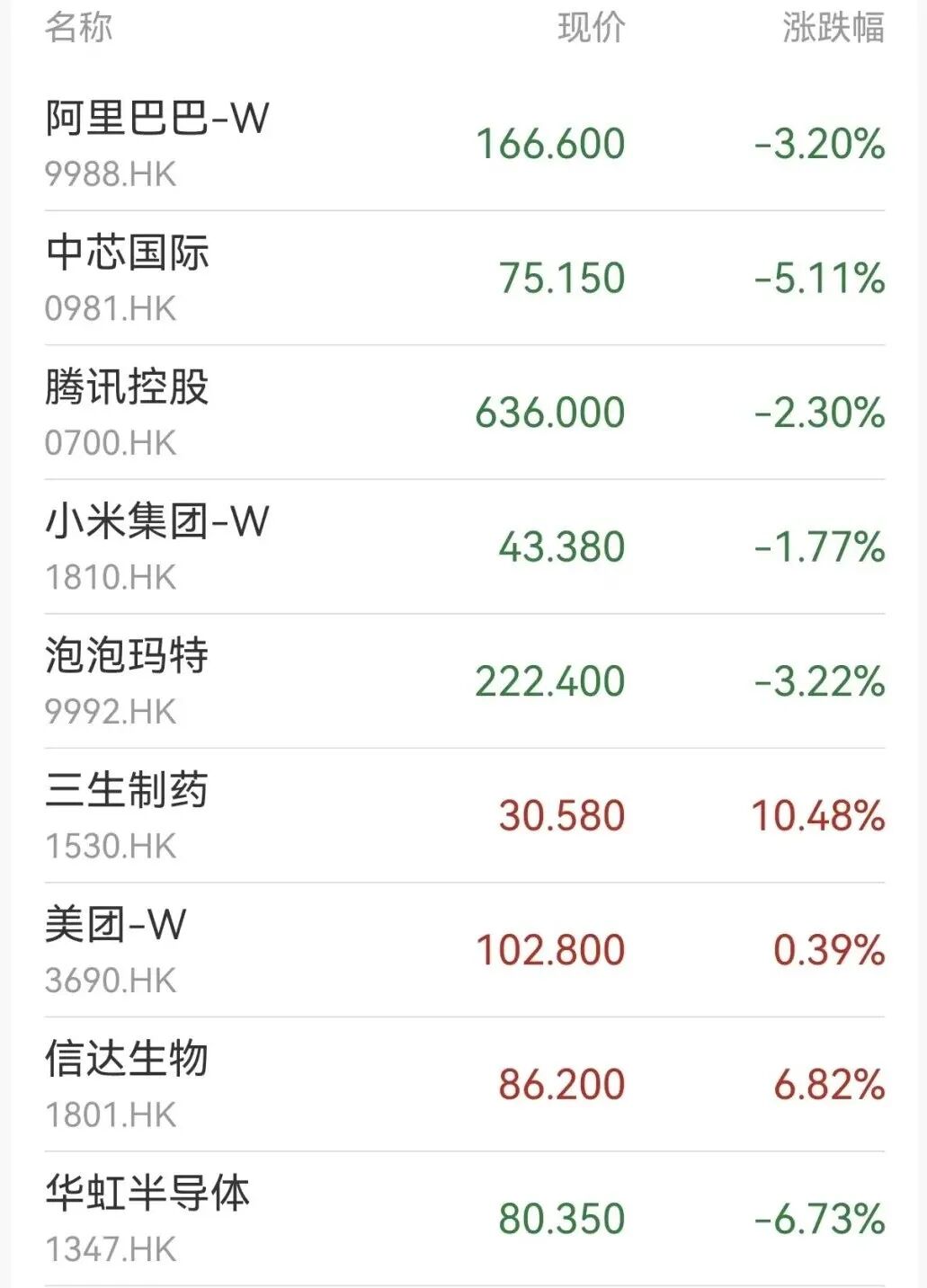
港股午评:恒生指数跌0.89% 恒生科技指数跌1.91%




Xin Lang Cai Jing· 2025-10-31 04:15
Core Viewpoint - The Hong Kong stock market experienced a decline, with the Hang Seng Index falling by 0.89% and the Hang Seng Tech Index dropping by 1.91% [1] Group 1: Market Performance - The Hang Seng Index closed down by 0.89% [1] - The Hang Seng Tech Index decreased by 1.91% [1] Group 2: Company-Specific Movements - Semiconductor Manufacturing International Corporation (SMIC) saw a decline of 5.11% [1] - Xinyi Solar Holdings Limited dropped by 4.77% [1] - BYD Company Limited fell by 3.74% [1] - Hansoh Pharmaceutical Group Company Limited increased by 2.81% [1] - China National Pharmaceutical Group Corporation rose by 2.47% [1]
港股半导体板块盘初下挫,中芯国际、华虹半导体跌超4%,上海复旦跌超3%,英诺赛科、宏光半导体跌2%
Ge Long Hui· 2025-10-31 02:37
Group 1 - The semiconductor sector in Hong Kong experienced a decline, with major companies like SMIC and Hua Hong Semiconductor dropping over 4% [2] - The semiconductor index fell by 3.88%, closing at 5309.924, down 214.057 points [3] - The trading volume was 28.927 million, with a total transaction value of 2.219 billion [3] Group 2 - The "14th Five-Year Plan" aims to accelerate breakthroughs in the entire semiconductor industry chain, focusing on developing new model algorithms and high-performance computing chips [4] - The domestic chip localization rate is expected to increase from 10% in October 2021 to 18% by 2024, with AI chip penetration projected at around 30% for Chinese brands [4] - There is a significant demand for domestic alternatives in CPU, GPU, analog chips, storage chips, and automotive chips due to external restrictions and the clear guidance of the "14th Five-Year Plan" [4]
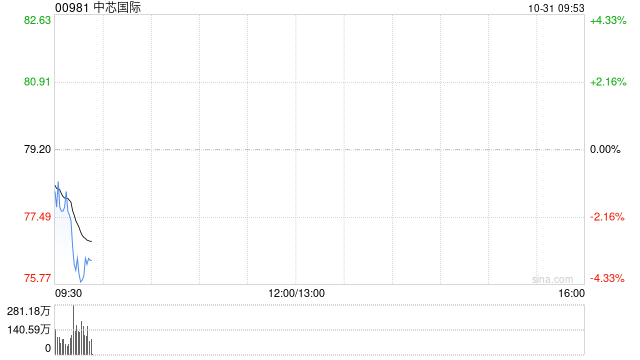
港股半导体股盘初走弱,华虹半导体、中芯国际跌超4%,上海复旦跌超3%
Mei Ri Jing Ji Xin Wen· 2025-10-31 02:08
每经AI快讯,10月31日,港股半导体股盘初走弱,华虹半导体、中芯国际跌超4%,上海复旦跌超3%。 每日经济新闻 ...
中芯国际港股获南向资金连续7日净买入!千亿ETF大厂热推国内首只港股信息技术ETF(159131)全网发售
Xin Lang Ji Jin· 2025-10-31 02:03
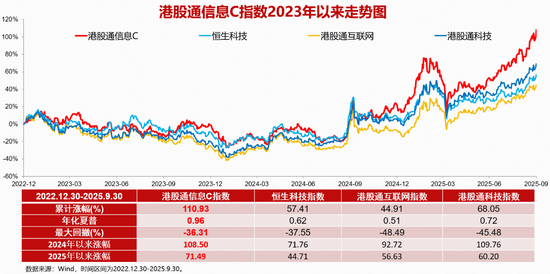
Core Insights - The article highlights the positive momentum in the semiconductor and AI computing sectors following the unexpected outcomes of the US-China summit on October 30, which has led to a continuous net buying of SMIC shares in the Hong Kong market for seven consecutive days, totaling HKD 30.44 billion [1][6] - The launch of the first Hong Kong information technology ETF (159131) is gaining attention as it tracks the CSI Hong Kong Stock Connect Information Technology Composite Index, which focuses on semiconductor, electronics, and software sectors [1][2] Group 1: Market Trends - The Hong Kong Stock Connect Information Technology Composite Index consists of 41 hard technology companies, with a composition of 70% hardware and 30% software, emphasizing a strong focus on semiconductor and electronic sectors [3][5] - The index has shown significant performance, with a cumulative increase of 110.93% from December 30, 2022, to September 30, 2025, outperforming other Hong Kong technology indices [5][8] Group 2: Investment Opportunities - The ETF provides a tool for investors to capitalize on the growth of hard technology assets in Hong Kong, particularly in the semiconductor sector, where SMIC holds a weight of 19.41% in the index [5][6] - The index's high concentration in leading companies aligns with the objective of capturing long-term growth opportunities in the technology sector [5][6] Group 3: Future Outlook - The article indicates a strong demand for quality hard technology companies in Hong Kong, with expectations for more listings in the future, driven by the increasing participation of international long-term funds in the IPO market [6][8] - The current price-to-earnings ratio of the index stands at 42.68, significantly lower than other major global technology indices, suggesting potential growth opportunities for investors [6][8]
智通港股沽空统计|10月31日
智通财经网· 2025-10-31 01:29
Summary of Key Points Core Viewpoint - The report highlights the top short-selling stocks in the market, indicating significant investor sentiment and potential volatility in these companies' stock prices [1]. Group 1: Top Short-Selling Ratios - JD Health-R (86618) has the highest short-selling ratio at 100.00% [2] - China Resources Beer-R (80291) follows with a short-selling ratio of 97.44% [2] - Sun Hung Kai Properties-R (80016) ranks third with a short-selling ratio of 77.85% [2] Group 2: Top Short-Selling Amounts - Alibaba-SW (09988) leads in short-selling amount with 3.449 billion [2] - Tencent Holdings (00700) has a short-selling amount of 3.116 billion [2] - Meituan-W (03690) follows with a short-selling amount of 2.066 billion [2] Group 3: Top Short-Selling Deviation Values - Dream Garden (N23076) has the highest deviation value at 33.73% [2] - Changjiang Life Technology (00775) follows with a deviation value of 32.22% [2] - Geely Automobile-R (80175) ranks third with a deviation value of 30.81% [2]