LENOVO GROUP(00992)

Search documents
联想取得当切换活动上行链路带宽部分时防止传输专利
Jin Rong Jie· 2025-07-29 09:38
本文源自:金融界 作者:情报员 金融界2025年7月29日消息,国家知识产权局信息显示,联想(新加坡)私人有限公司取得一项名为"当 切换活动上行链路带宽部分时防止传输"的专利,授权公告号CN115023971B,申请日期为2021年01月。 ...

中信建投阐述2025年AI投资策略:AIPC具备爆款应用诞生的可能性
智通财经网· 2025-07-29 08:30
Core Insights - The report from CITIC Securities highlights the rapid evolution of large models in AI, emphasizing their transition towards stronger, more efficient, and reliable capabilities since the launch of ChatGPT [1][2] - By 2025, significant acceleration in AI application deployment is expected, with OpenAI achieving an annual recurring revenue (ARR) of $10 billion and Claude's monthly revenue growth exceeding 20% [1][2] - The penetration of AI applications in B-end markets is anticipated to surpass expectations, driven by the integration of AI with existing business operations and the emergence of AI agents [1][2][3] AI Model Development - Large models are evolving towards greater strength, efficiency, and reliability, with a focus on scaling laws, autonomous reasoning capabilities, and multi-modal integration [1][2] - The transition from supervised to unsupervised learning and the increase in model parameters and data volume are key factors in the development of general intelligence [1][2] - The emergence of new capabilities in large models, termed "emergent abilities," is a significant marker of progress in AI [1][2] Market Dynamics - The global AI landscape is characterized by a "bipolar" structure, with China and the US accounting for over 80% of self-developed large models by 2024 [2] - China's DeepSeek-R1 model is closing the gap with top international models, showcasing advancements in inference capabilities and reduced training costs [2] - The commercial potential of AI applications is rapidly increasing, with a notable rise in user adoption rates comparable to the early days of the internet [2][3] Application Trends - AI agents are expected to become a crucial focus in AI development by 2025, with various companies launching their unique agent strategies [2][3] - Multi-modal models are advancing quickly, with significant applications in both consumer and business sectors, enhancing efficiency and reducing costs [3] - The integration of AI into traditional industries, such as education, healthcare, and manufacturing, is set to redefine operational efficiencies and drive growth [6] Infrastructure and Supply Chain - The shift in AI computing power from training to inference is leading to increased demand for cloud computing resources and improved profit margins for providers [4] - Key technological upgrades in cooling systems, copper connections, and power supply units are essential for supporting the growing demands of AI infrastructure [4][5] - The domestic supply chain for AI components is expected to strengthen, driven by the increasing reliance on local chip production and advancements in PCB and optical module technologies [5][6] AI PC Development - The emergence of AI PCs is seen as a significant application area, with major companies like Lenovo launching products equipped with advanced AI capabilities [9] - AI PCs are designed to enhance productivity by enabling local processing of AI tasks, thus ensuring data privacy and responsiveness [9] - The rapid growth of edge AI applications is anticipated, with a wide range of use cases emerging across various sectors [7][8]

越秀证券每日晨报-20250729
越秀证券· 2025-07-29 05:32
Market Performance - The Hang Seng Index closed at 25,562, up 0.68% with a year-to-date increase of 27.43% [1] - The Hang Seng Tech Index closed at 5,664, down 0.24% with a year-to-date increase of 26.77% [1] - The Dow Jones Index closed at 44,837, down 0.14% with a year-to-date increase of 5.39% [1] Currency and Commodity Overview - The RMB Index is at 95.710, down 0.22% over the last month and down 5.14% over the last six months [2] - Brent crude oil is priced at $69.10 per barrel, up 3.40% over the last month but down 5.59% over the last six months [2] - Gold is priced at $3,338.20 per ounce, up 1.04% over the last month and up 20.77% over the last six months [2] Company News - Alibaba has launched its first self-developed AI smart glasses, Quark Glasses, which integrates features from its ecosystem including Alipay [9] - Lenovo has signed a strategic cooperation agreement with China Telecom to explore AI computing and other fields [10] - Audi reported a 24.27% decline in profit for the first half of the year, adjusting its full-year performance guidance downwards [13] - Tesla has signed a $16.5 billion chip supply agreement with Samsung, aimed at producing next-generation AI chips [14] Trade and Economic Data - Hong Kong's exports grew by 11.9% year-on-year last month, marking the 16th consecutive month of growth, although the growth rate has slowed [11] - The Dallas Fed's manufacturing index rose to 0.9 in July, indicating a recovery in factory activity after five months of decline [15] Stock Performance - China Biologic Products Holdings saw a stock price increase of 7.09%, leading the gainers in the Hang Seng Index [17] - BYD's stock price decreased by 1.16%, with a short-selling ratio of 42.43% [19] - The top-performing sectors in the Hong Kong market included biotechnology and pharmaceuticals, while the automotive sector faced declines [20]



对话联想创投:在喧嚣与泡沫中寻找具身智能的真实落点
Zhong Guo Ji Jin Bao· 2025-07-28 09:04
【导读】对话联想创投:在喧嚣与泡沫中寻找具身智能的真实落点 中国基金报记者 莫琳 2025年7月,联想创投周期间,联想创投管理合伙人王光熙、联想创投合伙人林林与媒体进行了一场闭门交流。 王光熙和林林深耕科技投资多年,始终保持审慎立场。在这次交流中,两位谈及AI、具身智能、底层创新和产业协同,数次提及"结构性机会""产业共 振""协同落地",透露出作为CVC(Corporate Venture Capital:企业风险投资)领军人物的他们,对当下热潮的清晰认知。 机器人不是热点 具身智能的爆发,让机器人成为AI产业中最具"想象力"的一环。人形机器人、工业协作臂、AMR、AGV,甚至AI四足狗,几乎成了2025年初投资界的流 量担当。但在王光熙看来,机器人并非新风口,更像是"AI赋能物理世界"的长期演进节点。 他表示,联想创投在十年前就开始布局机器人方向。其关注的不只是硬件形态本身,而且关乎交互方式的根本性演化。 而是交互变革的延续 "机器人将是联想老本行的最终答案。"联想创投合伙人林林曾在内部这样总结。这个判断并不空泛。作为一家深耕硬件与制造的公司,联想对于输入输出 方式的演进有着天然的敏感性。从键盘屏幕到触摸 ...


对话联想创投:在喧嚣与泡沫中寻找具身智能的真实落点
中国基金报· 2025-07-28 08:46
Core Viewpoint - The article discusses the insights from Lenovo Ventures on the current state and future of embodied intelligence and robotics, emphasizing the importance of structural opportunities and industry collaboration in the investment landscape [1][3][5]. Group 1: Embodied Intelligence and Robotics - Embodied intelligence is seen as a significant evolution in the AI industry, with robots becoming a key component of this transformation, rather than just a new trend [3]. - Lenovo Ventures has been investing in robotics for over a decade, focusing on the fundamental evolution of interaction methods rather than just hardware [3][5]. - The true value of embodied intelligence lies in its ability to understand, perceive, and engage with complex physical environments, ultimately enhancing human labor roles [3][5]. Group 2: Market Dynamics and Investment Strategy - Since late 2024, embodied intelligence has become a focal point in the capital markets, with rapid valuation increases in projects and significant interest from various industries [5][6]. - Lenovo Ventures highlights that the essence of the current market bubble is not the valuations themselves but the unfulfilled promises of companies [5]. - The firm emphasizes the importance of delivering real capabilities within three to five years to avoid being labeled as a bubble, contrasting with projects that lack systematic advancement [5][11]. Group 3: Cross-Industry Collaboration - The rise of embodied intelligence is characterized by cross-industry collaboration, with capital bringing not just funding but new resource organization methods [6][8]. - Lenovo Ventures aims to create an ecosystem that integrates research, production, supply, sales, and service, enhancing the value of their investments beyond mere capital [7][8]. - The firm has initiated various programs to support early-stage companies, providing manufacturing resources and facilitating connections with Lenovo's business lines [7][8]. Group 4: Future Outlook and Strategic Focus - The next three to five years are expected to be crucial for determining the industry landscape, with a focus on depth rather than speed in investment strategies [11]. - Lenovo Ventures has invested in over 130 specialized companies, with nearly 50% being new unicorns, reflecting a robust investment framework [10]. - The company prioritizes projects with clear technological loops and commercial pathways, aiming for long-term value rather than chasing the hottest trends [11].

联想与伊利共创制造业AI生态圈
Zheng Quan Ri Bao Wang· 2025-07-28 06:42
Core Insights - The core viewpoint of the articles emphasizes the transformation of China's manufacturing industry through AI, particularly illustrated by the collaboration between Yili and Lenovo, which aims to create a new architecture for AI integration in manufacturing [1][2][4] Group 1: AI Transformation in Manufacturing - Traditional manufacturing faces challenges in integrating advanced technologies while ensuring data security and business continuity, leading to the development of a hybrid AI architecture [2] - Yili's proactive approach in digital transformation includes smart manufacturing, supply chain optimization, and comprehensive marketing, supported by Lenovo's hybrid AI capabilities [2][3] - The collaboration has resulted in the creation of over 600 algorithm models, reshaping the entire production chain from farm management to consumer services [2][3] Group 2: Breakthroughs Achieved - Three major breakthroughs were achieved: redefining "human-machine collaboration" to enhance intelligence rather than speed, creating a consumer-centric business model connecting over 60 million consumers, and establishing an intelligent supply chain that significantly reduces transportation costs and improves delivery efficiency [3] - The integration of digital twin technology and MES systems allows real-time visibility of equipment operation, production line status, and energy consumption data, enhancing production control accuracy [3] Group 3: Practical Implications and Global Relevance - Lenovo's global data indicates a nearly 40% year-on-year increase in AI application within organizations, with some companies experiencing a 31% boost in employee efficiency and operational effectiveness [4] - The partnership between Yili and Lenovo exemplifies a unique path for AI transformation in Chinese manufacturing, balancing the adoption of advanced AI technologies with the need for core capabilities to remain autonomous and controllable [4] - This approach not only addresses the immediate needs of Chinese manufacturing but also offers valuable insights for global manufacturing AI transformations by focusing on architectural restructuring rather than mere acceleration [4]

开放共赢铸就数智未来:联想(00992.HK)与伊利共创制造业AI生态圈
Xin Lang Cai Jing· 2025-07-28 05:31
Core Insights - The core argument of the articles emphasizes that the competitive advantage of Chinese manufacturing in the AI era lies in the ability to restructure the industrial chain rather than just scale and cost efficiency [1][2][5] Group 1: AI Transformation in Manufacturing - The traditional manufacturing sector faces fundamental challenges in AI transformation, particularly in ensuring data security and business continuity while embracing advanced technologies [2][3] - The collaboration between Yili and Lenovo demonstrates a shift from merely adding AI functionalities to existing systems to jointly constructing a hybrid AI architecture [2][3] - Yili's proactive approach in digital transformation across smart manufacturing, supply chain optimization, and marketing showcases the potential of AI to redefine production relationships and business processes [2][3] Group 2: New Business Models and Consumer Engagement - Yili's AI transformation is not just about enhancing existing processes but creating entirely new value creation models, as evidenced by the redefined product safety architecture [5][6] - The introduction of a comprehensive data handling capability allows consumers to access detailed product information, fostering a new trust relationship between the company and consumers [5][6] - Yili's AI applications enable a new service architecture throughout the product lifecycle, allowing for consumer participation in product development and personalized health consultations [5][6] Group 3: Precision and Efficiency in Production - The integration of digital twin technology and MES systems has led to unprecedented precision in production management, ensuring that every product is "100% attentive, 100% safe, and 100% healthy" [6] - Lenovo's data indicates a nearly 40% year-on-year increase in AI application within organizations, with some companies experiencing a 31% boost in employee efficiency and operational effectiveness [6] - The collaboration between Yili and Lenovo exemplifies a unique path for AI transformation in Chinese manufacturing, balancing the adoption of advanced AI technologies with the need for core capabilities to remain controllable [6][7]
从智能眼镜到AI PC 人工智能终端产业重构经济生态
Shang Hai Zheng Quan Bao· 2025-07-27 18:48
Core Viewpoint - The AI terminal industry is undergoing a significant transformation, with smart glasses emerging as a key product that could redefine human-computer interaction and personal data management, potentially becoming the most important mobile entry point after smartphones [2][3]. Group 1: AI Glasses Development - Smart glasses are seen as one of the best carriers for AI implementation, providing practical applications such as calorie counting and navigation [1]. - The "hundred glasses battle" is just the beginning, with smart glasses expected to dramatically increase personal data volume and serve as a sensory hub for human interaction [2]. - Major companies like Rokid and Alibaba are developing advanced features for smart glasses, such as low power consumption, long battery life, and enhanced user experience through innovative technologies [2][3]. Group 2: Traditional Terminals and AI Integration - The integration of AI into traditional terminals is progressing through three stages: app-based AI, functional AI, and systemic AI, with Huawei's HarmonyOS 6.0 entering the third stage [4]. - Lenovo emphasizes the goal of AI terminals to become true "silicon-based twins," fundamentally changing user interaction with technology [5]. - The industry is characterized by a diverse exploration of AI terminals, which will reshape human-computer interaction and expand service consumption boundaries [5][6]. Group 3: Industry Collaboration and Standards - The Ministry of Industry and Information Technology is working on national standards for AI terminal intelligence grading, focusing on innovation, stability, application development, and ecosystem promotion [6]. - Key industry players stress the importance of building a domestic computing foundation and fostering open collaboration to enhance the AI terminal ecosystem [5][6].
联想三大超级智能体首度亮相WAIC 2025
Zheng Quan Shi Bao Wang· 2025-07-27 12:07
Group 1 - Lenovo showcased three major super intelligent systems: Tianxi Personal Super Intelligent System, Lexiang Enterprise Super Intelligent System, and City Super Intelligent System at WAIC2025, highlighting its full-stack AI technology achievements and practical applications in both personal and enterprise intelligence [1] - The Tianxi Personal Super Intelligent System serves as a new generation human-computer interaction interface, featuring five functions: AI control, AI search, AI translation, AI notes, and AI services, while ensuring data security and personal privacy protection [1] - The Lexiang Enterprise Super Intelligent System acts as a new official interface for employees, customers, partners, and the public, forming Lenovo's first "silicon-based team" alongside intelligent systems in marketing, sales, and service [1] Group 2 - The City Super Intelligent System, supported by the "1+N Intelligent System" architecture, demonstrated Smart City 4.0 applications, with strategic partnerships established in cities like Wuyishan, Yichang, Hongkou, and Hohhot, focusing on cultural tourism, energy management, smart transportation, and industrial intelligence [2] - Lenovo's intelligent system matrix also includes Baijing Intelligent System and Xiangbangbang Intelligent System, showcasing immersive AI scenarios in education and healthcare, with the latest version of Baijing Intelligent System and the launch of Baichuang Lab for IT operations, AI office, and AI marketing services [2] - A strategic cooperation signing ceremony between Lenovo and China Telecom was held, aiming to explore collaboration in areas such as basic communication, comprehensive information services, AI computing, international business, and joint expansion in government and enterprise clients [2]
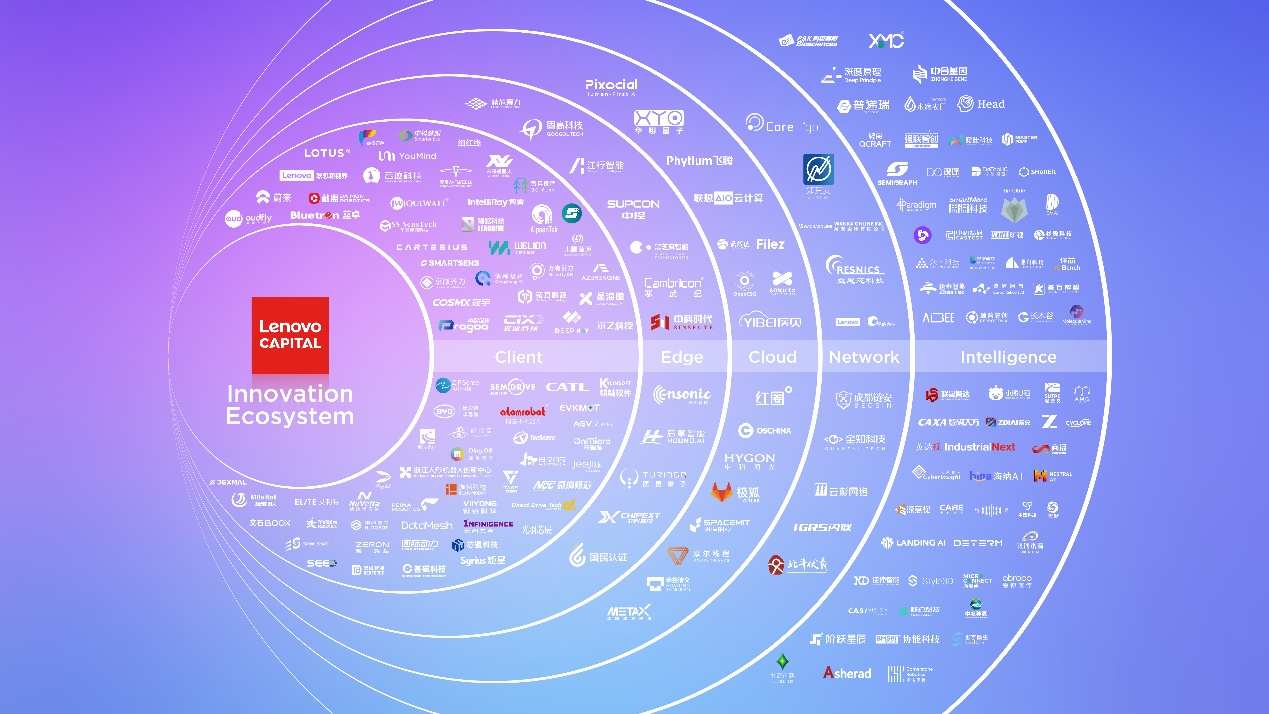
联想集团(00992)的AI投资版图
智通财经网· 2025-07-27 07:45
Core Insights - Lenovo is positioning itself as a leader in the AI ecosystem, moving beyond its traditional PC manufacturing image to create a comprehensive AI empire that spans various applications and technologies [1][3][10] Group 1: Full-stack AGI Layout - Lenovo's strategy in AI focuses on a dual-track approach of "top-tier coverage + architectural innovation" in computing power, targeting leading AI companies in China [3] - Investments in companies like Cambricon Technologies and emerging firms in the RISC-V architecture highlight Lenovo's commitment to next-generation computing power [3][4] - The emphasis on foundational large models reflects Lenovo's belief in their long-term value, even if immediate commercial applications are not evident [4][10] Group 2: Intelligent Agents - Lenovo categorizes intelligent agents into three types: general, vertical, and ToC (consumer) agents, with a focus on creating versatile platforms and specialized tools for various industries [5][8] - The potential for consumer AI applications to create significant market players, akin to ByteDance, is recognized as a key opportunity [5] Group 3: Hardware and Physical Integration - Lenovo's investment strategy includes a focus on hardware as a core enabler for AGI, with significant investments in robotics and AI-native hardware [8][10] - The company has invested in over 50 robotics-related enterprises, covering diverse applications from smart manufacturing to healthcare [8] Group 4: CVC Ecosystem Collaboration - Lenovo Capital and Incubator Group (LCIG) has invested in over 280 tech companies, with a notable success rate in nurturing unicorns and facilitating IPOs [10][11] - The "Light Plan" addresses production challenges for portfolio companies by leveraging Lenovo's manufacturing capabilities, significantly reducing costs [11][12] - The "Star Plan" and "Fire Plan" focus on comprehensive support for startups, from R&D collaboration to early-stage concept validation, fostering innovation in long-term fields like quantum computing [11][12]