
LENOVO GROUP(00992)

Search documents
联想申请RACH时机组的确定专利,可以增强RO确定规则
Jin Rong Jie· 2026-02-04 02:36
国家知识产权局信息显示,联想(北京)有限公司申请一项名为"RACH时机组的确定"的专利,公开号 CN121444575A,申请日期为2023年6月。 专利摘要显示,本公开的各个方面涉及RACH时机(RO)组的确定。在一个方面,用户设备从至少一 个同步信号和物理广播信道(PBCH)块(SSB)到RO关联模式周期中的多个RO中确定RO组集合。多 个RO与相同SSB或相同SSB集合相关联。多个RO中的每个RO与频率索引和时间索引相关联。通过为 RO分配两个索引,即频率索引和时间索引,用户设备可以容易地确定能够用于物理随机接入信道 (PRACH)重复的传输的RO组。以这种方式,可以增强RO确定规则。 天眼查资料显示,联想(北京)有限公司,成立于1992年,位于北京市,是一家以从事计算机、通信和 其他电子设备制造业为主的企业。企业注册资本565000万港元。通过天眼查大数据分析,联想(北京) 有限公司共对外投资了108家企业,参与招投标项目5000次,财产线索方面有商标信息1743条,专利信 息5000条,此外企业还拥有行政许可238个。 本文源自:市场资讯 作者:情报员 声明:市场有风险,投资需谨慎。本文为AI基于第 ...

联想申请功耗调整方法专利,降低目标硬件功耗以延长续航
Jin Rong Jie· 2026-02-03 13:29
国家知识产权局信息显示,联想(北京)有限公司申请一项名为"功耗调整方法、装置及电子设备"的专 利,公开号CN121433477A,申请日期为2025年11月。 专利摘要显示,公开提供了一种功耗调整方法,包括:响应于电子设备的第一供电来源停止供电,且电 子设备的第二供电来源电量小于等于预设电量阈值,获取电子设备中多个硬件的使用信息;使用信息至 少表征硬件在预设时间范围内的使用程度;根据各个使用信息,确定至少一个目标硬件;降低各个目标 硬件的功耗。 天眼查资料显示,联想(北京)有限公司,成立于1992年,位于北京市,是一家以从事计算机、通信和 其他电子设备制造业为主的企业。企业注册资本565000万港元。通过天眼查大数据分析,联想(北京) 有限公司共对外投资了108家企业,参与招投标项目5000次,财产线索方面有商标信息1743条,专利信 息5000条,此外企业还拥有行政许可238个。 声明:市场有风险,投资需谨慎。本文为AI基于第三方数据生成,仅供参考,不构成个人投资建议。 本文源自:市场资讯 作者:情报员 ...
联想取得传输具有延迟的信号专利
Jin Rong Jie· 2026-02-03 10:37
国家知识产权局信息显示,联想(新加坡)私人有限公司取得一项名为"传输具有延迟的信号"的专利, 授权公告号CN115804016B,申请日期为2021年5月。 声明:市场有风险,投资需谨慎。本文为AI基于第三方数据生成,仅供参考,不构成个人投资建议。 本文源自:市场资讯 作者:情报员 ...
联想集团董事长兼CEO杨元庆:以混合式AI推动AI向实
Xin Hua Cai Jing· 2026-02-03 08:07
Group 1 - The core viewpoint of the article emphasizes the importance of integrating artificial intelligence (AI) with manufacturing to enhance China's position in the global value chain, as outlined in the "AI + Manufacturing" action plan released by multiple government departments [2][3] - Lenovo's Chairman and CEO, Yang Yuanqing, highlights that the current wave of AI, driven by large models, fundamentally transforms human-machine interaction, significantly improving cognitive depth and execution efficiency, which is crucial for the integration of AI into the real economy [2][3] - The article discusses the unique advantages China possesses in the field of AI and its integration with the real economy, including a large market space and a comprehensive manufacturing system, which can enhance core competitiveness and stimulate new market demands [3][4] Group 2 - Yang Yuanqing identifies three technical paths for the integration of AI large model technology with industry: public intelligence, private intelligence, and hybrid intelligence, which can effectively leverage the strengths of both while avoiding their inherent limitations [4] - The article stresses that accelerating the "AI towards reality" initiative is essential for Chinese manufacturing to seize opportunities in the current industrial transformation and to ensure sustainable economic development amid global challenges [3][4] - The construction of a hybrid intelligent system tailored to individual and enterprise needs is crucial, requiring a comprehensive approach that includes data security governance, talent development, and ethical standards to ensure a balanced and systematic transformation process [4]

2025全球显示器出货增1.1% 联想出货量增长11%增速领跑
Ge Long Hui· 2026-02-03 07:24
Group 1 - The global display market is projected to reach 128 million units in 2025, reflecting a 1.1% increase from the previous year [1] - OLED displays are a significant growth driver, with shipments surging 72% year-on-year to 24.5 million units [1] - Dell remains the market leader with 22.5 million units shipped, despite a 5% decline in market share [1] Group 2 - The display market is expected to encounter three core opportunities in 2026: technological upgrades, expanded usage scenarios, and localized supply chain optimization [2] - The cost reduction of OLED and Mini LED technologies will enhance market penetration and create ample premium pricing opportunities [2] - The gaming industry and content creation ecosystem are driving demand for high-refresh-rate and high-color-accuracy displays [2]
产业向善的力量:UNGLEP与跨国公司ESG战略赋能共筑全球青年职业可持续发展网络
Huan Qiu Wang· 2026-02-03 07:19
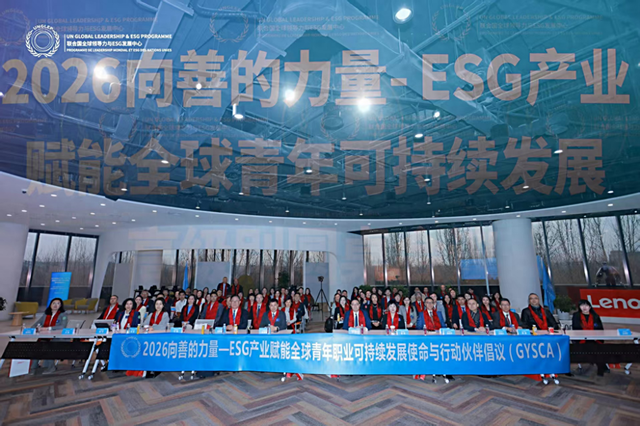
在高级别圆桌对话环节,由道达尔集团亚洲副总裁、中国欧盟能源项目组主席徐忠华博士主持,国务院 原参事、跨境电商50人论坛主席汤敏先生,空中客车中国人力资源副总裁宁斐女士,科锐国际轮值CEO 曾诚女士,世界银行高级经济学家王德文先生,中金公司董事总经理赵可女士,美锦能源(氢能)董事 长姚锦丽女士等嘉宾,围绕"数字经济时代,产业如何系统性赋能青年人才可持续发展"展开深入交流, 从产业协同、金融支持、组织机制创新与人才培养模式升级等多个维度,系统探讨了青年在ESG支持企 业长期转型过程中的角色定位与发展路径。 来源:环球网 北京,2026年1月30日——企业未来的竞争力,取决于今天如何培养青年。在联合国2030年可持续发展 目标进入最后五年的冲刺阶段,2026"向善的力量"——ESG产业赋能全球青年可持续发展高级别圆桌会 议暨联合国全球领导力与ESG发展中心(UNGLEP)高级导师年会,于北京联想集团未来中心成功举 办。本次会议由联合国全球领导力与ESG发展中心(UNGLEP)与联想集团共同主办,汇聚来自联合国 系统、国际多边金融机构、全球领先跨国公司、新质生产力代表企业及顶尖学术智库的近百位代表,共 同回答一个时代 ...
联想集团发布股份变动月报表,确认充足公众持股量
Ge Long Hui· 2026-02-03 06:37
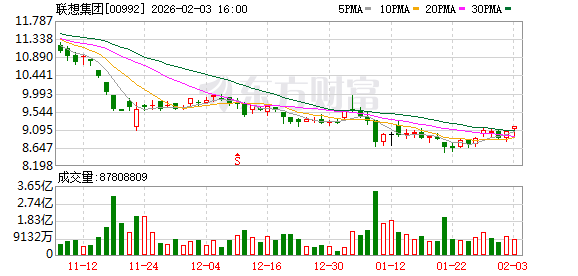
Core Viewpoint - Lenovo Group (00992.HK) submitted a monthly report on share changes to the Hong Kong Stock Exchange, indicating stability in its share structure and compliance with public holding requirements [1] Group 1: Share Capital and Issued Shares - As of January 31, 2026, Lenovo Group's authorized/registered share capital remained unchanged, with a total of 12,404,659,302 issued shares, consistent with the previous month [1] - There are no treasury shares reported, and the company confirms compliance with the applicable public holding requirement, which mandates that at least 25% of issued shares be held by the public [1] Group 2: Convertible Securities - The report updates information regarding convertible securities, specifically noting that 1,150,000,000 warrants issued on January 8, 2025, could potentially increase the share count by 1,187,625,838 shares if fully exercised at an exercise price of HKD 11.92 per share [1] - Additionally, the company issued USD 2,000,000,000 zero-coupon convertible bonds, which could convert into 1,610,618,556 shares at a conversion price of HKD 9.7 per share if fully converted [1]
联想集团发布最新CIO报告:AI投资回报率飙升至179%,企业有望进一步释放效率红利
Ge Long Hui· 2026-02-03 02:54
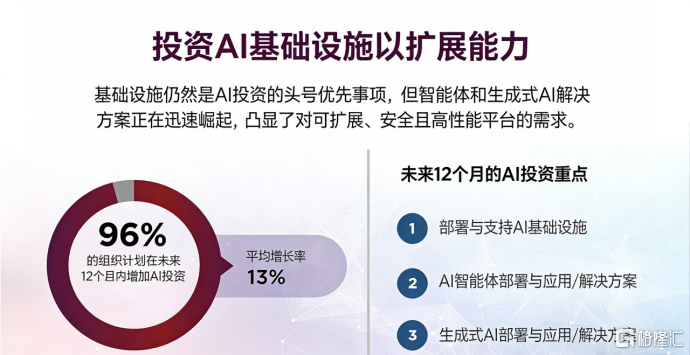
Core Insights - The report indicates that enterprises are increasingly optimistic about the return on AI investments, with a potential return rate of up to 179% as Agentic AI becomes more widely adopted [2][3] - Despite the high expectations, there is a significant gap in AI readiness among organizations, with only 27% having established a robust AI governance framework [2][3] - The transition from Generative AI to Agentic AI is anticipated to occur by 2026, with Agentic AI expected to become the primary focus for CIOs [7][9] Investment Expectations - Enterprises expect AI investments to yield substantial returns, with nearly half (46%) of AI proof-of-concept projects successfully moving into production [3] - A majority (96%) of respondents plan to increase AI investments in the next 12 months, with an average growth rate of 13% [3][11] AI Readiness and Governance - While 60% of organizations believe they are in the mid-to-late stages of AI application, only 27% have a well-established AI governance framework [6][11] - The lack of data quality, skilled personnel, and organizational collaboration is widening the gap between AI aspirations and reality [6] Deployment Trends - Hybrid AI is becoming the preferred deployment model, with 62% of surveyed enterprises choosing it as their main architecture [2][7] - Currently, only 21% of CIOs have deployed Agentic AI in actual business operations, with over half (55%) still in exploratory or pilot phases [2][7] Infrastructure and Support - The successful implementation of Agentic AI will depend on organizations' long-term capabilities, including secure and efficient infrastructure and flexible hybrid architectures [9][11] - Lenovo is introducing solutions to help enterprises transition from pilot projects to scalable AI applications, emphasizing the importance of governance frameworks [11][12] Future Outlook - The role of AI is evolving from a supportive tool to a production entity, necessitating advanced reasoning capabilities and low-latency feedback [7][9] - AI PCs and edge devices are becoming critical components in enterprise AI strategies, directly empowering employees and ensuring business process security [10]
杨元庆在工信部机关刊物发表署名文章:以混合式AI推动AI向实
Xin Lang Cai Jing· 2026-02-03 01:43
Core Viewpoint - The article emphasizes the importance of integrating artificial intelligence (AI) with the real economy to achieve new industrialization, proposing a "Lenovo solution" of "AI + manufacturing" [1][3]. Group 1: AI Integration with Industry - The current wave of AI driven by large models fundamentally reshapes human-machine interaction, enhancing cognitive depth and execution efficiency, allowing machines to autonomously solve problems to some extent [1][3]. - The integration of AI with the real economy is not merely an extension of technology application but is crucial for the profound competition in global industrial chain restructuring [1][3]. - To occupy a proactive position in the future global value chain, AI must be genuinely integrated into the industrial innovation system, bridging the entire chain of technology transformation, scenario application, and ecosystem construction [1][3]. Group 2: Paths for AI Application - There are three technological paths for the integration of large model AI technology with industry: public intelligence, private intelligence, and a hybrid approach that combines both [2][4]. - Hybrid AI can effectively absorb the advantages of both public and private intelligence while avoiding their inherent limitations, providing efficient solutions for empowering various industries and achieving widespread technology accessibility [2][4]. - The key to promoting "AI towards reality" lies in accurately constructing hybrid AI tailored to differentiated needs of individuals and enterprises, focusing on personalized and customized AI products and services [2][4].
联想申请显示控制方法和电子设备专利,基于视线焦点区域配置信息控制光标移动
Jin Rong Jie· 2026-02-02 13:10
Core Viewpoint - Lenovo (Beijing) Co., Ltd. has applied for a patent titled "Display Control Method and Electronic Device," indicating a focus on innovative display control technology [1] Group 1: Patent Application Details - The patent application was published under CN121433496A with a filing date of October 2025 [1] - The disclosed method involves controlling a display based on gaze movement information, determining the focal area on the display screen, and processing this information to control cursor movement [1] Group 2: Company Background - Lenovo (Beijing) Co., Ltd. was established in 1992 and is located in Beijing, primarily engaged in the manufacturing of computers, communications, and other electronic devices [1] - The company has a registered capital of 565 million HKD and has invested in 108 enterprises, participated in 5,000 bidding projects, and holds 1,743 trademark records and 5,000 patent records [1]