
CNCB(00998)

Search documents
中信银行郑州分行圆满完成中国人民银行经理国库40周年主题宣传活动
Zhong Guo Jin Rong Xin Xi Wang· 2025-09-16 12:00
据悉,中信银行郑州分行各辖区机构积极参加属地人行组织的经理国库40周年活动。9月5日,在人民银 行平顶山市分行、平顶山市总工会举办的"中国人民银行经理国库40周年知识技能竞赛"活动中,中信银 行平顶山分行荣获团体一等奖,并获得个人一等奖、二等奖、三等奖各一名。中信银行新乡分行荣 获"国库四十载 竞逐新未来"国库知识与竞赛活动团体二等奖,中信银行洛阳分行在中国人民银行洛阳 市分行举办的"国库知识我知道"线上竞答活动中表现突出,荣获"优秀组织单位"称号。(张营营 方子 匀) 编辑:穆皓 在中国人民银行经理国库四十周年之际,中信银行郑州分行积极响应人民银行号召,精心组织了形式多 样的主题宣传活动。中信银行郑州分行组织职工学习了国库历史,通过梳理国库发展脉络,确保职工熟 练掌握国库知识、提升自身素养。同时,该行充分发挥营业网点"主阵地"作用,在营业大厅显著位置设 立主题宣传专区,并在LED显示屏播放宣传口号;在营业网点设置国库/国债咨询台,由业务骨干为客 户宣讲国库职能,并为新市民、中老年等重点客群提供服务。 此外,中信银行郑州分行还在农贸市场、社区、商铺等地进行宣传,详细介绍人民银行经理国库在国债 发行、资金归集、 ...

银行股午后震荡走弱,宁波银行跌近2%
Mei Ri Jing Ji Xin Wen· 2025-09-16 07:10
每经AI快讯,银行股午后震荡走弱,宁波银行跌近2%,农业银行、浦发银行、中信银行等跌超1%。 (文章来源:每日经济新闻) ...



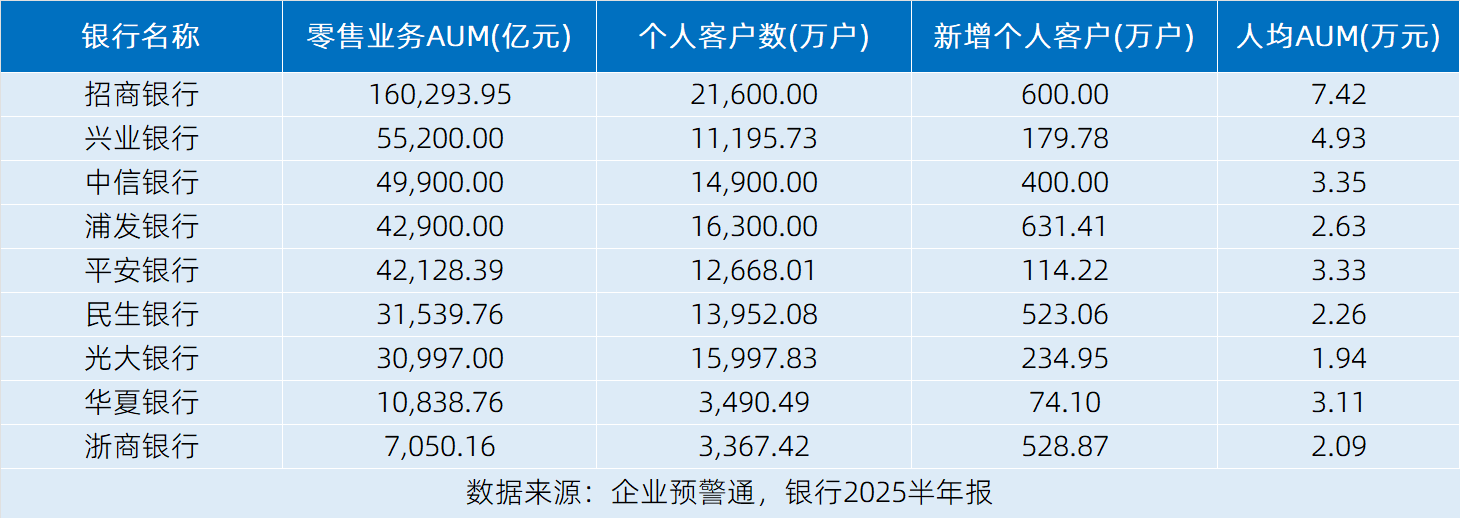
透视9家上市股份行零售金融业务:招商银行、浦发银行、光大银行个人客户数位列前三
Jin Rong Jie· 2025-09-16 03:54
Core Viewpoint - The retail transformation in the financial industry emphasizes personal financial services as a key strategy for banks to adjust their business structure and build differentiated competitive advantages [1] Group 1: Personal Financial Asset (AUM) - China Merchants Bank leads the industry with a retail AUM of 16.03 trillion yuan, significantly ahead of its competitors by over 1 trillion yuan [3] - Industrial Bank ranks second with a retail AUM of 5.52 trillion yuan, showing an 8% increase from the previous year [3] - CITIC Bank, with a retail AUM of 4.99 trillion yuan, has adopted a "retail first strategy" and achieved a 6.52% growth [4] Group 2: Number of Personal Customers - China Merchants Bank has the largest personal customer base with 216 million customers, enhancing its cross-selling opportunities [5] - Shanghai Pudong Development Bank follows with 163 million customers, leveraging online and offline channels for customer acquisition [5] - China Everbright Bank ranks third with 160 million customers, utilizing precise marketing strategies to attract specific customer segments [5] Group 3: New Personal Customer Acquisition - Shanghai Pudong Development Bank leads in new customer acquisition with 6.31 million new customers, continuing its online and offline customer acquisition strategy [6] - China Merchants Bank ranks second with 6 million new customers, indicating a lower growth rate relative to its existing customer base [6] - Zhejiang Commercial Bank reported a growth of 5.29 million new customers, focusing on various targeted customer segments [6] Group 4: Average AUM per Customer - China Merchants Bank has the highest average AUM per customer at 74,200 yuan, reflecting its strong wealth management capabilities [7] - Industrial Bank ranks second with an average AUM of 49,300 yuan, maintaining a strong position in customer asset management [7] - CITIC Bank, Ping An Bank, and Huaxia Bank have average AUMs ranging from 30,000 to 40,000 yuan, indicating a need for improvement in high-net-worth service capabilities [8]



中信银行九江经开支行开展“2025年反假货币宣传月暨优化人民币现金支付”宣传活动
Zhong Guo Jin Rong Xin Xi Wang· 2025-09-15 11:38
Core Points - The article discusses a series of promotional activities conducted by China CITIC Bank's Jiujiang Economic Development Branch aimed at enhancing public awareness of counterfeit currency and protecting the legal status of the Renminbi [1][2] - The activities include online education through community WeChat groups, distribution of promotional materials, and interactive quizzes to improve the public's ability to identify counterfeit currency [1][2] Group 1 - The Jiujiang Economic Development Branch organized a campaign titled "Building a Strong Currency Security Network to Protect the People's Wallets" to promote anti-counterfeit currency knowledge [1] - The branch utilized various methods such as community outreach, merchant inspections, and street performances to educate the public about the importance of accepting Renminbi and the legal implications of refusing it [2] - The campaign encourages businesses to sign a "Commitment to Accept Renminbi Cash" and display signs supporting cash payments [2] Group 2 - The branch plans to continue its efforts through a combination of online and offline activities to further educate the public on Renminbi knowledge and enhance awareness of counterfeit currency prevention [2] - The initiative aims to create a harmonious cash circulation environment and strengthen the public's sense of responsibility regarding counterfeit currency [2]
有银行开30万年薪,和大厂争夺AI人才,金融科技招聘需求翻倍
3 6 Ke· 2025-09-15 08:26
Group 1 - The recruitment market is experiencing a peak during the "golden September and silver October" period, with major banks like ICBC, ABC, SPDB, and CMB launching their 2026 campus recruitment initiatives [1][2] - There is a significant demand for fintech talent, with some banks reporting a 100% increase in the need for such positions [2][3] - The focus on AI-related talent is growing, with banks like ICBC introducing specialized recruitment for AI roles for the first time, aiming to hire around 20 individuals with backgrounds in artificial intelligence and big data [2][3] Group 2 - Local banks are also actively seeking AI talent, with institutions like Hangzhou Bank and Shanghai Rural Commercial Bank offering positions related to AI and fintech [3] - The trend indicates a shift in the banking industry towards integrating AI into core business functions, moving from pilot projects to large-scale value creation [3][4] - The demand for AI talent reflects a broader transformation where AI is becoming a strategic foundation rather than just a tool, with three key trends: AI becoming a core driver, accelerated data value release, and deep organizational restructuring [4][5] Group 3 - The salary range for AI-related positions in banks is generally lower than that in internet companies, with annual salaries for algorithm positions in banks typically between 200,000 to 350,000 yuan [6][7] - Many banks require new hires to undergo a rotation in grassroots positions, even for tech roles, indicating a comprehensive training approach [7] - The urgent need for "AI + business" hybrid talent highlights the challenges and opportunities in the banking sector, as organizations face pressures in both recruitment and training of such talent [7]

服务实体经济 中信银行郑州分行助力消费产业升级
Huan Qiu Wang· 2025-09-15 08:13
Core Viewpoint - The event organized by CITIC Bank Zhengzhou Branch and Lichu Business Services aims to discuss new trends, opportunities, and collaborations in the chain industry, emphasizing the bank's commitment to supporting local economic growth through comprehensive financial services [1] Group 1: Event Overview - CITIC Bank Zhengzhou Branch has been operating in Henan for 27 years, aligning its growth with the regional economy [1] - The event is part of a strategy to create a "chain industry community," focusing on integrated services of financing, production, and intelligence to help chain enterprises expand and upgrade the consumption industry in Henan [1] Group 2: Expert Insights - Industry experts from Lichu Business Services shared insights on "CBK business-finance integration," addressing core challenges faced by chain enterprises such as store expansion, capital management, and data-driven decision-making [1] - Successful local case studies were presented to illustrate the construction of an open ecosystem [1] Group 3: Financial Solutions - CITIC Bank's retail and transaction banking departments provided explanations on service solutions tailored for the chain industry, focusing on a five-dimensional financial leap involving collection, payment, management, financing, and taxation [1] - The private banking department introduced CITIC Bank's private banking rights system [1] Group 4: Future Initiatives - The event marks an important initiative for CITIC Bank Zhengzhou Branch to integrate resources and serve the real economy [1] - The bank plans to use this event as a starting point to collaborate with more ecosystem partners to build a "chain enterprise growth alliance," offering integrated solutions combining finance, technology, and operations [1]
中信银行将在9月21日进行系统升级维护工作
Jin Tou Wang· 2025-09-15 02:58
Core Viewpoint - CITIC Bank (601998) announced a system upgrade maintenance scheduled from September 21, 2025, 00:40 to September 21, 2025, 05:00, aimed at providing better and more convenient services [1] Group 1 - During the maintenance period, there will be a temporary interruption of services for public online banking login, activity center standard queries, and personal credit-related businesses [1] - Mobile banking, WeChat public account, personal online banking, 95558 self-service voice, cash self-service machines, and cloud marketing-related electronic channel services will also experience temporary service interruptions [1] - Customers are advised to make necessary financial arrangements in advance due to the expected service disruptions [1]
8月金融数据点评:存款非银化延续,贷款投放或“价在量先”
KAIYUAN SECURITIES· 2025-09-14 08:06
Investment Rating - The industry investment rating is "Overweight" (maintained) [1] Core Viewpoints - The report indicates that the financial management scale is expected to benefit, and there may be changes in investment fund preferences due to new regulations on fund sales [3] - The trend of deposit non-bankization continues, with loan issuance potentially prioritizing price over volume [4] - The report highlights a decrease in both corporate and personal loans in August, with a notable decline in short-term and medium-to-long-term loans [5][6] Summary by Sections Financial Data - In August, M1 and M2 year-on-year growth rates were 6.00% (up 0.4 percentage points month-on-month) and 8.80% (unchanged month-on-month), respectively [4] - The total social financing (社融) increased by 2.57 trillion yuan in August, a year-on-year decrease of 463 billion yuan, with a stock growth rate of 8.8% (down 0.2 percentage points month-on-month) [4] - The new RMB loans amounted to 590 billion yuan in August, a year-on-year decrease of 310 billion yuan [5] Loan Analysis - Corporate loans showed a decline, with medium-to-long-term loans decreasing by 20 billion yuan year-on-year, while short-term loans increased by 70 billion yuan, marking the first positive growth in five years for corporate short-term loans [6] - Residential loans also decreased, with medium-to-long-term loans adding only 20 billion yuan, a year-on-year decrease of 100 billion yuan [6] Investment Recommendations - The report anticipates a recovery in credit rhythm in September, with potential short-term loan growth for enterprises [7] - Recommended bank stocks include Agricultural Bank of China, China Merchants Bank, CITIC Bank, Industrial Bank, Beijing Bank, Jiangsu Bank, Hangzhou Bank, Chengdu Bank, and Chongqing Rural Commercial Bank [7]
9家金融机构,被罚超1.5亿元
Shang Hai Zheng Quan Bao· 2025-09-13 08:37
Core Viewpoint - A number of financial institutions in China have been penalized by the Financial Regulatory Bureau, with total fines exceeding 150 million yuan, highlighting issues related to compliance and risk management practices across the sector [1][2]. Group 1: Penalties on Major Banks - Guangfa Bank and Hengfeng Bank were fined over 60 million yuan each, with Guangfa Bank receiving a fine of 66.7 million yuan due to imprudent management of loans, bills, and factoring, as well as non-compliance in regulatory data reporting [2]. - Hengfeng Bank was fined 61.5 million yuan for similar violations, including imprudent management of loans and regulatory data reporting [2]. - Both banks acknowledged the penalties and stated they have completed the necessary rectifications and are committed to improving their risk management frameworks [2]. Group 2: Other Financial Institutions Penalized - Huaxia Wealth Management was fined 12 million yuan for non-compliance in investment operations and regulatory data reporting [3]. - Several other institutions, including China Export-Import Bank, China Construction Bank, and Everbright Bank, received fines exceeding 1 million yuan for various compliance failures, such as inaccurate risk classification and inadequate management of outsourced IT services [4]. - Notably, China Export-Import Bank was fined 1.3 million yuan for inadequate country risk management, while Everbright Bank faced a fine of 4.3 million yuan for deficiencies in IT outsourcing management [4].


8家银行被罚1.487亿元!多张罚单,集中公布……
券商中国· 2025-09-13 05:16
Core Viewpoint - Multiple financial institutions have been fined by regulatory authorities for various compliance and operational deficiencies, highlighting the need for improved risk management and compliance systems across the sector [2][3][4]. Group 1: Penalties Overview - On September 12, the National Financial Regulatory Administration disclosed penalties against several financial institutions, with a total of 148.7 million yuan (approximately 21.1 million USD) imposed on 8 banks, 14.2 million yuan (approximately 2 million USD) on 2 wealth management companies, and 2.825 million yuan (approximately 400,000 USD) on 1 insurance company [2]. - The penalties stem from issues such as deficiencies in information technology and system management, weak risk management and internal controls, violations in investment and wealth management operations, and problems with data governance and reporting [2]. Group 2: Specific Violations by Banks - Several banks, including Guangfa Bank, Hengfeng Bank, Minsheng Bank, and others, received fines exceeding 1 million yuan for violations related to regulatory data misreporting and improper management of loans and wealth management [3]. - Guangfa Bank was fined 66.7 million yuan (approximately 9.5 million USD) for improper management of loans and regulatory data misreporting, with two responsible individuals fined a total of 100,000 yuan (approximately 14,000 USD) [3]. - Hengfeng Bank faced a fine of 61.5 million yuan (approximately 8.7 million USD) for similar violations, with four responsible personnel fined a total of 250,000 yuan (approximately 35,000 USD) [3]. Group 3: Wealth Management and Investment Violations - Wealth management and investment operations were significant areas of concern, with institutions like Huaxia Wealth Management fined 12 million yuan (approximately 1.7 million USD) for non-compliance in investment operations and data reporting [4]. - Citic Bank was fined 5.5 million yuan (approximately 780,000 USD) for inaccurate risk classification in wealth management assets, while its subsidiary, Xinyin Wealth Management, was fined 2.2 million yuan (approximately 310,000 USD) for regulatory non-compliance in product naming and investment ratios [4]. - In the insurance sector, Hengda Life Insurance faced penalties for severe non-compliance in fund utilization and management, resulting in fines totaling 2.825 million yuan (approximately 400,000 USD) for 20 responsible personnel [4]. Group 4: Policy Bank Penalties - The only policy bank involved in this round of penalties was the China Export-Import Bank, which was fined 1.3 million yuan (approximately 180,000 USD) for inadequate country risk management and salary payment management [5].

