
CHINA RES LAND(01109)

Search documents
2025中国房企品牌价值研究报告重磅发布!
Sou Hu Cai Jing· 2025-05-28 19:01
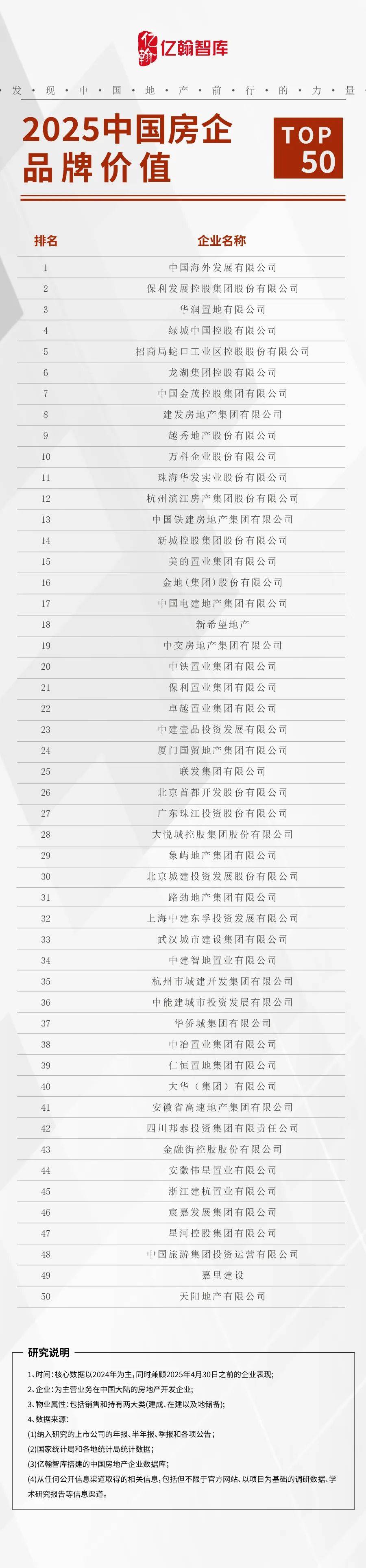
Core Viewpoint - The 9th CRS Summit "C9·2025 China Industry Resource Strategy Summit" was held on May 28, focusing on the transformation paths and development opportunities in the real estate industry under the dual-track system, with the release of significant research reports including the "2025 China Real Estate Company Brand Value TOP 50" [1] Industry Overview - The summit gathered experts and industry leaders from real estate, property management, and rental housing sectors to discuss the industry's transformation and opportunities [1] - The new "Good House" regulations will be implemented from May 1, 2025, setting higher standards for residential projects, which is expected to positively impact the real estate market [31] - Major cities like Hangzhou, Shenzhen, and Shanghai are witnessing a rise in high-end residential sales, indicating a market recovery [31] Brand Value Rankings - The "2025 China Real Estate Company Brand Value TOP 50" report highlighted leading companies such as China Overseas Development, Poly Developments, and China Resources Land [4][5][8][11][13][16] - In Beijing, the top-ranked companies include China Overseas, China Merchants Shekou, and Poly Developments [10][11] - In Guangzhou, Poly Developments and Yuexiu Property lead the rankings [13] Research Methodology - The core data for the brand value assessment is primarily based on 2024 performance, with consideration for data up to April 30, 2025 [7][10][20] - The research includes data from annual reports, statistical data from national and local statistics bureaus, and a database built by Yihan Think Tank [7][10][20] Market Dynamics - Major state-owned enterprises like China Overseas, Poly, China Resources, and China Merchants dominate the market in key cities, with sales exceeding 100 billion [32][33] - Local companies have also achieved significant success by focusing on their local markets, such as Hangzhou's Binjiang Group and Shenzhen's Hongrongyuan [33] Product Development - Real estate companies are constructing differentiated "Good House" product systems based on four core standards: safety, comfort, green, and smart [35] - Companies like Yuexiu and Greenland are implementing comprehensive standards to enhance product quality and brand image [35] Brand Ecosystem - Companies are diversifying their business models to create a brand ecosystem that integrates development, operation, and service [39] - The focus is on building a community ecosystem that encourages user co-creation and enhances customer engagement [48] Marketing Strategies - Real estate firms are adopting youth-oriented marketing strategies to engage younger demographics through social media and immersive experiences [44] - AI tools are being utilized for promotional activities, enhancing brand visibility and engagement [47]



“好房子”家国命题下,房企产品力进阶大盘点
克而瑞地产研究· 2025-05-28 09:33
Core Viewpoint - The concept of "Good House" has been introduced in the government work report, providing policy guidance for the "housing for all" initiative, marking a significant shift from policy advocacy to a binding national standard with the implementation of the "Residential Project Specification" on May 1, 2025, leading to a profound transformation in the industry from "quantity" to "quality" [2][3]. Group 1: Industry Response to "Good House" - Over 50% of monitored real estate companies have mentioned "Good House" in their official communications this year, indicating a strong industry response to this significant concept [2]. - Various companies have developed comprehensive systems to ensure their products meet the expectations and standards set by the "Good House" initiative, integrating their past experiences and advancements in the quality era [2][3]. Group 2: Company Standards and Innovations - Greentown China introduced the industry's first "Good House" standard, focusing on six key elements: aesthetics, affordability, intelligence, low carbon, full lifecycle, and health [3]. - China Electric Power Real Estate established a "Good House" standard with six dimensions and 165 technical parameters, emphasizing safety, health, green, and smart features [3]. - Poly Developments proposed a "Cultural Community" product concept, integrating "good products, good services, good living" as its core strategy [3]. - China Resources Land has established a "Good House" system focusing on community, product, and service, detailing twelve key scenarios to meet customer needs [3][6]. Group 3: Addressing Consumer Pain Points - The focus on consumer needs has become paramount, with companies like Greentown China responding to insights from a lifestyle demand report by offering customized living spaces [10]. - China State Construction developed a "Good House" construction system based on extensive customer feedback, addressing over 95% of common residential pain points [11]. - China Overseas Property launched the Living OS system, aiming to meet diverse customer expectations through a technology-driven approach [13]. Group 4: Technological Integration - The integration of technology and intelligence into housing products is a growing trend, with companies like Poly Developments implementing a comprehensive smart response across their product and service chains [14]. - Wuhan Urban Construction is utilizing BIM technology in its projects to enhance construction efficiency and quality control [14][16]. - Jinji Real Estate is collaborating with Huawei to provide smart home systems for high-end residential projects, aiming to create a holistic intelligent living environment [17]. Group 5: Product Launches and Market Trends - The "Good House" era has seen the launch of innovative products, such as Huafa's "Good House" project in Zhuhai, featuring advanced technology like AI butlers and drone delivery systems [18]. - China State Construction has introduced several projects with "Good House" characteristics, focusing on green and low-carbon living environments [21]. - Poly Developments' project "Zhenluan" emphasizes functional aesthetics, transforming traditional luxury into practical living spaces [24]. Group 6: Future Developments and Evaluations - The 2025 semi-annual CRIC "China Real Estate Product Evaluation" has been initiated, including a new category for "Good House" evaluations, with results expected in June [25][27].




优质土储联合行动 | 2025年5月房地产企业新增土地储备报告
Sou Hu Cai Jing· 2025-05-26 11:51
Core Insights - The report highlights a competitive landscape among real estate companies for acquiring quality land reserves, with a notable increase in land acquisition activities during the first four months of the year [5][12][15]. Group 1: Land Acquisition Trends - The top companies in land acquisition from January to April include Poly Developments, China Overseas, and Greentown China, with land reserves of 145.57 million square meters, 128.22 million square meters, and 126.75 million square meters respectively [11][12]. - The total land area acquired by the top 50 real estate companies in April was 454.01 million square meters, reflecting a month-on-month increase of 30.85% [8][12]. - The total investment in land acquisition by leading companies during this period was significant, with Greentown China leading at 291.44 billion yuan, followed closely by China Overseas at 272.91 billion yuan [12][13]. Group 2: Market Dynamics - The supply of residential land in first, second, and third-tier cities has decreased, with 450 plots offered, totaling 2,504.16 million square meters, representing a month-on-month decline of 9.13% and a year-on-year decline of 19.04% [16][18]. - The average transaction price for residential land increased to 6,579.75 yuan per square meter, with a month-on-month increase of 12.5% and a year-on-year increase of 26.37% [22][24]. - The competitive bidding for core land plots has intensified, with several major companies forming alliances to secure high-quality land [6][35]. Group 3: Government Policies and Support - The central government has emphasized the need for high-quality housing supply and has initiated policies to optimize the land supply structure, which is expected to stabilize the market [16][18]. - The government is also supporting urban renewal projects, with significant funding allocated to improve old residential areas, particularly in cities like Shijiazhuang and Shanghai [7][36][39]. - Local governments are increasingly collaborating with state-owned enterprises to enhance urban renewal efforts, indicating a shift towards more integrated development strategies [15][37].
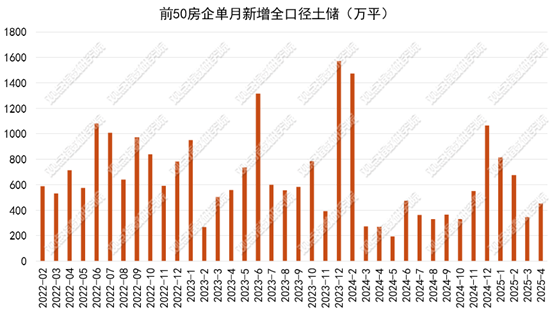
观点指数:前50房企5月新增土地建筑面积454.01万平方米 环比上升30.85%
智通财经网· 2025-05-26 11:37
Core Insights - The report indicates a significant increase in land acquisition by the top 50 real estate companies, with a monthly increase of 454.01 million square meters, representing a 30.85% month-on-month rise [1] - The leading companies in land investment from January to April include Greentown China, China Overseas Property, and others, with equity land acquisition amounts reaching 291.44 billion, 272.91 billion, and 269.68 billion yuan respectively [1] - The total value of newly acquired land from January to April shows that China Jinmao and Yuexiu Property led with 559.61 billion and 544.67 billion yuan respectively [3] Land Transaction Overview - During the report period, 360 residential land transactions occurred across first, second, and third-tier cities, with a total planned building area of 1,964.82 million square meters, marking a 7.22% increase month-on-month and a 4.22% increase year-on-year [5] - The total transaction price reached 1,291.5 billion yuan, reflecting a 20.62% month-on-month increase and a 31.7% year-on-year increase [5] - The average floor price was 6,579.75 yuan per square meter, with a month-on-month increase of 12.5% and a year-on-year increase of 26.37% [5] City-Level Land Transaction Data - In April 2025, first-tier cities saw a total of 44.1 million square meters of land transacted, with a total price of 179.9 billion yuan and an average floor price of 40,839 yuan per square meter [7] - Second-tier cities experienced a month-on-month decrease in transaction volume but a year-on-year increase in both transaction price and average floor price [7] - Third-tier cities showed a 20.8% month-on-month increase in transaction volume, with a 3.3% year-on-year increase [7] Competitive Landscape - The report highlights that non-core land parcels are often sold at base prices, while core parcels attract competitive bidding, primarily from local enterprises in second and third-tier cities [8] - In key cities, there were 36 residential land parcels available for bidding, with a starting price of 552.16 billion yuan and a total area of 147.76 million square meters, indicating a 48% increase in offered area compared to the previous period [10] - The competitive landscape for high-quality core land is characterized by joint bidding among leading developers [12]


大国水岸波澜壮阔处,耀启西安“国际滨水生活”
Xin Lang Cai Jing· 2025-05-26 02:07
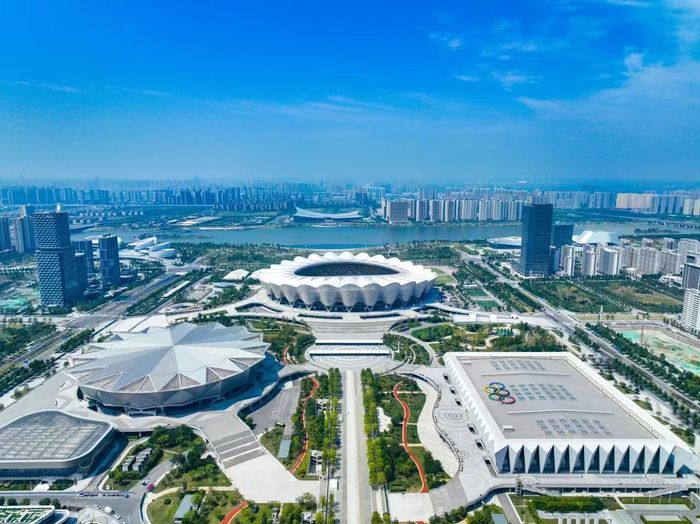
Core Viewpoint - The article emphasizes the transition from a road-centric urban revival to a river-centric development model, highlighting the significance of riverfront areas in urban growth and cultural resurgence [1][2]. Group 1: Urban Development and Cultural Significance - Xi'an is experiencing a renaissance, marked by significant events such as the 14th National Games and the China-Central Asia Summit, positioning it as a key player in the Belt and Road Initiative [2][4]. - The historical significance of Xi'an is underscored, with references to its past as a cultural and commercial hub along the Silk Road, suggesting a revival of its former glory [1][2]. Group 2: Riverfront Development - The article discusses the concept of "waterfront city development," drawing parallels with global cities like London and Paris, where rivers play a crucial role in urban identity and growth [4][5]. - The transformation of the Shaanxi region, particularly the Chang'an International Port, is highlighted as a pivotal area for international cultural exchange and economic development [5][8]. Group 3: Corporate Involvement and Investment - China Resources Land has been a significant player in Xi'an's urban development, investing over 28 billion yuan in various projects, including commercial, residential, and public infrastructure [12][13]. - The company has established a strong presence in Xi'an since 2012, contributing to the city's modernization and internationalization through strategic partnerships and development projects [9][12]. Group 4: Future Prospects - The article anticipates the emergence of a new "land king" in Xi'an, with China Resources Land acquiring a prime riverfront plot for approximately 1.177 billion yuan, signaling confidence in the local real estate market [18][19]. - The development is expected to enhance the city's appeal and set a new benchmark for high-end residential living, reflecting the ongoing trend of "waterfront city" initiatives [19][20].
房地产行业最新观点及25年1-4月数据深度解读
CMS· 2025-05-25 10:25
Investment Rating - The report maintains a recommendation for the real estate industry, indicating a cautious outlook with potential for gradual recovery in the market [3]. Core Insights - The real estate market continues to experience low-level fluctuations, with construction completions showing a year-on-year decline, indicating a challenging environment for developers [1][42]. - New construction starts are expected to gradually decrease in their rate of decline throughout the first half of 2025, driven by stabilizing housing demand and strategic adjustments by developers [2][43]. - The report highlights the importance of government policies aimed at stabilizing the real estate market, with a focus on urban renewal and optimizing existing property acquisition strategies [40][41]. Summary by Sections Sales and Market Performance - In April, the year-on-year growth rate of sales area adjusted for the base period was -2.1%, reflecting ongoing low market activity and suppressed buyer sentiment [7][13]. - The total sales area for January to April was 28.26 million square meters, with a cumulative year-on-year decline of 2.8% [9][14]. - The sales amount for April was 270.35 billion yuan, showing a year-on-year decrease of 3.2% [9][14]. Construction and Investment - The new construction area in April saw a year-on-year decline of 22.1%, with expectations for a gradual narrowing of this decline in the coming months [2][43]. - The total investment in real estate development for April was 277.30 billion yuan, reflecting a year-on-year decrease of 10.3% [9][12]. - The completion area in April decreased by 27.9% year-on-year, indicating a faster-than-expected decline in construction completions [42][46]. Financial Indicators - The funding index for the real estate sector showed a downward trend, currently at a historically low level, suggesting potential improvements in cash flow for some companies [2][9]. - The funding sources for real estate development in April totaled 325.96 billion yuan, with a year-on-year decline of 4.1% [12][41]. Price Trends - The new home prices in 70 cities fell by 0.12% month-on-month in April, with an increasing number of cities experiencing price declines [10][11]. - The average price of new homes was 9,566 yuan per square meter, reflecting a slight year-on-year decrease of 0.4% [12][14].

如何打造“好房子”
经济观察报· 2025-05-23 14:00
Core Viewpoint - The article emphasizes that real estate companies are shifting their focus from traditional development models to addressing the real needs of customers by creating "good houses" that solve common pain points in the housing industry [1][3]. Pain Points - According to the 2024 residential quality complaint report by the China Index Academy, common complaints include water leakage (18%), noise issues (15%), and insufficient storage space (12%), which are now key areas for real estate companies to address in their "good house" product lines [5]. - China Overseas Land & Investment has developed a "6633" living demand framework based on 33,000 customer cases, focusing on 101 high-frequency pain points among 172 identified needs, prioritizing basic quality issues in housing [5][6]. Solutions to Pain Points - China Overseas has implemented specific solutions in their "good house" products, such as advanced waterproofing techniques that reduce leakage rates by approximately 80% compared to industry averages, and noise reduction systems that decrease complaints by 87% [7]. - Other companies like China Resources Land have also focused on addressing resident pain points, such as using soundproofing materials to enhance living conditions [7][8]. Resource Integration - Real estate companies are increasingly integrating internal and external resources to enhance product offerings and brand recognition, with examples including the collaboration between Dalian Wanda and COFCO to incorporate health concepts into real estate projects [10][11]. - Companies like Longfor Group are leveraging their resources in commercial, elderly care, and rental sectors to enrich the value of their residential offerings [11]. Core Competitiveness - The transition from traditional housing to "good houses" is supported by the resources and technologies of parent companies, with examples including China Overseas leveraging its parent company's engineering and green building technologies [15][16]. - Companies are developing unique product identities and competitive advantages through the integration of cultural and operational resources, such as Poly Developments' focus on cultural integration within communities [16].

华润置地(01109) - 关连交易 - 收购目标公司的股权
2025-05-23 10:42
董 事 會 欣 然 宣 佈 , 於 二 零 二 五 年 五 月 二 十 三 日 , 買 方( 本 公 司 間 接 全 資 附 屬 公 司 )與 賣 方 及 目 標 公 司 就 買 賣 目 標 股 權 訂 立 股 權 轉 讓 協 議 , 據 此 , 買 方 同 意 購 買而賣方同意出售目標股權( 相當於目標公司全部註冊資本的100 % ),代價為人 民幣200,791,265.57元( 相當於約218,251,375.62港元 )及適用利息,惟須受股權轉 讓協議所載的條款及條件規限。 於本公告日期,買方為本公司的間接全資附屬公司。由於華潤股份擁有本公司 已發行股本總額約59.55 %的權益,為本公司的控股股東,故華潤股份為本公司 的關連人士。賣方為華潤股份的間接全資附屬公司,故賣方亦為華潤股份的聯 繫 人及 本 公 司的 關 連人 士 。 因此 , 根 據上 市 規 則第 14A 章, 收 購 事項 構 成 本公 司 的 關 連 交 易 。 由 於 收 購 事 項 的 一 項 以 上 適 用 百 分 比 率 超 過 0. 1 % 但 均 低 於 5 %,故根據上市規則第14A章,收購事項僅須遵守申報及公告規定, ...
如何打造“好房子” | 探索“家”
Jing Ji Guan Cha Wang· 2025-05-23 10:33
Core Perspective - The article discusses the evolving concept of "good housing" in the real estate industry, emphasizing the need for developers to address customer pain points and meet unarticulated needs through innovative product design [2][3]. Group 1: Industry Trends - Since the implementation of the "good housing" national standard in 2025, major real estate companies like China Overseas Land & Investment, Poly Developments, and China Resources Land have introduced specific product lines that focus on enhancing living quality [2]. - Developers are increasingly prioritizing the resolution of common industry pain points, such as water leakage, noise, and insufficient storage space, as highlighted in the 2024 residential quality complaint report by the China Index Academy [4]. Group 2: Product Development - China Overseas Land & Investment has developed a "6633" living demand framework based on 33,000 customer cases, focusing on 101 high-frequency pain points related to housing quality [4]. - Specific solutions include advanced waterproofing techniques that reduce leakage rates by approximately 80% and noise control systems that decrease complaints by 87% [5]. Group 3: Customer-Centric Approach - Developers are urged to understand and translate the often unexpressed needs of buyers into tangible product designs, moving away from traditional development models that overlook customer demands [3][7]. - Poly Developments has introduced flexible housing layouts to accommodate changing family needs, such as movable partition walls for adaptable living spaces [6]. Group 4: Resource Integration - Companies like Longfor Group and Joy City Holdings are integrating internal and external resources to enhance product offerings and brand recognition, focusing on both visible and invisible aspects of housing [8]. - The collaboration between real estate firms and their parent companies or related industries is crucial for addressing common pain points and enhancing product quality [14]. Group 5: Competitive Advantage - The transition from traditional housing to "good housing" requires firms to leverage their unique resources and capabilities, with many relying on the support of their parent companies for technology and market insights [11][12]. - Companies are increasingly differentiating their products based on individual characteristics and market needs, moving away from homogeneity in housing projects [15].

地产大事件丨一周热点回顾(5.19—5.23)
Cai Jing Wang· 2025-05-23 07:53
Group 1: Company Transactions - Yuexiu Property announced the sale of 65% equity in Beijing Haizhen Real Estate Co., Ltd. for approximately 4.15 billion yuan, aiming to quickly recover capital and enhance liquidity for new project development [1] - Vanke signed a loan agreement with Shenzhen Metro Group for up to 4.2 billion yuan, with a pledge of up to 6 billion yuan in stock as collateral [2] Group 2: Market Developments - Hangzhou's first batch of "good houses" land auction generated 4.249 billion yuan, with a maximum premium rate of 51.38%, marking the implementation of new residential quality improvement regulations [3] - Poly Developments and Beijing Construction secured land in Beijing for 4.545 billion yuan, with a floor price of 78,418 yuan per square meter and a premium rate of 11.95% [4] Group 3: Policy and Economic Environment - The Ministry of Housing and Urban-Rural Development emphasized the importance of urban renewal, with plans for financial support and resource management to enhance urban quality [5] - The People's Bank of China announced a reduction in the Loan Prime Rate (LPR) by 10 basis points for both 1-year and 5-year terms, with the new rates set at 3.0% and 3.5% respectively [6]
