
CHINA RES LAND(01109)

Search documents
华润置地2025年股东应占溢利254.2亿元,同比下降0.45%
Bei Jing Shang Bao· 2026-03-30 03:09AI Processing
(文章来源:北京商报) 北京商报讯3月30日,华润置地发布2025年度业绩报告显示,2025年华润置地综合营业额为2814.4亿 元,同比增长0.9%。其中,开发销售型业务营业额为2381.6亿元;经营性不动产收租型业务营业额为 254.4亿元,轻资产管理收费型业务营业额为178.3亿元;股东应占溢利为254.2亿元,同比下降0.45%。 ...

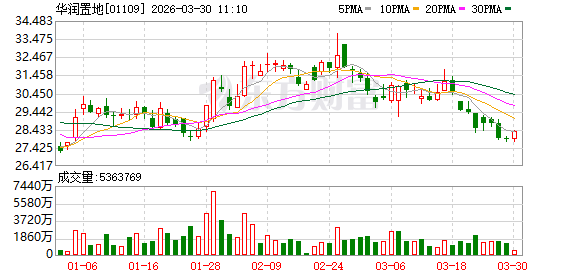
华润置地发布年度业绩 股东应占溢利254.18亿元同比减少0.45%
Xin Lang Cai Jing· 2026-03-30 00:20
Core Viewpoint - China Resources Land (01109) reported its financial results for the fiscal year ending December 31, 2024, showing a slight increase in revenue but a decrease in net profit attributable to shareholders [1]. Financial Performance - The company's revenue reached 281.438 billion RMB, representing a year-on-year increase of 0.91% [1]. - Net profit attributable to shareholders was 25.418 billion RMB, a decrease of 0.45% compared to the previous year [1]. - Basic earnings per share were reported at 3.56 RMB, with a proposed final dividend of 0.966 RMB per share [1]. Operational Metrics - The group's recurring business revenue and profit grew by 3.7% and 13.1% year-on-year, respectively [1]. - The proportion of recurring business profit increased by 11.2 percentage points to 51.8% [1]. Future Outlook - For 2025, the group achieved a contracted sales amount of 233.6 billion RMB, reflecting a year-on-year decline of 10.5% [1]. - The contracted sales area was 9.22 million square meters, down 18.6% year-on-year [1].
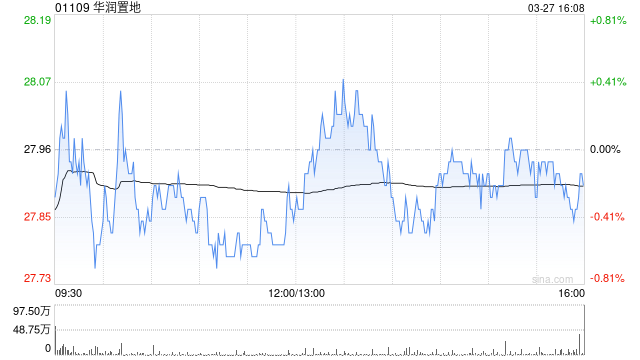
华润置地:2025年度营收
Sou Hu Cai Jing· 2026-03-29 23:42
Core Viewpoint - China Resources Land (01109.HK) reported a slight increase in revenue for 2025, but a small decline in net profit, indicating a stable yet challenging financial environment for the company [1] Financial Performance - The revenue for 2025 reached 281.44 billion RMB, representing a year-on-year growth of 0.9% [1] - The net profit for the same period was 25.42 billion RMB, showing a decrease of 0.45% compared to the previous year [1] Dividend Distribution - The board proposed a final dividend of 0.966 RMB per share based on a total of 7.131 billion shares, amounting to a total dividend payout of 6.89 billion RMB [1] - Including the interim dividend, the total dividend for the year is 8.315 billion RMB [1]
华润置地(01109.HK):2025年核心净利润为224.8亿元 拟派末期息每股0.966元
Ge Long Hui· 2026-03-29 23:22
Group 1 - The core viewpoint of the articles highlights that China Resources Land (01109.HK) reported a revenue of RMB 281.44 billion for the fiscal year 2025, reflecting a year-on-year growth of 0.9% [1] - The revenue breakdown includes RMB 238.16 billion from development sales, RMB 25.44 billion from rental income, and RMB 17.83 billion from light asset management fees [1] - The total recurring business income reached RMB 43.28 billion, marking a 3.7% increase year-on-year, which constitutes 15.4% of total revenue [1] Group 2 - In 2025, the group achieved a property contracted sales amount of RMB 233.6 billion, ranking third in the industry, with a contracted area of 9.22 million square meters [2] - As of the end of 2025, the group has locked in unrecognized revenue of RMB 164.58 billion, with an expected RMB 123.48 billion to be recognized in 2026 [2] - The group added land reserves of 3.39 million square meters in 2025, bringing total land reserves to approximately 46.73 million square meters by the end of 2025 [2] - The total debt of the group stood at RMB 281.47 billion, with cash and bank balances of RMB 116.99 billion, resulting in a net interest-bearing debt ratio of 39.2% [2] - The weighted average cost of debt financing decreased by 39 basis points to 2.72% compared to the end of 2024, maintaining the lowest level in the industry [2]
华润置地(01109)发布年度业绩 股东应占溢利254.18亿元 同比减少0.45%
智通财经网· 2026-03-29 23:20
Group 1 - The core revenue for China Resources Land (华润置地) for the fiscal year ending December 31, 2024, was RMB 281.44 billion, representing a year-on-year increase of 0.91% [1] - The profit attributable to shareholders was RMB 25.42 billion, showing a slight decrease of 0.45% year-on-year, with basic earnings per share at RMB 3.56 [1] - The company's recurring business revenue and profit grew by 3.7% and 13.1% year-on-year, respectively, with the recurring profit margin increasing by 11.2 percentage points to 51.8% [1] Group 2 - In 2025, the group achieved a contracted sales amount of RMB 233.6 billion, a decline of 10.5% year-on-year, with a contracted area of 9.22 million square meters, down 18.6% year-on-year [1] - The overall performance of the real estate market is stabilizing after a deep adjustment, but challenges such as insufficient demand and inventory reduction persist [1] - The company is focusing on strategic transformation and innovation while seizing policy opportunities to maintain stable overall performance [1] Group 3 - The shopping center revenue for 2025 was RMB 21.92 billion, reflecting a year-on-year growth of 13.3%, with an occupancy rate of 97.4%, an increase of 0.3 percentage points year-on-year [2] - The overall valuation of the shopping center asset portfolio increased by RMB 9.45 billion, with a total assessed asset value of RMB 240.35 billion, accounting for 22.3% of the group's total assets [2] - The total building area of shopping centers reached 12.42 million square meters, an increase of 8.4% year-on-year, with six new shopping centers opened during the period, bringing the total to 98 [2] Group 4 - There were no new office buildings put into operation during the period, maintaining the number of operational office buildings at 23 [3]
华润置地:全年开发物业营业额2,381.6亿元人民币。
Xin Lang Cai Jing· 2026-03-29 23:19
Group 1 - The core point of the article is that China Resources Land reported a total revenue of 238.16 billion RMB from property development for the year [1] Group 2 - The company achieved significant financial performance in the property development sector, indicating strong market presence and operational efficiency [1]
华润置地(01109) - 截至二零二五年十二月三十一日止年度的末期股息
2026-03-29 22:57
免責聲明 第 2 頁 共 2 頁 v 1.1.1 EF002 第 1 頁 共 2 頁 v 1.1.1 | 代扣所得稅信息 | | | --- | --- | | 股息所涉及的代扣所得稅 | 不適用 | | 發行人所發行上市權證/可轉換債券的相關信息 | | | 發行人所發行上市權證/可轉換債券 | 不適用 | | 其他信息 | | | 其他信息 | 不適用 | | 發行人董事 | | | 於本公告日期,本公司執行董事為李欣先生、張大為先生、徐榮先生、郝忠明先生、趙偉先生及陳偉先生;本公司非執行董事為黃 | 挺先生、魏成林先生及王宇航先生;以及本公司獨立非執行董事為鐘偉先生、孫哲先生、陳帆先生、梁國權先生及秦虹女士。 | | 香港交易及結算所有限公司及香港聯合交易所有限公司對本公告的內容概不負責,對其準確性或完整性亦不發表任何聲明,並明確表示,概不對因 | | | --- | --- | | 公告全部或任何部份內容而產生或因倚賴該等內容而引致的任何損失承擔任何責任。 | | | | 股票發行人現金股息(可選擇貨幣)公告 | | 發行人名稱 | 華潤置地有限公司 | | 股份代號 | 01109 | | 多櫃檯股 ...
华润置地(01109) - 2025 - 年度业绩
2026-03-29 22:55
Financial Performance - For the fiscal year ending December 31, 2025, the total revenue was RMB 281.44 billion, representing a year-on-year growth of 0.9%[2] - The revenue from development and sales business amounted to RMB 238.16 billion, while the rental income from operating real estate was RMB 25.44 billion[2] - The gross profit margin for the fiscal year was 21.2%, with the development and sales business gross margin at 15.5% and the operating real estate rental gross margin at 71.8%, an increase of 1.8 percentage points year-on-year[2] - The net profit attributable to shareholders was RMB 25.42 billion, with the core net profit (after adjustments) at RMB 22.48 billion, reflecting an increase in the contribution of core net profit to 51.8%[2] - The earnings per share attributable to shareholders was RMB 3.56, while the core net profit per share was RMB 3.15[2] - The company reported a net debt ratio of 39.2%, with total liabilities amounting to RMB 1,645.8 billion[3] - The financing cost of debt decreased by 39 basis points to 2.72%, maintaining the lowest level in the industry[3] - The company achieved a regular business revenue of RMB 43.28 billion, which accounted for 15.4% of total revenue, showing a year-on-year growth of 3.7%[2] - The company's revenue for the year ended December 31, 2025, was CNY 281,437,885,000, compared to CNY 278,905,492,000 for the previous year, representing a growth of approximately 0.5%[5] - Gross profit for the year was CNY 59,744,383,000, a slight decrease from CNY 60,356,025,000, indicating a decline of about 1.0%[5] - Net profit for the year was CNY 32,819,375,000, down from CNY 33,633,836,000, reflecting a decrease of approximately 2.4%[6] - Total comprehensive income for the year was CNY 32,194,783,000, compared to CNY 33,824,432,000, representing a decrease of approximately 4.8%[6] Dividends and Shareholder Returns - The board proposed a final dividend of RMB 0.966 per share, with a total annual dividend of RMB 1.166 per share for 2025[2] - The proposed final dividend for the year ending December 31, 2025, is RMB 0.966 per share, totaling approximately RMB 6,888,488,000 based on 7,130,939,579 shares issued[32] - Shareholders must submit their currency preference for the dividend by July 16, 2026, to receive the final dividend in RMB[112] - If shareholders do not submit their currency preference, they will automatically receive the final dividend in HKD[114] - Shareholders are advised to seek professional tax advice regarding potential tax implications of the dividend payment[115] Assets and Liabilities - The company reported a total assets increase from CNY 645,783,667 thousand in 2024 to CNY 710,687,002 thousand in 2025, representing a growth of approximately 10.1%[9] - Non-current assets decreased from CNY 432,916,883 thousand in 2024 to CNY 418,814,285 thousand in 2025, a decline of about 3.2%[8] - Current liabilities rose from CNY 388,693,554 thousand in 2024 to CNY 503,917,528 thousand in 2025, indicating an increase of approximately 29.6%[10] - Total equity increased from CNY 419,315,681 thousand in 2024 to CNY 396,952,306 thousand in 2025, reflecting a decrease of about 5.3%[10] - Cash and cash equivalents decreased from CNY 131,380,988 thousand in 2024 to CNY 115,449,212 thousand in 2025, a reduction of approximately 12.1%[8] - The company's total liabilities increased from CNY 690,006,996 thousand in 2024 to CNY 625,583,759 thousand in 2025, a decrease of approximately 9.3%[10] Operational Highlights - The company achieved an annual operating revenue of RMB 18.02 billion, representing a year-on-year growth of 5.1%, and a core net profit of RMB 3.95 billion, up 13.7% year-on-year[48] - The average occupancy rate improved to 77.7%, with new leasing area reaching a record high during the same period, and the tenant mix continued to optimize[46] - The company managed 135 shopping centers by the end of 2025, adding 15 new centers during the year, with retail sales in these centers reaching RMB 266 billion, accounting for 0.53% of the national total retail sales[48] - The company opened 7 new shopping centers during the year, expanding its portfolio to 98 centers, with 82 projects ranking among the top three in their local markets[45] - The company acquired 33 projects during the year, with equity investments totaling RMB 67.37 billion, maintaining a strong investment intensity within the industry[42] Strategic Initiatives - The company is focused on transforming its business model from scale expansion to quality improvement, aiming for high-quality and sustainable development in the real estate sector[39] - The group aims to enhance its strategic positioning to become a world-class urban investment and development operator, focusing on three business strategies: quality improvement, reasonable growth, and profitable revenue[61] - The group plans to drive sustainable growth through three growth lines: development and sales business, operational real estate rental business, and light asset management revenue business[61] - The group will accelerate the implementation of "AI+" initiatives to drive digital transformation across the entire industry chain[62] - The group aims to enhance its ESG performance, maintaining its position in the Hang Seng Sustainable Development Index and achieving an MSCI rating of AA[57] Financial Management - The company has a total of 59,077 employees in mainland China and Hong Kong as of December 31, 2025[101] - The company actively manages foreign exchange risk, with an exposure ratio of 3.9% as of December 31, 2025[99] - The company has implemented dynamic monitoring of foreign exchange risk exposure and will make necessary adjustments based on market conditions[99] - The company maintains a credit rating of BBB+ from S&P, Baa1 from Moody's, and BBB+ from Fitch as of 2025[97] - The average financing cost as of December 31, 2025, was approximately 2.72%, a decrease of 39 basis points from 3.11% at the end of 2024[94] Compliance and Governance - The company’s financial statements are prepared in accordance with Hong Kong Financial Reporting Standards, ensuring compliance with local regulations[12] - The company has established good corporate governance practices and has complied with all applicable corporate governance codes during the reporting period[102] - The annual performance for the year ending December 31, 2025, has been reviewed by the audit committee, which consists of five independent non-executive directors and one non-executive director[108] - The company's auditor, PwC, confirmed that the financial data disclosed in the preliminary announcement is consistent with the consolidated financial statements for the year ending December 31, 2025[109]
行业周报:小阳春成色略有不足,苏州出台青年人才贴息-20260329
KAIYUAN SECURITIES· 2026-03-29 14:15
Investment Rating - The industry investment rating is "Positive" (maintained) [1] Core Viewpoints - The report indicates that the recent weekly transaction data shows a continued year-on-year decline in new and second-hand housing sales across 30 cities, reflecting a slight shortfall in the expected "small spring" recovery. However, new local policies in cities like Suzhou, Nanchang, Qingdao, and Guangzhou are expected to improve supply and demand dynamics, leading to price stabilization in the real estate market [5][6][46]. Summary by Sections Policy Developments - Multiple cities have introduced local policies aimed at revitalizing the real estate market, including: - Suzhou's implementation of a housing fund interest subsidy for young talents starting April 1, 2026, covering 50% of the actual interest paid on housing fund loans, with a maximum subsidy of 50,000 yuan [6][13]. - Qingdao's initiative to explore efficient utilization of idle land resources [6][14]. - Guangzhou's measures to promote modular construction in new public housing projects [6][15]. Market Performance - Sales data shows a decline in both new and second-hand housing transactions: - In the 13th week of 2026, the new housing transaction area in 30 cities was 2.912 million square meters, down 8.5% year-on-year, with a cumulative decline of 18.4% [7][16]. - The second-hand housing transaction area in 15 cities was 200.2 million square meters, down 8% year-on-year, with a cumulative decline of 8.5% [24][25]. Investment Trends - The land transaction area in 100 major cities increased by 21% year-on-year in the 13th week of 2026, totaling 2.554 million square meters. However, the cumulative land transaction area for the first 13 weeks of 2026 showed a decline of 5% [32][33]. Price Trends - The Iceberg 100 Index, which tracks second-hand housing prices, was reported at 9983, reflecting a week-on-week decrease of 0.1% and a year-on-year decrease of 12.4% [42][44]. Investment Recommendations - The report maintains a "Positive" rating for the industry, suggesting that the recent local policies will lead to improved market conditions. Recommended stocks include: - Strong credit real estate companies that cater to improving customer demand: China Jinmao, Jianfa International Group, China Merchants Shekou, and others [5][46]. - Companies benefiting from both residential and commercial real estate recovery: China Resources Land, New Town Holdings, and Longfor Group [5][46]. - Quality property management firms under the "Good House, Good Service" policy: China Resources Mixc Life, Greentown Service, and others [5][46].


房地产开发2026W12:本周二手房成交同比+1.1%,上海单月成交接近近年高点
GOLDEN SUN SECURITIES· 2026-03-29 12:24
Investment Rating - The report maintains an "Overweight" rating for the real estate industry [4][6] Core Insights - The real estate market is showing positive signals, particularly in core cities, with Shanghai's second-hand housing transactions nearing recent highs. In March 2026, the number of second-hand homes sold in Shanghai, Beijing, and Shenzhen were 27,733, 17,153, and 4,671 respectively, with year-on-year changes of +4.5%, -1.3%, and -17.0% [1][11] - The new housing market in 30 cities recorded a transaction area of 2.277 million square meters this week, a month-on-month increase of 16.1% but a year-on-year decrease of 6.7%. The first-tier cities accounted for 546,000 square meters, with a month-on-month increase of 9.1% and a year-on-year decrease of 10.2% [2][34] - The report emphasizes the importance of observing real estate data over a longer cycle and the transmission chain from second-hand to new housing [1][11] Summary by Sections Second-hand Housing Market - In March 2026, Shanghai's second-hand housing transactions are expected to exceed 30,000 units, with a significant daily transaction peak of 1,585 units on March 28, the highest since 2022 [1][11] - The average daily transaction volumes for Shanghai, Beijing, and Shenzhen are 991, 613, and 167 units respectively [1][11] New Housing Market - The new housing transaction area in first-tier cities was 546,000 square meters, while second-tier cities saw 1.248 million square meters, and third-tier cities recorded 482,000 square meters [2][34] - Cumulative new housing transaction area for the first 12 weeks of the year in 30 cities is 1,538.9 million square meters, reflecting a year-on-year decrease of 29.6% [2][34] Credit Bond Market - A total of 14 credit bonds were issued by real estate companies this week, amounting to 10.301 billion yuan, a decrease of 5.33 billion yuan from the previous week [3][49] - The net financing amount was -4.885 billion yuan, indicating a significant increase in the repayment volume [3][49] Investment Recommendations - The report suggests focusing on real estate-related stocks due to the expected policy support and improving competitive landscape, particularly favoring first-tier and select second-tier cities [4][6]


