
HWORLD(01179)

Search documents
华住集团-S(01179.HK)2025Q3业绩公告点评:结构持续优化 REVPAR将转正
Ge Long Hui· 2025-11-24 21:41
Core Insights - Q3 revenue exceeded guidance with 7 billion yuan, a year-on-year increase of 8.1%, surpassing the upper limit of the guidance by 2% to 6% [1] - Net profit attributable to shareholders reached 1.47 billion yuan, up 15.4%, driven by asset-light strategies that improved gross margin by 0.6 percentage points, along with reduced one-time expenses and increased foreign exchange gains [1] - The company anticipates Q4 revenue growth of 2% to 6%, with RevPAR expected to stabilize or slightly increase [2] Financial Performance - Q3 adjusted EBITDA was 2.5 billion yuan, a year-on-year increase of 18.9%, with the DH segment contributing 70 million yuan, up 179% [1] - Management franchise and licensing revenue was 3.3 billion yuan, a year-on-year increase of 27.2%, exceeding the guidance growth rate of 20% to 24% [1] - Revenue from mainland operations was 5.7 billion yuan, up 10.8%, while DH segment revenue was 1.2 billion yuan, down 3.0% [1] Business Expansion - As of Q3 2025, the number of stores in mainland China reached 12,580, a year-on-year increase of 17.5%, with franchise stores accounting for 95.8% [1] - A total of 749 new stores were opened in Q3, a decrease of 3.2%, with a net increase of 452 stores, up 6.0% [2] - The company aims to open 2,300 new stores and achieve a net increase of 1,700 stores for the full year [2] Market Outlook - The company expects RevPAR in Q4 to turn positive, with Q3 mainland RevPAR at 256 yuan, a slight year-on-year decrease of 0.1% [2] - Occupancy rate (OCC) decreased by 0.8 percentage points to 84.1%, while average daily rate (ADR) increased by 0.9% to 304 yuan [2] - The company has revised its profit forecast for 2025-2027, with net profits projected at 4.62 billion, 4.90 billion, and 5.40 billion yuan respectively, corresponding to PE ratios of 21, 20, and 18 times [2]
华住集团-S(01179):Q3国内RevPAR拐点显现,看好龙头优势扩张与周期预期修复
Guoxin Securities· 2025-11-24 14:05
Investment Rating - The investment rating for the company is "Outperform the Market" [6] Core Views - The company has shown a significant recovery in Q3, with revenue exceeding guidance and a notable increase in performance compared to previous quarters. The hotel revenue for Q3 reached approximately 30.6 billion yuan, a year-on-year increase of 17.5% [11] - The company is expected to maintain a stable growth trajectory in Q4, with projected revenue growth of 2-6% and domestic growth of 3-7%. The anticipated growth in franchise revenue is between 17-21% year-on-year [14][15] - The company is focusing on optimizing revenue management and strengthening direct sales channels, which has led to a slight recovery in domestic RevPAR, with a mixed RevPAR of 256 yuan, down only 0.1% year-on-year [12] Summary by Sections Q3 Performance - Q3 revenue was 6.96 billion yuan, up 8.1% year-on-year, surpassing the previous guidance of 2-6%. The net profit attributable to shareholders was 1.47 billion yuan, a 15.4% increase year-on-year [11] - The company’s domestic same-store RevPAR decreased by 4.7% year-on-year, showing a gradual recovery compared to earlier quarters [12] Membership and Revenue Management - The number of members in the company's loyalty program exceeded 300 million, a year-on-year increase of 17.3%. Member bookings increased by 19.7%, accounting for 74% of total room nights [12] - The company has successfully implemented revenue management strategies, resulting in a positive year-on-year growth in average daily rate (ADR) of 0.9% [12] Expansion and Profitability - The company opened 2,038 new stores and closed 483, resulting in a net increase of 1,555 stores. The total number of operating hotels reached 12,600, with a market share estimated at 11% [13] - Franchise revenue and gross operating profit (GOP) increased by 27.4% and 28.6% year-on-year, respectively, while direct store revenue and GOP decreased by 5.5% and 24.7% [13] Future Outlook - The company anticipates a stable or slight increase in domestic RevPAR in Q4, with overall core indicators expected to maintain a healthy development trend [14] - The management expects to exceed the initial target of opening 2,300 new hotels by the end of the year, supported by improved signing and conversion rates [13] Financial Projections - The company has revised its revenue growth projections for 2025-2027, expecting a year-on-year increase of 5.4%, 5.8%, and 6.2%, respectively. Adjusted net profits are projected to be 4.44 billion, 5.17 billion, and 5.78 billion yuan for the same period [15]
消费者服务行业周报(20251117-20251121):看好经营改善的酒店、免税行业-20251124
Huachuang Securities· 2025-11-24 11:20
Investment Rating - The report maintains a "Recommended" rating for the hotel and duty-free industries, indicating a positive outlook for operational improvements in these sectors [1]. Core Viewpoints - Despite the overall pressure on consumption in the current macro environment, a structural recovery trend in certain consumer service sectors is becoming increasingly evident. Operational improvements are being observed, suggesting a gradual exit from the bottom range [4]. - The hotel industry is experiencing an optimization in supply-demand dynamics, with core operational data showing marginal improvements, indicating a mild upward trend in industry prosperity supported by sustained travel demand [4]. - The duty-free industry is expected to benefit from policy incentives, particularly with the upcoming operational phase in Hainan and the continued rollout of related policies, which are anticipated to catalyze new growth opportunities [4]. Industry Basic Data - The consumer services industry comprises 55 listed companies with a total market capitalization of 498.804 billion yuan and a circulating market capitalization of 457.081 billion yuan [1]. Market Performance - The consumer services sector experienced a decline of 4.86% this week, while the overall A-share market fell by 5.14%. The CSI 300 index decreased by 3.77% [7][23]. - Notable stocks in the consumer services sector that performed well include Dalian Shengya, Chuangye Heima, and Shangri-La (Asia) [4]. Important Announcements - Huazhu Group reported a 17.5% year-on-year increase in hotel revenue for Q3 2025, reaching 30.6 billion yuan, with net profit of 1.5 billion yuan [30]. - Ctrip Group's Q3 net operating revenue was approximately 18.3 billion yuan, reflecting a 16% year-on-year growth, with a net profit increase of 192.6% [30]. - Wanwu Xingsheng achieved a total revenue of 5.15 billion yuan in Q3 2025, marking a 27.1% year-on-year increase [30]. Upcoming Shareholder Meetings - Several companies in the consumer services sector have scheduled shareholder meetings in the coming month, including Bubu Gao on December 11, Guilin Tourism on December 5, and Guangzhou Restaurant on November 28 [31].




601179,外资股东一年三度减持
Di Yi Cai Jing· 2025-11-23 12:01
Core Viewpoint - The recent share reduction announcement by China XD Electric (601179.SH) has caused significant market reactions, with the fifth largest shareholder, GE SMALLWORLD (SINGAPORE) PTE LTD, planning to reduce its stake by up to 154 million shares, potentially cashing out around 1.36 billion yuan [2][3]. Group 1: Shareholder Actions - GE SMALLWORLD plans to reduce its holdings, which represent 3% of China XD Electric's total shares, through centralized bidding and block trading between December 12, 2025, and March 11, 2026 [3][4]. - This is the third time GE SMALLWORLD has reduced its stake in the past year, indicating an accelerated exit strategy [5]. - The previous reductions occurred in 2024 and February 2025, with the first reducing 154 million shares for 1.22 billion yuan and the second reducing 102 million shares for 648 million yuan [5]. Group 2: Market Reactions - Following the announcement, China XD Electric's stock price dropped to 7.96 yuan, marking a weekly decline of 14.6% [3][6]. - The broader electric grid equipment sector also experienced a significant downturn, with the sector index falling 10% and many leading companies seeing stock price drops exceeding 10% [3][6]. Group 3: Industry Context - The timing of the share reduction comes after a substantial increase in stock prices, with the electric grid equipment index reaching a ten-year high earlier in November [3][7]. - Analysts suggest that the reduction signals a potential peak in valuation for both China XD Electric and the electric grid equipment sector, prompting a reassessment of the sector's valuation after a period of rapid growth [3][7]. - Despite the short-term volatility, the long-term growth prospects for the electric grid equipment industry remain strong, driven by the transition to a new power system and increased investments from state-owned enterprises [8][9].



华住集团-S(01179):RP境内同比企稳,新推中高端品牌“全季大观”
GOLDEN SUN SECURITIES· 2025-11-23 11:21
Investment Rating - The report maintains a "Buy" rating for the company [6]. Core Views - The company achieved revenue of 6.961 billion yuan in Q3 2025, a year-on-year increase of 8.1%, exceeding the guidance of 2%-6% [1]. - The domestic business generated revenue of 5.722 billion yuan, up 10.8% year-on-year, also surpassing the guidance of 4%-8% [1]. - The company is expanding its portfolio with the introduction of a new mid-to-high-end brand, "全季大观" [3]. Revenue and Profitability - In Q3 2025, the company's direct hotel revenue was 3.487 billion yuan, down 5.5% year-on-year, while franchise and management revenue was 3.309 billion yuan, up 27.2% year-on-year [1]. - The overall operating profit margin improved to 29.4%, an increase of 2.7 percentage points year-on-year, driven by the growth in franchise and management business contributions [3]. - The company expects total revenue growth of 2%-6% in Q4 2025, with management franchise and licensing revenue projected to grow by 17%-21% [3]. Market Performance - The domestic hotel RevPAR was 256 yuan, a slight decrease of 0.1% year-on-year, while the overseas hotel RevPAR was 87 euros, an increase of 6.4% year-on-year [2]. - The company has opened a total of over 2,000 new hotels this year, aiming for a target of 2,300 by year-end [3]. Financial Projections - The projected revenues for 2025-2027 are 25.276 billion yuan, 26.697 billion yuan, and 28.225 billion yuan, representing year-on-year growth rates of 5.8%, 5.6%, and 5.7% respectively [4]. - The expected net profits for the same period are 4.543 billion yuan, 5.112 billion yuan, and 5.795 billion yuan, with growth rates of 49.1%, 12.5%, and 13.4% respectively [4].
华住集团-S(01179):结构持续优化,RevPar将转正
Soochow Securities· 2025-11-23 10:31
Investment Rating - The investment rating for the company is "Buy" (maintained) [1] Core Insights - The company reported Q3 revenue of 7 billion yuan, a year-on-year increase of 8.1%, exceeding the guidance upper limit by 2% to 6% [7] - The net profit attributable to the parent company for Q3 was 1.47 billion yuan, up 15.4% year-on-year, driven by an increase in gross margin due to asset-light strategies [7] - The company expects RevPAR to turn positive in Q4, with revenue growth guidance of 2% to 6% [7] - The company has adjusted its profit forecast for 2025-2027, with net profits projected at 4.62 billion, 4.90 billion, and 5.40 billion yuan respectively [7] Financial Performance Summary - Total revenue for 2023 is projected at 21.882 billion yuan, with a year-on-year growth of 57.86% [1] - The net profit attributable to the parent company for 2023 is expected to be 4.085 billion yuan, reflecting a significant year-on-year increase of 324.33% [1] - The latest diluted EPS for 2023 is forecasted at 1.32 yuan per share, with a P/E ratio of 23.54 [1] - The company anticipates a steady increase in revenue and net profit over the next few years, with 2024 revenue expected to reach 23.891 billion yuan [1][8]
华住集团-S(1179.HK):Q3收入超预期 经营及开店持续向好 中长期成长潜力大
Ge Long Hui· 2025-11-21 13:36
Core Viewpoint - The company reported Q3 2025 earnings with revenue of 6.961 billion yuan, a year-on-year increase of 8.1%, and a net profit attributable to shareholders of 1.469 billion yuan, up 15.4% year-on-year, indicating better-than-expected revenue growth and improved profitability in domestic and DH segments [1][2] Financial Performance - Q3 2025 overall GMV reached 30.6 billion yuan, reflecting a year-on-year increase of 17.5% and a sequential improvement in growth rate [2] - Adjusted EBITDA for Q3 2025 was 2.513 billion yuan, up 18.9% compared to the previous quarter's 11.4% growth, with Legacy-Huazhu contributing 2.446 billion yuan, a 16.9% increase [2] - The company’s adjusted net profit for Q3 2025 was 1.520 billion yuan, representing a 10.8% increase [2] Operational Metrics - Q3 2025 showed significant recovery in operational metrics, with overall occupancy, ADR, and RevPAR showing minor declines compared to the previous year, indicating stabilization in the industry [3] - The company opened 750 new stores and closed 185, resulting in a net increase of 565 stores, with a notable acceleration in the mid-range segment [3] - The company aims to become a leader in the mid-to-high-end market by 2030, with a pipeline of 2,748 stores as of Q3 2025 [3] Strategic Initiatives - The company is focusing on optimizing pricing strategies, enhancing membership and supply chain capabilities, and expanding its mid-to-high-end brand matrix, as well as exploring high-end, lower-tier, and overseas markets for long-term growth [3]
601179,第二大股东又要减持
Zhong Guo Ji Jin Bao· 2025-11-20 16:05
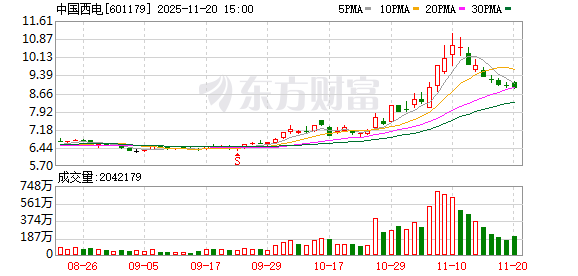
Core Viewpoint - General Electric Singapore plans to reduce its stake in China Xidian by up to 3%, which amounts to a maximum of 154 million shares, due to its operational needs [2] Group 1: Shareholding Changes - As of the announcement date, General Electric Singapore holds 359 million shares in China Xidian, representing 7% of the total share capital [2] - The planned reduction includes a maximum of 51.26 million shares through centralized bidding and 103 million shares through block trading [2] - From October 2024, General Electric Singapore has been continuously reducing its stake, with a total reduction of 3% in 2024, exceeding 150 million shares [3] Group 2: Market Performance - China Xidian's stock price was reported at 8.84 yuan per share as of November 20, with a market capitalization of 45.3 billion yuan [5] - The stock price had previously experienced a significant increase from October to early November 2025, breaking out of a long-term decline since its IPO price of 7.9 yuan per share in 2010 [4]
华住三季度营业额306亿元同比增17.5%!新推全季大观
Nan Fang Du Shi Bao· 2025-11-20 05:59
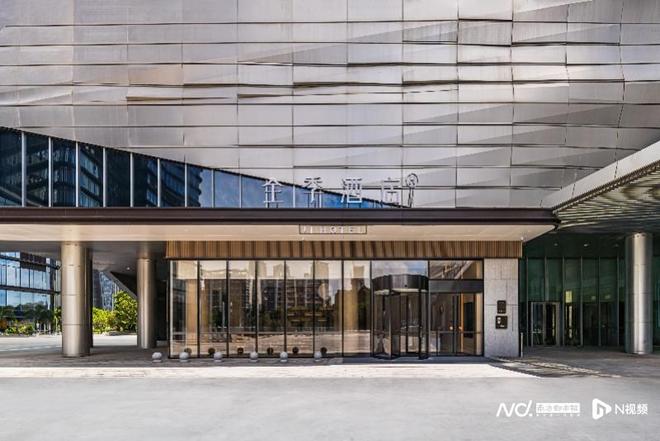
Core Insights - Huazhu Group's financial performance for Q3 2025 shows a continuous enhancement in profitability and a membership base exceeding 300 million, with 74% of nights booked by members [1][9][10] Financial Performance - In Q3, Huazhu Group reported hotel revenue of 30.6 billion yuan, a year-on-year increase of 17.5% [4] - The group's total revenue reached 7 billion yuan, up 8.1% year-on-year; adjusted net profit was 1.52 billion yuan, increasing by 10.8% [4] - Adjusted EBITDA was 2.5 billion yuan, reflecting an 18.9% year-on-year growth [4] Hotel Operations - As of the end of Q3, Huazhu Group operated a total of 12,702 hotels globally, a 17.1% increase year-on-year, with 1,246,240 rooms, up 17.3% [4] - Huazhu China opened 749 new hotels in Q3, averaging about 250 openings per month, marking a quarterly record for the year [5] Membership Growth - The membership count increased by 17.3% year-on-year, surpassing 300 million, making it the largest in the world [6][9] - Member nights booked grew by 19.7% year-on-year, totaling over 66 million nights, with a direct booking ratio of 74% [9][10] Brand Development - Huazhu's mid-to-high-end hotel count exceeded 1,600, a 25.3% year-on-year increase [13] - The launch of the new brand "All Season Grand View" aims to enhance Huazhu's mid-to-high-end brand matrix, focusing on market demand and consumer expectations [13][14] Market Insights - The Chinese hotel market shows distinct tiered characteristics, with significant growth potential in lower-tier cities where chain hotel penetration is low [13] - The middle-income group, exceeding 400 million people, is driving high-quality development in the hotel industry, with diverse and personalized demands from younger consumers [14]

华住集团-S(01179.HK):三季度境内REVPAR企稳 年度至今新开酒店突破2000 家
Ge Long Hui· 2025-11-19 21:34
Core Insights - The company reported Q3 2025 revenue of 7 billion yuan, an 8.1% year-on-year increase, exceeding guidance [1] - Adjusted net profit for Q3 2025 was 1.52 billion yuan, up 10.8% year-on-year, with a net profit margin increase of 0.5 percentage points [1] - The company’s franchise business contributed 70% of gross profit, with a gross operating profit of 2.24 billion yuan, a 28.6% increase year-on-year [1] Financial Performance - Q3 2025 revenue growth was driven by stable leisure travel demand and effective store expansion, with domestic revenue increasing by 10.8% [1] - The company’s domestic hotel RevPAR was 256 yuan, a slight decrease of 0.1% year-on-year, while the overseas hotel RevPAR increased by 6.4% [2] - The company opened 749 new stores in Q3 2025, bringing the total new openings to over 2,000 for the year, with expectations to exceed the previous guidance of 2,300 openings [2] Strategic Developments - The company launched a new mid-to-high-end brand "全季大观" to enhance its brand portfolio, aiming to establish it as a benchmark following existing brands [2] - The company maintains a strong market position with significant potential for brand expansion and global reach [2]