BYD(01211)

Search documents
全球汽车销量进一步走弱-Global Auto Sales weakening further
2026-03-26 13:20
Summary of Global Auto Sales Conference Call Industry Overview - **Industry**: Global Automotive Industry - **Date**: March 25, 2026 - **Key Focus**: Analysis of global auto sales trends, market share changes, and premium vs mass-market performance Key Takeaways Global Market Performance - Global auto sales decreased by **5.3%** in February 2026, influenced by declines in China and Japan, while the US experienced a better-than-expected drop. Europe and emerging markets (EMs) continue to show growth [13][59]. - Premium market share remained flat year-over-year (YoY) globally compared to mass-market sales, indicating a shift in consumer preferences [13]. Gaining Market Share - **Top Gainers in February**: - China OEMs - Stellantis - Tesla - Toyota - Kia - Suzuki - Hyundai - Ford [1][42][59]. - **Month-over-Month (MoM) Gainers**: - Stellantis - Honda - Ford - Renault - Hyundai - Tesla - Kia - GM [2][42]. Losing Market Share - **Top Losers in February**: - BYD - General Motors (GM) - Volkswagen Group (VW) - Nissan - Renault - Honda - Mercedes-Benz Group (MBG) - Volvo - Jaguar Land Rover (JLR) - Porsche - BMW [1][59]. - **MoM Losers**: - VW Group - BYD - MBG - JLR - BMW - Porsche [43]. Premium Market Insights - Global premium sales declined by **5%** in February, with strong performance in emerging markets and China, but weaker results in Japan and continued losses in Europe and the US [3]. - **Gaining Premium Share**: - Tesla - Honda - Ford - Renault - Nissan [3]. - **Losing Premium Share**: - MBG - VW Group - Volvo - GM - JLR - Stellantis - BMW - Porsche - Toyota [3]. Commodity Prices and Economic Factors - Commodity prices are on the rise, with foreign exchange (FX) stabilizing but still posing challenges for European OEMs [4]. Sales Data and Trends - Global auto sales are projected to return to pre-COVID levels, driven by pent-up demand and improving affordability [5]. - Monthly sales data indicates a significant drop in sales for several major OEMs, with Tesla and Stellantis showing notable growth [61][72]. Regional Performance - **Europe**: - Gainers: Tesla, Renault, Stellantis, SAIC, Honda - Losers: Toyota, VW Group, Hyundai, JLR, Ford, BMW, Porsche, MBG, Nissan, BYD [48]. - **US**: - Gainers: Nissan, Stellantis, Ford, Hyundai, Honda, Volvo, BMW - Losers: Toyota, GM, Tesla, VW Group, MBG, JLR, Porsche [49]. - **China**: - Gainers: BYD, Honda, SAIC, Tesla, Hyundai, Ford - Losers: VW Group, Nissan, Toyota, BMW, MBG, Volvo, Stellantis, JLR, Porsche [54]. Additional Insights - The premium market in China is experiencing a shift, with local OEMs gaining significant market share, impacting Western OEMs [39]. - The overall market dynamics indicate a challenging environment for traditional automakers, particularly in Western markets, as they face increasing competition from Chinese manufacturers and changing consumer preferences [66]. This summary encapsulates the critical insights from the conference call, highlighting the current state of the global automotive industry, market share dynamics, and regional performance trends.




伊朗战事持续-如何看待中国新能源车出海
2026-03-26 13:20
Summary of Conference Call Notes Industry Overview - The conference call discusses the **Chinese New Energy Vehicle (NEV)** industry, particularly focusing on the export potential and market dynamics amid ongoing geopolitical tensions and high oil prices [1][2]. Key Points and Arguments Market Dynamics - The recent surge in the automotive sector is primarily driven by **emotional factors** rather than strong fundamental data, with weak domestic sales data still prevailing [2][3]. - High oil prices are expected to accelerate the transition from fuel vehicles to NEVs, but this logic is deemed **unstable** due to several factors: - The main consumer group for fuel vehicles is less sensitive to oil prices and lifecycle costs [3]. - NEV penetration in the domestic market has already exceeded **60%**, making further replacement difficult [3]. - The **residual value** of NEVs is low, affecting consumer purchasing decisions [3]. Export Opportunities - The logic for exporting Chinese NEVs is more compelling than domestic sales, with several advantages: - Overseas NEV prices are approximately **30% higher** than comparable fuel vehicles, providing significant profit opportunities for Chinese manufacturers [4][5]. - There is less price competition in overseas markets, leading to better vehicle residual values [5]. - Chinese manufacturers have a **differentiated advantage** in plug-in hybrid technology compared to major global competitors [5]. Challenges in Exporting - Key challenges include the **lack of charging infrastructure** in overseas markets, which is significantly less developed than in China [5]. - Concerns about **range anxiety** persist, even though the actual range of NEVs is improving [5]. Market Projections - The total potential export market for Chinese vehicles is estimated at **33 million units**, with a realistic ceiling of **3.3 to 3.5 million units** for NEVs, suggesting that current market expectations of over **5 million units** may be overestimated [8]. - The expected overseas penetration rate for NEVs is projected to reach **30%**, with Europe potentially exceeding **50%** in the future [8]. Investment Strategies - Key investment targets include **BYD** and **Geely**: - BYD is expected to double its export volume annually from **2023 to 2025**, with a target of **1.5 million units** by **2026** [9][10]. - Geely's growth is shifting towards high-end exports, with an upward revision of its export guidance from **600,000 to 750,000 units** [10][11]. - The investment logic for Geely has transitioned from focusing on NEV profitability to leveraging high-end and export business contributions, which are expected to yield significant profit elasticity [11]. Market Sentiment and Risks - The automotive sector is currently experiencing mixed sentiments, with potential risks including disappointing sales data and upcoming quarterly reports that may impact market emotions [13]. - Positive factors include anticipated improvements in retail data and new vehicle launches at major auto shows, which could act as catalysts for market recovery [13][14]. Future Outlook - The period from **April to May** is identified as a critical verification phase for the automotive sector, where sales data and quarterly reports will clarify annual trends [14]. - Long-term investment strategies recommend focusing on companies with strong alpha attributes, such as Geely and NIO, while remaining vigilant for market corrections [15].


32GWh!从三大央企集采结果,看新型储能新格局
中关村储能产业技术联盟· 2026-03-26 12:46
Core Insights - The article discusses the recent announcements of large-scale energy storage procurement by three major state-owned enterprises in China, with a total procurement scale of 32GWh, including 19.8GWh of energy storage cells and 12.2GWh of energy storage systems [2]. Group 1: State Power Investment Corporation - The State Power Investment Corporation announced a centralized procurement of 5GWh for energy storage systems, divided into two segments: centralized (4.5GWh) and string-type (0.5GWh) [4]. - The centralized segment included five companies with bids ranging from 0.521 to 0.561 CNY/Wh [5]. - The string-type segment had two companies with bids between 0.530 and 0.549 CNY/Wh, with Xinyuan Zhichu Energy Development (Beijing) Co., Ltd. winning both segments [8]. Group 2: China General Nuclear Power Corporation - China General Nuclear Power Corporation announced a framework procurement project for energy storage systems totaling 7.2GWh, divided into six segments of 1.2GWh each [10]. - The final winning bid prices ranged from 0.491 CNY/Wh to 0.530 CNY/Wh, with six leading companies winning the bids [11]. - The winning companies include Envision Energy, BYD, and CRRC Zhuzhou Electric Locomotive Research Institute, each responsible for different regional deliveries [12]. Group 3: China Electrical Equipment Group - China Electrical Equipment Group announced a centralized procurement for energy storage cells, targeting 19.8GWh with an expected quantity of 19.71 million units of 3.2V/314Ah lithium iron phosphate cells [14]. - Eleven suppliers were selected for this procurement, including top industry players like CATL and Ganfeng Lithium [16]. - The procurement serves as a significant indicator of market share and technological advancements within the energy storage industry [16].



比亚迪:公司一直秉承用技术创新
Zheng Quan Ri Bao· 2026-03-26 12:43
证券日报网讯 3月26日,比亚迪在互动平台回答投资者提问时表示,公司一直秉承用技术创新,满足人 们对美好生活的向往,持续关注消费者的需求,并适时推出符合需求的产品。 (文章来源:证券日报) ...
比亚迪:公司持续关注消费者的需求,并适时推出符合需求的产品
Zheng Quan Ri Bao· 2026-03-26 12:41
证券日报网讯 3月26日,比亚迪在互动平台回答投资者提问时表示,比亚迪一直秉承用技术创新,满足 人们对美好生活的向往,持续关注消费者的需求,并适时推出符合需求的产品。 (文章来源:证券日报) ...
比亚迪:公司以开放的姿态探索商业合作模式
Zheng Quan Ri Bao Zhi Sheng· 2026-03-26 12:16
Core Viewpoint - BYD is exploring business cooperation models with existing charging network operators, viewing them as essential partners for its flash charging strategy [1] Group 1: Business Strategy - The company emphasizes collaboration with current charging network operators rather than seeing them as competitors [1] - BYD aims to develop "flash charging station sub-stations" in partnership with these operators to enhance service availability for more vehicle owners [1] Group 2: Service Coverage - In first-tier cities, the service radius is maintained at 3 kilometers, allowing users to reach charging stations in approximately 5 minutes [1] - For second and third-tier cities, the layout extends to 5 kilometers to meet commuting needs [1] - In fourth and fifth-tier cities, the distance between stations is set at 6 kilometers to cater to a larger consumer market [1]
比亚迪:公司持续深耕消费者核心需求,适时推出兼具市场竞争力与用户价值的产品及技术方案
Zheng Quan Ri Bao· 2026-03-26 11:16
(文章来源:证券日报) 证券日报网讯 3月26日,比亚迪在互动平台回答投资者提问时表示,公司始终秉持用技术创新,满足人 们对美好生活的向往,持续深耕消费者核心需求,适时推出兼具市场竞争力与用户价值的产品及技术方 案。后续相关动态,敬请关注公司官方发布的权威信息。 ...
比亚迪:公司以创新为核心驱动力,持续不断地推出一系列具有原创性、颠覆性的技术和产品
Zheng Quan Ri Bao· 2026-03-26 11:16
Group 1 - The company emphasizes innovation as its core driving force, continuously launching a series of original and disruptive technologies and products [1] - The company is committed to promoting global green and sustainable development [1] - The company aims to develop itself while addressing social issues [1]

报名通道 | 2026高工固态电池技术与应用峰会倒计时28天
高工锂电· 2026-03-26 11:00
Core Viewpoint - The solid-state battery industry is entering a critical year in 2026, transitioning from technology validation to large-scale production, driven by policies, technology, capital, and application scenarios [2][3]. Industry Development - The industry is moving from "technical exploration" to "industrialization and landing," with the Ministry of Industry and Information Technology designating solid-state batteries as a core breakthrough direction and implementing national standards for vehicle solid-state batteries [2][3]. - The core pain points of the industry are shifting from basic research to large-scale production, with a key window for small-scale production expected between 2026 and 2027 [2][3]. Technology Trends - The mainstream research direction is converging on sulfide electrolytes due to their high ionic conductivity and process compatibility, while oxide and polymer routes are pursuing differentiated layouts [3]. - The industry is transitioning from multiple exploratory routes to a focus on mainstream technology and supporting process adaptation [3]. Application Scenarios - High-end passenger vehicles remain the core window for the large-scale landing of solid-state batteries, while new scenarios such as eVTOL, humanoid robots, AIDC data centers, commercial aerospace, and low-altitude economy are emerging as new battlegrounds for performance validation and commercial value exploration [3][4]. - The application of solid-state batteries is also penetrating consumer electronics, including two-wheelers and wearable devices, creating a multi-dimensional application landscape [3][4]. Industry Collaboration - Competition in the solid-state battery sector is evolving from a single-point battle among battery companies to an ecosystem competition involving materials, equipment, battery cells, vehicles, resources, and applications [3][4]. - Vertical integration trends are becoming more pronounced as automakers and upstream resource giants accelerate their entry into the industry [3][4]. Cost and Supply Chain - Solid-state batteries currently cost over 30% more than traditional lithium batteries, with low yield rates and shortages of high-end raw materials posing significant bottlenecks for mass production [4]. - The industry's development logic is shifting from "technical parameter competition" to creating value across the entire lifecycle, with collaborative innovation across the supply chain being a core path to reducing costs and improving efficiency [4]. Summit Highlights - The summit will feature over 200 heavyweight enterprises from various sectors, with more than 300 industry leaders gathering for technical exchanges and new product displays [7]. - Key topics include the large-scale application of solid-state batteries in high-end models, advancements in core materials, and the challenges of mass production processes [8].





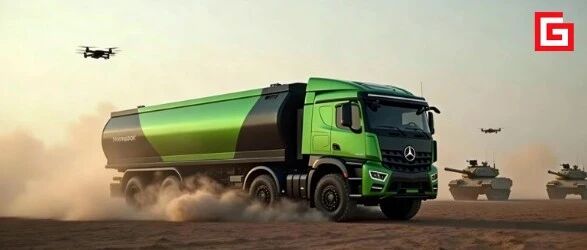
纯电重卡,2026锂电增量“新战场”
高工锂电· 2026-03-26 11:00
Core Viewpoint - The electric heavy truck market is rapidly expanding due to high oil prices, which enhance the operational cost advantages of electric trucks, making them a key growth area for battery manufacturers [3][4][6]. Group 1: Market Dynamics - The competition in the power battery industry is shifting from passenger vehicles to commercial vehicles, with electric heavy trucks emerging as a core incremental market for leading battery companies [3]. - High oil prices, driven by geopolitical factors, have led to increased diesel prices in China, making the operational costs of electric heavy trucks significantly lower than traditional diesel trucks [4]. - The penetration rate of new energy heavy trucks has increased from 12.9% in 2024 to 28.9% in 2025, with a further rise to 30.48% in early 2026 [7]. Group 2: Cost Advantages - Traditional diesel heavy trucks incur fuel costs of approximately 2-3 RMB per kilometer, while electric heavy trucks can keep costs below 1 RMB, resulting in annual savings of over 200,000 RMB per vehicle based on an average annual operation of 150,000 kilometers [4]. - The purchase cost of electric heavy trucks has decreased significantly, with 280 kWh models now priced around 400,000 RMB, a drop of over 30% year-on-year [5]. Group 3: Technological Advancements - Battery technology advancements are driving down the costs of electric heavy trucks, with significant improvements in energy density and fast-charging capabilities becoming standard [10][12]. - Major battery companies are launching fast-charging commercial vehicle batteries, with various models supporting rapid charging and high energy density [10]. Group 4: Strategic Collaborations - Battery companies are transitioning from exploratory participation to large-scale engagement in the electric heavy truck market through orders, strategic partnerships, and technology adaptations [9]. - Collaborations between battery manufacturers and heavy truck producers, such as the partnership between EVE Energy and XCMG, are enhancing the electricization of engineering machinery [10][12]. Group 5: Future Outlook - The ongoing high oil prices and technological breakthroughs are expected to continue driving the penetration of electric heavy trucks, establishing them as a significant growth avenue for the power battery industry [13].