AGRICULTURAL BANK OF CHINA(01288)
Search documents
多家银行上调积存金起点
2 1 Shi Ji Jing Ji Bao Dao· 2025-11-13 00:24
Core Viewpoint - The international gold price has returned to $4100 per ounce, prompting banks to raise the minimum investment threshold for gold accumulation, with some banks adjusting the starting point to a historical high of 1500 yuan [1][3]. Summary by Sections Bank Adjustments - Several banks have raised their gold accumulation thresholds, with notable changes including: - ICBC from 850 yuan to 1000 yuan - Bank of China from 850 yuan to 950 yuan - Ningbo Bank from 900 yuan to 1000 yuan - Ping An Bank from 900 yuan to 1100 yuan - Industrial Bank from 1000 yuan to 1200 yuan - CITIC Bank from 1000 yuan to 1500 yuan - Agricultural Bank and Bank of Communications have switched to a "floating with gold price" mechanism [2][3]. Investment Mechanism Changes - Some banks, like Agricultural Bank and Bank of Communications, have implemented a "floating with gold price" mechanism to avoid frequent adjustments, allowing the minimum investment amount to vary with market prices [4][5]. - This approach aims to provide flexibility for investors and better align with market dynamics [4]. Market Analysis - The gold price has seen significant volatility, with a rise of over 60% this year, peaking above $4300 per ounce before experiencing a sharp decline [6][7]. - Analysts have differing views on future gold prices, with predictions ranging from $3650 to $5000 per ounce by the end of 2026, influenced by various economic factors [7][8]. - The outlook remains optimistic for gold due to factors such as a weakening dollar and inflation risks, which could sustain investment demand [7][8]. Risk Awareness - In response to the volatile gold market, banks and regulatory bodies have increased risk awareness efforts, advising investors to recognize the inherent risks in precious metal investments [5].
财经早报:AI泡沫担忧从美股蔓延至美国债市 银行ETF吸金60亿丨2025年11月13日
Xin Lang Zheng Quan· 2025-11-13 00:14
Group 1 - The photovoltaic industry faced significant market turbulence due to rumors about a high-level executive from JA Solar stating that a storage platform had failed, which led to a sharp decline in stock prices within the sector [2][15] - The China Photovoltaic Industry Association issued a statement refuting these rumors, emphasizing that the industry is making steady progress and warning against misinformation that could harm the sector's reputation [2][15] Group 2 - The banking sector has shown a remarkable recovery in the fourth quarter, with the Shenwan Banking Index rising nearly 9%, significantly outperforming the broader market [4] - Agricultural Bank of China and Industrial and Commercial Bank of China reached historical highs in their stock prices, with Agricultural Bank's market capitalization surpassing 3 trillion yuan [4] - Over 60 billion yuan flowed into bank-related ETFs in the fourth quarter, indicating a shift in market sentiment towards the banking sector [4][5] Group 3 - AMD's CEO expressed optimism about the AI market, predicting that the total addressable market for AI data centers will exceed 1 trillion dollars by 2030, with a compound annual growth rate of over 40% [6] - AMD aims to capture a double-digit market share in the AI data center chip market, with expected annual revenue from this segment reaching 100 billion dollars within five years [6] Group 4 - Concerns about an AI investment bubble have spread from the stock market to the bond market, with corporate bonds facing sell-offs and widening yield spreads compared to U.S. Treasuries [7] - The market is increasingly wary of the financial implications of large tech companies seeking funding through public debt markets amid fears of an AI bubble [7] Group 5 - The third-quarter monetary policy report from the central bank highlighted the need for balanced macroeconomic policies to support growth while managing risks, with an emphasis on maintaining a stable economic environment [9] - Experts believe that the central bank will implement moderately accommodative monetary policies to achieve the annual growth target of around 5% [9] Group 6 - The Chinese M&A market has seen a significant increase in technology-related mergers, with a 287% year-on-year growth in tech acquisitions since the introduction of new regulations [10] - Traditional industries are also pursuing mergers to adapt and seek new growth avenues, indicating a trend towards consolidation in various sectors [10] Group 7 - OPEC's latest report suggests a potential oversupply in the oil market by 2026, a significant shift from previous forecasts that anticipated prolonged supply shortages [11] - This change in outlook has led to a sharp decline in oil prices, with Brent crude futures dropping nearly 4% following the report [11]
农行总市值近3万亿坐稳A股一哥 股价迭创新高418亿分红将落地
Chang Jiang Shang Bao· 2025-11-12 23:36
Core Viewpoint - Agricultural Bank of China has seen a significant increase in its stock price, reaching historical highs in both A-shares and H-shares, driven by strong fundamentals and leading performance among state-owned banks [2][3][5]. Stock Performance - As of November 12, 2025, Agricultural Bank's A-share price reached 8.64 CNY, marking a 68% increase year-to-date, while H-shares peaked at 6.4 HKD, reflecting a 48% increase [3][4]. - The A-share closed at 8.59 CNY with a trading volume of 512.59 million shares and a total turnover of 4.368 billion CNY on the same day [3]. Market Capitalization - Agricultural Bank's total market capitalization stands at 2.92 trillion CNY, making it the highest among A-share listed companies [4]. - The bank's A-share market capitalization is 2.74 trillion CNY, while its H-share market capitalization is approximately 194.58 billion HKD [4]. Financial Performance - For the first three quarters of 2025, Agricultural Bank reported operating income of 550.88 billion CNY, a year-on-year increase of 1.97%, and a net profit attributable to shareholders of 220.86 billion CNY, up 3.03% [6][7]. - The bank's total assets reached 48.14 trillion CNY, with a year-on-year growth of 11.33% [7]. Loan and Deposit Growth - As of September 30, 2025, the total amount of loans and advances was 26.99 trillion CNY, increasing by 8.36% from the previous year, while total deposits reached 32.07 trillion CNY, up 5.82% [7]. - In the rural finance sector, loans and advances amounted to 10.9 trillion CNY, reflecting a growth of 10.57% [7]. Asset Quality - The non-performing loan (NPL) ratio improved to 1.27%, a decrease of 0.03 percentage points from the end of the previous year [7]. - The bank's provision coverage ratio stands at 295.08%, down 4.53 percentage points from the previous year [7]. Dividend Distribution - Agricultural Bank plans to distribute a cash dividend of 0.1195 CNY per share, totaling approximately 41.82 billion CNY, which represents 29.98% of the net profit for the first half of 2025 [8].
提升金融效能 护航“十五五”战略
Shang Hai Zheng Quan Bao· 2025-11-12 17:51
Core Viewpoint - The "15th Five-Year Plan" period is crucial for achieving socialist modernization and promoting high-quality financial development in China, necessitating a transformation in financial services to meet new demands from emerging factors, industries, and business models [1][2][3] Financial System Reform - The financial system must deepen reforms to enhance its effectiveness in serving the real economy, addressing structural contradictions such as excess funds but difficulty in investment and financing [2][5] - Five breakthroughs are needed to improve financial service efficiency: building a national credit market, enhancing service capabilities for new factors, adapting to new industry types, improving overall service integration, and forming a correct financial service concept [2][3][4] Achievements During the "14th Five-Year Plan" - Significant progress was made in financial service to the real economy, with improvements in the financial institutional framework and market scale [5][6] - By September 2025, China became the world's largest credit market with a credit balance exceeding 270 trillion yuan, and the bond market's scale surpassed 190 trillion yuan [6][7] Financial Institutions Development - Major state-owned financial institutions have strengthened, with the asset scale of the banking sector nearing 470 trillion yuan, and the securities industry rapidly developing [7][8] - Public funds have become the largest public investment product, with assets under management exceeding 36 trillion yuan, generating significant returns for investors [7][8] Financial Services for Innovation and Green Transition - Financial institutions are increasingly supporting technological innovation, with venture capital funds reaching 14.4 trillion yuan and supporting over 36,000 tech startups [8][9] - China has become the largest green credit market globally, with a significant increase in ESG investment practices among listed companies [8][9] Financial Market Opening - The financial system is expanding its openness, with over 160 licensed foreign financial institutions and significant foreign investment in domestic bonds and stocks [9][10] - Financial institutions are enhancing services for Chinese companies going abroad, facilitating cross-border transactions and listings [9][10] Enhancing Financial Service Capabilities - Financial institutions need to adapt to new economic dynamics by improving their service capabilities for new factors like data and technology, transitioning from real estate-focused services to those that support intangible assets [12][13] - There is a need for better valuation and pricing mechanisms for new asset types, with a focus on technology and data-driven investments [12][13] Addressing New Industry Types and Business Models - The shift towards new consumption and technology-driven industries requires financial institutions to innovate their service offerings, focusing on consumer experience and emotional value [15][16] - Financial services must evolve to support the unique characteristics of new technology firms, including high R&D costs and long development cycles [15][16] Improving Overall Financial Service Integration - Financial products need to be more integrated and adaptable to meet the diverse needs of enterprises, particularly in terms of flexible financing options [17][18] - There is a challenge in aligning financial services with the operational realities of businesses, especially for SMEs facing high entry barriers [17][18] Forming a Correct Financial Service Concept - A clear understanding of the relationship between finance and the real economy is essential, emphasizing that finance should serve as a tool for value creation [20][21] - The financial sector must balance profitability with its role in supporting national strategic goals and local economic needs [20][21]
数字人民币试点覆盖民生多场景
Sou Hu Cai Jing· 2025-11-12 15:09
Core Insights - Digital RMB is becoming an integral part of daily life in China, enhancing various sectors from consumption to public services and cross-border payments [1][9] Group 1: Consumption Experience - Digital RMB is reshaping consumer experiences, particularly in daily transactions and services [3] - In Shenzhen, a collaboration between Agricultural Bank and the subway system has attracted 400,000 participants, enabling seamless payments even without internet or battery [2] - The introduction of "Digital RMB + Smart Contract" in housing services has streamlined the public fund withdrawal process, reducing it from three working days to real-time transactions [5] Group 2: Public Services - In healthcare, digital RMB is facilitating intelligent payment processes, with all public hospitals in Qingdao adopting online registration and payment systems [6] - The education sector is also benefiting, with digital RMB being used for tuition payments and research funding, ensuring transparency and security through its traceability and smart contract features [6] Group 3: Cross-Border Payments and Industrial Finance - Digital RMB is making strides in cross-border payments, exemplified by a recent transaction that reduced settlement time from 1-3 days to minutes for commodity imports [7] - In industrial finance, the "penetrating supervision" capability of digital RMB is aiding high-quality development in the real economy, as seen in a partnership between Zhejiang Wangshang Bank and Luzhou Laojiao [7] Group 4: Inclusive Finance - The ultimate goal of digital RMB is to create an inclusive financial ecosystem accessible to everyone, with initiatives like "one-click salary" for employees and a carbon credit platform in Qingdao [7] - Efforts are being made to extend digital RMB services from urban to rural areas, enhancing payment convenience for residents [8] Group 5: Future Outlook - The pilot practices of digital RMB signify a transformation in payment methods and an upgrade in financial services, evolving from a product to an industry [9] - Continuous innovations such as smart contracts and cross-border settlements are expected to further enhance the digital economy landscape [9]
有银行积存金起点涨至1500元,为历史最高
2 1 Shi Ji Jing Ji Bao Dao· 2025-11-12 14:28
Core Viewpoint - The international gold price has returned to $4,100 per ounce, prompting banks to raise the minimum investment threshold for gold accumulation, with some banks adjusting the starting point to a historical high of 1,500 yuan [1][5]. Group 1: Bank Adjustments - Citic Bank has raised the minimum investment amount for its gold accumulation plan from 1,000 yuan to 1,500 yuan, effective from November 15 [5]. - Construction Bank has revised its gold accumulation plan, increasing the minimum investment amount from 1,000 yuan to 1,200 yuan, marking the second increase this year [5]. - Several banks, including Agricultural Bank, have adopted a "floating mechanism" for gold accumulation, allowing the minimum investment to adjust according to real-time gold prices [6]. Group 2: Market Dynamics - The gold price has experienced significant volatility, with a rise of over 60% this year, peaking above $4,300 per ounce before a sharp decline [8]. - Analysts predict that while short-term fluctuations may occur due to factors like interest rate expectations and a stronger dollar, the medium-term outlook remains optimistic, with potential for gold prices to reach $4,500 to $5,000 per ounce [8][9]. - The World Gold Council maintains a positive outlook for the gold market, citing factors such as a weakening dollar and inflation risks that could support gold investment demand [8]. Group 3: Institutional Perspectives - Various financial institutions have differing forecasts for gold prices by the end of 2025, ranging from $4,200 to $4,600 per ounce, with long-term views suggesting gold retains its value as a safe-haven asset [9]. - Bank of America highlights that non-traditional policies in the U.S. will continue to favor gold, driven by factors like rising fiscal deficits and inflation [9]. - Citigroup anticipates a potential decline in gold prices to $3,650 per ounce by 2026, arguing that improving economic conditions may reduce gold's appeal as a safe-haven asset [9].
农业银行创新高,港股涨幅51%,A股已暴涨68%
Zhong Guo Ji Jin Bao· 2025-11-12 14:10
Market Overview - The Hong Kong stock market saw all three major indices rise collectively, with the Hang Seng Index reaching above 27,000 points during trading on November 12 [2][4] - The Hang Seng Index closed at 26,922.73 points, up 0.85%, while the Hang Seng Technology Index rose 0.16% to 5,933.99 points, and the Hang Seng China Enterprises Index increased by 0.82% to 9,538.99 points [3][4] Agricultural Bank Performance - Agricultural Bank's stock price and market capitalization hit historical highs, closing up 1.93% on the day, with a year-to-date increase of 51.22% in its Hong Kong shares, bringing its total market value to 32,034 million HKD [4] - The A-shares of Agricultural Bank have surged over 68% during the same period, with its total market capitalization exceeding 30,000 million CNY [4] Sector Performance - Financial, oil, pharmaceutical, and home appliance stocks showed strong performance, with several stocks reaching new highs [2][4] - Major insurance companies have begun launching "opening red" products, focusing more on dividend insurance with floating settings [6][7] Technology Sector - The Hang Seng Technology Index experienced mixed results, with Tencent Holdings, Trip.com Group, and JD.com seeing increases of 1.08%, 0.97%, and 1.30% respectively, while Alibaba, Baidu, and Meituan saw declines of 2.24%, 1.86%, and 0.20% [10] Pharmaceutical Sector - Pharmaceutical stocks were active, with BeiGene rising over 7%, and other companies like Kingsoft and JD Health also showing significant gains [11][12] Home Appliance Sector - Home appliance stocks benefited from the "Double Eleven" shopping festival, with Hisense, TCL, Midea, and Haier seeing increases of 6.99%, 4.78%, 4.36%, and 3.08% respectively [13][14] Digital Bond Issuance - The Hong Kong government successfully priced approximately 10 billion HKD worth of digital green bonds, marking the largest issuance of its kind globally, with total subscriptions exceeding 130 billion HKD, indicating a 12-fold oversubscription [15]
有银行积存金起点涨至1500元,为历史最高
21世纪经济报道· 2025-11-12 13:40
Core Viewpoint - The article discusses the recent adjustments in the minimum investment thresholds for gold accumulation plans by various banks in response to fluctuating international gold prices, which have seen significant volatility this year, particularly after surpassing $4000 per ounce [1][4][8]. Summary by Sections Investment Threshold Adjustments - Several banks, including Citic Bank and China Construction Bank, have raised their minimum investment amounts for gold accumulation plans, with Citic Bank increasing it from 1000 RMB to 1500 RMB, marking the highest threshold in history [4]. - China Construction Bank has also revised its minimum investment amount from 1000 RMB to 1200 RMB, indicating a trend of increasing thresholds across the banking sector [4][5]. Floating Investment Mechanism - To avoid frequent adjustments, some banks, such as Bank of Communications and Agricultural Bank of China, have implemented a "floating" investment mechanism where the minimum investment amount is tied to real-time gold prices [5]. - This approach allows investors to adjust their investment amounts based on market conditions, providing greater flexibility amid price volatility [5]. Market Volatility and Risk Awareness - The article highlights the significant fluctuations in gold prices, with a peak of over $4300 per ounce followed by a drop below $4100, emphasizing the need for investors to be aware of the associated risks [8][9]. - Regulatory bodies and banks are increasing their risk awareness efforts, advising investors to recognize the uncertainties in the gold market [6]. Future Price Predictions - Analysts have differing views on future gold prices, with some predicting a potential rise to $5000 per ounce due to factors like inflation and fiscal policies, while others foresee a decline to around $3650 per ounce as economic conditions improve [9][10]. - The overall sentiment remains optimistic regarding gold's long-term value as a safe-haven asset, despite short-term volatility [9][10].
估值修复行情开启?四大行中,为何农行PB率先站上1倍?
Hua Er Jie Jian Wen· 2025-11-12 13:36
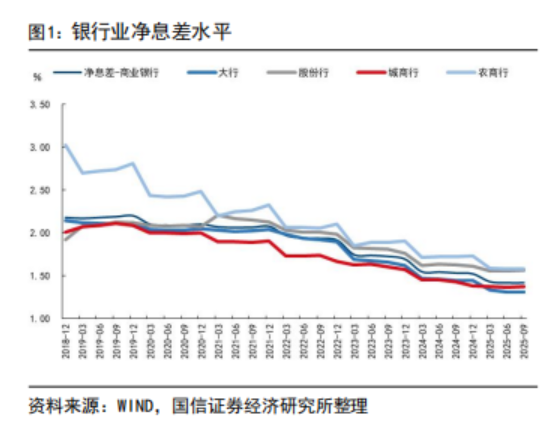
Core Viewpoint - Agricultural Bank's stock price surged over 4% on November 12, reaching a market capitalization of over 3 trillion yuan for the first time, marking a historical high. The stock has increased by 68% year-to-date and surpassed Industrial and Commercial Bank of China to become the new "universe bank" in early September [1][4]. Financial Performance - Agricultural Bank's price-to-book (PB) ratio has surpassed 1 for the first time among the four major state-owned banks, currently at 1.10, while its peers are below 0.8 [4]. - The bank's operating income grew by 2.0% year-on-year in the first three quarters of 2025, with its non-interest income growth leading among the four major banks at 31.7% [5][8]. - The bank achieved a floating profit of 8.5 billion yuan in the first three quarters, outperforming its peers, and was the only major bank to report a floating profit during the first quarter's bond market downturn [8][10]. Market Position and Strategy - Analysts suggest that Agricultural Bank's strong performance is attributed to its unique financial market operations and effective county-level financial strategies. The bank's credit expansion potential and resilient interest margins are highlighted as key strengths [4][16]. - The bank's strategy of maintaining a low proportion of TPL accounts (below 4%) has minimized its exposure to bond market fluctuations, allowing it to navigate market adjustments more effectively [10][11]. Seasonal Trends - The bank's performance aligns with historical seasonal trends, as the banking sector typically experiences a favorable period from November to January, with absolute return probabilities reaching 70%-80% [21][23]. - The bank's strong performance in the fourth quarter is expected to benefit from the traditional "opening red" phenomenon in January, where financial data is released, providing clearer insights for investors [23]. Future Outlook - Market analysts believe that Agricultural Bank's achievement of a PB ratio above 1 is indicative of a broader trend of valuation recovery among state-owned banks, supported by government policies aimed at strengthening these institutions [18][20]. - The bank's robust fundamentals, including strict non-performing loan recognition and strong provisioning, provide a solid foundation for future growth and risk management [16][17].
智通港股解盘 | 传闻引发光伏下跌 市场猛炒超跌次新消费股
Zhi Tong Cai Jing· 2025-11-12 12:23
Market Overview - Hong Kong stocks showed a positive trend, closing up 0.85% as bulls took control, indicating a lack of negative news is perceived as positive [1] - The U.S. House of Representatives is expected to vote on a compromise plan to end the longest government shutdown in U.S. history, which could restore funding to government agencies [1] - The ADP private sector employment report for October showed a decrease of 45,000 jobs, the largest drop in two and a half years, suggesting a cooling labor market and increasing expectations for a Fed rate cut in December [1] Sector Performance - The banking sector saw a rebound with major banks like Agricultural Bank of China reaching new highs, driven by long-term investments from insurance funds and public funds [1] - Consumer sectors are gaining traction, with companies like "Hushang Auntie" seeing a significant increase of nearly 29%, indicating a recovery in consumer sentiment [2] - Retail sales in Hong Kong are projected to rise by 4% year-on-year in October, benefiting retail rental stocks [3] Company Highlights - Baijie Shenzhou reported a 44.2% increase in total revenue for the first three quarters, driven by sales growth of its self-developed products [3] - Xiaomi announced a significant sales figure of over 29 billion yuan during the Double 11 shopping festival, indicating strong consumer demand [4] - The Ximangdu iron ore project, with reserves exceeding 4.4 billion tons, has commenced production, potentially altering the global iron ore supply landscape and benefiting companies like Maanshan Iron & Steel [5] Industry Developments - The Chinese commercial aerospace sector is set to advance with the upcoming maiden flight of the reusable rocket "Zhuque-3," which aims to reduce launch costs significantly [6] - The sportswear manufacturing sector is expected to see a recovery in demand, with Shenzhou International projecting a 15.3% increase in revenue for the first half of 2025 [7] - The company has expanded its overseas production capacity, with 53% of its garment output coming from international facilities, indicating a strategic shift towards globalization [8]