XIAOMI(01810)

Search documents
8点1氪丨小米通报两起汽车起火事件;嫣然基金会已筹款超2300万;信用卡分期还款能享受财政贴息
3 6 Ke· 2026-01-21 00:03
Group 1 - Xiaomi reported two incidents of car fires involving its vehicles, with no injuries reported. The first incident occurred in Haikou, where a vehicle caught fire shortly after being parked, and the second incident involved a collision in Henan, which also resulted in a fire after the vehicle was safely pulled over [1][2][3] - Gree Electric plans to mass-produce silicon carbide chips for automotive applications, with the CEO stating that half of the chips used by GAC Group in the future will be supplied by Gree [5][6] - The Renminbi cash payment regulations will take effect on February 1, 2026, prohibiting the refusal of cash payments and allowing the public to report discriminatory practices against cash [8][9] Group 2 - The personal consumption loan subsidy policy has been extended until the end of 2026, with credit card installment payments now included in the subsidy program [2][3] - The charity organization, Yanyuan Foundation, has raised over 23 million yuan for medical assistance to patients, with funds being allocated based on donor specifications [2] - HSBC's market value is approaching 300 billion pounds, with expectations of significant stock price increases [11]




智通港股通资金流向统计(T+2)|1月21日





智通财经网· 2026-01-20 23:33
Group 1 - The top three companies with net inflow of southbound funds are SMIC (10.84 billion), Xiaomi Group (8.70 billion), and Hua Hong Semiconductor (5.82 billion) [1] - The top three companies with net outflow of southbound funds are China Mobile (-11.60 billion), Alibaba Health (-4.83 billion), and Kuaishou-W (-4.55 billion) [1] - In terms of net inflow ratio, Qinhuangdao Port (82.38%), 361 Degrees (76.04%), and Southern Hong Kong Stock Connect (62.50%) lead the market [1] Group 2 - The top ten companies with the highest net inflow include SMIC (10.84 billion, 15.56%), Xiaomi Group (8.70 billion, 11.77%), and Hua Hong Semiconductor (5.82 billion, 15.18%) [2] - The top ten companies with the highest net outflow include China Mobile (-11.60 billion, -39.71%), Alibaba Health (-4.83 billion, -20.48%), and Kuaishou-W (-4.55 billion, -15.50%) [2] - The top three companies with the highest net inflow ratio are Qinhuangdao Port (82.38%), 361 Degrees (76.04%), and Southern Hong Kong Stock Connect (62.50%) [2][3] Group 3 - The top three companies with the highest net outflow ratio are Jiangnan Buyi (-60.89%), Yancoal Australia (-60.02%), and Standard Chartered Group (-56.28%) [3] - Other notable companies with significant net outflow include Tianli International Holdings (-55.78%) and China Shenhua Energy (-48.70%) [3]
智通ADR统计 | 1月21日
智通财经网· 2026-01-20 22:29
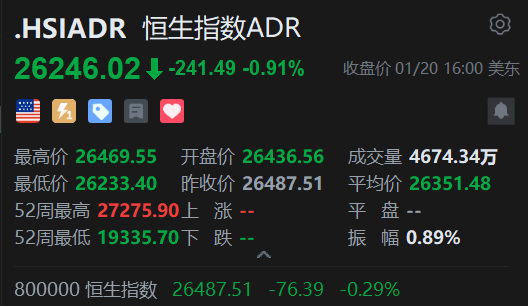
Market Overview - The Hang Seng Index closed at 26,246.02, down by 241.49 points or 0.91% [1] - The index reached a high of 26,469.55 and a low of 26,233.40 during the trading session [1] - The average price for the day was 26,351.48, with a trading volume of 46.7434 million [1] Major Blue-Chip Stocks Performance - HSBC Holdings closed at HKD 128.682, up by 0.22% compared to the Hong Kong close [2] - Tencent Holdings closed at HKD 593.183, down by 1.30% compared to the Hong Kong close [2] - Alibaba Group (W) closed at HKD 159.700, down by 0.44% [3] - Xiaomi Group (W) closed at HKD 35.480, down by 2.74% [3] - Meituan (W) closed at HKD 97.350, down by 1.17% [3] Stock Price Changes - Tencent Holdings saw a decrease of HKD 9.000, or 1.48% [3] - HSBC Holdings increased by HKD 1.400, or 1.10% [3] - China Ping An rose by HKD 0.600, or 0.88% [3] - BYD Company experienced a decline of HKD 3.700, or 3.67% [3] - Kuaishou Technology (W) fell by HKD 0.700, or 0.91% [3]






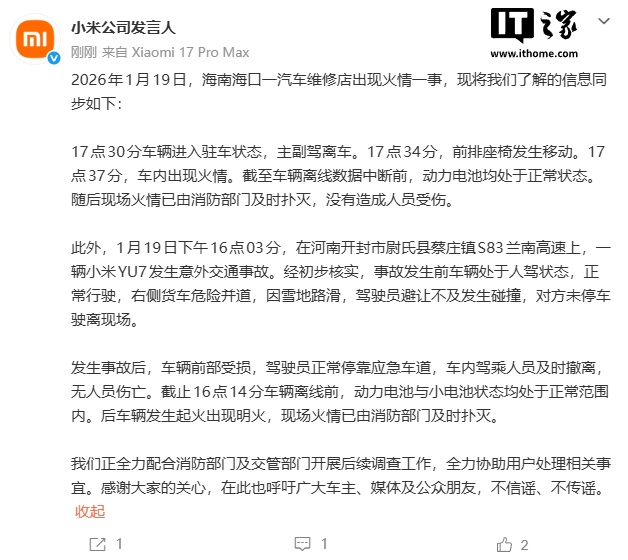
小米汽车回应海南维修店火情与河南 YU7 高速事故:车辆离线前电池状态均属正常,无人员伤亡
Xin Lang Cai Jing· 2026-01-20 19:27
IT之家 1 月 20 日消息,小米公司发言人刚刚发文,就 1 月 19 日海南海口一汽车维修店出现火情一事、 1 月 19 日兰南高速的小米 YU7 交通事故进行了回应。 IT之家附原文如下: 2026 年 1 月 19 日,海南海口一汽车维修店出现火情一事,现将我们了解的信息同步如下: 我们正全力配合消防部门及交管部门开展后续调查工作,全力协助用户处理相关事宜。感谢 大家的关心,在此也呼吁广大车主、媒体及公众朋友,不信谣、不传谣。 17 点 30 分车辆进入驻车状态,主副驾离车。17 点 34 分,前排座椅发生移动。17 点 37 分,车内出现火情。截至车辆离线数据中断前,动力电池均处于正常状态。随后现场火情已 由消防部门及时扑灭,没有造成人员受伤。 此外,1 月 19 日下午 16 点 03 分,在河南开封市尉氏县蔡庄镇 S83 兰南高速上,一辆小米 YU7 发生意外交通事故。经初步核实,事故发生前车辆处于人驾状态,正常行驶,右侧货 车危险并道,因雪地路滑,驾驶员避让不及发生碰撞,对方未停车驶离现场。 发生事故后,车辆前部受损,驾驶员正常停靠应急车道,车内驾乘人员及时撤离,无人员伤 亡。截至 16 点 ...
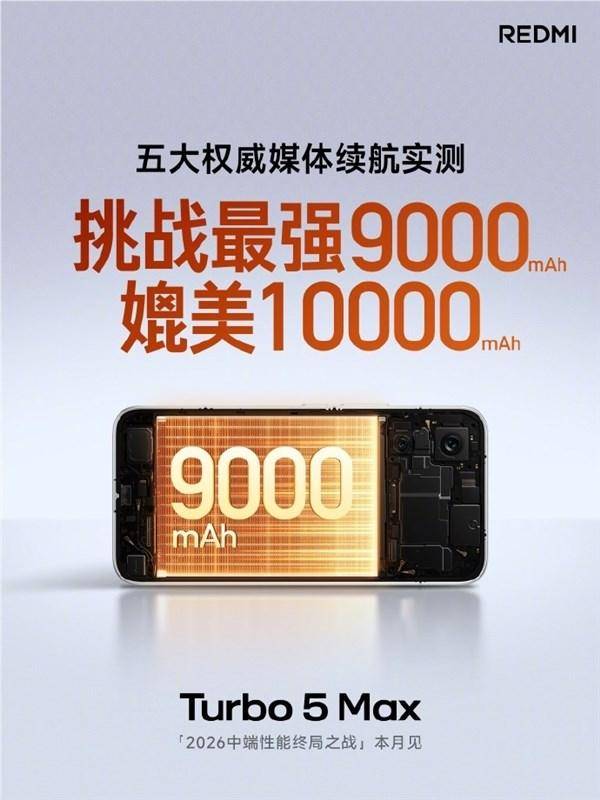
REDMI Turbo 5 Max本月发布 雷军:强得有点离谱
Sou Hu Cai Jing· 2026-01-20 17:14
Core Insights - REDMI officially confirms the upcoming launch of the Turbo5 series, with the Turbo5Max model highlighted for its impressive capabilities [1] - The Turbo5Max features a record-breaking 9000mAh battery, achieving performance comparable to devices with 10000mAh batteries [1] - The device is powered by the MediaTek Dimensity 9500s chip, developed in collaboration with MediaTek, utilizing advanced 3nm technology [3] Battery Performance - The Turbo5Max's 9000mAh battery has an energy density of 894Wh/L, setting a new record for Xiaomi [1] - In tests conducted by five major media outlets, the Turbo5Max demonstrated exceptional battery life, rivaling that of 10000mAh models [1] Performance Specifications - The Turbo5Max is equipped with the Dimensity 9500s chip, featuring a second-generation full-core architecture and a total transistor count nearing 30 billion [3] - The device aims to deliver flagship-level performance in the 2.5K price segment [3] Gaming Experience - The Turbo5Max's software tuning capabilities, combined with the new generation of the "Killer Engine," significantly enhance mainstream gaming experiences [4] - In practical tests, the Turbo5Max achieved nearly full-frame performance of 59.5fps in a demanding 3D turn-based game at 900P resolution and 60 frames per second, surpassing some flagship models priced around 4000 yuan [4]
小米集团-W(01810.HK)1月20日回购550.00万股,耗资1.96亿港元
Zheng Quan Shi Bao Wang· 2026-01-20 15:50
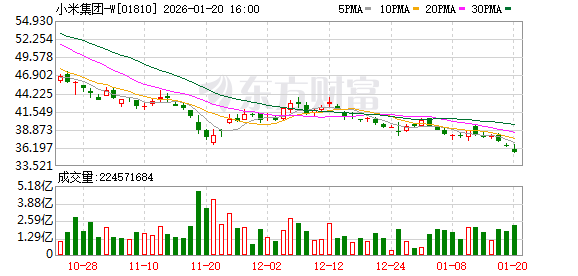
Group 1 - The core point of the article is that Xiaomi Group-W has been actively repurchasing its shares, with a total of 5,550,000 shares bought back on January 20 at prices ranging from 35.460 to 35.860 HKD, amounting to 196 million HKD [2] - Since January 13, the company has conducted share repurchases for six consecutive days, totaling 27,300,000 shares and a cumulative repurchase amount of 1.012 billion HKD, during which the stock price has decreased by 8.42% [2] - Year-to-date, the company has completed 11 repurchase transactions, acquiring a total of 47,850,000 shares for a total amount of 1.802 billion HKD [3] Group 2 - The detailed repurchase data shows the number of shares repurchased, the highest and lowest prices, and the total amount for each transaction, indicating a consistent strategy in share buybacks [3] - The highest repurchase price recorded was 39.320 HKD on January 5, while the lowest was 35.460 HKD on January 20 [3] - The repurchase activity reflects the company's commitment to supporting its stock price amid market fluctuations, as evidenced by the stock's decline during the repurchase period [2][3]
南向资金今日净买入36.63亿港元,腾讯控股净买入6.63亿港元
Zheng Quan Shi Bao Wang· 2026-01-20 15:44
Core Viewpoint - The Hang Seng Index fell by 0.29% on January 20, with southbound capital transactions totaling HKD 97.283 billion, resulting in a net inflow of HKD 36.63 billion [1] Group 1: Southbound Capital Transactions - Total southbound capital transactions amounted to HKD 97.283 billion, with buy transactions at HKD 50.473 billion and sell transactions at HKD 46.810 billion, leading to a net buy of HKD 36.63 billion [1] - The Hong Kong Stock Connect (Shenzhen) recorded a total transaction amount of HKD 37.804 billion, with net buying of HKD 2.18 billion, while the Hong Kong Stock Connect (Shanghai) had a total transaction amount of HKD 59.479 billion, with net buying of HKD 34.44 billion [1] Group 2: Active Stocks - Tencent Holdings had the highest transaction amount among active stocks, totaling HKD 63.88 billion, with a net buy of HKD 6.63 billion, despite a closing price drop of 1.48% [1][2] - Other notable stocks included Alibaba-W and Xiaomi Group-W, with transaction amounts of HKD 48.94 billion and HKD 46.53 billion, respectively [1] - The most significant net sell was recorded for SMIC, with a net sell of HKD 7.18 billion and a closing price drop of 3.25% [1][2] Group 3: Continuous Net Buying - Five stocks experienced continuous net buying for more than three days, with Tencent Holdings leading at 10 days, followed by Alibaba-W at 7 days and Huahong Semiconductor at 4 days [2] - The total net buying amounts during this period were HKD 106.21 billion for Tencent Holdings, HKD 47.56 billion for Alibaba-W, and HKD 14.29 billion for Xiaomi Group-W [2]

港股通(深)净买入2.18亿港元
Zheng Quan Shi Bao Wang· 2026-01-20 15:44
Core Viewpoint - On January 20, the Hang Seng Index fell by 0.29%, closing at 26,487.51 points, while southbound funds through the Stock Connect recorded a net buy of HKD 36.63 billion [1]. Group 1: Market Activity - The total trading volume for the Stock Connect on January 20 was HKD 972.83 billion, with a net buy of HKD 36.63 billion [1]. - The Shanghai Stock Connect accounted for HKD 594.79 billion in trading volume with a net buy of HKD 34.44 billion, while the Shenzhen Stock Connect had a trading volume of HKD 378.04 billion and a net buy of HKD 2.18 billion [1]. Group 2: Active Stocks - In the Shanghai Stock Connect, Tencent Holdings was the most actively traded stock with a transaction amount of HKD 37.26 billion, followed by Xiaomi Group-W and Alibaba-W with transaction amounts of HKD 30.51 billion and HKD 23.91 billion, respectively [1]. - Tencent Holdings had a net buy of HKD 5.03 billion, despite its closing price dropping by 1.48% [1]. - China Mobile recorded the highest net sell amount of HKD 6.37 billion, closing flat [1]. Group 3: Shenzhen Stock Connect Activity - In the Shenzhen Stock Connect, Tencent Holdings also led with a transaction amount of HKD 26.62 billion, followed by Alibaba-W and SMIC with transaction amounts of HKD 25.02 billion and HKD 19.36 billion, respectively [2]. - Meituan-W had the highest net buy amount of HKD 2.54 billion, although it closed down by 1.17% [2]. - SMIC experienced the largest net sell amount of HKD 5.42 billion, closing down by 3.25% [2].


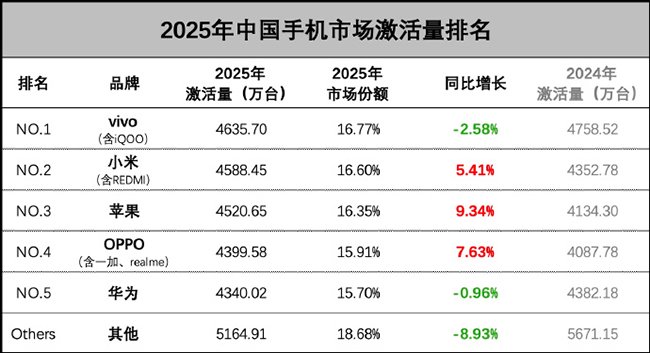
【市场】网传2025年中国手机市场激活量排名 vivo第一 小米第二
Xin Lang Cai Jing· 2026-01-20 13:40
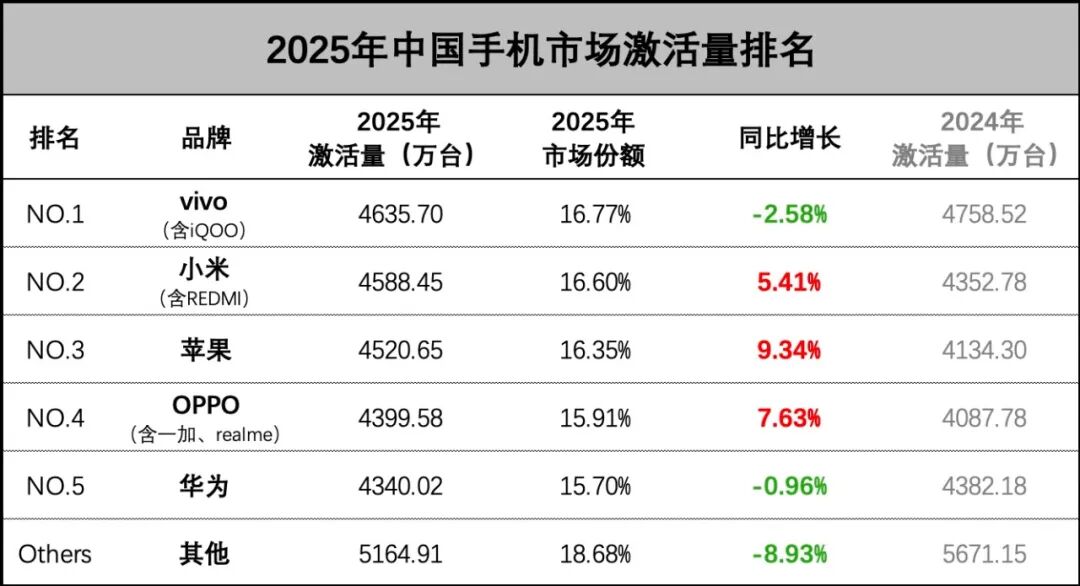
近日市场研究机构IDC、Counterpoint等纷纷更新了2025年第四季度(10-12月)和2025全年(1-12月)中国智能手机市场出货量数据,但都是出货量,今 日爆料达人数码闲聊站分享了一份激活量排名,来简单看下~ | | | | 2025年中国手机市场激活量排名 | | | | --- | --- | --- | --- | --- | --- | | 排名 | 品牌 | 2025年 | 2025年 | 同比增长 | 2024年 | | | | 激活量(万台) | 市场份额 | | 激活量(万台) | | NO.1 | VIVO (含iQOO) | 4635.70 | 16.77% | -2.58% | 4758.52 | | NO.2 | 小米 (含REDMI) | 4588.45 | 16.60% | 5.41% | 4352.78 | | NO.3 | 苹果 | 4520.65 | 16.35% | 9.34% | 4134.30 | | NO.4 | OPPO (含一加、realme) | 4399.58 | 15.91% | 7.63% | 4087.78 | | NO.5 | 华为 | ...

2025年中国手机激活量排名:vivo蝉联榜首 小米反超苹果登次席
Xin Lang Cai Jing· 2026-01-20 13:39
Core Insights - The 2025 Chinese smartphone market has seen a subtle shift in the competitive landscape, with vivo maintaining its lead, followed by Xiaomi and Apple, all surpassing 40 million units in activation volume [1][7]. Market Rankings - Vivo (including iQOO) ranked first with an activation volume of 46.357 million units, holding a market share of 16.77%, despite a slight decline of 2.58% from 2024 [2][8]. - Xiaomi (including REDMI) achieved an activation volume of 45.884 million units, capturing a market share of 16.60%, marking a growth of 5.41% year-on-year, thus surpassing Apple to claim the second position [3][9]. - Apple secured the third position with an activation volume of 45.206 million units and a market share of 16.35%, experiencing a significant growth of 9.34% [3][10]. - OPPO (including OnePlus and realme) ranked fourth with 43.996 million units and a market share of 15.91%, showing a year-on-year increase of 7.63% [4][10]. - Huawei placed fifth with an activation volume of 43.400 million units and a market share of 15.70%, reflecting a slight decline of 0.96% [4][10]. Market Trends - The overall smartphone market in China saw a slight decline in demand, with total shipments around 285 million units, down 0.6% year-on-year, indicating a softening consumer demand [2][8]. - The market is characterized by a "high-end consolidation and mid-range competition," with AI smartphones and foldable screens emerging as key growth areas [4][10]. - In 2025, the shipment volume of AI smartphones reached 118 million units, achieving a penetration rate of over 40% [4][10]. Future Outlook - Industry experts predict a continued slight decline in overall shipments by 2%-3% in 2026, with rising memory chip prices potentially increasing average smartphone prices by 10%-20% [11]. - The focus for leading brands will likely shift towards high-profit segments, intensifying market competition [11]. - Key questions for 2026 include whether vivo can maintain its lead, if Xiaomi can solidify its second position, and whether Apple can sustain its high-end growth trajectory [11].