XIAOMI(01810)

Search documents
地缘冲突、高油价下的港股市场应对策略
Zhong Guo Yin He Zheng Quan· 2026-03-22 07:55
Market Performance - The Hong Kong stock market indices all declined during the week from March 16 to March 20, with the Hang Seng Index falling by 0.74% to 25,277.32 points, the Hang Seng Tech Index dropping by 2.12% to 4,872.38 points, and the Hang Seng China Enterprises Index decreasing by 1.12% to 8,574.07 points[4]. - Among the sectors, three industries rose while eight fell, with industrials up 2.54%, financials up 1.71%, and energy up 0.96%. Conversely, materials fell by 10.09%, communication services by 3.7%, and information technology by 3.19%[6]. Liquidity and Fund Flows - The average daily trading volume on the Hong Kong Stock Exchange was HKD 284.51 billion, a decrease of HKD 8.92 billion from the previous week[13]. - Southbound capital experienced a net outflow of HKD 6.329 billion, a significant drop of HKD 58.769 billion compared to the previous week's net inflow[13]. - Over the past week, global active foreign funds saw a net outflow of USD 1.28 million from Hong Kong stocks, while passive foreign funds had a net outflow of USD 2.04 million, both significantly higher than the previous week's net inflows[19]. Valuation and Risk Premium - As of March 20, 2026, the Hang Seng Index had a PE ratio of 12.38 and a PB ratio of 1.27, placing it at the 81% and 63% percentile levels since 2010, respectively[30]. - The risk premium for the Hang Seng Index was calculated at 3.69%, which is -1.82 standard deviations below the 3-year rolling mean, indicating a low-risk environment[34]. Investment Outlook - The market is expected to undergo a three-phase evolution in response to potential long-term conflicts, characterized by short-term emotional shocks, mid-term fundamental transmission, and long-term structural differentiation[58]. - Investment strategies should focus on three main lines: (1) cyclical sectors benefiting from global manufacturing recovery and AI capital expenditure, (2) financial and consumer discretionary sectors at valuation bottoms, and (3) technology sectors with self-sufficient logic, particularly in AI[59]. Risk Factors - Risks include domestic policy effectiveness falling short of expectations, overseas interest rate cuts not materializing, and unstable market sentiment[60].


永金证券晨会纪要-20260322
永丰金证券· 2026-03-22 06:51
Core Insights - The report highlights the pressure on US stock markets, with the Dow Jones Industrial Average closing at 46,021 points, down 203 points or 0.44% [8] - It emphasizes the importance of finding "valuation safety + short-term catalysts" amid ongoing geopolitical tensions in the Middle East, which are affecting inflation and supply chains [8] - The report suggests a strategic asset allocation towards defensive and resource-related assets while maintaining cash reserves to navigate market adjustments [8] Market Overview - The US 10-year Treasury yield rose by 7.1 basis points to 4.329% [8] - Asian stock markets experienced declines, with the Hang Seng Index dropping 524 points or 2.02% to close at 25,500 points [12] - The report notes that Brent crude oil prices surged over 10%, reflecting heightened concerns about inflation and potential interest rate hikes by the Federal Reserve [10][12] Company Performance - Alibaba reported a 36% year-on-year revenue growth in its cloud segment, with total revenue for the quarter reaching 43.3 billion RMB [12] - AIA Group's operating profit after tax increased by 7% to 7.136 billion USD, with a 12% rise in earnings per share [12] - JD Cloud announced it would not follow the trend of price increases for its core products, ensuring cost stability for customers [12] Economic Data - The US Department of Labor reported a decrease in initial jobless claims to 205,000, down 8,000 from the previous week [10] - February new home sales in the US fell sharply by 17.6% month-on-month, with an annualized rate of 587,000 units, significantly below expectations [10] - The report indicates that foreign holdings of US Treasury securities increased to 9.31 trillion USD, an 8% year-on-year rise, primarily driven by Japan, the UK, and China [10]




用AI清退全部外包?网易回应;百度挖DeepSeek核心人才入职;曝宇树对外称弹性双休,内部是另一套规则,非常卷|AI周报
AI前线· 2026-03-22 05:33
Group 1 - DeepSeek core talent has joined Baidu, but it is not the rumored Guo Daye, raising industry speculation [3][4] - Baidu's internal personnel changes include the departure of Zhao Shiqi and the appointment of He Jingzhou as the head of the new Baidu APP R&D Center [4][5] - Tencent has dissolved its AI Lab, reallocating personnel to the large language model department and the industry-academia-research cooperation center [6] Group 2 - A programmer from Yushun Technology claims that the company promotes flexible working hours externally, but internally maintains a demanding work culture [7][8] - Yushun Technology has filed for an IPO on the STAR Market, aiming to raise 4.202 billion yuan [9] - NetEase responded to rumors of "AI layoffs of all outsourced employees," stating that recent personnel changes are part of normal business adjustments [10][11] Group 3 - A man was detained for spreading false rumors about iFlytek planning to lay off 30% of its workforce [12][13] - Cheetah Mobile's chairman, Fu Sheng, publicly criticized Qihoo 360's founder Zhou Hongyi over a debt dispute [14] - Cursor's new model faced accusations of being a rebranded version of Kimi K2.5, which the company later acknowledged [15][17] Group 4 - Major layoffs in the tech industry include Dell announcing a 10% workforce reduction, affecting approximately 11,000 employees, with severance costs around 5.69 billion USD [21][22] - Japan's Rakuten AI 3.0 was criticized for allegedly copying the architecture of China's DeepSeek V3, leading to public backlash [23][24][25] - OpenAI plans to acquire the startup Astral to enhance its Codex project, expanding its developer service tools [26][27] Group 5 - Alibaba has established a new business unit, Alibaba Token Hub, to consolidate its AI services and development efforts [28][29] - AI computing and storage product prices have increased by 5%-34% due to rising demand and supply chain costs [30] - ByteDance's "Doubao AI glasses" production plans have been delayed, with a focus on ensuring product differentiation [31]



The Dip Before The Re-Rate, Xiaomi's Window Of Maximum Pessimism
Seeking Alpha· 2026-03-22 03:26
Core Viewpoint - The article discusses the importance of conducting thorough due diligence before making investment decisions, emphasizing that opinions expressed are personal and not qualified investment advice [2][3][4] Group 1 - The analyst has been covering global stocks on Seeking Alpha since 2018 and has approximately a decade of experience in equity markets [1] - The article highlights that the analyst has no current positions in any mentioned companies and does not plan to initiate any within the next 72 hours [2] - It is noted that the research and interpretations provided may contain errors and should not be considered as definitive investment advice [3] Group 2 - The article clarifies that past performance of investments does not guarantee future results, and no specific recommendations are made regarding investment suitability for individual investors [4] - The views expressed may not reflect those of Seeking Alpha as a whole, indicating a diversity of opinions among analysts [4]

雷军,公开道歉
券商中国· 2026-03-21 23:32
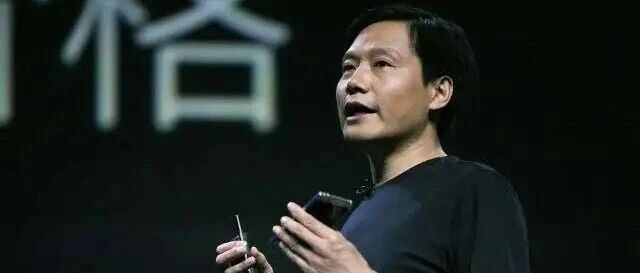
Core Viewpoint - Xiaomi's CEO Lei Jun addressed a misunderstanding regarding his statement about vehicle collision speeds, clarifying that it was a verbal mistake during a presentation [1] Group 1: Product Launch and Sales Performance - Xiaomi launched its new generation SU7 vehicle on March 19, with a starting price of 219,900 yuan. The vehicle achieved 15,000 locked orders within 34 minutes of its release [3] - The company reported that the locked order progress for the new SU7 has been better than that of the first generation model since its launch [4] Group 2: Communication Strategy - Xiaomi has opted to disclose "locked order" data instead of "big order" data since the launch of the YU7 model last year, as locked orders are seen as a more accurate reflection of user choice and acceptance [4]
任泽平带你看前沿科技:2026研学计划
泽平宏观· 2026-03-21 17:01
Core Insights - The article emphasizes the importance of practical learning experiences in cutting-edge technology sectors, aiming to connect entrepreneurs with leading companies and experts in the field [4][13][25]. Schedule Overview - The schedule for 2025 includes visits to major tech companies and events such as CES, featuring industry leaders like NVIDIA, Tesla, and Google, as well as academic institutions like Stanford and UC Berkeley [7][8]. - Specific events include closed-door research meetings focusing on AI and robotics, with participation from companies like Huawei and various leading robotics firms [9][10]. Learning Objectives - The program aims to provide deep insights into the strategic decisions and technological advancements of top companies, facilitating direct dialogue with founders and executives [13][25]. - It focuses on three main dimensions: emerging technology trends, new industry ecosystems, and innovative business strategies, helping entrepreneurs identify investment opportunities and drive practical innovation [13][25]. Past Activities - In 2023, participants visited notable companies such as Huawei, ByteDance, and NIO, engaging with prominent entrepreneurs for firsthand insights [24]. - The 2024 agenda includes visits to companies like BYD, Tencent, and JD.com, focusing on themes like artificial intelligence and renewable energy [25]. Future Aspirations - The program aims to continue exploring new investment opportunities in frontier technologies, with plans to visit leading firms in robotics, autonomous driving, and advanced sensing technologies [25]. - The initiative seeks to foster a community of entrepreneurs and investors, enhancing their understanding of macroeconomic trends and industry dynamics [48].



雷军低级口误引全网热议,张朝阳在线纠错
程序员的那些事· 2026-03-21 14:25
Core Viewpoint - The controversy arose from Lei Jun's statement during the Xiaomi SU7 launch regarding collision energy, which sparked widespread correction from the public and experts [1][2]. Group 1 - Lei Jun claimed that a collision between two cars at 60 km/h is equivalent to a single car crashing into a wall at 120 km/h, suggesting a collision energy of 1.44 times the standard condition [1]. - The statement was quickly challenged by physics enthusiasts, including notable figures like Zhang Chaoyang, leading to a viral response on social media [2]. - The mathematical error was identified as a misunderstanding of the kinetic energy formula E = ½ mv², where the energy in a two-car collision is shared, meaning each car only experiences a 60 km/h impact [3]. Group 2 - Following the backlash, Lei Jun publicly apologized on Weibo, acknowledging his mistake and expressing gratitude to those who pointed it out, without making excuses [3].

雷军回应“60加60”争议:确实说错了
证券时报· 2026-03-21 12:13
Core Viewpoint - Lei Jun, founder and CEO of Xiaomi, clarified his statement regarding vehicle collision speeds, acknowledging a mistake in his explanation during a recent event [1][3]. Group 1: Product Launch and Sales Performance - Xiaomi launched its new generation SU7 vehicle on March 19, with a starting price of 219,900 yuan [3]. - The SU7 achieved impressive sales, with 15,000 units locked in within 34 minutes of the launch [3]. - Xiaomi emphasized the importance of "locked orders" over "big orders" to better reflect user choices and satisfaction, indicating a focus on improving the purchasing experience for customers [3].
雷军回应“60+60相当于120km/h”:口误多讲了一句
21世纪经济报道· 2026-03-21 09:37
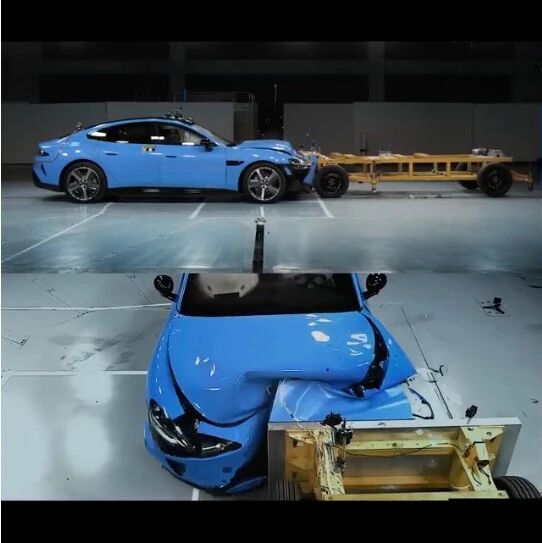
Core Viewpoint - The article discusses the recent controversy surrounding Lei Jun's comments on the safety of the new Xiaomi SU7 vehicle, highlighting the company's pricing strategy and sales targets amidst market challenges [2][6]. Group 1: Controversy and Response - Lei Jun acknowledged a verbal mistake regarding the collision test explanation of the SU7, which led to public ridicule and criticism from netizens [1][2]. - The original statement about the collision energy was criticized for its inaccuracies, with experts clarifying that the impact energy is not simply a matter of relative speed but depends on the energy dissipation process [4]. Group 2: Product Launch and Pricing Strategy - The new Xiaomi SU7 was launched with three versions: Standard, Pro, and Max, priced at 219,900 yuan, 249,900 yuan, and 303,900 yuan respectively, each increasing by 4,000 yuan compared to the previous model [6]. - Despite rising material costs, Xiaomi opted for a modest price increase to ensure affordability for consumers, particularly in light of changes in purchase tax policies [6]. - The company aims to sell 550,000 units by 2026, representing a year-on-year growth rate of approximately 34%, indicating a shift in the SU7's role from a breakthrough model to a stable sales foundation for the brand [6][7].
华为新车上市,要复刻小米爆款剧本
21世纪经济报道· 2026-03-21 08:26
Core Viewpoint - The article discusses the evolution of automotive culture and the emergence of new players like Xiaomi and Huawei in the electric vehicle market, emphasizing their focus on emotional value and user experience in their product offerings [4][9][13]. Group 1: Xiaomi's Success - Xiaomi's SU7 achieved over 88,898 pre-orders within 24 hours of its launch, setting a record for new car launches in China [5]. - The YU7 model also saw significant success, with 240,000 effective orders within 18 hours of its release [5]. - Xiaomi's branding emphasizes a spirit of "not settling for mediocrity," targeting users who aspire for a better lifestyle [9]. Group 2: Huawei's Entry - Huawei's new brand, Qian Kun, aims to create a "Dream Car" that resonates with young users, focusing on aesthetics, control, and emotional value [7][9]. - The GT7 model emphasizes a balance between stability and flair, appealing to users who desire both practicality and individuality [9][10]. - Huawei's approach includes extensive market research to understand user preferences, aiming to avoid compromises in design and functionality [9][10]. Group 3: Design and Aesthetics - Both Xiaomi and Huawei prioritize aesthetics in their vehicle designs, with Xiaomi's SU7 featuring nine color options and a focus on long-lasting paint quality [10][11]. - The GT7 from Huawei draws inspiration from travel destinations for its color palette, utilizing high-quality materials typically reserved for luxury vehicles [10][12]. - The design philosophy for both brands includes a low stance for a sporty appearance, with engineering efforts to achieve this without sacrificing interior space [11][12]. Group 4: Technology and Innovation - Huawei's GT7 will incorporate advanced technologies such as the latest generation of laser radar and intelligent driving systems, focusing on enhancing user experience rather than just technical specifications [13][16]. - The vehicle will also feature innovative lighting systems that convey emotional messages, further emphasizing the importance of emotional value in automotive design [16]. - Both companies are leveraging their existing technological expertise to enhance the driving experience, with Xiaomi focusing on performance testing and Huawei integrating its digital platform for seamless control [11][13]. Group 5: Market Positioning and Challenges - Xiaomi benefits from a strong brand loyalty established through its smartphone business, which may facilitate the acceptance of its automotive products [17]. - Huawei faces challenges in building brand recognition for its new automotive venture, as it is relatively new compared to its established smartphone and technology products [17][20]. - The competition between Huawei's Qian Kun and other emerging brands like Shangjie highlights the need for differentiation in a crowded market [18][20].