
ZTO EXPRESS(02057)

Search documents
商务部等九部门发文促服务出口 跨境电商行业迎来黄金机遇(附概念股)
Zhi Tong Cai Jing· 2025-09-24 23:30
Group 1: Policy Measures - The Ministry of Commerce and nine other departments released measures to promote service exports, focusing on fiscal, financial, and facilitation aspects [1] - The measures include 13 specific initiatives, such as enhancing support for key areas and projects in service exports and optimizing tax refund processes [1] - Financial policies emphasize increasing export credit insurance support and improving financial services for small and micro enterprises [1] Group 2: Cross-Border E-commerce Growth - China's cross-border e-commerce trade has shown stable growth, with exports expected to exceed 2.15 trillion yuan in 2024, marking a 16.9% increase from 2023 [2] - Over 70% of surveyed enterprises anticipate stable or growing cross-border e-commerce imports and exports in 2025 [2] - Taobao's cross-border business plans to invest 1 billion yuan in marketing subsidies for the upcoming "Double 11" event, aiming to double overseas transactions for 100,000 merchants [2] Group 3: Competitive Landscape - AliExpress launched a "Super Brand Going Global Plan," aiming to compete directly with Amazon by offering lower costs for higher sales [3] - The number of new brands on AliExpress increased by 70% in the first half of the year, with over 500 brands doubling their sales [3] - Analysts suggest that cross-border e-commerce platforms will benefit from rising demand for overseas services and increased buyer traffic in non-U.S. regions [3][4] Group 4: Company Performance - Zibuyu reported a 34.1% increase in total revenue to approximately 1.9613 billion yuan for the first half of 2025, driven by brand development and expansion beyond Amazon [5] - JD Group's revenue grew by 22.4% year-on-year in the second quarter, achieving a three-year high, with expectations for further margin improvement [6] - Pinduoduo initiated a significant support program for merchants, aiming to enhance quality development across various regions [6] Group 5: Stock Recommendations - Analysts recommend companies with strong brand potential and improving performance, including Anker Innovation and Ugreen Technology in the B2C sector, and Xiaogoods City in the B2B sector [4] - Other recommended companies for overseas expansion include Miniso and Kangnait Optical [4] - Zhongtong Express received an upgraded rating from "Outperform" to "Buy," with a target price increase based on improved industry pricing conditions [7]



无人车为快递网点抠出0.1元成本
Di Yi Cai Jing· 2025-09-24 12:35
Core Insights - The rapid adoption of functional unmanned vehicles in the express delivery industry is significantly reducing costs and improving efficiency [1][2] - Unmanned vehicles are reported to lower transportation costs by approximately 0.1 yuan per package compared to human delivery [1] - Monthly sales of unmanned vehicles have surged from 200-300 units at the beginning of the year to nearly 2000 units currently [2] Group 1: Industry Impact - The deployment of unmanned vehicles has transitioned from pilot programs at select locations last year to widespread implementation this year [1] - Unmanned vehicles are being utilized effectively in logistics, with one express delivery point reporting a cost of 0.06 yuan per package for unmanned transport [1] - Major express companies like Zhongtong and Jitu are significantly increasing their fleets of unmanned vehicles, with Zhongtong operating over 2000 units across more than 700 locations [1] Group 2: Company Developments - New Stone Technology has delivered its 10,000th unmanned vehicle, indicating strong growth in production and delivery capabilities [1] - Zhongtong has reported that its unmanned vehicles can handle 200,000 packages daily, showcasing the scale of operations [1] - Jitu plans to add 3000 unmanned vehicles this year, having already deployed 900, up from just 218 at the end of last year [1]

消息称中通、极兔等快递公司将在上海区域涨价
Xi Niu Cai Jing· 2025-09-24 06:28
Group 1 - Major express delivery companies in Shanghai, including Jitu Express, Zhongtong Express, YTO Express, and Shentong Express, announced a price increase for all customers starting from September 22, 2025 [2] - The price adjustment aims to implement national policies against "involution" competition, eliminate disruptive low pricing practices, and ensure stable service for customers [2] - Jitu Express and Zhongtong Express confirmed the authenticity of the notification, while YTO Express and Shentong Express have not yet responded [2] Group 2 - Recently, regions such as Hubei, Shandong, and Tianjin have also announced increases in express delivery fees [5] - Several express companies in Heilongjiang, including YTO Express, stated that they will adjust their pricing based on company costs starting from September 20, 2025, to promote rational and healthy competition [5]



快递涨价“连续剧”更新 上海收件价格上调,商家默默取消运费险
2 1 Shi Ji Jing Ji Bao Dao· 2025-09-23 23:16
Core Viewpoint - The recent price increase in the express delivery sector, initiated by major companies like Jitu, Zhongtong, and Yuantong, reflects a broader trend driven by policy and cost pressures, aiming to curb long-standing low-price competition in the industry [1][3]. Price Increase Details - Five leading express companies have raised the collection prices in Shanghai by 0.2 to 0.4 yuan per order [1]. - Similar price adjustments have occurred in key e-commerce regions such as Zhejiang and Guangdong, indicating a widespread trend [1][3]. - The price hikes primarily target low-priced orders below cost, while personal parcel rates remain unaffected [1]. Cost Pressures and Industry Response - The express delivery industry has been facing rising costs, including increased wages for delivery personnel and higher transportation and packaging expenses [5]. - The average price for express services has decreased by nearly 8% year-on-year, with major companies experiencing a decline in per-order revenue [5]. - Companies are shifting from a volume-driven strategy to a quality-focused approach to maintain profitability [5][6]. Financial Impact on Companies - The price increase is expected to enhance station revenues and improve the income of delivery personnel [4]. - For instance, a single station estimates that a 0.1 yuan increase in per-order revenue could lead to an additional 1.5 million yuan in monthly income [4]. Market Dynamics and Regional Variations - The price increase has not been uniformly adopted across all regions, with core areas like Guangdong and Zhejiang implementing changes while non-core areas maintain previous pricing strategies [6]. - The disparity in e-commerce density affects the pace of price adjustments, with some regions still engaging in price competition to attract customers [6]. Effects on Related Industries - The rise in express delivery costs has led to the cancellation of shipping insurance by some merchants, particularly in the high-return apparel sector, which may impact sales conversion rates [7]. - The cancellation of shipping insurance could also affect reverse logistics, which has been a significant revenue source for express stations [7]. Future Outlook - While the price increases may improve profit margins, the long-term effectiveness in curbing low-price competition remains uncertain, as consumer acceptance of higher prices is crucial [7].


快递涨价“连续剧”更新 上海收件价格上调 商家默默取消运费险
2 1 Shi Ji Jing Ji Bao Dao· 2025-09-23 23:13
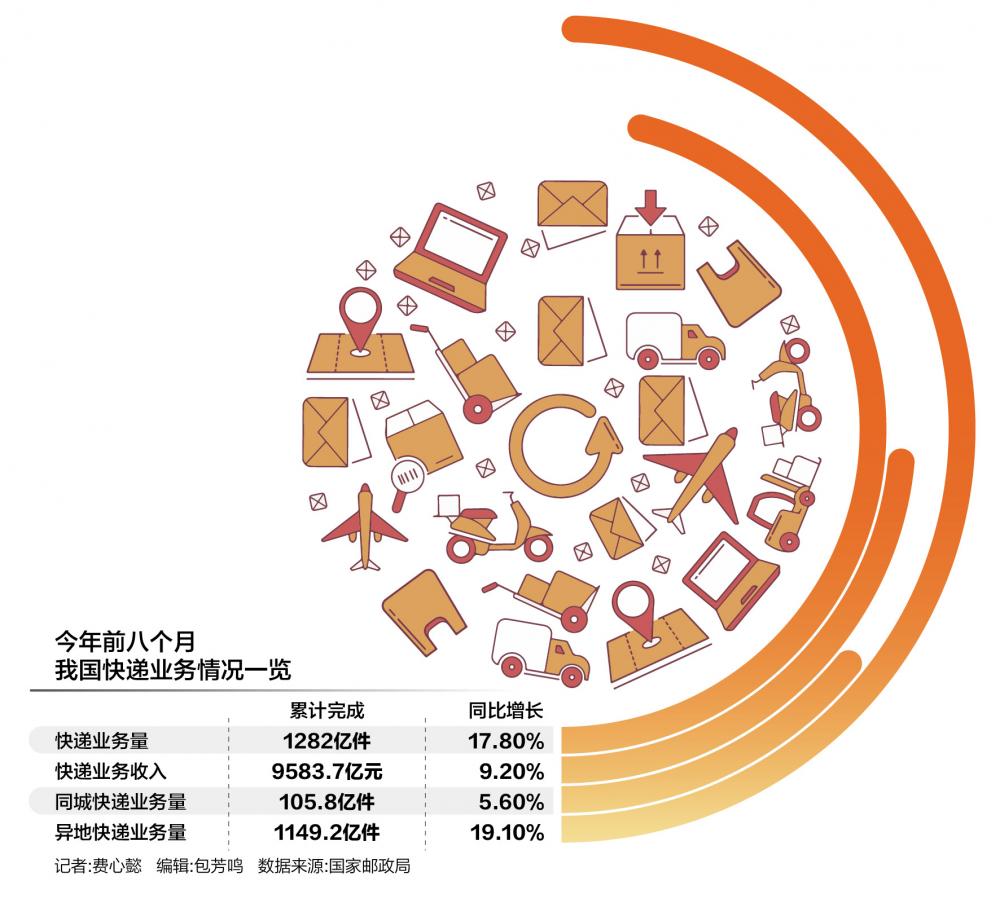
Core Viewpoint - The recent price increase in the express delivery sector, driven by policy and cost pressures, is spreading from core e-commerce areas to broader regions, aiming to curb long-standing low-price competition and improve service quality satisfaction among consumers [1][3][5]. Price Increase Details - On September 22, major express companies including Jitu, Zhongtong, and Yuantong raised the collection prices in Shanghai by 0.2 to 0.4 yuan per order [1]. - Previous price hikes occurred in Yiwu, Zhejiang, and Guangdong, with minimum prices set at 1.2 yuan and 1.4 yuan respectively, indicating a trend towards establishing a price floor to combat low-price competition [3][4]. Financial Impact - The price adjustments are expected to enhance station profitability and courier income, with one franchisee estimating an additional 1.5 million yuan in monthly revenue from a 0.1 yuan increase per order [4]. - The express delivery industry has seen record volumes, with 1,282 billion packages delivered in the first eight months of the year, a 17.8% year-on-year increase, and total revenue reaching 9,583.7 billion yuan, up 9.2% [4]. Competitive Landscape - The express delivery sector is transitioning from a volume-driven strategy to a quality-focused approach due to shrinking profit margins amid fierce competition [5][6]. - Major companies like Zhongtong have adjusted their growth forecasts downward, indicating a shift in focus towards balancing service quality and profitability [6]. Regional Price Variations - Price increases have been more pronounced in e-commerce hubs like Guangdong and Zhejiang, while non-core regions maintain previous pricing strategies, leading to potential market imbalances [6][7]. - Some franchisees in less competitive areas are still offering lower prices to attract customers, which may undermine the overall price increase efforts [6]. Broader Implications - The rise in express delivery costs has led to the cancellation of shipping insurance by some merchants, particularly in the high-return apparel sector, which could impact sales conversion rates [7]. - Experts suggest that while price increases may improve profit margins, the long-term effectiveness in curbing low-price competition will depend on consumer acceptance of higher prices [7].
ZTO Express Down 18.7% Y/Y: Will the Plunge Continue Throughout 2025?
ZACKS· 2025-09-23 18:36
Core Insights - ZTO Express shares have declined 18.7% over the past year, underperforming the transportation-services industry's 14.5% decline [1][9] Financial Performance - ZTO Express is facing increasing pressure on its bottom line due to rising expenses, with a 14.2% year-over-year increase in total cost of revenues in 2024 and a 21.5% increase in the first half of 2025, primarily driven by higher sorting hub operating costs [4] - The Zacks Consensus Estimate for ZTO's 2025 earnings has been revised downward by 4.52% in the past 60 days, with a 2.35% downward revision for 2026, indicating a lack of confidence from brokers [7] Market Guidance - ZTO Express has lowered its 2025 parcel volume guidance to a range of 38.8 billion to 40.1 billion, reflecting a year-over-year growth of 14-18%, down from a previous guidance of 40.8 billion to 42.2 billion, which indicated a growth of 20-24% [5][9] Competitive Landscape - The domestic express delivery market is highly competitive, with major players like SF Express and STO Express, which may further pressure ZTO's stock price if competition intensifies [6] Industry Context - ZTO belongs to an industry currently ranked 206 out of 248 groups by Zacks, placing it in the bottom 16% of Zacks industries, suggesting that the overall industry performance significantly impacts stock price movements [10]
上海快递涨价,多个站点已收到通知,不影响个人寄件价格
21世纪经济报道· 2025-09-23 12:16
Core Viewpoint - The recent price increase in the express delivery industry, driven by policy and cost pressures, is spreading from core e-commerce areas to broader regions, aiming to curb long-standing low-price competition and improve service quality to retain consumer satisfaction [1][4][10]. Group 1: Price Increase Trends - Major express companies, including Jitu, Zhongtong, and Yuantong, have raised prices in Shanghai by 0.2 to 0.4 yuan per order, reflecting a broader trend initiated in regions like Zhejiang and Guangdong [1]. - The price adjustments primarily target low-priced e-commerce orders below cost, while personal parcel rates remain unaffected [1][4]. - The price increase is expected to enhance station profitability and courier income, with estimates suggesting a potential monthly revenue increase of approximately 1.5 million yuan for some stations [4]. Group 2: Industry Performance Metrics - In the first eight months of the year, the express delivery industry achieved a record volume of 1,282 billion packages, a year-on-year increase of 17.8%, while total revenue reached 958.37 billion yuan, reflecting a decline of 9.2% [2]. - The average price per delivery has decreased significantly, with major companies like Yunda and Yuantong reporting declines in per-package revenue due to intense competition [5]. Group 3: Cost Pressures and Market Dynamics - The express delivery sector faces rising costs, including increased wages for couriers and higher transportation and packaging expenses, leading to financial strain on many franchise operators [5][6]. - The shift from a volume-driven strategy to a quality-focused approach is evident, as companies like Zhongtong adjust their growth forecasts downward to prioritize service quality and profitability [6]. Group 4: Regional Price Variation and Market Response - Price adjustments have been uneven across regions, with core areas like Guangdong and Zhejiang implementing changes while non-core regions maintain existing pricing strategies [9]. - The autonomy of franchise operators in setting prices can lead to variations that undermine the intended effects of price increases, highlighting the need for a balance between headquarters policies and franchisee interests [9]. Group 5: Implications of Price Increases - The rise in delivery fees has led to the cancellation of shipping insurance by some merchants, particularly in high-return sectors like apparel, which may impact sales conversion rates [10]. - The potential reduction in reverse logistics volume due to the cancellation of shipping insurance could affect overall revenue for express stations, as reverse shipments are a significant source of additional income [10].
快递涨价“连续剧”更新!上海收件价格上调,商家默默取消运费险
2 1 Shi Ji Jing Ji Bao Dao· 2025-09-23 11:16
Core Viewpoint - The recent price increases in the express delivery industry, driven by policy and cost pressures, are spreading from core e-commerce areas to a broader range, aiming to curb long-standing low-price competition while the sustainability of these price hikes depends on service quality satisfaction among consumers [1][2][3]. Group 1: Price Increases and Market Dynamics - Major express companies in Shanghai have raised collection prices by 0.2 to 0.4 yuan per order, with similar actions observed in Zhejiang and Guangdong [1]. - The price adjustments primarily target low-priced orders below cost, while personal parcel prices remain unaffected [1][2]. - The price floor management in various regions has effectively curbed vicious low-price competition, leading to a stabilization in single-order revenue [2]. Group 2: Financial Impact on Companies - The price increase is expected to enhance station profitability and courier income, with estimates suggesting an additional 1.5 million yuan in monthly revenue for some stations if single-order income rises by 0.1 yuan [3]. - The express delivery industry has seen a record volume of 1,282 billion packages in the first eight months of the year, with a revenue of 9,583.7 billion yuan, marking a 17.8% and 9.2% year-on-year growth respectively [3]. Group 3: Cost Pressures and Competitive Landscape - The industry faces rising costs, including increased wages for couriers and higher transportation and packaging expenses, leading to some franchisees operating at a loss [4]. - The average price for express services has decreased by nearly 8% year-on-year, with major companies experiencing declines in single-order revenue [4]. Group 4: Regional Variations and Strategic Shifts - Price increases have been more pronounced in e-commerce core regions like Guangdong and Zhejiang, while non-core areas maintain previous pricing strategies [5]. - The ability of franchisees to set prices independently has led to some circumventing the price hikes, indicating a need for balance between headquarters policies and franchisee interests [6]. Group 5: Broader Implications of Price Changes - The rise in express fees has led to the cancellation of freight insurance, particularly affecting high-return sectors like clothing, which may impact sales conversion rates [6]. - The cancellation of freight insurance could also reduce the volume of reverse logistics, which has been a significant revenue source for express stations [6]. Group 6: Future Outlook and Challenges - Experts suggest that while price increases may improve profit margins, the effectiveness in curbing low-price competition remains uncertain, as consumer price sensitivity could affect order volumes [7].
伊金霍洛旗:打造绿色低碳智慧物流新标杆
Yang Guang Wang· 2025-09-22 02:22
Core Insights - The Erdos Airport Logistics Distribution Center is a key component of the Erdos Airport Logistics Park, focusing on building a green, low-carbon, and intelligent logistics system supported by digital supply chain platforms [1][3] Group 1: Infrastructure and Investment - The logistics center covers a total area of 104,000 square meters with an investment of 790 million yuan, featuring eight standardized warehouses and supporting facilities [1] - The center incorporates green technologies, including a rooftop CdTe photovoltaic system with a total capacity of 1.36 MW, and utilizes graphene electric heating and pure electric delivery vehicles [1] Group 2: Logistics Strategy and Operations - The logistics park aims to enhance logistics efficiency by integrating dispersed logistics resources and attracting enterprises in five core sectors: new energy equipment logistics, mining spare parts logistics, complete vehicle logistics, express logistics, and cold chain logistics [2][4] - The logistics hub is designed to facilitate a "gathering first, then distributing" model to achieve economies of scale [2] Group 3: Regional Connectivity and Economic Impact - The logistics park is strategically located at the intersection of major transportation networks, enhancing its role as a logistics hub connecting various regions, including the Beijing-Tianjin-Hebei, Yangtze River Delta, and Pearl River Delta [2][3] - The park is positioned as a "gateway node" for Erdos to connect with international markets, contributing to regional economic growth and serving as a logistics hub for the Belt and Road Initiative [3] Group 4: Industry Collaboration and Future Development - The logistics park has successfully attracted leading companies in various sectors, including Envision Energy and Chery Automobile, enhancing its operational capabilities [4] - Future plans include accelerating the construction of a national-level airport logistics hub in the western region, driven by leading enterprises and technological innovation [4]

全国多地快递市场相继迎来涨价 但对个人寄递影响有限
Cai Jing Wang· 2025-09-22 01:04
Core Viewpoint - The express delivery industry is signaling a shift away from price wars towards rational competition, driven by increased regulatory oversight and industry consensus [1][2]. Group 1: Price Adjustments - Major express companies in Shanghai announced a price increase effective September 22, 2025, to combat low-price disruptions and ensure stable service [1]. - Other regions, including Zhejiang, Guangdong, and Fujian, have also initiated price hikes, with minimum prices rising from 1.1 yuan to 1.2 yuan and 1.4 yuan respectively [1]. Group 2: Industry Challenges - The express delivery sector has been plagued by low-price competition, leading to a 20.1% increase in business volume but an 8.2% decrease in average price per package, resulting in a "volume increase, price drop" scenario [2]. - Many frontline express outlets have been operating at a loss due to this low-price competition, hindering the industry's healthy operation [2]. Group 3: Regulatory Environment - The State Post Bureau has emphasized the need for enhanced industry regulation and has opposed "involutionary" competition, aiming to improve service quality and contribute to a unified national market [2]. Group 4: Revenue Recovery - A preliminary recovery in single-package revenue has been observed, with companies reporting improvements: Shentong Express at 2.06 yuan, YTO Express at 2.15 yuan, and Yunda at 1.92 yuan [2]. - Companies are also focusing on cost reduction through operational optimization and automation, targeting price adjustments primarily at e-commerce special items and large clients [3]. Group 5: Future Outlook - The industry faces the challenge of ensuring that price increases are justified and sustainable, balancing profitability with market tolerance [3]. - Long-term solutions will require industry consolidation and a transformation in competitive models to establish a healthy competitive landscape [3].
