VANKE(02202)

Search documents
万科- 2025 年上半年业绩如预期令人失望
2025-08-26 13:23
Summary of China Vanke Company Ltd. Conference Call Company Overview - **Company**: China Vanke Company Ltd. - **Industry**: China Property - **Stock Rating**: Underweight [5][66] - **Current Price**: Rmb6.56 (as of August 22, 2025) [5][66] - **Market Capitalization**: Rmb74,444 million [5] Key Financial Results - **1H25 Revenue**: Rmb105,323 million, a decline of 26% year-over-year from Rmb142,779 million in 1H24 [9] - **Core Net Profit**: Reported at Rmb(11,591) million, a 52% increase in losses compared to Rmb(7,613) million in 1H24 [9] - **Gross Margin**: Improved to 9.0% from 7.3% year-over-year [9] - **Net Gearing Ratio**: Increased to 86% from 62% year-over-year [9] - **Cash Coverage**: Decreased to 0.4x [8] Financial Challenges - **Core Losses**: Widened to Rmb11.6 billion, attributed to a significant revenue decline and increased asset impairment [8] - **Development Profit Margin**: Dropped to 8.1%, indicating pressure on margins [8] - **Unbooked Sales**: Decreased to Rmb184 billion, a 17% decline compared to the end of 2024, suggesting revenue pressure for 2025-26 [8] Market Outlook - **Weak Outlook**: The company is expected to face continued losses due to declining property sales, margin pressures, and asset impairments [3] - **Debt Repayment**: While the company may manage public debt repayments with assistance from SZ Metro, the medium-term outlook remains cautious [3] Valuation and Price Target - **Price Target**: Rmb5.07, indicating a downside of 23% from the current price [5] - **NAV Estimate**: Rmb7.24/share, with a 30% discount applied based on a developers' scorecard [11] Risks - **Upside Risks**: Potential for stronger-than-expected contract sales and successful monetization of business diversification [14] - **Downside Risks**: Weaker-than-expected financial results and contract sales [14] Additional Insights - **Asset Impairment**: Increased to Rmb5.1 billion, reflecting the ongoing challenges in the property market [8] - **High Completed Inventory**: Remains at Rmb117 billion, which is 48% of 2024 pre-sales, indicating potential liquidity issues [8] This summary encapsulates the critical financial metrics, challenges, and outlook for China Vanke Company Ltd. as discussed in the conference call.

深圳金融史,一个波澜壮阔的中国金融改革奇迹
Ge Long Hui· 2025-08-26 13:20
Core Insights - Shenzhen has transformed from a financial desert in 1979 to one of China's three major financial centers by 2024, with a GDP exceeding 36.8 trillion yuan and a financial industry value-added of over 470 billion yuan [2][5]. Group 1: Initial Creation and Exploration (1979-1990) - Shenzhen was designated as a "testing ground" for financial reform in 1979, leading to significant innovations in China's financial history [6]. - The establishment of the first foreign bank branch in China, the Nanyang Commercial Bank in 1982, marked a pivotal moment in breaking monopolies [8]. - The founding of China Merchants Bank in 1987 and the listing of Shenzhen Development Bank on the stock exchange created early capital market legends [8]. - The issuance of China's first stock by the Bao'an Investment Company in 1983 initiated the exploration of shareholding reform [10]. Group 2: Growth and Development (1990-2004) - The establishment of the Shenzhen Stock Exchange on December 1, 1990, marked a significant leap in Shenzhen's financial landscape [11][12]. - By the end of 2004, the Shenzhen Stock Exchange had 536 listed companies with a total market capitalization of 1.1 trillion yuan, reflecting exponential growth [15]. - Shenzhen became a hub for venture capital, with the establishment of Shenzhen Innovation Investment Group in 1999, investing over 2 billion yuan by 2004 [16]. Group 3: Adjustment and Transformation (2004-2019) - The introduction of the SME Board in 2004 provided a dedicated financing platform for small and medium enterprises [19]. - The launch of the ChiNext board in 2009 focused on innovative and growth-oriented enterprises, significantly boosting the entrepreneurial spirit [21]. - By 2019, the ChiNext had grown to nearly 800 companies with a total market capitalization exceeding 6 trillion yuan [21]. Group 4: Elevation and Leadership (2019-Present) - Shenzhen's financial sector has advanced to a higher level under national strategies, with over 400 companies listed through the ChiNext registration system by 2025 [26]. - The establishment of the Qianhai Shenzhen-Hong Kong Modern Service Industry Cooperation Zone has positioned it as a financial innovation pilot zone [23]. - By 2024, the digital yuan pilot program had over 300 million merchants accepting it, with transaction amounts surpassing 600 billion yuan [27]. Group 5: Achievements and Strengths - As of the end of 2024, Shenzhen's financial institutions held deposits of 135.78 trillion yuan and loans of 94.83 trillion yuan [29]. - The Shenzhen Stock Exchange had 2,852 listed companies with a total market value of 33.04 trillion yuan, ranking it third globally in trading volume [31]. - Shenzhen's financial industry added value reached 471 billion yuan in 2024, accounting for approximately 12.8% of its GDP [31].



观楼|昆明首个四代洋房住宅终于首开入市,去化率高达64%
Xin Lang Cai Jing· 2025-08-26 05:20
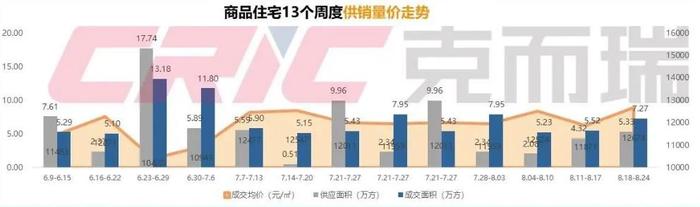
Market Overview - In the week of August 18-24, 2025, the Kunming real estate market saw an increase in both transaction volume and prices, with a total of 4 projects supplying approximately 53,300 square meters, a 23% increase week-on-week [1] - Total transactions reached about 72,700 square meters, marking a 32% week-on-week increase, with an average transaction price of approximately 12,674 yuan per square meter, up 7% from the previous week [1] Key Projects - Longfor Tianjing achieved remarkable sales, topping the sales charts with a sales amount of approximately 131 million yuan, selling 73 units at an average price of about 15,088 yuan per square meter, and a unit price of approximately 1.79 million yuan [3] - The project recorded sales of about 410 million yuan on its opening day, featuring new unit types ranging from 89 to 235 square meters, and is noted for its high space efficiency and attractive design features [3][6] Competitive Landscape - The market remains polarized, with high-end properties like Bangtai Guanyun and Longfor Shanhai Yuanzhu continuing to perform well, achieving sales amounts of approximately 55 million yuan and 26 million yuan, with average prices around 18,836 yuan and 18,941 yuan per square meter respectively [6] - Conversely, affordable housing projects such as Bangtai Yingyue and Bangtai Huayuan City are also selling well, with average transaction prices of approximately 8,182 yuan and 4,725 yuan per square meter [6] New Supply and Demand - The newly launched Zhongtong Lian Dashushan project in Chenggong New City successfully sold 110 units with a take-up rate of 64%, offering units priced between 10,200 and 11,500 yuan per square meter [7] - The project is recognized for its high efficiency in space utilization, with some units achieving a remarkable 252% usable area ratio [7][10] Educational Infrastructure Development - The Longjie Village urban renewal project includes plans for a new primary school, with a total planned area of approximately 27,001.14 square meters [10][12] - The Guandu Ancient Town project is also set to include educational facilities, with a total land area of about 67.68 acres, aimed at enhancing local educational resources [12][14]

万科A(000002):业绩延续承压 可关注后续资产盘活进展
Xin Lang Cai Jing· 2025-08-26 02:37
Core Viewpoint - The company reported a significant decline in revenue and net profit for 1H25, aligning with previous warnings and expectations, while maintaining stable debt levels and making progress in financing [1][2]. Financial Performance - The company’s revenue for 1H25 decreased by 26% year-on-year to 105.3 billion yuan, with a 30% drop in revenue from property development settlements. However, the gross margin improved by 1.3 percentage points to 8.1% [1]. - The net profit attributable to shareholders recorded a loss of 11.9 billion yuan, compared to a loss of 9.9 billion yuan in 1H24, consistent with prior profit warnings [2]. - As of the end of 1H25, the company’s interest-bearing debt stood at 364.3 billion yuan, showing a slight increase of 1% from the end of 2024, with a decrease in the proportion of short-term debt [2]. Business Trends - The property development business continues to face pressure, with a 44% year-on-year decline in contract sales amounting to 82.1 billion yuan from January to July 2025. The company added 6 new land reserves during the first half of the year [3]. - Non-development revenue remained stable at 31.3 billion yuan, increasing its proportion of total revenue by 8 percentage points to 30%, indicating an improvement in revenue structure [3]. - The company completed 13 major transactions in cities like Shanghai, Shenzhen, and Hangzhou, totaling 6.43 billion yuan, and is advancing asset transactions related to various REITs [3]. Profit Forecast and Valuation - The company maintains its profit forecasts for 2025 and 2026, projecting net losses of 28.3 billion yuan and 17.2 billion yuan, respectively. The current stock price trades at 0.49 times and 0.54 times the projected book value for 2025 and 2026 [4]. - The company retains an outperform rating and a target price of 8.30 yuan per share, suggesting a 16% upside potential from the current stock price [4].
万科-2025 年上半年业绩低于预期;流动性改善初现端倪但尚未可持续;维持卖出评级China Vanke _ 1H25 below expectation_ Early signs of liquidity improvement but not yet sustainable; retain Sell
2025-08-26 01:19
Summary of China Vanke's Earnings Call Company Overview - **Company**: China Vanke (000002.SZ, 2202.HK) - **Industry**: Real Estate Development Key Financial Highlights 1. **1H25 Financial Performance**: - Reported net losses of Rmb11.9 billion, aligning with the lower end of the estimated loss range of Rmb10 billion to Rmb12 billion [1] - Revenue decreased by 26% year-over-year to Rmb104 billion, with property development revenue down 32% year-over-year to Rmb84 billion [12][1] - Gross margin improved to 10% in 2Q25, up 9 percentage points quarter-over-quarter, marking the highest level since 4Q23 [7][1] 2. **Impairment Charges**: - Total impairment charges amounted to Rmb5.4 billion, impacting the net loss significantly [1][8] - The company anticipates continued impairment recognition, with expected charges of Rmb3 billion in 2H25E and Rmb1 billion in 2026E-27E [2] 3. **Liquidity Situation**: - Secured over Rmb49 billion in financing year-to-date, including Rmb25 billion from external sources and Rmb24 billion in shareholder loans [6][4] - Debt structure improved slightly, with short-term maturities reduced to 43% of total debt [6][1] 4. **Future Projections**: - Forecasting net losses of Rmb18.4 billion, Rmb9.9 billion, and Rmb9.7 billion for 2025E-27E [2] - Contract sales estimate for 2025E is Rmb139 billion, reflecting a 44% year-over-year decline [10] Market Position and Valuation 1. **Valuation Metrics**: - Vanke A and H shares are trading at discounts of 2% and 29% to end-2025E NAV, respectively [3] - Target prices remain unchanged at Rmb6.0 for Vanke A and HK$4.7 for Vanke H, indicating an 8% downside [3][19] 2. **Market Performance**: - Property sales in 7M25 declined by 44% year-over-year, underperforming the average market decline of 18% [10] Strategic Outlook 1. **Land Banking**: - Acquired 6 projects in 1H25, totaling Rmb2.5 billion, which accounted for 4% of total contract sales [9] - Reliance on third-party interests increased, with attributable interests in new projects down to 53% [9] 2. **Risks and Challenges**: - Continued pressure on margins and inventory write-downs expected until ASP stabilization occurs [21] - Strenuous liquidity conditions and the need for additional support from major shareholders remain critical [1][21] 3. **Upside Risks**: - Potential government funding support and a stronger-than-expected recovery in higher-tier cities could improve sell-through rates and ASP [15][23] Conclusion - China Vanke is facing significant challenges with liquidity, profitability, and market performance, leading to a "Sell" rating. The company’s future hinges on effective management of impairments, liquidity support, and market recovery dynamics.
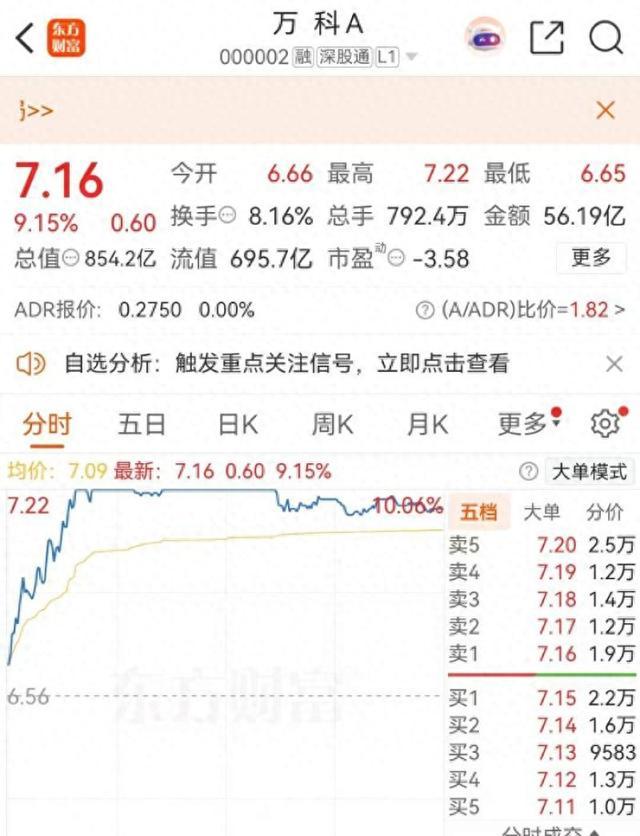
万科A盘中罕见涨停 地产板块投资机会怎么看?
Feng Huang Wang· 2025-08-26 00:25
Group 1 - Vanke reported a revenue of 105.32 billion yuan and a net loss of 11.95 billion yuan for the first half of the year, with sales area and amount down 42.6% and 45.7% respectively [2] - The management attributed the losses to a decline in development business settlement scale and low gross margins, alongside impairment provisions for certain assets [2] - Vanke has made progress in debt resolution, repaying 24.39 billion yuan in public market debt and having no due overseas public debt before 2027 [2] Group 2 - Other real estate stocks in A-shares performed well, with multiple stocks rising over 5%, and Hong Kong real estate stocks also saw gains [3] - Shanghai introduced new housing policies aimed at optimizing real estate measures, including reducing housing purchase restrictions and improving housing credit policies [3] - Institutions are optimistic about the investment potential of leading real estate companies with solid fundamentals [3] Group 3 - The real estate industry is expected to stabilize as sales data remains low but shows signs of recovery, with core cities continuing to optimize purchasing policies [4] - Analysts suggest that the real estate sector may present mid-to-long-term investment opportunities, particularly in first and second-tier cities [4] - The market is anticipated to gradually recover, with leading companies benefiting from lower financing costs and high market share in core areas [4]
“沪六条”,引爆地产板块
Di Yi Cai Jing· 2025-08-25 15:36
Core Viewpoint - The recent policy adjustments in Shanghai, known as "沪六条," aim to optimize the real estate market by relaxing purchase restrictions and enhancing financing options, which is expected to boost market activity and stabilize prices [2][6]. Group 1: Policy Adjustments - The "沪六条" policy allows Shanghai residents and non-residents with at least one year of social insurance or income tax payments to purchase homes without limit in the outer ring, while limiting purchases to two homes in the inner ring [3][4]. - The policy increases the maximum loan amount for first-time homebuyers from 1.6 million yuan to 1.84 million yuan, with additional increases for families with multiple children [3]. - The commercial housing loan interest rate mechanism has been optimized, removing the distinction between first and second homes, which is expected to reduce the interest burden on homebuyers [4]. Group 2: Market Reactions - Following the announcement of "沪六条," real estate stocks surged, with Vanke A (万科A) and other major players seeing significant gains, indicating positive market sentiment [9]. - Analysts believe that the new policies will enhance market expectations and improve transaction activity, particularly in the context of recent declines in the Beijing housing market [9][10]. Group 3: Broader Implications - The adjustments in Shanghai are seen as a response to similar policies in Beijing, with expectations that other cities, particularly Shenzhen, may follow suit in relaxing restrictions [5][6]. - The historical context of the "限购令" indicates a gradual shift away from stringent purchase restrictions that have been in place since 2010, reflecting a broader trend towards market liberalization [7][8].

“沪六条”引爆地产板块 15年楼市“限购令”逐步淡出
Di Yi Cai Jing· 2025-08-25 13:50
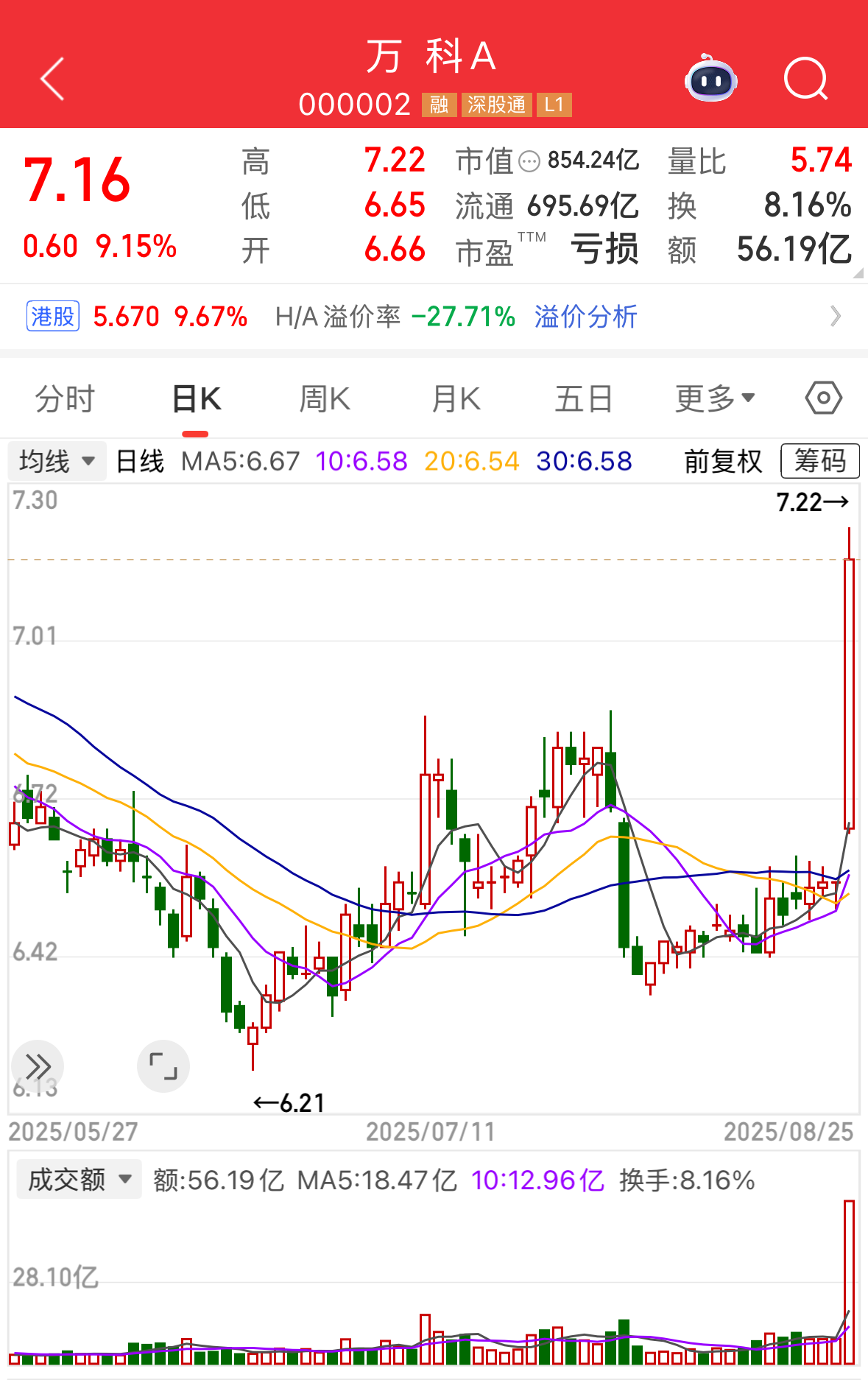
伴随上海发布限购"松绑"等楼市新政,包含万科A(000002.SZ)在内的房地产上市公司8月25日集体飘 红。 上海市住房和城乡建设管理委、市房屋管理局等六部门当天联合印发了《关于优化调整本市房地产政策 措施的通知》(下称"沪六条"),涉及住房限购、公积金、住房信贷、住房税收等六项调整。新政自 2025年8月26日起施行。 一周前(8月18日)召开的国务院第九次全体会议要求,采取有力措施巩固房地产市场止跌回稳态势, 结合城市更新推进城中村和危旧房改造,多管齐下释放改善性需求。 上海易居房地产研究院副院长严跃进对第一财经记者表示,2010年出台的楼市限购令正在逐步淡出,但 无论是北京还是上海,对居民购房资格仍有一定的社保要求,说明当前政策依然服务于在当地工作及居 住生活群体的合理购房需求。 截至目前,四个一线城市中,广州已全面取消限购,北京、上海、深圳也都在不断对限购政策进行松 绑。接受第一财经记者采访的不少业内人士都认为,有了新政的加持,楼市"金九银十"成色可期。 单身人士购房资格等同于家庭 "沪六条"的出台,对单身人士购房,以及居民在外环外购房等场景将有促进作用。 首先,限购政策调整方面,"沪六条"明确,上 ...
“沪六条”引爆地产板块,15年楼市“限购令”逐步淡出
Di Yi Cai Jing· 2025-08-25 13:42
Group 1: Policy Changes - The new policy "沪六条" was jointly issued by six departments in Shanghai, adjusting housing purchase limits, housing provident fund, housing credit, and housing tax regulations, effective from August 26, 2025 [1][2] - The policy allows single individuals to have the same housing purchase qualifications as families, promoting home purchases for single residents [2] - The housing provident fund loan limits have been increased, with the maximum loan for first-time buyers raised from 1.6 million yuan to 1.84 million yuan, and for families with multiple children, it can go up to 2.16 million yuan [2] Group 2: Market Reactions - Following the announcement of "沪六条," real estate stocks surged, with Vanke A (万科A) and others seeing significant gains, indicating positive market sentiment [9][10] - The overall performance of the A and H share real estate sectors improved, with Vanke A rising over 9% on the day of the announcement [9][10] - Analysts believe that the new policies will enhance market expectations and activity, contributing to a stabilization of the real estate market [10] Group 3: Broader Implications - The adjustments in Shanghai's policies are seen as a response to similar measures taken in Beijing, with expectations that Shenzhen may follow suit in further easing restrictions [4][6] - The historical context of housing purchase restrictions indicates a gradual phasing out of the "限购令" that has been in place since 2010, with many cities now relaxing or eliminating these limits [7][8] - The central government's focus remains on stabilizing the real estate market, with indications that further supportive policies may be forthcoming [10]
在挑战与修复中交出半年答卷,万科仍需“以时间换空间”
Hua Xia Shi Bao· 2025-08-25 10:37
Core Viewpoint - Vanke's financial performance in the first half of 2025 shows significant challenges, with a revenue decline of 26.2% and a net loss of 119.5 billion yuan, indicating the ongoing difficulties in the real estate sector [1][4]. Financial Performance - Vanke reported a total revenue of 1,053.2 billion yuan in the first half of 2025, down 26.2% year-on-year [1]. - The net loss attributable to shareholders was 119.5 billion yuan, an increase from the 98 billion yuan loss in the same period last year [1]. - The company's revenue from real estate development and related asset management accounted for 80.2% of total revenue, with a reported income of 844.4 billion yuan, down 31.57% year-on-year [4][6]. Sales and Operations - Vanke's sales area decreased by 42.6% to 538.9 million square meters, with sales revenue dropping 45.7% to 691.1 billion yuan [4]. - The company experienced a decline in both construction starts and completions, with a 28.6% drop in area started and a 39.3% decrease in area completed [4]. Market Conditions - The real estate market is undergoing a deep adjustment, with a 3.60% decline in second-hand residential prices across 100 cities in the first half of 2025 [5]. - The overall gross profit margin for Vanke's real estate development and related asset management was 8.7%, a 1.5 percentage point increase from the previous year [6]. Strategic Adjustments - Vanke is actively adjusting its strategies in response to market challenges, focusing on asset disposal, sales strategies, and cash flow management [3][4]. - The company has implemented a systematic approach to revitalize existing assets, leveraging government support and optimizing planning conditions [7][8]. Debt Management - Vanke's net debt ratio increased to 90.4%, up 9.8 percentage points from the end of 2024, while the asset-liability ratio slightly decreased to 73.1% [9]. - The company received significant financial support from its major shareholder, Shenzhen Metro Group, which provided 238.8 billion yuan in loans at a low interest rate of 2.34% [9][11]. Future Outlook - Analysts believe that Vanke's debt risks may stabilize due to ongoing support from government policies and its major shareholder, with no foreign public debt due before 2027 [10]. - The company is also exploring new financing channels and accelerating the asset securitization process to improve its financial structure [10].