YUM CHINA(09987)

Search documents
百胜中国(09987.HK)11月17日耗资626.94万港元回购1.75万股
Ge Long Hui· 2025-11-18 09:40
Core Viewpoint - Yum China (09987.HK) announced a share buyback on November 17, 2025, spending HKD 6.2694 million to repurchase 17,500 shares at a price range of HKD 355-361 per share [1] Summary by Category - **Share Buyback Details** - The company repurchased 17,500 shares at a total cost of HKD 6.2694 million [1] - The buyback price per share ranged from HKD 355 to HKD 361 [1]
百胜中国(09987) - 翌日披露报表
2025-11-18 09:33
FF305 翌日披露報表 (股份發行人 ── 已發行股份或庫存股份變動、股份購回及/或在場内出售庫存股份) 表格類別: 股票 狀態: 新提交 公司名稱: 百勝中國控股有限公司("本公司") 呈交日期: 2025年11月18日 如上市發行人的已發行股份或庫存股份出現變動而須根據《香港聯合交易所有限公司(「香港聯交所」)證券上市規則》(「《主板上市規則》」)第13.25A條 / 《香港聯合交易所有限公司GEM證券 上市規則》(「《GEM上市規則》」)第17.27A條作出披露,必須填妥第一章節 。 | 第一章節 | | | | | | | | | | --- | --- | --- | --- | --- | --- | --- | --- | --- | | 1. 股份分類 | | 普通股 | 股份類別 | 不適用 | | 於香港聯交所上市 | 是 | | | 證券代號 (如上市) | | 09987 | 說明 | | | | | | | A. 已發行股份或庫存股份變動 | | | | | | | | | | | 事件 | | 已發行股份(不包括庫存股份)變動 | | | 庫存股份變動 | 每股發行/出售價 (註 ...
百胜中国(09987.HK):门店高速增长 利润率持续提升
Ge Long Hui· 2025-11-18 05:33
Core Insights - The company reported total revenue of $3.2 billion in Q3 2025, a 4% year-over-year increase excluding foreign currency effects, while adjusted net profit was $282 million, reflecting a 5% decline year-over-year due to investment income drag [1] Store Expansion - The company experienced rapid store growth, adding 536 new stores in Q3 2025, with franchises accounting for 32% of the new openings [1] - By brand, KFC added 402 new stores, marking a historical high for Q3, with franchises making up 41% of these additions; Pizza Hut added 158 new stores, with franchises at 28% [1] - As of the end of Q3, the total number of stores reached 17,514, including 12,640 KFC stores, 4,022 Pizza Hut stores, and over 1,800 KPRO coffee shops [1] Sales Performance - System sales increased by 4% year-over-year, driven by a 4% increase in new store openings and a 1% rise in same-store sales [2] - KFC's system sales grew by 5%, with same-store sales up by 2%, primarily due to a 3% increase in same-store transaction volume, despite a 1% decline in average ticket size [2] - Pizza Hut's system sales rose by 4%, with same-store sales increasing by 1%, supported by a 17% rise in same-store transaction volume, while average ticket size fell by 13% due to strategic adjustments for better value [2] - Overall, delivery sales for both KFC and Pizza Hut saw significant growth, increasing by 33% and 27% respectively, with delivery now accounting for 51% of restaurant revenue [2] Profitability - Profit margins for both KFC and Pizza Hut improved in Q3, with KFC's operating profit margin rising to 16% and restaurant profit margin to 18.5% [3] - For Pizza Hut, operating profit margin reached 8.9% and restaurant profit margin 13.4%, benefiting from improved operational efficiency and lower raw material costs, although increased delivery costs and a focus on value products partially offset these gains [3] - The company's overall operating profit margin and restaurant profit margin increased by 0.4 and 0.3 percentage points to 12.5% and 17.3% respectively [3] Future Outlook - The company is expected to maintain a high store opening pace, projecting 1,600 to 1,800 new stores in 2025, which is anticipated to drive continued revenue growth [4] - Forecasted net profits for 2025-2027 are $928 million, $1.012 billion, and $1.088 billion respectively, with corresponding price-to-earnings ratios of 18, 17, and 15 times [4]
Yum China (NYSE:YUMC) 2025 Investor Day Transcript
2025-11-18 02:00
Summary of Yum China's 2025 Investor Day Company Overview - **Company**: Yum China - **Industry**: Fast Food and Casual Dining - **Legacy**: Over three decades in the Chinese market, starting with the introduction of Western fast food [2][4] Core Strategies and Achievements - **Store Expansion**: - Achieved 13,000 stores by the last Investor Day, targeting 20,000 stores by 2026, with expectations to reach this milestone in 2025 [4][5] - The first 10,000 stores took 33 years to build, while the next 10,000 is projected to take only six years [4] - **Market Leadership**: - Maintained position as China's largest restaurant company by system sales, with a 60% growth in system sales from 2016 to 2024 [5] - Operating profit increased by 80% during the same period [5] - **Value for Money Philosophy**: - Focused on delivering value through product innovation and pricing strategies, avoiding significant price inflation while expanding product offerings [5][6] - KFC maintained steady pricing, while Pizza Hut adopted a more aggressive pricing strategy [5] Strategic Priorities - **RGM Strategy (Resilience, Growth, Moat)**: - Transitioning to RGM 3.0, which emphasizes resilience, growth, and competitive advantage [7][8] - Innovations and operational efficiency are key drivers of this strategy [7] - **Front-End Segmentation and Back-End Consolidation**: - Tailoring services to diverse customer needs while streamlining operations for efficiency [8] - Focus on both physical and virtual store presence to enhance customer experience [9] Growth Opportunities - **Market Potential**: - China is the world's largest consumer segment by purchasing power parity, with significant growth potential in the restaurant industry [8] - Aiming to serve half of the Chinese population by 2028, currently serving only one-third [8] - **Emerging Brands**: - Lavazza and Taco Bell are gaining momentum, with Lavazza achieving double-digit growth and profitable store openings [9][10] - Pizza Hut is on a growth trajectory, reaching 4,000 stores and aiming to double operating profit to over $310 million by 2029 [9] Operational Efficiency - **Supply Chain Innovations**: - Upgrading supply chain systems to enhance operational efficiency and support expansion into new markets [10] - Marketing efficiency improved by 55% from 2016 to 2024, with rent costs as a percentage of sales decreasing by 170 basis points [8][10] Future Outlook - **Store Count Goals**: - Targeting 20,000 stores by next year and over 30,000 by 2030 [10] - KFC aims to exceed ¥10 billion (approximately $1.4 billion) in operating profit by 2028 [10] - **Membership Growth**: - Plans to increase active membership from 265 million to 400 million by 2030 [10] - **Commitment to Innovation**: - Continuous focus on digital transformation and AI integration to enhance customer engagement and operational efficiency [10] Conclusion - **Vision**: To be the world's most innovative pioneer in the restaurant industry, leveraging a strong foundation and a commitment to customer satisfaction and operational excellence [10]

Yum China (NYSE:YUMC) 2025 Earnings Call Presentation
2025-11-18 01:00
Innovation & Operational Efficiency JOEY WAT CHIEF EXECUTIVE OFFICER Cautionary Statements Forward-Looking Statements. This presentation contains "forward-looking statements" within the meaning of Section 27A of the Securities Act of 1933 and Section 21E of the Securities Exchange Act of 1934. We intend all forward-looking statements to be covered by the safe harbor provisions of the Private Securities Litigation Reform Act of 1995. Forward-looking statements generally can be identified by the fact that the ...
百胜中国(09987):创新与提效双轮驱动,目标2030年门店超3万家
Haitong Securities International· 2025-11-18 00:03
Investment Rating - The report maintains an "Outperform" rating for Yum China Holdings [2][7] Core Insights - Yum China held its 2025 Investor Day on November 17, launching the "RGM 3.0" strategy, focusing on resilience, growth, and competitive advantage, with innovation and efficiency as dual drivers [3][13] - The company targets over 30,000 stores by 2030, with specific store count goals of 20,000 by 2026 and 25,000+ by 2028 [4] - Revenue projections for 2025-2027 are USD 11.63 billion, USD 12.16 billion, and USD 12.76 billion, with year-over-year growth rates of 2.9%, 4.6%, and 4.9% respectively [7][14] Financial Projections - Adjusted net profits are expected to be USD 911 million in 2025, USD 1.03 billion in 2026, and USD 1.13 billion in 2027, with growth rates of 0.0%, 12.8%, and 10.2% respectively [7][14] - The company anticipates a gross profit margin (GPM) of 68.7% in 2025, increasing to 69.9% by 2027 [10][12] - The report projects a diluted EPS of USD 2.52 for 2025, increasing to USD 3.13 by 2027 [10][12] Expansion Strategy - Franchise empowerment is a core strategy, with plans to open over 3,000 new franchise stores from 2026 to 2028, with franchise stores making up 40%-50% of new openings for both KFC and Pizza Hut [4] - The company aims to enhance restaurant profitability, targeting an operating profit margin of at least 11.5% by 2028 [4] New Business Developments - New business initiatives, including KFC Coffee and KPRO, are expected to exceed initial growth expectations, with KFC Coffee projected to surpass 5,000 stores by 2029 [5] - The company plans to return approximately 100% of free cash flow to shareholders starting in 2027, with expected annual shareholder returns of USD 900 million to USD 1 billion [5]
百胜中国公布未来3年至5年增长目标 2030年力争突破3万家门店
Zheng Quan Ri Bao Wang· 2025-11-17 13:13
Core Insights - Yum China Holdings, Inc. has set ambitious growth targets, aiming to reach 20,000 stores by 2026, over 25,000 by 2028, and over 30,000 by 2030 [1][3] - The company is focusing on expanding its store network, driving sales growth, and enhancing profitability through various strategic initiatives [1][3] Store Expansion Goals - The company plans to double its store count from 10,000 to 20,000 within six years, a significant acceleration compared to the previous 33 years to reach the first 10,000 [1] - KFC aims to increase its store count to over 17,000 by 2028, with a target operating profit exceeding RMB 10 billion [1] - Pizza Hut plans to add over 600 new stores annually for the next three years, targeting over 6,000 stores by 2028 [1] Emerging Business Models - New business models like KFC Coffee and KPRO are expected to exceed growth expectations, with KFC Coffee projected to surpass 5,000 locations by 2029 [2] - Pizza Hut's WOW model focuses on "everyday low prices," reducing single-store investment by nearly 50% and expanding into lower-tier cities [2] - Lavazza Coffee is set to expand significantly, aiming for over 1,000 stores and $60 million in retail sales by 2029 [2] Market Opportunities - The company sees significant opportunities in the Chinese market, currently serving about one-third of consumers, with a goal to increase this to about half [3] - The penetration rate of chain restaurants in China is only about 20%, compared to over 50% in developed countries like the U.S. [3] Strategic Framework - Yum China has introduced the RGM 3.0 strategy, focusing on resilience, growth, and competitive advantage, with an emphasis on innovation and efficiency [3][4] - The company is leveraging resource sharing and integration across its brands to create stronger synergies [4] Commitment to Shareholders - The company plans to return approximately 100% of its free cash flow to shareholders starting in 2027, after paying dividends to minority shareholders [4][5] - Yum China expresses confidence in achieving its growth targets and continuing to create value for shareholders [5]
百胜中国公布未来3—5年增长目标 2030年力争突破3万家门店
Zheng Quan Shi Bao Wang· 2025-11-17 12:47
Core Insights - Yum China aims to achieve over 10 billion RMB in operating profit for KFC by 2028 and plans to double Pizza Hut's operating profit by 2029 compared to 2024 [1] Expansion Goals - The company targets a total of 20,000 stores by 2026, over 25,000 by 2028, and aims to exceed 30,000 by 2030 [1] - KFC plans to increase its store count by approximately one-third to over 17,000 by 2028 [1] - Pizza Hut aims to add over 600 new stores annually for the next three years, reaching over 6,000 stores by 2028 [1] Emerging Businesses - KFC's coffee brand, Kenuo Coffee, has surpassed 1,800 locations and is expected to exceed 5,000 by 2029 [2] - KPRO, focusing on light meals, opened over 100 stores in more than 20 cities within a year and aims for a thousand-store scale in five years [2] - Pizza Hut's WOW model has reduced single-store investment by nearly 50% and is expanding rapidly in lower-tier cities [2] Market Opportunities - Yum China sees early signs of recovery in consumer sentiment, with increased foot traffic and effective marketing [3] - The company currently serves about one-third of Chinese consumers and aims to increase this to about half [3] - The penetration rate of chain restaurants in China is around 20%, significantly lower than over 50% in developed countries like the U.S. [3] Strategic Focus - The company has introduced the RGM 3.0 strategy, emphasizing resilience, growth, and competitive advantage [3] - The strategy incorporates a dual approach of "innovation and efficiency" and a development philosophy of "front-end layering and back-end aggregation" [3] Resource Integration - Yum China is enhancing synergy through resource sharing and integration across stores, regions, and brands [4] - The company compares its structure to a bamboo forest, with various brands supported by a robust underlying network developed over nearly 40 years [4] Shareholder Commitment - The company plans to return approximately 100% of its free cash flow to shareholders starting in 2027, after paying dividends to minority shareholders [5] - Yum China expresses confidence in achieving its growth targets and continuously creating value for shareholders [5]


百胜中国:力争2030年门店突破3万家 肯德基2028年经营利润突破100亿元
Zheng Quan Ri Bao Wang· 2025-11-17 11:17
Core Viewpoint - Yum China is accelerating its store network expansion and enhancing sales growth and profitability through strategic initiatives presented during the 2025 Investor Day event held in Shenzhen on November 17 [1] Group 1: Growth Targets - The company has set a new growth target to reach a total of 20,000 stores by 2026 [1] - By 2028, the total number of stores is expected to exceed 25,000 [1] - The company aims to surpass 30,000 stores by 2030 [1] Group 2: Brand-Specific Goals - For KFC, the number of stores is projected to increase by approximately one-third to over 17,000 by 2028, with an operating profit target of over 10 billion yuan [1] - Pizza Hut plans to add more than 600 new stores annually over the next three years, aiming to exceed 6,000 stores by 2028 [1]
分拆、合资、放权......入华二十多年的洋快餐为何都要“独立”?
Xin Lang Cai Jing· 2025-11-17 08:12
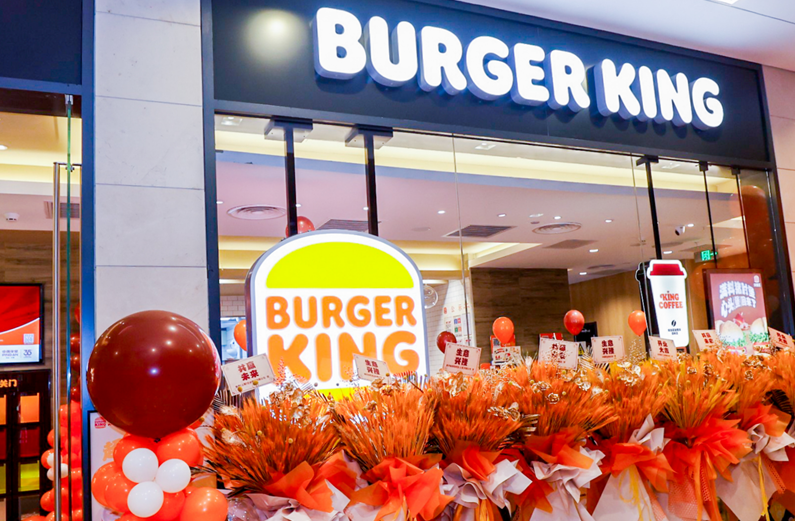
Core Insights - The article highlights a trend of multinational companies, particularly in the food and beverage sector, increasingly opting for joint ventures and local partnerships in China to enhance growth and localization strategies [1][10][15]. Group 1: Joint Ventures and Partnerships - Starbucks announced a joint venture with Boyu Capital, selling up to 60% of its Chinese operations for an estimated valuation of $4 billion (approximately 284.84 billion RMB) [3][10]. - CPE Yuanfeng has formed a joint venture with Restaurant Brands International (RBI) to take over Burger King's operations in China, with CPE holding approximately 83% and RBI retaining about 17% [1][10]. - The trend of forming joint ventures is not new; McDonald's previously sold 80% of its China operations to a consortium led by CITIC and Carlyle in 2017, while Yum China was spun off from Yum Brands in 2016 [3][11][15]. Group 2: Growth and Localization Strategies - Starbucks aims to expand its store count in China from 8,000 to 20,000, leveraging Boyu's local expertise to penetrate smaller cities and emerging regions [3][10]. - Burger King plans to increase its store count from 1,250 to over 4,000 with the support of CPE Yuanfeng, focusing on product upgrades and digital transformation [3][10]. - McDonald's set a goal to grow its store count from 2,500 to 4,500 within five years after partnering with CITIC and Carlyle, emphasizing delivery and digital trends [3][10]. Group 3: Market Dynamics and Competition - The Chinese market is significant, with McDonald's identifying it as its second-largest and fastest-growing market globally, contributing about 8% to Starbucks' revenue [5][6]. - The competitive landscape is shifting, with local players like Luckin Coffee and Wallace rapidly gaining market share, prompting international brands to rethink their strategies [7][19]. - Starbucks' market share in China has declined from 42% in 2017 to an estimated 14% in 2024, indicating increasing competition from local brands [6][19]. Group 4: The Role of Local Partners - The introduction of local partners is seen as a crucial strategy for navigating the complexities of the Chinese market, as evidenced by the success of brands like Luckin Coffee and Heytea [9][29]. - The partnership model allows foreign brands to maintain brand ownership while leveraging local expertise for operational execution, enhancing their adaptability in a competitive environment [29][30]. - The article emphasizes that successful localization does not mean abandoning brand values but rather adapting to local consumer preferences and market dynamics [34][36].