BABA(09988)

Search documents
“扫遍”东南亚,中国品牌靠什么拿下八成市场?
Guan Cha Zhe Wang· 2026-01-14 00:48
Core Viewpoint - The Southeast Asian market is emerging as a new opportunity for Chinese smart cleaning device brands, despite previous doubts about its consumer spending power, especially following the bankruptcy of iRobot, which once dominated the global market with nearly 80% share [1][3]. Market Dynamics - Chinese brands have rapidly gained market share in Southeast Asia, capturing 80% of the local robotic vacuum market, driven by technological innovation and localized strategies [4]. - The Southeast Asian e-commerce market is projected to reach $128.4 billion in 2024, with double-digit GMV growth and a young population enhancing online purchasing power [4][9]. Competitive Strategy - Companies like Roborock, Ecovacs, and others are leveraging localized product strategies to adapt to the unique living environments and climates of Southeast Asia, focusing on features such as extended battery life and odor control [4]. - The "online + offline" collaborative model is being employed to enhance brand recognition and consumer trust, with over 100 experience stores established in Vietnam alone [5]. E-commerce Ecosystem - Alibaba's international business group is crucial in supporting Chinese brands' expansion into Southeast Asia, providing a comprehensive service system that facilitates market entry [6]. - Lazada, as a key platform, offers a "one-click light export" project that simplifies the process for merchants, allowing them to synchronize product and marketing information without additional investment [6][8]. Future Outlook - The digital economy in Southeast Asia is expected to drive continued growth for smart cleaning products, with e-commerce transactions projected to reach $186 billion by 2025 [9]. - The outflow model of Chinese brands is evolving from simple product exports to deep localization, with a focus on understanding local consumer preferences and building localized teams [9][10]. - Innovations in platform operations are lowering barriers for market entry, as demonstrated by Lazada's significant sales growth during major shopping events [10].



AI的入口变革与供给爆炸将重塑互联网产业逻辑
Tai Mei Ti A P P· 2026-01-14 00:43
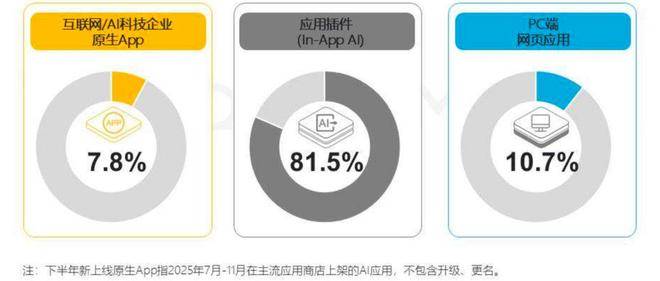
Core Insights - The internet industry is at the beginning of a structural transformation driven by AI, which will redefine interaction forms, business models, and value assessment systems by 2026 [1] - AI Agents and AIGC (AI-generated content) will collaborate to reshape the underlying logic of industries, marking a shift from traditional app-based user engagement to intent-driven interactions [2][5] Group 1: AI Agents and User Interaction - AI Agents will fundamentally change the flow distribution model, moving from traditional app matrices focused on user time consumption to efficient understanding and execution of user intent [2] - The transition from graphical user interfaces (GUI) to intent user interfaces (IUI) signifies a new era of human-computer interaction [2] - In 2025, 81.5% of newly launched AI applications will integrate as plugins within existing ecosystems, indicating a shift from plugin-based AI to system-level AI [2] Group 2: Competitive Landscape - Major tech companies are competing for the AI Agent entry point, which is expected to become an operating system-level traffic hub [4] - Google and OpenAI are enhancing their platforms to seamlessly integrate third-party services, while Alibaba, ByteDance, and Tencent are developing their own AI agents to connect various ecosystems [4][5] - The competition is fundamentally about migrating from attention economy to efficiency economy, where the most successful companies will be those that create indispensable entry points [5] Group 3: AIGC and Content Supply - AIGC is expected to lead to an explosion in content supply, lowering the production threshold for various content types to near-zero marginal costs [6] - The abundance of content will result in a devaluation of mediocre content, while high-quality, emotionally resonant, and culturally unique content will become more valuable [6] - Content consumption will evolve from passive viewing to active engagement, with new forms of interactive content emerging to fill the time saved by AI Agents [6] Group 4: Industry Impacts - In the gaming sector, AI is transitioning from a supportive tool to a core engine driving gameplay innovation, significantly enhancing asset generation efficiency [8] - The domestic gaming market is projected to reach a record revenue of 350.79 billion yuan in 2025, setting the stage for a significant year in 2026 [9] - In the film industry, competition among AI video models is intensifying, with companies focusing on industrialization and controllability to reshape the production chain [11] Group 5: Advertising and Efficiency - The transformation in the internet industry necessitates a closed-loop business model, with advertisers increasingly focusing on return on investment (ROI) [12] - Programmatic advertising platforms that leverage AI for precise matching and real-time optimization are outperforming the market [12] - Companies like AppLovin are experiencing significant revenue growth, indicating a shift in advertising from an art to a data-driven science [12] Group 6: Investment Opportunities - Investment opportunities are polarizing, with one side focusing on "entry builders" that can integrate large ecosystems and understand user intent, such as Alibaba, Tencent, and ByteDance [13] - The other side includes "supply cores" that possess scarce content and emotional connection capabilities, highlighting the value of top IPs and trusted brands [13] - Specific companies to watch include Giant Network, Century Huatong, and Kyeong Network in gaming, as well as Light Media and Huace Film in the film sector [13]

智通港股沽空统计|1月14日
智通财经网· 2026-01-14 00:38
Group 1 - Anta Sports (82020), Lenovo Group (80992), and Kuaishou (81024) have the highest short-selling ratios at 100.00%, 78.04%, and 71.83% respectively [1][2] - Alibaba (09988), Tencent Holdings (00700), and Xiaomi Group (01810) lead in short-selling amounts, with 2.968 billion, 1.700 billion, and 1.588 billion respectively [1][2] - China National Building Material (03323), Jiangsu Nanjing Highway (00177), and China Liansu (02128) have the highest deviation values at 33.68%, 31.58%, and 22.77% respectively [1][2] Group 2 - The top short-selling stocks by amount include Alibaba (09988) at 2.968 billion, Tencent Holdings (00700) at 1.700 billion, and Xiaomi Group (01810) at 1.588 billion [2] - The top short-selling ratios are led by Anta Sports (82020) at 100.00%, followed by Lenovo Group (80992) at 78.04%, and Kuaishou (81024) at 71.83% [2] - The highest deviation values are recorded for China National Building Material (03323) at 33.68%, Jiangsu Nanjing Highway (00177) at 31.58%, and China Liansu (02128) at 22.77% [2][3]




智通港股通持股解析|1月14日
智通财经网· 2026-01-14 00:36
Core Insights - The top three companies by Hong Kong Stock Connect shareholding ratios are China Telecom (71.39%), Gree Power Environmental (69.71%), and Kaisa New Energy (68.10%) [1][2] - Tencent Holdings, Xiaomi Group-W, and China Construction Bank saw the largest increases in shareholding amounts over the last five trading days, with increases of +4.302 billion, +3.564 billion, and +1.688 billion respectively [1][2] - The largest decreases in shareholding amounts over the same period were recorded by the Tracker Fund of Hong Kong (-4.857 billion), Alibaba-W (-2.314 billion), and Hang Seng China Enterprises (-2.098 billion) [1][3] Group 1: Shareholding Ratios - China Telecom (00728) has a shareholding ratio of 71.39% with 9.909 billion shares [2] - Gree Power Environmental (01330) has a shareholding ratio of 69.71% with 0.282 billion shares [2] - Kaisa New Energy (01108) has a shareholding ratio of 68.10% with 0.170 billion shares [2] - Tianjin Chuangye Environmental (01065) has a shareholding ratio of 67.45% with 0.229 billion shares [2] - China Shenhua (01088) has a shareholding ratio of 66.32% with 2.240 billion shares [2] Group 2: Recent Increases in Shareholding - Tencent Holdings (00700) increased its shareholding by +4.302 billion, with a change of +6.8552 million shares [2] - Xiaomi Group-W (01810) increased its shareholding by +3.564 billion, with a change of +9.3845 million shares [2] - China Construction Bank (00939) increased its shareholding by +1.688 billion, with a change of +21.6074 million shares [2] - China Life (02628) increased its shareholding by +0.890 billion, with a change of +2.6972 million shares [2] Group 3: Recent Decreases in Shareholding - Tracker Fund of Hong Kong (02800) decreased its shareholding by -4.857 billion, with a change of -17.962 million shares [3] - Alibaba-W (09988) decreased its shareholding by -2.314 billion, with a change of -1.4471 million shares [3] - Hang Seng China Enterprises (02828) decreased its shareholding by -2.098 billion, with a change of -2.2106 million shares [3] - China Mobile (00941) decreased its shareholding by -2.049 billion, with a change of -2.5313 million shares [3]

智通港股通资金流向统计(T+2)|1月14日
智通财经网· 2026-01-13 23:36
Group 1 - Tencent Holdings (00700), Xiaomi Group-W (01810), and Kuaishou-W (01024) ranked the top three in net inflow of southbound funds, with net inflows of 1.412 billion, 0.870 billion, and 0.775 billion respectively [1] - Alibaba-W (09988), Laopuhuang (06181), and Meituan-W (03690) ranked the top three in net outflow of southbound funds, with net outflows of -2.615 billion, -0.468 billion, and -0.367 billion respectively [1] - In terms of net inflow ratio, Changjiang Infrastructure Group (01038), CLP Holdings (00006), and Hong Kong and China Gas (01083) led the market with ratios of 65.87%, 58.38%, and 56.59% respectively [1] Group 2 - The top ten stocks by net inflow included Tencent Holdings (00700) with 1.412 billion and a net inflow ratio of 12.94%, and Kuaishou-W (01024) with 0.775 billion and a net inflow ratio of 26.20% [2] - The top ten stocks by net outflow included Alibaba-W (09988) with -2.615 billion and a net outflow ratio of -15.38%, and Laopuhuang (06181) with -0.468 billion and a net outflow ratio of -29.76% [2] - The top three stocks by net inflow ratio were Changjiang Infrastructure Group (01038) at 65.87%, CLP Holdings (00006) at 58.38%, and Hong Kong and China Gas (01083) at 56.59% [3]


智通ADR统计 | 1月14日
智通财经网· 2026-01-13 22:43
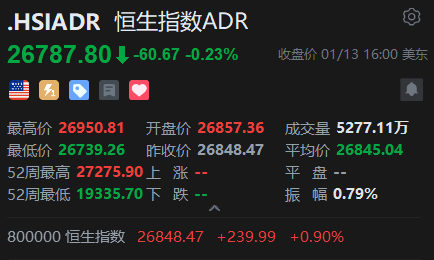
Core Viewpoint - The Hang Seng Index (HSI) experienced a slight decline, closing at 26,787.80, down 0.23% from the previous close, indicating a mixed performance in the Hong Kong stock market [1]. Group 1: Market Performance - The Hang Seng Index closed at 26,787.80, down 60.67 points or 0.23% [1]. - The index reached a high of 26,950.81 and a low of 26,739.26 during the trading session, with a trading volume of 52.77 million shares [1]. - The average price for the session was 26,845.04, with a 52-week high of 27,275.90 and a low of 19,335.70 [1]. Group 2: Major Blue-Chip Stocks - HSBC Holdings closed at HKD 127.188, up 0.62% compared to the previous close [2]. - Tencent Holdings closed at HKD 624.864, down 0.42% from the previous close [2]. - Alibaba Group saw a price increase of 3.63%, closing at HKD 159.900 [3]. - Other notable performances include AIA Group up 0.84% at HKD 84.400 and China Construction Bank up 1.17% at HKD 7.810 [3].


Is Alibaba's Cash Flow Pressure Making Its Growth Strategy Riskier?
ZACKS· 2026-01-13 17:15
Core Insights - Alibaba's cash flow strain highlights risks in its expansion-led strategy, with a widening gap between revenue growth and cash generation [2][10] - Heavy investments in AI and cloud infrastructure are a major contributor to cash flow pressure, with approximately RMB120 billion spent on capital expenditures over the past four quarters [3][10] - The company's rapid push into quick commerce boosts revenues but negatively impacts margins due to logistics costs and high customer acquisition spending [3][4] Financial Performance - Alibaba's September quarter results showed a significant drop in operating cash flow and a large free cash flow outflow, indicating the capital-intensive nature of its current expansion phase [2][10] - The Zacks Consensus Estimate suggests limited mid-single-digit revenue growth of 5.75% in fiscal 2026, raising concerns about the long-term viability of its strategy [5] Competitive Landscape - JD.com demonstrates stronger cash flow management through a supply-chain-focused model, achieving solid revenue growth and improved retail margins despite heavy logistics investments [6] - PDD Holdings utilizes an asset-light marketplace model, generating strong operating cash flow and maintaining a large cash balance, which provides financial flexibility [7] Valuation Metrics - Alibaba's stock is currently trading at a forward Price/Earnings ratio of 19.13X, lower than the industry's 25.48X, indicating a potential undervaluation [12] - The Zacks Consensus Estimate for fiscal 2026 earnings is $6.42 per share, reflecting a 28.8% year-over-year decline [15]
1月13日港股通净买入12.96亿港元




Zheng Quan Shi Bao Wang· 2026-01-13 14:52
Market Overview - On January 13, the Hang Seng Index rose by 0.90%, closing at 26,848.47 points, with a total net inflow of HKD 1.296 billion through the southbound trading channel [1][4] - The total trading volume for the southbound trading was HKD 137.348 billion, with a net buy of HKD 1.296 billion [1] Trading Activity - In the Shanghai-Hong Kong Stock Connect, the trading volume was HKD 82.493 billion, with a net buy of HKD 0.149 billion, while the Shenzhen-Hong Kong Stock Connect had a trading volume of HKD 54.855 billion and a net buy of HKD 1.147 billion [1] - The most actively traded stock in the Shanghai-Hong Kong Stock Connect was Alibaba-W, with a trading amount of HKD 81.051 billion, followed by Tencent Holdings and Xiaomi Group-W, with trading amounts of HKD 29.445 billion and HKD 28.570 billion, respectively [1][3] Stock Performance - In terms of net buy amounts, Xiaomi Group-W led with a net buy of HKD 0.324 billion, despite its closing price dropping by 1.96% [1] - Alibaba-W had the highest net buy in the Shenzhen-Hong Kong Stock Connect, amounting to HKD 1.161 billion, with its closing price increasing by 3.63% [2][3] - The stock with the highest net sell was China Mobile, with a net sell of HKD 0.804 billion, and its closing price decreased by 0.25% [1][3] Detailed Trading Data - The top ten actively traded stocks in the southbound trading included: - Alibaba-W: HKD 81,050.183 million (net sell: HKD 9.046 million, daily change: +3.63%) [3] - Tencent Holdings: HKD 29,449.159 million (net buy: HKD 0.661 million, daily change: +0.72%) [3] - Xiaomi Group-W: HKD 28,572.459 million (net buy: HKD 32.370 million, daily change: -1.96%) [3] - SMIC: HKD 22,715.902 million (net sell: HKD 17.347 million, daily change: -1.13%) [3]
港股通1月13日成交活跃股名单

Zheng Quan Shi Bao Wang· 2026-01-13 14:49
Market Overview - On January 13, the Hang Seng Index rose by 0.90%, with total southbound trading amounting to HKD 137.35 billion, including buy transactions of HKD 69.32 billion and sell transactions of HKD 68.03 billion, resulting in a net buying amount of HKD 1.30 billion [1] Southbound Trading Activity - The southbound trading through Stock Connect (Shenzhen) recorded a total trading amount of HKD 54.86 billion, with buy transactions of HKD 28.00 billion and sell transactions of HKD 26.85 billion, leading to a net buying amount of HKD 1.15 billion [1] - The southbound trading through Stock Connect (Shanghai) had a total trading amount of HKD 82.49 billion, with buy transactions of HKD 41.32 billion and sell transactions of HKD 41.17 billion, resulting in a net buying amount of HKD 0.15 billion [1] Active Stocks - Alibaba-W was the most actively traded stock with a total trading amount of HKD 139.06 billion and a net buying amount of HKD 10.71 billion, closing with a price increase of 3.63% [1][2] - Tencent Holdings followed with a total trading amount of HKD 52.93 billion and a net buying amount of HKD 7.56 billion, closing with a price increase of 0.72% [1][2] - Xiaomi Group-W had a total trading amount of HKD 49.62 billion and a net buying amount of HKD 6.07 billion, closing with a price decrease of 1.96% [1][2] Continuous Net Buying and Selling - Three stocks experienced continuous net buying for more than three days, with Xiaomi Group-W, Tencent Holdings, and Kuaishou-W having net buying days of 9, 5, and 3 respectively [2] - Tencent Holdings had the highest cumulative net buying amount of HKD 69.99 billion, followed closely by Xiaomi Group-W with HKD 69.33 billion [2] - Two stocks faced continuous net selling, with China Mobile and Meituan-W having net selling amounts of HKD 52.84 billion and HKD 11.67 billion respectively [2]
Generation Uranium Signs new agreement on the Yath Extension project.
Thenewswire· 2026-01-13 14:00
Core Viewpoint - Generation Uranium Inc. has signed an agreement to acquire the Yath Extension Property, enhancing its presence in the Angilak Uranium District of Nunavut [1][2]. Acquisition Details - The definitive purchase agreement allows Generation Uranium to acquire 100% ownership of the Yath Extension property, adding 4,123.94 hectares across five claims, bringing the total size of the Yath Project to approximately 18,214.87 hectares [2]. - The agreement reduces share payments by 6 million shares and breaks the share payments into two tranches over two years [2][10]. Geological Highlights - The Yath Extension property is underlain by Archean basement rocks of the Kaminak Group, known for uranium-copper mineralization within quartz-vein stockworks and brecciated zones [3]. - Historical mapping and sampling confirm the presence of narrow, high-grade mineralized shears and fractures [3]. Strategic Significance - This acquisition strengthens Generation's control over key structural corridors in the Yath Basin and aligns with the company's goal to advance high-priority exploration targets within a proven uranium district [6]. - CEO Mihcael Collins emphasized that the acquisition expands the company's core holdings and enhances its strategic position within Nunavut's uranium belt [7]. Historical Data - Historical Trench A averaged 0.82 lb/ton U3O8, with a peak sample returning 0.188% U3O8; Historical Trench B averaged 1.79 lb/ton U3O8, with a peak sample returning 0.52% U3O8 [7]. - A float sample exhibited 10.1% Na2O and 0.26% U, indicating a distinct sodium-rich alteration signature [7]. Transaction Summary - Vendors will receive 14 million common shares of Generation Uranium over two years in equal tranches of 7 million shares, along with a cash payment of $60,000 upon closing [10]. - A 2% Net Smelter Return (NSR) royalty will be granted as part of the transaction [10]. Company Overview - Generation Uranium is a Canadian resource exploration company focused on uranium, advancing its 100% owned Yath uranium project in Nunavut's Angilak district, which is one of Canada's most active emerging uranium camps [11]. - The company has a robust pipeline of high-priority exploration targets and is well-positioned to contribute to the future supply of clean nuclear energy [11].