BABA(09988)

Search documents
AI算力与存储产品迎来涨价潮,北证50上涨0.69%
Soochow Securities· 2026-03-18 13:37
Capital Market News - The Chinese government responded to Trump's postponement of his visit to China, emphasizing the importance of high-level diplomacy in U.S.-China relations and the continuation of communication regarding the visit [6] - The Vice Minister of Commerce, Ling Ji, hosted a roundtable in Hong Kong discussing investment opportunities under the "14th Five-Year Plan," highlighting the commitment to high-level opening-up and the provision of development space for international investors, including Hong Kong enterprises [7] Industry News - AI computing power and storage products are experiencing a price increase, with Baidu Smart Cloud and Alibaba Cloud announcing price hikes of 5%-34% for AI-related services and up to 34% for parallel file storage products, effective from April 2026 [8][9] - NVIDIA's CEO Jensen Huang stated that the AI industry has entered the "inference" era, predicting that NVIDIA's revenue will reach at least $1 trillion by 2027, and emphasized the importance of AI agents and token economies in digital transformation [10] Market Performance - On March 18, 2026, the North Exchange 50 index rose by 0.69%, with the ChiNext index up 2.02%, and the Shanghai Composite Index up 0.32%. The average market capitalization of the 299 constituent stocks in the North Exchange was 2.943 billion, with a trading volume of 15.154 billion, a decrease of 1.711 billion from the previous trading day [11][12]


阿里巴巴(BABA):首次覆盖报告:AI赋能成长提速大消费平台再启航
Western Securities· 2026-03-18 11:41
Investment Rating - The report assigns a "Buy" rating for Alibaba (9988.HK) [1][6] Core Insights - The report predicts Alibaba's revenue for FY2026-2028 to be CNY 1,037.73 billion, CNY 1,185.38 billion, and CNY 1,330.86 billion, representing year-on-year growth of +4.2%, +14.2%, and +12.3% respectively. The net profit attributable to shareholders is forecasted to be CNY 97.75 billion, CNY 122.51 billion, and CNY 144.48 billion, with year-on-year changes of -24.5%, +25.3%, and +17.9% respectively [1][6] Summary by Sections Business Overview - Alibaba has transitioned from an e-commerce platform to a "technology + big consumption platform" since 2019, focusing on enhancing its core business and AI capabilities [27][28] E-commerce Group - The domestic e-commerce revenue for FY2026H1 increased by +9%, driven by improved take rates and customer management revenue (CMR) growth of +10%. Instant retail business saw a significant increase of +37% [2][34] - The company is enhancing efficiency through AI-driven marketing tools, which have improved merchant ROI and increased advertising revenue [2][34] - The instant retail segment is expected to see revenue growth of +70.0%, +40.9%, and +20.0% for FY2026-2028 [12][69] International Digital Commerce Group (AIDC) - AIDC achieved profitability for the first time in FY26Q2, with revenue growth of +10% driven by improved unit economics in its international retail business [12][45] - The international wholesale business is expected to grow at +11.3%, +9.6%, and +8.0% for FY2026-2028 [12][69] Cloud Business - The cloud revenue is projected to grow by +33.4%, +33.0%, and +27.5% for FY2026-2028, supported by strong demand for AI-related products [13][70] - Alibaba plans to invest over CNY 380 billion in AI and cloud infrastructure over the next three years to enhance its capabilities [13][70] Investment Thesis - The report highlights that Alibaba's focus on AI and cloud services, along with its upgraded organizational structure, positions the company for significant growth in the consumer platform and technology sectors [3][16]
涨价了 | 谈股论金
水皮More· 2026-03-18 09:58
Market Overview - The three major A-share indices collectively rose today, with the Shanghai Composite Index increasing by 0.32% to close at 4062.98 points, the Shenzhen Component Index rising by 1.05% to 14187.80 points, and the ChiNext Index up by 2.02% to 3346.37 points. The total trading volume in the Shanghai and Shenzhen markets was 2.06 trillion, a decrease of 163.5 billion compared to yesterday [3]. Key Events - Alibaba announced a price increase for its cloud products, which not only boosted its own stock price but also turned the Hang Seng Index from decline to rise. This news sparked a rally in sectors such as CP O, semiconductor chips, computing power, and cloud concepts, contributing to a strong performance in the Shenzhen market [4][5]. - The market saw a broad-based rally with over 3470 stocks rising and only 1673 declining. The overall trading volume shrank to around 2 trillion, indicating a rebound in a shrinking volume context [4]. Sector Performance - The technology sector, particularly represented by the "Easy Zhongtian" stocks, significantly contributed to the market's upward movement. These stocks alone contributed 50 points to the index, while the Shenzhen Component Index rose by a total of 148 points [5]. - Conversely, the financial sector did not support the market's rebound, with the banking sector down by 0.63% and the securities sector down by 0.34%. Only the insurance sector saw a slight increase of about 0.45% [4]. International Influences - International oil prices continued to fluctuate significantly, with recent geopolitical events, such as the assassination of Iran's security council secretary, failing to drive oil prices up. This indicates a diminishing sensitivity of the market to oil price fluctuations [5]. Capital Flow - There was a noticeable return of main capital in the afternoon, with net inflows into the northbound trading and Hong Kong Stock Connect. The net inflow for Hong Kong Stock Connect was 1.217 billion, a significant recovery from the previous day's outflow [6].


阿里巴巴启动2027届校招,16个业务集团和公司同时开招
新华网财经· 2026-03-18 08:27
Group 1 - Alibaba has officially launched its recruitment for 2027 interns on March 18, involving 16 business groups and companies, with over 80% of the positions related to AI [1] - The recruitment includes a new program aimed at top global young scientific talents, covering five cutting-edge fields: foundational models, AI infrastructure, large model applications, industrial AI, and computing architecture [1] - Graduates can apply through the upgraded Alibaba campus recruitment website, the Alibaba Group recruitment WeChat account, or internal referrals, with the opportunity to apply for multiple positions [3] Group 2 - The recruitment process begins with online applications or internal referrals starting March 18, followed by assessments and written tests in late March [4] - Offer letters are expected to be issued in late April, with campus presentations and business fairs scheduled at various universities from March 26 to April 9 [4]

Billionaire David Tepper of Appaloosa Tripled His Stake in Micron but Has Been Dumping a Historically Cheap AI Stock Over the Last Year
The Motley Fool· 2026-03-18 08:06
Core Viewpoint - Institutional investors are required to file Form 13F, revealing their stock transactions, which provides insights into investment trends among major fund managers [1] Group 1: David Tepper's Investment Activities - Billionaire David Tepper of Appaloosa increased his stake in Micron Technology by purchasing 1 million shares, raising his total to 1.5 million shares, making it Appaloosa's fourth-largest holding [2][4] - Tepper's fund has been selling shares of Alibaba Group, reducing its stake by 57% in 2025, indicating a significant shift in investment strategy [10][11] Group 2: Micron Technology Insights - Micron is a leading supplier of high-bandwidth memory (HBM), which is crucial for AI-accelerated data centers, driving its growth [5] - The demand for AI data center infrastructure is leading to a shortage of HBM and GPUs, granting Micron strong pricing power and boosting its gross margin to 56% in the fiscal first quarter [7] - Despite a quadrupling of Micron's shares since August 2025, its projected profits have increased even more rapidly, with a forward P/E ratio of just 9 as of March 13 [8] Group 3: Alibaba Group Analysis - Tepper sold 1,312,069 shares of Alibaba, which may be attributed to profit-taking after a significant rise in the stock price from the $80s to $192 [12] - Concerns over geopolitical issues, particularly U.S.-China trade relations, may have influenced Tepper's decision to reduce his stake in Alibaba [13] - Although Alibaba's forward P/E of 15 is historically low for an AI stock, it represents a higher valuation compared to its recent history, possibly making it less attractive to Tepper [14]


Alibaba's AI strategy shift comes into focus with big bets on agents
Reuters· 2026-03-18 07:29
Core Insights - Alibaba is shifting its AI strategy to focus on agents that connect its various business units, indicating a significant restructuring within the company [1][2]. Business Strategy - Alibaba has separated its AI businesses from its cloud computing division, creating the Alibaba Token Hub business group to enhance its focus on AI-driven digital assistants [2][3]. - The company is integrating AI agents into its ecosystem, which spans e-commerce, logistics, and other services, potentially transforming consumer behavior [7][9][10]. Financial Performance - Analysts predict a 3.8% increase in Alibaba's third-quarter revenue, while net income is expected to decline by 42.5%, influenced by the recent Singles' Day shopping festival [3]. Market Context - The company is responding to a prolonged slump in consumer confidence and a weak macroeconomic outlook by exploring new business models to stimulate consumption [4]. - Alibaba's AI chatbot, Qwen, is evolving from a Q&A tool to a platform that facilitates direct purchases through chat interactions [5]. Competitive Landscape - Alibaba's ecosystem offers a unique advantage over competitors like Tencent and ByteDance, as it integrates various consumer-facing functions and logistics within its platform [9][10]. - The launch of the Wukong platform aims to automate complex business tasks, further enhancing Alibaba's capabilities in enterprise solutions [11]. Talent and Leadership - Recent departures of key AI leadership, including Lin Junyang, have raised concerns about Alibaba's ability to retain talent and maintain its competitive edge in AI [13][14]. - Despite these challenges, the company has a robust talent pool within its AliCloud division to address leadership gaps [14].
悟空出世,阿里打响AI toB发令枪
阿尔法工场研究院· 2026-03-18 04:28
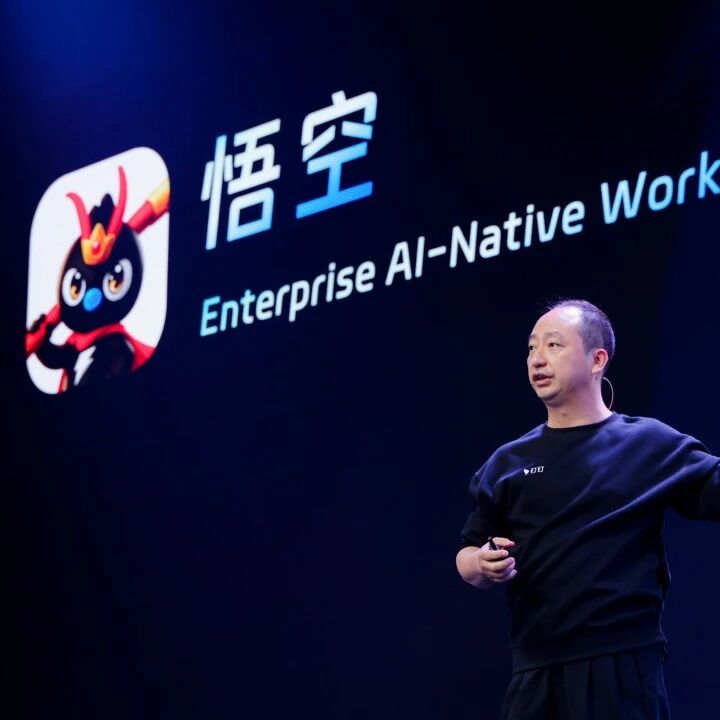
Core Viewpoint - Alibaba is undergoing a significant transformation by completely overhauling its DingTalk platform, shifting from a graphical user interface (GUI) to a command-line interface (CLI) to enhance AI integration and functionality [3][4]. Group 1: Transformation and Strategy - The overhaul of DingTalk is not just a product upgrade but a self-revolution aimed at creating a robust enterprise-level AI platform named "Wukong," which focuses on practical applications rather than mere conversational capabilities [5][6]. - The establishment of the Alibaba Token Hub (ATH) signifies a strategic shift, placing AI on par with cloud and e-commerce, indicating its critical importance to Alibaba's future [10][11]. - ATH consolidates Alibaba's AI initiatives into a cohesive strategy, emphasizing the importance of token creation, delivery, and consumption in the AI landscape [12][13]. Group 2: Wukong's Capabilities - Wukong is designed to be a comprehensive execution platform that integrates deeply into enterprise workflows, moving beyond basic tasks to perform complex operations [16][17]. - It features three critical capabilities: execution ability, system capability, and enterprise security capability, ensuring that AI can operate effectively and securely within corporate environments [18][20][22]. - Wukong also introduces industry-specific solutions, enabling businesses to deploy AI functionalities tailored to their needs, such as e-commerce and legal services [26][27]. Group 3: Market Positioning and Future Outlook - Alibaba's focus on the B2B sector is strategic, recognizing the potential for higher token consumption and revenue generation compared to B2C applications [30][34]. - The company aims to leverage its existing infrastructure and ecosystem, including its supply chain and financial services, to enhance Wukong's capabilities and market reach [45][47]. - The launch of Wukong represents a significant step in Alibaba's AI strategy, positioning it as a potential leader in the enterprise AI market, akin to a "B2B Taobao" for AI services [47][48].
Tencent seizes momentum in China’s AI race against Alibaba
The Economic Times· 2026-03-18 03:44
Core Insights - Tencent has introduced several AI products aimed at capitalizing on the growing interest in AI agents, leveraging its extensive WeChat platform with 1.4 billion users [1][4] - Alibaba faces challenges in translating its lead in open-source large language models into commercial success, compounded by the recent departure of a key developer [2][8] - Investors are increasingly optimistic about Tencent's stock performance, which has risen approximately 4.7% since the launch of its AI services, positioning it for its best monthly performance against Alibaba in two years [3][4] Tencent's AI Strategy - Tencent is integrating its AI agent into WeChat to automate tasks such as ride-hailing and restaurant bookings, with a potential launch as early as next month [1][13] - The company has gained about $30 billion in market value since the release of its AI services QClaw and WorkBuddy, making it the most valuable Chinese firm in this context, second only to Contemporary Amperex Technology Co. [4][5] - Tencent's access to vast user data and its WeChat ecosystem positions it well for developing agentic AI services [5][6] Competitive Landscape - Alibaba, despite leading in open-source large language models, has struggled with commercial applications and recently underwent a corporate restructuring to focus on profitability [2][4] - The departure of Junyang Lin, a key developer for Alibaba's Qwen models, has raised concerns about the company's AI strategy and internal communication issues [8][15] - Tencent's stock is currently favored in Asia with 64 buy recommendations, compared to Alibaba's 48, and both companies trade at a discount compared to American tech giants [7][8] Market Dynamics - During the recent Lunar New Year, major Chinese tech firms, including Tencent and Alibaba, collectively spent 8 billion yuan ($1.2 billion) on AI promotions, leading to significant short-term user growth [11][12] - However, Tencent's main consumer app, Yuanbao, experienced a decline in daily active users post-campaign, while Qwen's usage remained elevated [12][15] - Tencent aims to evolve WeChat into a comprehensive agentic service, enhancing its role as a digital assistant for users [13][14]

每日投资策略-20260318
Guodu Securities Hongkong· 2026-03-18 02:14
Group 1: Market Overview - The report indicates that the Hong Kong stock market is experiencing persistent risk aversion, with no optimistic outlook for the near future. Despite a brief rally, the Hang Seng Index closed only slightly higher, reflecting ongoing market concerns [3]. - The Hang Seng Index opened at 25,938 points, reaching a high of 26,250 points before facing selling pressure, ultimately closing at 25,868 points, up 34 points or 0.13%. The total market turnover was 26.83 billion [3]. Group 2: Company News - Alibaba (09988) launched the world's first enterprise-level AI agent platform named "Wukong," which allows teams to coordinate multiple AI agents for complex tasks. The platform is currently in beta testing for invited users [10]. - Leapmotor (09863) announced that its factory in Spain is expected to start production in October, with plans to introduce models B10 and B05. The battery factory is also under construction, with initial production scheduled for April [11]. - Tianyu Semiconductor (02658) expects to narrow its net loss to approximately 55 million to 65 million RMB for the fiscal year ending December 2025, significantly down from a loss of about 500 million RMB in the previous fiscal year, attributed to business growth and the absence of major one-time inventory write-downs [12]. Group 3: Industry Dynamics - Jefferies' global macro strategist Mohit Kumar expressed that there is currently no immediate concern regarding a bubble in the U.S. AI sector, predicting that if a bubble were to form, it would take at least two years. He noted that most AI capital expenditures are funded by cash rather than debt, with leverage levels expected to rise only by the end of next year [7]. - Kumar has shifted his focus to Chinese tech stocks, believing they will outperform their U.S. counterparts due to lower costs and comparable quality in AI model development. He anticipates two interest rate cuts in the U.S. later this year, which could lead to a more dovish stance from global central banks [7]. Group 4: Transportation Sector - Hong Kong International Airport reported a significant year-on-year increase in passenger traffic, with February figures showing 5.42 million passengers, up 20.1%. The airport also saw a 10.5% increase in aircraft movements and an 11.6% rise in cargo volume [8].

腾讯、百度、阿里,集体下跌
第一财经· 2026-03-18 01:38
Market Overview - On March 18, the Hong Kong Hang Seng Index opened up by 0.21% at 25,923.03, while the Hang Seng Tech Index increased by 0.1% to 5,112.97 [1][2]. Sector Performance - The biotechnology sector showed a slight increase, with the Hang Seng Biotechnology Index rising by 0.16% to 14,472.25 [2]. - The Hang Seng China Enterprises Index also saw a minor gain of 0.08%, reaching 8,833.95 [2]. Stock Movements - Mixed performance was observed among tech stocks, with Bilibili and Hua Hong Semiconductor both rising over 2% [2]. - Tencent Music experienced a significant drop of 15%, closing at 48.620, while XPeng Motors fell by 3.45% to 75.500 [3]. - Other notable declines included Tencent Holdings down by 0.64% to 546.500, Baidu Group down by 0.25% to 118.900, and Alibaba down by 0.15% to 134.400 [3]. Semiconductor Sector - The semiconductor sector rebounded, with notable gains from companies such as Lanqi Technology and Zhaoyi Innovation, which rose over 3% [2]. - Specific stock performances included Lanqi Technology up by 3.74% to 186.000 and Zhaoyi Innovation up by 3.12% to 416.000 [4].