
GBIAC(600004)

Search documents
广州白云机场迎来客流与航线双丰收
Jing Ji Ri Bao· 2025-12-07 22:48
经济日报广州12月7日讯(记者杨阳腾、喻剑)日前,广州白云机场T3航站楼运行满月,并交出了一份 亮眼的"满月答卷"。数据显示,11月白云机场累计接送旅客732万人次,同比增长12.56%。 依托"五条跑道+三座航站楼"超大规模格局,白云机场在国际航线密度、洲际直达能力等维度实现跨越 式提升,作为中国南方前往非洲、中东的"第一门户"地位愈发稳固。未来,白云机场还将进一步深耕东 南亚、南亚、中东、澳新、非洲等市场,与共建"一带一路"国家、《区域全面经济伙伴关系协定》其他 成员国新开及加密航线,并向欧洲、北美、南美航点覆盖。 截至12月2日,白云机场今年累计接送旅客7652万人次,已超2024年全年旅客吞吐量。其中,国际旅客 达1584万人次,同比增长19.01%。 白云机场是我国三大全方位门户复合型国际航空枢纽之一。《粤港澳大湾区发展规划纲要》明确提出建 设世界级机场群,白云机场以T3航站楼投运为支点,为这幅"世界级机场群图景"补上了关键拼图。随着 T3航站楼启用,白云机场新增的跑道和航站楼资源推动了大湾区航线网络从"广覆盖"向"高密度、高质 量"升级,迎来客流与航线的双丰收。 在今年冬春航季,白云机场每周客运航 ...

T3航站楼“满月答卷”亮眼 广州白云机场迎来客流与航线双丰收
Jing Ji Ri Bao· 2025-12-07 21:58
在今年冬春航季,白云机场每周客运航班计划达10728架次,多家航司加密广州始发航线。其中,印度 靛蓝航空率先恢复中印"广州—加尔各答"首条内地客运航线,开通广州至德里直飞航线,进一步拓展了 白云机场在南亚地区的航线覆盖;南航新开广州—马德里、广州—达尔文国际长航线,澳洲航线班次量 同比增加30%。今年以来,白云机场新开、恢复及加密国际客运航线30余条,国际及地区通航点数量已 超100个。 依托"五条跑道+三座航站楼"超大规模格局,白云机场在国际航线密度、洲际直达能力等维度实现跨越 式提升,作为中国南方前往非洲、中东的"第一门户"地位愈发稳固。未来,白云机场还将进一步深耕东 南亚、南亚、中东、澳新、非洲等市场,与共建"一带一路"国家、《区域全面经济伙伴关系协定》其他 成员国新开及加密航线,并向欧洲、北美、南美航点覆盖。 (文章来源:经济日报) 本报广州12月7日讯(记者杨阳腾、喻剑)日前,广州白云机场T3航站楼运行满月,并交出了一份亮眼 的"满月答卷"。数据显示,11月白云机场累计接送旅客732万人次,同比增长12.56%。 截至12月2日,白云机场今年累计接送旅客7652万人次,已超2024年全年旅客吞吐量。 ...
广深港机场扩容升级,粤港澳大湾区联通全球再提速
Nan Fang Du Shi Bao· 2025-12-07 00:02
Core Insights - The third runway at Shenzhen Bao'an International Airport has officially commenced operations, increasing the total number of runways in the Guangdong-Hong Kong-Macao Greater Bay Area airport cluster to 15, making it one of the regions with the highest runway density globally [1] - The Greater Bay Area airport cluster, centered around Guangzhou, Shenzhen, and Hong Kong, has been continuously expanding and upgrading, with significant investments in infrastructure to enhance capacity and connectivity [2] Group 1 - The new runway and terminal resources are expected to upgrade the Greater Bay Area's air route network from "broad coverage" to "high density and high quality," reflecting the region's increased vitality and economic stability [1] - In 2024, the economic output of the Greater Bay Area is projected to reach 14.79 trillion yuan, with its foreign trade accounting for nearly one-fifth of the national total, driving substantial demand for air travel and logistics [1][2] - The airport cluster's expansion will attract international airlines to open and enhance routes, supporting China's high-level opening-up strategy [2][3] Group 2 - The expanded airport cluster will significantly improve cargo capacity, which is crucial for the responsiveness of supply chains and the resilience of the manufacturing sector in the Greater Bay Area [2] - The upgraded Shenzhen Bao'an Airport is expected to accommodate an annual passenger throughput of 80 million and a cargo throughput of 4.5 million tons, while Guangzhou Baiyun Airport will have a terminal capacity of 140 million passengers and 600,000 tons of cargo [2] - A more efficient global aviation network will accelerate personnel exchanges, technology transfers, and capital flows, enhancing the Greater Bay Area's status as a hub in the global city network [3]

出圈了!大湾区世界级机场群为什么能成为流量王?
2 1 Shi Ji Jing Ji Bao Dao· 2025-12-06 23:14
Core Insights - Guangzhou Baiyun International Airport has reported a total of 76.52 million passengers from January 1 to December 2 this year, surpassing the total passenger throughput of 76.37 million for the entire year of 2024 [1] - The airport has seen a 19.01% year-on-year increase in international passengers, reaching 15.84 million, which constitutes 20.70% of total passengers [1] Group 1: Airport Expansion and Upgrades - Shenzhen Airport has launched its 60th international passenger route, marking a return to the historical peak level of international and regional routes seen in 2019 [2] - The third runway at Shenzhen Airport became operational on November 29, enhancing its hub capabilities and supporting a projected annual passenger throughput of over 60 million in 2024 and 65 million in 2025 [2][5] - Guangzhou Baiyun International Airport's T3 terminal has been operational for a month, contributing to a steady increase in passenger flow [5] Group 2: Cultural and Commercial Development - Baiyun Airport's T3 terminal features a 1,200 square meter observation platform that has become a popular spot for visitors, with over 100,000 visitors recorded since its opening [6][9] - The terminal integrates cultural elements and has launched immersive travel experiences, enhancing its appeal as a cultural and commercial destination [6][7] - Hong Kong Airport has developed a sky corridor connecting terminals, becoming a popular attraction, while Shenzhen Airport has upgraded its retail and dining facilities [9] Group 3: Integrated Transportation Network - The Greater Bay Area is developing a multi-modal transportation network centered around airport hubs, with Baiyun Airport's T3 set to integrate various transport modes including high-speed rail and metro [12] - The "Yue Che Nan Xia" policy has facilitated seamless connections for travelers, enhancing the operational efficiency of Hong Kong International Airport [10] - The region's airports are increasingly collaborating to enhance connectivity and support economic growth, marking a shift towards a more integrated airport cluster development model [12]

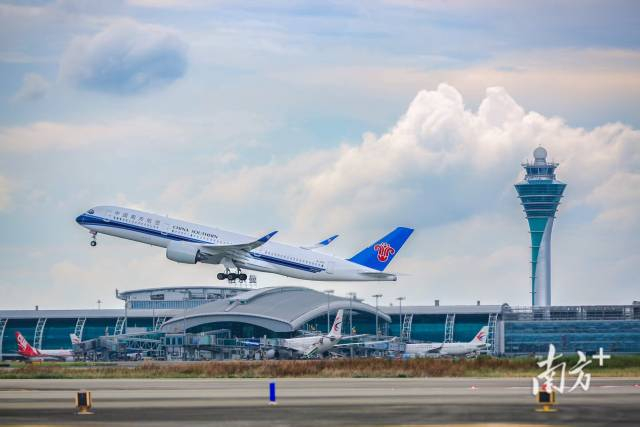
旅客与游客齐聚、民航与文旅融合 粤港澳大湾区机场群建设发展呈现新活力
Yang Shi Wang· 2025-12-06 09:34
Core Insights - The Guangzhou Baiyun International Airport T3 terminal and the fifth runway officially commenced operations on October 30, 2025, making it the first airport in China with five operational runways [1] Group 1: Operational Performance - The T3 terminal has been operational for over a month, with a smooth and orderly operation aided by self-service check-in, baggage drop, and smart security equipment [4] - Since the transition of domestic operations from T1 to T3, five airlines have moved their services, executing an average of 158 flights daily and handling approximately 26,000 passengers per day [4] - The average check-in time for domestic direct flights has been significantly reduced, with some passengers completing the process in under one minute [6] Group 2: Design and Visitor Experience - The architectural design of T3 is themed around "flowers," symbolizing "blossoming flowers in Yangcheng," and includes a viewing platform that allows close observation of the airport [8] - The viewing platform, located in the public area before security, has attracted over 10,000 visitors since its opening, with an average of 3,000 visitors daily [11] Group 3: Strategic Importance - The new terminal and runway resources enhance Baiyun Airport's status as a major international aviation hub, contributing to the development of the Guangdong-Hong Kong-Macao Greater Bay Area airport cluster [14] - The expansion of the airport is expected to lower logistics costs in the region, promote the free flow and efficient allocation of economic factors, and elevate the Greater Bay Area's capacity for global resource allocation [17]

广东白云机场T3航站楼投运满月 日均执行航班达158个
Xin Lang Cai Jing· 2025-12-06 08:04
今年10月30日,大湾区重大工程——广州白云国际机场T3航站楼及第五跑道正式投运,白云机场成为 中国民航首个拥有五条商用跑道的机场。如今,T3航站楼运行已超一个月。T3航站楼投运后,已有5家 航司的国内业务从T1航站楼转场至这里,日均执行航班达158个,日均旅客吞吐量达2.6万人次左右。 (央视新闻) ...
世界级机场群要来了
中国基金报· 2025-12-05 07:35
Core Viewpoint - The article discusses the significant transformation occurring in the Greater Bay Area's airport infrastructure, highlighting the expansion and modernization of major airports to enhance their global competitiveness and support regional economic growth [5][21]. Infrastructure Developments - Hong Kong International Airport has fully operationalized its third runway system and is progressively opening its expanded second passenger terminal, with the departure hall expected to be operational by 2026 [2][12]. - Guangzhou Baiyun International Airport's T3 terminal and fifth runway have commenced operations, making it the first airport in China with five commercial runways [2][3]. - Shenzhen Bao'an International Airport has officially launched its third runway, enhancing operational efficiency and capacity to accommodate large aircraft [10]. Capacity and Demand Response - The expansion of the Greater Bay Area airport cluster is a direct response to the increasing demand for air travel, with projections indicating that the total passenger throughput for the seven airports in the region will exceed 200 million by 2024 [14][15]. - The airports in Guangzhou, Shenzhen, and Hong Kong have all reported over 8% growth in passenger throughput in the first three quarters of the year [15]. Economic Impact - The airport expansions are expected to significantly boost the regional economy, with the Greater Bay Area's economic output projected to surpass 14.79 trillion yuan in 2024, contributing to nearly one-fifth of the national foreign trade [15]. - The enhanced airport infrastructure will facilitate a shift from broad coverage to high-density, high-quality air route networks, supporting the region's logistics and trade needs [15][19]. Strategic Importance - The development of the airport cluster is crucial for strengthening the competitive advantage of the Greater Bay Area's real economy, particularly in high-value industries such as electronics, biomedicine, and cross-border e-commerce [17][18]. - Upgraded airport facilities will improve cargo transport capabilities, essential for maintaining supply chain resilience and supporting the region's manufacturing and global trade ambitions [19]. Connectivity and Integration - The article emphasizes the importance of creating a seamless transportation network, with plans for integrated air-rail transport systems to enhance connectivity among the airports in the Greater Bay Area [26]. - The collaborative development of the airport cluster aims to transition from competition to cooperation, ensuring that each airport can leverage its unique strengths to form a complementary network [27][29]. Future Outlook - The ongoing enhancements in both hardware and software aspects of the airport cluster are expected to significantly elevate the Greater Bay Area's global resource allocation capabilities, positioning it as a key node in international supply chains and innovation networks [30].
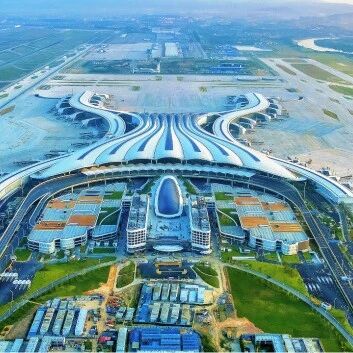
广州白云机场客流与航线双增长
Ren Min Ri Bao· 2025-12-04 22:24
Core Insights - Guangzhou Baiyun International Airport has experienced significant growth in passenger traffic and flight routes following the operational launch of Terminal 3 and the fifth runway, enhancing its role as an "air gateway" for the Guangdong-Hong Kong-Macao Greater Bay Area [1][2] Group 1: Passenger Traffic Growth - As of December 2, 2023, Baiyun Airport has served a total of 76.52 million passengers this year, surpassing the annual passenger throughput of 76.37 million projected for 2024 [1] - In November 2023, the airport recorded 7.32 million passengers, reflecting a year-on-year increase of over 12.56% [1] Group 2: International Travel Expansion - The airport has introduced, restored, and enhanced over 30 international passenger routes this year, including new destinations such as Almaty, Algiers, Madrid, and Darwin, while also resuming services to Vancouver, Kolkata, and Delhi [2] - The number of international and regional destinations has exceeded 100, with the addition of several international carriers such as Astana Airlines, Dongyi Airlines, Nepal Airlines, Algerian Airlines, and IndiGo, further expanding its international network [2] Group 3: Operational Enhancements - The operational launch of Terminal 3 has facilitated the transfer of 21 domestic flights from five airlines, including China Eastern Airlines and Shanghai Airlines, enhancing operational efficiency [1] - The introduction of the domestically produced C919 aircraft by major airlines at the new terminal marks a significant milestone in the airport's service offerings, promising an improved travel experience for passengers [1]
新航站楼投运一个月 广州白云机场客流与航线双增长
Ren Min Ri Bao· 2025-12-04 21:59
Core Insights - Guangzhou Baiyun International Airport has experienced significant growth in passenger traffic and flight routes following the operational launch of Terminal 3 and the fifth runway, enhancing its role as an "air gateway" for the Guangdong-Hong Kong-Macao Greater Bay Area [1][2] Group 1: Passenger Traffic Growth - As of December 2, 2023, Baiyun Airport has served a total of 76.52 million passengers this year, surpassing the annual passenger throughput of 76.37 million projected for 2024 [1] - In November, the airport recorded 7.32 million passengers, reflecting a year-on-year increase of over 12.56% [1] - International passenger numbers reached 15.84 million, marking a year-on-year growth of 19.01%, which constitutes 20.70% of total passenger traffic [1] Group 2: Operational Enhancements - The operational launch of Terminal 3 on October 30, 2023, signifies the airport's transition to a "five-runway and three-terminal" operational model [1] - Five airlines, including China Eastern Airlines and Shanghai Airlines, have transferred 21 domestic flights to Terminal 3, indicating a smooth transition and efficient operations [1] - The introduction of the domestically produced C919 aircraft by major airlines at Terminal 3 enhances the travel experience for passengers [1] Group 3: International Route Expansion - This year, Baiyun Airport has opened, restored, and increased over 30 international passenger routes, including new destinations such as Almaty, Algiers, Madrid, and Darwin [2] - The number of international and regional destinations has exceeded 100, reflecting the airport's expanding global connectivity [2] - Several international carriers, including Astana Airlines and Nepal Airlines, have been introduced, further broadening the airport's international network [2]
广深港机场加码扩建,新跑道航站楼接连投运,世界级机场群要来了!
2 1 Shi Ji Jing Ji Bao Dao· 2025-12-03 03:53
Core Insights - The article highlights the significant transformation occurring in the Greater Bay Area's airport infrastructure, driven by the expansion of major airports like Guangzhou Baiyun, Shenzhen Bao'an, and Hong Kong International Airport, which aims to enhance their global competitiveness and support regional economic growth [1][3][4]. Infrastructure Developments - Hong Kong International Airport has fully operationalized its third runway system, with the second passenger terminal expansion set to enhance capacity by 2026, allowing for an annual handling of 120 million passengers and 10 million tons of cargo [6][7]. - Guangzhou Baiyun International Airport's T3 terminal is now operational, with a projected capacity of 120 million passengers and 3.8 million tons of cargo annually, positioning it as a key hub for routes to Africa, the Middle East, and Southeast Asia [4][9]. - Shenzhen Bao'an Airport's third runway, measuring 3,600 meters, is expected to improve operational efficiency and accommodate all current large passenger and cargo aircraft, supporting the airport's capacity to handle 80 million passengers and 4.5 million tons of cargo annually [6][9]. Economic Impact - The expansion of the airport infrastructure is a direct response to the increasing demand for air travel, with projections indicating that the total passenger throughput for the seven airports in the Greater Bay Area will exceed 200 million by 2024 [7][9]. - The region's economic growth, with a projected GDP surpassing 14.79 trillion yuan in 2024, is driving the need for enhanced air travel and logistics capabilities, facilitating a shift from broad coverage to high-density, high-quality air routes [7][10]. Strategic Objectives - The airport expansions are part of a broader strategy to strengthen the Greater Bay Area's position in the global economy, enhancing its ability to attract multinational companies and fostering the development of high-value industries such as electronics, biomedicine, and cross-border e-commerce [9][10]. - The construction of a world-class airport cluster is essential for the Greater Bay Area to achieve its goal of becoming a leading global city cluster, with improved connectivity and resource allocation capabilities [10][19]. Collaborative Dynamics - The article emphasizes the need for collaboration among the three major airports—Guangzhou, Shenzhen, and Hong Kong—to optimize their operations and create a complementary network of air routes, enhancing the overall efficiency of the airport cluster [17][18]. - The integration of transport systems, including high-speed rail and multi-modal transport networks, is crucial for facilitating seamless connectivity within the Greater Bay Area, thereby enhancing the movement of people and goods [15][19].
