
CMBC(600016)

Search documents
依托百家网点 民生北分打造科创企业“5公里半径服务圈”
Zhong Jin Zai Xian· 2025-10-22 04:53
Core Insights - The article emphasizes the importance of technology finance as a crucial support for the national innovation system and achieving high-level technological self-reliance [1] - It highlights the shift in banks' financial services for technology enterprises from relying solely on financial statements to providing specialized and comprehensive service solutions [1][2] - The establishment of specialized institutions and a "5-kilometer service circle" by Minsheng Bank's Beijing branch aims to cover key technology innovation areas and support the entire lifecycle of technology enterprises [2][3] Group 1: Financial Services for Technology Enterprises - Minsheng Bank's Beijing branch has developed a product system that covers the entire lifecycle of technology enterprises, offering tailored financial products for startups, growth-stage, and mature companies [4] - The bank has reported a loan balance of 56 billion yuan for technology enterprises and 6.6 billion yuan for specialized and innovative enterprises, serving over 13,300 technology enterprises [1][4] Group 2: Specialized Institutions and Service Framework - The bank has established a "3+6+16" service framework, including 3 specialized branches, 6 specialized institutions, and 16 feature branches to enhance the professional operation of technology finance [2] - The establishment of specialized institutions helps banks deepen industry understanding and accurately identify enterprise value, addressing the challenges of traditional credit logic [2] Group 3: Support for Overcoming Challenges - The article discusses the "death valley" that technology enterprises often face during the technology transformation phase, highlighting the need for financial institutions to provide deep support and patience [5][6] - Minsheng Bank's "Kunpeng Plan" aims to select 100 high-quality enterprises for a three-year empowerment program to cultivate internationally competitive "Kunpeng" enterprises [6] Group 4: Ecosystem Development and Collaboration - The bank has implemented a "3+3+N" development strategy focusing on supply chains, industry chains, and channel chains to meet comprehensive needs for investment and financing [7] - Minsheng Bank is actively building a technology finance ecosystem by collaborating with various institutions and government departments to enhance brand influence and service capabilities [7]

厦门金龙汽车集团股份有限公司关于2025年7-9月份委托理财情况的公告
Zhong Guo Zheng Quan Bao - Zhong Zheng Wang· 2025-10-21 10:42
Core Viewpoint - The company aims to enhance the efficiency of fund utilization and reduce financial costs through entrusted wealth management while ensuring the safety of funds [5][4]. Group 1: Overview of Entrusted Wealth Management - The total amount for entrusted wealth management is 498,900 million yuan [3]. - The entrusted wealth management products include various structured deposits linked to gold and exchange rates from multiple banks [3]. - The duration for entrusted wealth management is within one year [4]. Group 2: Purpose and Source of Funds - The purpose of the entrusted wealth management is to ensure fund safety while improving fund utilization efficiency and obtaining certain investment returns [5]. - The source of funds for the entrusted wealth management is the temporarily idle self-owned funds of the company and its subsidiaries [6]. Group 3: Risk Control and Management - The company will conduct strict evaluations and selections of wealth management products, focusing on high safety, good liquidity, and low-risk principal-protected products [7]. - The company aims to avoid investment risks associated with policy changes by selecting short-term bank wealth management products [8]. Group 4: Impact on the Company - The wealth management activities are designed to improve the efficiency of idle funds without affecting the company's main business operations, thus benefiting the overall returns for the company and its shareholders [12]. - The accounting treatment for the wealth management products will be reported under "trading financial assets" according to the new financial instrument standards issued by the Ministry of Finance [12]. Group 5: Decision-Making Process - The decision to conduct wealth management was approved by the company's board of directors and the annual general meeting, emphasizing the importance of fund safety and efficiency [14]. - Independent directors believe that using temporarily idle self-owned funds for low-risk financial institution products aligns with the interests of the company and all shareholders [14].





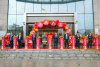
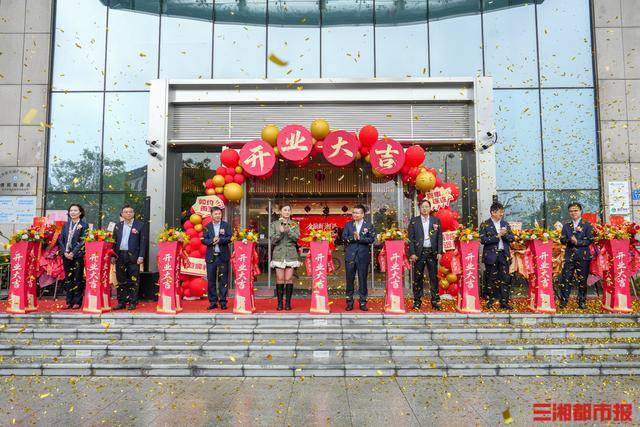
焕新启航!中国民生银行长沙分行营业部重装开业
Chang Sha Wan Bao· 2025-10-21 10:42
Core Viewpoint - China Minsheng Bank's Changsha branch has undergone a significant renovation, enhancing its service capabilities and reaffirming its commitment to serving the local economy and community [1][5]. Group 1: Renovation and Service Enhancement - The newly renovated branch features a "technology + warmth" service space, equipped with modern devices such as cash intelligent cabinets and a VIP area, creating a comfortable and private environment for customers [3]. - The branch has implemented accessibility features and developed a simplified mobile banking app tailored for elderly users, ensuring that financial services are inclusive and user-friendly [3][6]. Group 2: Support for Local Economy - As the first financial institution in Hunan Financial Center, the Changsha branch focuses on customer-centric services, promoting inclusive finance, and embracing digital transformation to support the local economy [5]. - The bank has introduced a diverse range of financial products for small and micro enterprises, including "Cloud Quick Loan" and "Tax Network Happy Loan," addressing the unique financing needs of these businesses [5][6]. - In response to national policies aimed at boosting consumption, the branch has optimized personal consumption loan processes and tailored loan schemes to various consumer scenarios, contributing to market vitality [6].

资金流向日报:沪指涨1.36%,277.24亿资金净流入
Zheng Quan Shi Bao Wang· 2025-10-21 09:03
Market Overview - On October 21, the Shanghai Composite Index rose by 1.36%, the Shenzhen Component Index increased by 2.06%, the ChiNext Index climbed by 3.02%, and the CSI 300 Index gained 1.53% [1] - Among the tradable A-shares, 4,628 stocks rose, accounting for 85.25%, while 729 stocks declined [1] Capital Flow - The net inflow of main funds reached 27.724 billion yuan for the day [1] - The ChiNext saw a net inflow of 7.134 billion yuan, while the STAR Market had a net inflow of 3.374 billion yuan, and the CSI 300 constituents experienced a net inflow of 13.677 billion yuan [1] Industry Performance - Out of the 30 first-level industries classified by Shenwan, 30 industries rose, with the top gainers being the communication and electronics sectors, which increased by 4.90% and 3.50%, respectively [1] - The coal industry was the biggest loser, declining by 1.02% [1] Industry Capital Flow - A total of 17 industries experienced net inflows, with the electronics sector leading at a net inflow of 12.028 billion yuan and a daily increase of 3.50% [1] - The communication sector followed with a net inflow of 5.525 billion yuan and a daily increase of 4.90% [1] - Conversely, 14 industries saw net outflows, with the banking sector leading at a net outflow of 1.705 billion yuan, despite a daily increase of 0.33% [1] Individual Stock Performance - A total of 2,398 stocks had net inflows, with 882 stocks seeing inflows exceeding 10 million yuan, and 118 stocks with inflows over 100 million yuan [2] - The stock with the highest net inflow was Industrial Fulian, which rose by 9.57% with a net inflow of 2.199 billion yuan [2] - Other notable stocks included Xinyi Technology and Luxshare Precision, with net inflows of 1.792 billion yuan and 1.499 billion yuan, respectively [2] - Stocks with net outflows exceeding 100 million yuan included CITIC Securities, Silan Microelectronics, and Minsheng Bank, with outflows of 800 million yuan, 603 million yuan, and 491 million yuan, respectively [2]



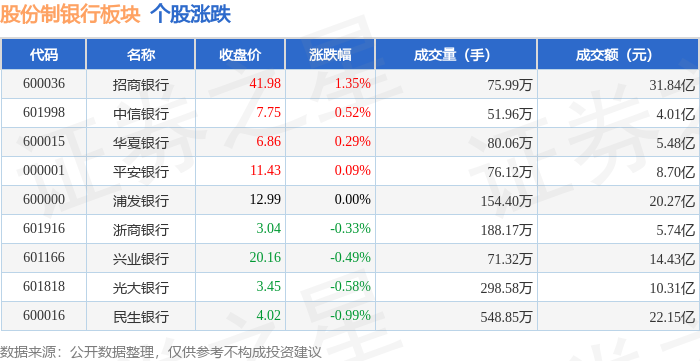
股份制银行板块10月21日涨0.33%,招商银行领涨,主力资金净流出9.73亿元
Zheng Xing Xing Ye Ri Bao· 2025-10-21 08:30
证券之星消息,10月21日股份制银行板块较上一交易日上涨0.33%,招商银行领涨。当日上证指数报收于3916.33,上涨1.36%。深证成指报收于 13077.32,上涨2.06%。股份制银行板块个股涨跌见下表: 以上内容为证券之星据公开信息整理,由AI算法生成(网信算备310104345710301240019号),不构成投资建议。 相关ETF A50ETF (产品代码: 159601) ★ 跟踪:MSCI中国A50互联互通人民币指数 | 代码 | 名称 | 收盘价 | 涨跌幅 | 成交量(手) | 成交额(元) | | --- | --- | --- | --- | --- | --- | | 600036 | 指商银行 | 41.98 | 1.35% | 75.99万 | 31.84亿 | | 661698 | 中信银行 | 7.75 | 0.52% | 51.96万 | 4.01亿 | | 600015 | 华夏银行 | 6.86 | 0.29% | 80.06万 | 5.48 Z | | 000001 | 平安银行 | 11.43 | 0.09% | 76.12万 | 8.70亿 | | 60000 ...




银行如何扛起“可持续”大旗?多位大咖齐聚这场大会,共话行业新方向
Xin Lang Cai Jing· 2025-10-21 00:46
Group 1: Conference Overview - The 2025 Sustainable Global Leaders Conference was held from October 16 to 18 in Shanghai, focusing on "Collaborating to Address Challenges: Global Action, Innovation, and Sustainable Growth" [1] - The conference gathered prominent figures from the banking industry, including leaders from the People's Bank of China and major banks, to discuss core issues related to sustainable development [1] Group 2: Central Bank Insights - The global sustainable development process is slower and more complex than anticipated, with significant challenges remaining in various sectors, such as hunger and access to safe drinking water [2] - China’s experience in green transformation, which combines economic growth with environmental protection, is highlighted as a model for other developing countries [2][3] - As of last year, China's renewable energy installed capacity accounted for 35% of the global total, demonstrating a significant reduction in energy consumption per unit of GDP [2] Group 3: Sustainable Finance Discussion - Sustainable finance has made significant progress globally and is now a focal point for financial innovation, but it faces challenges such as market mechanism deficiencies and information asymmetry [4] - The need for collaboration among governments and enterprises is emphasized to address the challenges in sustainable finance [4] Group 4: Banking Sector Perspectives - Several executives from joint-stock banks discussed the importance of sustainable finance, emphasizing that it is a long-term journey requiring cooperation from all sectors of society [5][6] - The commitment to green finance is reflected in the strategic positioning of banks, with a focus on supporting low-carbon transitions and enhancing green financial services [6][7][8] Group 5: Digital Technology in Banking - Digital technology is seen as a key driver for the sustainable development of private banks, with significant efficiency advantages reported [10][11] - The use of digital technology has enabled banks to provide substantial green credit, supporting various sustainable projects [10][11] Group 6: International Bank Contributions - Morgan Stanley has been actively involved in supporting China's green transformation, assisting clients in issuing nearly $59.8 billion in green bonds since 2015 [12] - The bank has set a goal of $1 trillion in green financing as part of a broader $2.5 trillion sustainable development target, with significant progress reported by the end of 2024 [12]

金价狂飙!银行密集提示市场风险,专家建议投资者考虑战略配置而非押注涨跌
Xin Lang Cai Jing· 2025-10-21 00:46
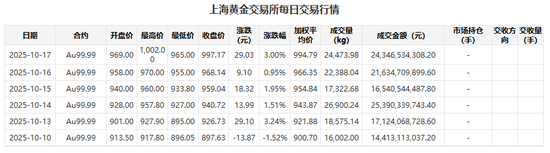
Core Insights - The precious metals market is experiencing increased volatility, prompting banks and exchanges to issue risk warnings [1][7][8] - Gold prices recently hit a historical peak, with spot gold reaching $4380.79 per ounce on October 17, marking a year-to-date increase of over 60% [3][2] - Financial institutions are raising thresholds for gold accumulation and adjusting margin requirements due to market fluctuations [10][6] Group 1: Market Performance - On October 20, gold prices fell below $4230 per ounce, a drop of over $45 from the day's high, yet remained at historically high levels [1] - The price of gold in the Shanghai Gold Exchange reached a record high of 997.17 yuan per gram on October 17 [3] - Brand gold jewelry prices have also surged, with Chow Tai Fook's gold jewelry priced at 1279 yuan per gram, an increase of 32 yuan from the previous day [4][5] Group 2: Institutional Responses - Major banks, including China Construction Bank and China Merchants Bank, have issued multiple risk warnings regarding precious metals trading [8][10] - The Shanghai Gold Exchange and Shanghai Futures Exchange have advised members to enhance risk management practices due to market instability [7] - Several banks have raised the minimum purchase amounts for gold accumulation products, with China Bank adjusting its minimum from 850 yuan to 950 yuan [10] Group 3: Investment Strategies - Bridgewater Associates founder Ray Dalio suggests that gold should be viewed from a strategic allocation perspective rather than a speculative one, recommending a portfolio allocation of 10% to 15% in gold [14][11] - Despite warnings from financial institutions, there is a growing trend of investors engaging in risky behaviors, such as using loans to purchase gold [12][13] - Experts caution that while gold has strong liquidity, extreme market conditions could lead to liquidity issues, and using borrowed funds for investment purposes may violate regulations [12][13]
硬件升级服务提质,中国民生银行长沙分行营业部焕新启航
Sou Hu Cai Jing· 2025-10-20 11:32
Core Viewpoint - China Minsheng Bank's Changsha branch has undergone a significant renovation, enhancing its service capabilities and technological integration to better serve local citizens and businesses, reflecting its commitment to regional development and financial empowerment [1][9]. Group 1: Renovation and Upgrades - The Changsha branch has introduced upgraded smart devices and restructured service areas to create a more comfortable and efficient banking environment [3][4]. - New features include a redesigned lobby with advanced equipment such as cash intelligent cabinets and a dedicated wealth management center, optimizing customer experience [3][7]. - The branch aims to enhance service efficiency, reducing transaction times significantly, with average processing times for certain services cut from 8 minutes to 3 minutes [3][10]. Group 2: Targeted Services for Diverse Demographics - The bank has implemented tailored services for different customer segments, including a digital financial service package for younger clients and a dedicated financial manager service for the elderly [7][8]. - Specialized services for small and micro enterprises include simplified loan processes and tailored financial products to meet specific industry needs [8][10]. Group 3: Commitment to Local Economic Development - The renovation aligns with the bank's strategy to support local economic growth, particularly focusing on small and micro enterprises through innovative financing solutions [9][10]. - The bank has actively engaged in providing financial support to local industries, exemplified by a recent case where a company received 30 million yuan in funding to enhance production efficiency by 40% [10][11]. - The bank's ongoing initiatives reflect its dedication to serving the community and contributing to the high-quality development of Hunan province [11].
股份制银行板块10月20日跌0.43%,浦发银行领跌,主力资金净流出2.29亿元
Zheng Xing Xing Ye Ri Bao· 2025-10-20 08:27
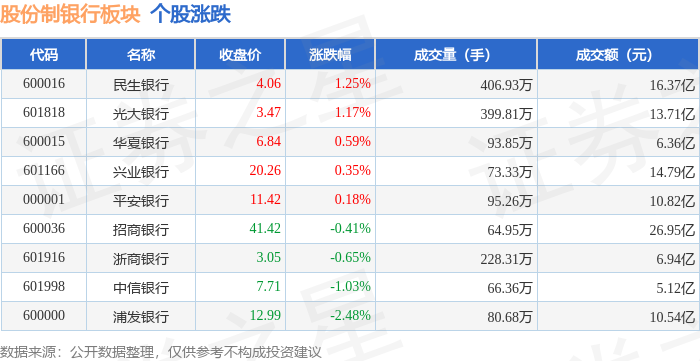
证券之星消息,10月20日股份制银行板块较上一交易日下跌0.43%,浦发银行领跌。当日上证指数报收 于3863.89,上涨0.63%。深证成指报收于12813.21,上涨0.98%。股份制银行板块个股涨跌见下表: | 代码 | 名称 | 收盘价 | 涨跌幅 | 成交量(手) | 成交额(元) | | --- | --- | --- | --- | --- | --- | | 600016 | 民生银行 | 4.06 | 1.25% | 406.93万 | 16.37亿 | | 601818 | 光大银行 | 3.47 | 1.17% | 399.81万 | 13.71亿 | | 600015 | 华夏银行 | 6.84 | 0.59% | 93.85万 | 6.36 Z | | 601166 | 兴业银行 | 20.26 | 0.35% | 73.33万 | 14.79亿 | | 000001 | 平安银行 | 11.42 | 0.18% | 95.26万 | 10.82亿 | | 600036 | 招商银行 | 41.42 | -0.41% | 64.95万 | 26.95亿 | | 601916 | 浙商 ...

依托百家网点 民生北分打造科创企业5公里半径服务圈
Bei Ke Cai Jing· 2025-10-20 07:29
Core Insights - Technology finance is a crucial support for the national innovation system and achieving high-level technological self-reliance, with tech enterprises being key players in driving industrial upgrades and implementing the strategy of a technology-powered nation [1] - The banking sector is increasingly providing diversified financial services to tech enterprises, moving from reliance on financial statements for financing to offering specialized and comprehensive service solutions [1][2] - Minsheng Bank's Beijing branch has established a "5-kilometer service radius" around key tech innovation areas, creating a product system and ecosystem that supports tech enterprises throughout their lifecycle [1][4] Group 1: Financial Services for Tech Enterprises - Minsheng Bank has set up specialized institutions to address the financing challenges faced by tech enterprises, which often struggle with asset-light models, high investment needs, and fluctuating revenues [2] - The bank has created a "3+6+16" service structure, consisting of 3 specialized branches, 6 specialized institutions, and 16 distinctive branches, to systematically advance services for tech enterprises [2] - The establishment of specialized institutions helps banks deepen industry understanding and accurately identify enterprise value, overcoming the reluctance to lend due to lack of comprehension [2] Group 2: Comprehensive Product Offerings - Minsheng Bank has developed a product portfolio that covers the entire lifecycle of tech enterprises, offering tailored financial products for startups, growth-stage companies, and mature enterprises [4] - For startups, the bank provides services such as account opening, fund management, and various online financing products; for growth-stage companies, it offers equity financing and specialized services; and for mature enterprises, it provides comprehensive solutions including IPO guidance and cross-border finance [4] - The bank emphasizes a one-stop service model that integrates public and private business, offering a range of customized financial products [4] Group 3: Support for Overcoming Challenges - Tech enterprises often face significant risks during their transition from startup to maturity, particularly in the technology conversion phase, which is referred to as the "valley of death" [5] - Minsheng Bank has launched the "Kunpeng Plan" to support high-potential tech enterprises, aiming to cultivate 100 quality companies over three years [6] - The bank has successfully provided deep support to several representative companies in the commercial aerospace sector, adapting its service strategies to meet the unique challenges of this high-tech field [6] Group 4: Ecosystem Development - The development of tech enterprises relies on collaboration within the industrial chain, prompting Minsheng Bank to implement a "3+3+N" development strategy focusing on supply chains, industrial chains, and channel chains [7] - The bank has established partnerships with various regulatory and financial institutions to enhance information sharing and service collaboration [7] - Minsheng Bank aims to create a mature and efficient technology finance service system, continuing to work with tech enterprises to transform "technological value" into "market value" [7]