
CM BANK(600036)

Search documents
招商银行大宗交易成交1.16亿元
Zheng Quan Shi Bao Wang· 2025-11-21 13:49
据天眼查APP显示,招商银行股份有限公司成立于1987年03月31日,注册资本2521984.5601万人民币。 (数据宝) 11月21日招商银行大宗交易一览 | 成交量 | 成交金额 | 成交价格 | 相对当日收盘折溢 | 买方营业部 | 卖方营业部 | | --- | --- | --- | --- | --- | --- | | (万股) | (万元) | (元) | 价(%) | | | | 270.00 | 11610.00 | 43.00 | 0.00 | 国泰海通证券股份有 | 申万宏源证券有限 | | | | | | 限公司总部 | 公司国际部 | (文章来源:证券时报网) 招商银行11月21日大宗交易平台出现一笔成交,成交量270.00万股,成交金额1.16亿元,大宗交易成交 价为43.00元。该笔交易的买方营业部为国泰海通证券股份有限公司总部,卖方营业部为申万宏源证券 有限公司国际部。 进一步统计,近3个月内该股累计发生14笔大宗交易,合计成交金额为49.83亿元。 证券时报·数据宝统计显示,招商银行今日收盘价为43.00元,下跌0.53%,日换手率为0.38%,成交额为 34.14亿元, ...

兴业银行旗下AIC开业,招商银行也提上日程!另有2家已获批筹建
Xin Lang Cai Jing· 2025-11-21 11:02
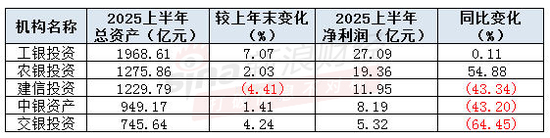
另有2家银行获批筹建 11月19日,在深圳国际金融大会上,王良表示,旗下AIC将于近期即将开业。金监总局官网 显示,7月3日,招商银行获批筹建招银金投。同时,此前有媒体报道称,该公司获批在深筹 建。 又有股份行旗下金融资产投资公司(AIC)即将开业! 11月19日,招商银行行长王良在深圳国际金融大会上表示,旗下AIC将于近期即将开业。此 前,该行发布公告称,招银金融资产投资有限公司(以下简称"招银金投")注册资本150亿 元,为其全资子公司。而在三日前,兴业银行旗下AIC兴银投资在福州揭牌成立并举行签约 仪式,标志着我国首家股份行AIC正式成立。此外,邮储银行、中信银行AIC均已获批筹 建。 自2017年国内首批大行设立AIC以来,至今已有八年时间,彼时的工商银行、农业银行、中 国银行、建设银行、交通银行相继成立了各自的AIC,成为首批持牌机构,主要聚焦科技、 绿色等"五篇大文章"重点领域。 招商银行旗下AIC即将开业, 另外,招银金投注册资本为150亿元,超过兴业银行和中信银行旗下AIC的100亿元注册资 本。 此前,招商银行发布公告称,设立招银金投系招商银行积极响应国家号召,主动融入国家发 展大局的重要举 ...


这500家企业,展现了广东经济发展的三大趋势
2 1 Shi Ji Jing Ji Bao Dao· 2025-11-21 10:52
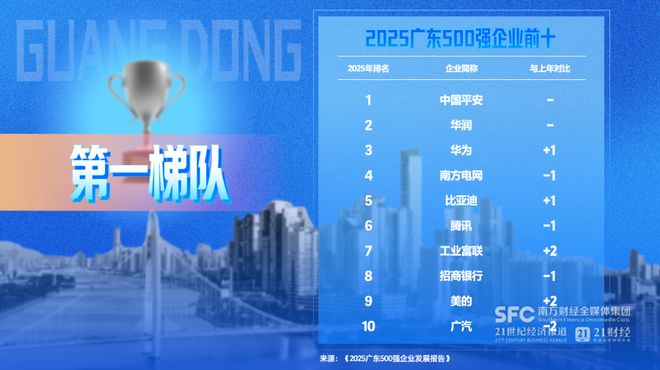
Core Insights - The report indicates that the threshold for entering the "2025 Guangdong Top 500 Enterprises Development Report" has surpassed 3 billion yuan for the first time, with Ping An ranking first and projected to exceed 1 trillion yuan in revenue for 2024 [2][4] - The total operating revenue of the 500 enterprises reached a historical high of 19.36 trillion yuan, reflecting the resilience and recovery of Guangdong's economy [4][5] - The report highlights a shift towards new industries, with a significant increase in the number of enterprises in the new energy and electronic information sectors, while traditional real estate companies have seen a decline in rankings [6][8] Group 1: Economic Trends - Guangdong's economy is steadily recovering, with a year-on-year growth rate of operating revenue increasing from 0.37% to 3.36% [7] - Net profit is expected to see a slight increase of 2.06% in 2025, following a recovery in 2024 [7] - Total assets have grown from 56.62 trillion yuan in 2021 to 68.33 trillion yuan in 2025, indicating a cumulative growth of over 11 trillion yuan [7] Group 2: Industry Transformation - The traditional "real estate-finance-local government infrastructure" model is no longer sustainable, leading to a focus on optimizing traditional industries and nurturing emerging sectors [8] - The proportion of strategic emerging industries among the top 500 enterprises reached 81.6%, with significant representation from electrical machinery and equipment manufacturing [8] Group 3: Innovation Investment - The total R&D expenditure of the top 500 enterprises reached 584.96 billion yuan, with a focus on artificial intelligence, new energy, and biomedicine [9] - The investment in scientific research and technical services accounted for 18.99% of the total R&D spending, indicating a strong commitment to innovation [9] - The report emphasizes the importance of integrating technological and industrial innovation, aligning with the "14th Five-Year Plan" objectives [9]



招商银行11月21日现1笔大宗交易 总成交金额1.16亿元 溢价率为0.00%
Xin Lang Zheng Quan· 2025-11-21 09:48
第1笔成交价格为43.00元,成交270.00万股,成交金额11,610.00万元,溢价率为0.00%,买方营业部为 国泰海通证券股份有限公司总部,卖方营业部为申万宏源证券有限公司国际部。 进一步统计,近3个月内该股累计发生14笔大宗交易,合计成交金额为49.83亿元。该股近5个交易日累 计下跌0.58%,主力资金合计净流入9772.48万元。 11月21日,招商银行收跌0.53%,收盘价为43.00元,发生1笔大宗交易,合计成交量270万股,成交金额 1.16亿元。 责任编辑:小浪快报 ...
股份制银行板块11月21日跌1.29%,民生银行领跌,主力资金净流出5.23亿元
Zheng Xing Xing Ye Ri Bao· 2025-11-21 09:33
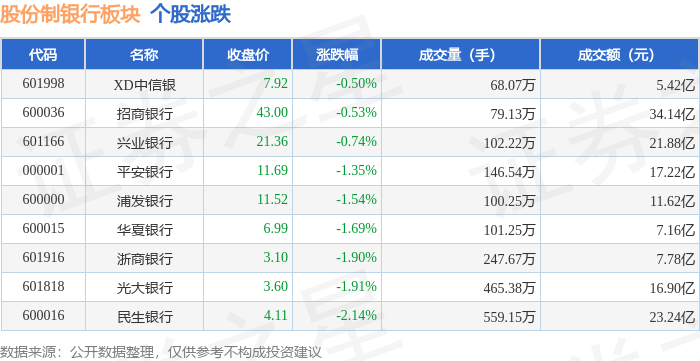
Core Points - The banking sector experienced a decline of 1.29% on November 21, with Minsheng Bank leading the drop [1] - The Shanghai Composite Index closed at 3834.89, down 2.45%, while the Shenzhen Component Index closed at 12538.07, down 3.41% [1] Banking Sector Performance - CITIC Bank (601998) closed at 7.92, down 0.50% with a trading volume of 680,700 shares and a transaction value of 542 million yuan [1] - China Merchants Bank (600036) closed at 43.00, down 0.53% with a trading volume of 791,300 shares and a transaction value of 3.414 billion yuan [1] - Industrial Bank (601166) closed at 21.36, down 0.74% with a trading volume of 1,022,200 shares and a transaction value of 2.188 billion yuan [1] - Ping An Bank (000001) closed at 11.69, down 1.35% with a trading volume of 1,465,400 shares and a transaction value of 1.722 billion yuan [1] - Shanghai Pudong Development Bank (600000) closed at 11.52, down 1.54% with a trading volume of 1,002,500 shares and a transaction value of 1.162 billion yuan [1] - Huaxia Bank (600015) closed at 6.99, down 1.69% with a trading volume of 1,012,500 shares and a transaction value of 716 million yuan [1] - Zhejiang Commercial Bank (601916) closed at 3.10, down 1.90% with a trading volume of 2,476,700 shares and a transaction value of 778 million yuan [1] - China Everbright Bank (601818) closed at 3.60, down 1.91% with a trading volume of 4,653,800 shares and a transaction value of 1.690 billion yuan [1] - Minsheng Bank (600016) closed at 4.11, down 2.14% with a trading volume of 5,591,500 shares and a transaction value of 2.324 billion yuan [1] Capital Flow Analysis - The banking sector saw a net outflow of 523 million yuan from main funds, while speculative funds had a net inflow of 224 million yuan and retail investors had a net inflow of 299 million yuan [1]


不良贷款 加速“促销”转让!
Zheng Quan Shi Bao· 2025-11-21 08:53
Core Viewpoint - The recent data from the National Financial Regulatory Administration indicates a slight increase in both the non-performing loan (NPL) balance and the NPL ratio of commercial banks, while the market for transferring non-performing loans has seen significant growth this year [1] Group 1: Non-Performing Loan Market Trends - The scale of non-performing loan transfers has surged, with over 26 billion yuan in asset packages listed since November, and the total for the first half of 2025 expected to exceed 167 billion yuan, doubling from the same period in 2024 [1][2] - The issuance of asset-backed securities (ABS) for non-performing loans has surpassed 67.857 billion yuan this year, reflecting an increase of over 80% compared to the previous year [1] Group 2: Retail Loan Risks - There is a consensus in the industry that retail loan risks are becoming more apparent, with no signs of reaching a peak yet [1][6] - Major banks are increasingly transferring personal non-performing loans to improve asset quality and release capital [1][3] Group 3: Asset Transfer Dynamics - Banks are actively listing large amounts of non-performing assets, particularly in personal loans and credit card overdrafts, with significant amounts being transferred [2] - The trend of "discount promotions" for non-performing assets is growing, with some assets being sold for as little as 10% of their original value [4] Group 4: Retail Loan Quality Indicators - The non-performing loan ratio for retail loans is on the rise, with specific banks reporting increases in their personal loan NPL ratios [6][7] - The characteristics of retail loan risks include a higher default rate in consumer loans and credit card loans, while mortgage loans remain the most stable [6][7]


银行们,正在批量撤回“免费午餐”
Sou Hu Cai Jing· 2025-11-21 08:03
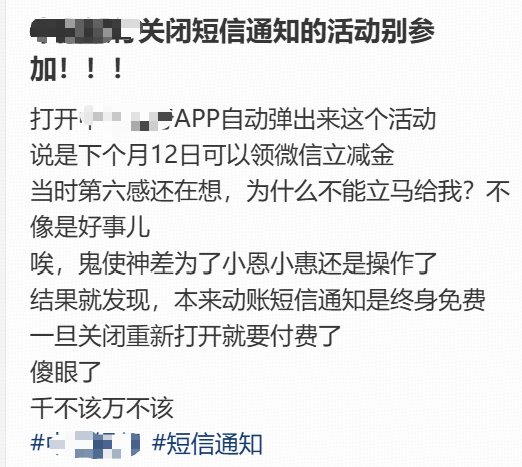
Core Viewpoint - Banks are increasingly charging for services that were previously free, such as transaction SMS notifications, as they face declining profits and need to find new revenue sources [1][3][9]. Group 1: Changes in Banking Services - Users have reported that banks are inviting them to participate in activities that lead to charges for services that were once free, such as SMS notifications for account transactions [1]. - Many banks have raised the threshold for free SMS notifications, with China Bank increasing the trigger amount from 0 to 100 yuan, and Hunan Rural Credit raising it from 200 to 500 yuan [3]. - Some banks, like Guizhou Rural Credit, have started charging for SMS services, while Minsheng Bank has ended free SMS notifications for transactions over 300 yuan, now charging 2 yuan per month [3][6]. Group 2: Broader Trends in Banking Fees - The trend of banks withdrawing free services is not limited to SMS notifications; many banks are adjusting various service fees, including ATM withdrawal fees and card delivery fees [4][6]. - For example, China Agricultural Bank has canceled free cash withdrawal policies for certain credit cards and increased fees for cross-bank withdrawals [6]. - Local banks, such as Lujiang Rural Commercial Bank, have also begun charging for ATM withdrawals, previously free [8]. Group 3: Reasons Behind Fee Increases - The banking industry is facing pressure on profits due to reduced loan demand and lower interest rates, leading to a decline in net interest margins [9][11]. - The net interest margin for commercial banks dropped from 1.69% in Q1 2024 to 1.43% in Q1 2025, significantly below the historical average of 2.44% [11]. - As banks look to cut costs, they are reducing the number of physical branches and staff, which has led to a focus on previously overlooked fees like SMS and delivery charges [11][12]. Group 4: Financial Implications of Fee Changes - Charging for SMS notifications can provide significant profit margins for banks, with a potential net profit margin of 87.5% based on the cost of sending messages [13]. - The shift from free to paid services is seen as a necessary measure for banks to maintain profitability in a challenging economic environment [14]. Group 5: User Adaptation Strategies - Users are encouraged to adapt to these changes by utilizing remaining free services and considering alternative notification methods, such as app notifications instead of SMS [15]. - Planning transactions to maximize free services and opting for electronic statements can help users mitigate the impact of these fee increases [15].
2025上市公司董事会“最佳实践案例”揭晓
Sou Hu Cai Jing· 2025-11-21 05:09
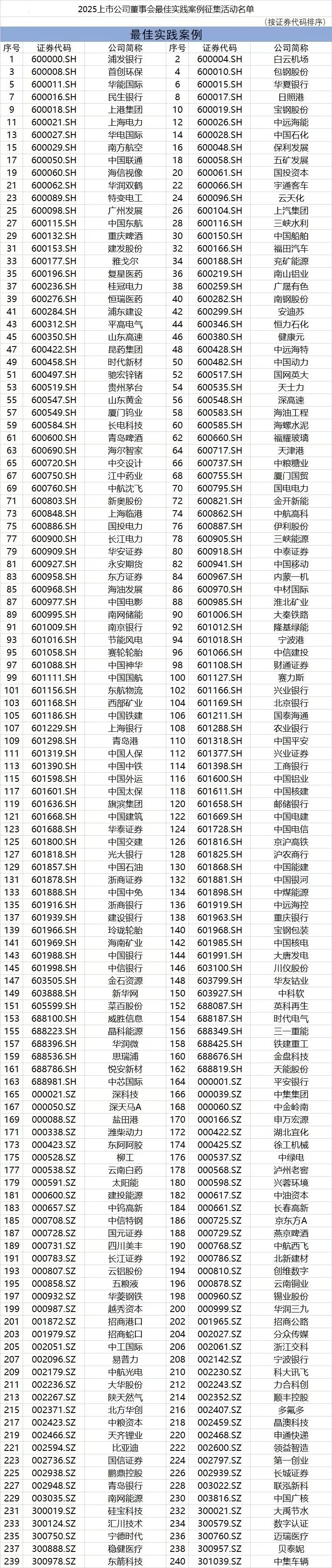
Core Insights - The China Securities Regulatory Commission (CSRC) has emphasized the importance of corporate governance and board effectiveness in listed companies, leading to the launch of the "2025 Best Practices for Corporate Boards" initiative, which has recognized 240 best practice cases, 190 excellent cases, and 156 typical cases [1][2]. Group 1: Corporate Governance and Board Effectiveness - The initiative aims to enhance the legal and compliant operation of corporate boards, improving governance effectiveness in response to higher demands from the new "National Nine Articles" and the "1+N" policy framework [1]. - The core role of corporate boards is to drive strategic decision-making, align with national macro policies, and integrate company growth into the modernization of the industrial system [1][2]. - Companies are encouraged to establish robust internal control systems and risk supervision capabilities to support high-quality development in the capital market [1][2]. Group 2: Value Management and Shareholder Returns - Corporate boards are elevating value management to a strategic level, focusing on enhancing intrinsic value, optimizing investor communication, and standardizing information disclosure [2]. - Emphasis on sustainable dividends has become a key aspect of governance, with companies responding to policies for multiple dividends per year and ensuring the continuity and stability of shareholder return policies [2]. - The boards are actively working to improve investor satisfaction and confidence through optimized dividend strategies [2]. Group 3: ESG Integration - Corporate boards are advancing the establishment and practice of Environmental, Social, and Governance (ESG) frameworks, embedding sustainability into strategic planning and performance evaluation [3]. - The ESG strategy focuses on innovation, employee growth, environmental friendliness, and corporate governance, aiming for a sustainable development governance model unique to China [3]. Group 4: Best Practice Case Listings - A comprehensive list of recognized companies for best practices in corporate governance has been compiled, showcasing a diverse range of sectors and industries [4][5][6][7][8][9][10].






中国银行股价续创历史新高!银行ETF天弘(515290)成交额超5000万元,机构:国有大行明年或迎来一轮估值修复
2 1 Shi Ji Jing Ji Bao Dao· 2025-11-21 02:56
Group 1 - The banking sector showed active trading on November 21, with the China Securities Bank Index down 0.20% at the time of reporting, while China Bank saw a rise of over 2%, reaching a historical high [1] - A comprehensive cooperation agreement was signed between China Agricultural Development Bank and China Construction Bank on November 19, involving 13 branches for deeper collaboration in financial markets, syndicate loans, and consulting services [1] - The banking industry in China is transitioning from a phase of scale expansion to one of transformation and value creation, as stated by the president of China Merchants Bank at the 2025 Shenzhen International Financial Conference [1] Group 2 - Shenwan Hongyuan reiterated a focus on a dual strategy of "leading banks as the platform + bottom-tier joint-stock banks and quality city commercial banks as the performers," suggesting that state-owned banks and China Merchants Bank will elevate the valuation center [2] - It is anticipated that relatively undervalued state-owned banks may experience a valuation recovery next year, while quality small and medium-sized banks with improving fundamentals and high credit growth are expected to show significant stock price elasticity amid improving economic expectations [2]



招商银行科技金融服务品牌全新升级
Xin Hua She· 2025-11-21 02:12
Core Viewpoint - China Merchants Bank (CMB) is enhancing its technology finance services to support the high-quality development of technology enterprises, emphasizing the integration of technology innovation and financial services [1][2]. Group 1: Technology Finance Strategy - CMB has a long-standing commitment to integrating technology into financial services, having established its operational philosophy in the early 1990s [2]. - The bank serves over 2.2 billion retail customers and 3.5 million corporate clients, showcasing its extensive reach and experience in the technology sector [2]. - CMB's technology finance strategy focuses on long-term partnerships with technology enterprises, supporting their growth through various nurturing programs [2]. Group 2: Organizational Structure - CMB has developed a "1+20+100" organizational structure for technology finance, which includes one central committee, 20 key branches, and over 100 specialized branches [3]. - This structure aims to enhance service quality and efficiency for technology enterprises by concentrating resources in regions with a high concentration of tech companies [3]. Group 3: Comprehensive Service Solutions - CMB has launched a "4×3" matrix service solution to provide comprehensive financial support throughout the entire lifecycle of technology enterprises [4]. - The service covers four key areas: talent innovation, technology innovation, product innovation, and industry innovation, with tailored financial services for each stage [4]. - The bank collaborates with various stakeholders, including government departments and industry leaders, to create an ecosystem that supports the growth and development of technology enterprises [4].