CM BANK(600036)

Search documents
招商银行1H25业绩点评:非息降幅收窄,营收业绩环比改善
Xin Lang Cai Jing· 2025-09-01 21:02
Core Viewpoint - China Merchants Bank reported a slight decline in revenue for the first half of 2025, but net profit showed a modest increase, indicating resilience in its financial performance amidst challenging market conditions [1]. Financial Performance - The bank achieved a revenue of 169.97 billion yuan in 1H25, a year-on-year decrease of 1.7%, with the decline narrowing by 1.4 percentage points compared to 1Q25 [1]. - The net profit attributable to shareholders reached 74.93 billion yuan, reflecting a year-on-year growth of 0.3%, with an increase of 2.3 percentage points from 1Q25 [1]. Interest and Non-Interest Income - Net interest income remained stable, amounting to 106.09 billion yuan in 1H25, representing a year-on-year increase of 1.6% [1]. - The decline in non-interest income has slowed, indicating improved performance in this segment [1]. Loan Growth and Quality - The loan balance at the end of 1H25 was 7,116.6 billion yuan, showing a year-on-year growth of 5.5%, slightly down from 5.8% at the end of 2024 [1]. - Corporate loans experienced a significant increase, rising by 11.5% year-on-year to 3,089.7 billion yuan [1]. - The non-performing loan (NPL) ratio at the end of 1H25 was 0.93%, stable compared to 1Q25, with corporate NPLs improving by 13 basis points from the end of the previous year [1]. Interest Margin and Cost Management - The net interest margin stood at 1.88%, down 12 basis points year-on-year, but the decline was less severe than the 17 basis points drop in 2024 [1]. - The bank is optimizing its funding costs, which is contributing to the stabilization of its interest margin [1]. Investment Strategy - The bank is deepening its wealth management strategy, with rapid growth in retail assets under management (AUM) and a solid competitive position in retail banking [1]. - With the expected recovery in economic growth, the bank's performance is anticipated to improve, maintaining a "recommended" rating for investment [1].
2375亿!17家上市银行中期分红大手笔
Shen Zhen Shang Bao· 2025-09-01 16:41
Core Viewpoint - The listed banks in China have shown strong performance in the first half of the year and are preparing to reward investors with significant mid-term dividends, reflecting their profitability and commitment to shareholder returns [2][4]. Group 1: Dividend Distribution - Among the 42 listed banks in A-shares, nearly half will implement mid-term dividends for 2025, with 17 banks already disclosing their plans, totaling 237.54 billion yuan [2]. - The six major state-owned banks lead in dividend distribution, with Industrial and Commercial Bank of China (ICBC) at the forefront, distributing 50.396 billion yuan, followed by China Construction Bank and Agricultural Bank of China with 48.605 billion yuan and 41.823 billion yuan respectively [2]. - The total dividends from the six major state-owned banks account for 86% of the total dividends announced by the 17 banks [2]. Group 2: Specific Bank Plans - Among joint-stock banks, CITIC Bank, Minsheng Bank, Ping An Bank, and Huaxia Bank have announced their mid-term dividend plans, with CITIC Bank proposing a total of 10.461 billion yuan [3]. - In the city and rural commercial banks, seven banks have announced mid-term dividends, including Ningbo Bank and Shanghai Bank, with Shanghai Bank proposing a cash dividend of 3 yuan per 10 shares [3]. - Four banks have a dividend payout ratio exceeding 30%, including Shanghai Bank and Postal Savings Bank, indicating a strong commitment to returning value to shareholders [3]. Group 3: Market Implications - The expansion of banks implementing mid-term dividends and their willingness to distribute reflects the resilience of the banking sector's profitability and a positive response to shareholder return demands [4]. - This trend indicates improved cash flow and capital management capabilities among certain banks, which may help boost market confidence and attract long-term value investors [4].





果然财经|个人消费贷贴息今起实施,单家机构最高贴息3000元
Sou Hu Cai Jing· 2025-09-01 16:31
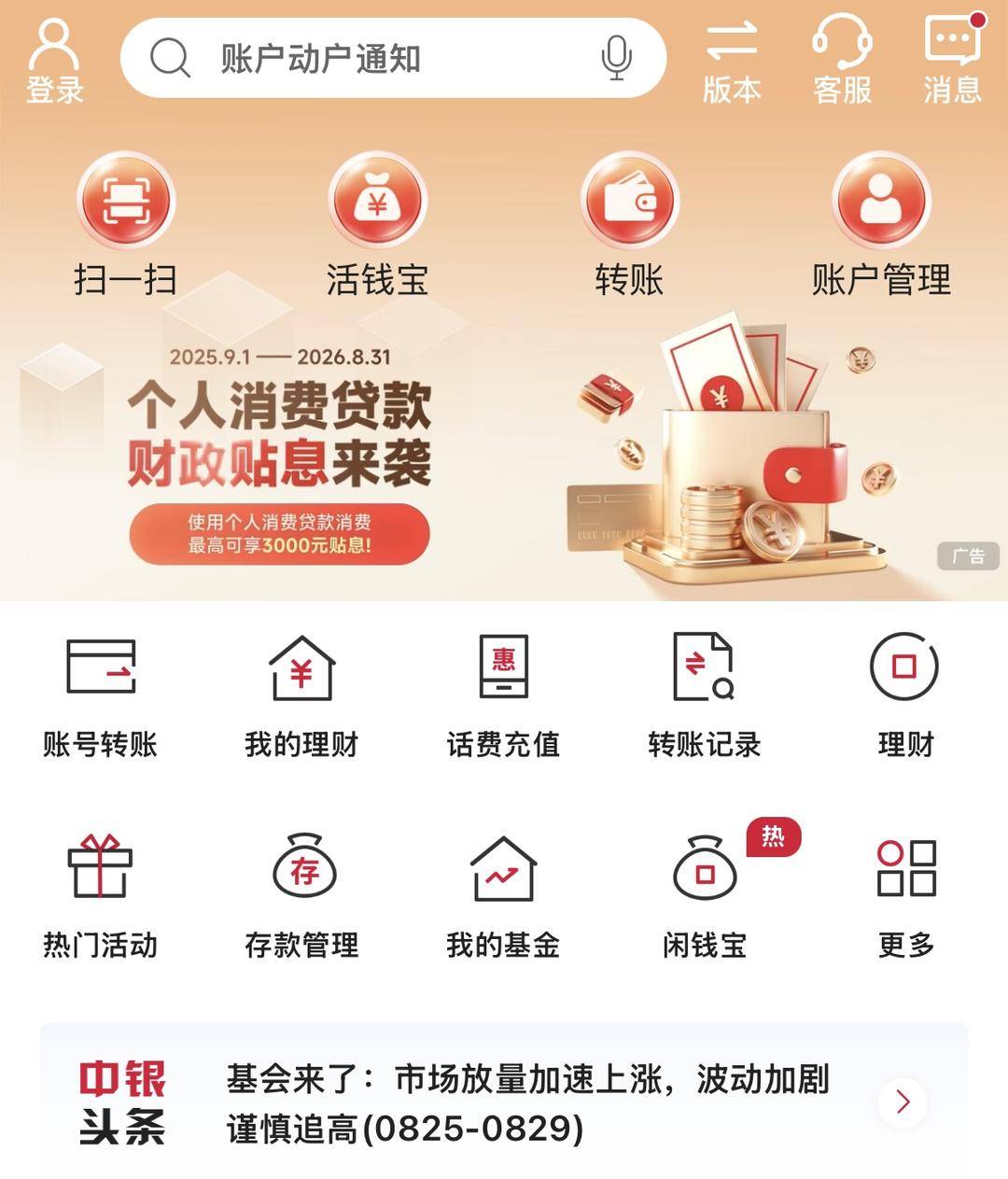
Core Viewpoint - The implementation of a personal consumption loan interest subsidy policy marks the first time the central government has provided subsidies for personal consumption loans, allowing residents to enjoy a 1% annual subsidy on loans used for various consumption purposes [1]. Group 1: Policy Details - The subsidy applies to personal consumption loans obtained from financial institutions for purposes such as home renovation, travel, education, and purchasing consumer goods like electronics and vehicles [1]. - The maximum subsidy per individual at a single bank is capped at 3,000 yuan, corresponding to a total consumption amount of 300,000 yuan [3]. - For loans under 50,000 yuan, the maximum subsidy is 1,000 yuan, linked to a consumption amount of 100,000 yuan [3]. Group 2: Application Process - Consumers can apply for the consumption loan products directly through bank apps, which will automatically calculate and deduct the subsidy from the loan interest [3]. - Existing customers with outstanding loans prior to September 1 may also qualify for the subsidy if the funds are utilized for eligible consumption after this date [4]. Group 3: Bank Initiatives - Many banks have established dedicated sections in their apps for the subsidy, making the application process user-friendly and straightforward [4][6]. - Major banks like China Bank and Construction Bank have prominently featured the subsidy in their apps, allowing consumers to easily access related products and agreements [6][8]. Group 4: Fund Usage Management - Strict management of fund usage is emphasized, requiring that loan funds be used for actual consumption to qualify for the subsidy [9]. - Consumers must utilize the loan funds within one month of disbursement for designated consumption, or they risk losing the subsidy [9]. - Banks have mechanisms in place to verify that funds are used for legitimate consumption, including automatic recognition through payment systems and the option to submit receipts for verification [9]. Group 5: Fraud Prevention Measures - Banks are implementing strict measures to prevent fraudulent activities related to the subsidy, including the prohibition of false documentation and illegal loan practices [10]. - Violations may lead to legal consequences and impact the borrower's credit record, emphasizing the importance of responsible borrowing [10].

信贷风险未现拐点、息差相对变化承压,“零售之王”招商银行如何保持定力?
Bei Jing Shang Bao· 2025-09-01 15:14
Core Viewpoint - The core viewpoint of the article emphasizes the long-term strategy of China Merchants Bank, highlighting its ability to achieve a positive net profit in a challenging banking environment characterized by low interest rates and low spreads [1][2]. Financial Performance - In the first half of 2025, China Merchants Bank reported a net profit attributable to shareholders of 74.93 billion yuan, a year-on-year increase of 0.25%, maintaining the leading position among joint-stock banks [2][3]. - The bank's operating income was 169.97 billion yuan, a decrease of 1.72% year-on-year, with net interest income at 106.09 billion yuan, up 1.57%, and non-interest income at 63.88 billion yuan, down 6.73% [2][3]. Retail Banking Insights - The bank's retail customer base reached 216 million, growing by 2.86% from the end of the previous year, with high-net-worth clients increasing to 5.63 million, a growth rate of 7.57% [3]. - Retail financial business pre-tax profit was 52.04 billion yuan, up 1.64%, accounting for 58.53% of total pre-tax profit, an increase of 1.42 percentage points year-on-year [3]. Credit Risk and Strategy - The bank faces challenges in the retail credit sector, with rising risks and a significant decline in new credit growth across the industry [3][4]. - The bank's strategy includes focusing on quality, scale, efficiency, and structure in its credit offerings, with 90% of retail loans coming from high-quality clients and over 80% being secured loans [4]. Interest Margin Situation - As of June 30, 2025, the bank's net interest yield was 1.88%, down 12 basis points year-on-year, and the net interest margin was 1.79%, down 9 basis points [5]. - The average annual yield on interest-earning assets was 3.14%, down 46 basis points, while the average cost of interest-bearing liabilities was 1.35%, down 37 basis points [5]. Internationalization Strategy - The bank is accelerating its internationalization strategy, driven by the increasing overseas investment needs of Chinese enterprises and the integration of the Chinese economy into the global market [7][8]. - As of the reporting period, the bank had established six branches and three wholly-owned subsidiaries overseas, with total assets of overseas institutions growing by 6.56% year-on-year [8]. Future Development Focus - The bank aims to enhance its digital transformation by investing in financial technology for risk control and efficiency improvement [9]. - It plans to offer more comprehensive financial services, particularly in emerging sectors like technology and green finance, while also diversifying its international retail product offerings [9].
个人消费贷“国补”贴息首日:多银行晒操作“指南”,有客户已可签署补充协议
Bei Jing Shang Bao· 2025-09-01 13:55
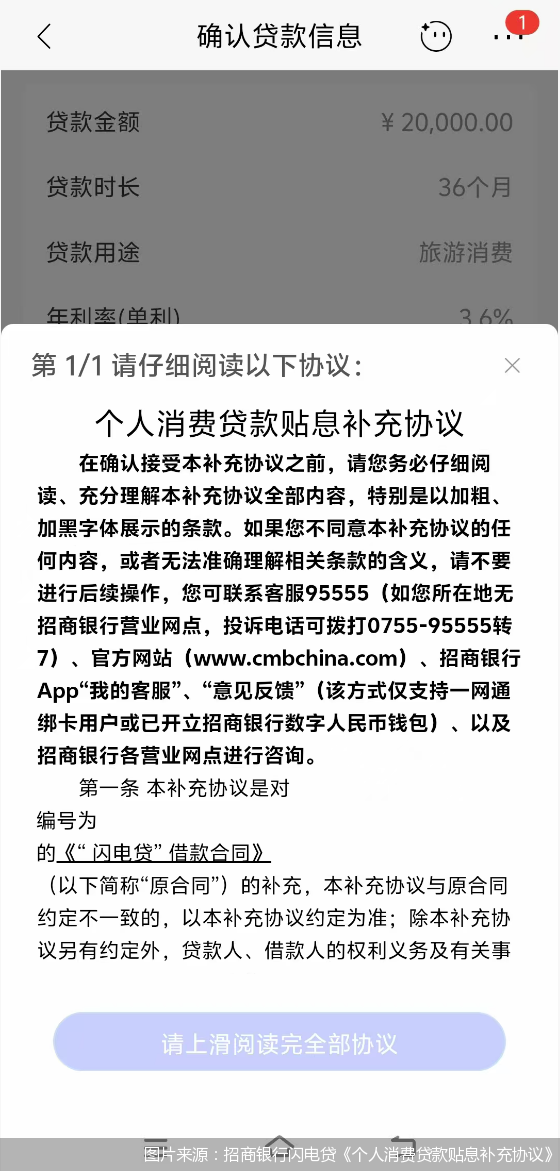
Core Viewpoint - The implementation of the personal consumption loan interest subsidy policy marks a significant step in promoting consumption through direct financial support from the government [1][6]. Group 1: Policy Implementation - The personal consumption loan interest subsidy policy officially took effect on September 1, with multiple banks, including Huaxia Bank, Zhejiang Commercial Bank, and Everbright Bank, releasing guidelines for the subsidy [1][4]. - The subsidy covers consumption loans for amounts below 50,000 yuan and for specific categories such as home appliances, automotive purchases, and education [4][10]. - For loans below 50,000 yuan, the subsidy is calculated based on the actual amount, with a maximum subsidy of 1,000 yuan per borrower at the same institution [4][10]. Group 2: Operational Procedures - Banks have established specific operational processes to facilitate the subsidy, including automatic identification of eligible transactions and manual review for unrecognized transactions [5][6]. - Customers must authorize banks to access their transaction information to enable automatic subsidy processing, and they may need to provide proof of consumption for manual review [5][8]. - The subsidy is applied as a deduction from the monthly repayment amount rather than a direct cash transfer [6][10]. Group 3: Customer Obligations and Restrictions - Customers are required to sign agreements or confirmations to authorize banks to verify their consumption transactions [5][9]. - The subsidy is not applicable for transactions that do not meet specific criteria, such as cash withdrawals or transfers to personal accounts [9][10]. - Banks are mandated to ensure that the funds are used for legitimate consumption purposes, and any fraudulent activities will result in the revocation of the subsidy [9][10].




净息差、行业“反内卷”、零售信贷风险……招行管理层最新表态!
Zheng Quan Ri Bao· 2025-09-01 13:03
Core Viewpoint - The performance report of China Merchants Bank for the first half of 2025 shows a slight decline in revenue but a modest increase in net profit, indicating resilience amid challenging market conditions [1][2]. Financial Performance - China Merchants Bank's revenue decreased by 1.72% year-on-year to 169.969 billion yuan, while net profit attributable to shareholders rose by 0.25% to 74.930 billion yuan, marking a positive turnaround compared to the first quarter [1]. - Total assets increased by 4.16% from the end of 2024 to 12.66 trillion yuan, and the non-performing loan ratio decreased by 0.02 percentage points to 0.93% [1]. Net Interest Margin - The net interest margin for the first half of the year fell by 0.12 percentage points to 1.88%, although it remains significantly above the industry average [2]. - The bank's deposit cost is already lower than the industry average, with demand deposits making up 50% of the deposit structure, limiting further reduction in deposit costs [2]. Retail Business and Credit Risk - The retail business of China Merchants Bank is performing well, with total assets under management (AUM) reaching 16.03 trillion yuan, a 7.39% increase from the end of 2024 [1]. - The retail non-performing loan ratio rose to 1.03%, an increase of 0.07 percentage points from the end of 2024, reflecting challenges in the retail credit sector [4][5]. Market Trends and Customer Preferences - There is a noted shift in customer risk preferences towards equity assets, with a marginal improvement in aggressive investment preferences, although a conservative approach remains predominant [5]. - The bank plans to enhance its wealth management capabilities by diversifying products and improving global asset allocation services [5]. Industry Context - The "anti-involution" trend in the banking sector is expected to stabilize loan pricing and control deposit costs, contributing to improved asset quality [3]. - The retail credit industry is facing unprecedented challenges, with a decline in market demand and an increase in risk exposure due to economic slowdown and reduced consumer repayment capacity [5].
A股上市粤企半年报传递哪些经济信号?丨年报透视镜
Sou Hu Cai Jing· 2025-09-01 12:45
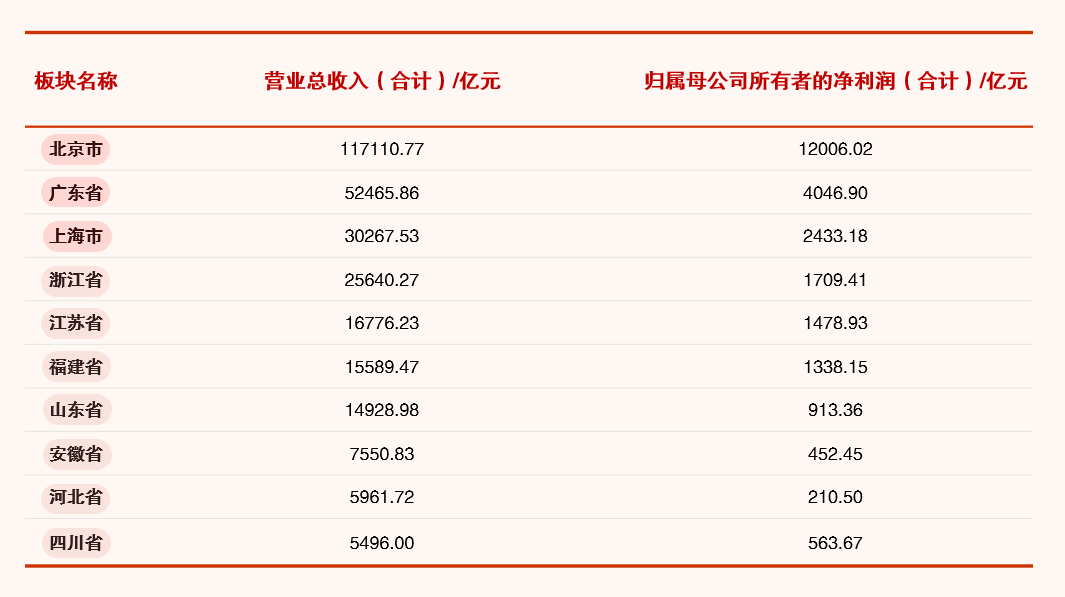
Core Insights - The report indicates that the overall performance of listed companies in China shows a slight growth in revenue and profit for the first half of 2025, with total revenue reaching 35.01 trillion yuan, a year-on-year increase of 0.16%, and net profit at 3.00 trillion yuan, up 2.54% [1][3] Group 1: Overall Market Performance - Nearly 60% of companies reported revenue growth, and over 75% achieved profitability, with 2,475 companies showing positive net profit growth [3] - Excluding the financial sector, the revenue of real economy companies remained stable at 30.42 trillion yuan, with a net profit increase of 0.94% to 1.59 trillion yuan [3] - The growth rates for companies listed on the ChiNext, STAR Market, and Beijing Stock Exchange were notably higher, with revenue growth of 9.03%, 4.90%, and 6.08% respectively [3] Group 2: Sector Performance - Among 19 industry categories, 17 reported profitability, with 7 industries showing revenue growth and 10 industries experiencing net profit growth [4] - The manufacturing sector showed signs of recovery, with revenue and net profit growth rates of 4.73% and 7.75% respectively [5] Group 3: Guangdong Province Performance - Guangdong's listed companies achieved a total revenue of 5.25 trillion yuan, a 6.05% increase year-on-year, ranking second nationally [7] - Approximately 74.83% of Guangdong's listed companies were profitable, with over half (54.10%) reporting year-on-year net profit growth [7] - Major companies in Guangdong, such as Ping An and BYD, reported significant revenue figures, with BYD's revenue growing by 23.29% [7][8] Group 4: R&D Investment - Guangdong's listed companies invested a total of 1601.99 billion yuan in R&D, accounting for 19.75% of the total R&D investment in A-share companies [10] - The average R&D intensity for Guangdong companies was 3.64%, surpassing the A-share average of 2.47% [11] - Leading companies like BYD and ZTE demonstrated substantial R&D investments, focusing on key technologies such as electric vehicles and 5G communications [10][11]




招商银行(03968) - 截至二零二五年八月三十一日止月份之股份发行人的证券变动月报表
2025-09-01 12:28
第 1 頁 共 11 頁 v 1.1.1 | 3. 股份分類 | 優先股 | 股份類別 | 其他類別 (請註明) | 於香港聯交所上市 (註1) | 否 | | --- | --- | --- | --- | --- | --- | | 證券代號 (如上市) | 360028 | 說明 | 於上交所上市之人⺠幣27,500,000,000元的非累積境內優先股(「境內優先股」) | | | | 2. 股份分類 | 普通股 | 股份類別 A | | | 於香港聯交所上市 (註1) | | 否 | | | | --- | --- | --- | --- | --- | --- | --- | --- | --- | --- | | 證券代號 (如上市) | 600036 | 說明 | | 於上海證券交易所 (「上交所」)上市之A股 | | | | | | | | | 法定/註冊股份數目 | | 面值 | | | 法定/註冊股本 | | | | 上月底結存 | | 20,628,944,429 | RMB | | | 1 RMB | | 20,628,944,429 | | | 增加 / 減少 (-) | | | 0 ...
招商银行(600036):2025Q2归母净利润增速由负转正,存款成本继续
Dongguan Securities· 2025-09-01 12:27
Investment Rating - The report maintains a "Buy" rating for the company [1][7]. Core Insights - In the first half of 2025, the company achieved operating income of 169.969 billion yuan, a year-on-year decrease of 1.72%, while the net profit attributable to shareholders was 74.930 billion yuan, a slight increase of 0.25% [4][7]. - The net interest margin for the first half of 2025 was 1.88%, down 12 basis points year-on-year, but the cost of deposits continued to optimize, decreasing by 34 basis points to 1.26% [7]. - The company’s retail loan asset quality remains under pressure, with a non-performing loan ratio of 0.93% as of June 2025, and the coverage ratio stands at 410.93% [7][10]. Summary by Sections Financial Performance - The company reported a net interest income of 106.085 billion yuan in the first half of 2025, an increase of 1.57% year-on-year, while net fee and commission income was 37.602 billion yuan, down 1.89% [7]. - The wealth management fee income grew by 11.89%, and the income from agency insurance decreased by 18.76% due to changes in business structure [7]. Asset Quality - The non-performing loan ratio for retail loans increased to 1.03%, indicating ongoing challenges in asset quality, particularly in credit card loans [7][10]. - The company maintains a high risk compensation capability with a provision coverage ratio of 410.93% [7]. Future Outlook - The company plans to maintain a dividend payout ratio of over 30%, with a proposed mid-term dividend of 35% in 2025, highlighting its high dividend value [7]. - The estimated net asset value per share for 2025 is projected to be 45.25 yuan, with the current stock price corresponding to a price-to-book ratio of 0.95 times [7].
十家股份行7家营收“踩刹车”,净息差承压下挑战几何?
Nan Fang Du Shi Bao· 2025-09-01 12:11
Core Viewpoint - The mid-year performance report for 2025 reveals that the ten listed joint-stock banks have shown a stable overall operational trend, with total assets reaching 73.38 trillion yuan and net profits totaling 278.125 billion yuan, while also exhibiting diverse development characteristics across the industry [2] Group 1: Asset Performance - Total assets of the joint-stock banks have generally increased, with the leading banks being China Merchants Bank and Industrial Bank, with total assets of 12.657 trillion yuan and 10.614 trillion yuan respectively, marking growth rates of 4.16% and 1.01% compared to the end of the previous year [3][4] - Among the ten banks, except for China Minsheng Bank and Bohai Bank, all other banks achieved positive growth in total assets [4] Group 2: Revenue and Profitability - Seven out of ten banks reported a year-on-year decline in operating income, with only Shanghai Pudong Development Bank, China Minsheng Bank, and Bohai Bank achieving revenue growth [5][7] - China Merchants Bank led in net profit with 74.930 billion yuan, showing a slight increase of 0.25% year-on-year, while four banks experienced a decline in net profit [8][9] Group 3: Net Interest Margin - The net interest margin has shown a significant downward trend, with eight out of ten banks continuing to decline, influenced by factors such as the reduction in the Loan Prime Rate (LPR) and adjustments in mortgage rates [9][10] - China Merchants Bank reported the highest net interest margin at 1.88%, although it decreased by 0.12 percentage points year-on-year [10][11] Group 4: Asset Quality - The non-performing loan (NPL) balances of all ten banks have increased compared to the end of the previous year, with Bohai Bank experiencing the fastest growth in NPLs, reaching 17.269 billion yuan, a 4.79% increase [12][13] - The highest NPL ratios were recorded by Bohai Bank (1.81%), Huaxia Bank (1.60%), and China Minsheng Bank (1.48%), while China Merchants Bank had the lowest at 0.93% [14] Group 5: Provision Coverage Ratio - The provision coverage ratio has decreased for seven banks compared to the end of the previous year, with Ping An Bank experiencing the largest decline of 12.23 percentage points [15] - China Merchants Bank has the highest provision coverage ratio at 410.93%, while China Minsheng Bank has the lowest at 145.06% [15]