SINOLINK SECURITIES(600109)

Search documents
国金证券(600109) - 2025 Q2 - 季度财报
2025-08-28 10:35
国金证券股份有限公司2025 年半年度报告 公司代码:600109 公司简称:国金证券 国金证券股份有限公司 2025 年半年度报告 四、 公司负责人冉云、主管会计工作负责人姜文国及会计机构负责人(会计主管人员)李登川声明: 保证半年度报告中财务报告的真实、准确、完整。 五、 董事会决议通过的本报告期利润分配预案或公积金转增股本预案 公司2025年半年度合并报表中归属于母公司所有者的净利润为1,110,777,587.53元。根据中国 证监会《上市公司股份回购规则(2025年修订)》的规定,上市公司以现金为对价,采用要约方 式、集中竞价方式回购股份的,视同上市公司现金分红,纳入现金分红的相关比例计算。公司2025 年上半年以现金为对价,采用集中竞价方式已实施的股份回购金额59,466,804.00元(不含交易费 用),占2025年上半年归属于母公司所有者的净利润的比例为5.35%。2025年半年度公司不再另 行派发现金红利。 六、 前瞻性陈述的风险声明 1 / 184 国金证券股份有限公司2025 年半年度报告 重要提示 一、 本公司董事会及董事、高级管理人员保证半年度报告内容的真实性、准确性、完整性,不存在 ...

国金证券(600109) - 国金证券股份有限公司2025年度“提质增效重回报”行动方案
2025-08-28 10:31
证券代码:600109 证券简称:国金证券 公告编号:临 2025-70 国金证券股份有限公司 2025年度"提质增效重回报"行动方案 本公司董事会及全体董事保证本公告内容不存在任何虚假记载、误导性陈 述或者重大遗漏,并对其内容的真实性、准确性和完整性承担个别及连带责任。 为深入贯彻落实党的二十大和中央金融工作会议精神,落实国务 院《关于加强监管防范风险推动资本市场高质量发展的若干意见》及 配套文件要求,践行以投资者为本的理念,着力提升公司质量和投资 价值,增强投资者满足感与获得感,国金证券股份有限公司(以下简 称"公司")积极响应《上海证券交易所上市公司"提质增效重回报" 专项行动一本通》倡议等相关要求,结合自身实际,制定了公司 2025 年度"提质增效重回报"行动方案,本方案已经公司第十三届第二次 董事会审议通过,具体如下: 一、稳中求进,守正创新,持续提升经营能力 2024 年,公司持续深入推进十年战略规划,从战略顶层设计出 发,系统化部署和推进各项行动方案,践行"一个国金"的理念,将 业务协同工作做深做实做透,增强公司综合金融服务能力;公司坚持 科技赋能业务,塑造 AI 友好型组织;公司持续优化债务结 ...
国金证券:上半年归母净利润11.11亿元,同比增长144.19%
3 6 Ke· 2025-08-28 10:29
36氪获悉,国金证券发布半年报。财报显示,公司上半年实现营业收入38.62亿元,同比增长44.28%; 归属于上市公司股东的净利润11.11亿元,上年同期4.55亿元,同比增长144.19%;基本每股收益0.301 元/股。 ...
耐普矿机:8月27日接受机构调研,华宝基金、国金证券等多家机构参与
Zheng Quan Zhi Xing· 2025-08-28 09:57
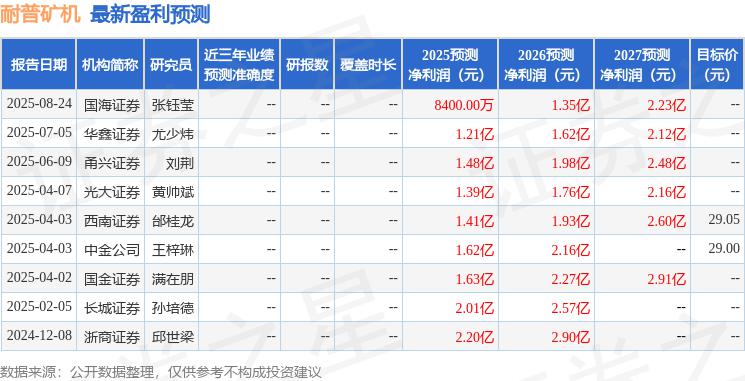
Core Viewpoint - The company reported a significant decline in revenue and net profit for the first half of 2025, but it is optimistic about future growth driven by overseas market expansion and innovative product development. Financial Performance - The company achieved a revenue of 413 million yuan, a decrease of 34.04% year-on-year, but revenue excluding EPC projects remained stable compared to last year [2] - The net profit attributable to shareholders was 16.99 million yuan, down 79.86% year-on-year, but showed a 100.34% increase compared to the first quarter of 2025 [2] Market Expansion - The company is actively pursuing an overseas sales strategy, with overseas revenue accounting for 54.88% of total revenue in the mid-year report, up from 44.98% in the first quarter [2] Challenges Faced - The decline in performance is attributed to the absence of EPC project revenues, increased fixed asset depreciation costs (up approximately 50% to around 45 million yuan), foreign exchange losses of 2.66 million yuan, and increased R&D expenses of 24.91 million yuan [3] Acquisition Progress - The company is in the final stages of obtaining environmental approval for the acquisition of a copper-gold mine in Colombia, with expectations to complete the equity transfer within 1-2 months [4] Future Investment Strategy - The company plans to continue investing in the mining sector, focusing on copper and gold due to the chairman's expertise and existing partnerships in these areas [5] Overseas Base Potential - The company has established five overseas bases and anticipates total production capacity to reach 3 billion yuan, driven by capacity release and new product breakthroughs [6] Product Development - The second-generation forged composite liner product is expected to significantly enhance mining efficiency and is currently in the trial phase with various clients, with large-scale revenue recognition anticipated to begin in Q4 2025 [8] Competitive Position - The company has no direct domestic competitors in its niche of wear-resistant parts, and its products have a 40%-50% longer lifespan compared to major international competitors, providing a competitive edge [8] Growth Logic - Future growth is expected from the gradual production of overseas bases, the innovative second-generation liner product, and strategic investments in copper and gold resources [9]


国金证券:从数据、算力、模型切入的3类龙头 看全球AI制药全景图
智通财经网· 2025-08-28 06:22
Core Insights - The AI-driven pharmaceutical industry is on the verge of a breakthrough, with the first AI-developed drug expected to be approved soon, making it a focal point for investment opportunities [1][2] - The entry of both traditional pharmaceutical companies and new tech firms into the AI drug development space is creating a competitive landscape, emphasizing the importance of robust pipelines and proven capabilities [1][2] Timing - The application of AI in pharmaceuticals has transitioned from concept to reality, with multi-omics development expected to enhance efficiency by 1000 times, indicating a significant shift in the industry [2] - The timeline for AI's impact began with the Turing Test in 1950, gaining momentum with DeepMind's AlphaGo in 2016, and is expected to culminate in notable achievements like the Nobel Prize for breakthroughs in protein structure prediction by 2024 [2] - The EU's AI Act is set to eliminate AI drug discovery systems that rely on opaque models, ensuring that only verifiable and replicable AI models remain in the market [2] Essence - Cloud computing and data limitations are being overcome, leading to a resurgence in innovation and faster returns on research and development [3] - Major tech companies like Amazon, Google, and Microsoft provide ample cloud computing resources for pharmaceutical companies, enhancing their AI capabilities [3] - The shift from deep learning to federated learning is breaking down data silos, allowing for better model development and collaboration across organizations [3] - The development of generative AI models is crucial for maintaining competitive advantages, as efficiency in model iteration and training experience becomes increasingly important [3] Industry Dynamics - Tech giants are actively entering the AI pharmaceutical space, with significant investments and developments from companies like NVIDIA and Google [4] - Pharmaceutical companies are also ramping up their AI initiatives, with major players like Merck, Pfizer, and Eli Lilly investing hundreds of billions into AI-related ventures [4] - Recent data indicates that over $50 billion has been invested in AI drug development projects in the last five years, highlighting the growing importance of AI in the pharmaceutical industry [4]
国金证券:给予中国广核买入评级
Zheng Quan Zhi Xing· 2025-08-28 05:21
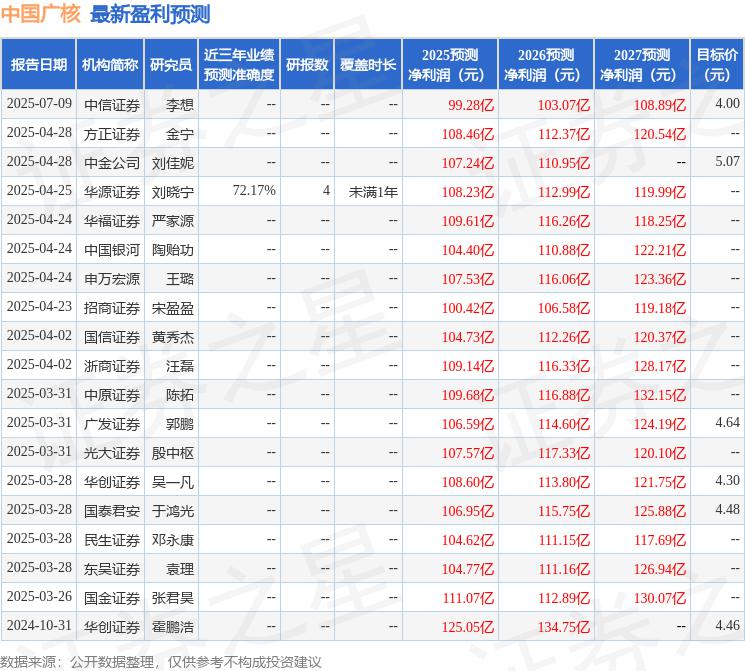
国金证券股份有限公司张君昊,唐执敬近期对中国广核(003816)进行研究并发布了研究报告《电价拖累 业绩,管理在建机组达20台》,给予中国广核买入评级。 中国广核 业绩简评 8月27日晚间公司披露25年中报,1H25实现营收391.7亿元,同比-0.5%;实现归母净利润59.5亿元,同 比-16.3%。2Q25实现营收191.4亿元,同比-5.2%;实现归母净利润29.3亿元,同比-16.5%。 经营分析 | 报告日期 | 机构简称 | 研究员 | 沂三年业绩 | 研报数 | 覆盖时长 | 2025预测 | 2026预测 | 2027预测 | 目标价 | | --- | --- | --- | --- | --- | --- | --- | --- | --- | --- | | | | | 预测准确度 | | | 净利润(元) | 净利润(元) | 净利润(元) | (70) | | 2025-07-09 | 中信证券 | 李樹 | - | -- | - | 99.28 G | 103.07 Z | 108.89 Z | 4.00 | | 2025-04-28 | 方正证券 | 我 | -- | -- | ...

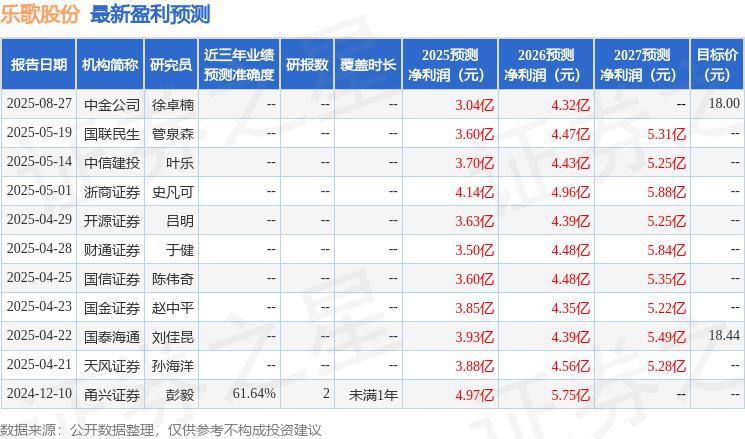
国金证券:给予乐歌股份买入评级
Zheng Quan Zhi Xing· 2025-08-28 05:20
Core Viewpoint - The report highlights that Lege Co., Ltd. has shown excellent performance in expanding new product categories, although various factors have impacted short-term profitability, leading to a "Buy" rating for the company [1] Financial Performance - For the first half of 2025, Lege Co., Ltd. achieved operating revenue of 3.145 billion, a year-on-year increase of 29.56%, while net profit attributable to shareholders decreased by 19.47% to 129 million, and net profit excluding non-recurring items fell by 26.58% to 79 million [2] - In Q2 2025, the company reported operating revenue of 1.600 billion, a 22.57% increase, with net profit attributable to shareholders at 77 million, down 3.87%, and net profit excluding non-recurring items at 53 million, down 19.70% [2] Business Analysis - Cross-border e-commerce revenue grew by 9.16% to 1.000 billion in H1 2025, with independent site revenue increasing by 11.22% to 410 million, accounting for 41% of cross-border e-commerce income [3] - Ergonomic product series generated 1.383 billion in revenue, a 3.48% year-on-year increase, while new categories like electric sofas and ergonomic chairs contributed approximately 20% to revenue growth [3] - Overseas warehouse revenue surged by 84.27% to 1.559 billion, serving 1,744 outbound enterprises, with the German warehouse achieving over 70% utilization and profitability [3] Profitability and Cost Structure - The gross margin for H1 2025 decreased by 5.66 percentage points to 25.69%, primarily due to the increased share of overseas warehouse revenue and rising logistics costs [4] - The gross margin for ergonomic products was 41.46%, up by 1.29 percentage points, while the gross margin for warehousing logistics services fell by 5.31 percentage points to 9.69% [4] - Expense ratios for sales, management, R&D, and financial costs were 14.52%, 4.19%, 3.52%, and 0.03%, respectively, with sales expense ratio decreasing by 2.05 percentage points [4] Future Outlook - The overseas warehouse business is expected to maintain high growth rates and improve profitability due to increasing e-commerce penetration in the U.S. and enhanced operational efficiency [5] - The company's strong product demand and development capabilities, along with its overseas operational experience, are anticipated to mitigate trade friction impacts and support future growth [5] Earnings Forecast and Valuation - The projected earnings per share (EPS) for 2025, 2026, and 2027 are 0.91, 1.04, and 1.20 yuan, respectively, with current price-to-earnings (PE) ratios of 16.18, 14.09, and 12.26 times [6]
国金证券:给予中航成飞买入评级
Zheng Quan Zhi Xing· 2025-08-28 05:19
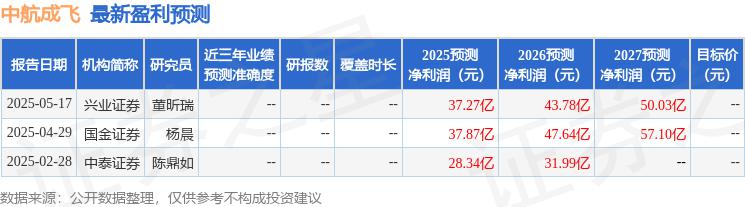
Core Viewpoint - The report highlights that AVIC Chengfei (中航成飞) is expected to accelerate its product delivery pace in the second half of 2025, with a "buy" rating assigned by Guojin Securities [1] Financial Performance Summary - In the first half of 2025, the company achieved revenue of 20.702 billion (-38.99%) and a net profit attributable to shareholders of 0.913 billion (-68.33%), while the non-recurring net profit was 0.855 billion (+1180.03%) [2] - For Q2 2025, the company reported revenue of 17.393 billion, a year-on-year increase of 5.9% and a quarter-on-quarter increase of 426%; the net profit attributable to shareholders was 0.756 billion, down 45.6% year-on-year but up 383% quarter-on-quarter [2][3] - The gross profit margin for Q2 2025 was 8.49%, down 4.25 percentage points year-on-year and 2.56 percentage points quarter-on-quarter; the net profit margin was 4.35%, down 4.12 percentage points year-on-year and 0.38 percentage points quarter-on-quarter [3] Operational Analysis - The company has seen a significant increase in contract liabilities and inventory, with contract liabilities at 18.72 billion, up 190.3% from the beginning of the year, and inventory at 30.113 billion, up 25.1% [4] - Prepayments increased to 13.688 billion, up 176.3% from the beginning of the year, indicating proactive inventory preparation [4] - The company is focusing on military trade and has a strong historical foundation in this area, with successful products like the J-10 fighter jet [4] Innovation and Development - The company is advancing in high-end aviation weaponry and has made breakthroughs in key technology areas such as advanced materials and digital manufacturing [4] - New directions include hydrogen energy drones and cargo airdrop systems, with successful initial development of the "Wen'ao" system achieving 30 hours of continuous flight [4] Profit Forecast and Valuation - The long-term strategic positioning of AVIC Chengfei is viewed positively, with projected net profits for 2025-2027 at 3.787 billion, 4.764 billion, and 5.710 billion respectively, reflecting substantial growth rates [5] - The company is considered a rare technology-driven main manufacturer in China, with both domestic and military trade developments expected to accelerate [5]
国金证券:AI医疗商业化加速落地 有望助力行业提质增效
智通财经网· 2025-08-28 02:19
Core Insights - The investment value in AI healthcare will focus on companies that integrate advanced technologies with specific clinical scenarios and can quantify product value in terms of improving diagnostic efficiency, optimizing patient outcomes, and reducing healthcare costs [1] Industry Development - The AI healthcare industry in China is transitioning through three stages: informatization (before 2014), internetization (2014-2020), and smartization (2021-present), driven by technological iterations that deepen the integration of AI and healthcare [1] - The market size of AI healthcare has expanded from 2.7 billion yuan in 2019 to 10.7 billion yuan in 2023, with its share of the AI industry increasing from 6.4% to 8.6%, and is expected to reach 97.6 billion yuan by 2028, accounting for 15.4% of the AI industry [1] - AI applications in healthcare must go through four progressive stages: demand validation, model development, performance testing, and commercialization exploration, with significant differences in maturity across various fields [1] Pain Points and Technological Innovation - The healthcare industry faces challenges such as an aging population, resource misallocation, and increasing pressure on medical insurance funds, which drive the need for technological innovation [2] - The complexity of diseases and inefficiencies in hospital operations further restrict the quality of healthcare services, highlighting the value of AI technology in addressing these issues [2] - Breakthroughs in large model technology have increased market acceptance of medical AI, with applications in clinical decision support systems (CDSS) enhancing diagnostic accuracy and efficiency [2] Case Study: IBM Watson - IBM Watson serves as an early application case in AI healthcare, demonstrating the clinical demand for AI tools despite facing challenges in technology and commercialization [3] - Initial successes included building a product matrix through natural language processing and machine learning, but limitations arose from system closure, insufficient data training, and complex clinical adaptation [3] - The commercial model struggled due to high costs and unclear quantification of clinical value, underscoring the need for companies with technological barriers, application capabilities, and clear commercialization paths in the domestic AI healthcare sector [3]
上海加快推进城中村改造,券商建议逢低配置地产股
Huan Qiu Wang· 2025-08-28 01:25
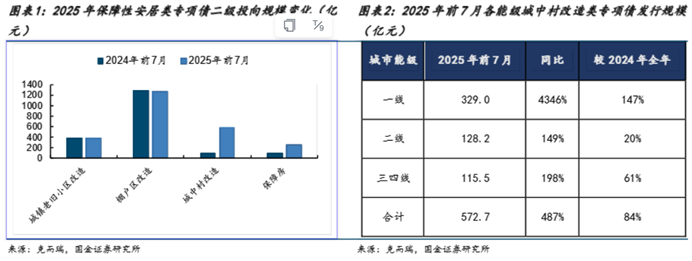
Group 1 - The core viewpoint of the news is the acceleration of urban village renovation in Shanghai, prioritizing areas with urgent public needs and social governance risks [1] - The implementation of the renovation plan requires soliciting villagers' opinions, with collective economic organizations holding at least 10% of shares in cooperative renovations [1] - According to statistics from the China Index Academy, financing for urban village renovations reached 57.3 billion yuan before July 2025, an increase of 47.5 billion yuan compared to the same period in 2024, representing a year-on-year growth of 487% [1] - Among different city tiers, first-tier cities showed the most significant growth, with a cumulative issuance scale of 32.9 billion yuan, a year-on-year increase of 43.4 times [1] - The report from Guojin Securities indicates that the data reflects a more stable new housing market in first-tier cities, manageable inventory levels, and the emergence of high-premium residential land since 2025, providing a conducive environment for urban village renovations [1] - The land reclamation from urban village renovations is expected to create more space for urban development, enhance the efficiency of land use, and support the stabilization of the real estate market [1] Group 2 - Guojin Securities suggests that given the current low valuation of the real estate sector, it is advisable to accumulate real estate stocks during dips [2] - The recommendation focuses on developers that operate steadily and are likely to benefit from potential policy incentives, particularly those emphasizing core first- and second-tier cities and improving product offerings [2] - The targeted developers should possess sustainable land acquisition capabilities [2]